Butterflies, Ecology, Hill Farming

Back on the Farm and a Moral Dilemma!

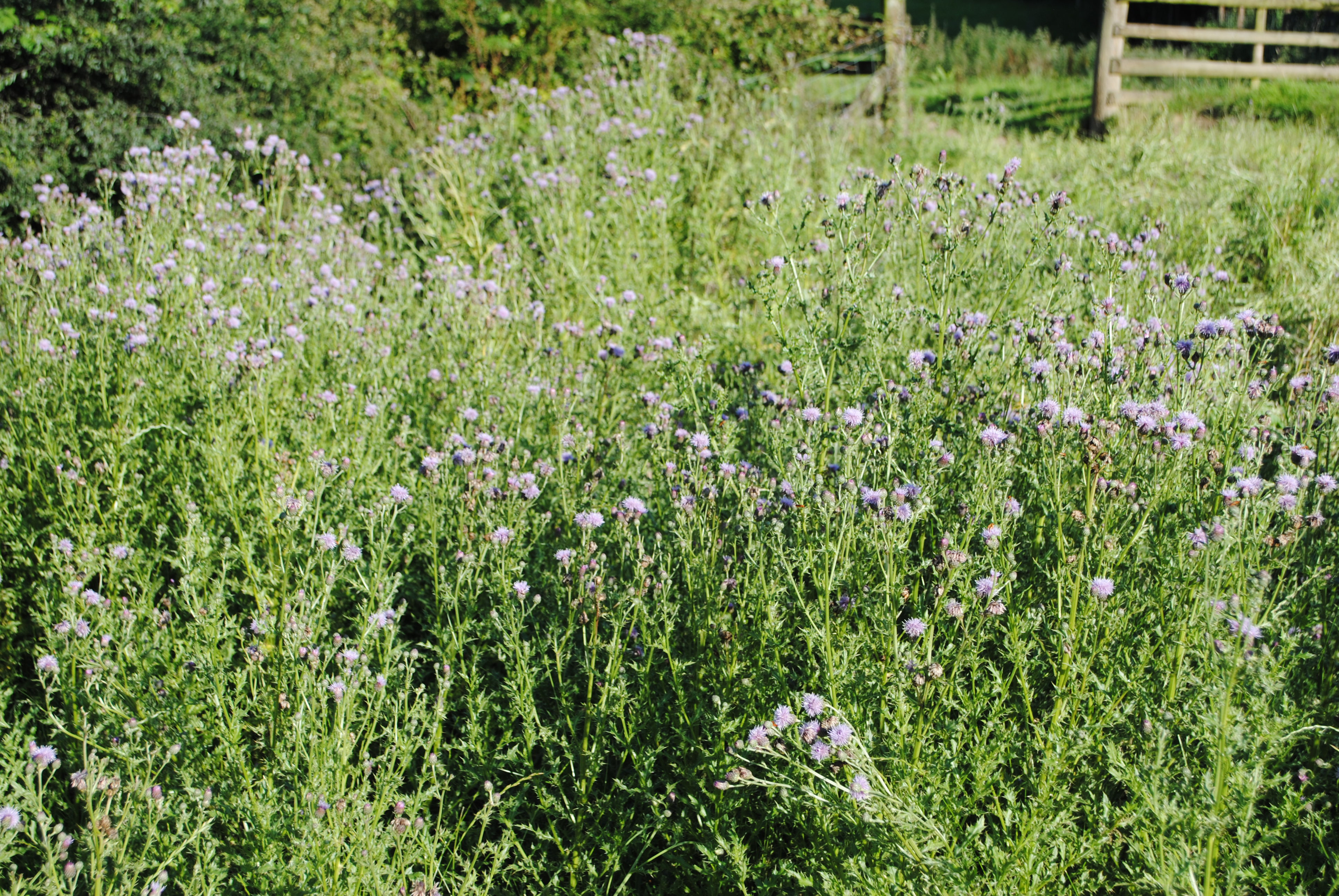
The hot dry spring was just what our thistles yearned for — they grew and grew. While our neighbours sheep gather in the shade it is time for us to deal with the thistle plague.

I was told by those who know:

Cut in June, they will grow back soon,

Cut in July they will surely die.

So we held our nerve, but once into July we have waged war on the thistles, Bill pulling the topper behind the quad bike and cutting every accessible thistle. 10 acres of thistles — not bad for a septuagenarian with no previous farming experience! It’s wonderfully adaptable, the human race.
All this time I have been busy managing and hiding in my cool office doing important paper work. But now the rains have started, waves of torrential rain coming in from the west, and the family are due next week so we are running out of time. Its all hands to the scythe and the sickle in the corners and the precipices where the quad bike cannot reach.

But wait!

There is a problem. In the sunny periods, between the showers, the butterflies and bees and hoverflies and beetles and flies come out as well as us. Finding most of the thistles gone without trace because once cut the sheep gobble them up, this profusion of insects settles on what is left.

The thistle beds are teaming with insect life, buzzing and fluttering and slurping up the nectar.

Just by the barn we saw about 20 pristine new small tortoiseshell, meadow brown and comma butterflies.

Small Tortoiseshell and friends on thistle.

One look at this beauty and guess what? We have decided to leave the edges for a while to give the butterflies a chance to mate and lay their eggs. Oh dear, the caterpillars feed on nettles — we’ll have to leave them as well!

Standard
Uncategorized

A Glimpse of 16th Century Cirencester

This chap looks bemused as well he might — an erstwhile Abbot of Cirencester whose image was smashed and buried in the ruins of his once rich and powerful Abbey — his name forgotten.

This was the Dissolution of the Monasteries which was not just about getting rid of King Henry VIII’s infertile wife. Like everything else it had a lot to do with money, and the reformation and getting rid of rich and decadent priests. It was a re-organisation — a re-directing of resources into education and defence — sound familiar?

Cirencester was a town doing well — wealth and opportunity based on farming and the wool trade. One man who benefitted from the demise of the Abbey was John Coxwell.

John Coxwell (1516-1618) pictured here at the age of 98!

John was a local entrepreneur, from humble beginnings he was surprisingly socially mobile, rising to the gentry, he had made a lot of money in the wool trade and bought much of the Abbey land. Like many driven men he had a robust constitution living until he was 101.

This was not the rule.

One young man’s three young wives lost in childbirth.

What you needed in those days was a good doctor.

Richard Masters, physician to Queen Elizabeth I and richly rewarded for good service with Abbey land and this silver gilt chalice the Boleyn Cup. He has a certain je ne sais quoi, don’t you think. He was a generous man and made many bequests in the town and gave his cup to the magnificent Parish Church of John Baptist.

Nothing like a grateful patient!

Standard
Architecture, British history

Ecclesiastical Surprise

We can never resist an open church door — except on a Sunday.

Recent travels have taken us to Beverley in Yorkshire, a market town (I bought a dress) with 29,000 inhabitants. It has a minster. What is a minster? I hear you ask. I understand it as a throw back to the administrative structure of the Church 1000 years ago — all that has changed but a few minsters remain. Some are cathedrals like York Minster. Some are parish churches with attitude like Beverley Minster!

It is a Gothic masterpiece built between 1220-1425 now dedicated to St John and St Martin.

John was a local boy in the 700s who made good becoming Bishop of York and established a monastery in Beverley. He was credited with many feats of healing and good works and was canonised in 1037 — before the great schism so he is still revered by the orthodox churches!

Martin, better known outside Beverley, was a Hungarian conscript into the Roman army and sent to France. On a cold winter’s day he saw a beggar, almost naked and shivering. He cut his cloak in half with his sword and gave half to the beggar. The beggar returned to him in a dream as Christ and he became a Christian, founding a community and later became Bishop of Tours. A good demonstration that you are never quite sure whom exactly it is that you help or, conversely, that you do down!

Both he and St John had significant biographers — the key to posterity perhaps. One of John’s students was Bede, becoming venerable as the chronicler of his own and earlier ages. PR was always important.

The nave — not surprising that the Minster was used as a set for Westminster Abbey in the film Young Victoria
Detail from above door — amazing collection of statues — 99 outside but late Victorian, although the one of the future Edward VII is a good likeness! Unfortunately the light wasn’t good.
Quire, magnificent woodcarving with 21st century chorister’s mug and music?

A fascinating, beautiful church, though my photographs do not do it justice — well worth a visit.

Standard