




Celtic knot, granite with lichen!

A magic place, soon after dawn (which isn’t very early) on the Fowey estuary in January. Lapwings cluster on the sandbanks and the eerie calls of the curlew heralds the progress of the seasons.

Snow drops are under the bare oak in St Winnow’s churchyard, primroses blooming and campion in the hedgerow under the golden gorse. All in the cool moist air that reminds us of our amazing good fortune as family and friends in Australia (who used to tease us about our rain) suffer unimaginable heat and anxiety. They are living with the threat of loosing everything they hold dear in a biblical inferno.

I wish I could send them all a little while in the cool of St Winnow’s churchyard.
We didn’t see many monarchs in Texas last month — not because it is a Republican state but because the cold snap had presumably sent these amazing migratory butterflies scuttling south to warmer climes. Only one or two non-migratory ones had stayed around to remind us what we had missed.
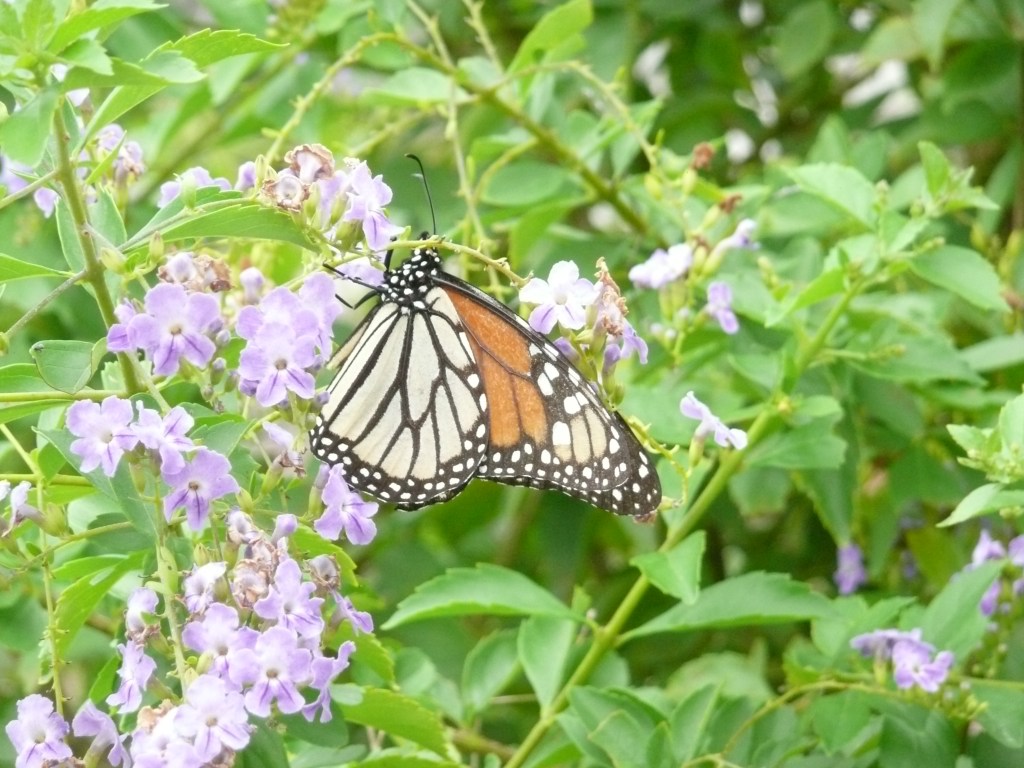
These creatures over-winter in the mountains of Mexico and set off in the spring to fly northwards, pausing to breed, then the offspring in their turn set off again northward, pausing to breed and thus they go, a step per generation, all the way to southern Canada. Come the autumn they all turn southward heading back to their wintering grounds where no individual has ever been before — how clever is that?

They lay their eggs on milkweed, the food plant of the caterpillar, which contains alkaloids which confer the gift of nastiness to the way they taste and which make them poisonous to predators. That helps!
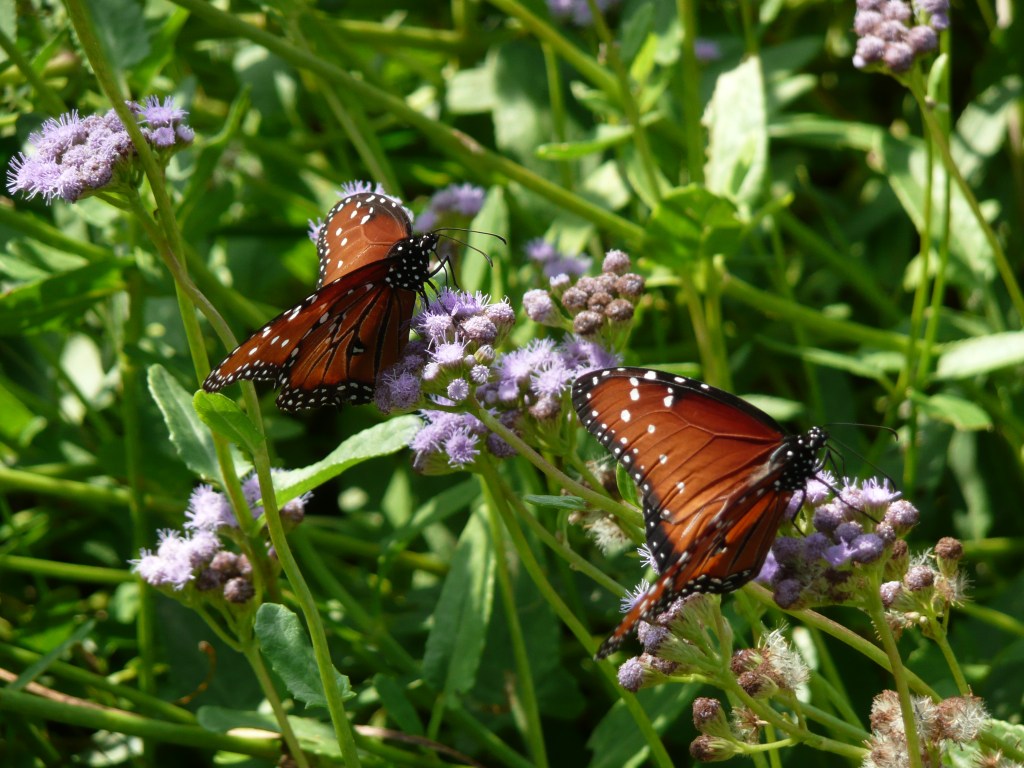
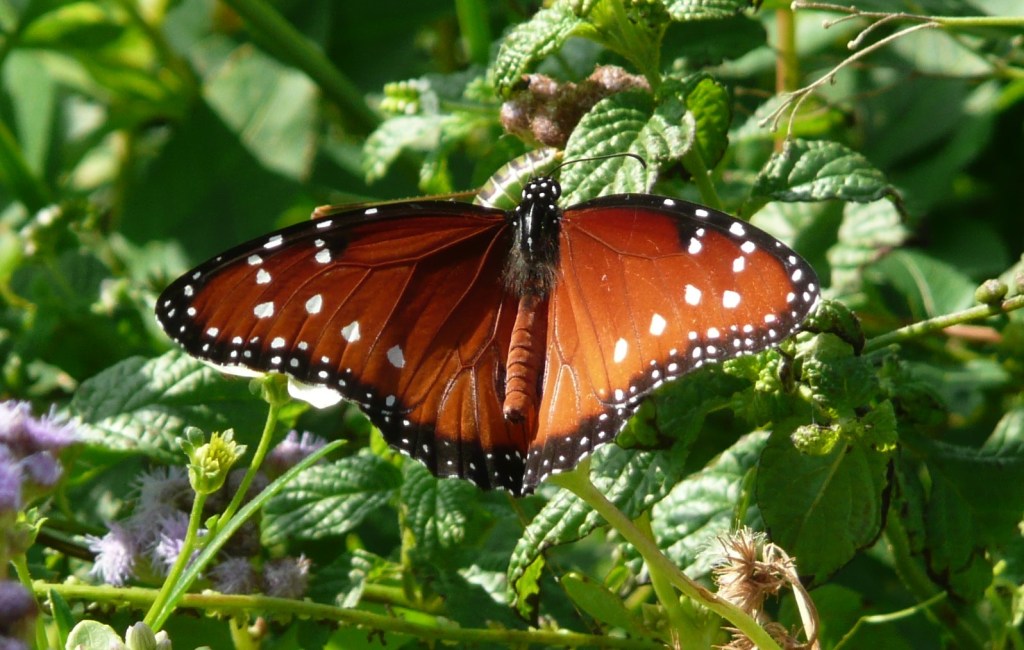
Queens are also milkweed butterflies — we saw more of them — they are also migratory, presumably also following the milkweed season north but less is known about their migratory habits. They are similar to monarchs but are darker and more russety and have no black veining when viewed from above.
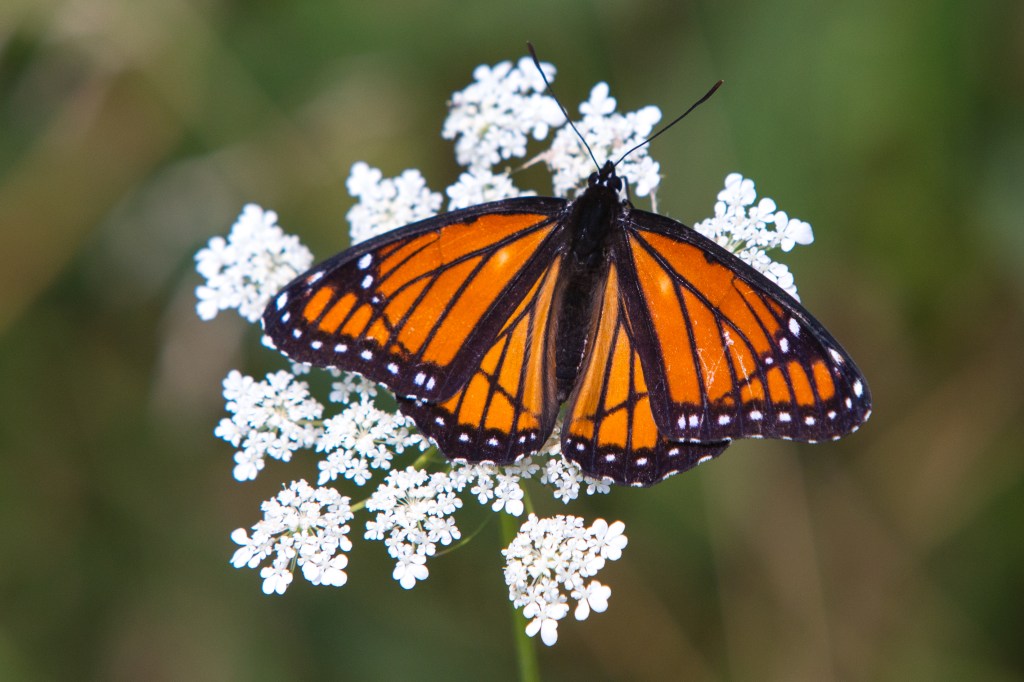
The viceroy butterfly, below, looks much more like the monarch, apart from those straight black lines which transect the black veins towards the back of their wings. This is the impersonator! They do not lay their eggs on milkweed, they do not assimilate the poisonous alkaloids of the milkweed and presumably taste quite good to birds, reptiles and hungry amphibians. They are just mimics, surviving and prospering because they look like something that tastes nasty! Their ancestors didn’t have to practice on a poisonous plant that probably killed some of them. Now that is really clever!

Last month in Texas we saw lots of herons and egrets, so what’s the difference? They are all members of the heron family, Ardeida . We tend to call the white ones egrets but they are not a separate family. In fact the great white egret, (Ardea alba), above, is closely related to the great blue heron (Ardea herodius)below.

To make things more complicated the great blue heron has variants that are white, thus only differing in superficial appearance from its egret cousin by its shaded heavier bill and paler legs.
Although the appearance of these two is similar their distribution is very different with the Great Egret being widely distributed through most of the world while the great blue heron is usually restricted to the Americas. Both look quite different with their necks hunched up. Here is the great blue heron with his neck extended a little:

Here is a smaller heron, the tricolored heron (Egretta tricolor):
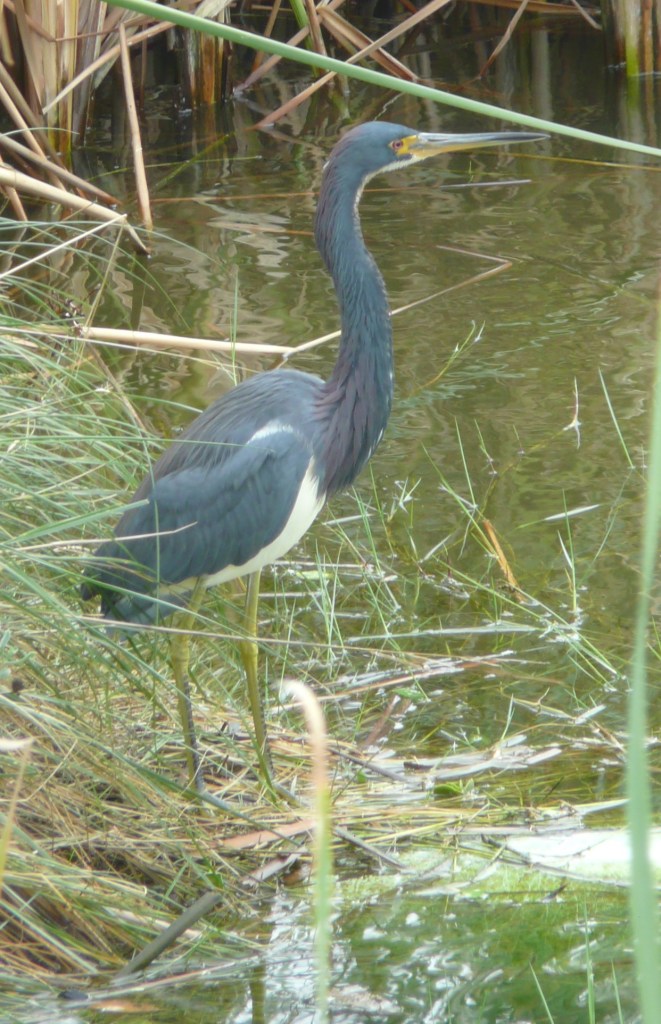
This chap is a more specialist feeder, fishing for minnows in the shallow, we saw him dashing about quite frenetically fishing, not the cool stalking that we usually associate with herons. They have a trick of stretching out their wings to make a pool of shadow into which the fish swim. They are more restricted in their distribution living mainly around the Gulf of Mexico and the Caribbean. He is in winter plumage (only two colours) in the breeding season he sports a beautifully russet/maroon neck.
Here is the yellow crowned night heron (Nyctanassa violacea) keeping a low profile during the day — herons fill many niches — these hunt crustaceans and insects at night, often nesting high in trees.

Here are two black crowned night herons(Nycticorax nicticorax) , at Sable Palm Sanctuary, South Padre Island, Texas:

These beautiful birds are common in the wetlands of the USA and also found in the warmer parts of Europe and were reported to have bred for the first time in the UK in 2017, in Somerset. Whether this was due to the hardiness of one pair who strayed too far north or to global warming is the question!
They are not however the only new herons to be colonizing our shores. As well as the great egret and the little egret, the cattle egret is becoming quite common, we have seen several this year in the UK and nearly always, happily as you might expect, in fields of cows!
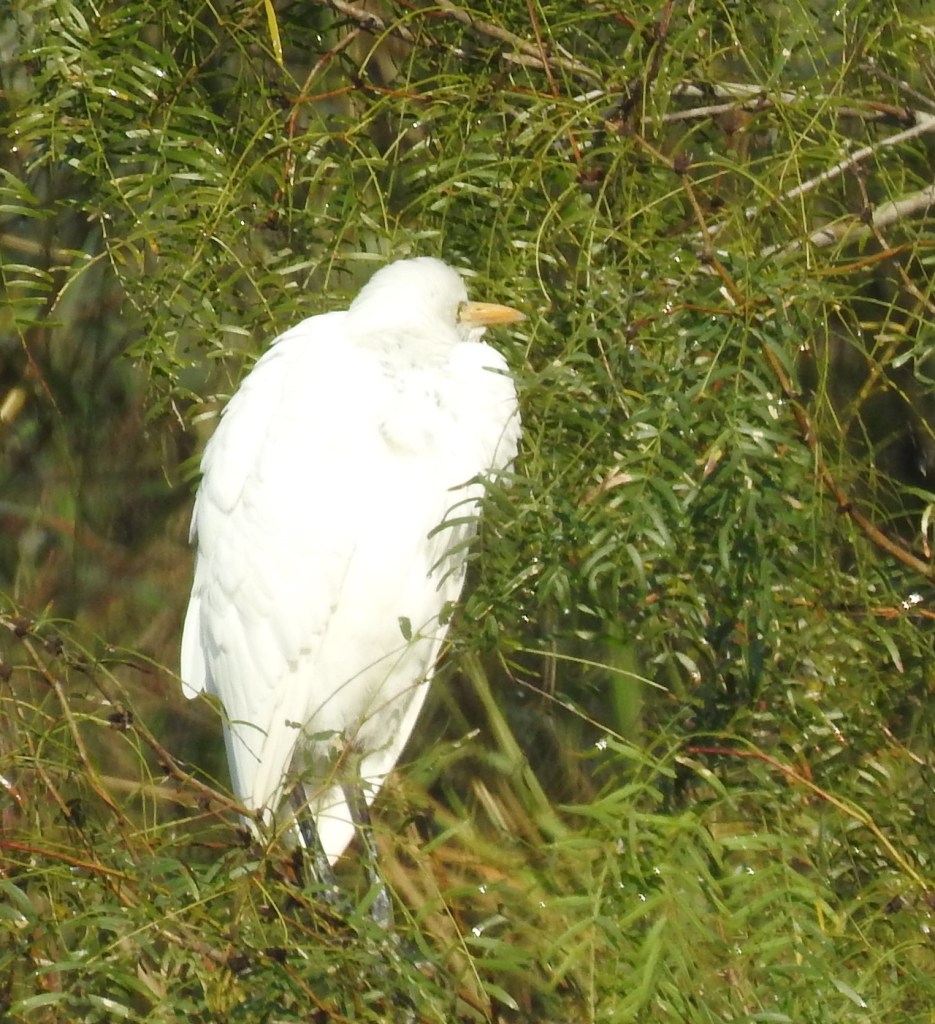
Here is a snowy egret for comparison — note the black bill, these are limited to the Americas and are very territorial in the breeding season when they display noisily, pointing their bills skyward and bobbing up and down to the great interest of other egrets gathered to watch. They also tumble in the sky in their attempts to attract a mate.
It is similar in appearance to our little egret (Egretta garzetta) which is only an occasional visitor to the States — Here is a beautiful video of our Little Egret sent to me by Mark Barkan, after reading this blog — Thank you so much Mark — what a magnificent creature!

This little heron is a green heron (Butorides virescens), they sit in thick undergrowth by preferably shallow water looking intently for little fish onto which to lunge.

The last of the herons that we saw in Texas was the rare reddish egret (Egretta rufescens) seen here at a distance, its numbers are decreasing, breeding in the Caribbean and a visitor to the Gulf of Mexico.

Thanks to Bill Branford for allowing me to use his photographs of the great egret, snowy egret, western cattle egret, green heron and the reddish egret, (all rights reserved).
I will show you the ibises, cranes and spectacular spoonbills soon!
When it’s a Peccary (or a Javelina)!
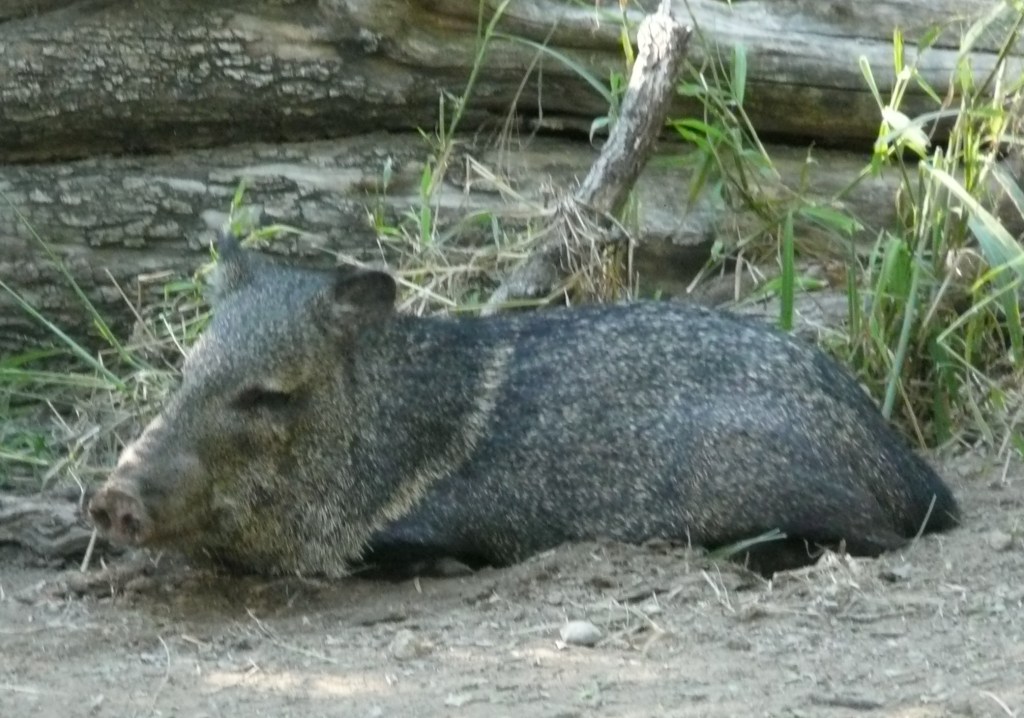
This musk scented, short sighted creature potters around the thorn scrub of Southern Texas, alone or in small groups looking for its favourite prickly pears and snoozing under the live oak trees which are festooned with Spanish moss. It looks a bit like a wild boar but do not be deceived, reflect: “it did not hurtle out of the undergrowth to attack you!” In fact if it gets a whiff of you (provided you are not being horrid) it will ignore you, as this one did.
The collared peccary is not a proper pig — it’s not very closely related to pigs at all and will not breed with them. (Like wolves and dogs who are related and can interbreed and foxes who aren’t and don’t!)
It is the wild boar that is the father of all pigs. The Eurasian wild boar was domesticated millenia ago and then transported to the New World in the 1500s. The pig is an intelligent, enterprising beast so it did well in America and it often escaped. Now there is a significant feral pig population established in the States proud to carry the DNA of its pilgrim fathers. Our guides did not share my delight at the sight of this huge black feral pig snortling and rootling in the precious and delicate ecosystem of the Aransas National Wildlife Refuge on the Gulf coast of Texas three weeks ago.

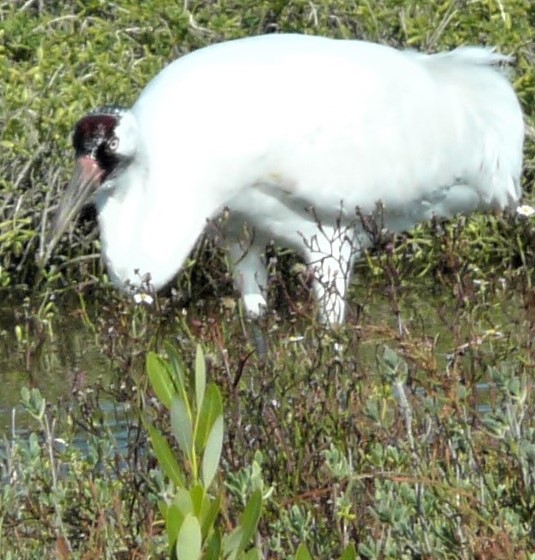
How had it reached this isolated peninsula dotted with lakes, one of the few places left where the whooping cranes can feed and breed? It had swum across the shallow waters of the bay to enjoy the peace and gorge on the rich vegitation, crustacea, toads, tortoises, birds eggs and reptile eggs, and to present the guardians of this habitat with a real problem.
These wild pigs breed prodigiously; one sow can start breeding at 6 months old and produce 5 litters of about 10 piglets every year! That’s 50 new pigs a year. Not surprisingly there are now about 6,000,000 wild pigs in the US — razorback hogs. They estimate that there are 2.6 million in Texas and that the cost to the agricultural economy is $50million per year.
It is estimated that to control the pig situation 65% need to be culled each year — that is a lot of pork and they do not taste very nice — even if they are “flushed” with a commercial diet before slaughter. People hunt them from helicopters, trap them and recently try to control them with rat poison. Ecologists might prefer a more organic approach and bears, wolves and large wild cats will take an adult pig, significantly these species are rare in the areas where the wild pigs thrive.

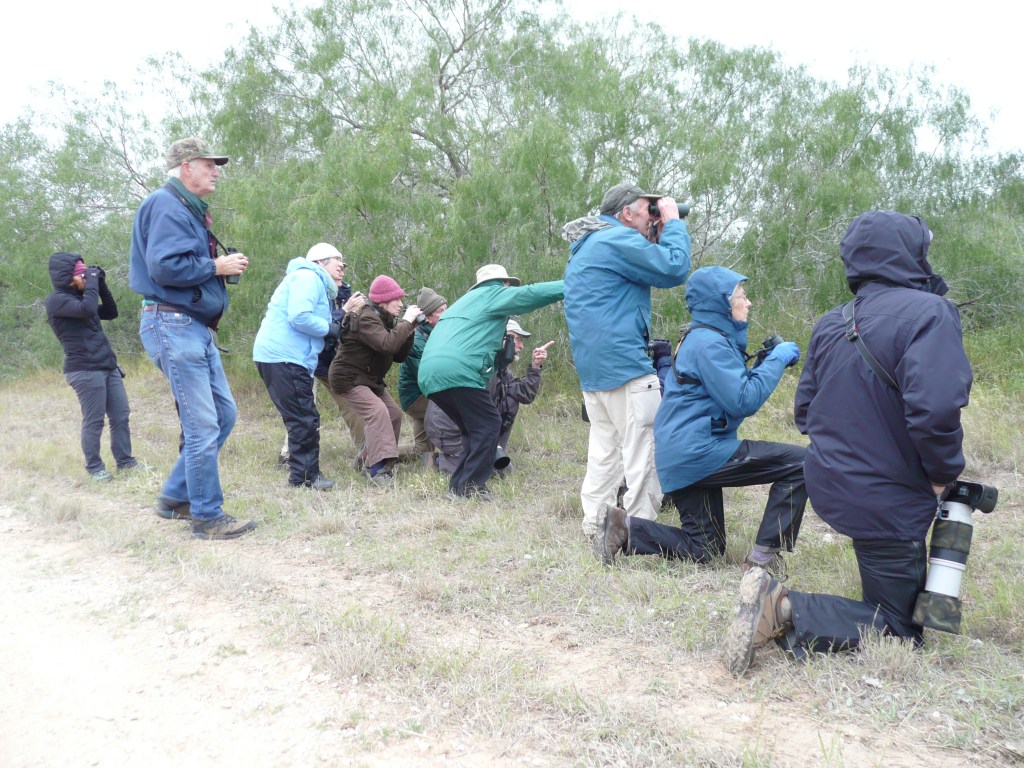
Here we are, a group of intrepid British bird-watchers hunting the Ferruginous Pygmy Owl (Glaucidium brasillium) in Texas last month, in perishing conditions as a freak cold front swept the US. All wearing everything we had and me with socks on my hands we searched a ranch 1/6th the area of Wales for a little tropical owl at the far north of its range. Our guides were tenacious and cunning with their recordings of Pygmy calls and inside information about recent sightings, they had no intention of letting us go until we had seen this timorous beastie.
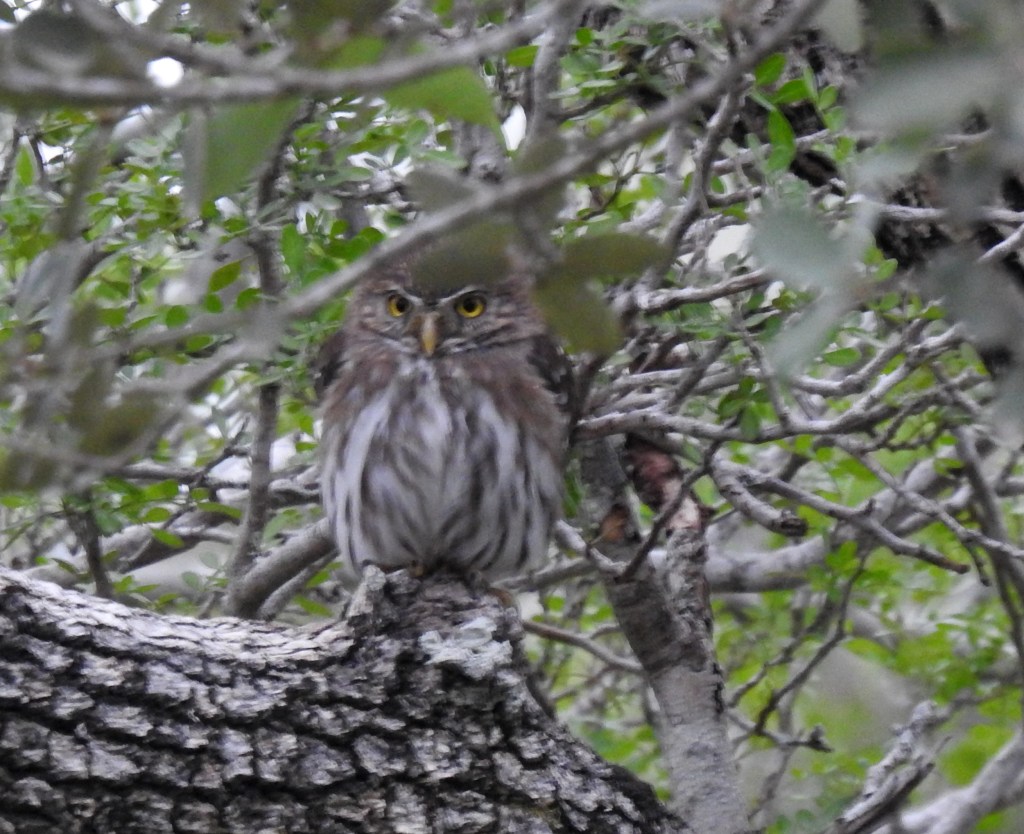
Here he is, about the size of a starling (but all puffed up), as intrigued by our strange appearance and beguiling calls as we were by him.
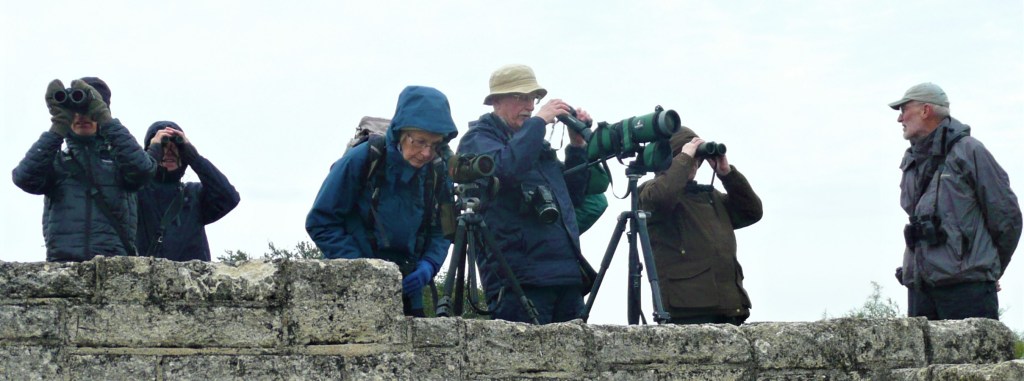
It had been even colder the day before when icicles were spotted dangling from the air-conditioning vent at breakfast. Here are the more robust members of the party looking for icebergs on Corpus Christi Lake.
As the more feeble fled for shelter in adjacent woodland we were treated to a view of this Great Horned Owl (Bubo virginianus) who had had the same idea.

As we climbed back into the minibus and fell upon the last of the emergency Worther’s Originals (the beauty of travelling with Grandads) a little bird flitted frantically in the bare branches above, looking for something to eat — a Black Throated Green Warbler (Setophaga virens) — a late migrant caught short by the Arctic blast.

This is the time of year when the Welsh countryside is in eclipse (in temporary decline), the leaves shrivel and fall, the berries drop or are eaten, the nuts hidden away by squirrels and jays, the swallows and martins are gone and the other birds have gone quiet. The waters are muddied by heavy rain and the clouds roll in from the west. Even the wasp’s nest in the shed falls silent.
But look again!
This is the season for fungi.

Honey fungus in the wood, bad news for this old hazel. Suddenly, everywhere there are strange fruiting bodies of the hidden silent mycelia that infiltrate the whole of our natural world and surround us.
We have been trying to identify just a few of the species we have seen recently and are accumulating vast picture files of “unidentified” fungi — so many, so transient, so changeable and so tricky to pin down but at least they sit still while you photograph them.
Some are easier to identify than others!

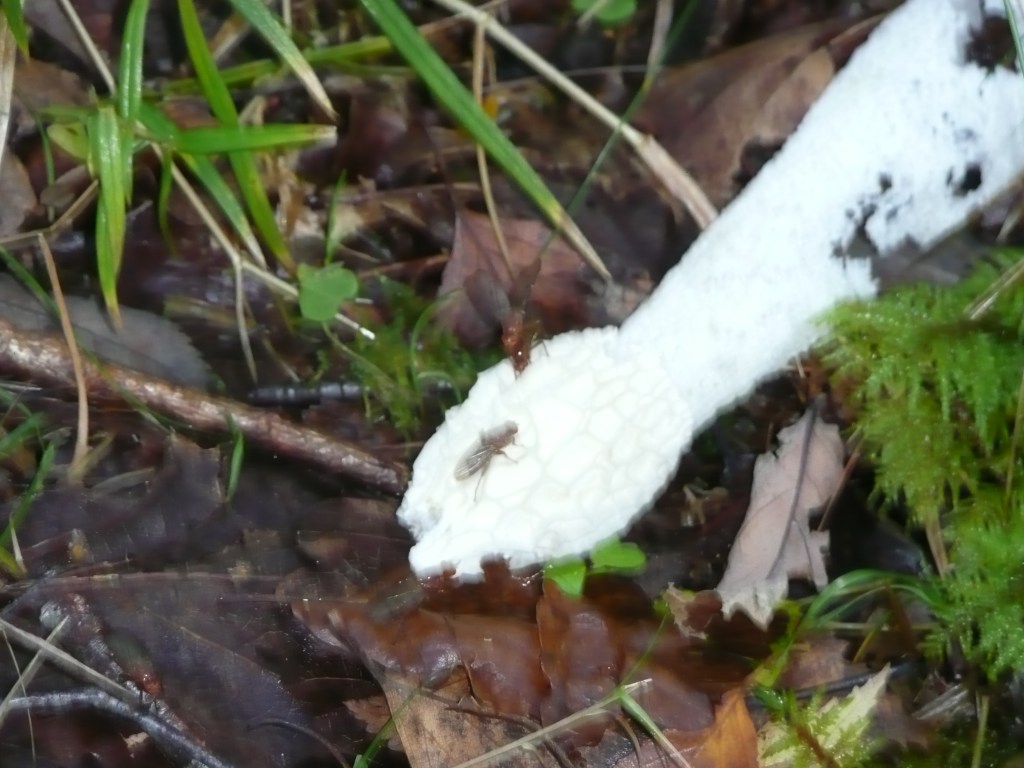
Like these Stinkhorns — the rude and smelly fungi of yore, still attracting flies who stamp their little feet in the glebal goo and spread the spores to other smelly places that flies frequent. Follow your nose and you will find they are quite common!
Not being an expert and only just starting it is the more easily identified fruiting bodies that will figure initially — these saprophytes and parasites are often named with a nod to their appearance, location and preferred host.
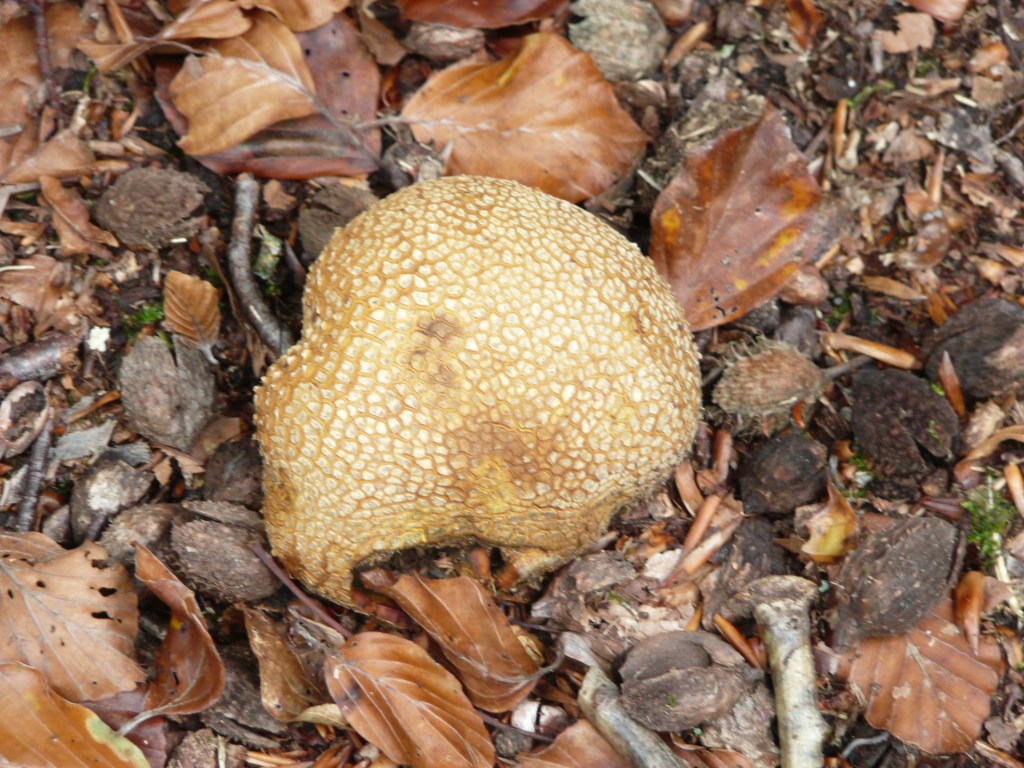
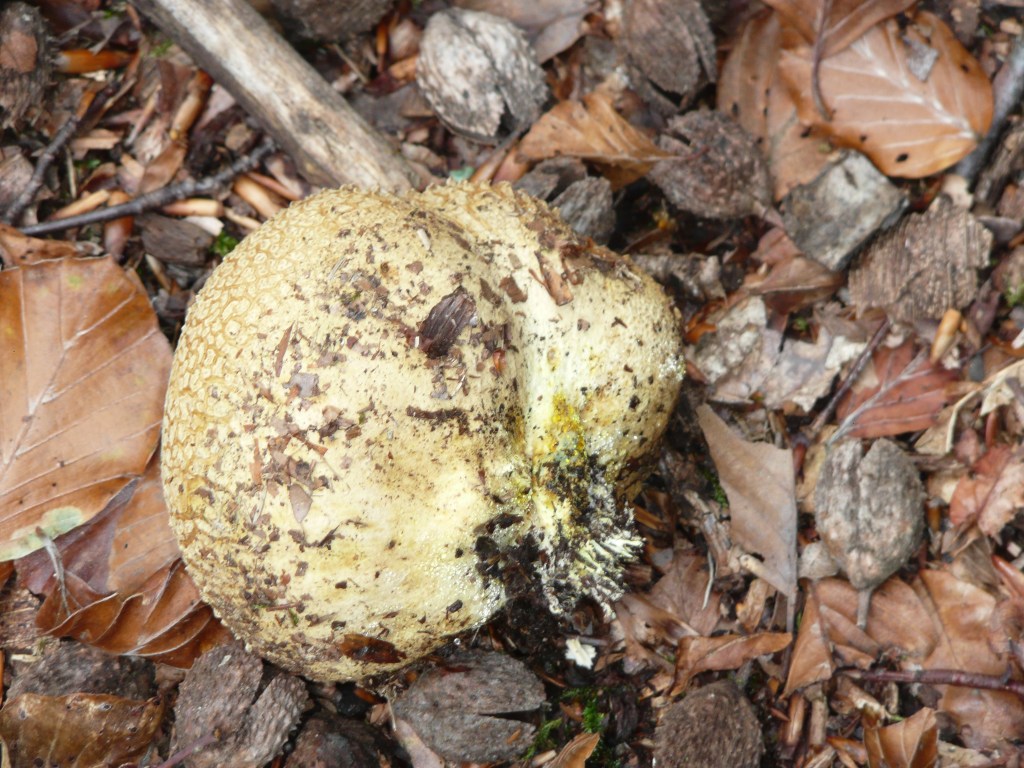
These balls grow in the earth attached at the base by coarse white mycelial strands. These were in the New Forest under beech trees.

They rupture irregularly to release their spores
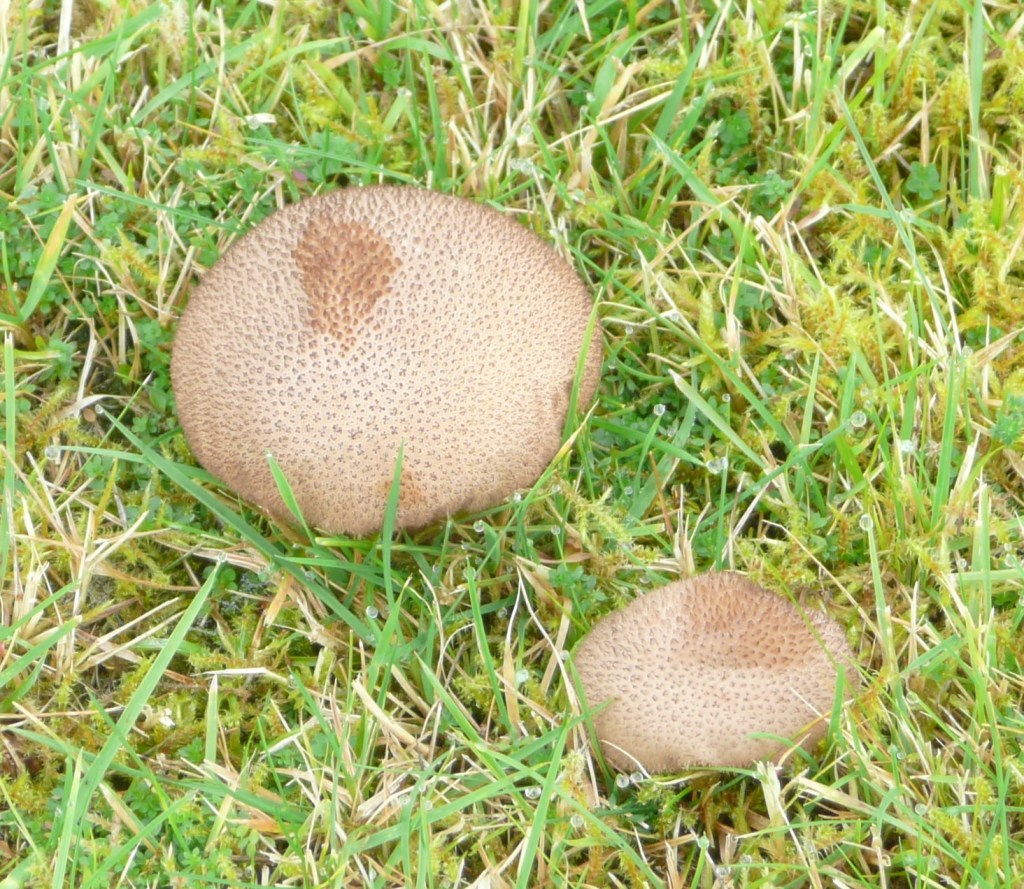

All the different puffballs are still a mystery, they differ from earthballs in tapering to a stout, stem like base but are many and varied and difficult to sort out! These were seen in the grave yard at the ancient cistercian abbey of Strata Florida in Mid Wales — if you recognize the type please tell me!

Here’s another conundrum — some sort of Cup Fungus from the New Forest but which?
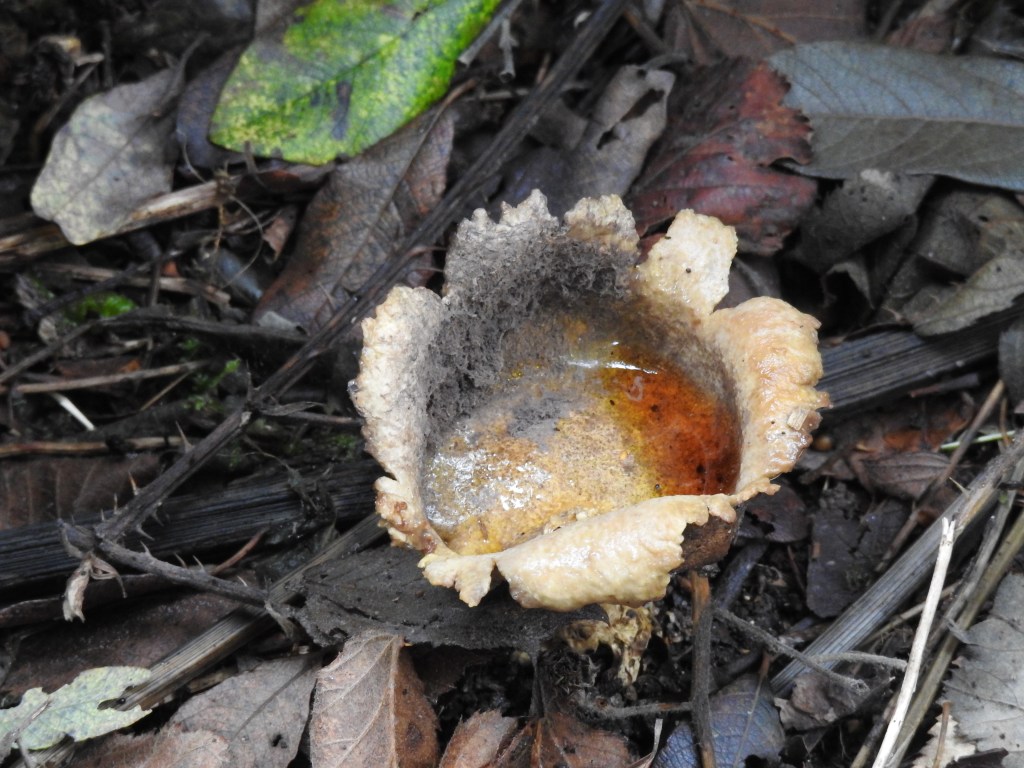

Another common one is the meadow waxcap, in meadows (you see!) and with a very waxy appearance, as it matures it turns itself inside out and often splits and distorts giving it a spooky look — common around Halloween!
Happy fungus hunting!
When you live in one of the wetter parts of our planet it is no good saying “90% chance of precipitation today — I think I’ll stay at home!”
You have to buy decent wellies (with grip) and really good waterproofs and embrace the rain.
Never more so than in the glorious autumn when the quality of the light enlivens the golden palette of the forest floor, set rustling by busy squirrels. The sky between the trees is streaked with flashes of blue from nutting jays.
In the tops of the trees flocks of foraging siskins chatter.
But look under foot!
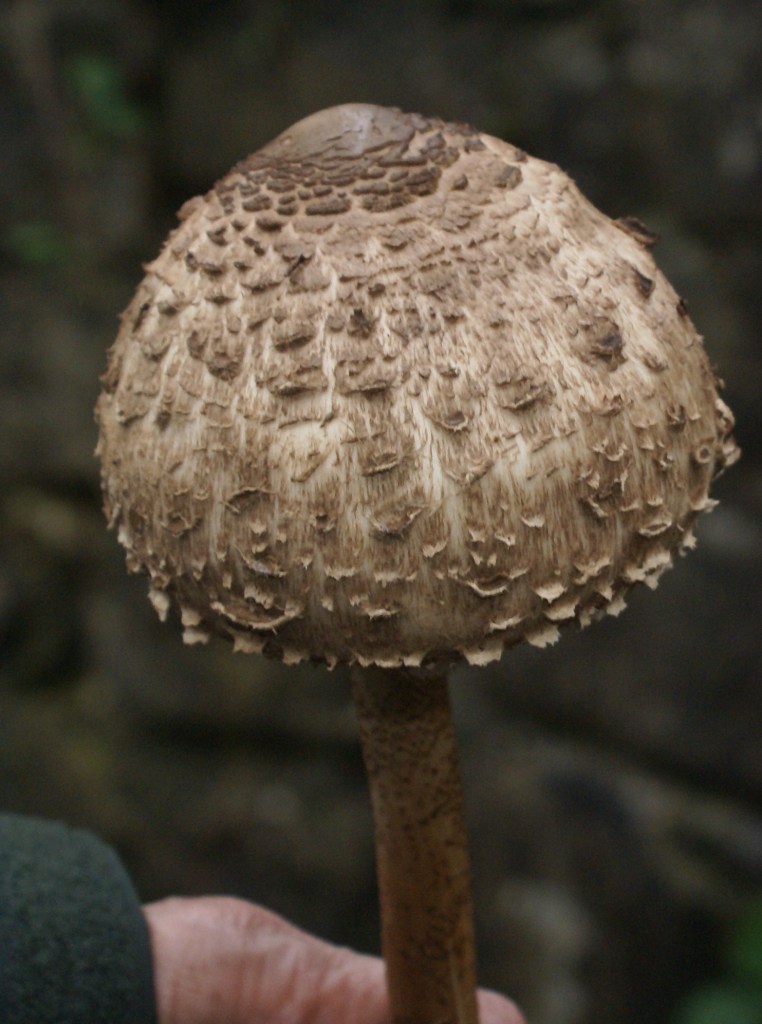
Nature’s bounty: you could fall over this one — something nice for supper! Fried in butter.
Also Field Mushrooms (Agaricus campestris) in profusion but my camera battery was flat so I’ll have to describe the wide ring of domed white delicacies, growing in our field where the sheep shelter, they have pink to brown gills (the mushrooms) so are not Avenging Angels or Death Caps (their gills are white) but beware the Yellow Stainer (Agaricus xanthoderma). These are one reason why you should always forage mushrooms by pulling them out to include the base which can give valuable information for identification. When you bruise a Yellow Stainer, as you might expect, they stain yellow and the flesh at the base is unmistakably bright yellow. They look very like their delicious and innocuous cousin but will make you very sick (thank you U-tube for saving us from that!)
Our Field Mushrooms were a little more watery than the ones you buy and had a faint tang of aniseed — very tasty with butter and lemon juice and no tummy ache!
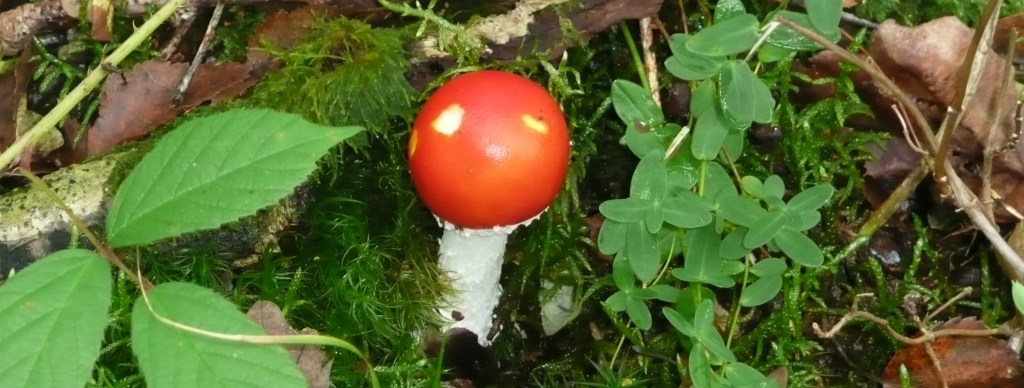
Here’s another you should not eat: the Fly Agaric (Amanita muscaria)

At a distance, in shade, we thought this was a cricket ball.
The woods are magic at this time of year but beware the little people:

When you have lived in a place for a long time you can become accustomed to its variety, even as its flora and wildlife change week by week. Showing it to someone new is an opportunity to throw off that familiarity that blunts your perception and see through refreshed eyes.
We have been playing with a new bat detector — a little gizmo that lowers the frequency of the otherwise inaudible echo location calls of bats into the audible range producing a sound we can hear and a pattern we can recognize and use to identify the species of bat as it flashes past.
Around our house in Wales we have recently identified pipistrelle, common and soprano, and noctules. The sopranos have higher pitched calls peaking at 55kHz, common ones at 45kHz. The detector makes one much more aware of their presence especially in the trees where there is much more activity than we had thought. It helps to demonstrate just how many and how busy these airborne insectivores are.
To aid identification one individual stopped by in my bedroom. He seemed very torpid and I was able to transport his sleeping body to the woodshed where he rested for a suspiciously long time.

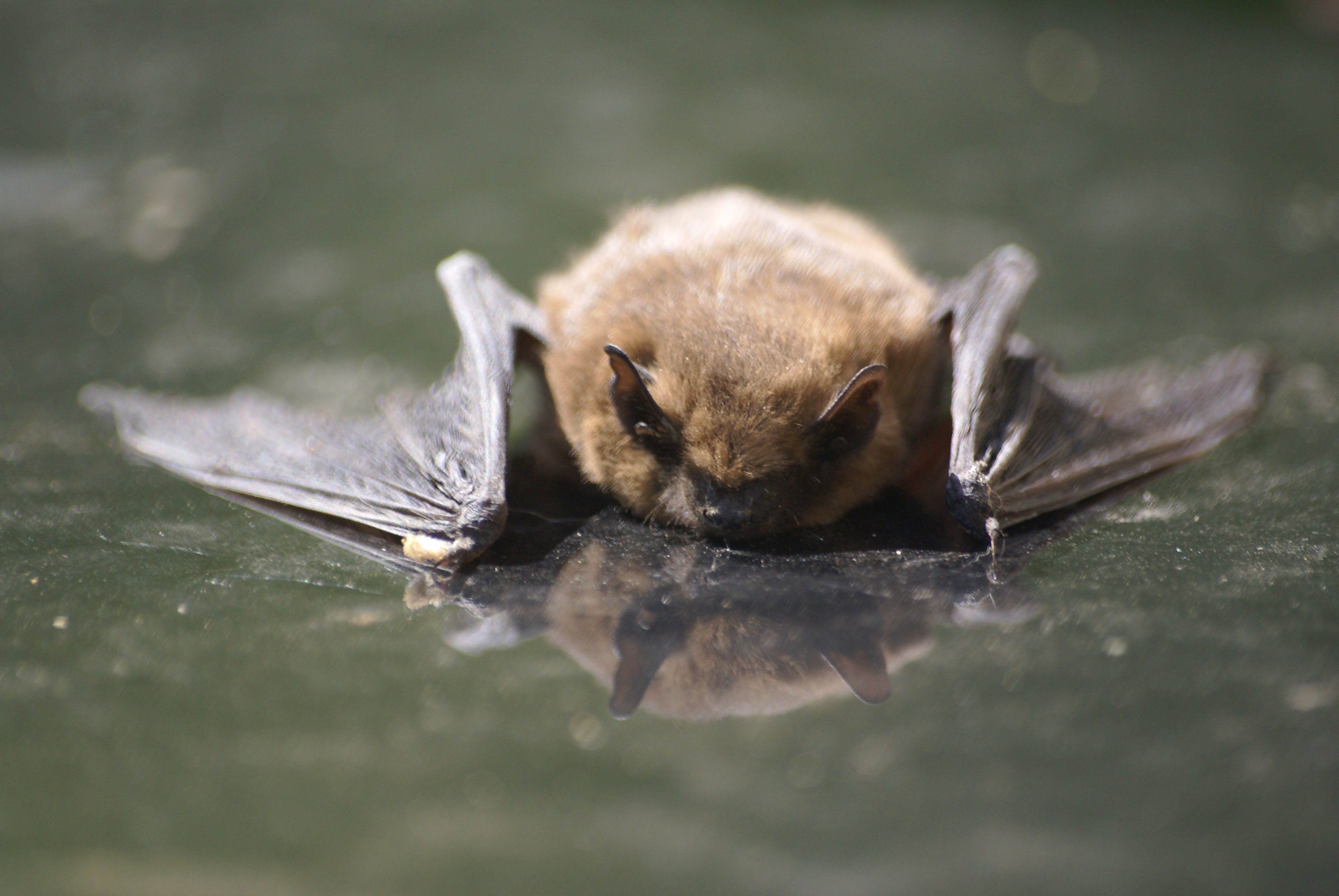
Further investigation confirmed his extremely poor state of health and we buried him.
The following week the local bat group came to look at the colony of bats that have recently occupied our neighbour’s log cabin. They came armed with state of the art bat detectors, deck chairs, counters, tea, coffee, biscuits and insect repellent.
445 Soprano pipistrelles exited the roost that evening which led our neighbours to seriously ponder the possible toilet arrangements of their new tenants.
Thus, despite our own personal experience, soprano pipistrelle bats would seem to be thriving, at least in Wales.
 dianaashworth