Architecture, British history

Moat envy!

I am interested in history and architecture and we visit a lot of National Trust properties. I joined when my friend, Jane, pointed out that they have the best tea rooms and lavatories and are ideal places for a comfort break and a rest when travelling alone! I joined when I was widowed, Bill was already a member — now we do our best to get our money’s worth!

Last week we visited 3 but there was only one I’d care to live in.

Brockhampton house was built in the reign of Henry VI, about 1425 (before the Tudors), from timber that grew in the Hereford hills. It has settled very comfortably into its surroundings over the last 6 centuries. Sitting on a green island surrounded by lily pads and irises and overflown by swooping swallows and squadrons of house martins.
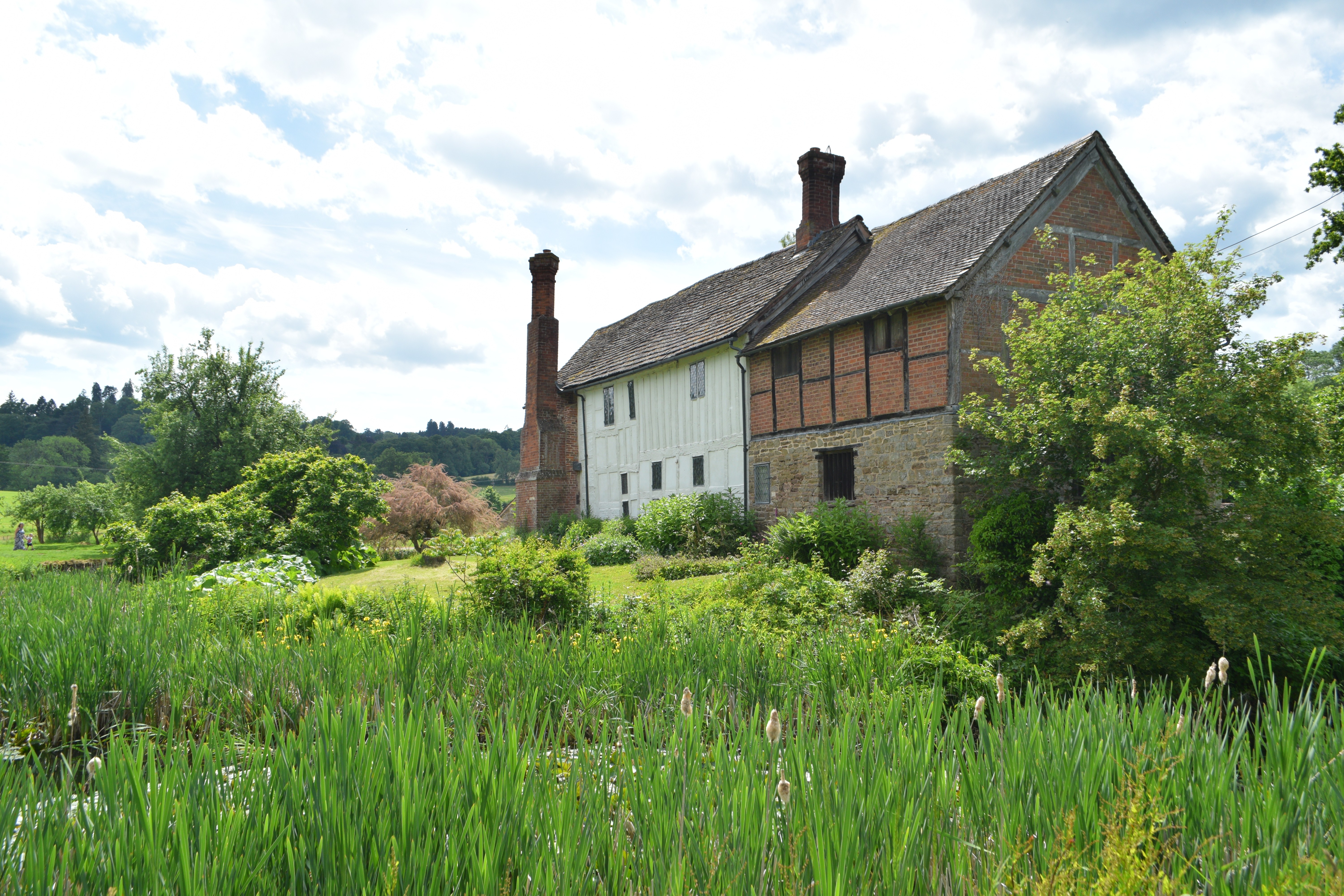
I love it’s relative humility! No mod-cons; an unapologetic mediaeval family house. But this family thrived on its productive farm (unlike so many of the erstwhile owners of our heritage houses — they did not gamble away their resources or run out of heiresses to marry). The family who owned this house moved out in Georgian times to a new grander manor house further up the estate and this old house was occupied by estate workers. By the Victorian era it was in a parlous state but thankfully was rescued, improved and sensitively restored, under the watchful eye of an admirer, retired architect JC Buckler.
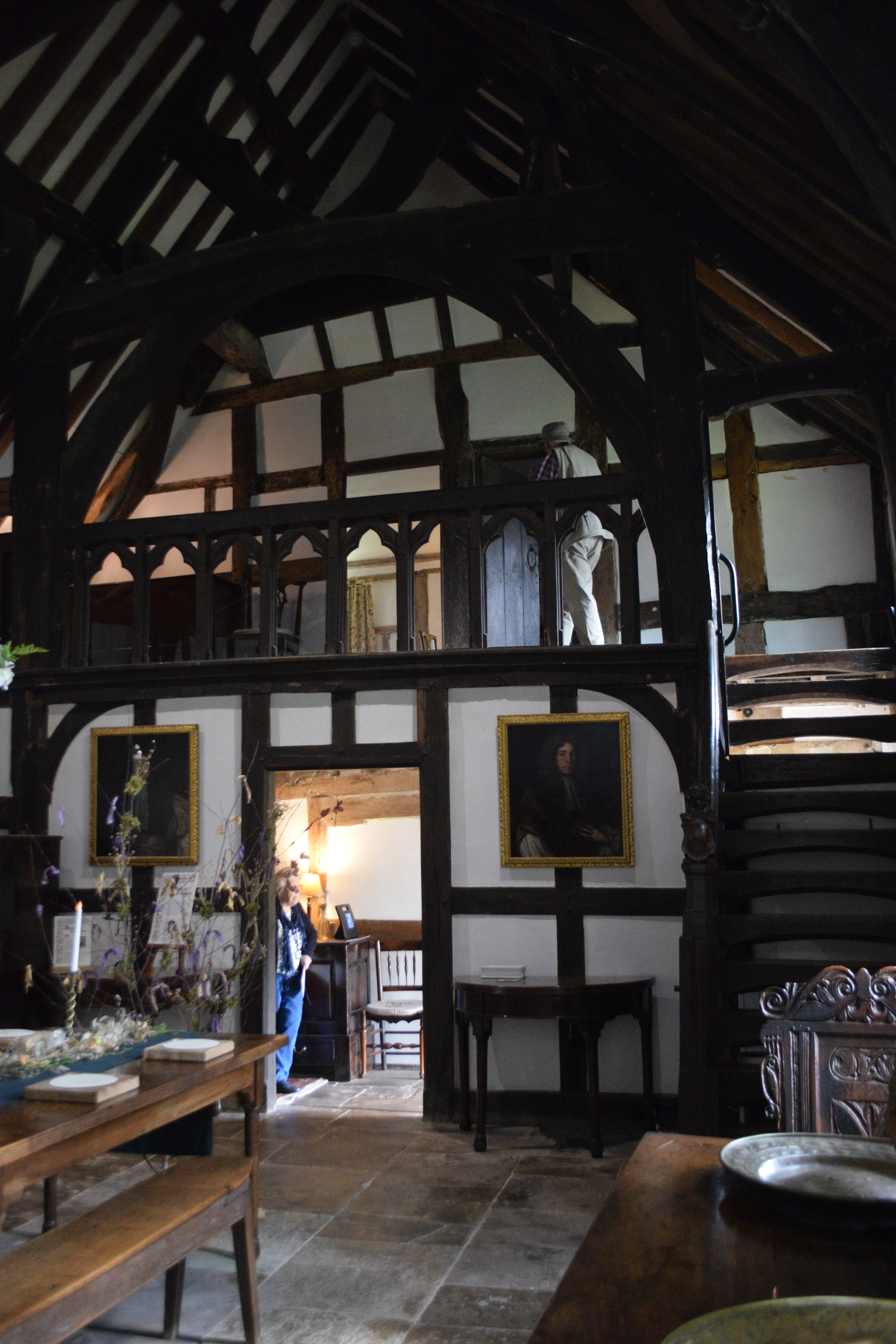
The whole aura of the place seems unchanged; minimal modern intrusions, the coolness and quietness of the great hall on a brilliant summer’s day, the chattering of baby birds in nests under the eaves of the gate house on the bridge over the moat. A sparrow chick peeps out from a chink in the brickwork.

Gatehouse timbers.
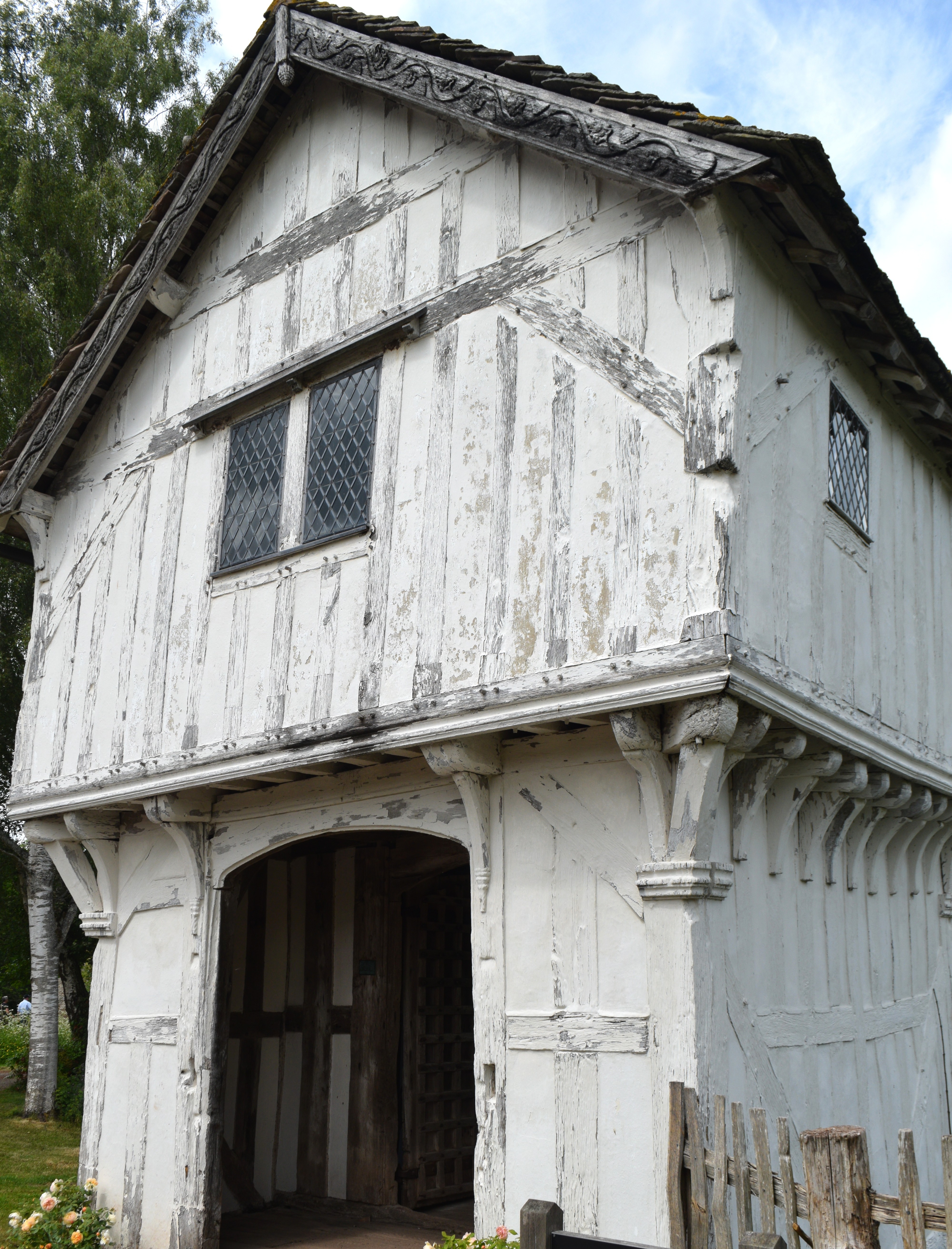
Mediaeval Gatehouse

View over the moat to the ruins of the Norman chapel.
Standard
Architecture, History

Visiting the Boston Stump!

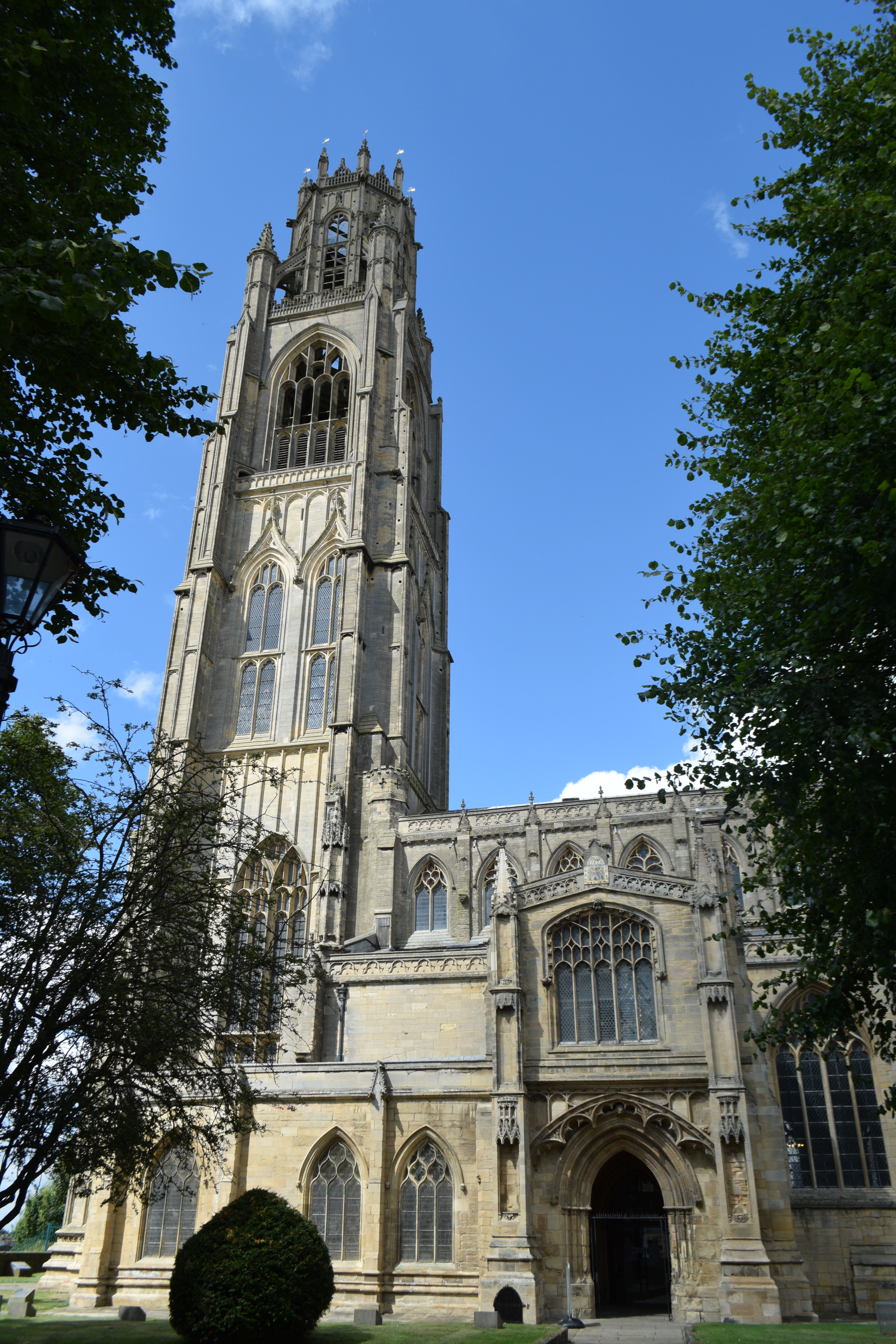
Last week we exhausted ourselves in the heat, tramping around Frampton Marsh on the Wash looking for yellow wagtails. In the distance we could see the only landmark in this flat landscape — Boston stump — the tall tower of Boston’s St Botolph’s medieval parish church . After lunch we went to have a closer look.
I had always thought that this was a cathedral but no, it is a humble parish church!

As you step into the nave, the vastness of it knocks you back and you wonder how this little town in Lincolnshire could possible have mustered the resources back in the 1309 to start such a mammoth project. It took the best part of a century and the tower was added later, by the late 1500s.

The view from the river gives a hint. The River Witham has a short course to the sea and is tidal — Boston, in its day was a major port, serving a rich agricultural area and the merchants were wealthy.

Boston in Lincolnshire, on the Wash — that great bite from the map of Eastern England, was the port from which many Puritans left Britain, notably those in 1630 in the reign of James I, bound for the Massachusetts Bay colony, frustrated by the lack of change in the Church of England — parted from Rome by Henry VIII, but not purged of much that was still Catholic. They took the town’s name with them and were soon followed by their own vicar, John Cotton who became known as the Puritan Patriarch of New England. 166 of his Boston, Lincolnshire parishioners made it to New England.

1660 was the year that marked the end of the Puritan rule of Oliver Cromwell that followed the Civil War and the restoration of the monarchy. Charles II ruled for 30 uneasy years but in 1685 when he died his younger brother James II, personally a committed Catholic, was again a threat to stability and within 3 years the powers-that-be, facing the prospect of another Civil War, invited William (protestant king of the Netherlands) and his queen, Mary ( James II’s daughter) to assume the crown. James’s army deserted him and he fled to France. In 1690 he tried to regain his throne but was beaten at the Battle of the Boyne in Ireland and the rest, as they say, is history — which goes on and on!

These were turbulent years in England. And not much fun for this schoolboy I spotted being beaten — seen on a misericord in the choir.

Standard
Architecture, British history

Powis Castle

It has been very wet of late so when we have a sunny day, we drop everything and head off for a day out!

The Castle is famous since the injection of cash it received indirectly from Clive of India when his eldest son, Edward, married Henrietta Herbert, daughter of the Earl of Powys. The Herbert family were at the heart of the British aristocracy but had fallen on hard times. Edward’s father, Robert Clive was a sort of eighteenth century, colonial oligarch. He had had a brilliant career in India as an administrator of the East India Company, a soldier, politician and adventurer — accruing considerable celebrity and wealth which is just what a medieval castle needs!

Because of it’s association with Clive, I had always thought it dated from that period but I was quite wrong. It was built way back, by Gruffudd ap Gwenwynwyn, a prince of Wales, in the 13th century to defend himself against the princes of Gwynedd — it is one of the few surviving properly Welsh medieval castles. Most of the now famous ones were built by the English King Edward I to keep the Welsh princes in order.

It commands a magnificent view of the country around Welshpool from the terraced Italianate garden.

It is famous for its monumental and historic yew hedges.

The castle is packed with amazing furniture and art works which, sadly, cannot be photographed. There are paintings dating back to Tudor times — well worth the visit.

I was very impressed by the tasteful and historically sensitive lady’s lavatory.

As Bill was by the athletic lady outside the cafe who appeared to be drinking a yard of ale!

Standard
Architecture, British history

Ecclesiastical Surprise

We can never resist an open church door — except on a Sunday.

Recent travels have taken us to Beverley in Yorkshire, a market town (I bought a dress) with 29,000 inhabitants. It has a minster. What is a minster? I hear you ask. I understand it as a throw back to the administrative structure of the Church 1000 years ago — all that has changed but a few minsters remain. Some are cathedrals like York Minster. Some are parish churches with attitude like Beverley Minster!

It is a Gothic masterpiece built between 1220-1425 now dedicated to St John and St Martin.

John was a local boy in the 700s who made good becoming Bishop of York and established a monastery in Beverley. He was credited with many feats of healing and good works and was canonised in 1037 — before the great schism so he is still revered by the orthodox churches!

Martin, better known outside Beverley, was a Hungarian conscript into the Roman army and sent to France. On a cold winter’s day he saw a beggar, almost naked and shivering. He cut his cloak in half with his sword and gave half to the beggar. The beggar returned to him in a dream as Christ and he became a Christian, founding a community and later became Bishop of Tours. A good demonstration that you are never quite sure whom exactly it is that you help or, conversely, that you do down!

Both he and St John had significant biographers — the key to posterity perhaps. One of John’s students was Bede, becoming venerable as the chronicler of his own and earlier ages. PR was always important.

The nave — not surprising that the Minster was used as a set for Westminster Abbey in the film Young Victoria
Detail from above door — amazing collection of statues — 99 outside but late Victorian, although the one of the future Edward VII is a good likeness! Unfortunately the light wasn’t good.
Quire, magnificent woodcarving with 21st century chorister’s mug and music?

A fascinating, beautiful church, though my photographs do not do it justice — well worth a visit.

Standard
Architecture, Urban environment

Laughing Shark Yard!

Kettering is not a bad place and it tries very hard.

It is full of proper, hard working people and has a proud industrial, non-conformist and anti-slavery history.

They got a bit carried away in the 1960’s when town planning, which had just been invented, got out of hand and they knocked down lots of buildings that they shouldn’t have.

There is still a beautiful parish church appreciated by the nesting peregrine falcons that live in the spire.

There are still some fine Victorian buildings and some earlier ironstone cottages and alms houses.

The Victorians also used some local ironstone, but mainly red brick.

Here is an elegant example, squeezed in next to a neoclassical bank building where shoe barons discussed investments with a bewhiskered bank manager. On the other side is a mid-twentieth century cinema, until recently an illicit cannabis farm, putting the “high” back in the High Street..

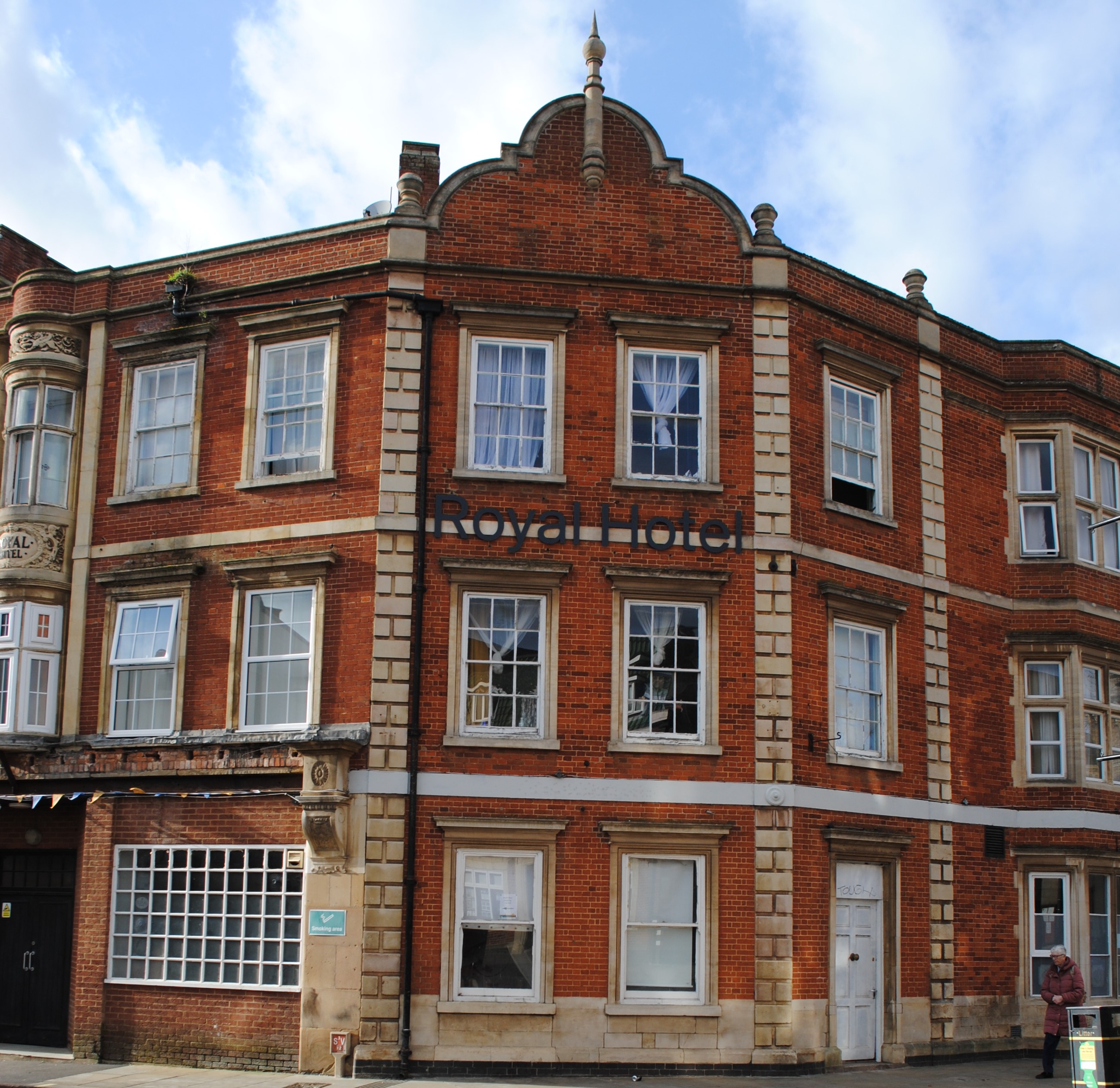
Here is the Royal Hotel — erstwhile commercial hub in the town’s heyday, where deals were negotiated for leather and shoes and more recently, probably marijuana.

Can you see someone at a first floor window, he gave me a friendly wave — one of the 40 people to whom the Royal now gives asylum. Despite the objections of the county council and police, Kettering seems to be surviving.

Development money has been spent regenerating the centre. There is the hint of a developing cafe culture.

A lot has been spent on new planters — the gardens have always been well tended.

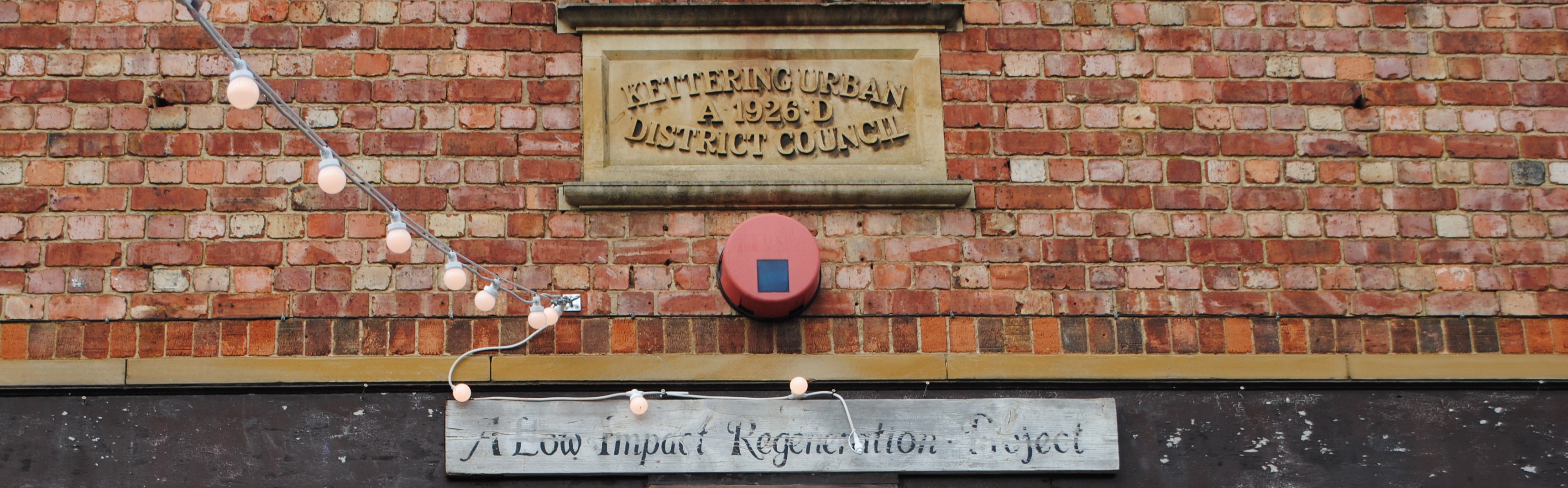
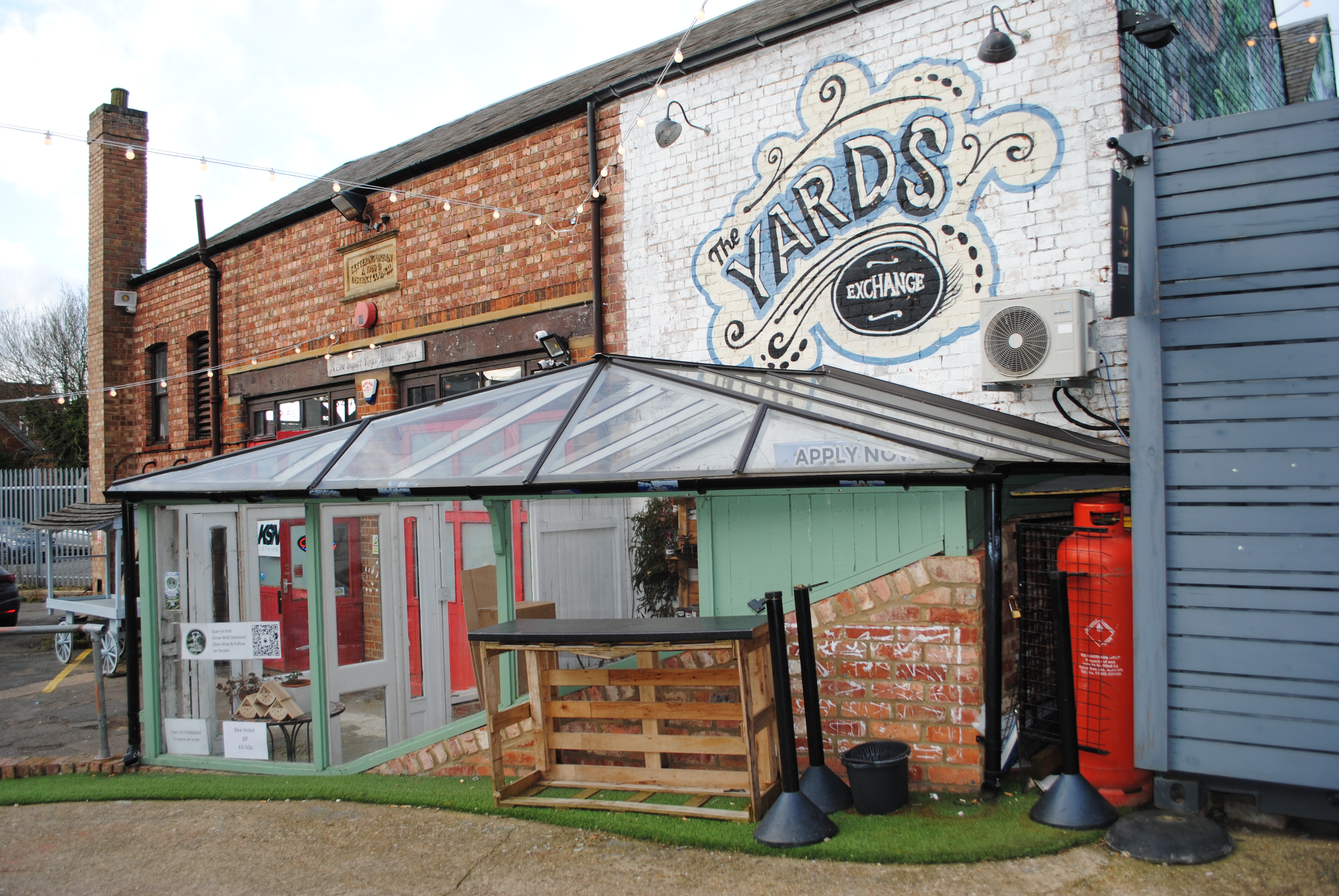
Today I discovered the Yards, described as a cool, laid back, shopping area with lots of small, independent traders (I’m all for that). The old fire station calls itself “A low impact regeneration project”. I’d call it alternative — there is a terrific clothes shop with a clever buyer sourcing stylish, quality garments at low prices. There are shops, a food bank and cafes and places to hang out — and there are murals — large murals.

Standard
Architecture, Art, British history

Looking Back

Sometimes an image will transport you to another time.

The carved bench ends of St Winnow’s Church in Cornwall take you straight back to 1520!

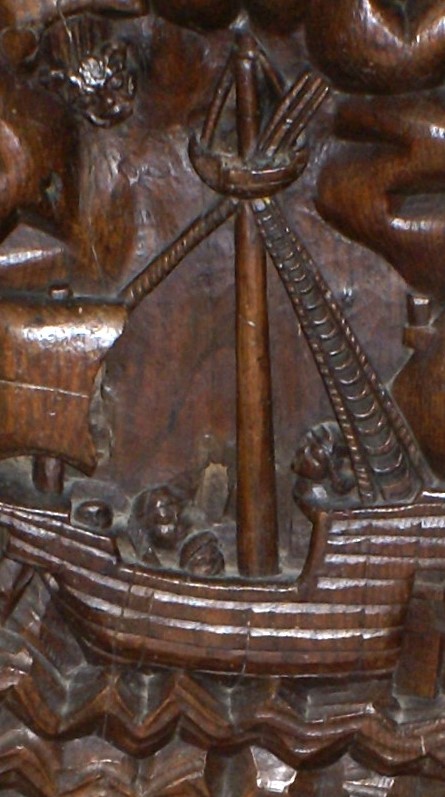
The same place, the Fowey estuary, but 500 years ago. A Tudor boat, like the ones they saw from the church yard, but in a heavy sea, blown by the wind god.

Local craftsmen will have been carving what they knew. Images and icons of the time, emblems, armorial bearings, monograms or, maybe an allusion to a sponsor, perhaps a guild. They were artists so there is more to the work than Christian symbolism — they capture the essence of the time.

According to Todd Gray, A Gazetteer of Ancient Bench Ends in Cornwall’s Parish Churches, these carvings of tools are images of the Passion (above is a hammer and pincers, pillar with cord and 2 whips). With my artisan’s hat on I wonder if they represent carpenters and the ceremonial truncheons — the marks of authority of maybe the constable and the two keepers of the poor-house.

You will note that some of these bench ends are better preserved than others — the church was renovated in 1874 and care was taken to preserve the ancient bench ends at that time.

This is supposed to be the symbol of the martyr Saint Catherine but her wheel should have impaling spikes to inflict her horrible death and be broken by the power of her holy spirit. Could it actually be a nod to the wheelwright who financed this particular bench end? Did he sit here?

As I get older I realise how short is a lifespan. How near we are to 1520 — how nothing changes. Here is the bench end that confirms this. Have you noticed how the archaeologists on TV are obsessed with ritual — I always look for practical explanations — is this chap a sinner or just marking the brewer’s bench?

Standard
Architecture, Birds, British history, History

We get more than we bargained for!

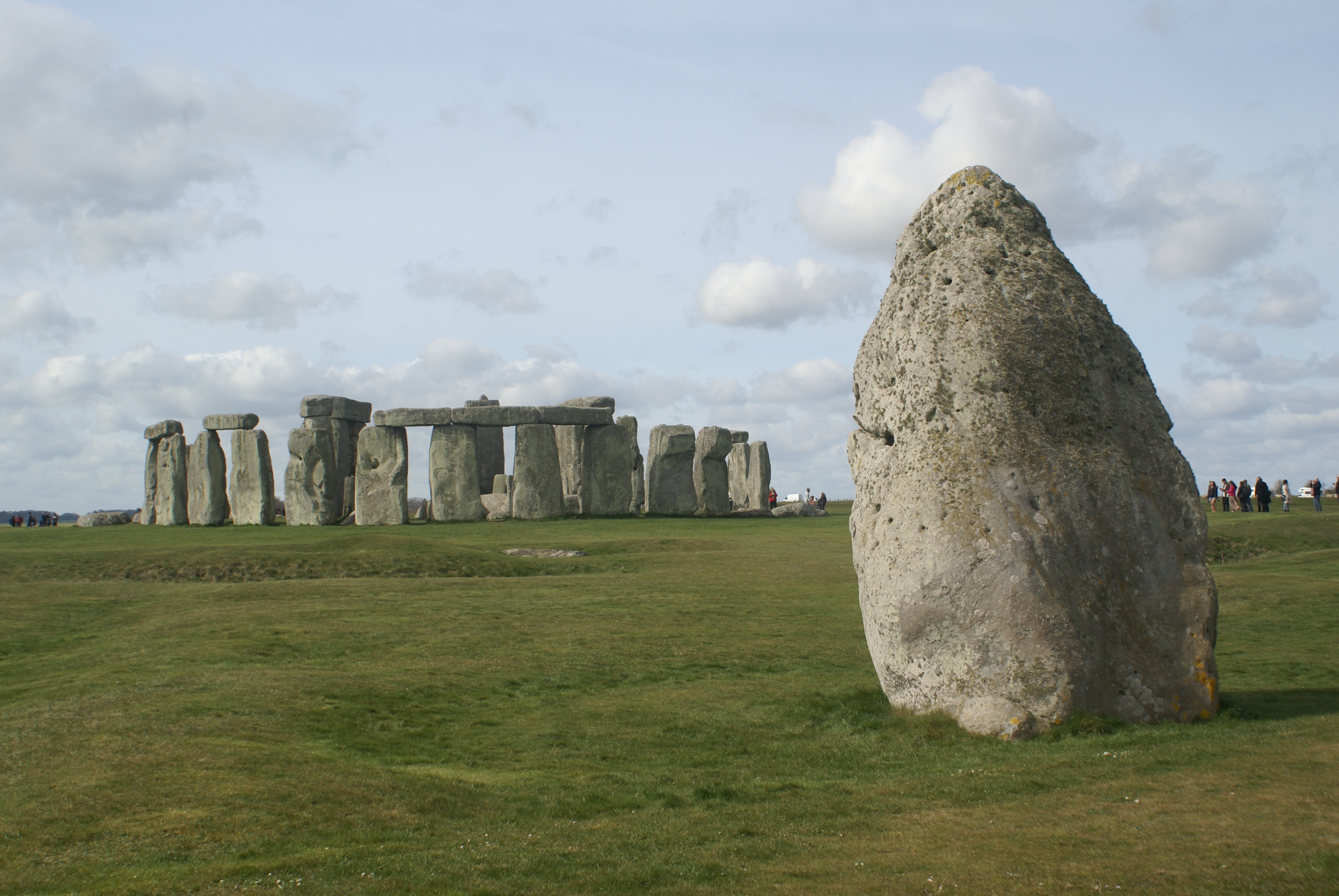
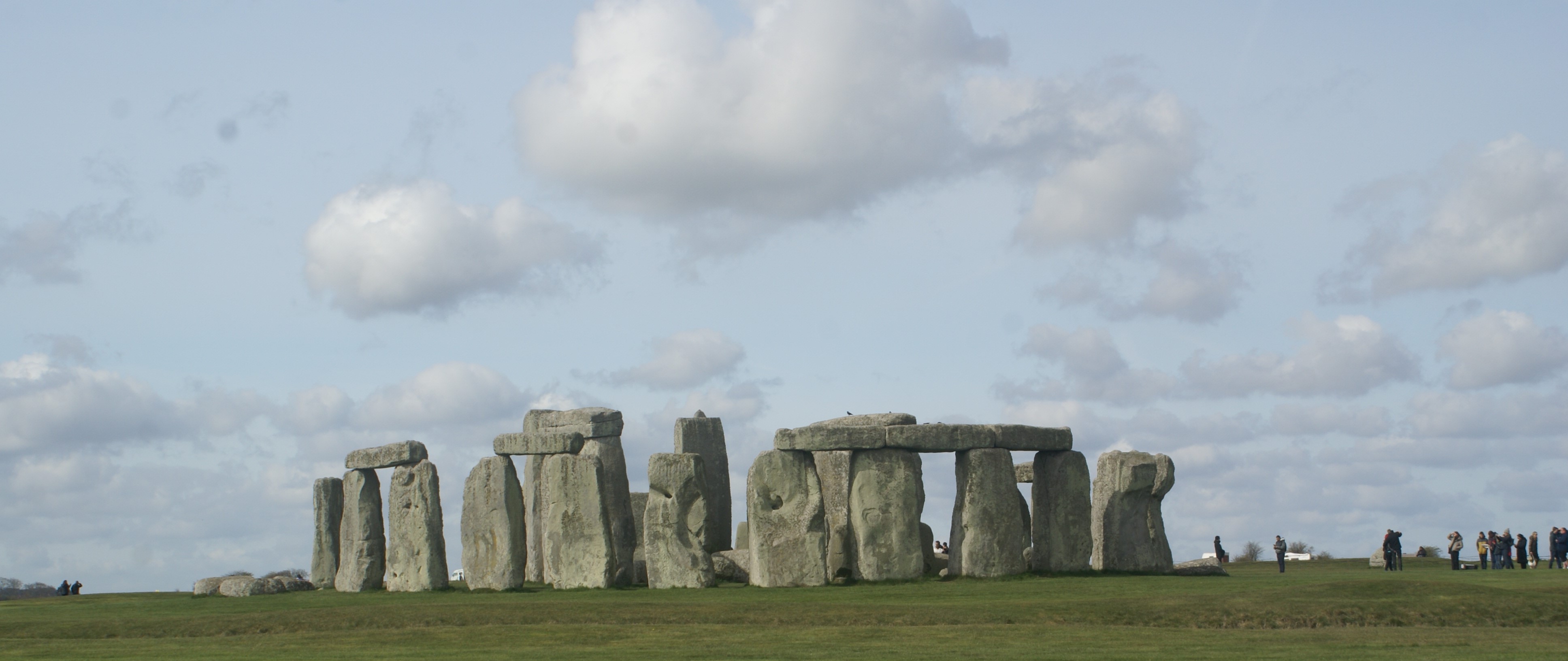
Stonehenge 10.04.2022

On our way to Cornwall we stopped off at Stonehenge — free for National Trust members so we thought we ought to get our money’s worth! Both of us had last visited more than half a century ago and were sure we would hate the modernisations.

You park miles away and take a shuttle bus — very quick and restful — especially as you can see all the walkers striding out on the horizon — forging their way across Salisbury Plain to the ancient monument.

Bill was slightly appeased for the loss of birding time by the receptionist at the monument:

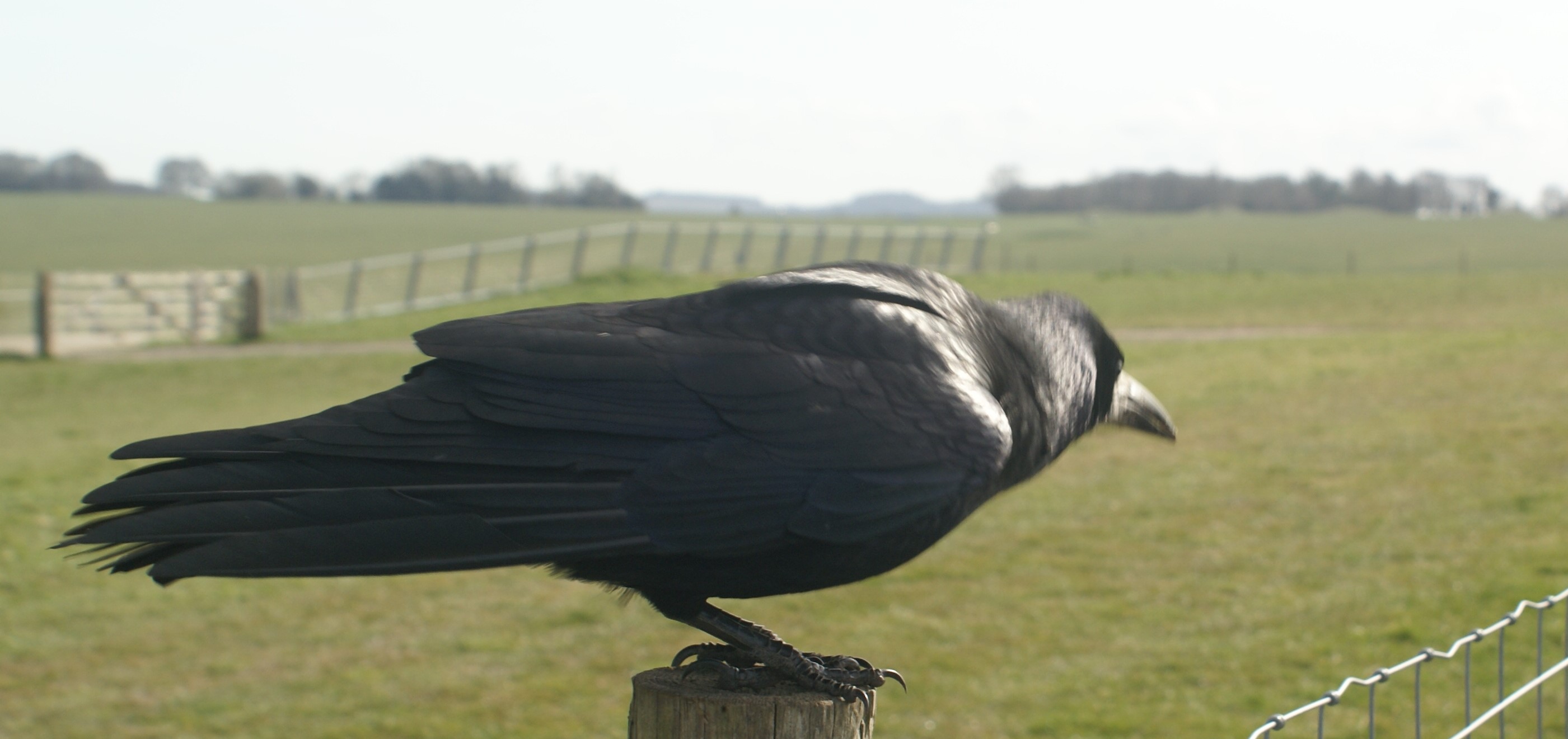
Large rook meeting and greeting the shuttle bus.

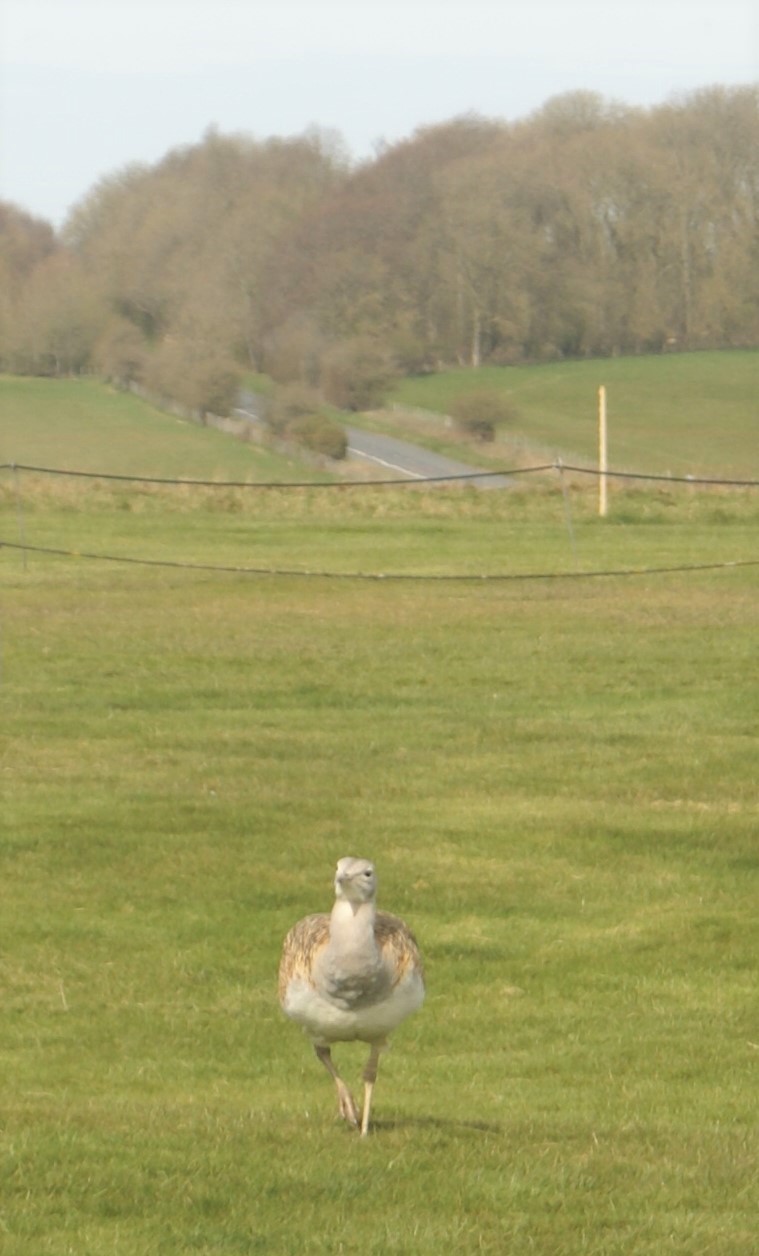
But what is this — marching to meet us?

Is it a goose? ‘It’s a wild turkey’, an American lad informs me. Oh no it isn’t — it’s only one of the rarest bird in Britain!

Recently re-introduced to a secret location on Salisbury Plain nearly 200 years after the last British bird was shot in 1832. This one has been named Gertrude by Stonehenge staff and has been making personal appearances since 2016. Nobody had told us so we were surprised and delighted, no one more than Bill who travelled to Hungary in 2019 to see their bustards who were very shy and only to be viewed though high powered lenses!

And the 4-5 thousand year monument… Since we last visited you can no longer touch the stones and some of the stones have been re-erected giving a better idea of how it might once have been. The circulation of visitors has been changed so that you can get the full visual impact without people getting in your way.

Standard
Architecture, Travel

Berwick-upon-Tweed

The town on the eastern end of the border between England and Scotland was fought over for centuries.

The old road bridge

With the eventual peace (I hope I don’t speak too soon) a road Bridge was started in 1610 by order of James I of England (VI of Scotland) and finished in 14 years. It cost £15,000 and was to carry the Great North Road, later the A1, between London and Edinburgh and it still carries traffic, albeit one-way but was closed for repairs when we visited recently.

Jacobean Bridge having its parapet repointed.
Looking on is the new road bridge — doing extra work while the old girl is indisposed!
Under her arches her structure is there for all to inspect.

Beyond the two road bridges you can just see the rail bridge — all are quiet as Scotland is only just opening up again after lock-down. The A1 now by-passes the town and crosses the Tweed up river of the town.
Fortified from its years of conflict the town has a sturdy wall along which you can walk.
This was a guard house but not redundant — now a heritage centre.
These beautiful town houses built along the wall look out to sea.
Along the wall you can see the emplacements for the many cannons that guarded the mouth of the Tweed
The other way they guard the harbour, everywhere there is a military air.
But the town hall represents another aspect of this fascinating place — the thriving economic heart of an important border crossing.
Standard
Architecture

“Ideal” Places — Richelieu and Grantown-on-Spey

I don’t know if it is because I spent a lot of my childhood in Welwyn Garden City but I really like towns that have been designed as ideal towns — one man’s dream — models of social engineering. I sense it the moment I enter — the street lay-out, the civic pride — the avenues of trees — the fountains!

The Coronation Fountain, Parkway, Welwyn Garden City, Hertfordshire.

Welwyn Garden City was the brainchild of Ebenezer Howard (1850-1928). He founded the Garden City movement that spawned Letchworth and WGC, probably in an ornamental pond surrounded by flowering cherries! He had a utopian vision — people living happily in harmony with nature, tamed by an enlightened municipal workforce — that is pretty well how I remember it as I grew up there.

Cardinal Richelieu (1585-1642) also had a vision (I don’t know enough to examine his motives), but I wonder if Ebenezer ever visited the cardinal’s hometown in Indre-et-Loire, France. The moment we blundered into the small town which carries his name, we knew it was no ordinary place.

Richelieu — a planned town with wide boulevards and squares and a magnificent market hall — the biggest oak framed building I have ever seen.

It reflects the social order of its time — there was a massive palace nearby that was demolished by 1805 when times had changed. The town though survives with its surrounding canals servicing the artisans dwellings and the centrally placed town houses built for the bourgeoisie (currying favour with Richelieu, the man). He was Louis XIII’s first minister — cardinal, politician, patron of the arts — a very powerful man who died of tuberculosis at the age of 57.

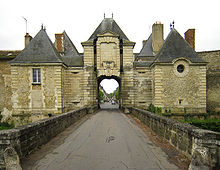
The fortified gate to Richelieu (Wikipedia).

I am reminded of all this by our recent sojourn, birdwatching, in Grantown on Spey. As we drove into the town along its wide central vista with its impressive central buildings I thought “this is an ideal town!” And it was.

Grantown on Spey founded in 1765, by Sir James Grant “Good Sir James”. At that time poverty was rife in the Highlands.

Sensibly he started with a linen mill to provide employment — this thrived and bought other trades and services to the town. By 1860 when Queen Victoria visited and stayed, as we did, at the Grant Arms, the population was about 1300. With the advent of the railway the town became a centre for tourists visiting the Highlands, made popular by the Queen.

If I couldn’t live in the country or a walled medieval hotchpotch, I think I might like to live in an “ideal” town.

Standard
Architecture

A Tale of Two Loos!

You can tell a lot about a place when you visit its more intimate corners.

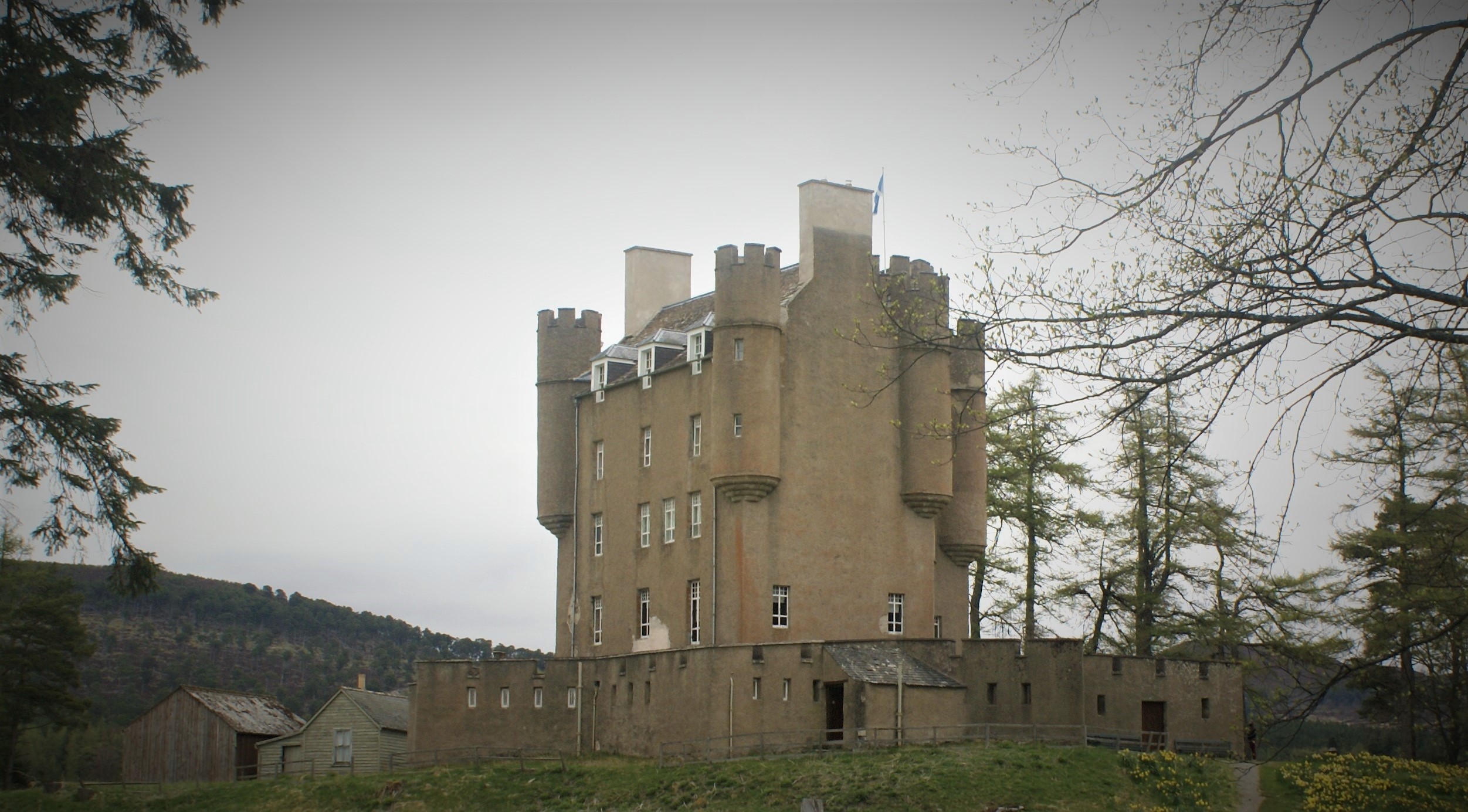
I was recently caught short at Braemar Castle in the Highlands of Scotland.

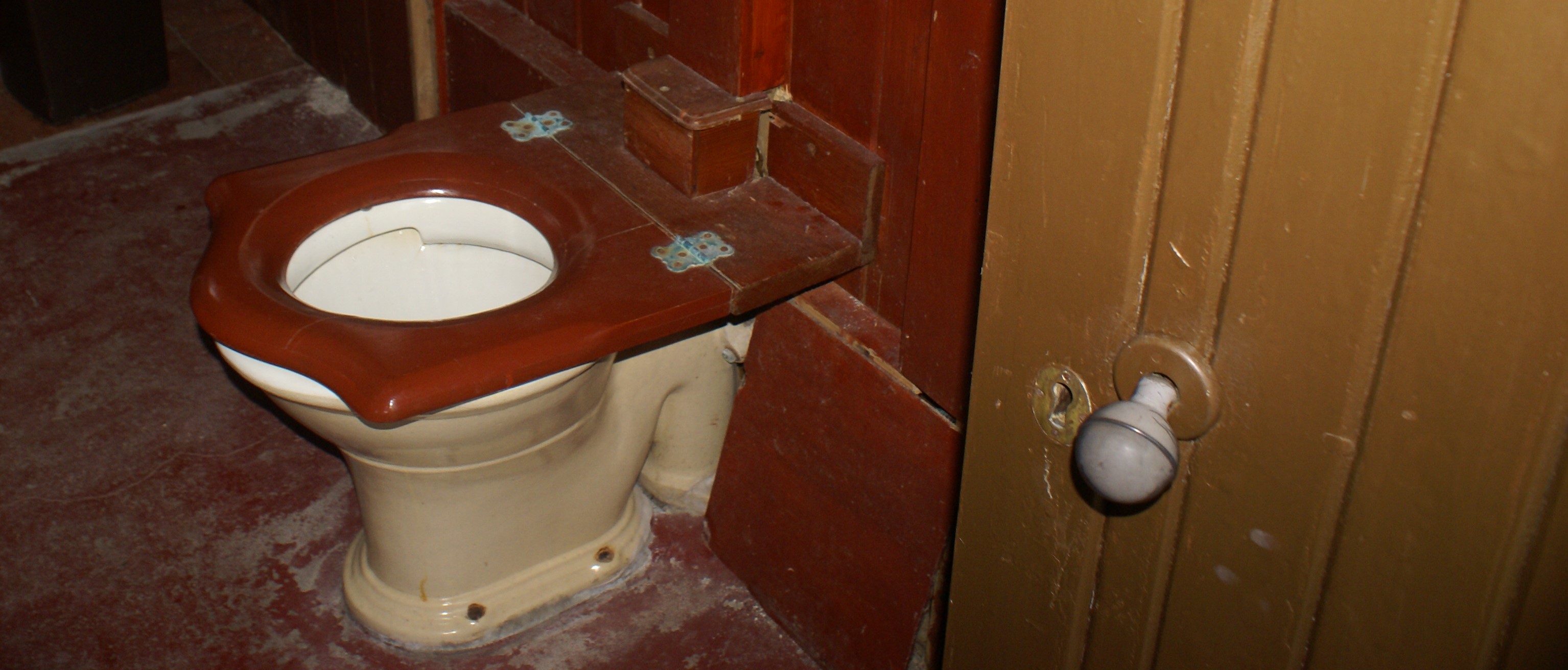
Overlooking a magnificent stretch of the River Dee one could imagine a member of the royal family fly fishing in these beautiful waters. Location, location, location! The 17th century interiors were closed to us due to Covid but the downstairs, outside loo had kindly been left open by the community charity which leases the building from the Farquharson clan leader and works to maintain its fabric. They must all work very hard — in lots of places the rendering is parting from the underlying higgledy-piggledy masonry which is crumbling in the elements — one can feel the old place sucking up all the money and efforts of the volunteers that tend it!

The state of the loo said it all!

Down in Fife in the town of my ancestors (and Bill’s youth) we visited the museum and public library.

Here we enjoyed the magnificently renovated basement lavatories with their tactile, sensuous mahogany seats and splendid door furniture. All resplendent in an aura of chlorine and civic pride.

The gents was equally spectacular though my companion was reluctant to photograph the facilities. The librarian swelled with pride as we congratulated her and admitted that because it is a listed building it had been a meticulous and very expensive refurbishment (£2,500,000 from Fife Council).

Well done Kirkcaldy!

Standard