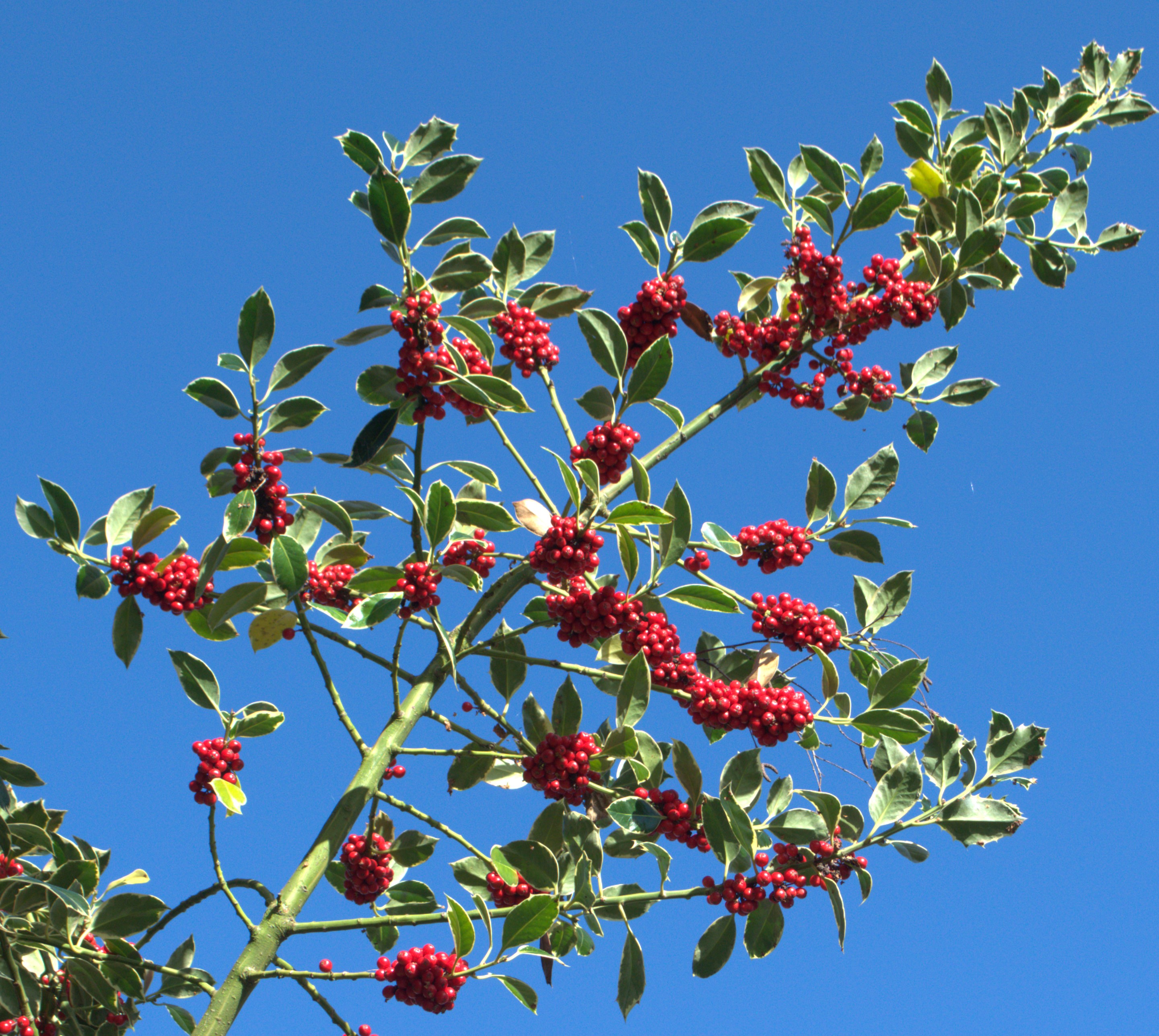
But it’s been an amazing year for holly — I’ve never seen so many berries. Nor such huge haws.
And the Mistletoe is marvelous.
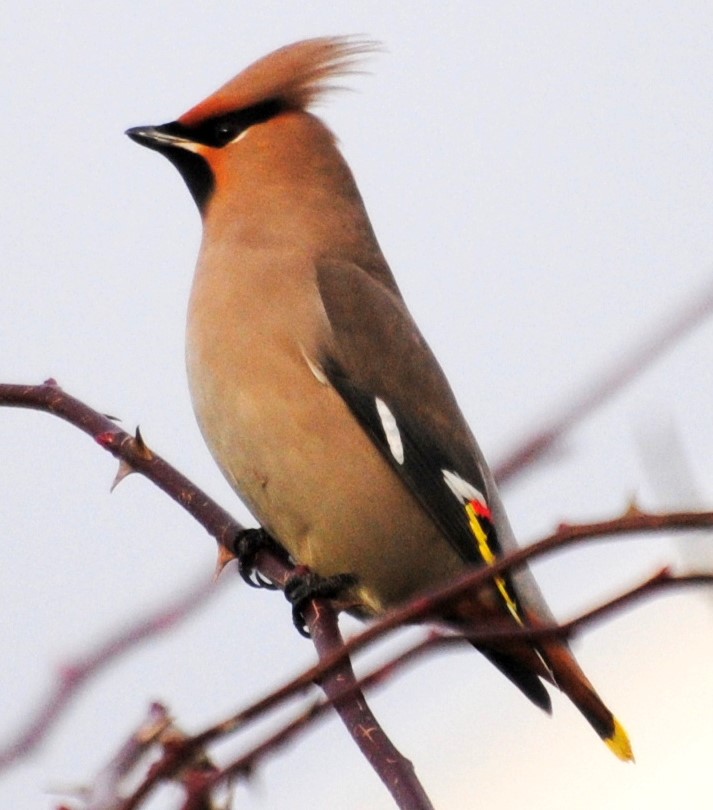
It all bodes well for a good Christmas but we are waiting for the long predicted Waxwings to appear.
These beautiful birds live in Scandinavia but head south in winter in search of food. This is one of those exceptional years when food is thin in the trees at home and the winds have been northerly. There have been lots of sightings as they following the berries, coming further south and west as they denude the trees. We got up before dawn to sneak into Newtown College car park where there are still rowan berries, their favorite… To no avail. Maybe there is so much to eat in the North of England that they will never get to Northamptonshire where Bill photographed this one in 2013 — the last exceptional year
I have been intrigued by ring ouzels since I read Gilbert White’s Natural History of Selborne, when I was about twelve. He was so excited about a bird I had never heard of, let alone seen. He said they were rare but reported flocks of 20, getting a friend to shoot four, just to be sure — times were different then! We too have hunted them high and low, but without a gun.
We’ve sought them in Scotland at 3600 ft, going twice to Cairngorm and braving the elements — on one occasion getting the most transient glimpse of a one scruffy, windswept pair as we left the car park at a lower level. On both occasion we also didn’t see a ptarmigan!
This autumn we have redoubled our efforts — searching in the Elan Valley in Wales which is reputed to be on their migration path. Above is Bill’s photo. We should perhaps re-name them the car-park bird — this one popped into view within 3 minutes of stopping the car!
In 1768 Gilbert White was looking for Ring Ousels in Selbourne, near Southampton. I think this eccentric Georgian clergyman was the first to realise that these spring and autumn visitors to his parish were migrating. He knew they bred in the north of England and worked out that they passed his way, feeding on ivy berries in the spring and returned, en route for warmer climes in autumn when they fed on haws. It is the rowan berries that persuade them to stop over in the Elan valley. Sadly we only saw one bird but he was rather fine!
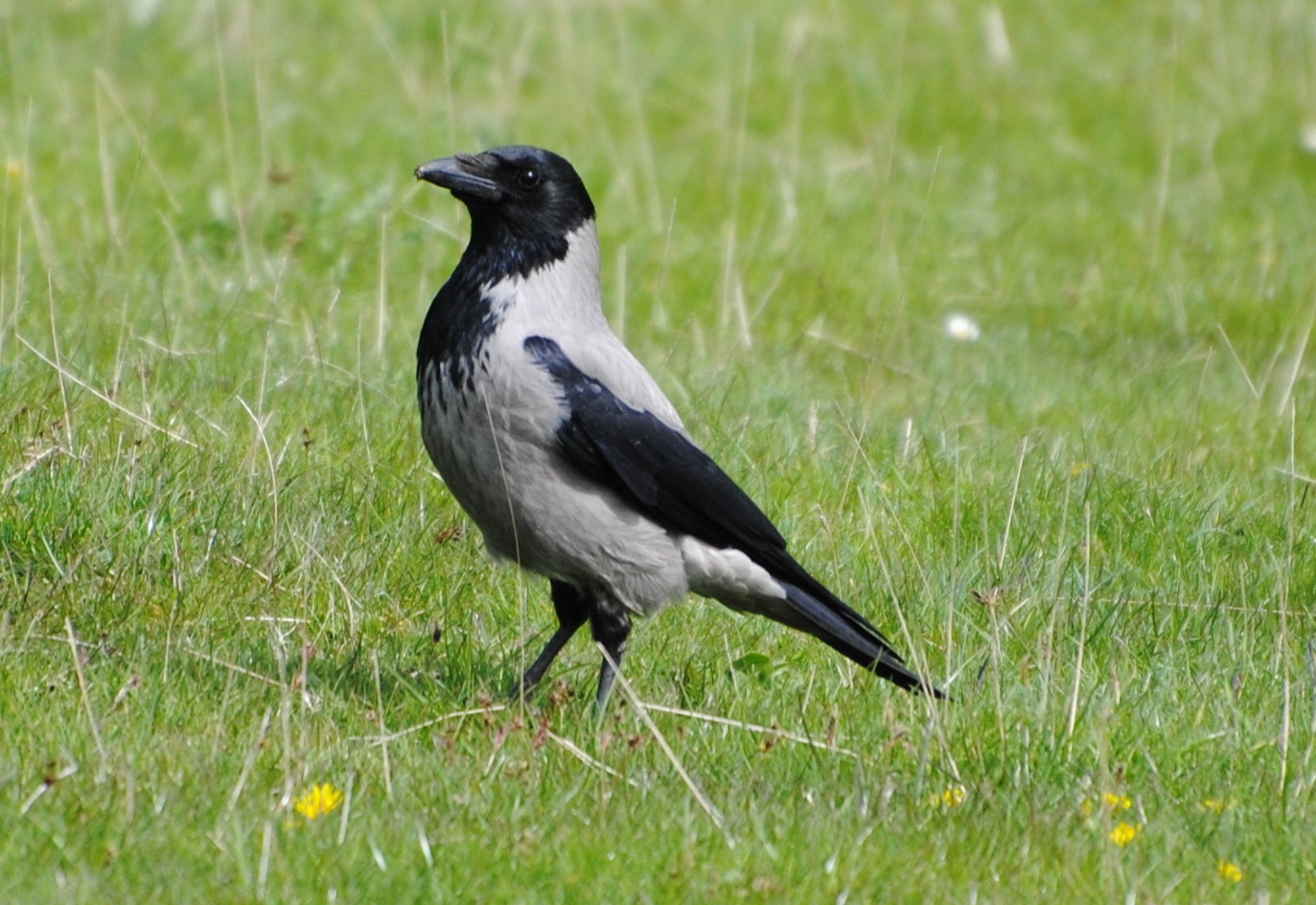
Addendum (for Paula — see comments ): Here is an image of a fine Hoodie for you! They are fantastic characters!
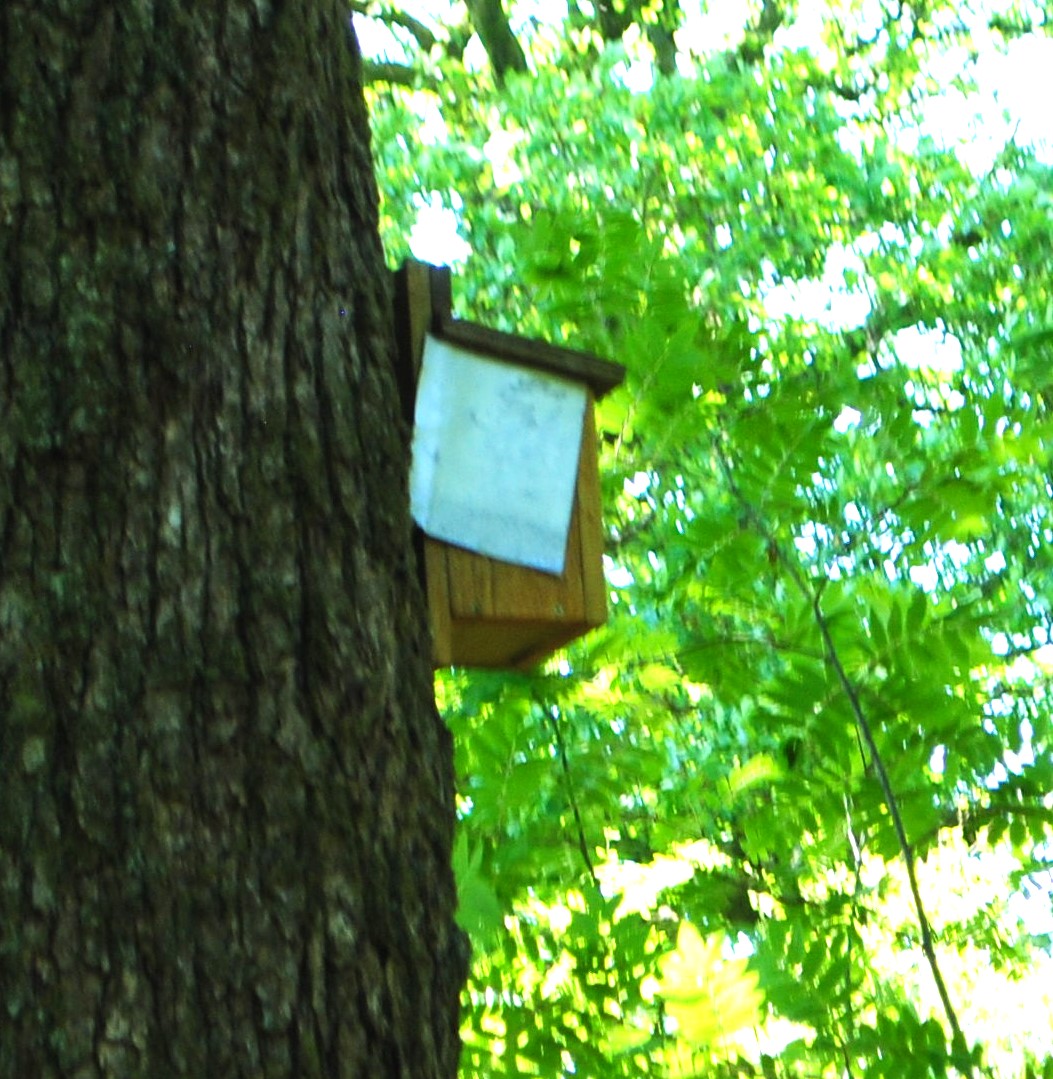
This is not how a bird box for our precious pied flycatchers should look — it has a perfectly good metal reinforced entrance hole facing the front. This box has been illegally modified — but by whom?
Number one suspect! Greater spotted woodpecker. But amazingly when checked by the intrepid bird ringers, it still contained 5 warm eggs.
The cunning woodpecker will be back to raid this nest once the chicks have hatched — no time to waste!
Last week Bill chastised me for cluttering up the new garage with a sheet of aluminium rescued from the back of a discarded electric fire — it was just what we needed and after an hour of wrestling with a blunt hacksaw and only minor injuries we had a patch. At first light we advanced upon the box, silicon gun in hand, 12 foot ladder under arm. As I wobbled up the ladder a female pied flycatcher whizzed out through the hole in the side of the box. I lobbed my silicone-sticky armour-plating over the hole and withdrew. Mother bird was mystified!
Then ensued the horrible second thoughts that occur when one interferes with Nature — visions of abandoned eggs, of feathers stuck to silicon, of a gormless bird permanently baffled by the loss of her new improved access, etc.
5 days later the ringers returned — she was sitting on chicks — we did not disturb her.
When we first moved to Wales, someone told me that there were still black grouse on the Gorn Hill, East of Llanidloes — I have never seen one there. We have been to the Cairngorm mountains in Scotland to find them.
The females are grey, often called greyhens and keep themselves tucked away, camouflaged and out of sight in the rough.
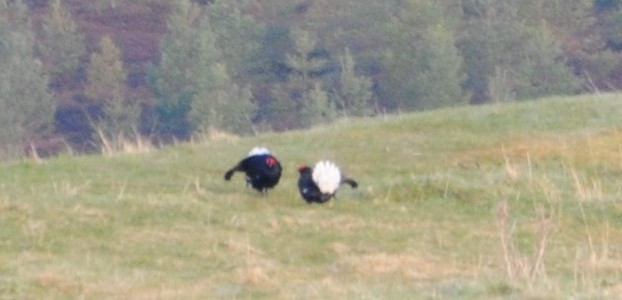
The blackcocks have no such inhibitions during the mating season when they are seen in their traditional display grounds lekking — that’s the best time to spot them, posturing and showing off their spectacular plumage, strutting their stuff, tails flared, while calling with a bubbling pigeon-like coo. They meet on traditional grounds, clearings on tops of rises — here we were lucky enough to see about 8 males but there may have been more on the other side of the hill. We could view them with long lenses from a public road — a lot of the previous leks are so threatened that visitors are actively discouraged. This is about as far West as they live but the species is distributed in a wide swathe across Eurasia as far as China. In Russia leks can attract 200 males.
Here they are confronting each other in pairs, like a knock-out competition where the winner gets to mate with the females who have been watching from the scrub, assessing their strength and fitness to breed — not that they take any part in rearing or protecting their offspring! Once mated the females fly off and hideaway to hatch and rear their young alone. I wonder if some females select for intelligence and mate with the cunning young blackcock who sneaks around the margin of the lek and woos the greyhens while the macho males are busy trying to impress each other?
See Wimoglen video published on YouTube
From what we had been led to expect we felt very lucky to see black grouse this year — let’s hope it won’t be the last time.
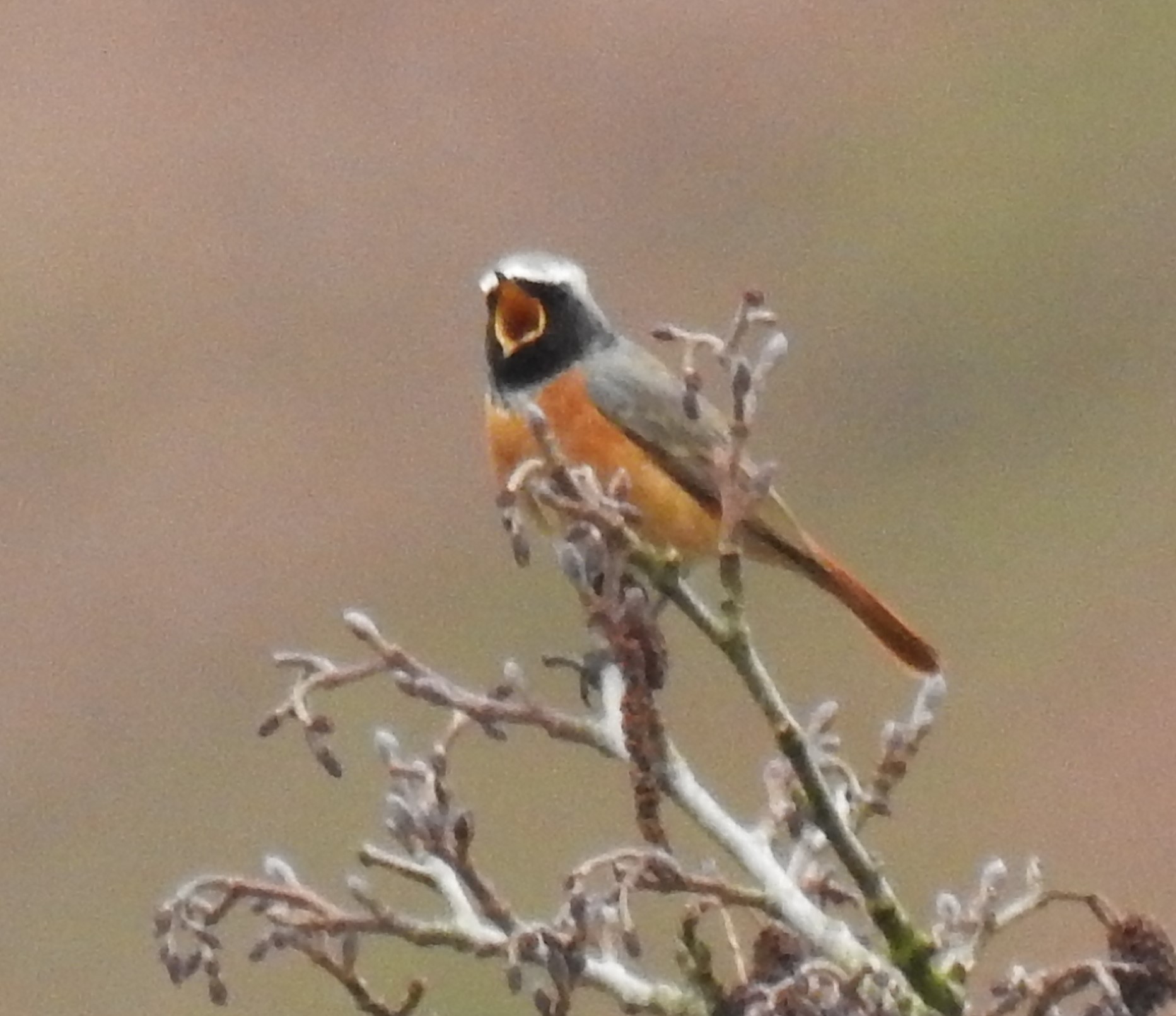
Spotted yesterday at the base of Fan hill by the carpark at the Bwlch-y-gle dam, this beautiful common redstart, singing his heart out.
Last week a black redstart was spotted in Carno. Rare in this country, on the continent it fills the same garden niche occupied by the robin here. There robins remain a woodland bird. Perhaps we will see more black redstarts if the summer temperatures continue to increase in the future.
The summer migrants are piling in, the male pied flycatchers have arrived and are claiming their territories including the nest box that was so successful last year — they are furiously defending potential nesting sites, squawking at any intruders while awaiting the arrival of the females.
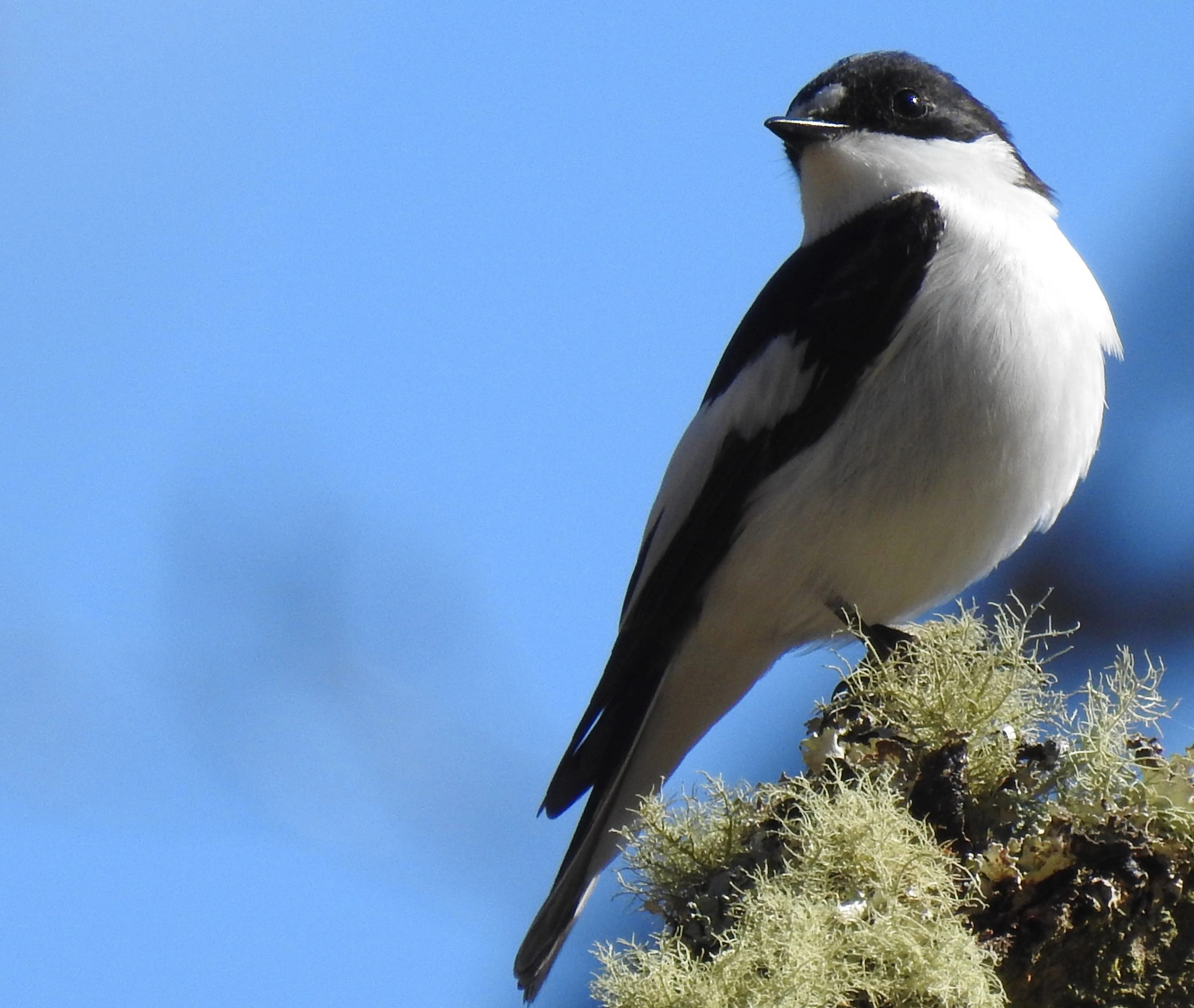
Pied Flycatchers, adult male (L) first summer male(R) seen at Ynys Hir on Saturday.
Here is our noisy pied flycatcher waiting for his mate.
Spotted in Gwernavon woods, Llawr-y-glyn, Powys yesterday (13.04.2023) the first pied flycatcher to make it back from Africa through the gales and rain — the day before that it snowed and hailed here. The male bird looked in very good condition, plump and lively — probably fluffed up trying to keep warm.
No sign of last years swallows returning yet but some have been seen in Y Fan, just over the hill
Where are our babies? The swallows from the beam in the barn.
Last years pied flycatcher fledgelings were ringed so we might be able to spot them if they make it back — here’s hoping.
Tomorrow the rain will stop and we will look for the northern wheatears — I shall feel very much better when they are all back in their summer quarters even though I know many individuals will have been lost!
It has been snowing hard all day but yesterday I had lunch with my friends. All three who live here, in the country (rather than the town) agreed that they were starting to have qualms about their bird feeders. Seems we have all created sparrowhawk feeders.
These small, fast predators whizz around the side of the house and bowl over their victims in a whirl of what seem pointed wings — an arial dogfight. The unfortunate tit will be consumed on the grass or caried off. If lucky, or quick, it may drop into the dense foliage of a protective shrub like our box bush. The little birds — the tits, sparrows, robins, siskins and finches — will cower there until one sounds the all-clear.
Every day we see buzzards and red kites, silhouetted against the sky as they soar above us.
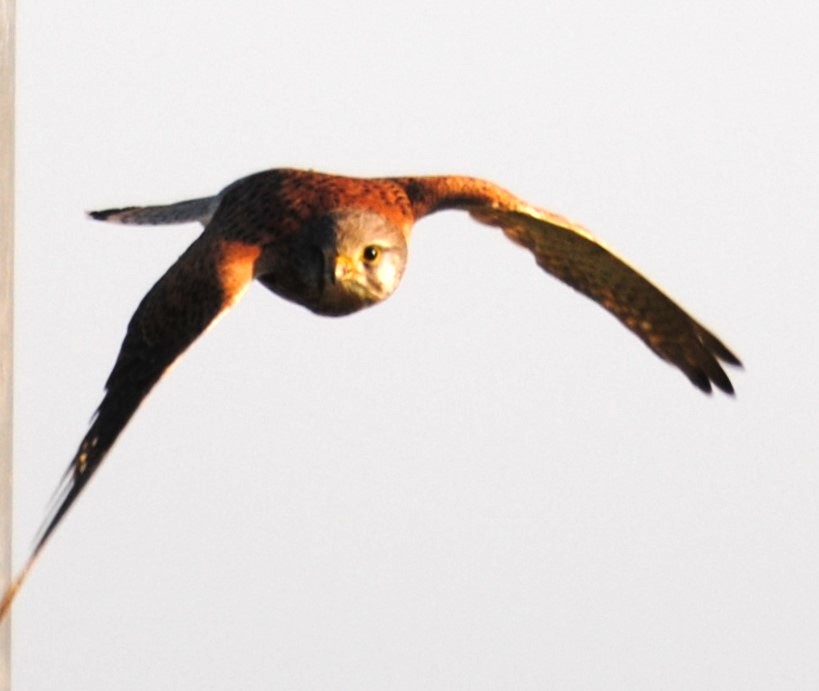
Occasionally we see a kestrel.
The peregrine falcons, thicker set, which are common place in Kettering are conspicuous by their absence in Mid-Wales although we saw this one on the flood plain of the Dyfi estuary and have seen one in the Elan valley.
Photos are a boon to bird identification — do you remember this one — I published it years ago. So blinded by rage was I that I failed to notice the most sought-after bird of prey in this area — the majestic goshawk — eating my last bantam cock under the bedroom window! Goshawks live in the woods and whistle in and out, weaving between the trees, gone before you know it! Much bigger than a sparrowhawk and much less commonly spotted — at least this year.
This year is the year of the sparrowhawk.
Prospering from the largess of the kind pensioners who fill up their small bird feeders — Nature red in tooth and claw!
Now is the time to see the ducks and geese overwintering in Norfolk and Lincolnshire on the marshes of the Wash, escaping the frozen winters of their northern breeding grounds
Flocks of wigeon with their strange whistling call. Here they are grazing on Frampton Marsh. Later we see them in great rafts, floating out at sea — didn’t know they did that.
Further out, beyond the sea wall (not a wall but a huge earth bank) there are hundreds of Brent geese gathered feeding on the flats, muttering and murmuring to each other — squadrons of them coming in, in great skeins and others taking off and passing overhead. Some crossing the Wash, that big bite that the North Sea takes out of East Anglia between the bulge of Norfolk and Lincolnshire to the North-West. There are hundreds of Brent geese on the marshes at Frampton and a single barnacle goose today, but none of our hoped for white fronted and pink footed quarry or even our familiar greylag or Canada goose — despite an eight mile wild goose chase!
Nearer to Cambridge are the Ouse washes. We visit Manea where the River Ouse overflows and floods the flat farm land at this time of the year. One way there are flooded fields:
On the other side of the levee gulls and crows follow the plough as the rich fenland pasture is prepared for a new crop. The whole area is crossed by a network of dykes, rivers and drains.
We are looking for the flocks of whooper swans that spend their winters here, grazing the drier fields by day. There are also Bewick swans that breed in northern Russia — harder to find, becoming quite scarce, smaller, more delicate with less yellow on their bills. We see a few of these timid birds at Welney, but too far away to photograph.
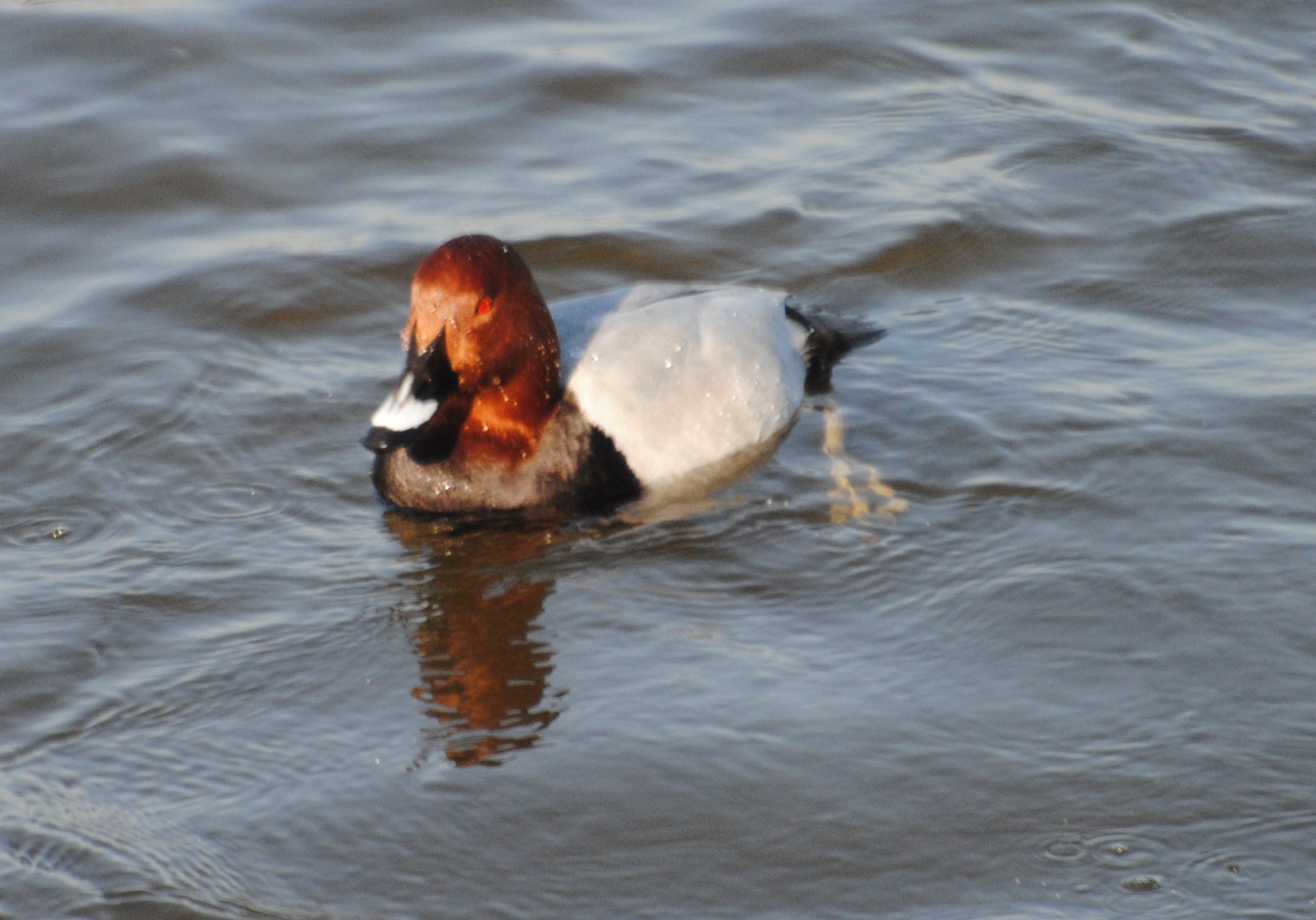
Above is a whooper at the reserve at Welney where there are also hundreds of beautiful male pochard (below). Males outnumber females enormously, it seems that the females prefer a warmer clime for their winter break. They like shallow water and can be seen diving to feed around the swans who kick up the mud for them, stirring up the invertebrates and plant material.
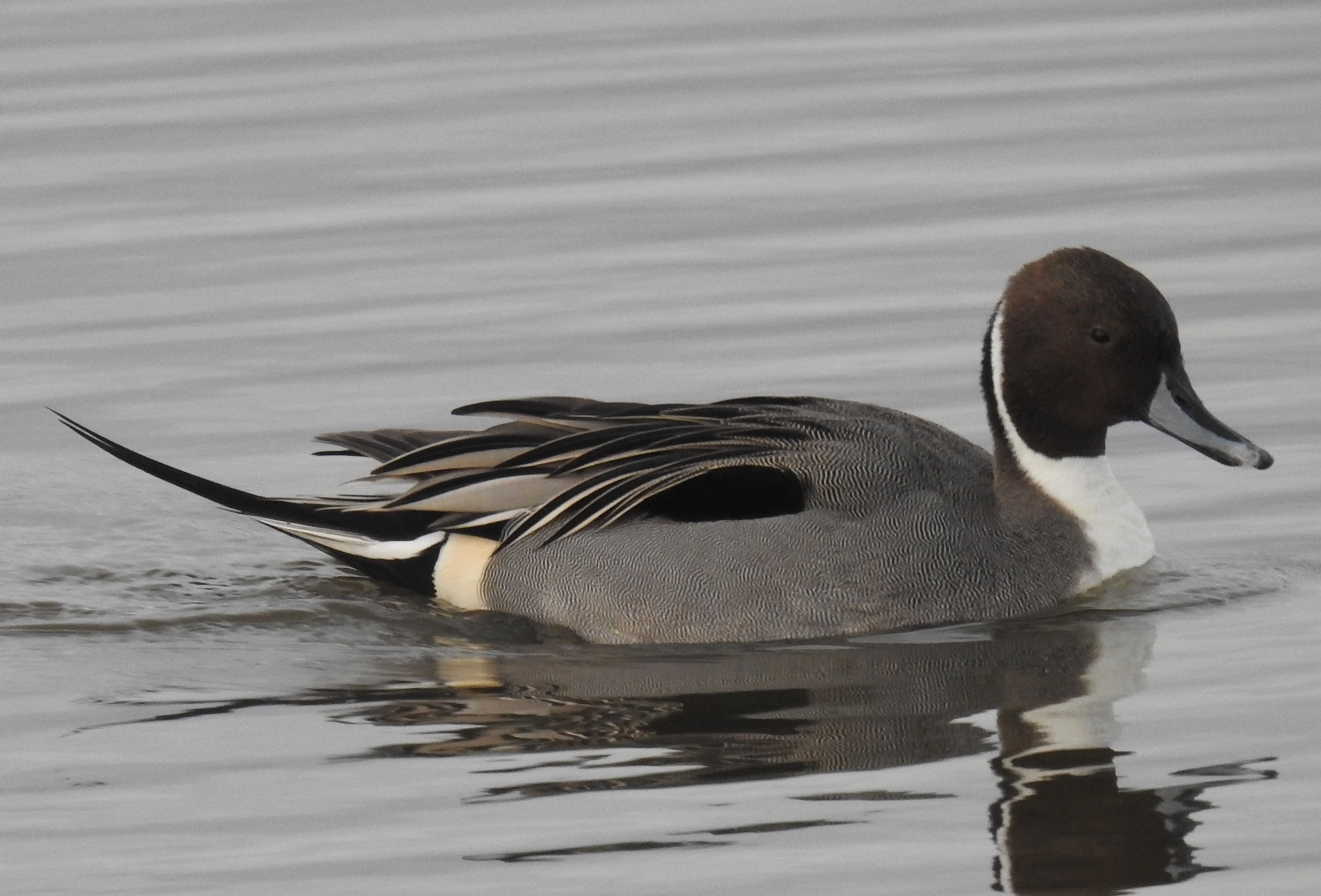
This year there a plenty of these exquisite pintails swimming in couples.
and the less gregarious shell duck, like this one(below). They spend much time with their tails in the air, feeding, when they display the large orange area under their tails.
As we leave Welney there are tree sparrows in a bramble thicket — rarely seen these days.
They are more active than house sparrows, have chocolate coloured heads and distinctive black cheek patches, males and females are similar. Our last treat at Welney — a barn owl quartering the land behind the centre.
Today 4 septuagenarians, one carrying a 10 ft ladder, picked their way along a precipitate and thickly wooded hillside in the foothills of the Cambrian mountains. While others waved flags (today was the Queen’s Platinum Jubilee) we looked for bird nest boxes put up at the end of winter and now hidden in the deep foliage of the Welsh rainforest. Bill and I were trying to help ring this year’s chicks.
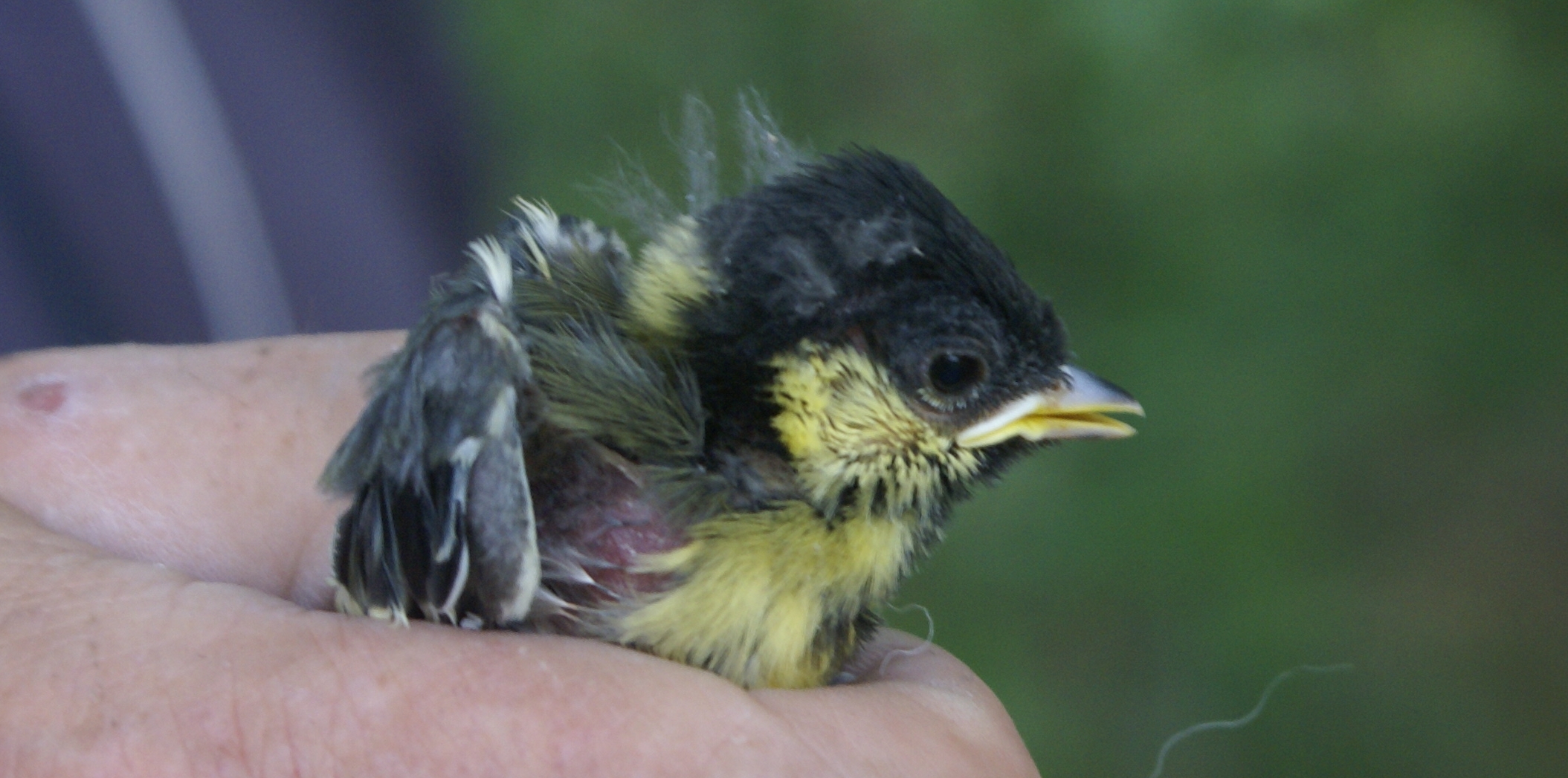
Great tit, one of a brood of 8. Very feisty and ready to fly the nest.
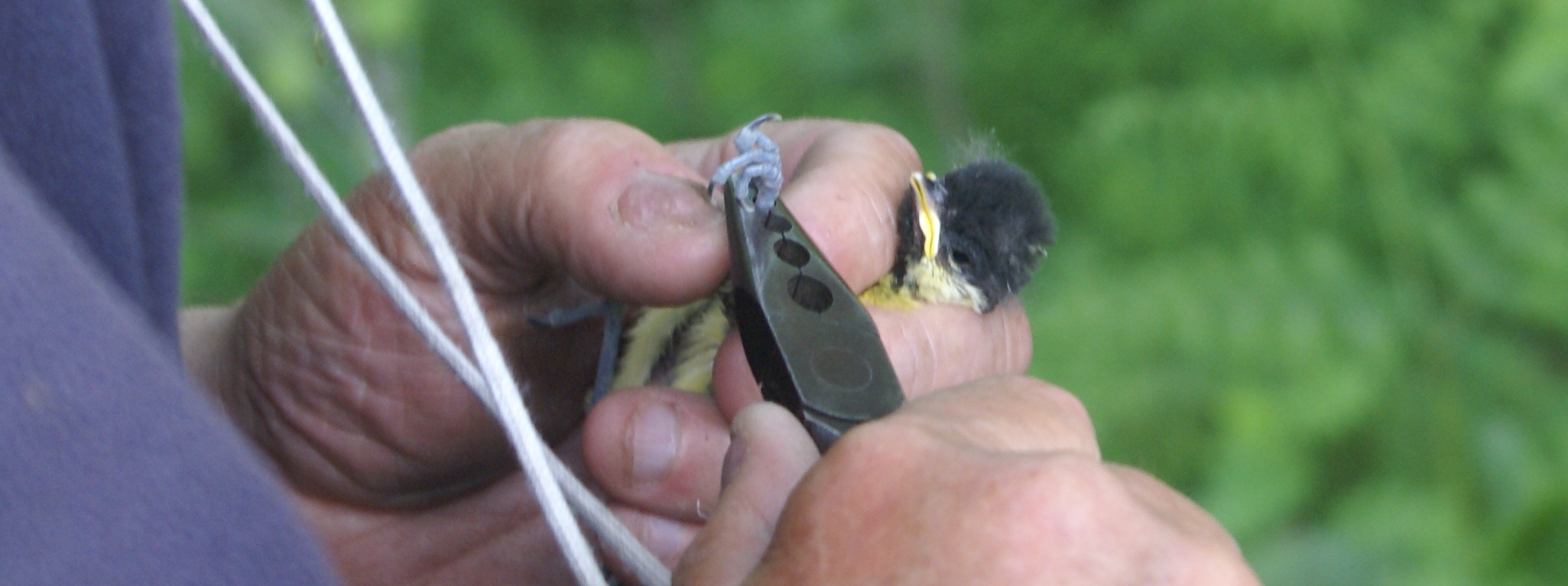
A right of passage — to get a number before they leave the nest — for us to monitor what is going on and to make sure we are doing the best we can to help the local birdlife! Most of out boxes only went up this year so expectations were not high as Jan and Jon of the local Habitat Protection Group inspected the 12 boxes which were designed primarily to boost our population of pied flycatchers.
This box had 7 chicks in it — Pied flycatchers!
Two of the boxes revealed pied flycatchers, one with a record brood of 9 chicks. The total of 16 chicks in the first year exceeded our wildest dreams.
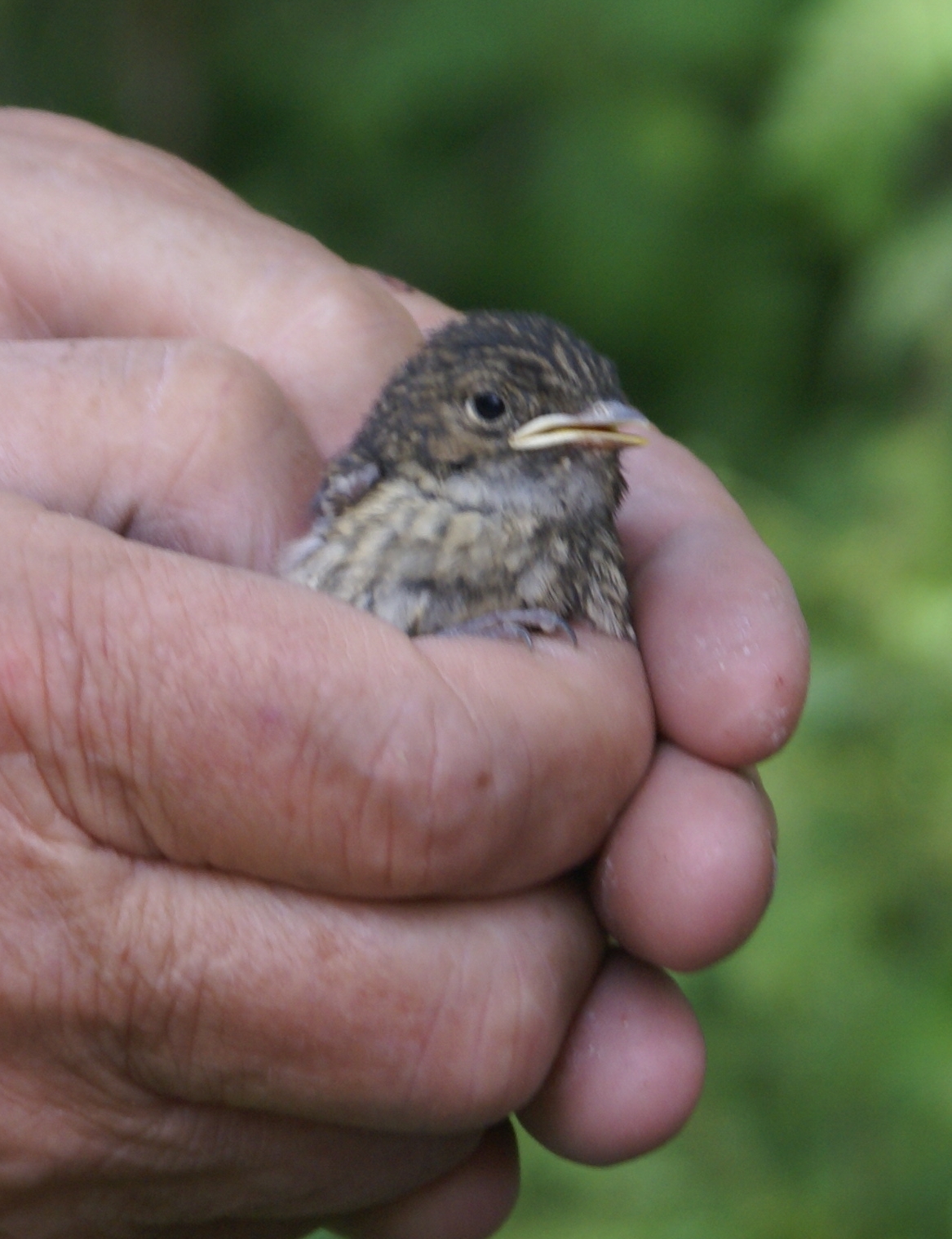
Undignified but gently done this great tit gets registered and tagged with a little metal anklet.Pied flycatcher chick poses after being ringed.
12 boxes yielded 48 chicks of which 24 were blue tits, 16 pied flycatchers and 8 great tits.
Thanks to the Habitat Protection Group for sharing their time, knowledge, expertise and for their patience and for giving us such a memorable jubilee.
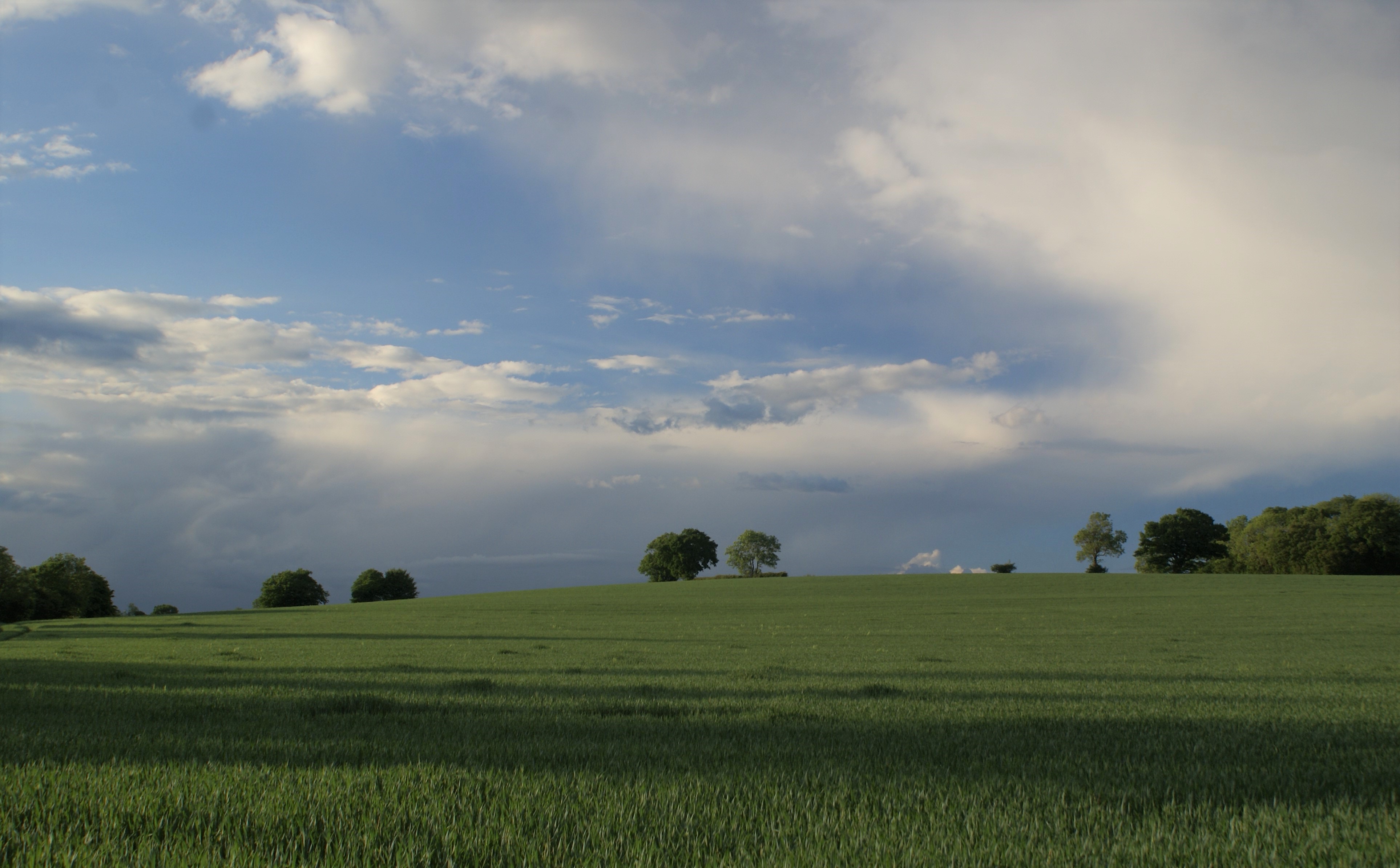
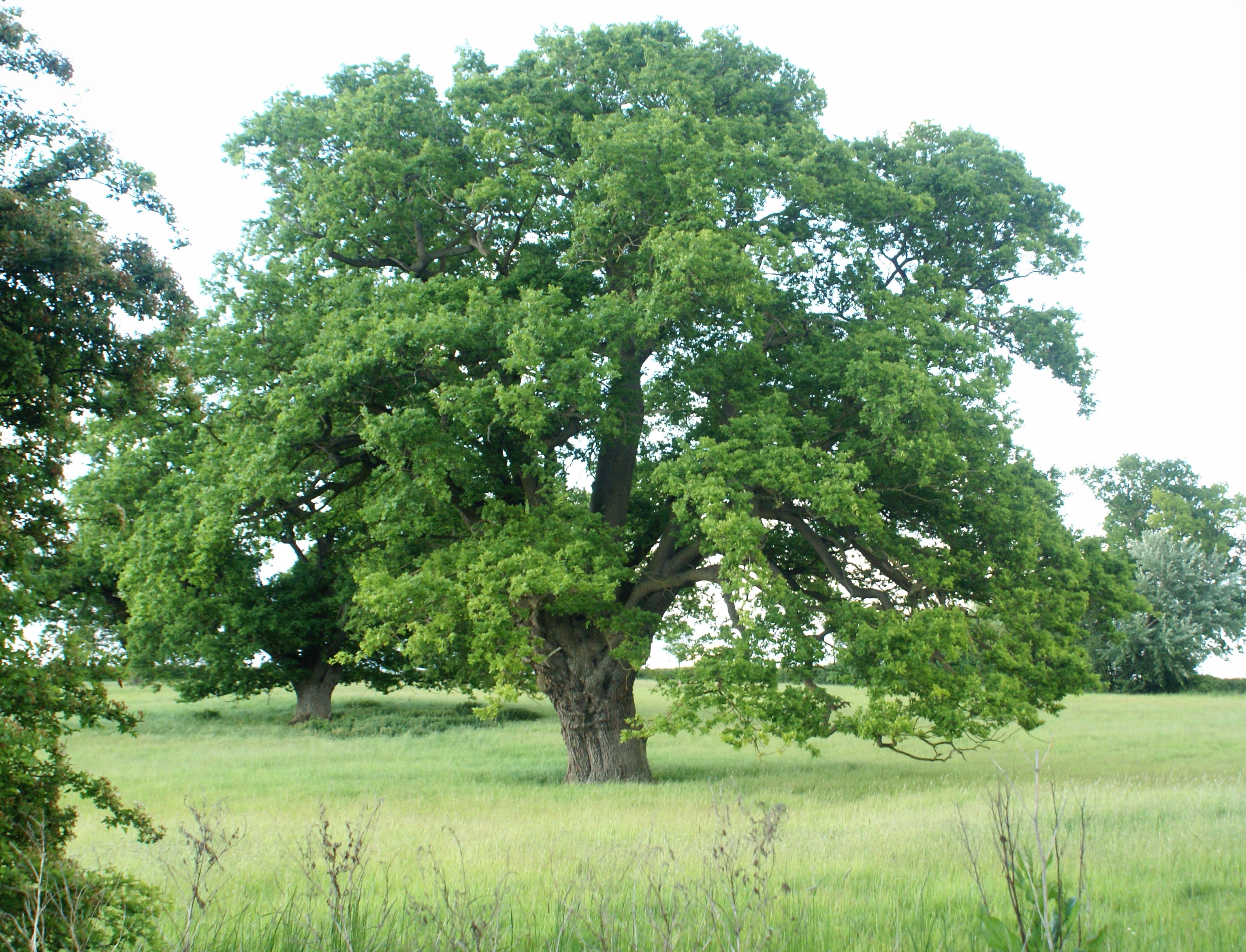
County of wide skies, windmills and huge oak trees.
Long shadows, full stomachs and an evening stroll to disturb a barn owl — flying, ghostly white on silent wings, low across the field. You can’t photograph ghosts and anyway he caught us by surprise!
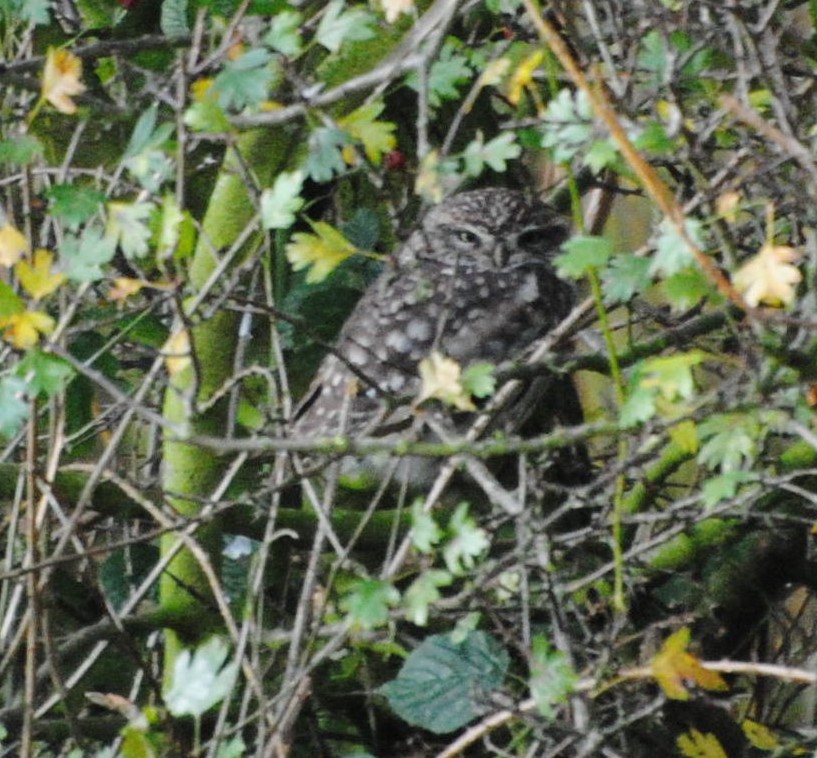
We’d gone out to find this little owl that Bill had seen before — we scoured all its usual roosts but it was nowhere to be seen this year.
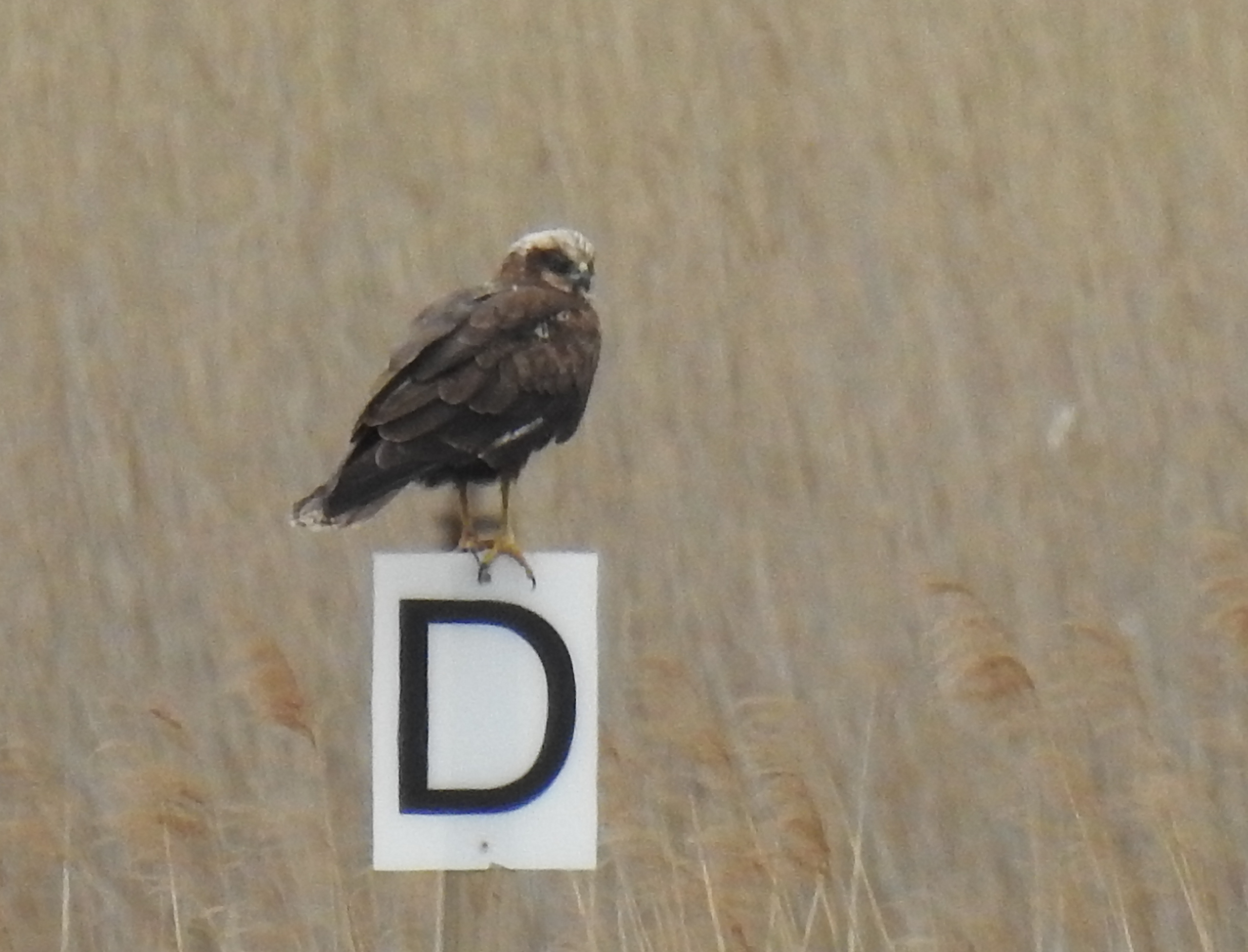
Neither could we photograph the bittern that occasionally flew up out of the reed bed at Minsmere to have a go at the low flying marsh harrier in a spectacular display of territorial aggression. Its great thick, flexible brown and yellow flecked neck bending back to stab at the flapping bird of prey. Here is the harrier recovering from the shock.
Marsh Harrier
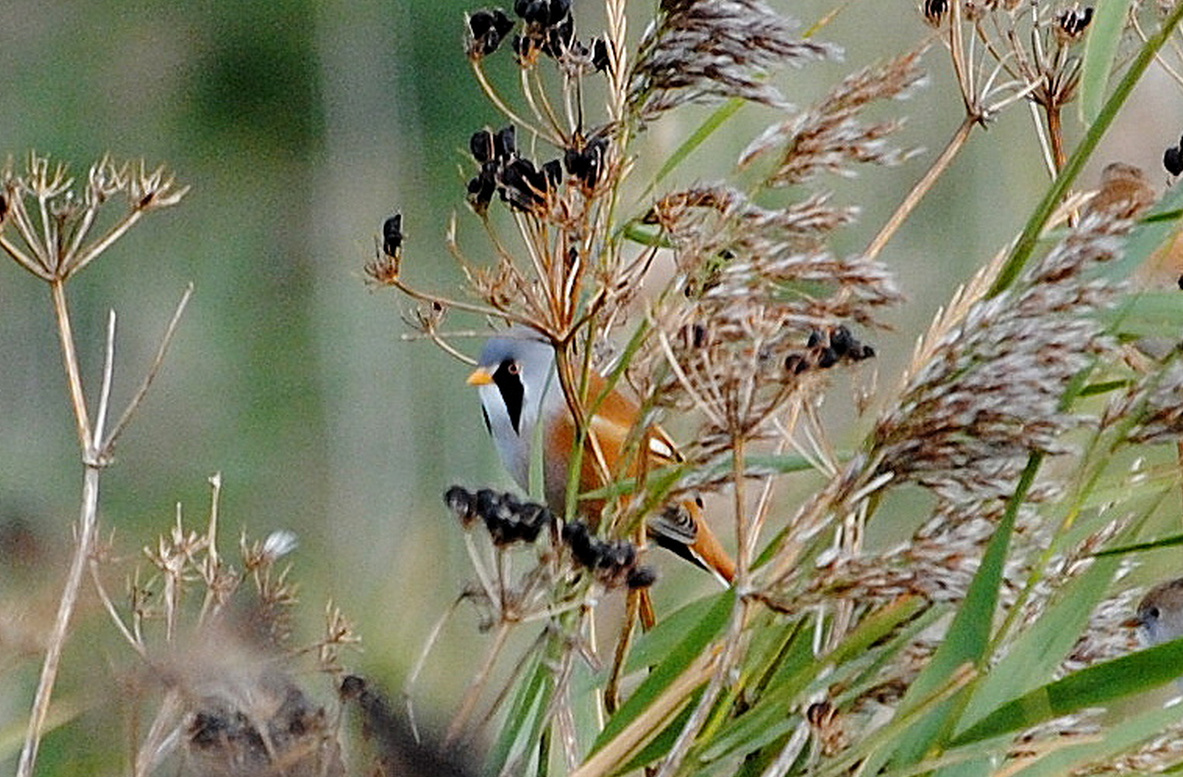
He is not holding up a grade for artistic merit (which was an A) but sitting on a marsh label so that other watchers in the hide can say ‘BITTERN — flying left to right above D’ and I can still miss it. Here is something else I had difficulty in seeing clearly although he was definitely there, flitting about in the reeds: bearded reedling… not a tit!
Bearded reedling
Wild horses would not drag Bill from the reserve but the promise of a glossy ibis was too much and we ventured out towards the dome of Sizewell B on yet another wild-ibis-hunt but we did see this fine wild polish konik stallion who looked as if he belonged on an ancient cave painting — look at the thickness of its neck. Not really wild but hardy and not picky when they graze and they don’t mind having wet feet — they were purchased to graze this marshland reserve and tick another conservation box.
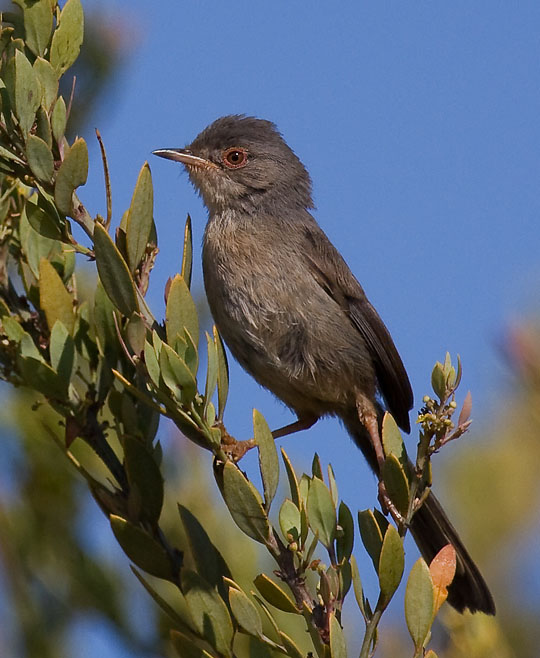
On to Dunwich Heath for an ice cream and despite the high wind a wonderful view of a Dartford warbler, which came up and looked at us with its head on one side
Above is a female Dartford warbler photographed in Spain — they are very difficult to catch with a camera, rare and fast and well camouflaged — the male we saw was much more purple — the colour of dry heather, with a grey head like this one, brilliant red eyes and the same bemused expression.






















 dianaashworth