We recently visited the Isle of Wight on a butterfly hunt. The weather did not help much but one sunny morning did yield a few windswept examples of what we had hoped for.
Glanville Fritillary — not seen very often in UK, except in the Channel Islands, Isle of Wight and far south.
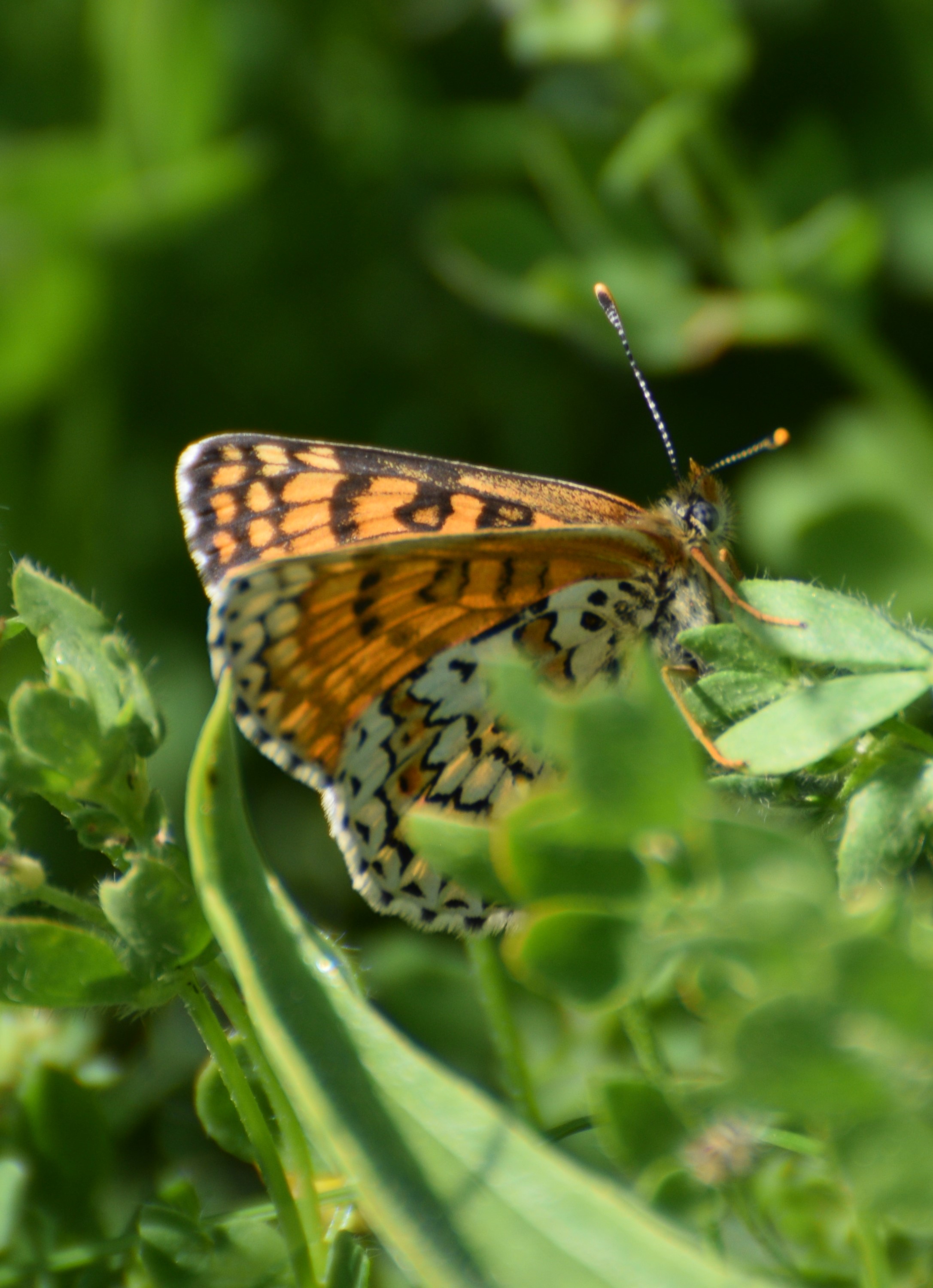
Underwing of Glanville Fritillary
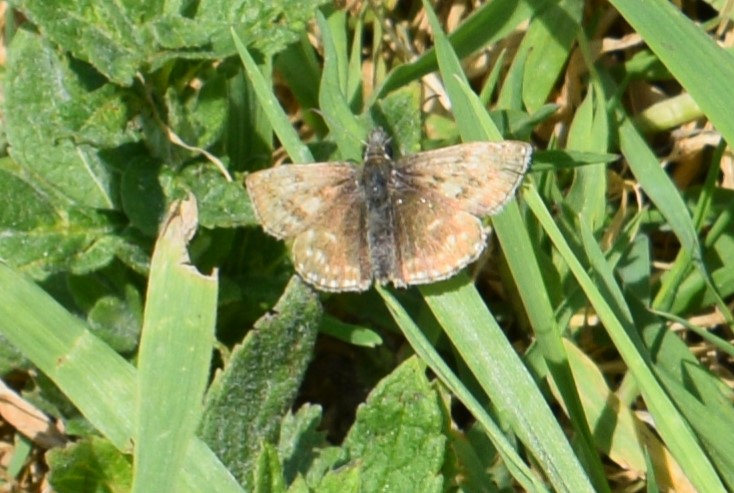
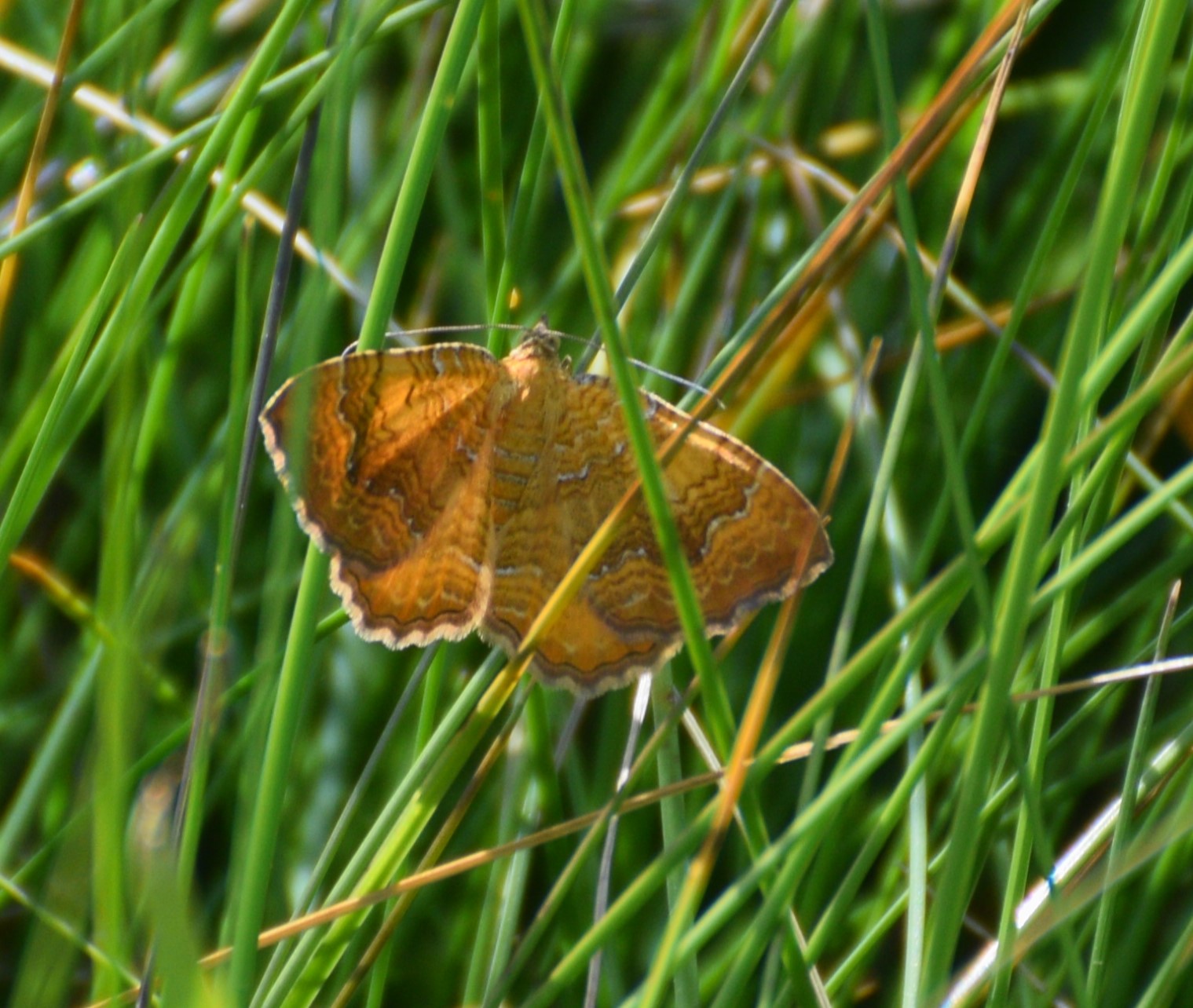
Grizzled skipperDingy skipperYellow shell mothAdonis Blue Adonis Blue underwingBrown ArgosA bonus — Caterpillars of Muellin moth — easily spotted because they had eaten nearly all the Muellin — they are so bright that I doubt they taste very nice!
The chalk downs are home to many plants that are unfamiliar to us in the acid West:
Bee Orchid
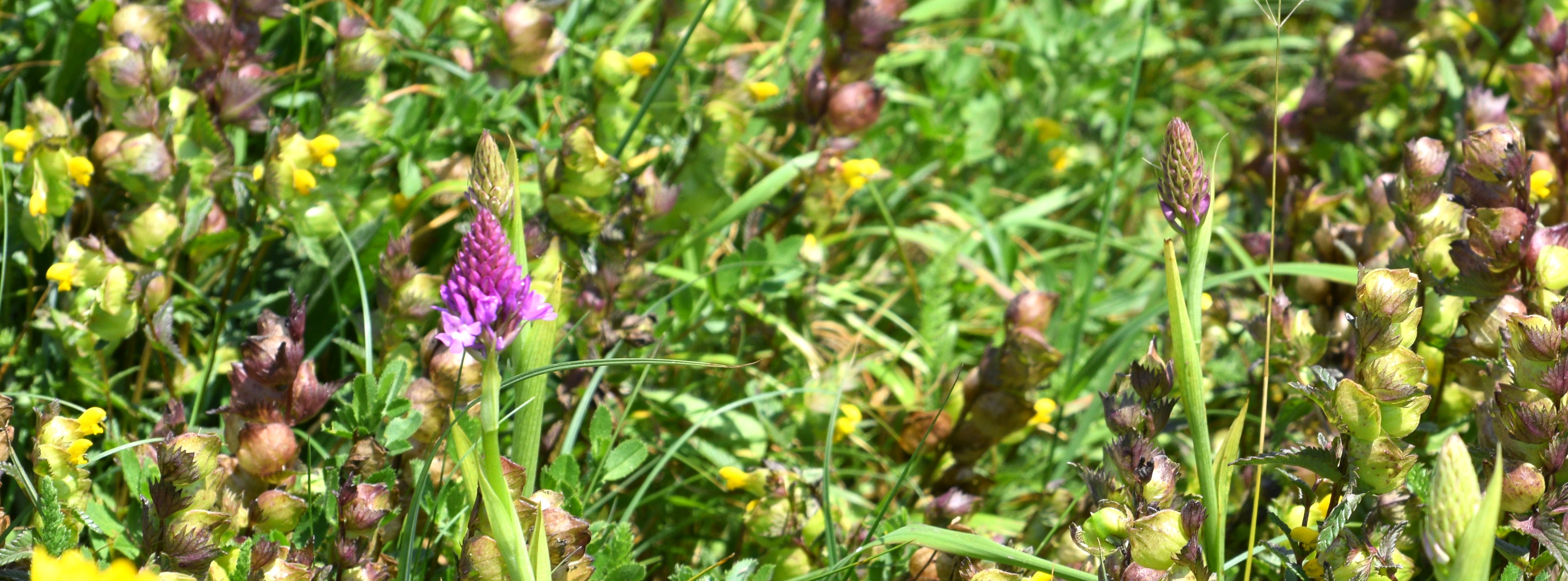
Pyramidal orchids amongst yellow rattle.Broomrape
We kept our eyes open for white tailed eagles and had a good look at all the likely habitats on the island. At one place we spotted a large, dead, oak tree. As we were looking there was an avian kerfuffle with crows attacking a marsh harrier — we watched fascinated as the harrier returned to its nest among the reeds when suddenly a huge bird swooped down and attacked the harrier, carrying off something which may have been a chick. It carried it up into the oak tree and was almost immediately joined by its mate.
What a fluke, two white tailed eagles in an unpublicized nest. But that was not all — as we looked through the telescope — there was a chick.
Fuzzy image but definitely a chick! Because this may have been it’s first photo-call we have allowed time for it to fledge before publishing the image. What a privilege and adequate compensation for the bad weather!
Yesterday, buoyed up by recent success but frustrated by even more recent dull weather, the sun came out and we made haste to Royston in search of rare butterflies. It was very hot! Too hot really for a couple of septuaginta-tresgenarians (this might not be quite right but I’m concussed — I’ll come to that later!). It was also very hilly but the butterflies were fantastic.
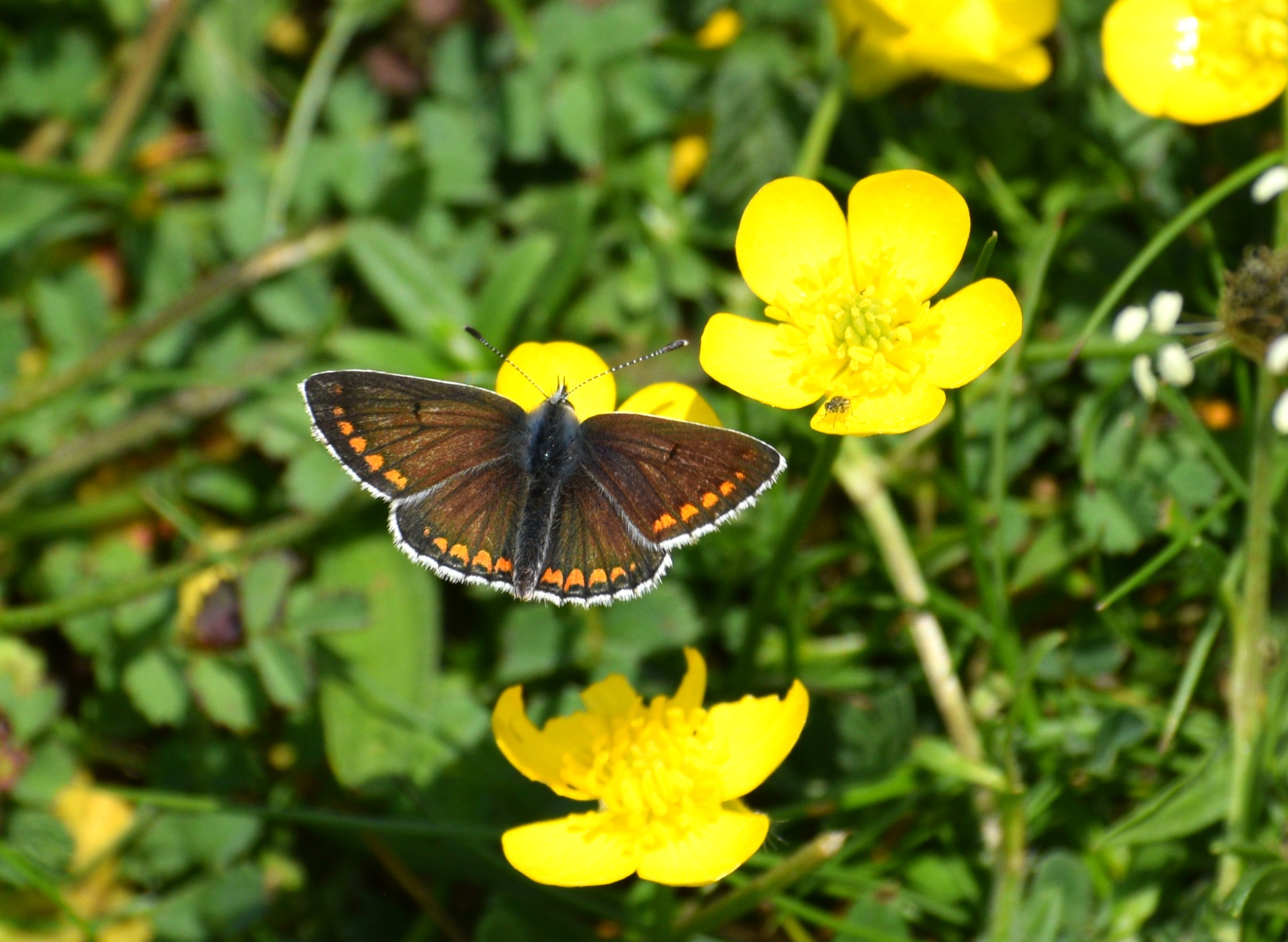
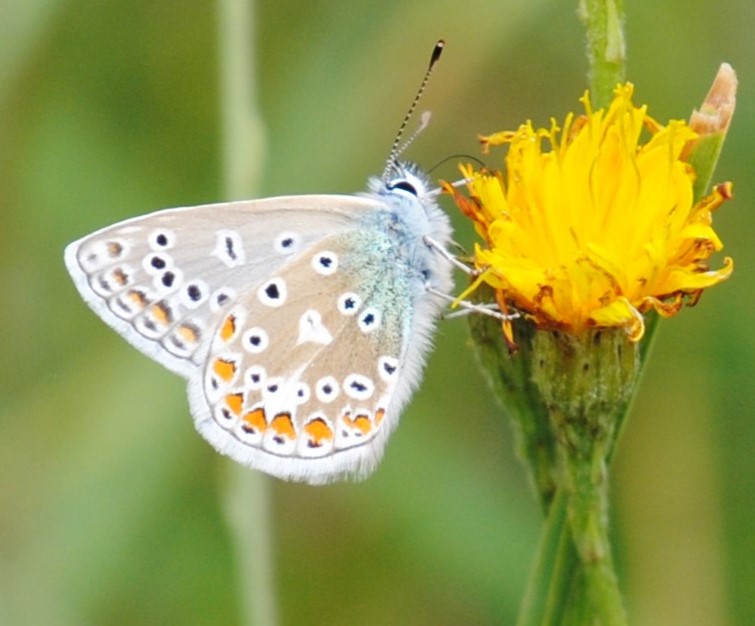
Common BlueCommon Blue, underwing — there were swarms of them.Brown Argus — Bill’s picture.
It is tiny but they were flitting around all over the chalk downs, more ‘ups’ at our age. So good was the butterfly watching that we decided to stay on after lunch — it was hotter and there were swarms of blue butterflies but only one possible Adonis Blue and it flew away before Bill could snap it — my camera is sadly at the menders — I dropped it and it is hurt.
By now I was all behind and had to rush into town before the shops shut — gosh it was hot!
During the night I didn’t feel at all well — why do we say that? I felt bad!
I got up to visit the bathroom — feeling very queezy. Next thing I know, I’m waking up somewhere I don’t immediately recognise — something diaphanous is waving above me — have I died?
I call out weakly, Bill is already up, he awoke with the crash but headed in the wrong direction. I call out again and am shortly found — head in the shower, huge bump on my forehead– how did it get here? I’m lying on my back. Turns out I am not dead. My knee hurts and is a funny colour but my shoulder decides not to make a fuss despite the huge contusion — it is biding it’s time.
I am picked up and put back to bed — I can make this last until lunchtime!
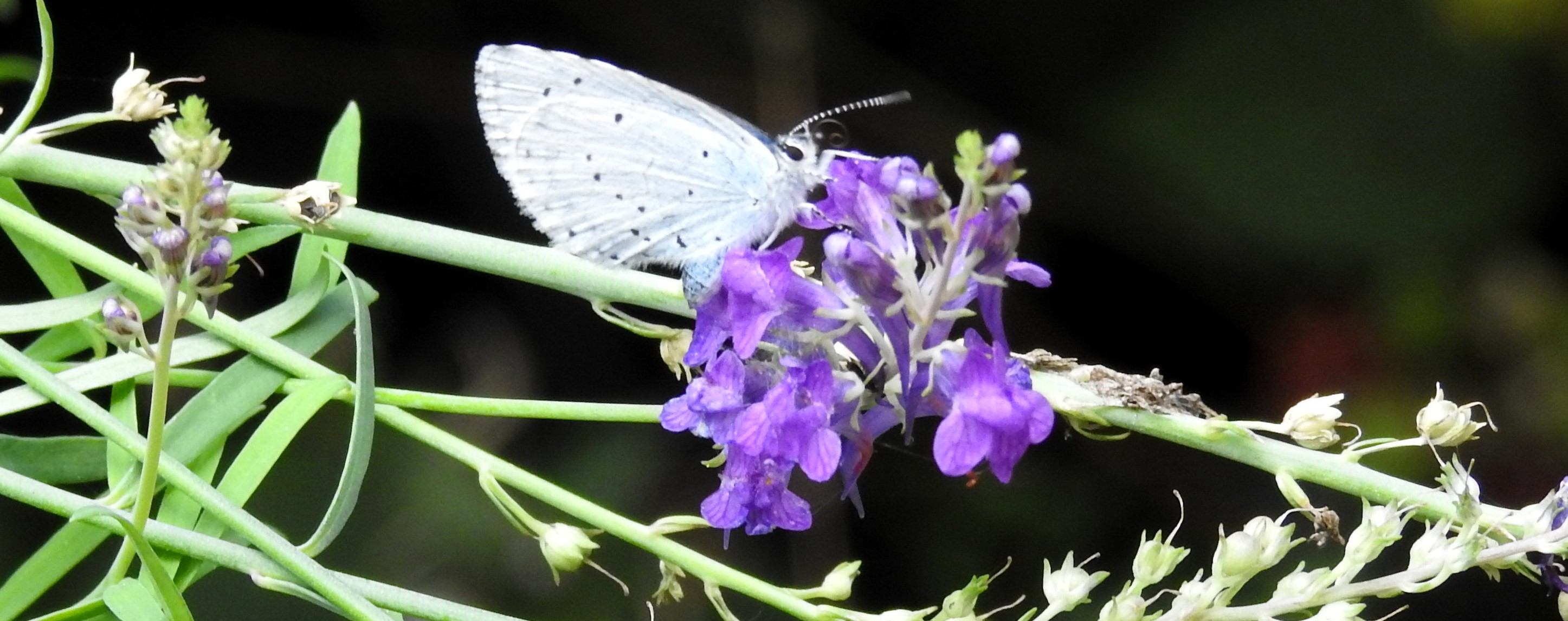
After a light lunch I rally to look at the Holly Blue in the garden.
Diagnosis? Was probably asleep all the time but fell off the loo when I slipped back into deep, REM sleep (do they still call it that) when I fell off my perch. It’s a miracle I’ve made it to 73!
Last month we were on the chalk hills of Gloucestershire — butterfly hunting, and not without success!
Large blue butterfly
Another large blue on Daneway Banks SSSI in the Cotswolds
Daneway banks are famous for the butterflies. Their steep chalk grassland is peppered with clumps of wild marjoram and thyme. It was a sunny day and there was a helpful and knowledgeable volunteer from the Butterfly Conservancy to point us in the right direction!
No Brown Argus spotted, not for lack of trying, but there were cavorting Marbled Whites a plenty.
Marbles white butterfly on marjoram
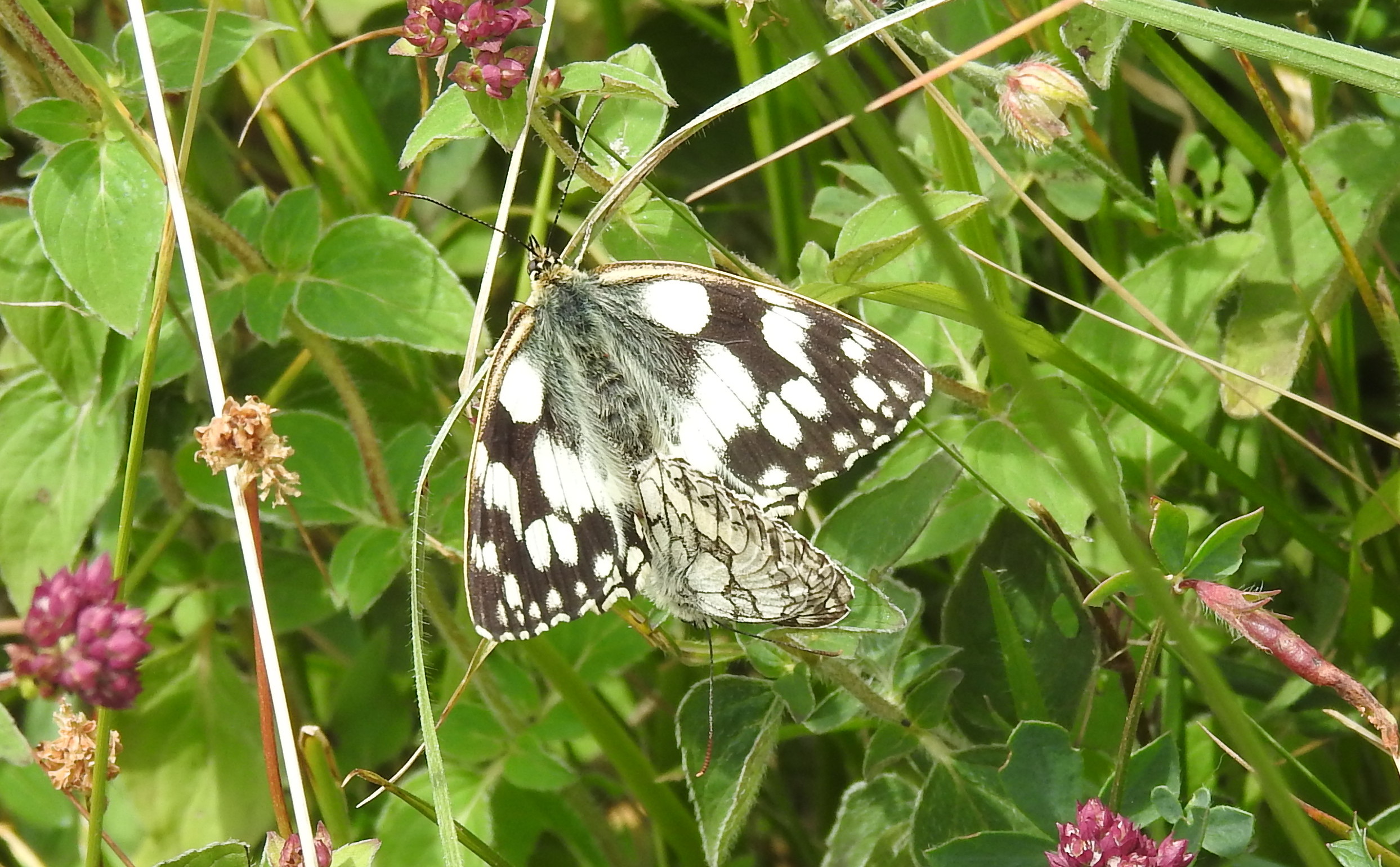
Mating marbled whites
And several Essex skippers, similar to small skippers but with black tipped antennae and a black stripe parallel to the leading edge of the forewing.
Essex Skipper
It was very hot and cooling off in the dappled shade of a nearby woodland we found my favourite butterfly — the silver washed fritillary.
Silver washed fritillary
Next week, if the weather cheers up, we are off to hunt the Adonis Blue and the Brown Argus.
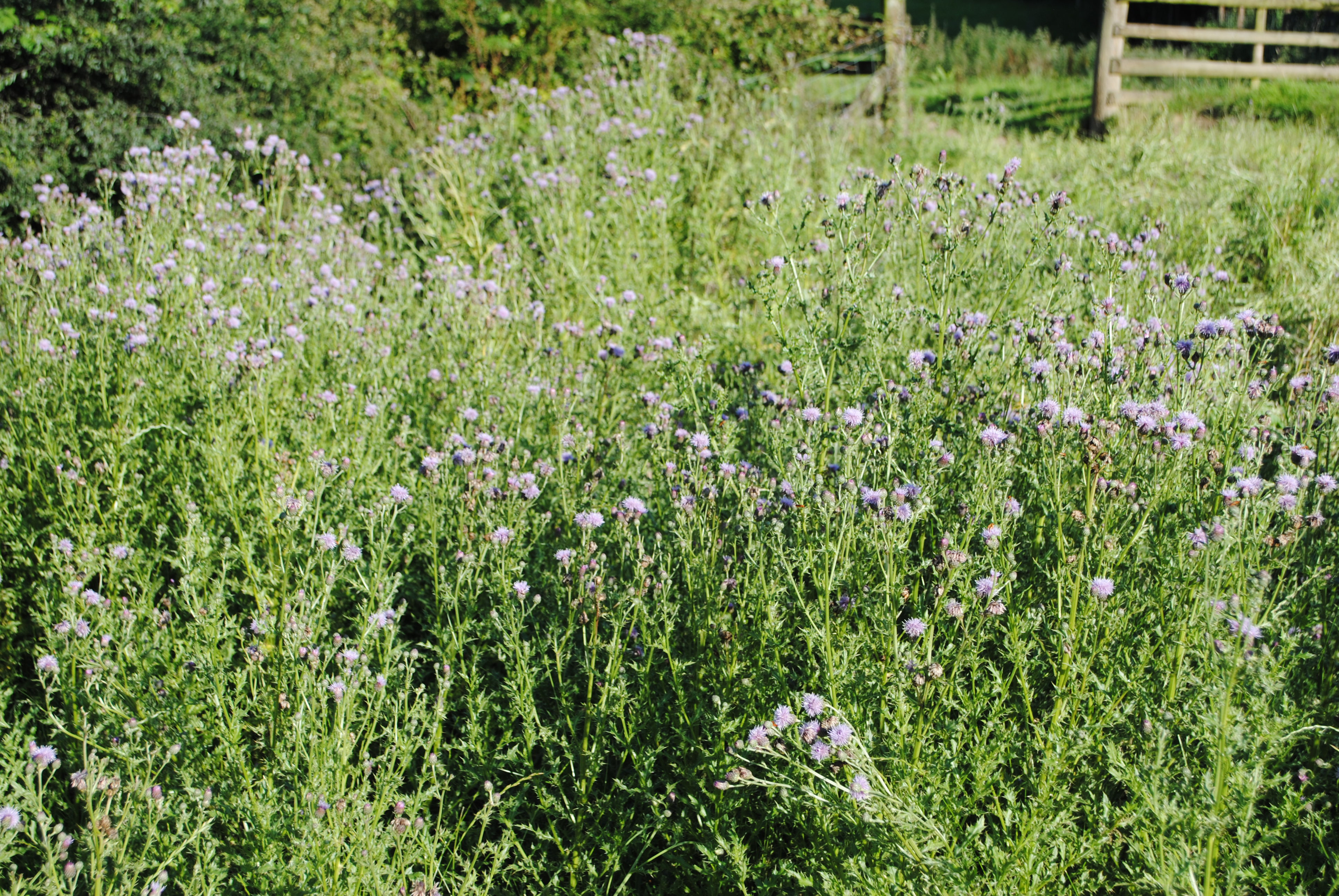
The hot dry spring was just what our thistles yearned for — they grew and grew. While our neighbours sheep gather in the shade it is time for us to deal with the thistle plague.
I was told by those who know:
Cut in June, they will grow back soon,
Cut in July they will surely die.
So we held our nerve, but once into July we have waged war on the thistles, Bill pulling the topper behind the quad bike and cutting every accessible thistle. 10 acres of thistles — not bad for a septuagenarian with no previous farming experience! It’s wonderfully adaptable, the human race.
All this time I have been busy managing and hiding in my cool office doing important paper work. But now the rains have started, waves of torrential rain coming in from the west, and the family are due next week so we are running out of time. Its all hands to the scythe and the sickle in the corners and the precipices where the quad bike cannot reach.
But wait!
There is a problem. In the sunny periods, between the showers, the butterflies and bees and hoverflies and beetles and flies come out as well as us. Finding most of the thistles gone without trace because once cut the sheep gobble them up, this profusion of insects settles on what is left.
The thistle beds are teaming with insect life, buzzing and fluttering and slurping up the nectar.
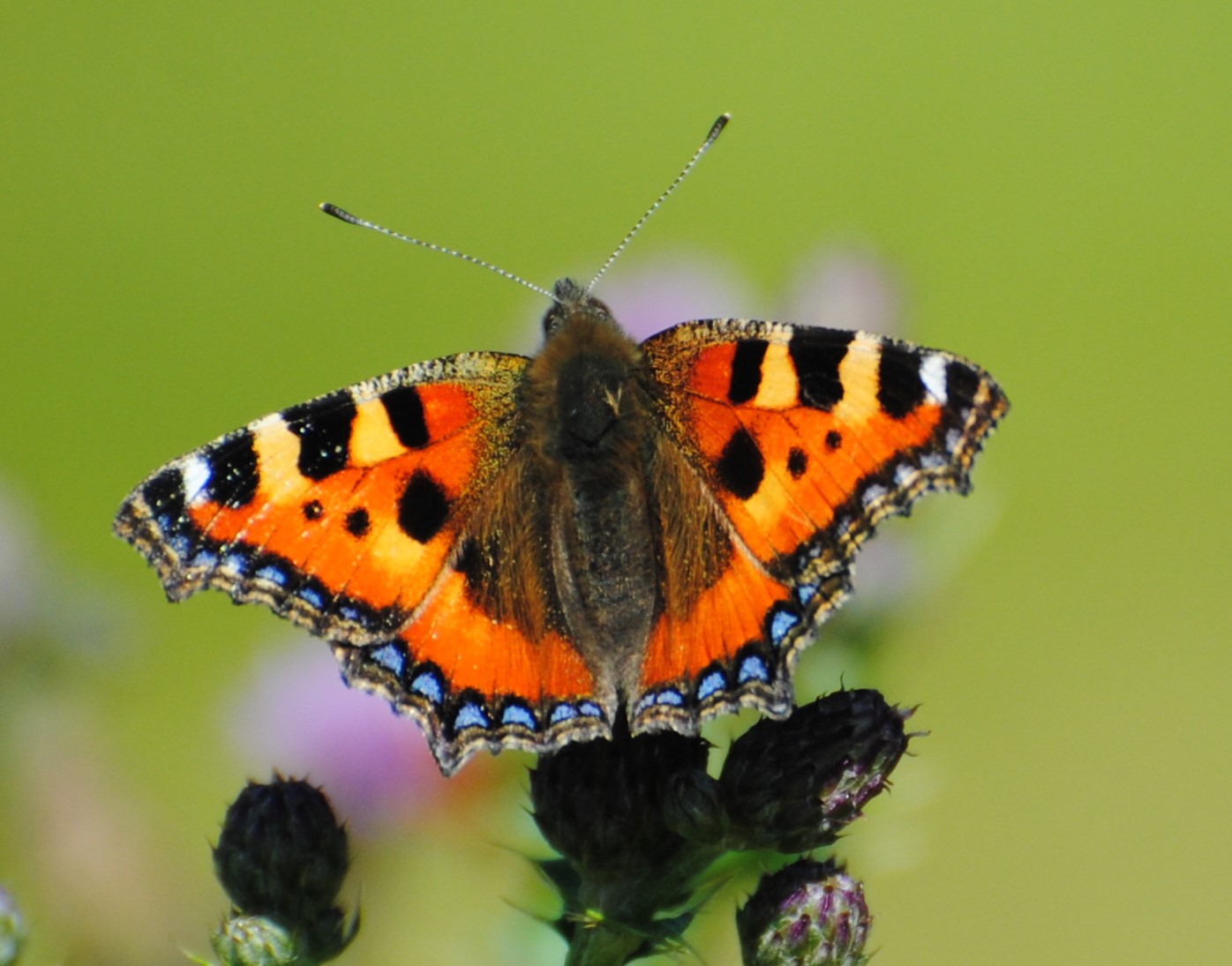
Just by the barn we saw about 20 pristine new small tortoiseshell, meadow brown and comma butterflies.
Small Tortoiseshell and friends on thistle.
One look at this beauty and guess what? We have decided to leave the edges for a while to give the butterflies a chance to mate and lay their eggs. Oh dear, the caterpillars feed on nettles — we’ll have to leave them as well!
The trouble with Nature is that it runs away with you!
You give her, Nature that is, a small area of hillside to play with and, before you know it, she has barricaded herself in with thorny thickets and hidden earthworks, molehills under layers of slippery bracken and ankle breaking, knee jarring pitfalls made by rabbits and badgers. (Did I tell you I’ve just had a new knee.) The whole area is now dense undergrowth, criss-crossed by looping, flailing brambles and willow whips.
Ah, you say, that’s nice — good for diversity!
But is it — it’s not as simple as that!
So concerned were we that we called in an expert — Super-eco-man, a conservation hero —
Bionomic Man — Rob Mileto from Naturetrek
He’ll know what to do.
And he did — we slithered and scrambled up and down our precipitous banks as he introduced us to species of which we had been oblivious. Pleased to meet you! He showed us how to distinguish between our six common ferns, and to start to make sense of some of our mosses, not easy as they mainly have Latin names, now recorded in my roughly dried notebook — it will be fun giving them proper English names — shaggy christmas tree moss and less shaggy christmas tree moss — I suppose they would sound more impressive in Latin
Most importantly he showed us what we might lose. In our emerging woodland, already we are losing the avenues of open ground for butterflies and moths, insects and bats. The paths that remain are steep sided — like canyons through the trees without the gently sloping edges needed by butterflies and pollinating insects — there is a lot to do.
The overgrowth of bracken is alternately shading and insulating the great anthills on the sunny bank so that our ancient neighbours, the huge colonies of yellow meadow ants cannot so efficiently control their temperature as they have done for thousands of years.
Our carefully placed owl box overlooks dwindling areas of decent hunting ground for barn owls as the vole habitat is being eroded by blackthorn — probably the reason they haven’t used it of late.
These little beauties settled elsewhere.
Our mature oaks, it turns out, are only 100 years old, adolescent almost, not nearly gnarled and hollow enough to provide adequate nesting for all the bats, like the ones currently breeding in the bathroom ceiling and the pied and spotted flycatchers that come looking for nest sites every spring. Our new barn will need a large well insulated roof space to deal with the housing shortage! A new owl box is planned for the old barn and a safety rail for the swallows and martins as the roof purlins are too steep — the nests tend to fall off.
Seems I’ll have to start production again. Did you know that spotted flycatchers like to nest near buildings.
Open fronted bird boxes for flycatchers and bat boxes — earlier prototypes.
Now I’ve got to go and plan the new pond, we know exactly where to put it and its adjacent compost heap and en-suite woodpile. Our lizards need somewhere to bask with an air raid shelter, we’ve got just the rocks we need.
Seriously we found the exercise very helpful, now we realize that managing an area for wildlife is not a passive exercise. Those who think that any form of re-wilding threatens the rural lifestyle had better think again — even though we might only be cutting some of our hedges every other year (to get more berries) we will be generating lots of other activity.
Where are you two going?Looking for Butterfllies, are you coming?
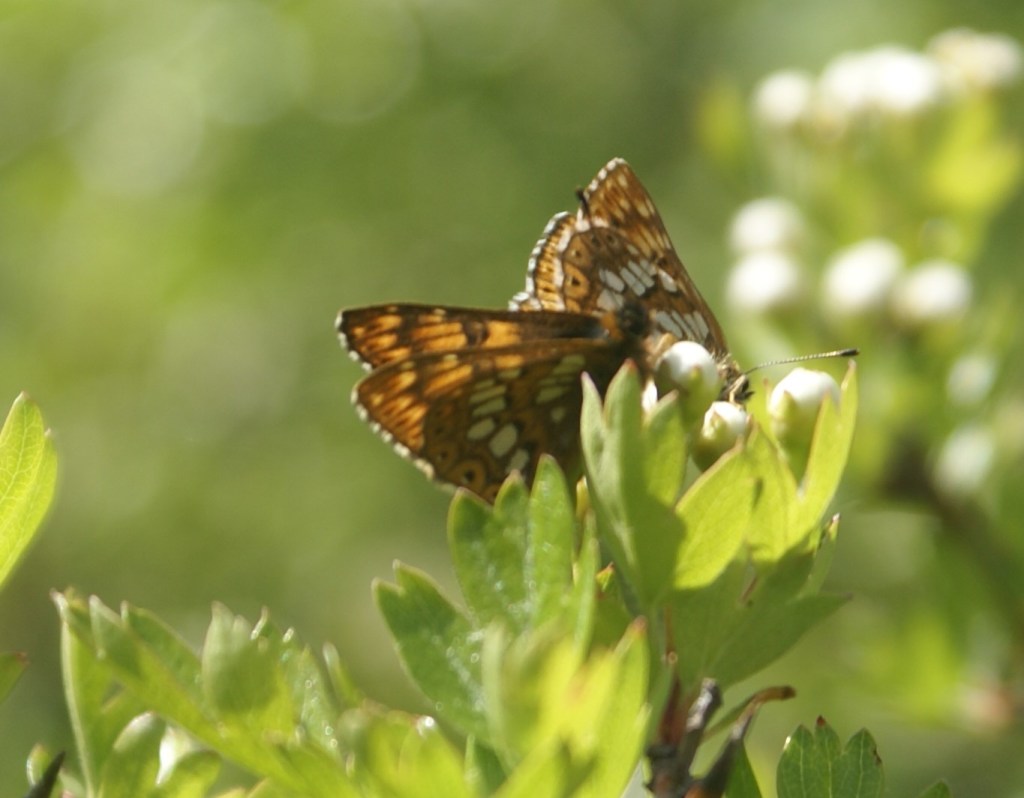
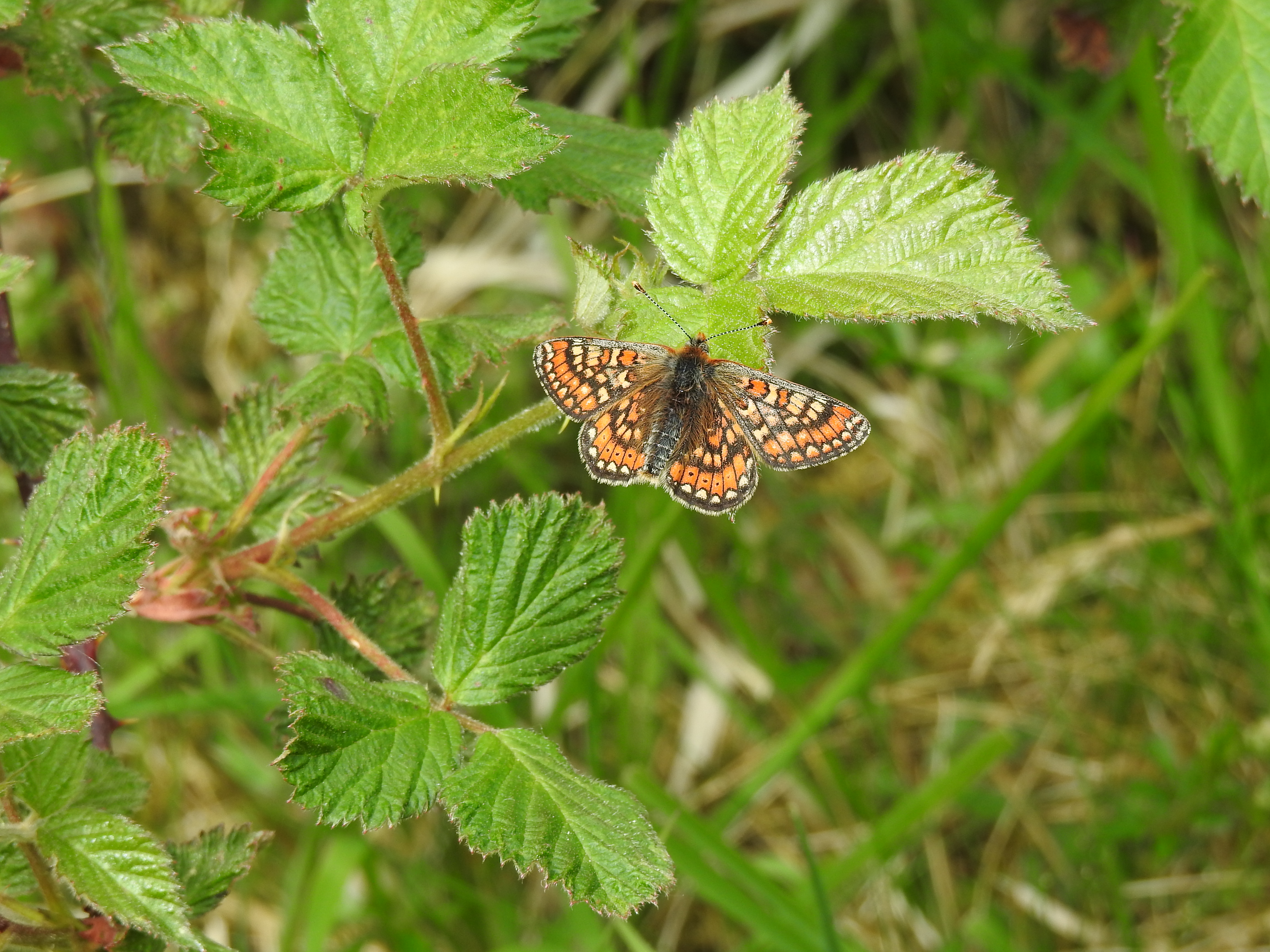
Duke of Burgundy Butterflies are rare these days but thanks to the communal spirit of another amateur lepidopterist we find them easily and in return point out an equally rare corn bunting, singing his heart out trying to be noticed.
A Corn Bunting singing from the tallest elder in the hedge of a chalkland cornfield, like a jangling bunch of keys, you will know it if you ever hear it.The Marsh Fritillary we found for ourselves in a bog below Cader Idris in Snowdonia — no one there to help!
Nearby was this beautiful flower that likes to have its feet wet — it is said to be common but I’d never seen it before —
Buckbean or Bogbean, from a distance you might think that you have found a new orchid but each flower of the spike has 5 symmetrical petals with strange lacy outgrowths and big juicy trilobed leaves that don’t obviously belong to the flowers until you trace them back under the boggy base.
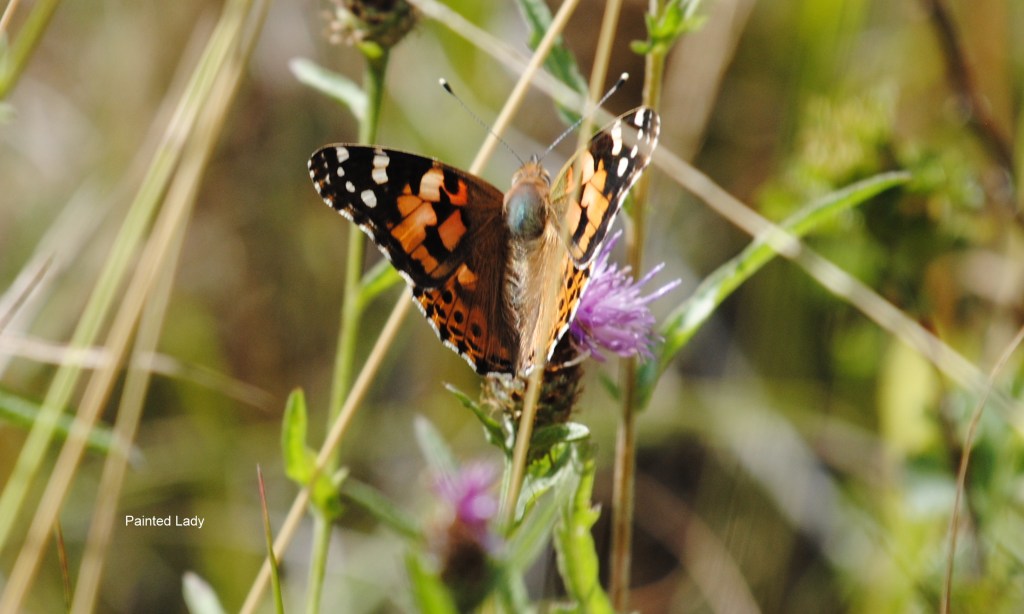
Despite recent sunny weather it seems to have been a slow year for butterflies but in the last few days Painted Ladies have arrived all the way from Africa, one of only two migratory butterflies that we see in the UK. No Clouded Yellow as yet.
queried a French boyfriend in 1966 when I was trying to teach him some English — that is probably when I first realized what a peculiar language we do speak! These are the butterflies we have seen in Wales recently, they are called, in Welsh gloyn byw, living glove — not much more sensible!
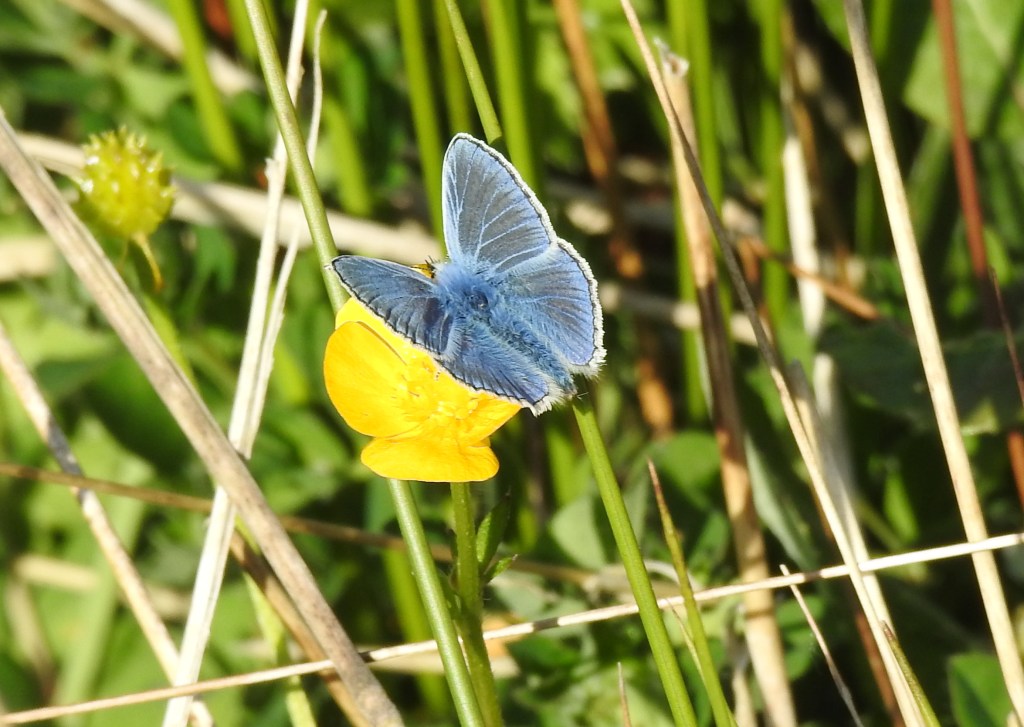
Common Blue
It has been a warmer, sunnier spring and early summer this year and we seem to have seen more blues than usual. Here is another Common Blue
Lots of Small Pearl Bordered Fritillaries:
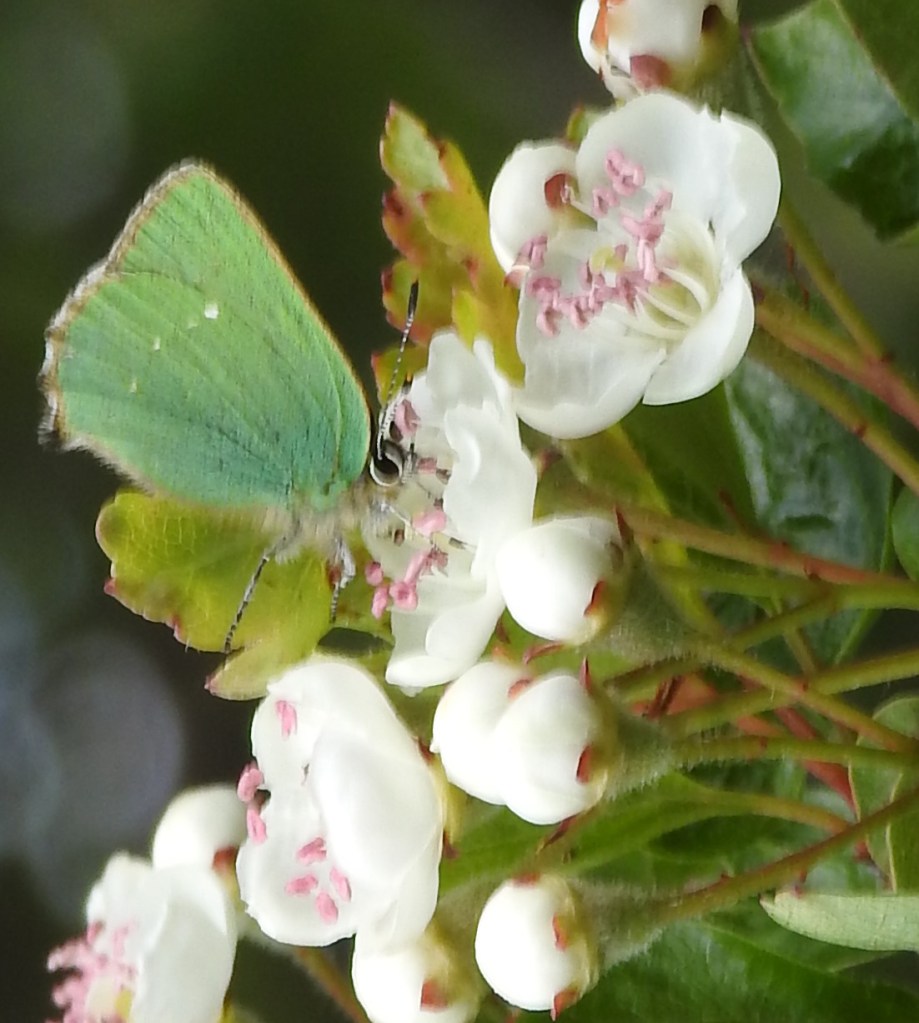
Small Green Hairstreaks like this one:
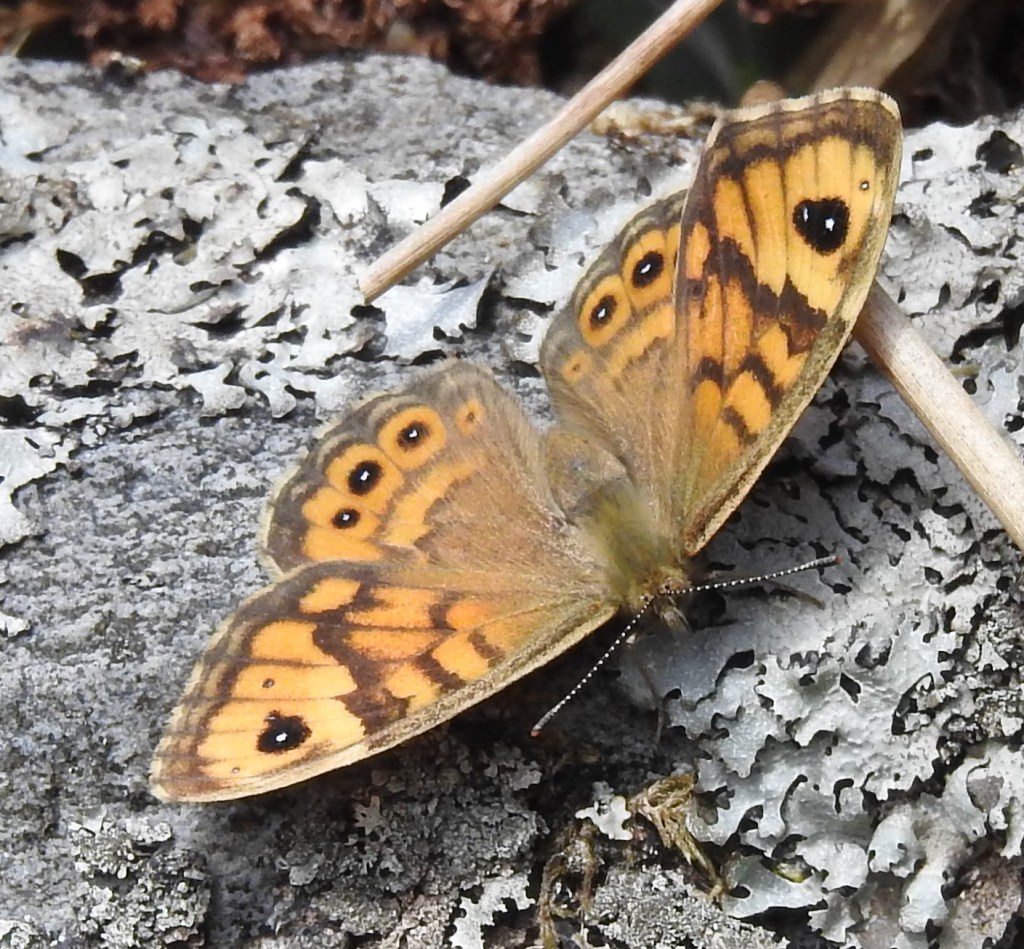
A Wall Brown — actually sitting on a wall.
Large Skipper:
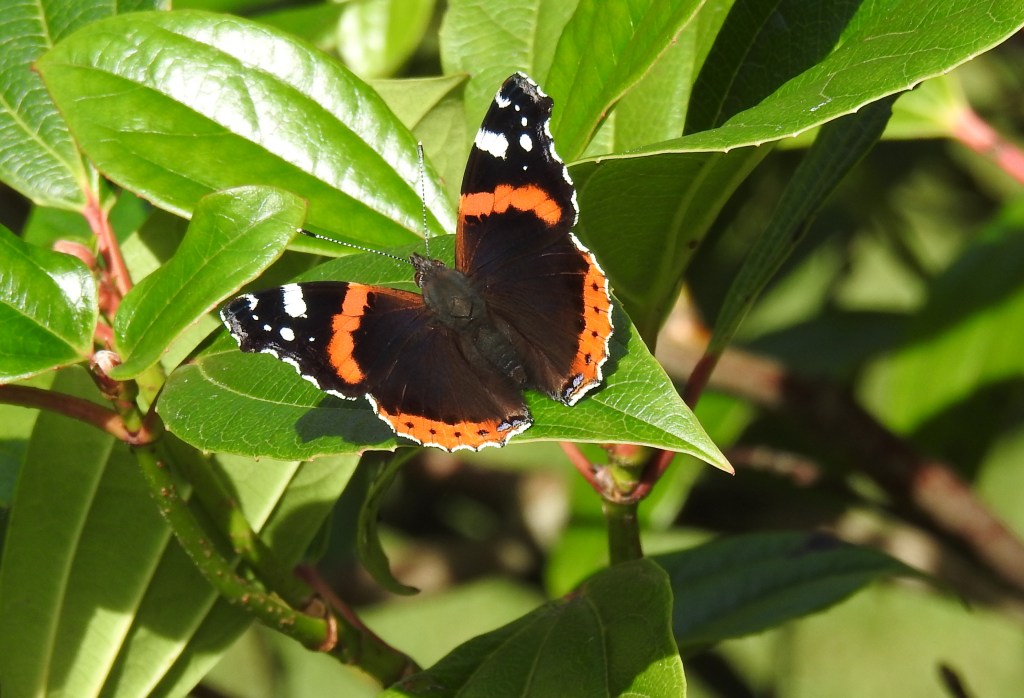
We have seen all these regulars (thank you Bill for the pictures). Clockwise from top left: Small Tortoiseshell, Small Heath, Red Admiral, Speckled Wood and Peacock
The Meadow Browns have only just appeared and are so frisky that they will not pose. We haven’t seen any Gate Keepers or Painted Ladies yet.
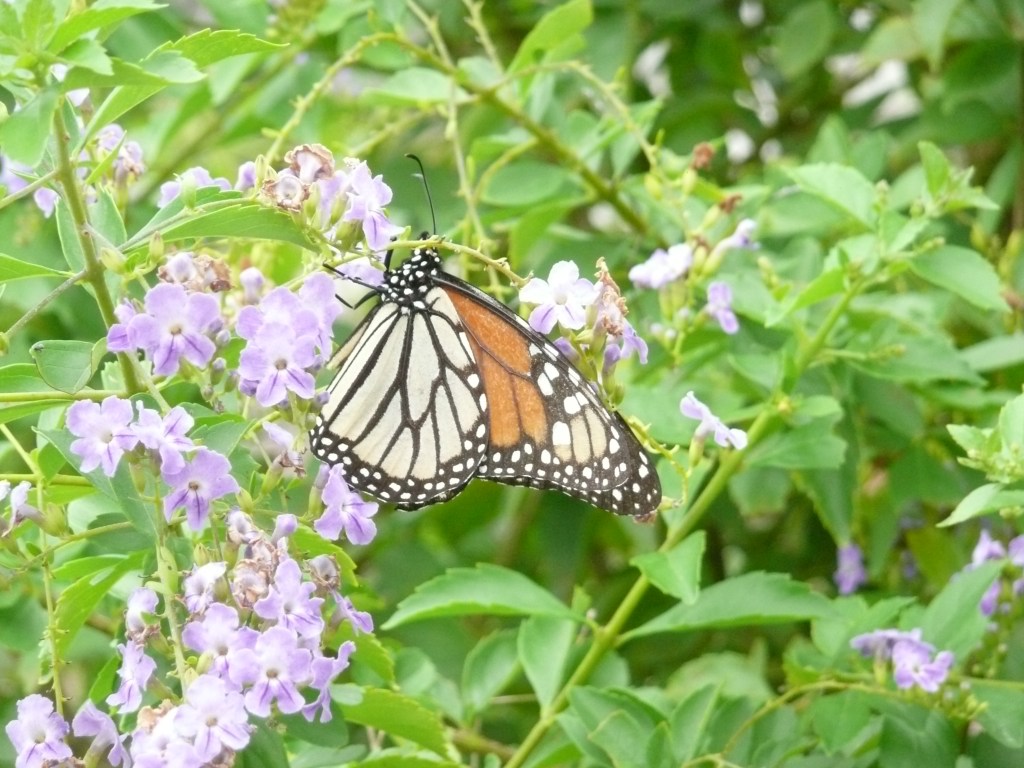
We didn’t see many monarchs in Texas last month — not because it is a Republican state but because the cold snap had presumably sent these amazing migratory butterflies scuttling south to warmer climes. Only one or two non-migratory ones had stayed around to remind us what we had missed.
These creatures over-winter in the mountains of Mexico and set off in the spring to fly northwards, pausing to breed, then the offspring in their turn set off again northward, pausing to breed and thus they go, a step per generation, all the way to southern Canada. Come the autumn they all turn southward heading back to their wintering grounds where no individual has ever been before — how clever is that?
Monarch Butterfly by Bill Branford (all rights reserved)
They lay their eggs on milkweed, the food plant of the caterpillar, which contains alkaloids which confer the gift of nastiness to the way they taste and which make them poisonous to predators. That helps!
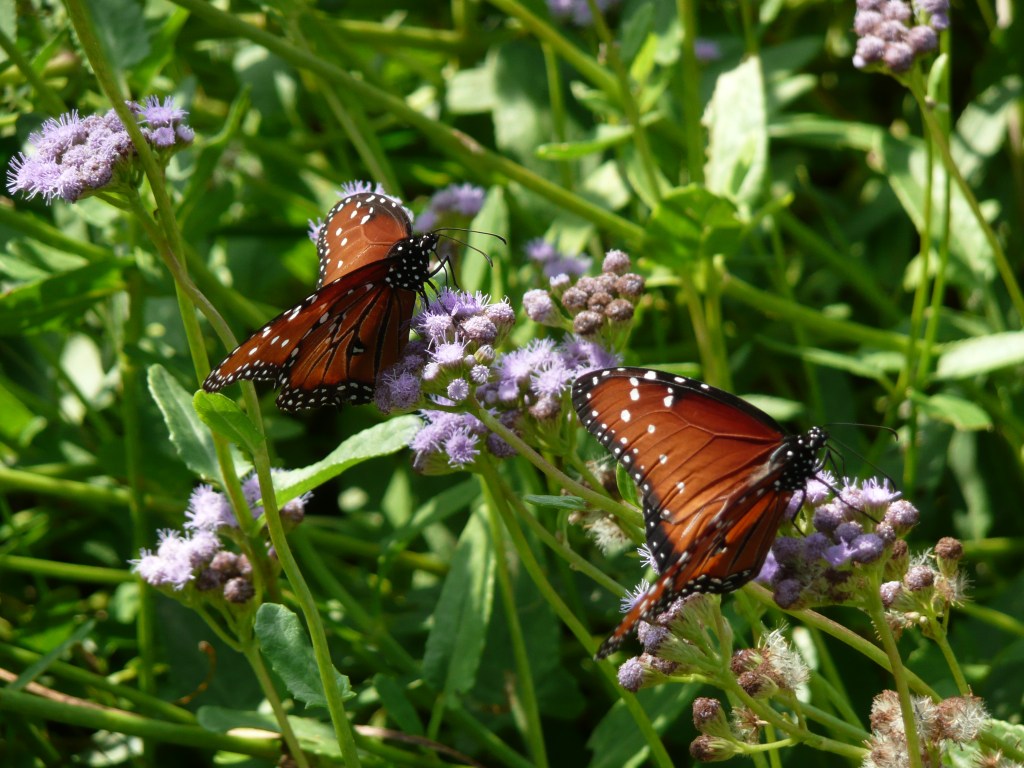
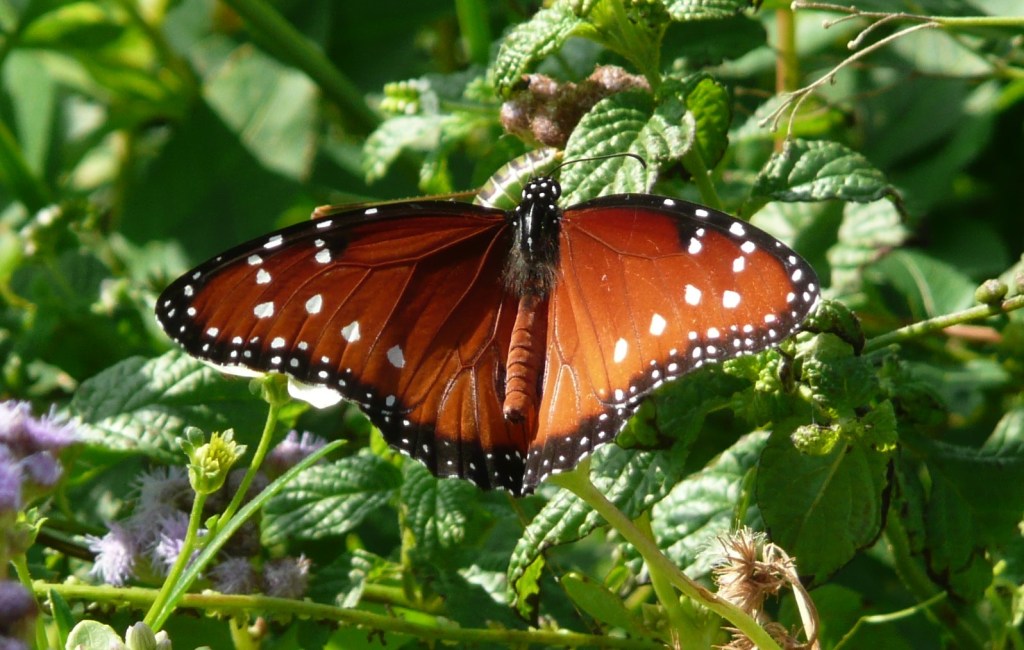
Queens are also milkweed butterflies — we saw more of them — they are also migratory, presumably also following the milkweed season north but less is known about their migratory habits. They are similar to monarchs but are darker and more russety and have no black veining when viewed from above.
Queen butterflies
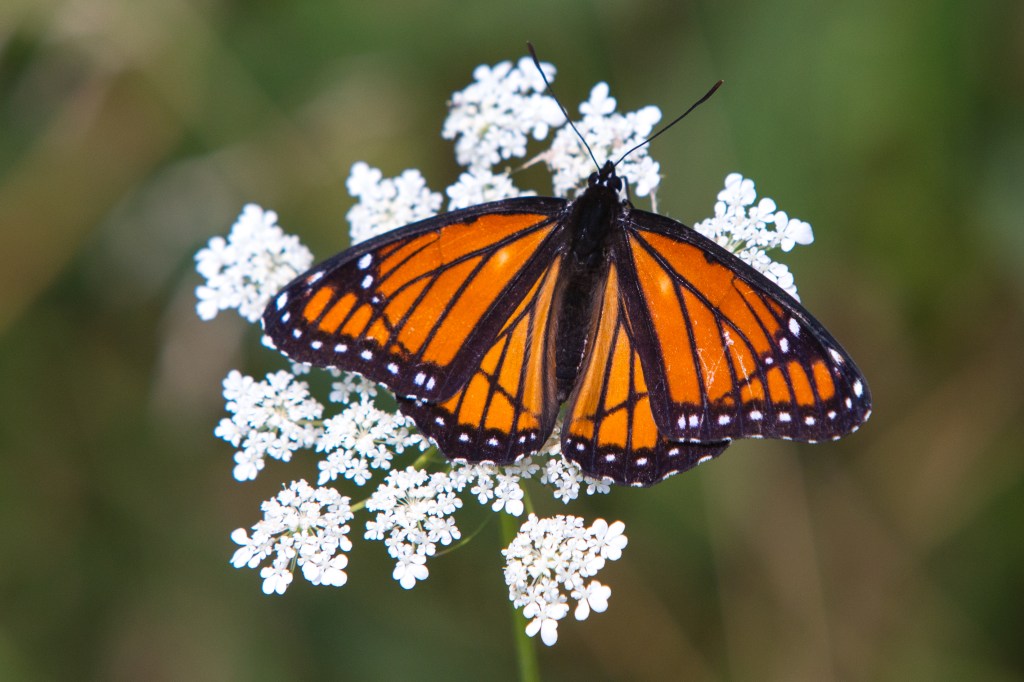
The viceroy butterfly, below, looks much more like the monarch, apart from those straight black lines which transect the black veins towards the back of their wings. This is the impersonator! They do not lay their eggs on milkweed, they do not assimilate the poisonous alkaloids of the milkweed and presumably taste quite good to birds, reptiles and hungry amphibians. They are just mimics, surviving and prospering because they look like something that tastes nasty! Their ancestors didn’t have to practice on a poisonous plant that probably killed some of them. Now that is really clever!
Viceroy Butterfly by popo.uw23 from Flikr (Public domain 1.0)





























 dianaashworth