in Cornwall recently, hoopoes, those charismatic European birds were popping up all over the place.
Camouflaged men and women with longer and longer lenses dashed about and swapped intelligence, clicked and whirred and punched the air in triumph, then moved on to hunt the elusive blue headed wagtail and the booted eagle!
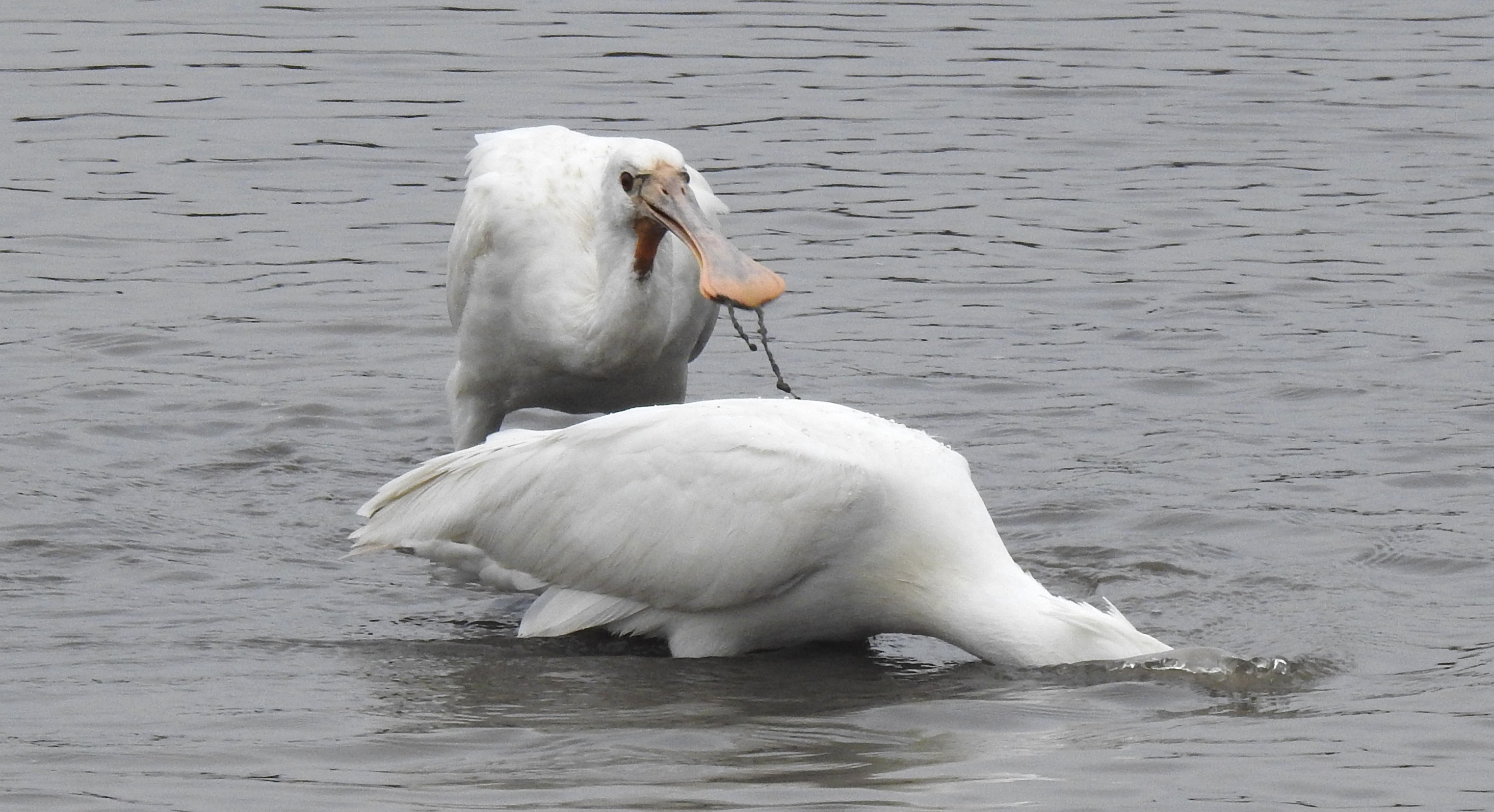
Last autumn we got to know the lonely spoonbill that hung around feeding in the Hayle estuary and associated pools.
How pleased we are to find that this spring he has a friend.
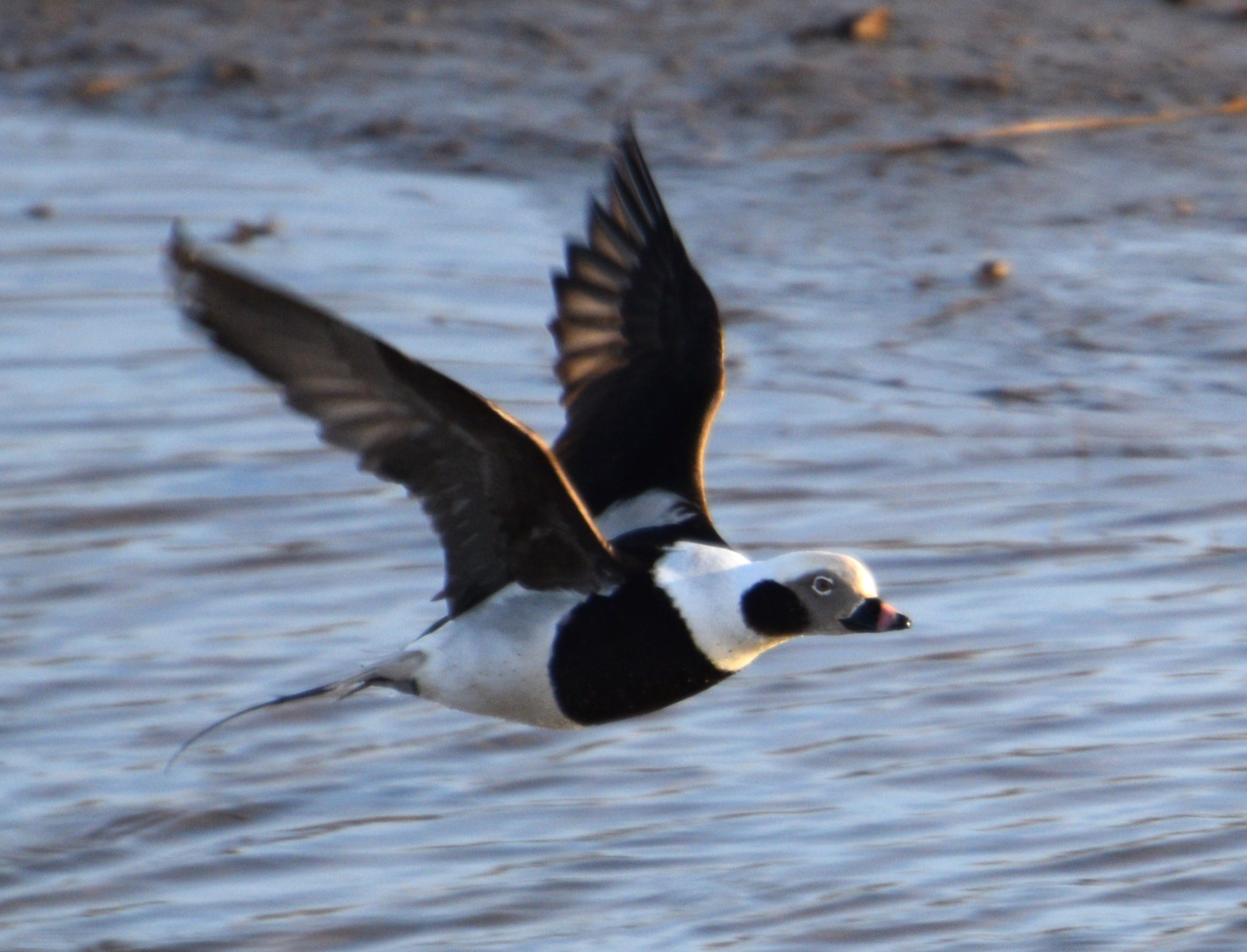
What is this? A dodgy duck on the boating lake in Newquay. A rare long tailed duck, a lonely female. When the weather gets better she’ll head out to sea to find a mate.
We saw this male in Norfolk — Holme Dunes, near Thornham, last year.
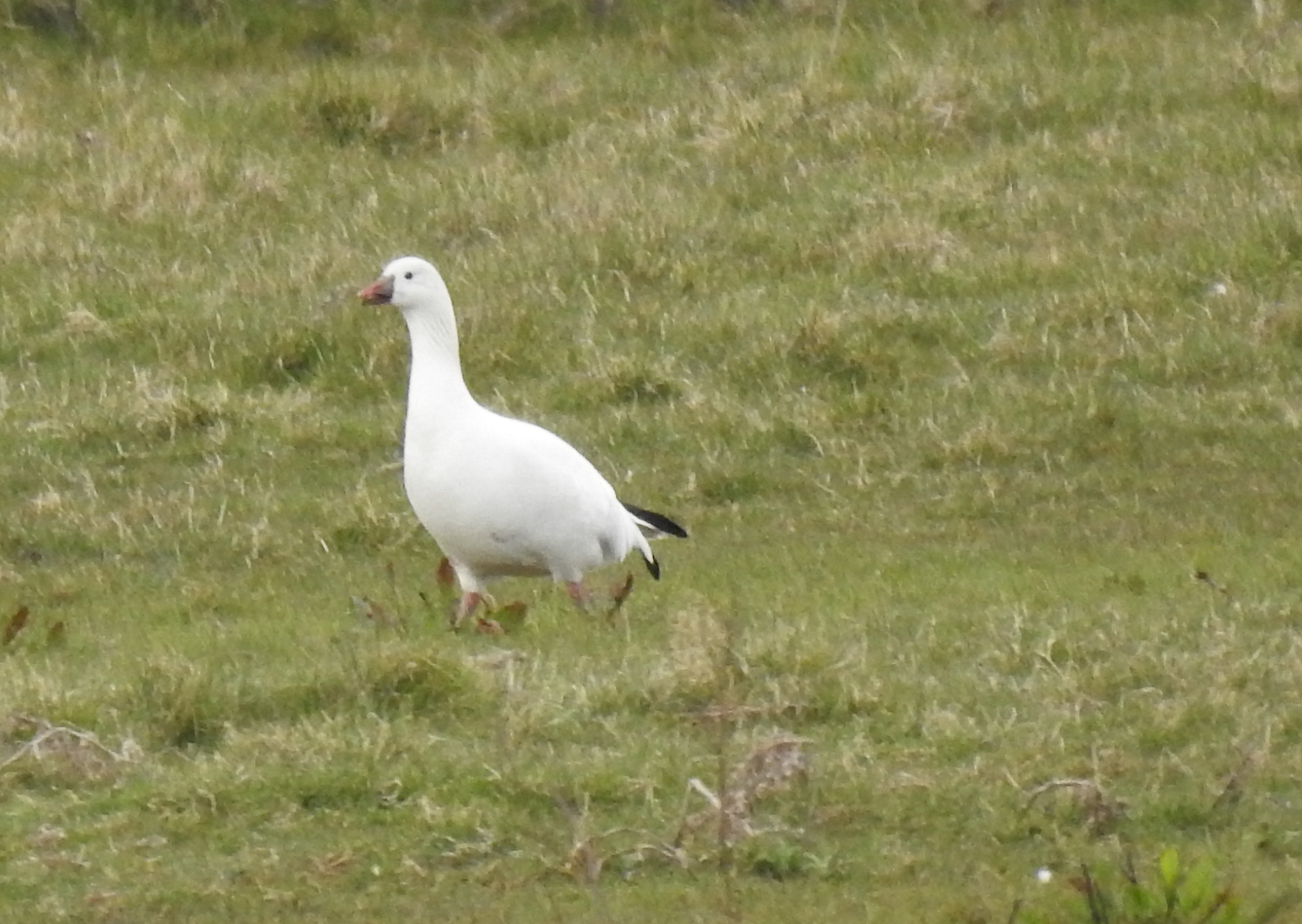
At Slimbridge, in Gloucestershire, we saw white fronted geese, a Ross’s goose and lots of barnacle geese.
Thanks to Bill for the pictures of the spoonbills, hoopoe and female sea duck. This is my best duck!
Garganey, isn’t he beautiful, but I cheated — he wasn’t exactly in the wild!
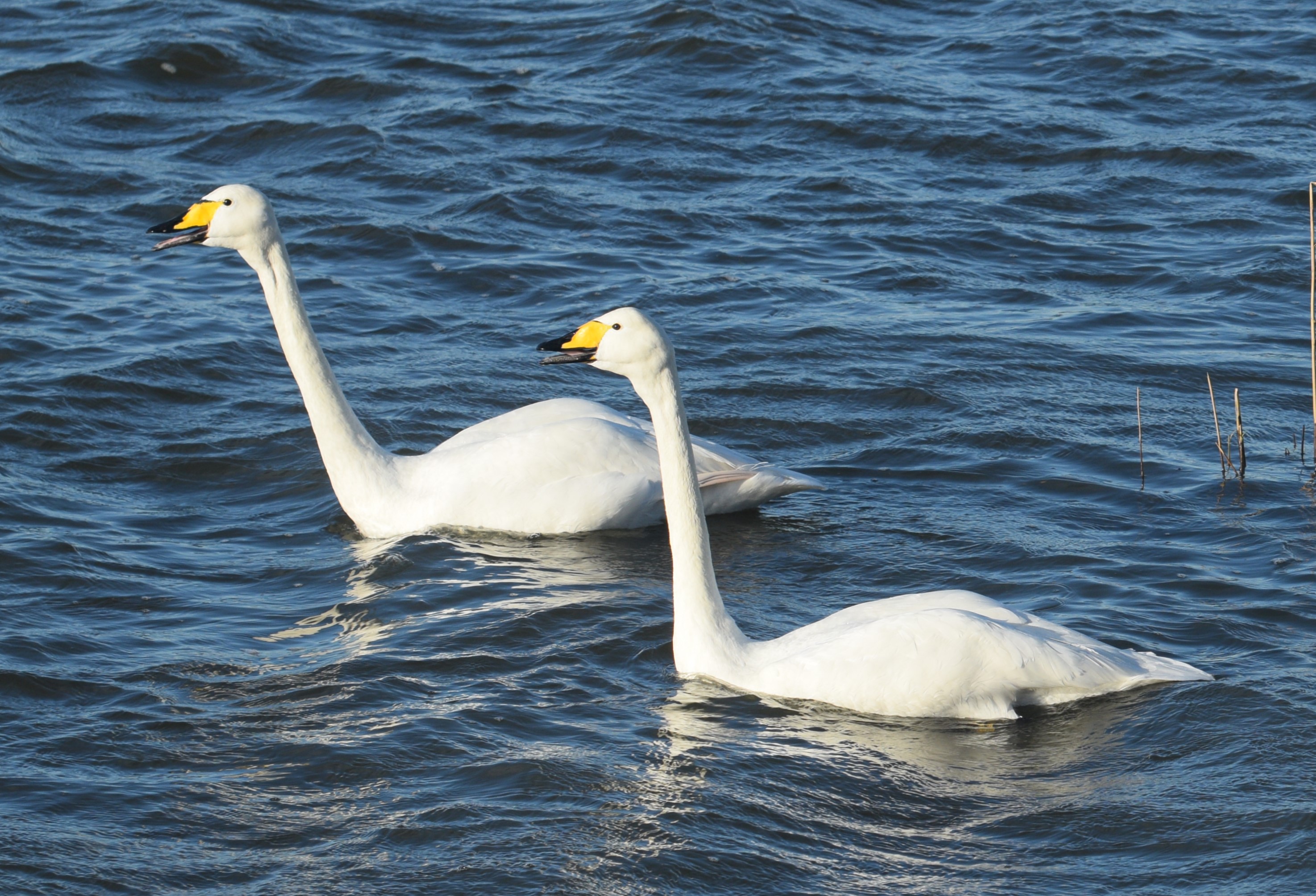
Above is a male red-breasted merganser, also seen at Slimbridge. Most of the swans have gone now, the Bewicks and the whoopers, gone back up to the Arctic to breed.
Whooper swans
Bewick Swans
Mute swans — for balance!
The little gull is a rare Bonaparte’s gull, seen in Hayle with a black headed gull for scale and balance.
I’ve been showing my bird photos to my grandchildren.
‘Elitist! Surely not!’
‘But where are the pigeons and gulls, Granny?’
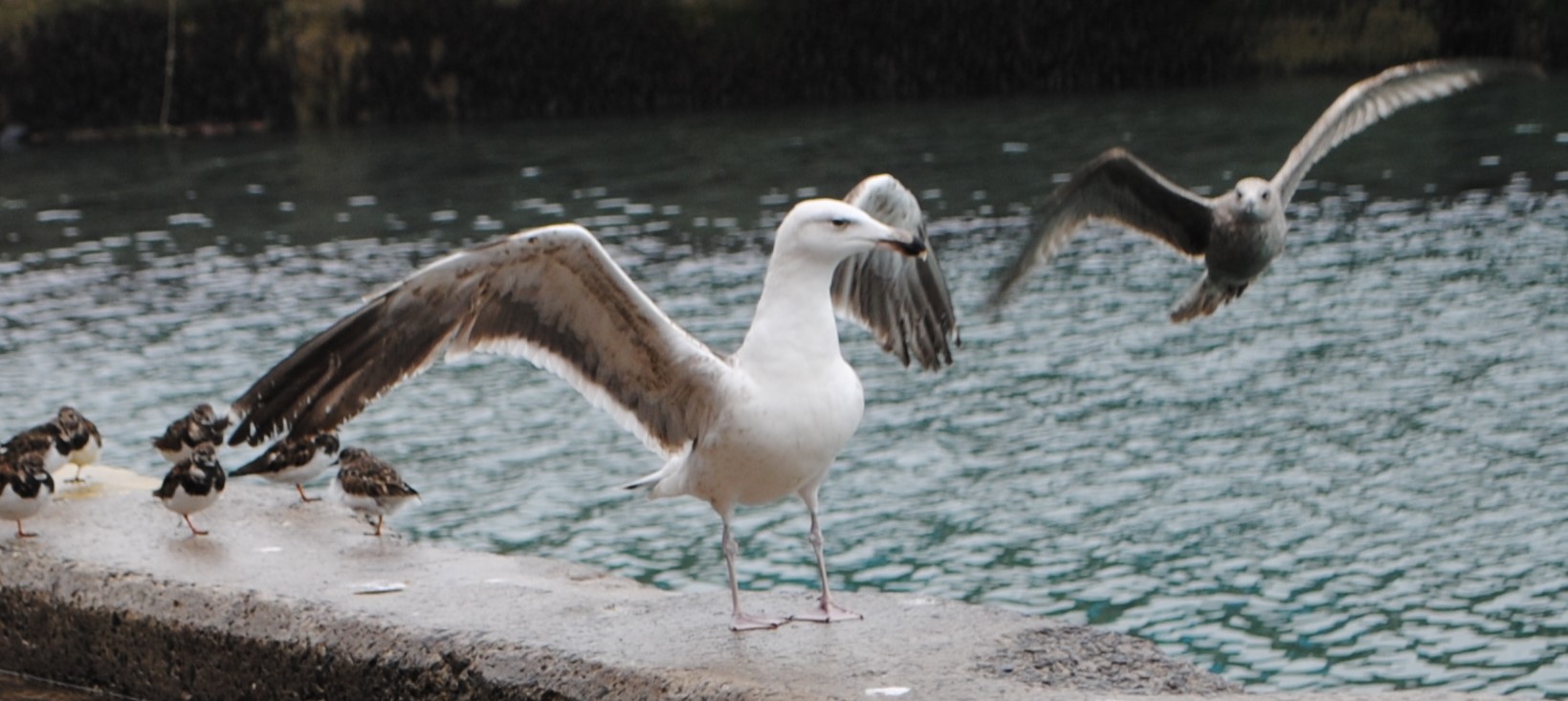
Yes! Move over turnstones, give a gull a chance!
They are cheeky these herring gulls but less inclined to mug you than they were, since the council in Cornwall have banned us feeding them. But there is still a certain amount of private enterprise:
Herring gulls staking out the fish market at Newlyn harbour.
Herring gull protection racket in the Lizard car park
H. Gull, tour guide, Lizard point, Cornwall.
When it comes to pigeons Emily might have a point — I haven’t photographed many.
But if you really want a pigeon? How about this one!
Biggest pigeon in the world and this one lives in Cornwall
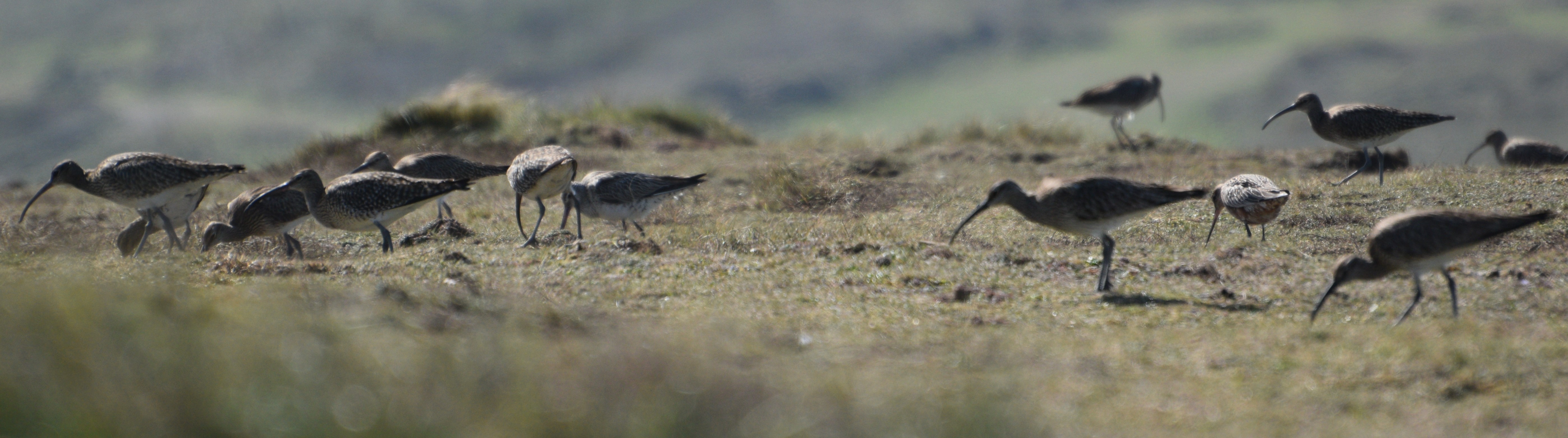
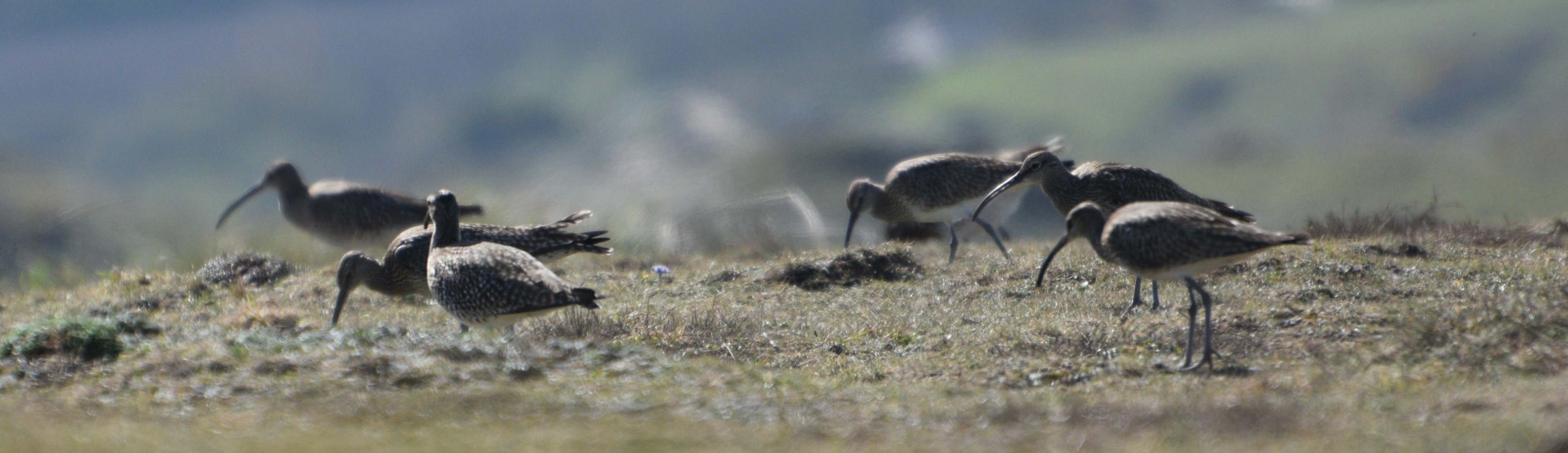
Just spent several days, in Cornwall, looking for this elusive bird, amongst other things — trying to spot it en-route between Africa and its breeding grounds in the sub-arctic, where it breeds as far south as Orkney, Shetland and the north of Scotland. They are the smaller of our two curlews.
They travel in groups, along the coasts of Britain, feeding as they go. Reported one day and gone the next! We missed them at Land’s End and at Boat Cove. At Godrevy, on our last evening we were scrambling on the rocky cliff edge scanning the rocks below when we were nearly knocked off the precarious path by a low flying squadron of huge birds. They had found us!
Twenty-four whimbrels with 2 godwits, stopping for an evening feed on the clifftop
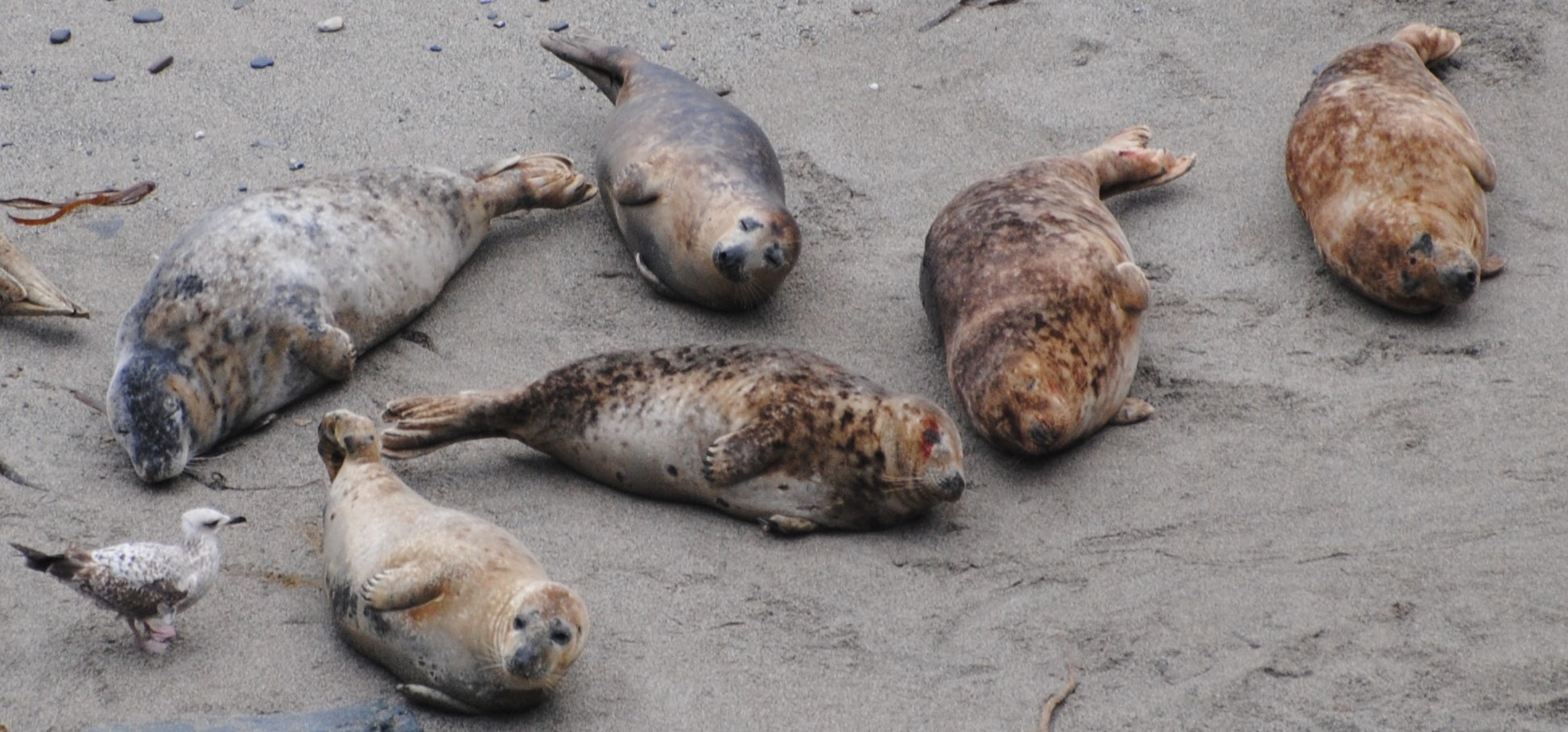
Seals are doing well around the United Kingdom since we stopped persecuting them, like these common seals seen earlier this year on a beach in Cornwall near to my daughter’s home. The common or harbour seals are smaller than the grey seals and, I think, look cuddlier although don’t get too close! Their faces are concave, more dog shaped than the grey seal below.
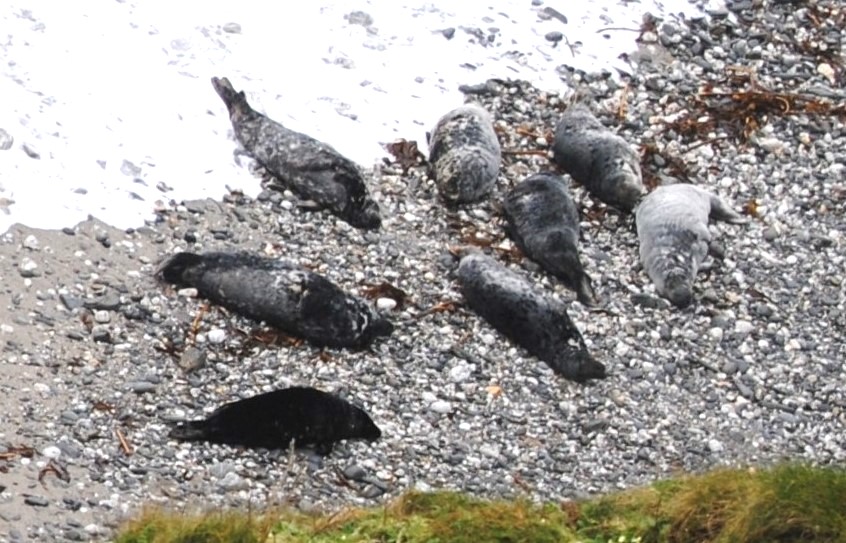
Grey seals are larger, often darker, greyer and with a more aquiline profile to their muzzles and their eyes are set further back. The greys tend to lie close together in groups when hauled up on the beach.
Here is a mixed group, some lying like bananas to keep their extremities out of the surf as the tide comes in. You’ll often see them doing this perched on a rock as the tide comes up to eventually lift them off and remind them that it is time to go and hunt.
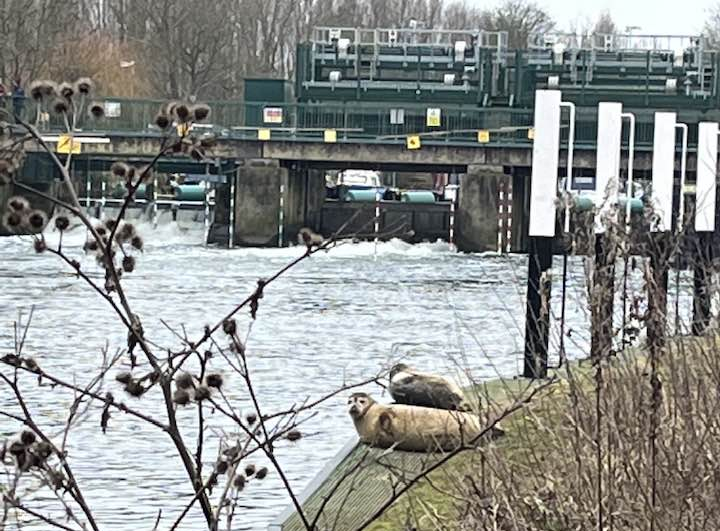
As their numbers increase their distribution is becoming wider. My other daughter took this photo in Peterborough, 40 miles inland.
Two common seals by the lock on the River Nene in Peterborough. Man is no longer the top predator of seals here, but killer whales keep down their numbers in Scotland and hunt them in shallow water, and the inlets of sea lochs, David Attenborough said so — will they eventually follow them down the coast and up the Nene? That will give us something other than sewage to worry about when we do our wild swimming and canoeing!
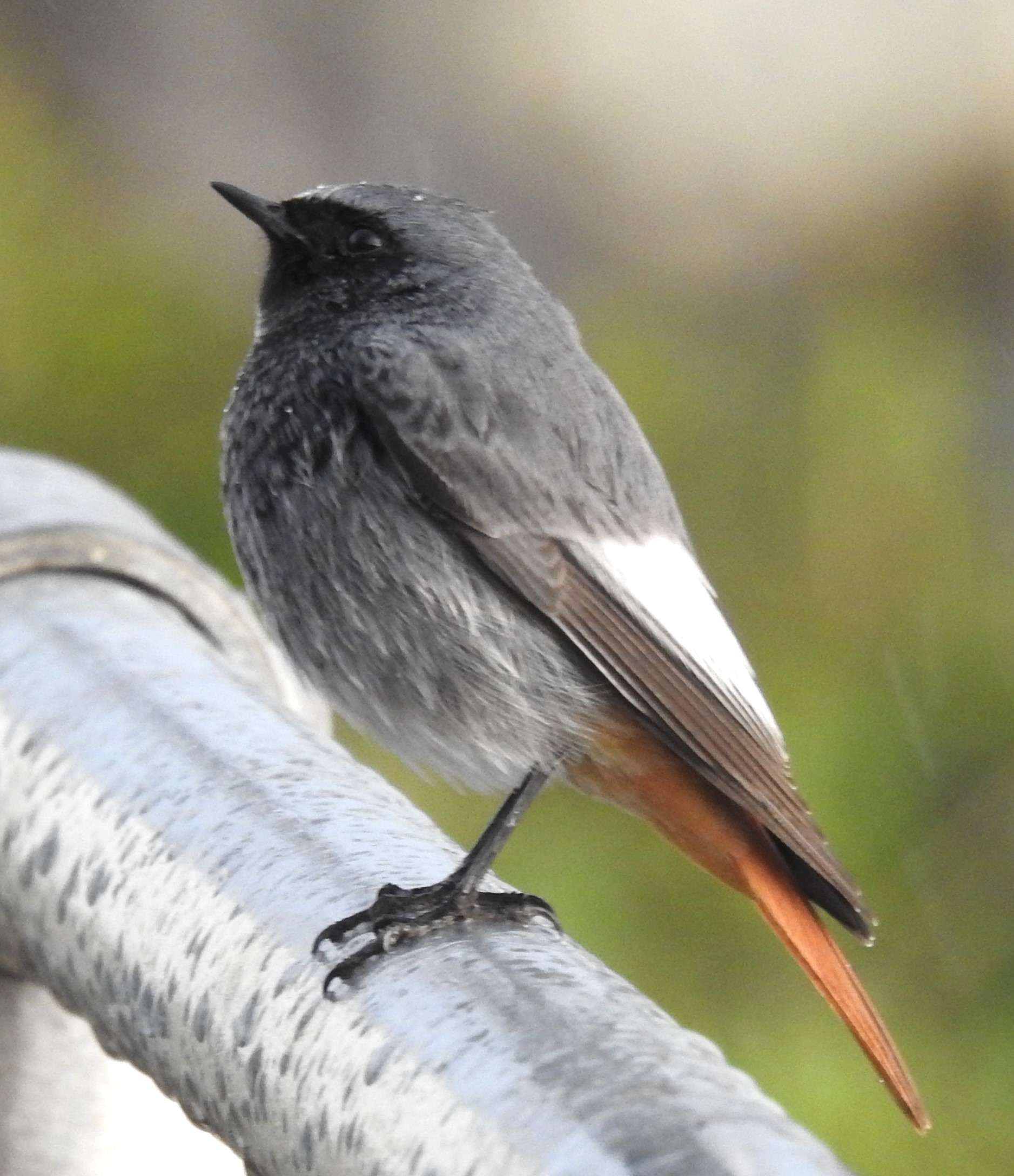
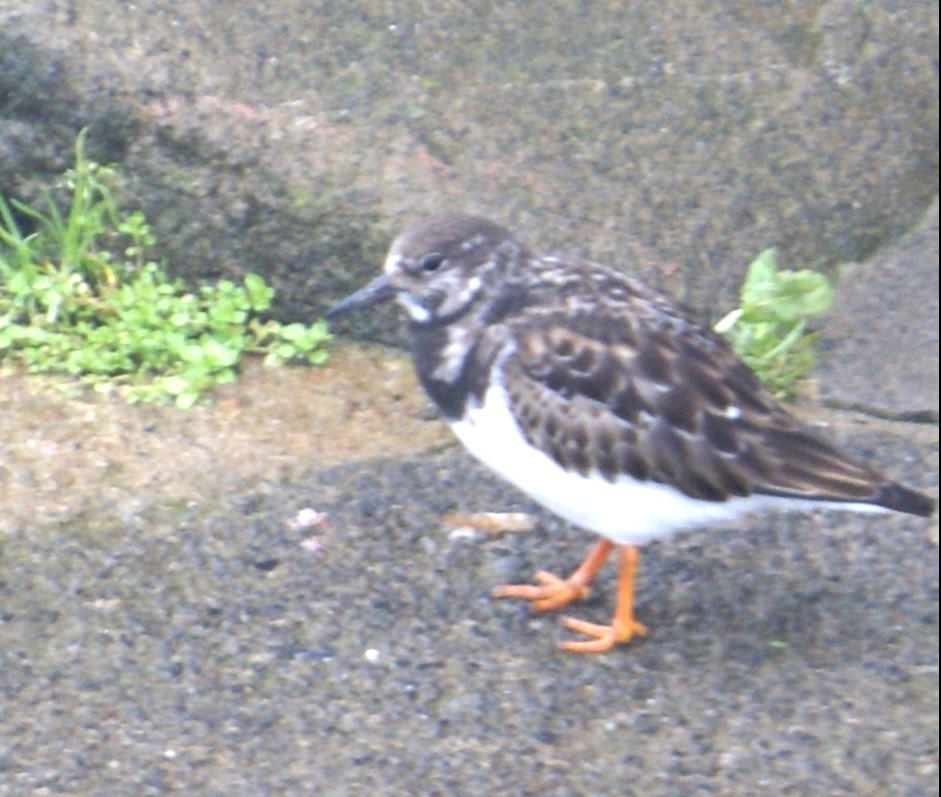
Newlyn is our favourite harbour. It may be an Icelandic gull or a black redstart that draws us, but it is the turnstones at the harbourmaster’s office that enchant us, dashing about avoiding the comings and goings of vehicles instead of waves, as they monitor the sandwich situation within and without the office.
Seems to me that in recent years the fishing fleet is looking smarter and younger. But then, I find that’s true of most things!
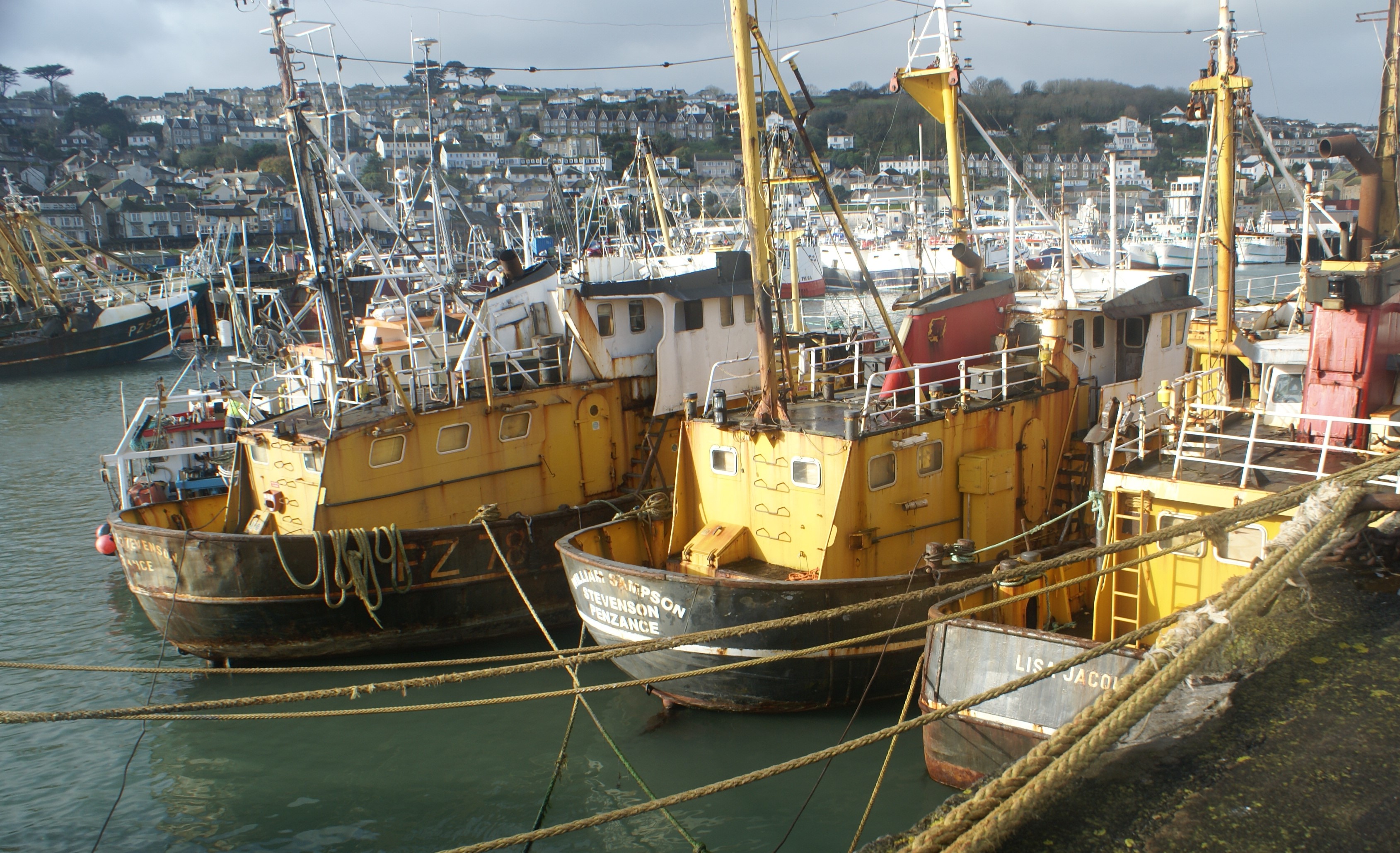
But there are still old friends —
and ropes to trip over
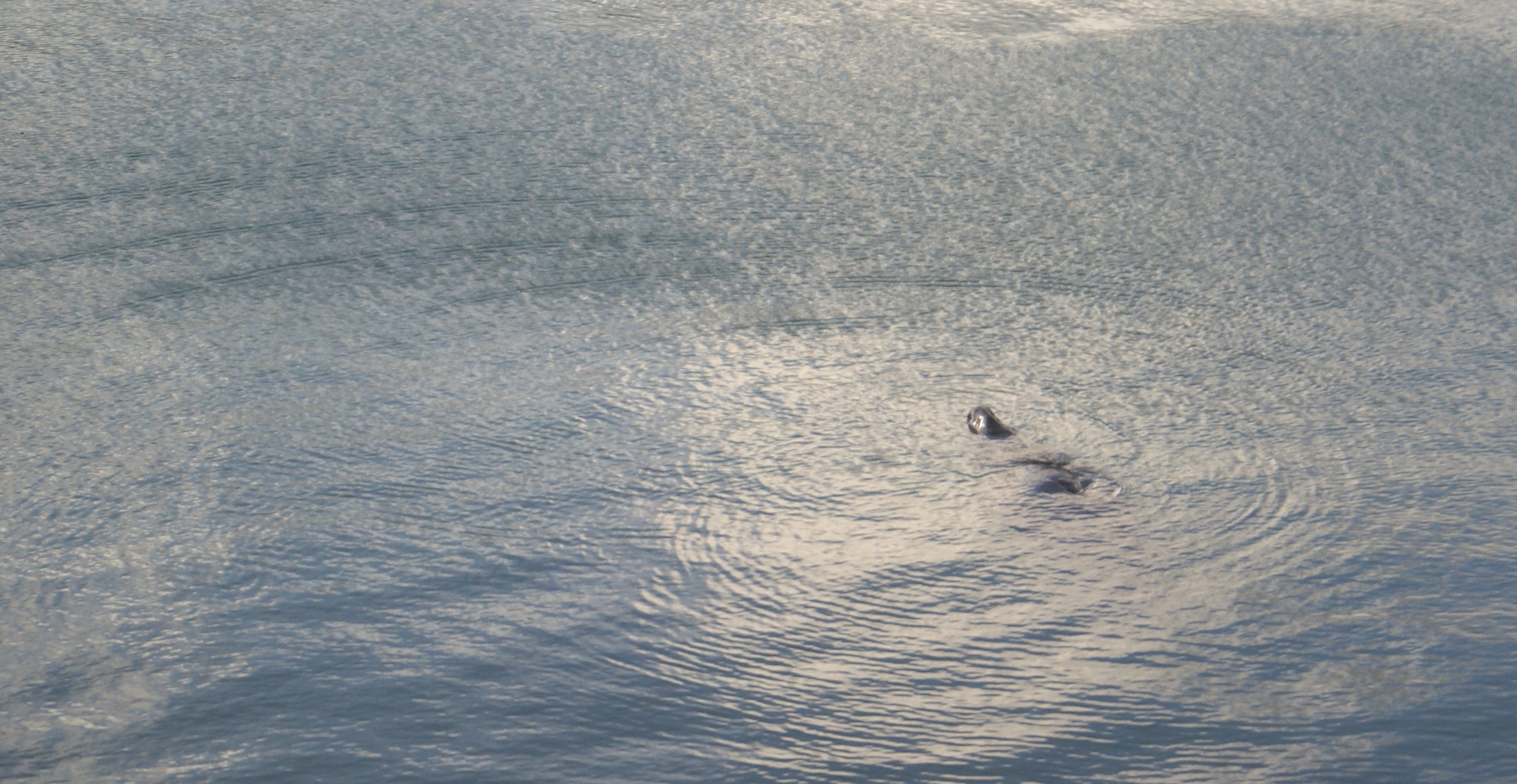
potentially propelling me into the green depths and alarming the old seal lolling in the harbour waiting for the tide to rise high enough for him to snatch the discarded crabs.
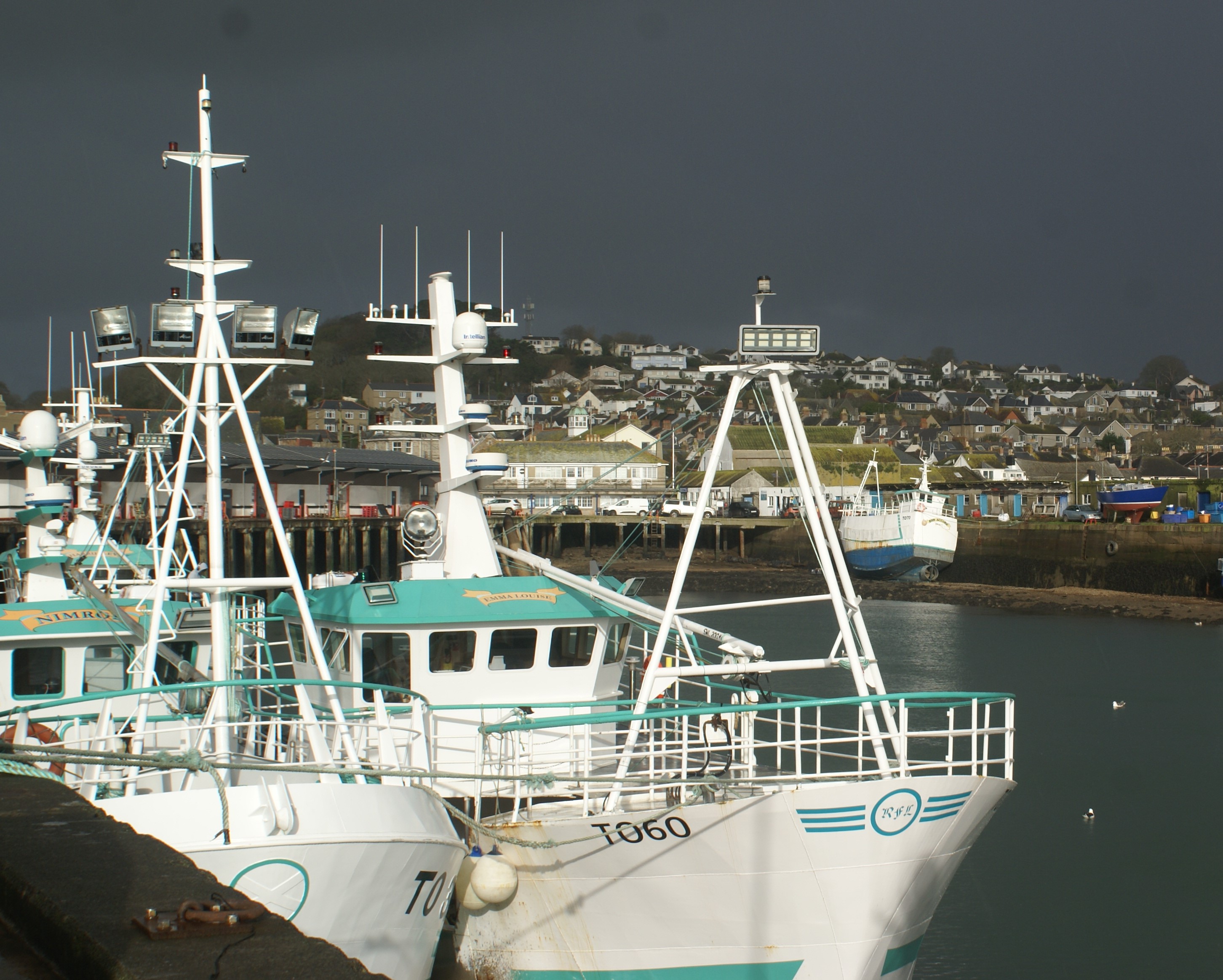
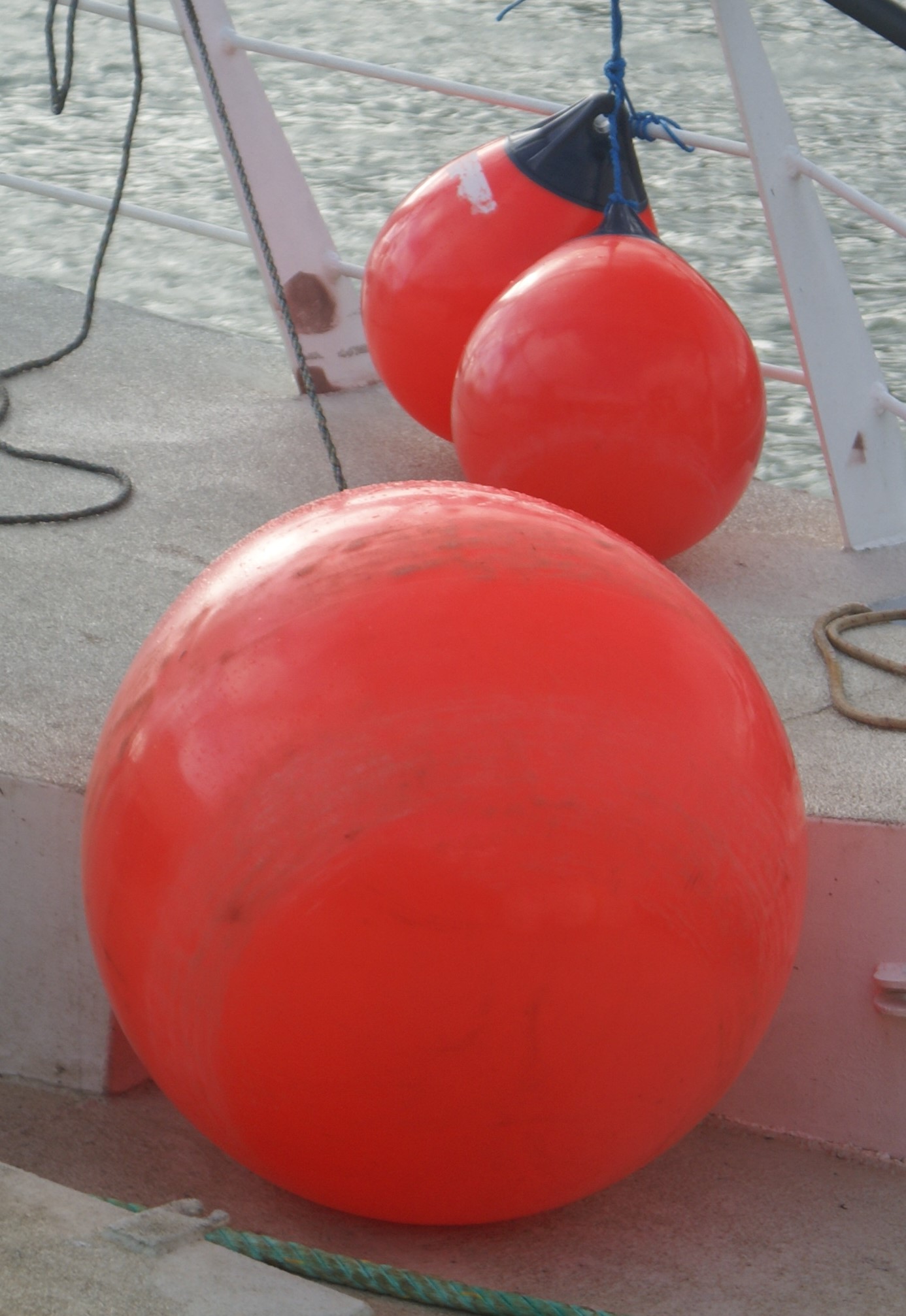
The bright young boats are hung with clusters of fenders like boat-eggs, tended by fishermen.
Notice the threatening weather which reminds us of the rigours of their chosen occupation.
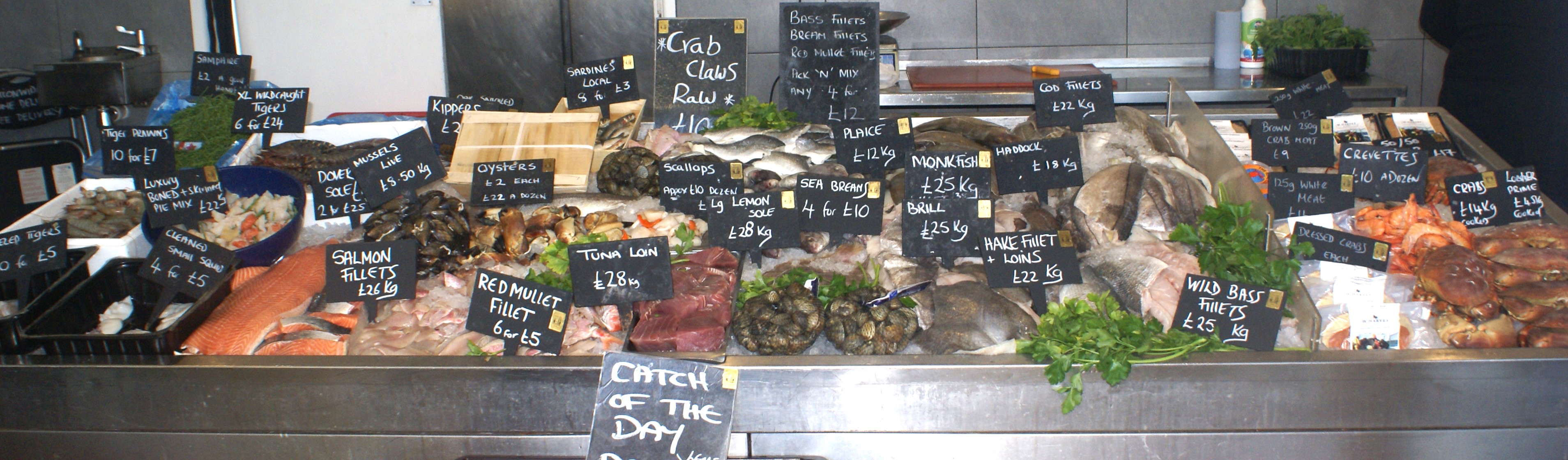
The best thing about visiting an active fishing port is the evening meal.
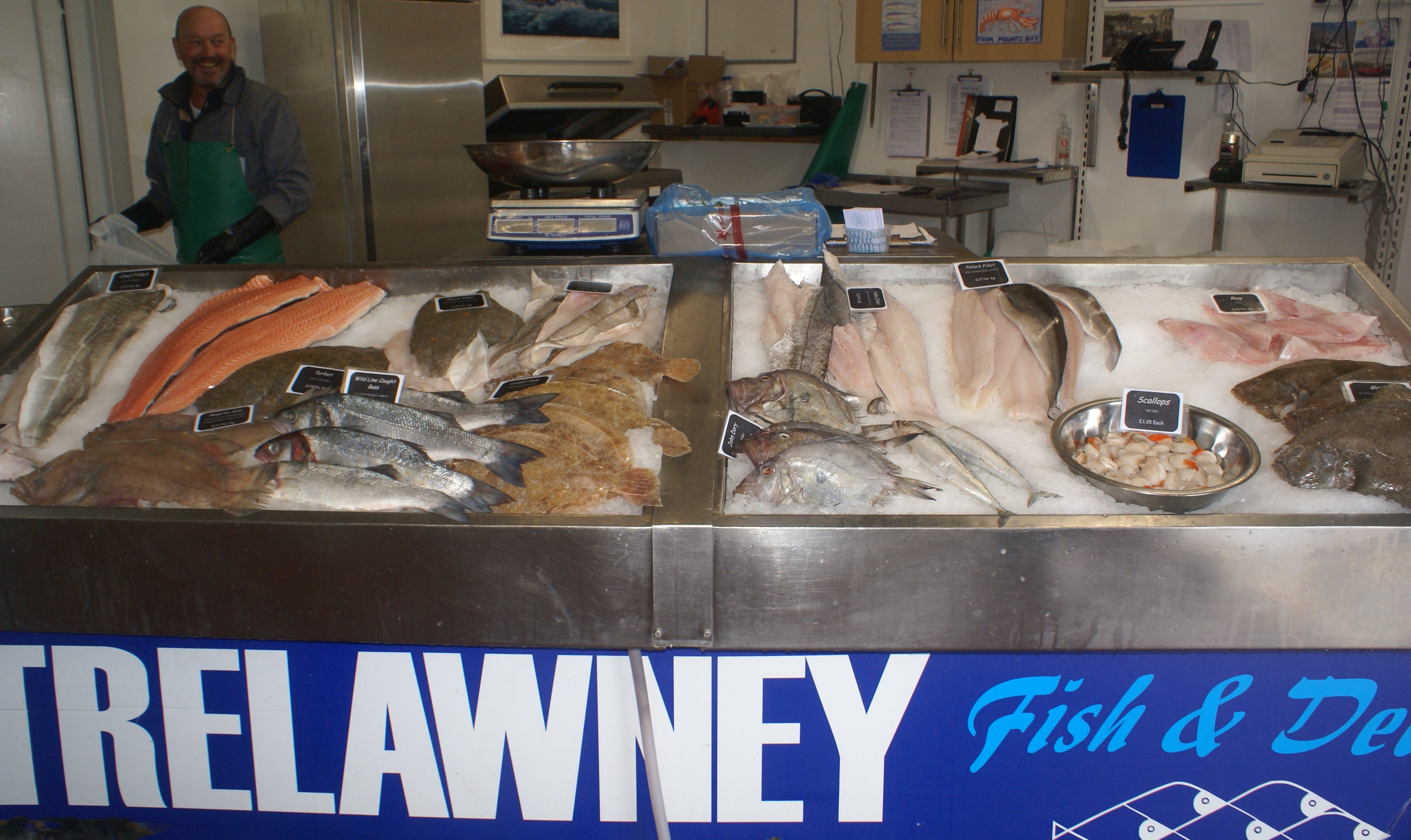
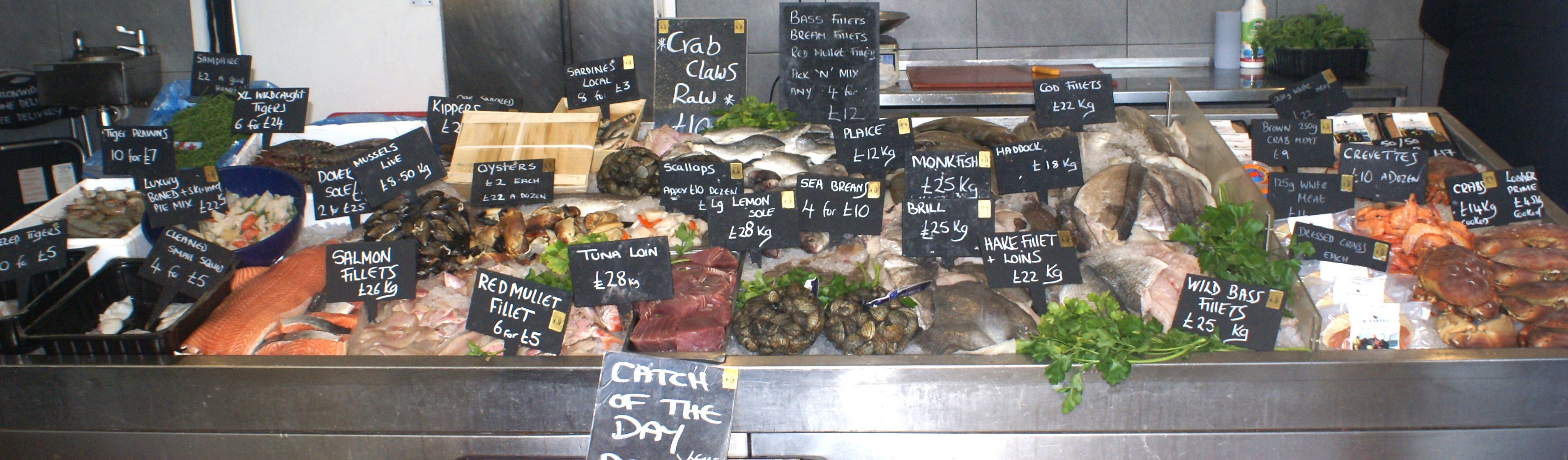
Brill for dinner — filleted, this monster landed the night before, just fitted into the largest available pan. Fried in butter… delicious!But there are two fishmongers behind the fish market at Newlyn and others in the town — it is impossible to pass without buying in both so there will be a starter of crab!
Film by Bill Carr featuring his dad, my daughter’s partner, Pete. The project is part of Bill’s university course and takes ‘helping with the homework’ to a whole new level!
Yesterday was not the right time of the year for birdwatchers to visit the Scillies — too late for migrants and not enough wind for blown-in vagrants.
But yesterday was exactly the right day to travel to the Scilly Isles — not a breath of wind, brilliant winter sunshine and water like a millpond.
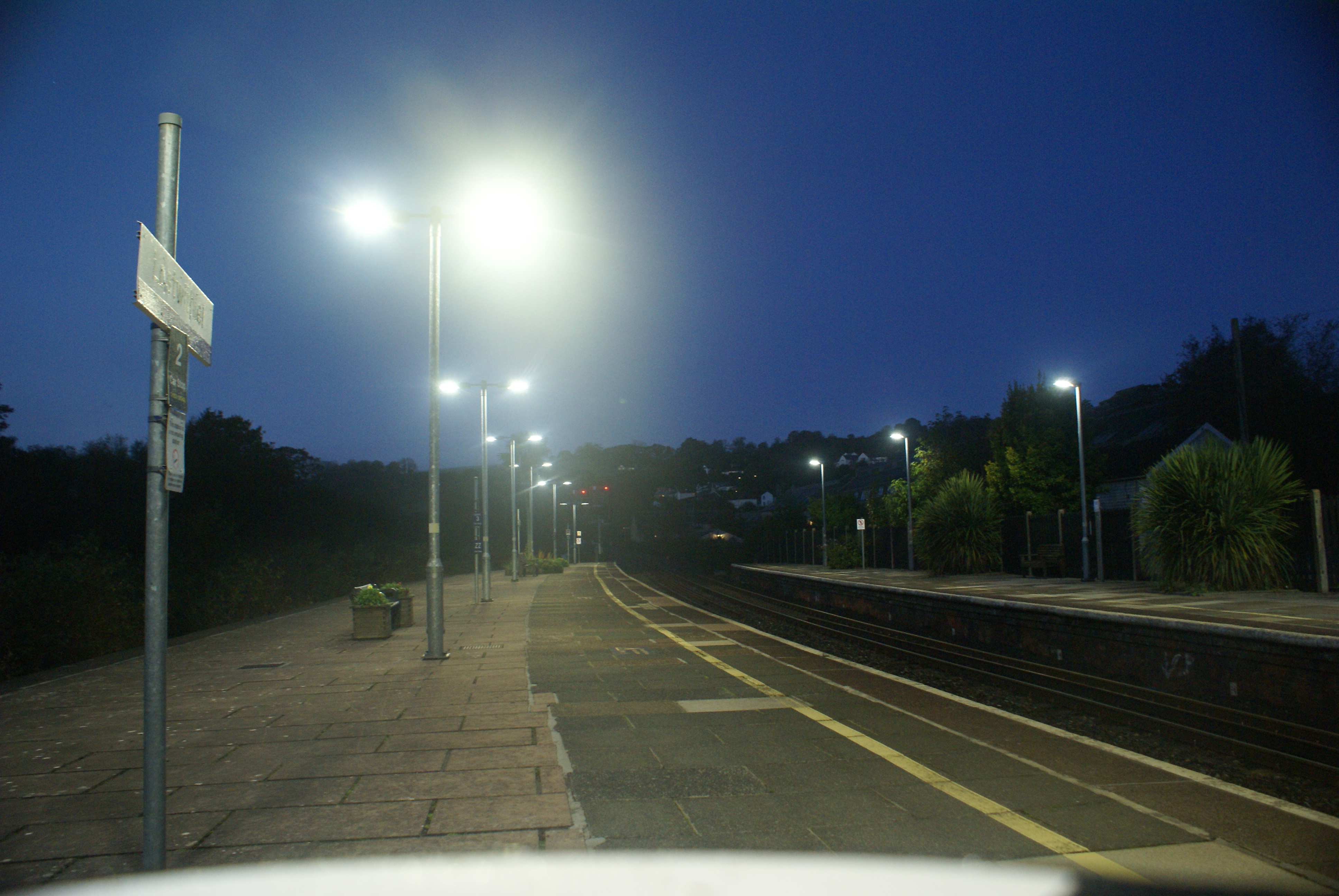
So catching the train to Penzance before dawn,
we piled onto the Scillonian III with lots of other followers of the weather forecast. The islands are about 30 miles from the tip of Cornwall.
Scillonian III has been the setting for more vomiting anecdotes than any other — in any family. Frances’ last word to me was “Travel sickness pills!” William, Bill’s eldest, had undermined confidence in his turn on the school trip to the Scillies by asking about what had happened to Scillonian I and II. Indeed one had hit the rocks in 1951 but it had not sunk!
Unlike many other ships. On our outward journey Bill regaled me with tales of Sir Cloudesley Shovell, a mate of Marlborough (his hero) who lost four ships on the rocks around the Scillies in 1707, with the loss of nearly 2000 sailors. This may have been due to the problems at the time in plotting longitude, though 80 years later it was rumoured to have been due to the Navy’s failure to listen to a seaman, native to the Islands, who told them they were heading for the rocks! He was hanged for trying to incite mutiny. This may or may not have been true or may be an early example of how we edit history according to our own prejudices!
Still lots of dodgy rocks around, some of which you can see — lots you can’t.
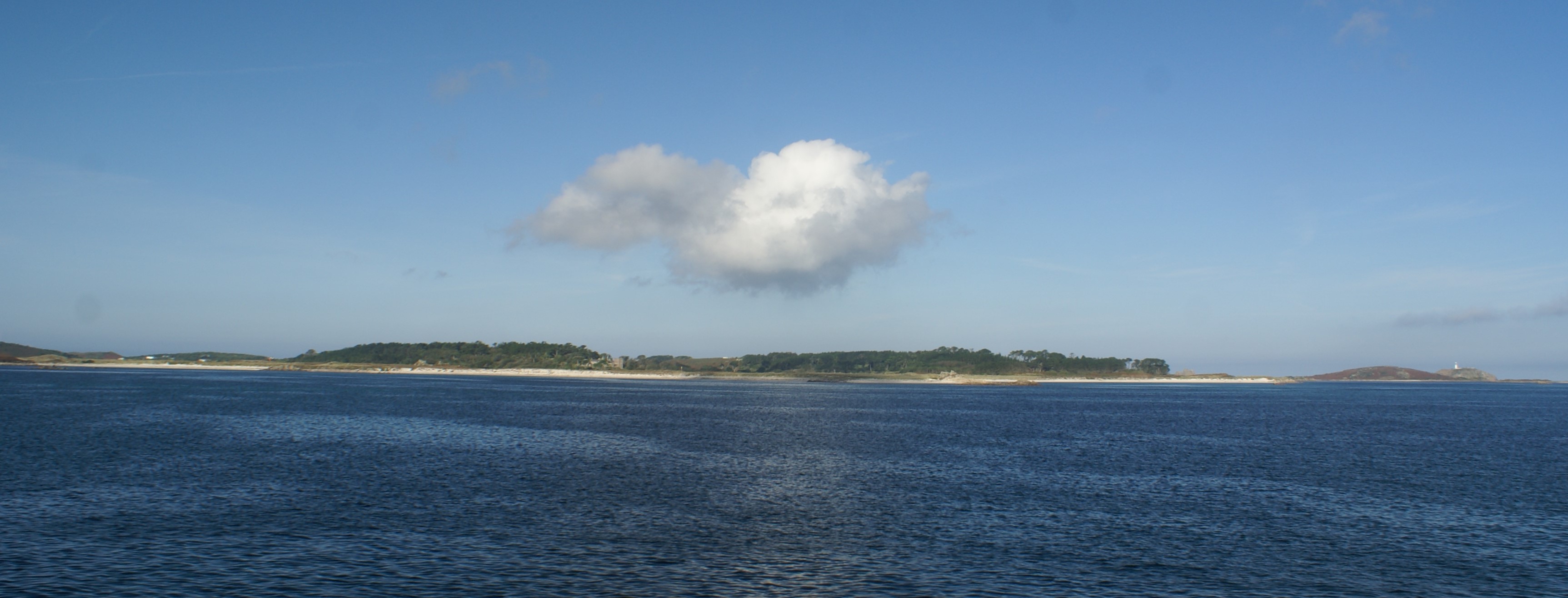
Yesterday the islands looked tropical.
The beech was patrolled by a little platoon of ducks and one or two people were swimming without wet suits. We did see some birds:
Rock pipit stowaway — the only way to migrate!
What a surprise — a water rail — sadly deceased.
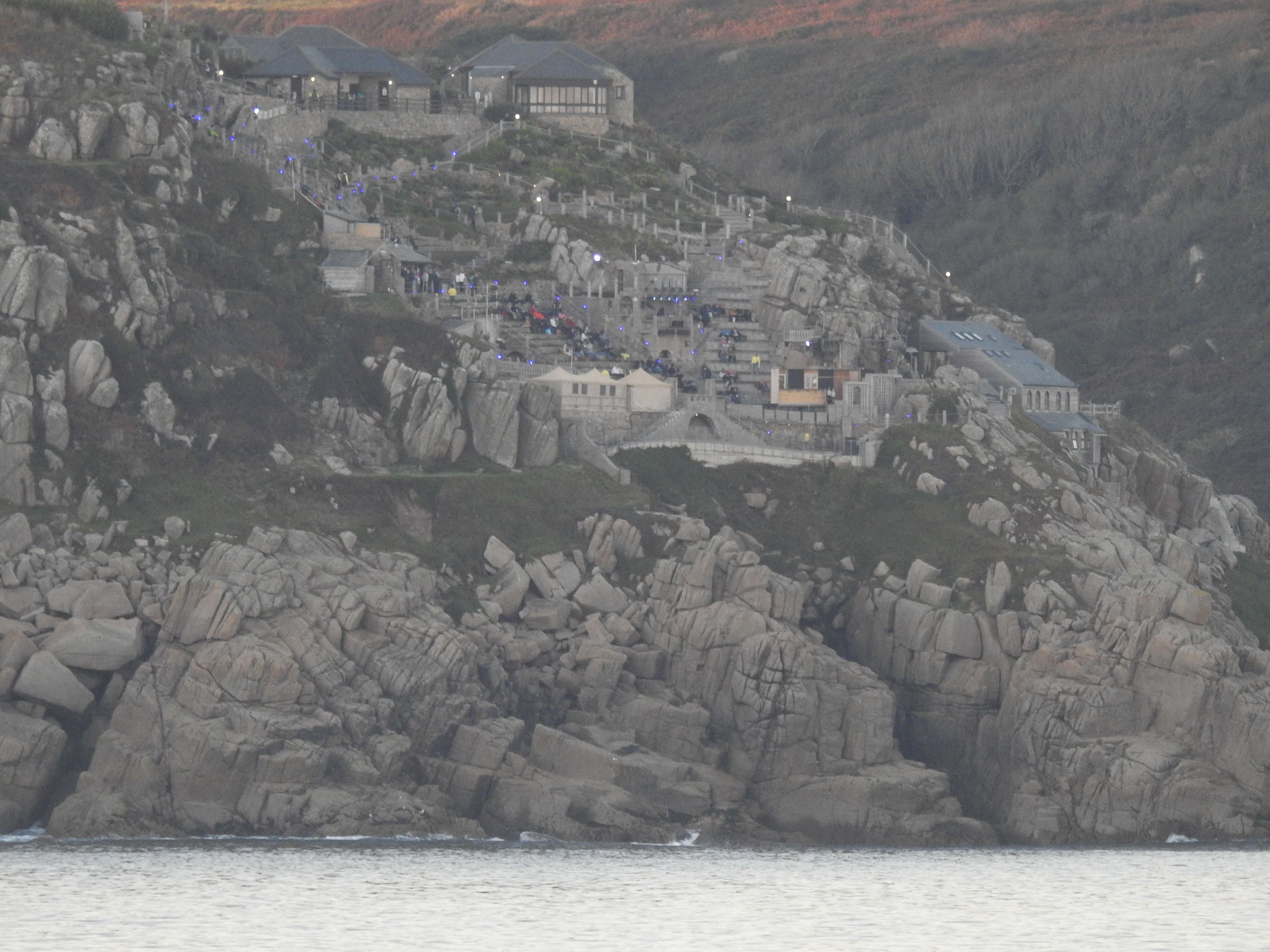
Comical turnstones jostling to get to the seaweed as the tide goes out, but they don’t like getting their feet wet so run up and down the beech with each little wave. Back to the mainland and we see the familiar outline of the Longships lighthouse on the Carn Bras off Land’s End.Then passing the Minack Theatre at dusk, perched on the cliffs with its muffled hardy audience — it is October!
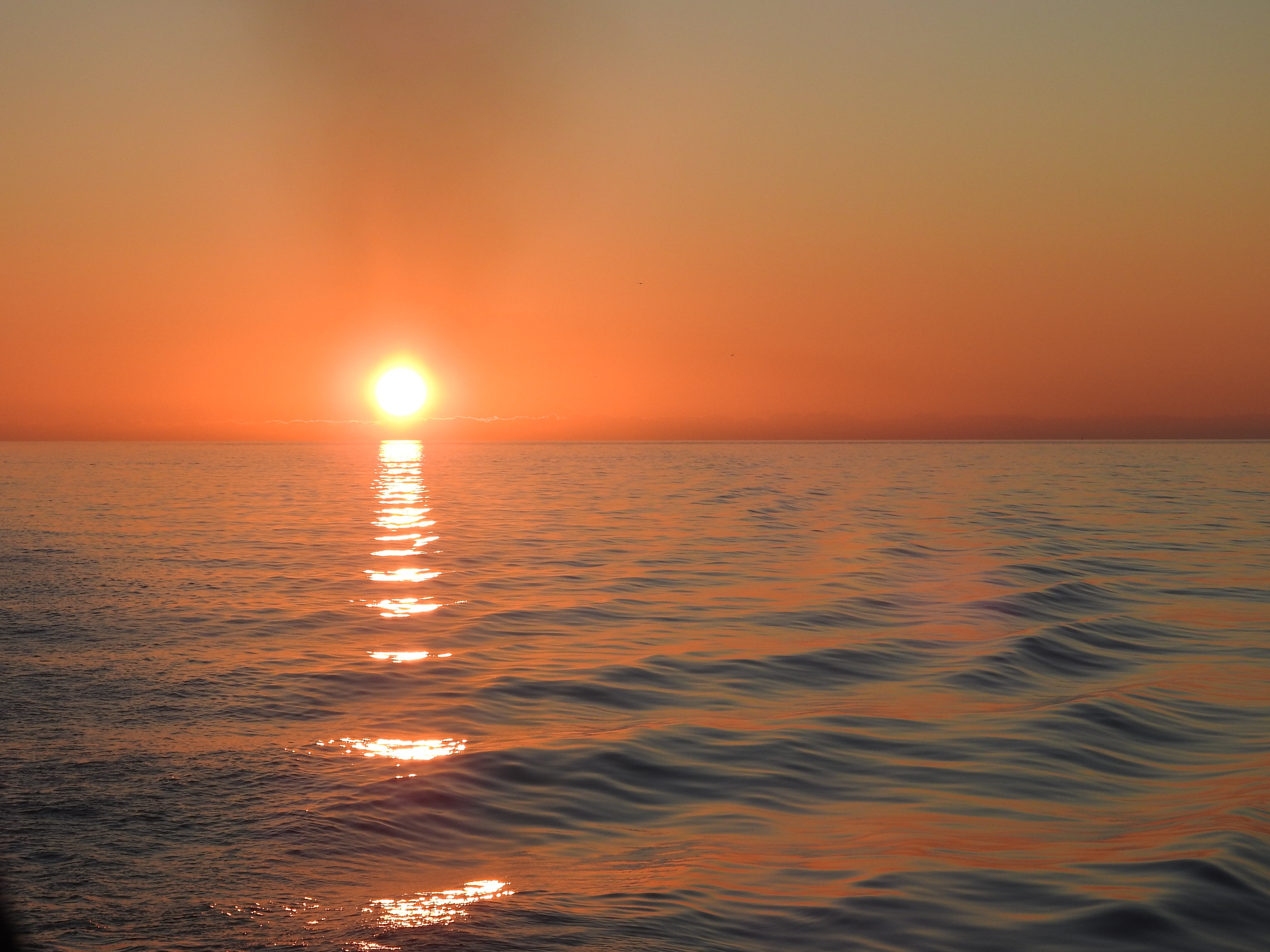
As we head back along the south coast of Cornwall, the passengers all gather on the aft decks and despite an increasing chill, gaze as one at the mesmerising sunset. No one looking at their phone or scanning the sea for more dolphins — as man has done for ever, we watched the sun go down.
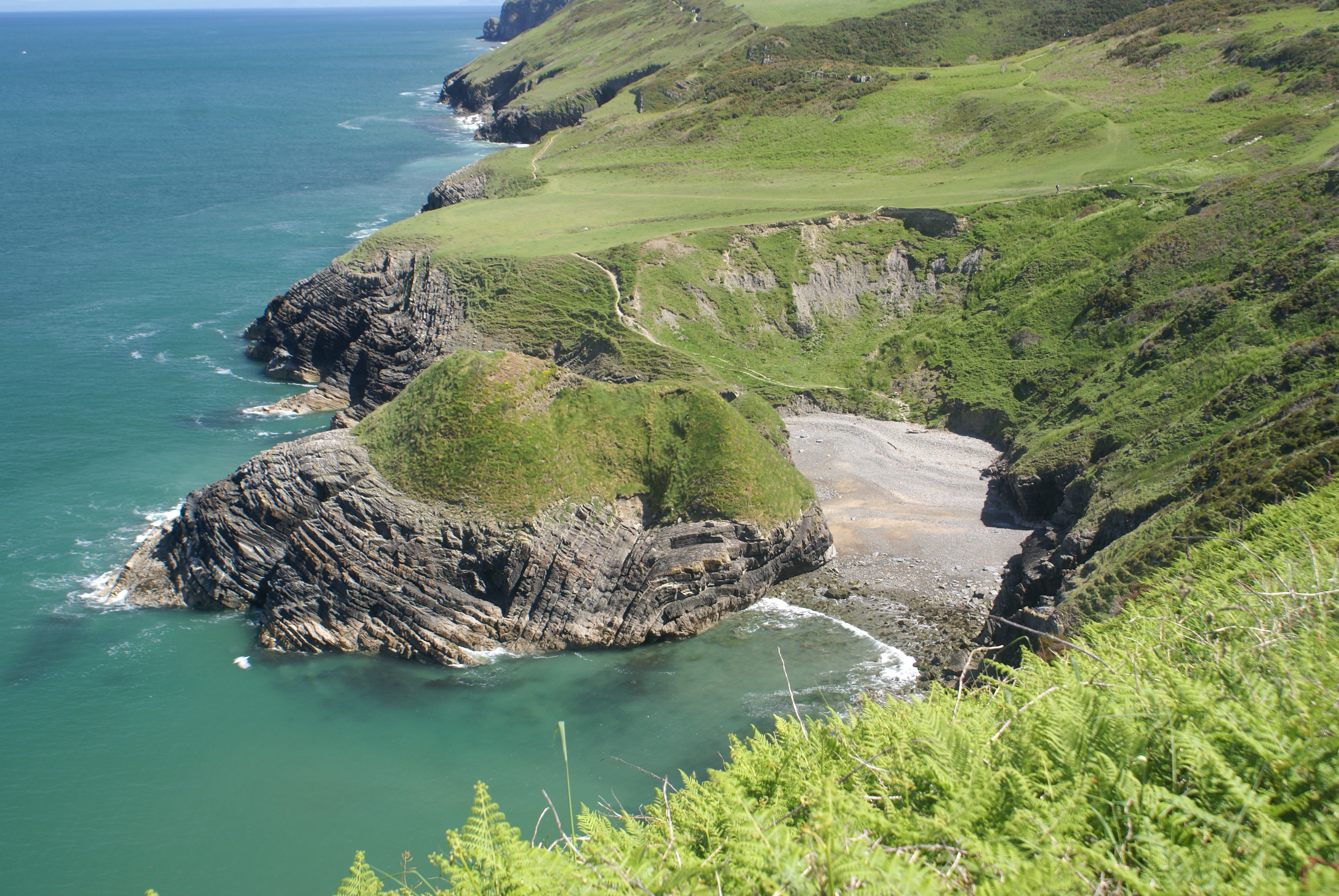
It may look like Cornwall but you can tell it’s not Cornwall because there aren’t any people, police, naval ships, radar installations, helicopters or motorcades. And no G7 demonstrators — a beach near my daughter’s Cornish home has been piled high with the undead bodies of middle aged ladies dressed as dead mermaids! All very artistic. No, this is Wales, this week at Cwm Tydu and I had no idea that this part was so beautiful.
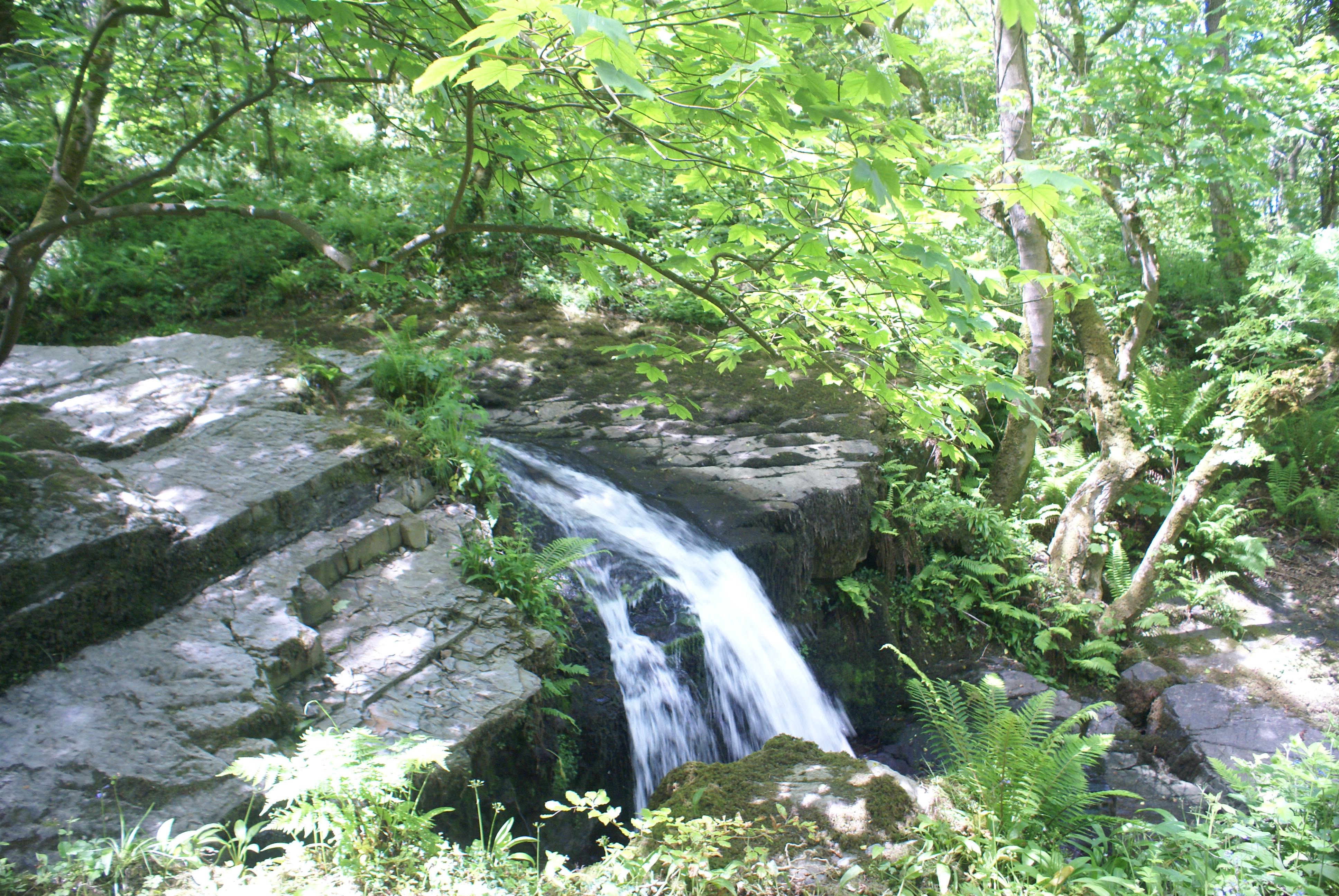
Rain Forest!
One or two midges by the stream and butterflies in the meadow. Best of all (you may remember how long I hunted these last year) there are choughs! Spotted by chance and very active probing for ants on the grazed sward, just as they like it, courtesy of wild ponies.
Its a shame their bills and feet are so muddy, you can’t see how vibrantly red they are. Never mind — the news is good about these rare birds because the previous day we saw a chattering of them swooping above Bird Rock, north of Aberystwyth showing the splayed, finger-like feathers at the ends of their wings– seems their numbers may be on the up.
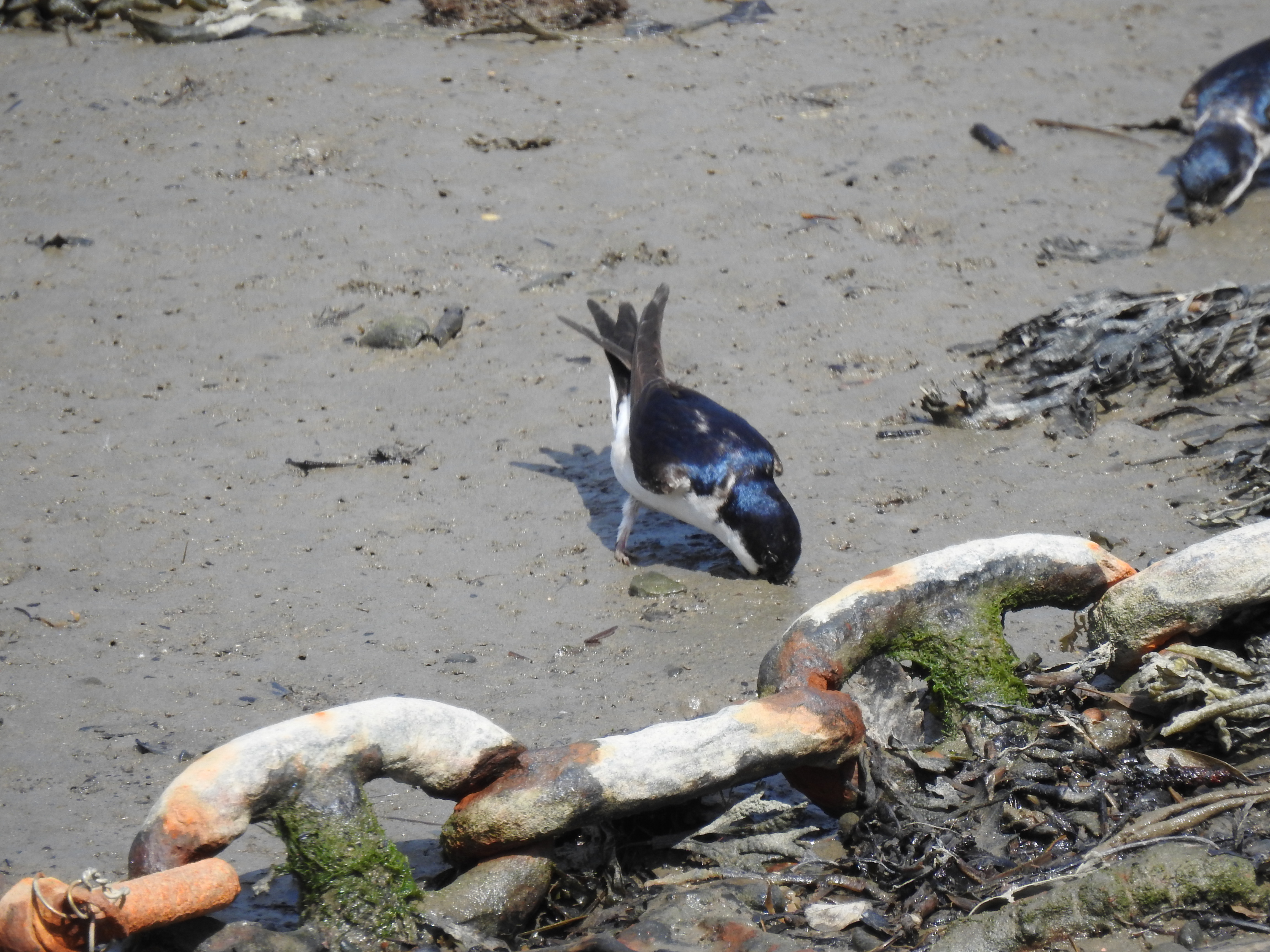
Mud is the order of the day — here one of the many house martins at Aberaeron harbour is collecting mud to build his house.
The common whitethroats are displaying.
Everywhere there is the hum of bumble bees making the most of this years blooming of the dog roses.
This one has so much pollen in her sacks it is a miracle that she can still fly — but then wild life is full of miracles.
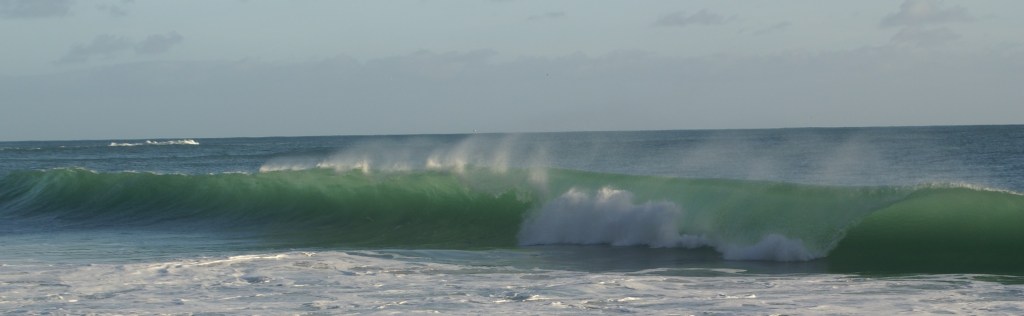
On a bright winter’s day, descending from the cliff at Porthcurno, Cornwall.To the beach where a few onlookers, drawn by the scene, look out to sea.Transfixed by the waves!
A magic place, soon after dawn (which isn’t very early) on the Fowey estuary in January. Lapwings cluster on the sandbanks and the eerie calls of the curlew heralds the progress of the seasons.
Snow drops are under the bare oak in St Winnow’s churchyard, primroses blooming and campion in the hedgerow under the golden gorse. All in the cool moist air that reminds us of our amazing good fortune as family and friends in Australia (who used to tease us about our rain) suffer unimaginable heat and anxiety. They are living with the threat of loosing everything they hold dear in a biblical inferno.
I wish I could send them all a little while in the cool of St Winnow’s churchyard.





























 dianaashworth