Birds, Ecology, Hill Farming, Uncategorized

Faux Christmas?

A friend of mine has just returned to the UK having lived for several years on the other side of the globe. She explains her disorientation in time and space on the disruption to her seasons (I have no excuse!). It’s mid-summer here and mid-winter in New Zealand, where those who suffer from European nostalgia have a pretend Christmas.
Here on our smallholding in Mid-Wales we do something similar — opening our gifts on one particular day. It’s exciting. It’s bird-ringing day! Not their necks so that we can roast them with pigs-in-blankets and plum pudding, but counting all the year’s baby birds, catching the fledgelings that are about to leave their nests and, in particular, those in our nest boxes and ringing them. A right of passage — a birdy Bar Mitzvah — we should have a party!
At a time when we feel we will be overwhelmed by the sheer fecundity of our temperate rain forest, it is good to have some positive feedback for our efforts for wildlife. We are engulfed in 8 foot bracken and torn at by wildly flailing tentacles of bramble that reach out across the tracks to grab us as the mower clogs and stalls yet again, which is just as well as it is overheating.
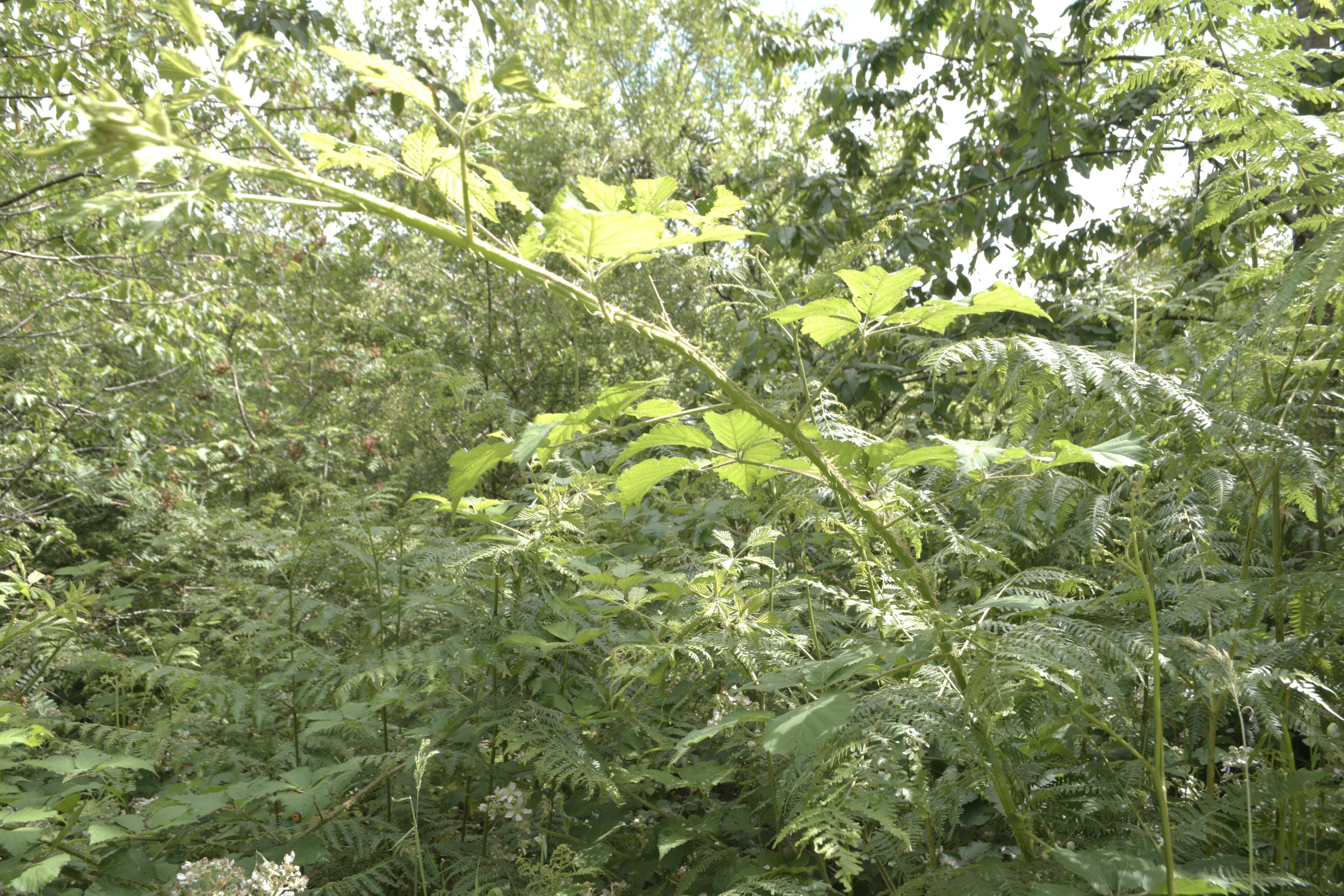
The cloud of buzzing flies that pursue us fails to reassure us that our local biosphere is healthy or that forswearing insecticides was a good idea. But counting birds does.
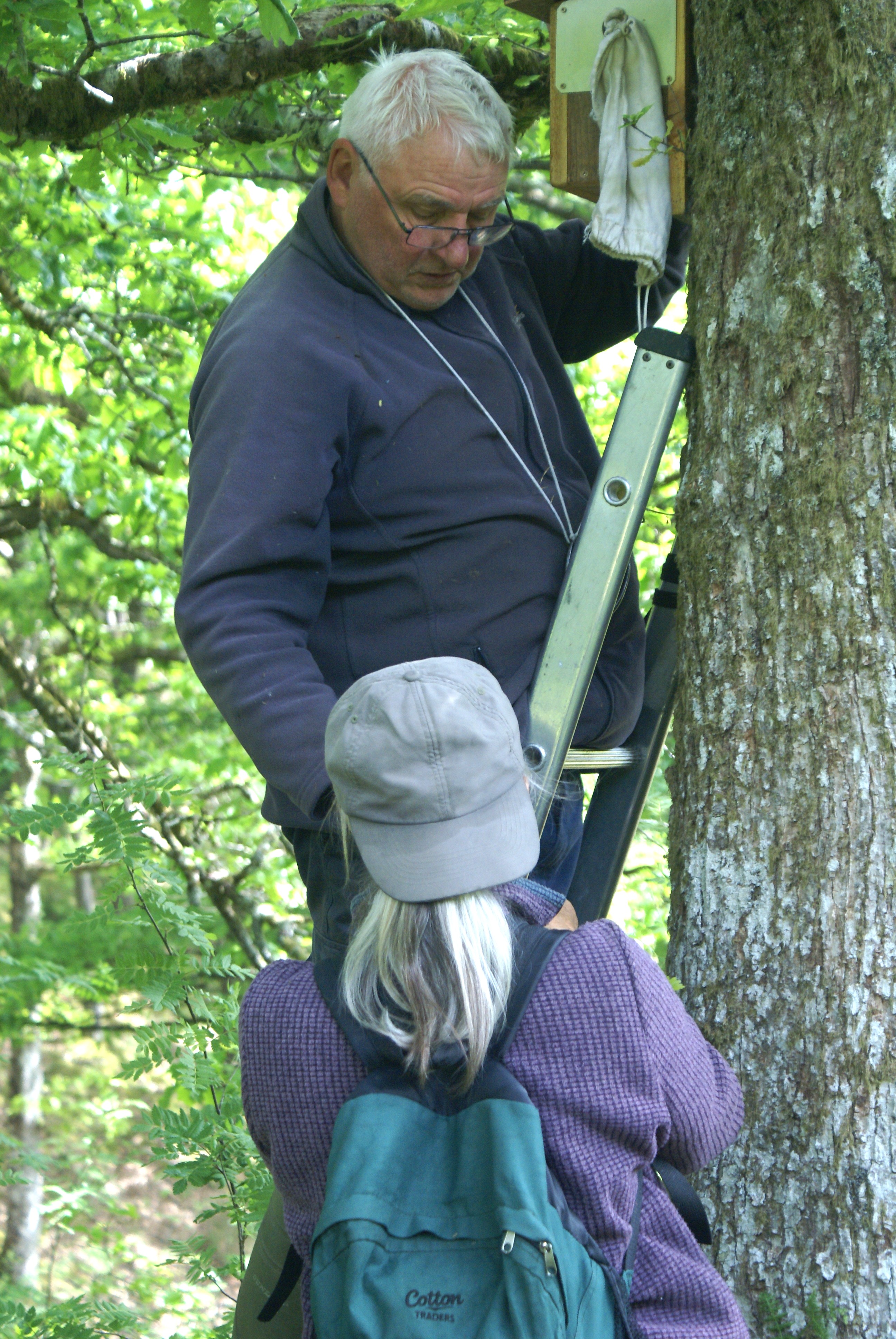
Jon and Jan

The stalwarts from the Habitat Protection group have made their annual visits and this year has been very good for blue tits — 52 chicks from 5 nest boxes. How’s’at for productivity! It represents a lot of caterpillars! Lots of work from this top-of -the-table, enterprising species.

A better year for our “target” species, the more endangered pied flycatcher. They produced 24 chicks from their 5 nests. Up 20% but one of their nests failed completely last year — we suspected a great spotted woodpecker. It’s harder for pied flycatchers as they are migrants and have to co-ordinate their arrival with the weather and the caterpillars, not to mention competing with the locals for nesting sites and finding each other again as the males arrive first.

Pied Flycatcher

There was only one nest of great tits but they produced 7 chicks.

Great tit fledgeling

Three of our 14 boxes were empty; today I noticed a great spotted woodpecker squarking a warning to its own fledgelings — wildlife is a balance.

They also ringed a treecreeper fledgling hopping about and keen to be included. They tend to nest in the holes between the roots of the oak trees and in the deep splits in trunks, we watched one earlier this year taking lots of spiders to a nest on the hill.

So, inspired by all this avian fertility, we bash on with re-establishing the tracks to maintain some sort of access to our wild areas and woodland and uncover the diversity that is appearing and a weighty crop of rowan berries and wild cherries that are already keeping the blackbirds and thrushes busy.
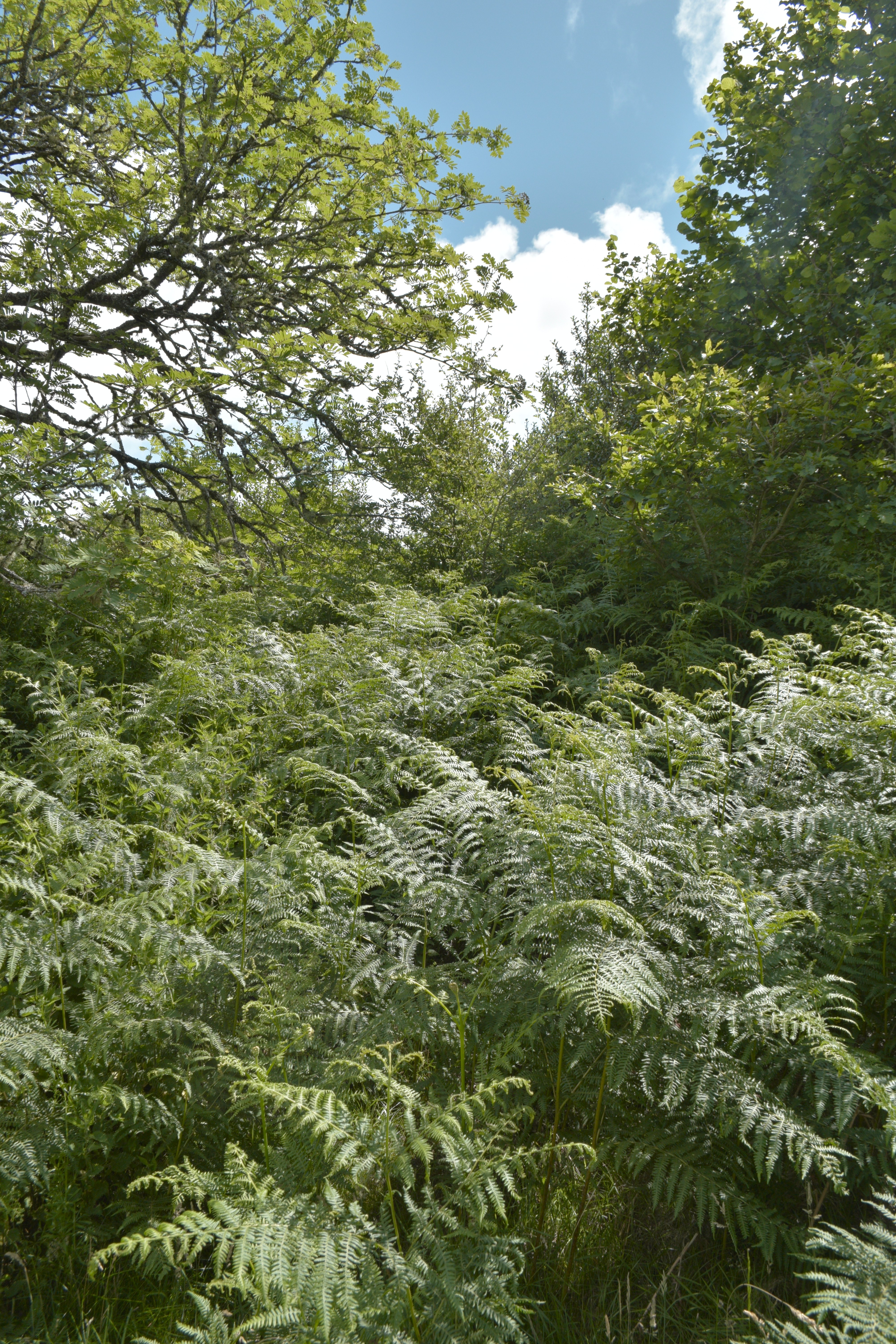
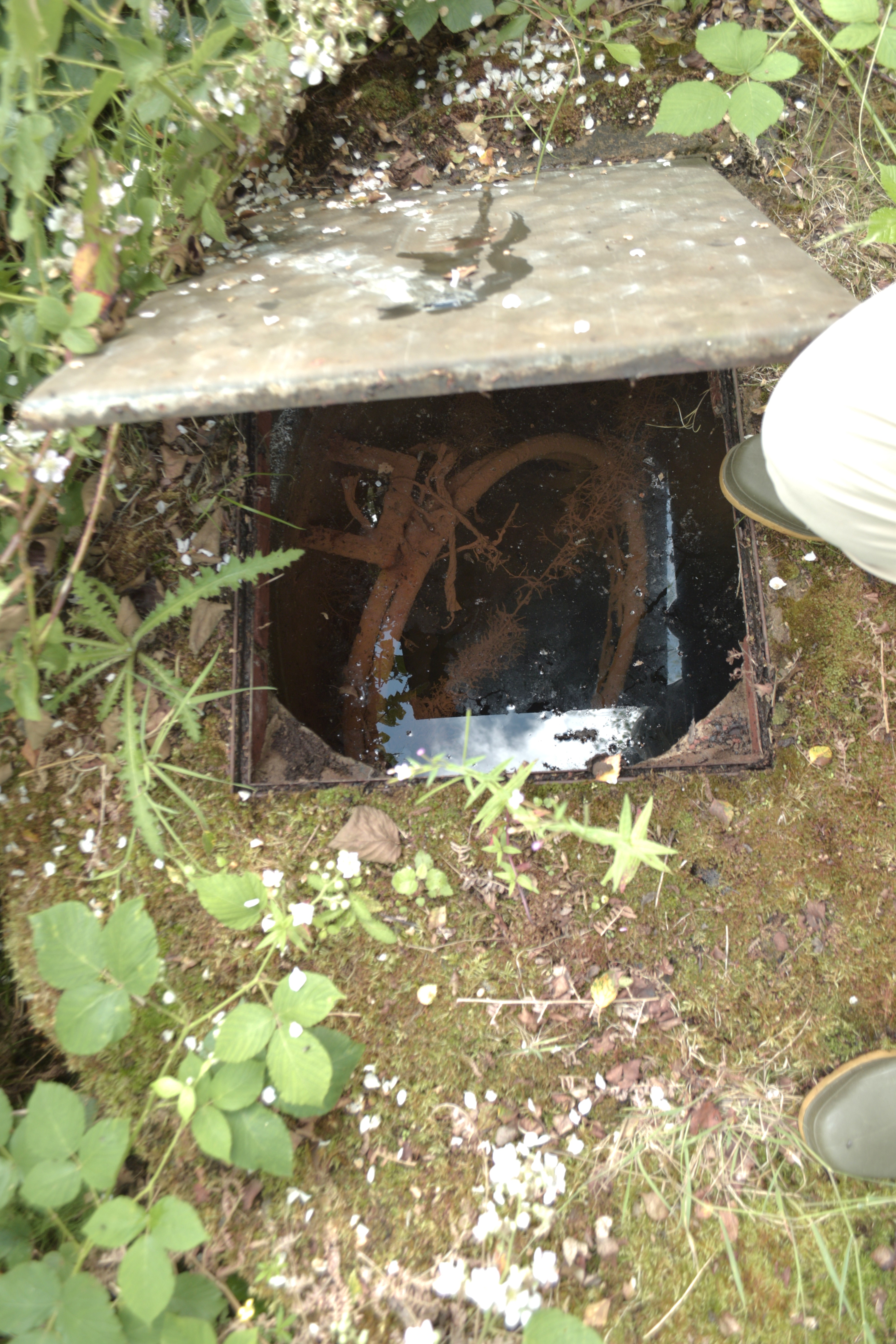
This is the time of the year when we regularly lose our well and it is quite important that we find it in its nest of horsetail ferns and overgrown by all this burgeoning diversity. Here it is and it’s full.
Standard
Ecology, nature, Nature Photography

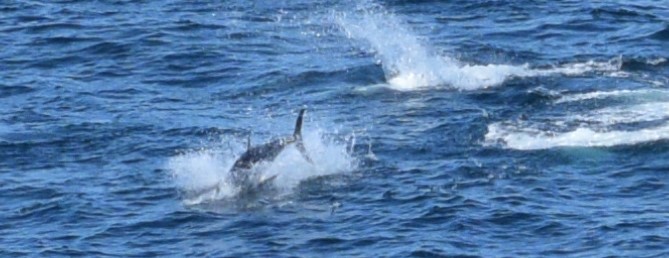
Would you believe it? Blue Fin Tuna!

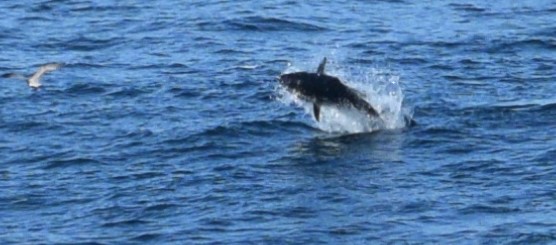
Here’s what we saw from the cliffs at Land’s End, the most southerly point of mainland Britain on our recent stay in Cornwall.

A disturbance — turbulence in the water and excitement amongst the sea birds, swooping above the swirling and splashing.

Whatever they are they are large as you can see, we are looking from a long way off.

Is it a shark? It looks like a tuna but surely they don’t swim off Cornwall — all the photos of big game fishing show men in Edwardian dress.

Here you have it — It’s official. The Blue Fin Tuna has returned to British waters. Either because of global warming, or the demise of the inshore fishing industry or because of excellent fishery management — they are back.
Blue fin tuna chasing shoals of smaller fishes around the rocks where the bait fish try to escape by jumping, and the opportunist gulls swoop to pick them off, mid-air.

Will they be fished to extinction again — hopefully not, there are now strict quotas, and fishery vessels patrolling — we saw Fishery Protection vessels as well as Border Force vessels from our viewpoint. A Border Force high speed rib was very actively chasing a fishing boat — by evening, the local News revealed that they had caught 6 tons of cocaine but no tuna!

Undercover surveillance?

Standard
Ecology

Rural sprawl — Natures fightback!

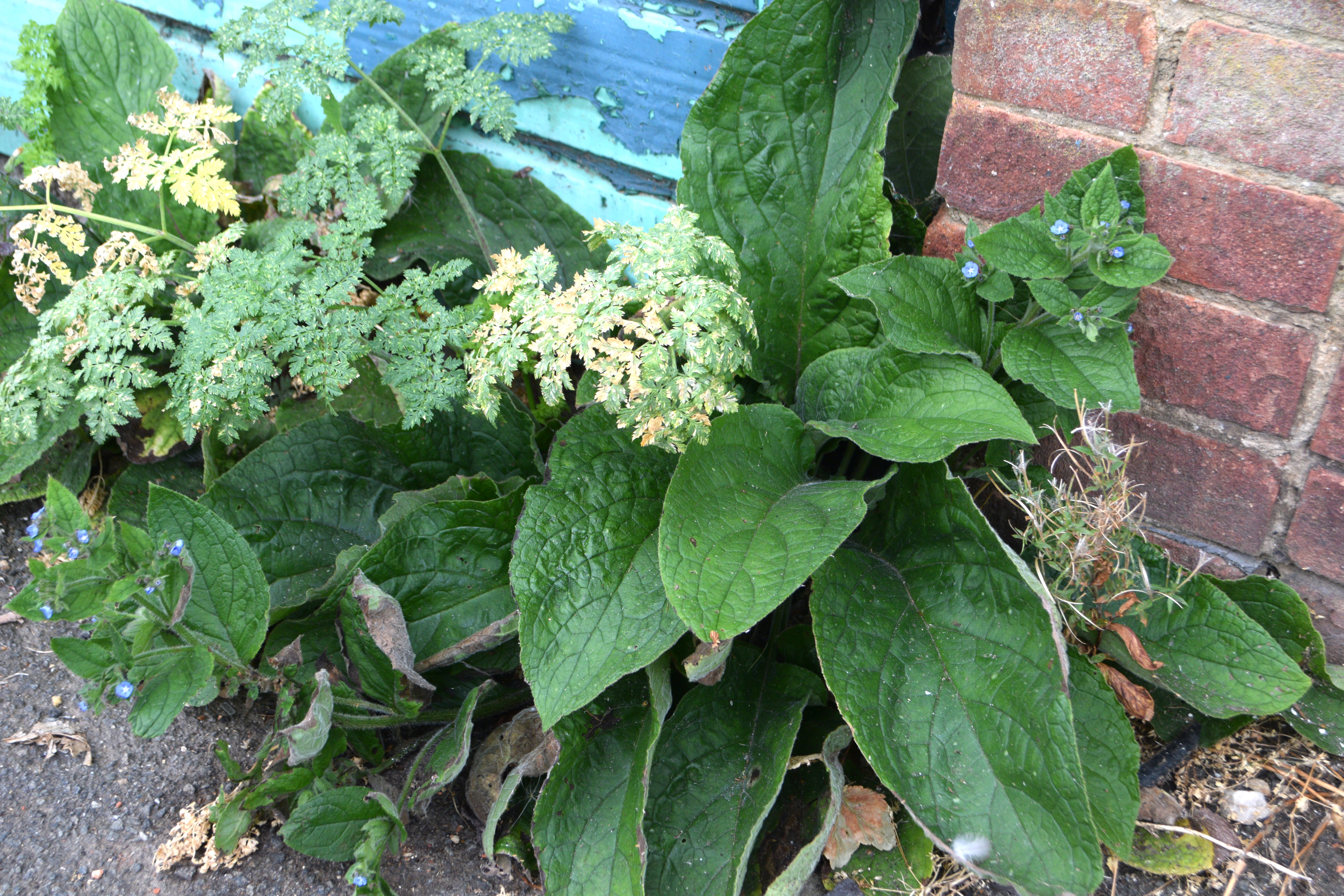
When I walk the pavements of the terraced streets of Kettering, where the mature lime trees seem to have pushed themselves up through the Tarmacadam, the thing that amazes me is all the life that emanates from the cracks. As if the countryside, on which our ancestors built this industrial shoe town, is still there underneath, escaping whenever and wherever it can– sometimes with evil intent. Above is green alkanet growing today in a crack with hemlock! I must remember not to buy flat-leafed parsley from the corner shop!

These houses are dated and most built about 125 years ago — the last time there were barley fields. In fact the predominant species are invasive like this rock fumewort (yellow corydalis) — it likes the well drained mortar of the old walls and has settled here from its home in the foothills of the Italian alps.

I love these hardy hangers on — maiden hair spleenwort, a fern that thrives in rocky crevices

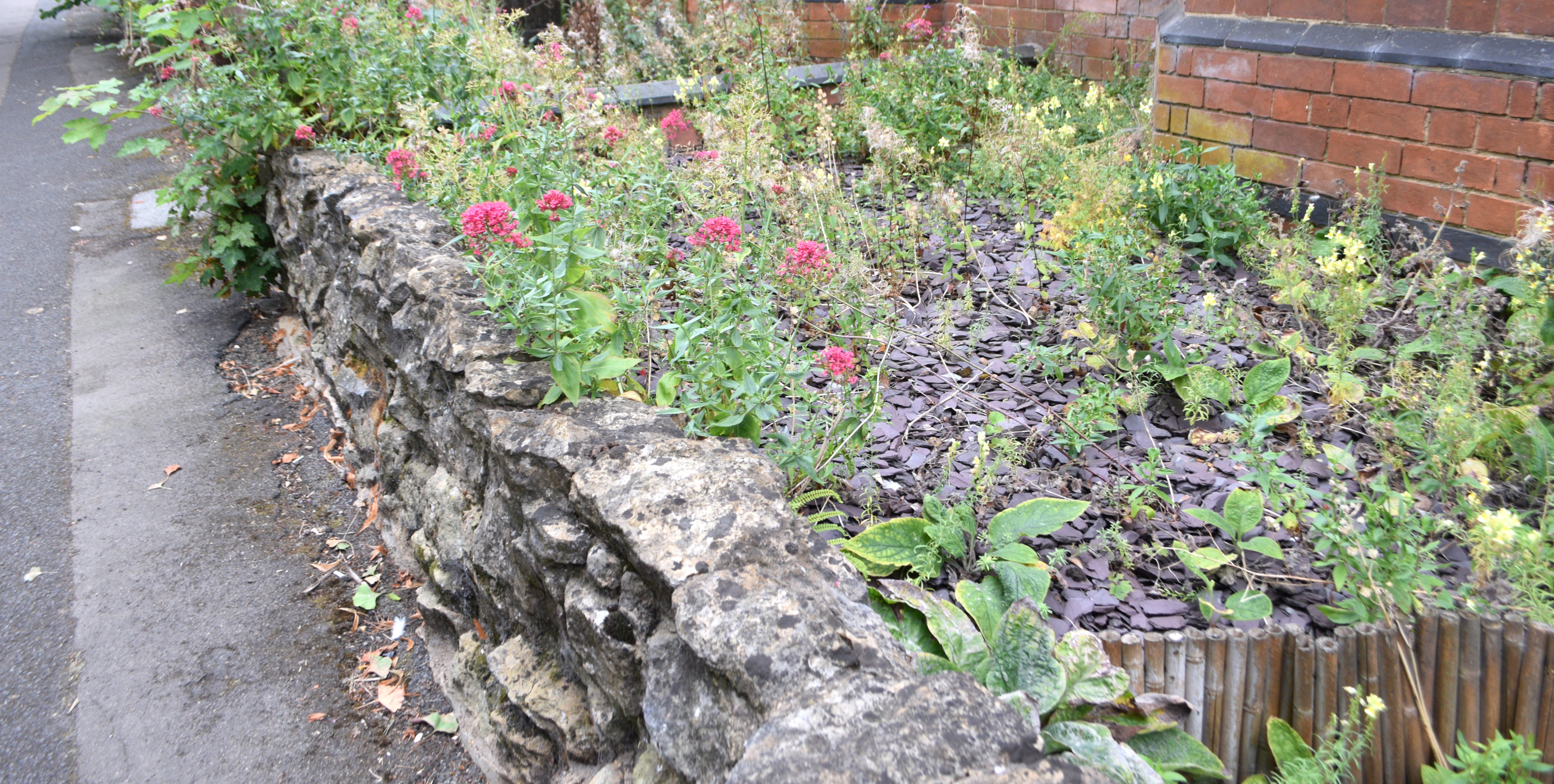
Despite the best endeavors of householders Nature fights hard to assert herself forcing her way through plastic membranes and squeezing between paving slabs. Here with the buddleia and the feral snap dragons is red valerian, in the vanguard of the battle, it quite likes the lime mortar in old stone walls and knocks them down in no time!

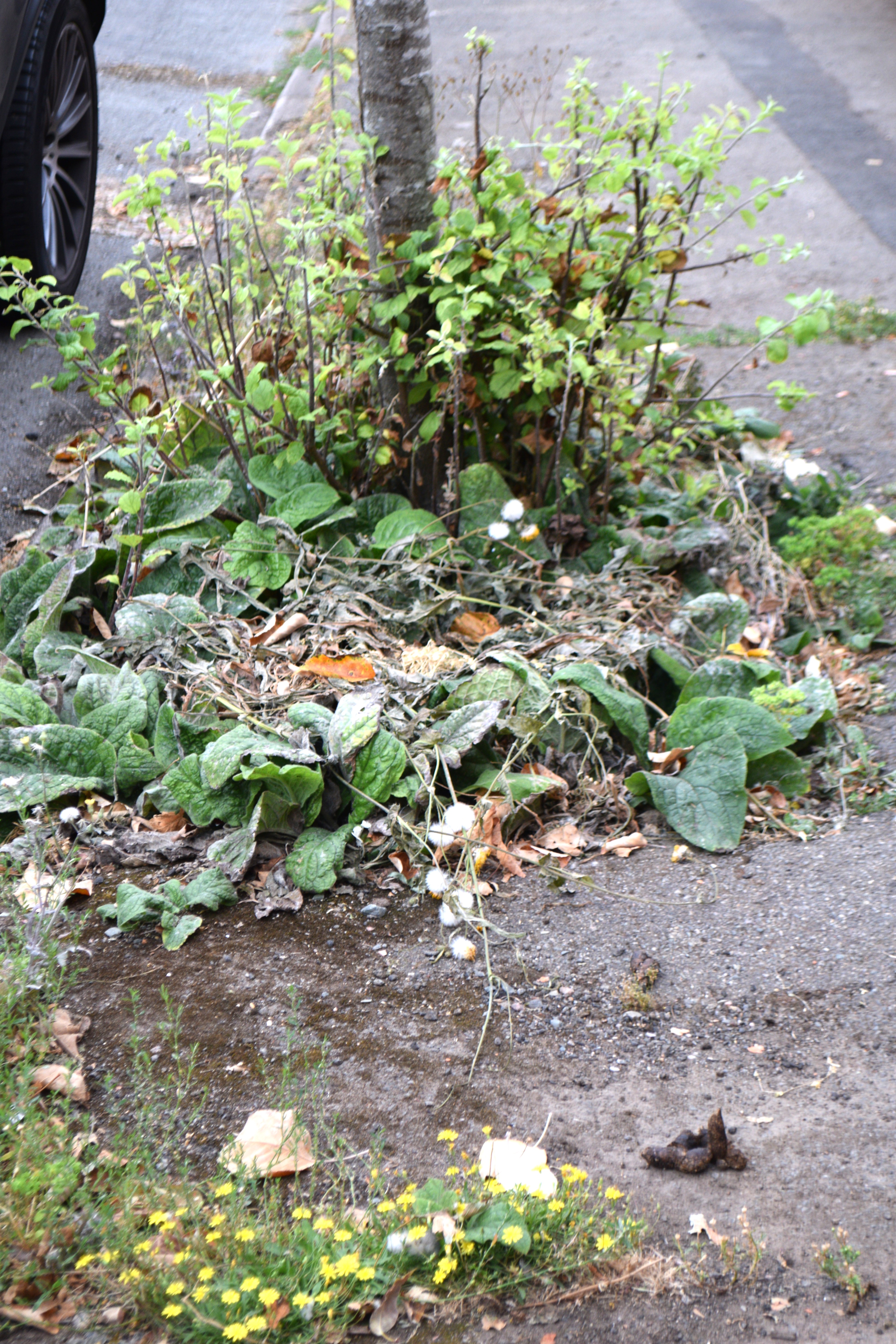
While exploring the biodiversity at the foot of a street tree a man rushed over the road to me, anxiously demanding to know why I was photographing his car — I was more discrete after that — recording biodiversity is not without its risks.

Watch out for predators!

Standard
Ecology, Humour

Doricum hoax uncovered!

Still getting serious responses to this post published 9 years ago — time to clear the air!

DoricumWhen faced with plants he did not know my father would confidently pronounce them  Doricums.  ‘Shouldn’t it be Dorica?’ we would ask.

‘No, Doricums.  The word is derived from the Greek, or possible the Zoroastrian,’ he would concede.  Doricums grew everywhere in Hertfordshire — my dad was not much of a gardener.

Last spring we dug some gravel from the stream bed to create a pool to encourage fish, we left the gravel in a heap at the waters edge.  Normally a fox would have placed a walnut whip on its summit — they do this to announce their ownership of all heaps — sand, salt for the roads, compost, even large mole hills — but this mound of gravel has become subject to another interloper — the dastardly Doricum!

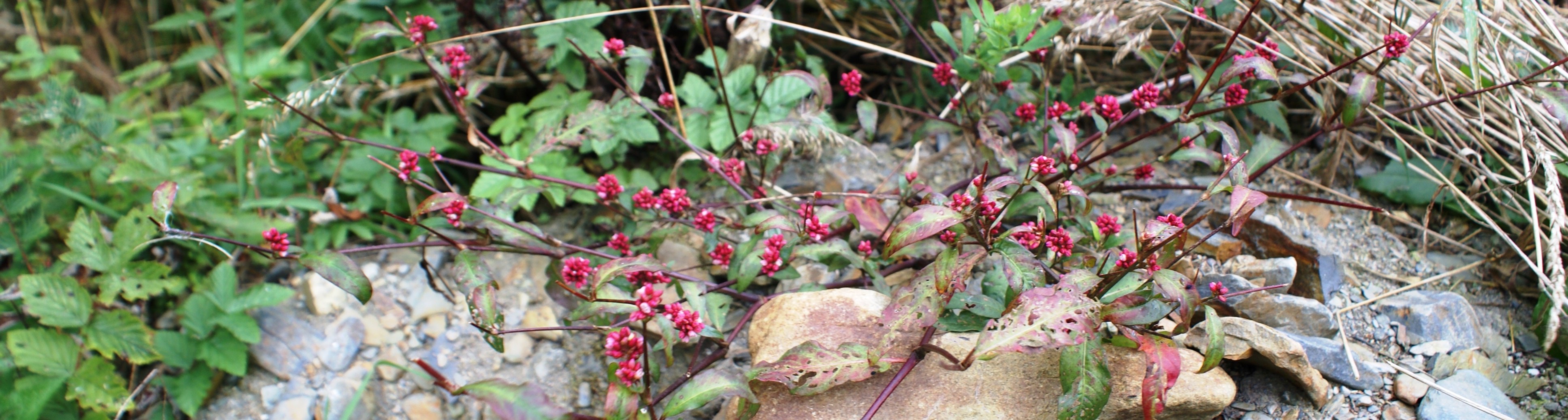
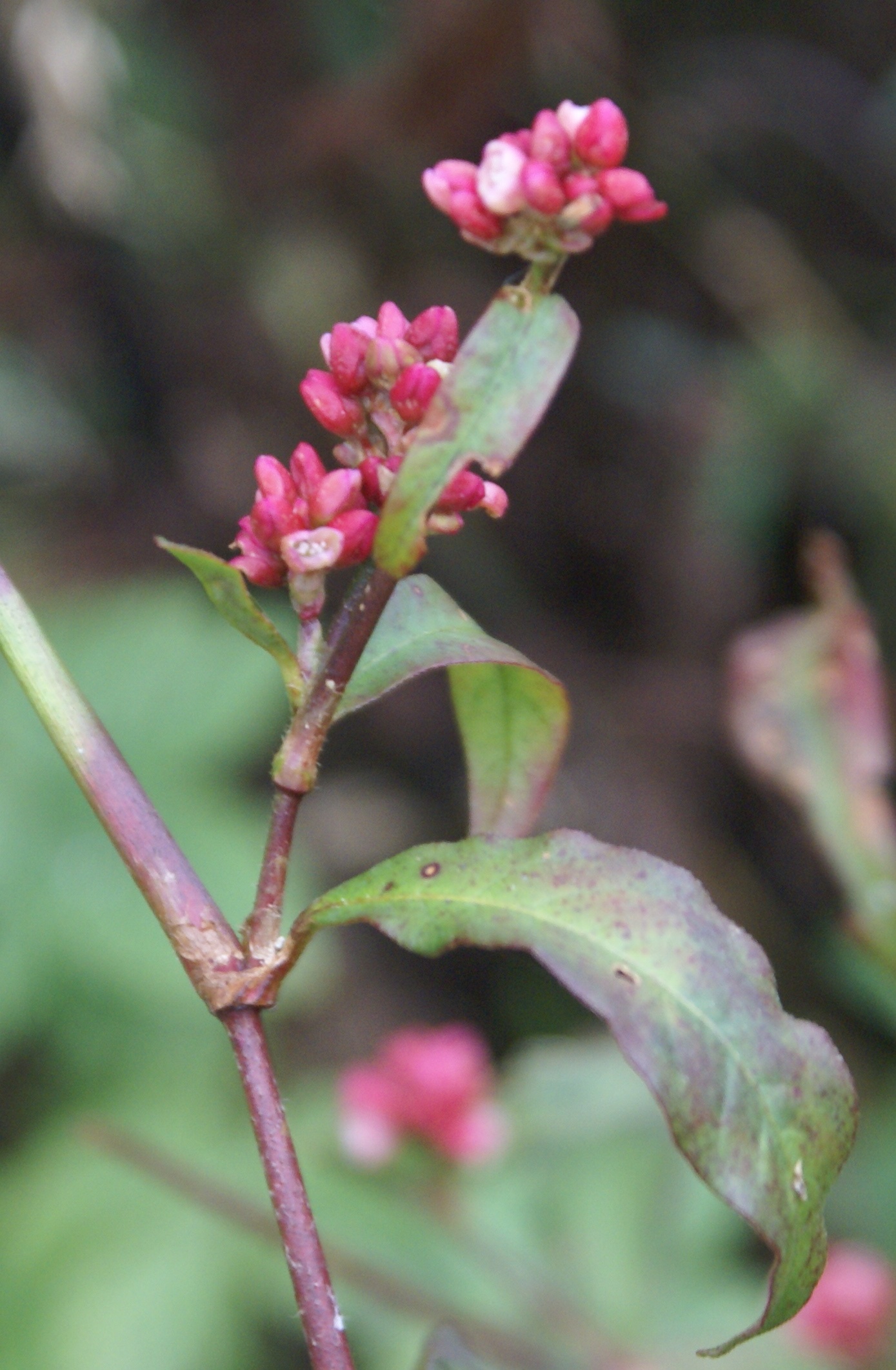
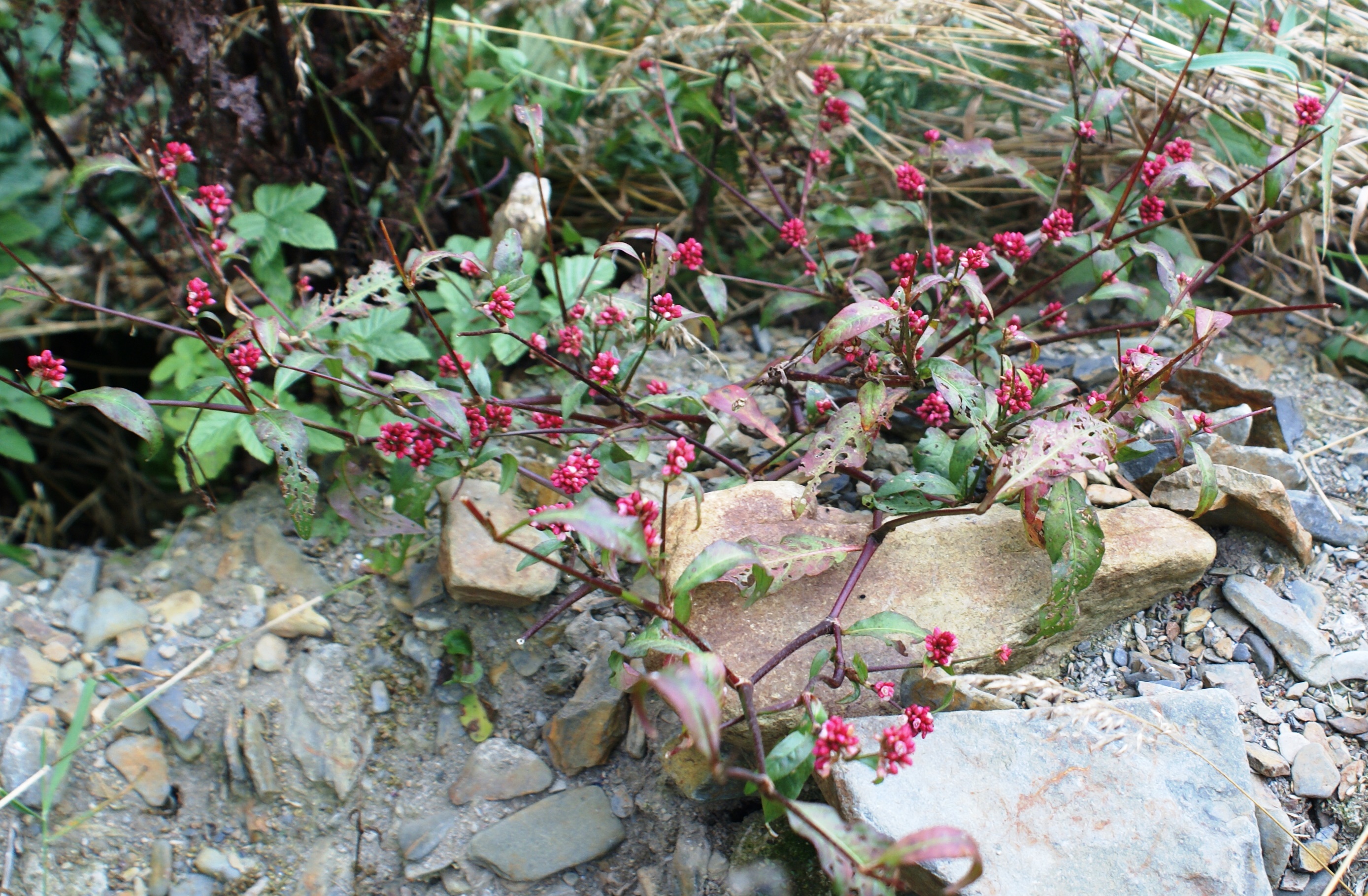
Have you seen this plant before?

?????????????????????????????

We have scanned the internet and looked at all our books but to no avail — although it does look vaguely familiar — we guess that it is feral or seriously out of context.

Do you have information about its true identity?

?????????????????????????????

It has been nibbled but not by sheep, this gives it a spiky appearance — we’ve looked up squirrelwort and rabbit-bit in the index of popular names — its not even under badger-nip.

Is this a new species — D. notlikelae?

Addendum: 30.11.2023 St Andrew’s day and Winston Churchill’s birthday.  On reflection this may have been a rather tatty example of Redleg (P. persicaria L.) a member of the dock family.  There is more of it about now and it looks more typical — sorry Dad!

Standard
Butterflies, Ecology, Hill Farming

Back on the Farm and a Moral Dilemma!

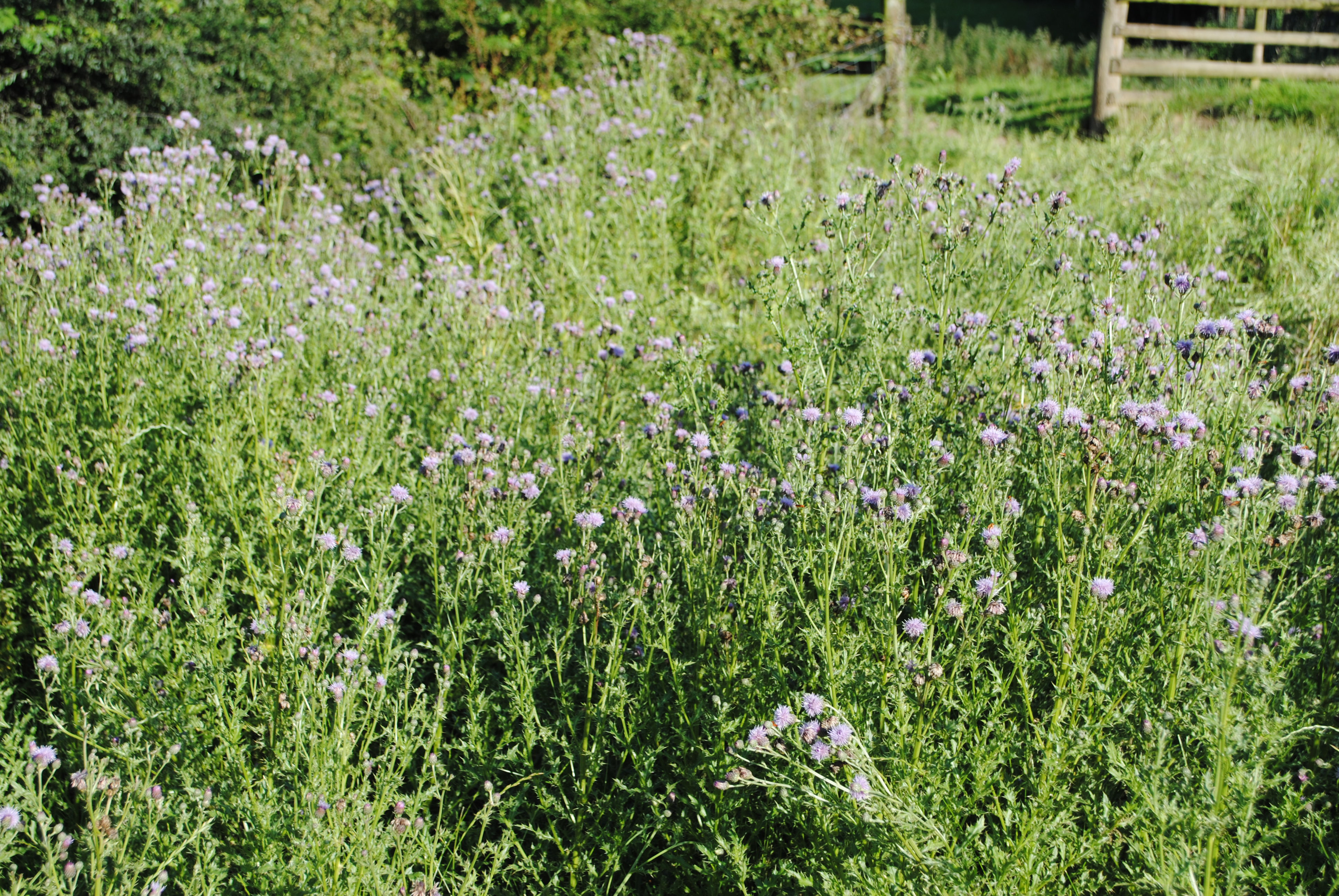
The hot dry spring was just what our thistles yearned for — they grew and grew. While our neighbours sheep gather in the shade it is time for us to deal with the thistle plague.

I was told by those who know:

Cut in June, they will grow back soon,

Cut in July they will surely die.

So we held our nerve, but once into July we have waged war on the thistles, Bill pulling the topper behind the quad bike and cutting every accessible thistle. 10 acres of thistles — not bad for a septuagenarian with no previous farming experience! It’s wonderfully adaptable, the human race.

All this time I have been busy managing and hiding in my cool office doing important paper work. But now the rains have started, waves of torrential rain coming in from the west, and the family are due next week so we are running out of time. Its all hands to the scythe and the sickle in the corners and the precipices where the quad bike cannot reach.

But wait!

There is a problem. In the sunny periods, between the showers, the butterflies and bees and hoverflies and beetles and flies come out as well as us. Finding most of the thistles gone without trace because once cut the sheep gobble them up, this profusion of insects settles on what is left.

The thistle beds are teaming with insect life, buzzing and fluttering and slurping up the nectar.

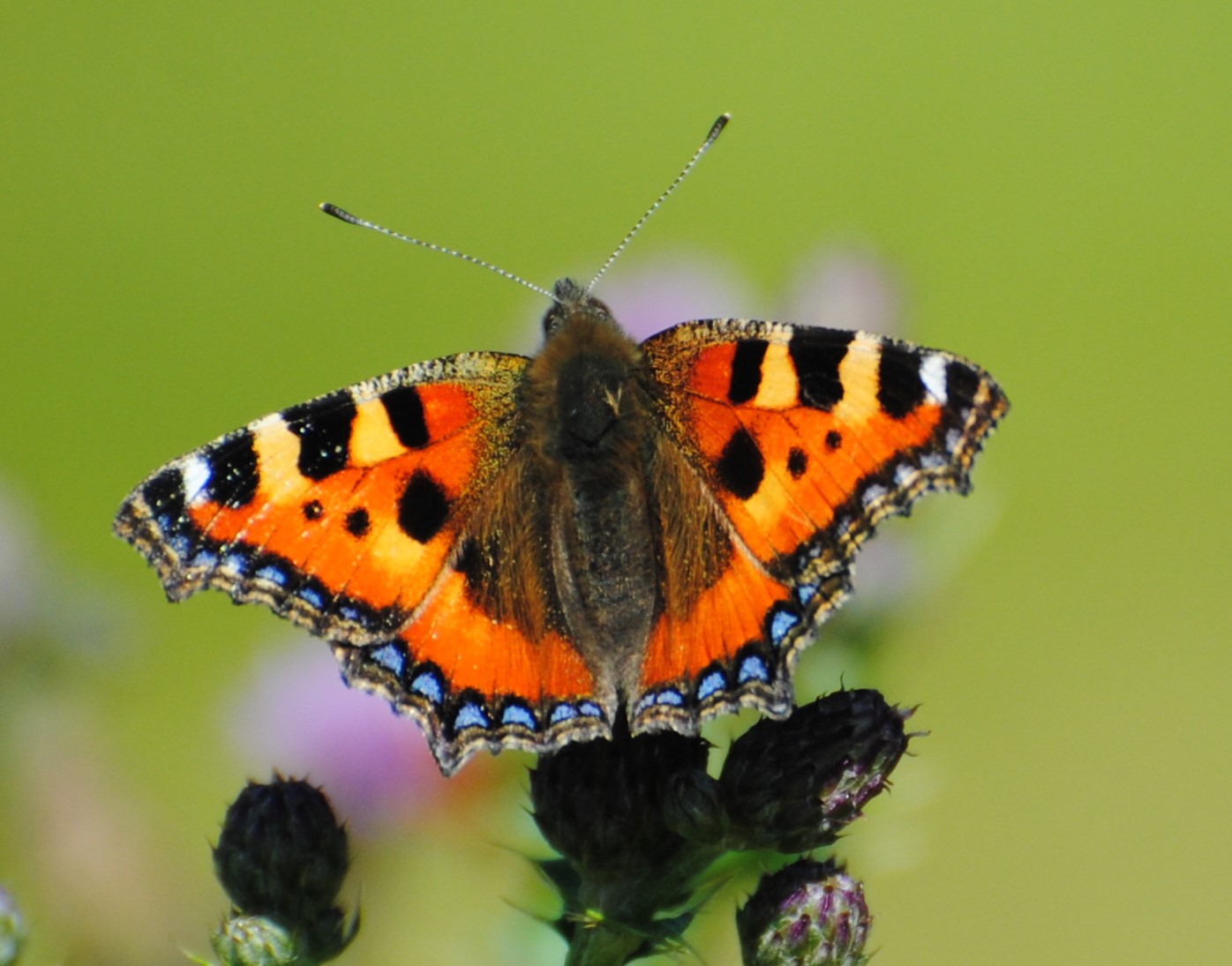
Just by the barn we saw about 20 pristine new small tortoiseshell, meadow brown and comma butterflies.

Small Tortoiseshell and friends on thistle.

One look at this beauty and guess what? We have decided to leave the edges for a while to give the butterflies a chance to mate and lay their eggs. Oh dear, the caterpillars feed on nettles — we’ll have to leave them as well!

Standard
Birds, Ecology

Crisis in Paradise!

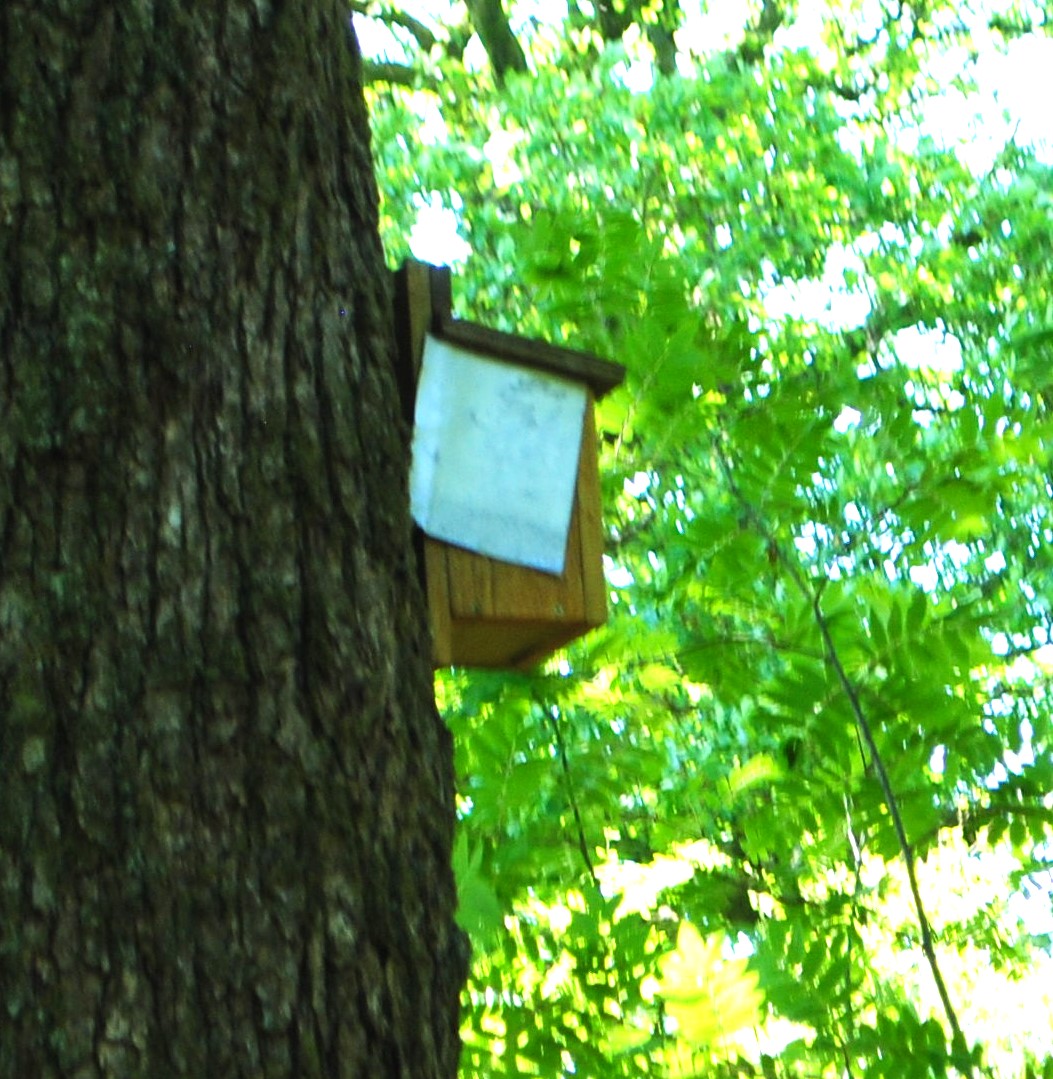
This is not how a bird box for our precious pied flycatchers should look — it has a perfectly good metal reinforced entrance hole facing the front. This box has been illegally modified — but by whom?

Number one suspect! Greater spotted woodpecker. But amazingly when checked by the intrepid bird ringers, it still contained 5 warm eggs.

The cunning woodpecker will be back to raid this nest once the chicks have hatched — no time to waste!

Last week Bill chastised me for cluttering up the new garage with a sheet of aluminium rescued from the back of a discarded electric fire — it was just what we needed and after an hour of wrestling with a blunt hacksaw and only minor injuries we had a patch. At first light we advanced upon the box, silicon gun in hand, 12 foot ladder under arm. As I wobbled up the ladder a female pied flycatcher whizzed out through the hole in the side of the box. I lobbed my silicone-sticky armour-plating over the hole and withdrew. Mother bird was mystified!

Then ensued the horrible second thoughts that occur when one interferes with Nature — visions of abandoned eggs, of feathers stuck to silicon, of a gormless bird permanently baffled by the loss of her new improved access, etc.

5 days later the ringers returned — she was sitting on chicks — we did not disturb her.

Standard
Ecology

Red Squirrels

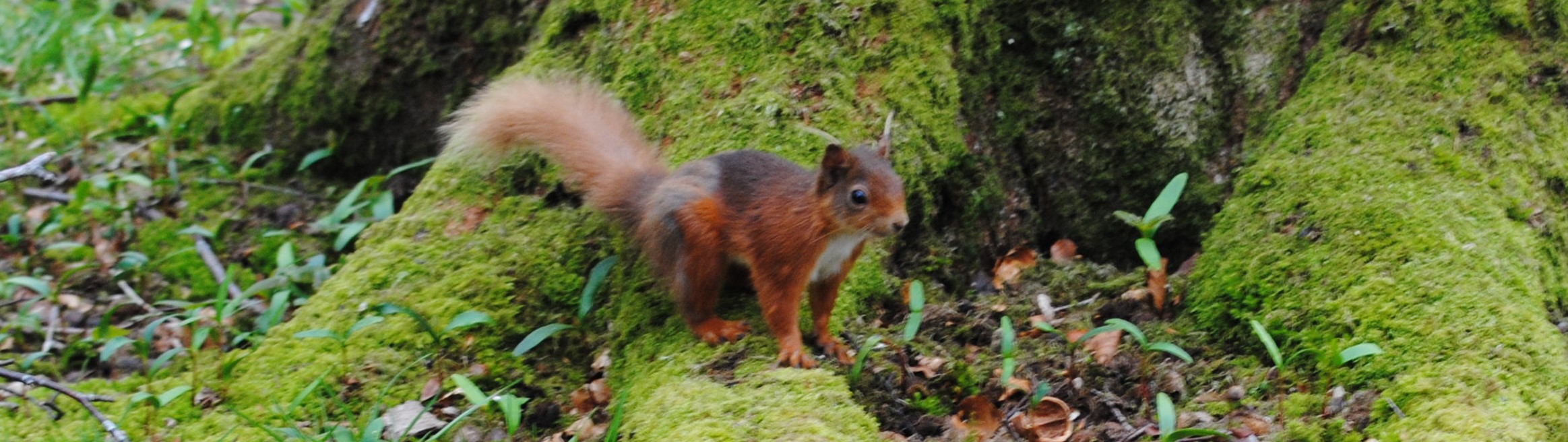
Red squirrels (Sciurus vulgare) are hard to find — they are almost extinct in England. They survive on Anglesey, North Wales and in parts of the Highlands and islands of Scotland, where isolation has saved them from the scourge of squirrel pox, carried by the successful grey squirrel (Sciurus carolinensis) that raids our bird feeders but it’s not as simple as that.

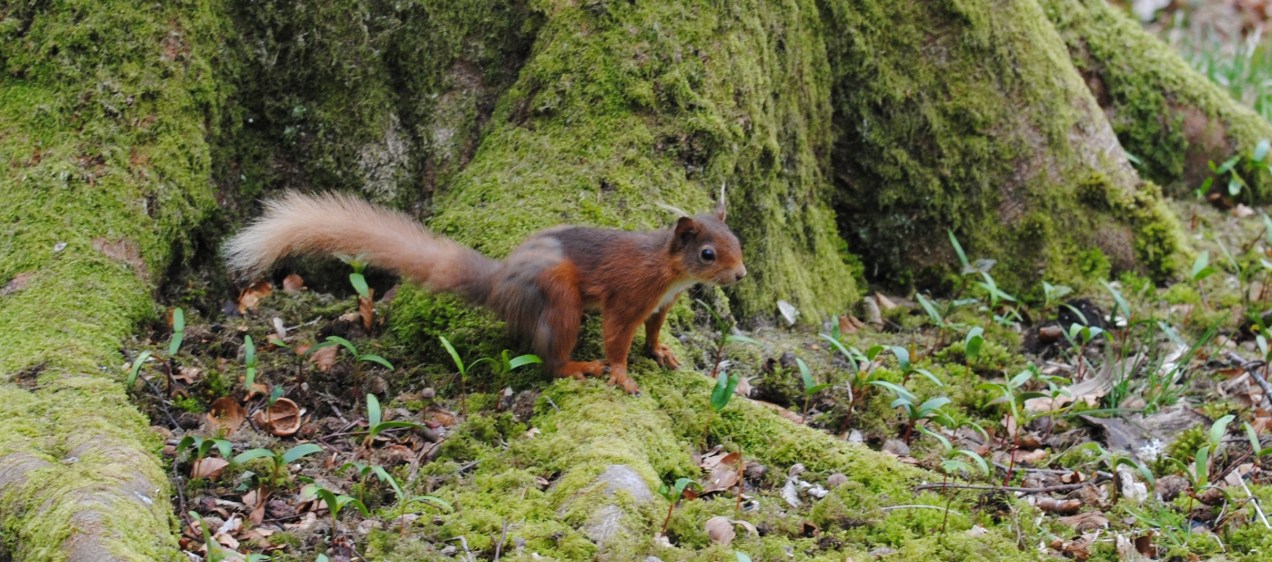
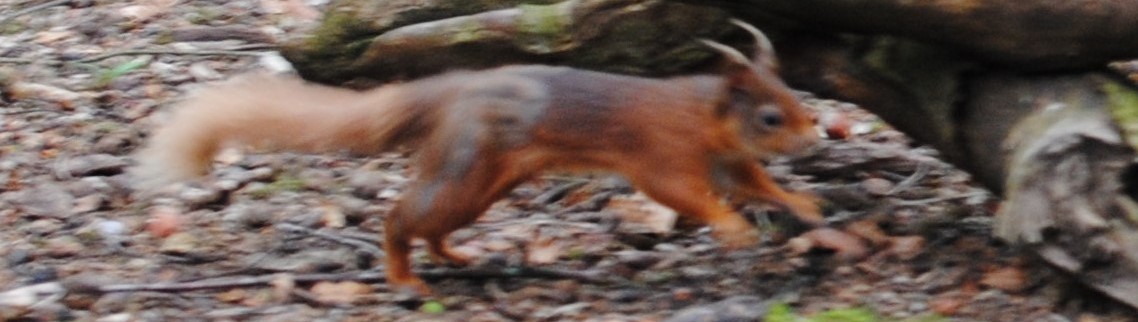
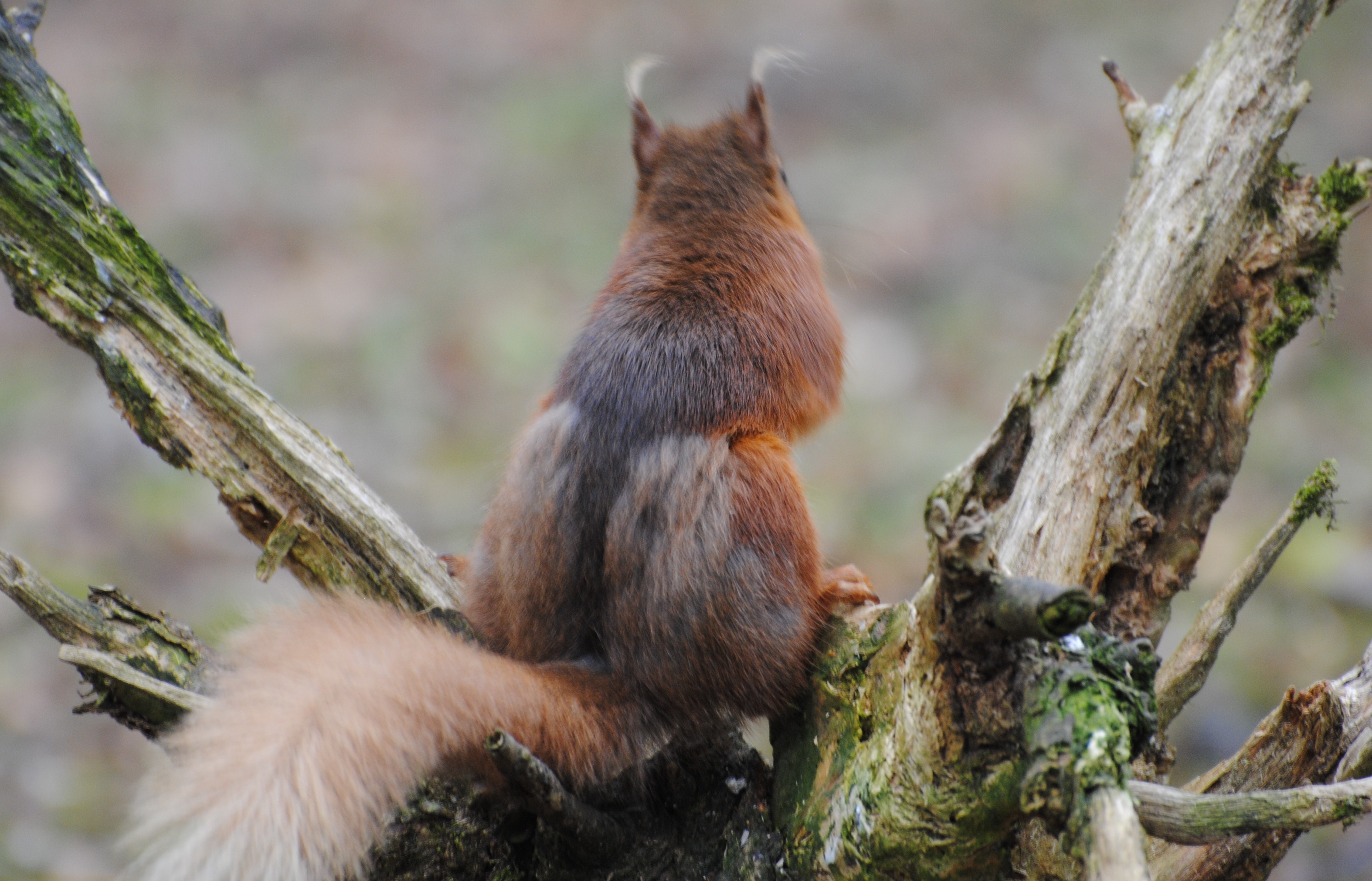
Last week we visited some in Abergaty, Stirlingshire, Scotland. They are agile, lively creatures.

Happily their populations in Scotland are stabilising, despite one problem — poor memory — I sympathise.

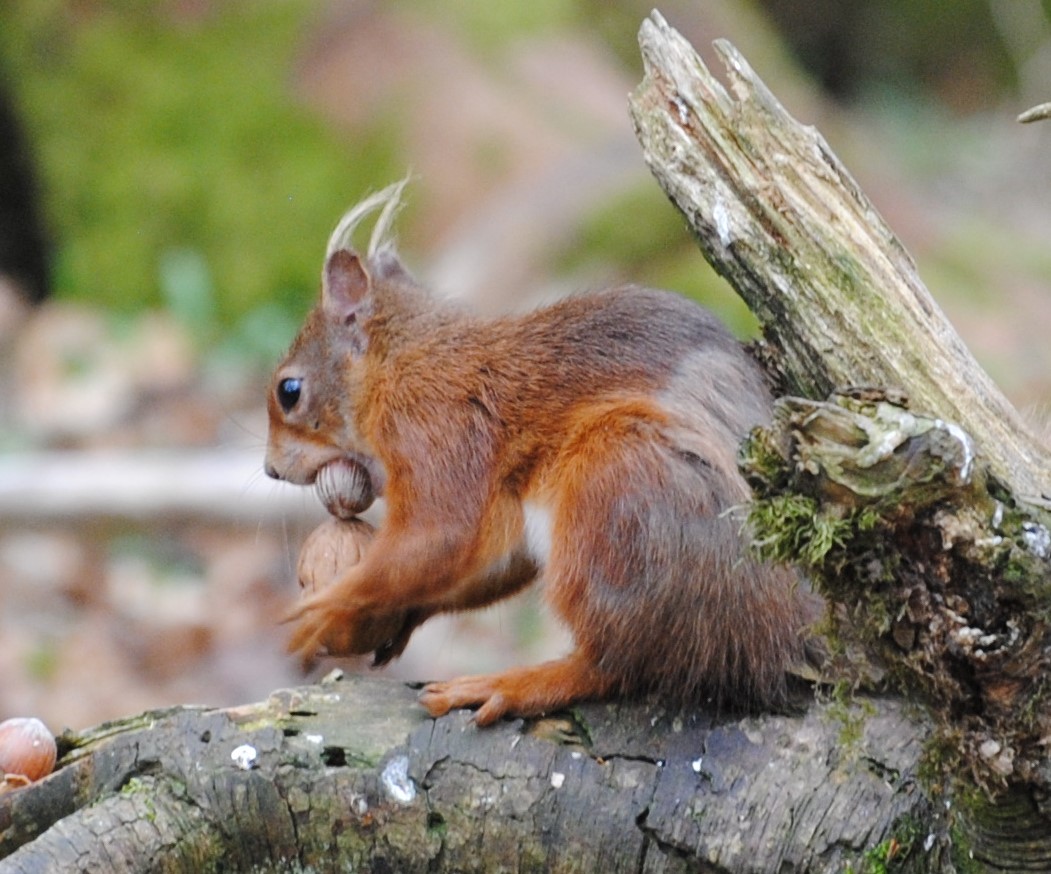
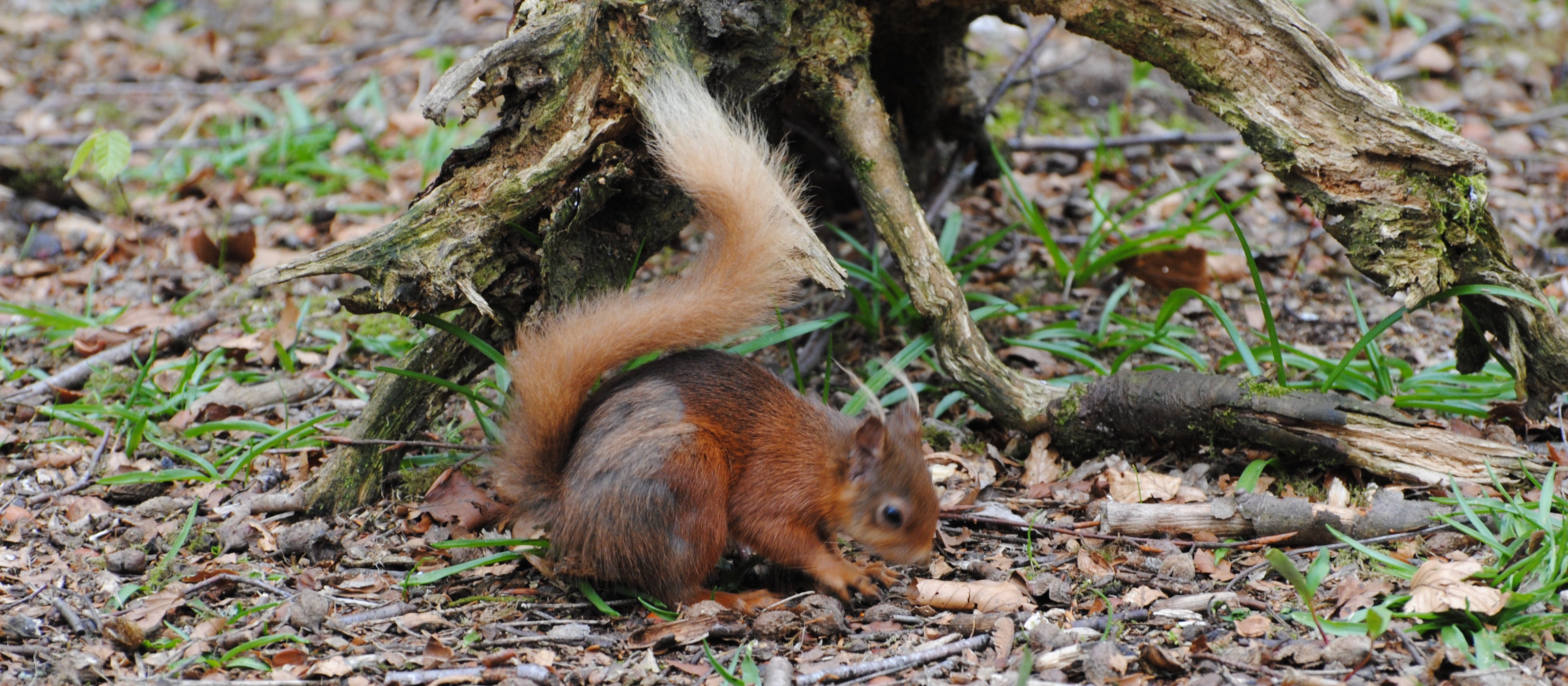
When they have too many nuts, like this one, they hide or bury them and, more often than not, they can find them when times are hard. The grey squirrel has better spatial memory and finds far more of his hidden caches of nuts. The squirrels we saw were busy burying theirs.

Another problem for them is predators, we saw a goshawk over their wood and several buzzards. That is why these have developed to be so alert, they do no have eyes on the back of their heads but you can see from this one that the position of the eyes right at the side of the head (like a sheep) must give 300′ plus vision.

One great positive for the red squirrel is that in recent years, with increased protection and understanding, there has been a resurgence of the pine marten. These ferocious predators evidently have a taste for grey squirrels or perhaps they are just easier to catch than the red, being less nimble in the tree tops, and heavier.

Thanks to Dani Kropivnik, CC BY-SA 3.0 https://creativecommons.org/licenses/by-sa/3.0, via Wikimedia Commons for his picture of a pine marten. We were not fortunate enough to see a pine marten — perhaps next time.

So these busy little creatures are doing alright!

Standard
Birds, Ecology

Black Grouse — a last look?

When we first moved to Wales, someone told me that there were still black grouse on the Gorn Hill, East of Llanidloes — I have never seen one there. We have been to the Cairngorm mountains in Scotland to find them.

The females are grey, often called greyhens and keep themselves tucked away, camouflaged and out of sight in the rough.

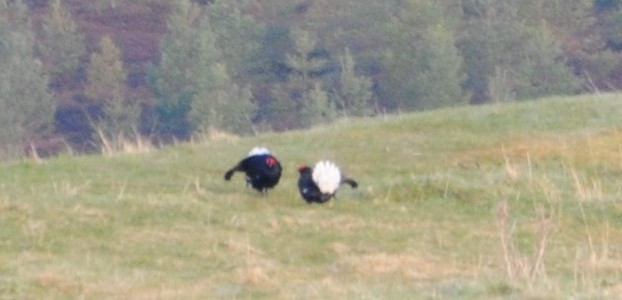
The blackcocks have no such inhibitions during the mating season when they are seen in their traditional display grounds lekking — that’s the best time to spot them, posturing and showing off their spectacular plumage, strutting their stuff, tails flared, while calling with a bubbling pigeon-like coo. They meet on traditional grounds, clearings on tops of rises — here we were lucky enough to see about 8 males but there may have been more on the other side of the hill. We could view them with long lenses from a public road — a lot of the previous leks are so threatened that visitors are actively discouraged. This is about as far West as they live but the species is distributed in a wide swathe across Eurasia as far as China. In Russia leks can attract 200 males.

Here they are confronting each other in pairs, like a knock-out competition where the winner gets to mate with the females who have been watching from the scrub, assessing their strength and fitness to breed — not that they take any part in rearing or protecting their offspring! Once mated the females fly off and hideaway to hatch and rear their young alone. I wonder if some females select for intelligence and mate with the cunning young blackcock who sneaks around the margin of the lek and woos the greyhens while the macho males are busy trying to impress each other?

See Wimoglen video published on YouTube

From what we had been led to expect we felt very lucky to see black grouse this year — let’s hope it won’t be the last time.

Standard
Cornwall, Ecology, Urban environment

Seals on the Balance of Nature.

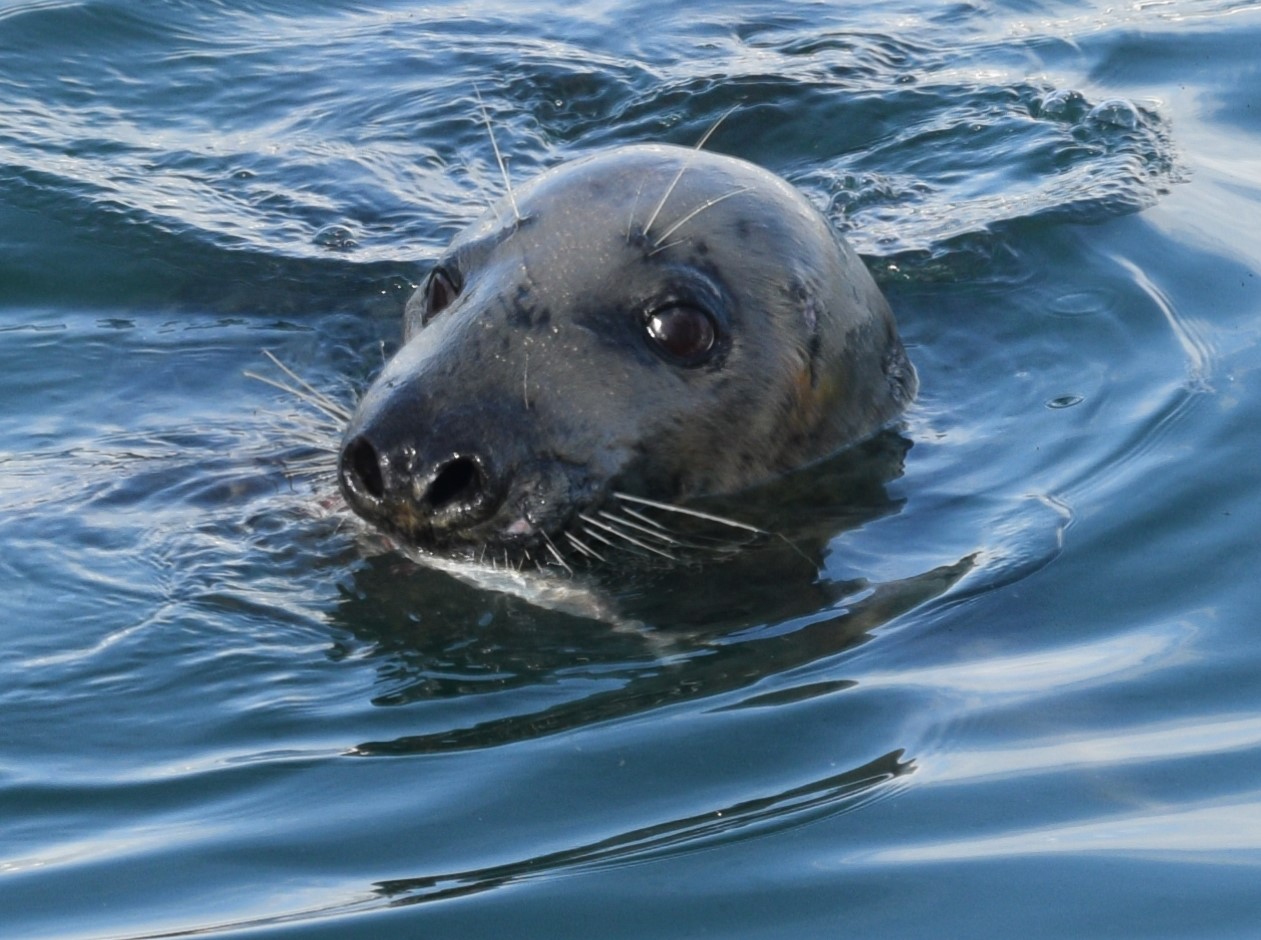
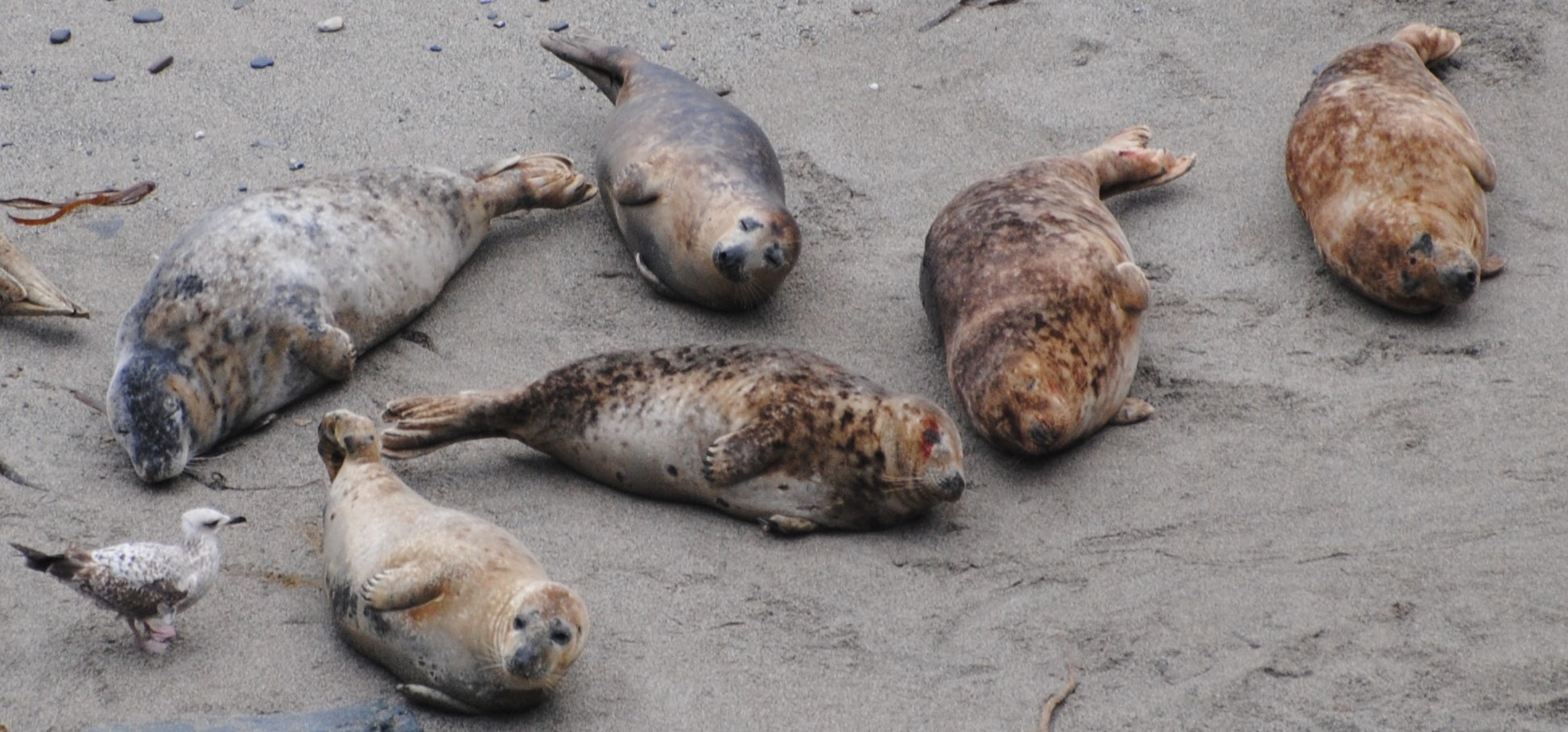
Seals are doing well around the United Kingdom since we stopped persecuting them, like these common seals seen earlier this year on a beach in Cornwall near to my daughter’s home. The common or harbour seals are smaller than the grey seals and, I think, look cuddlier although don’t get too close! Their faces are concave, more dog shaped than the grey seal below.

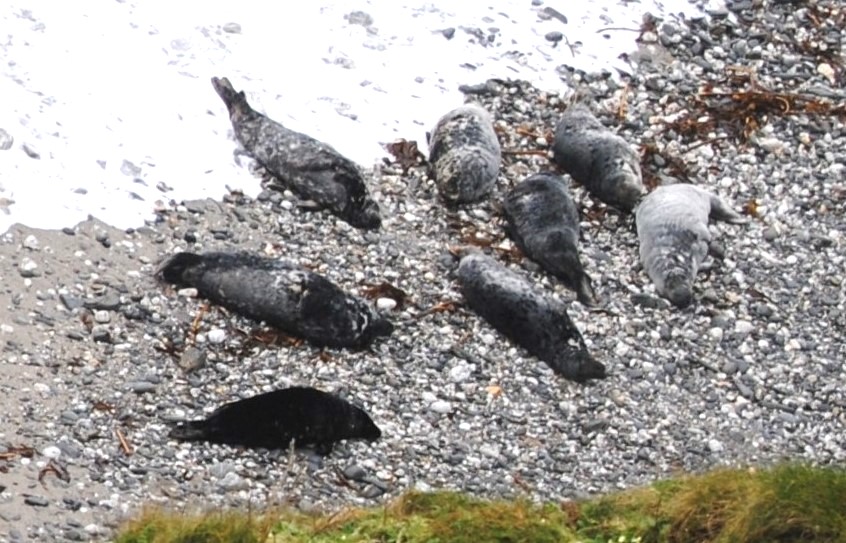
Grey seals are larger, often darker, greyer and with a more aquiline profile to their muzzles and their eyes are set further back. The greys tend to lie close together in groups when hauled up on the beach.

Here is a mixed group, some lying like bananas to keep their extremities out of the surf as the tide comes in. You’ll often see them doing this perched on a rock as the tide comes up to eventually lift them off and remind them that it is time to go and hunt.

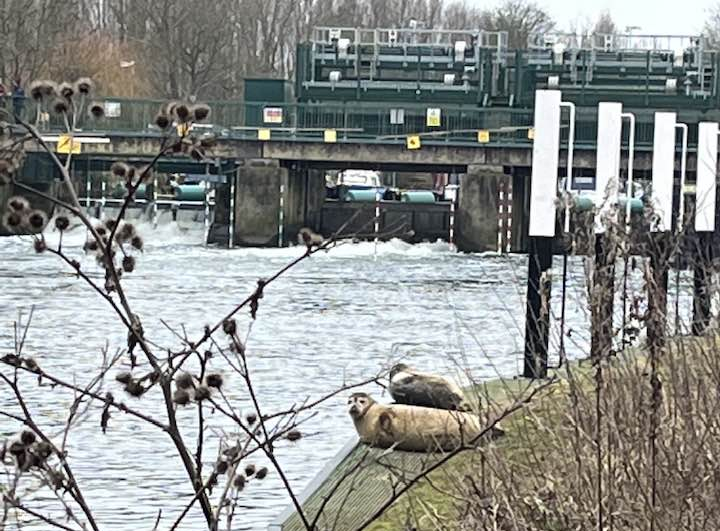
As their numbers increase their distribution is becoming wider. My other daughter took this photo in Peterborough, 40 miles inland.

Two common seals by the lock on the River Nene in Peterborough. Man is no longer the top predator of seals here, but killer whales keep down their numbers in Scotland and hunt them in shallow water, and the inlets of sea lochs, David Attenborough said so — will they eventually follow them down the coast and up the Nene? That will give us something other than sewage to worry about when we do our wild swimming and canoeing!

Standard
Birds, Ecology

Hawkeye!

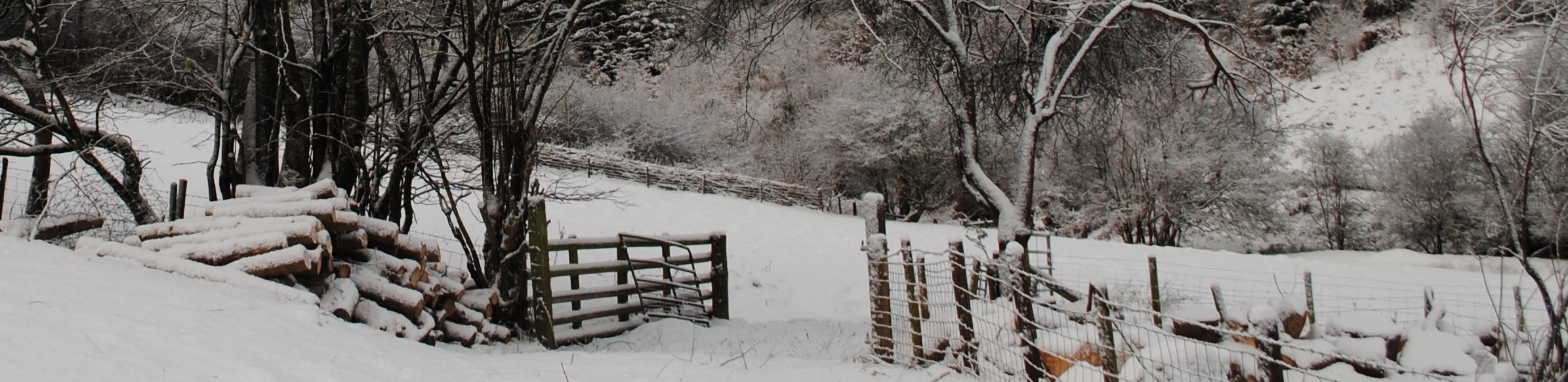
It has been snowing hard all day but yesterday I had lunch with my friends. All three who live here, in the country (rather than the town) agreed that they were starting to have qualms about their bird feeders. Seems we have all created sparrowhawk feeders.

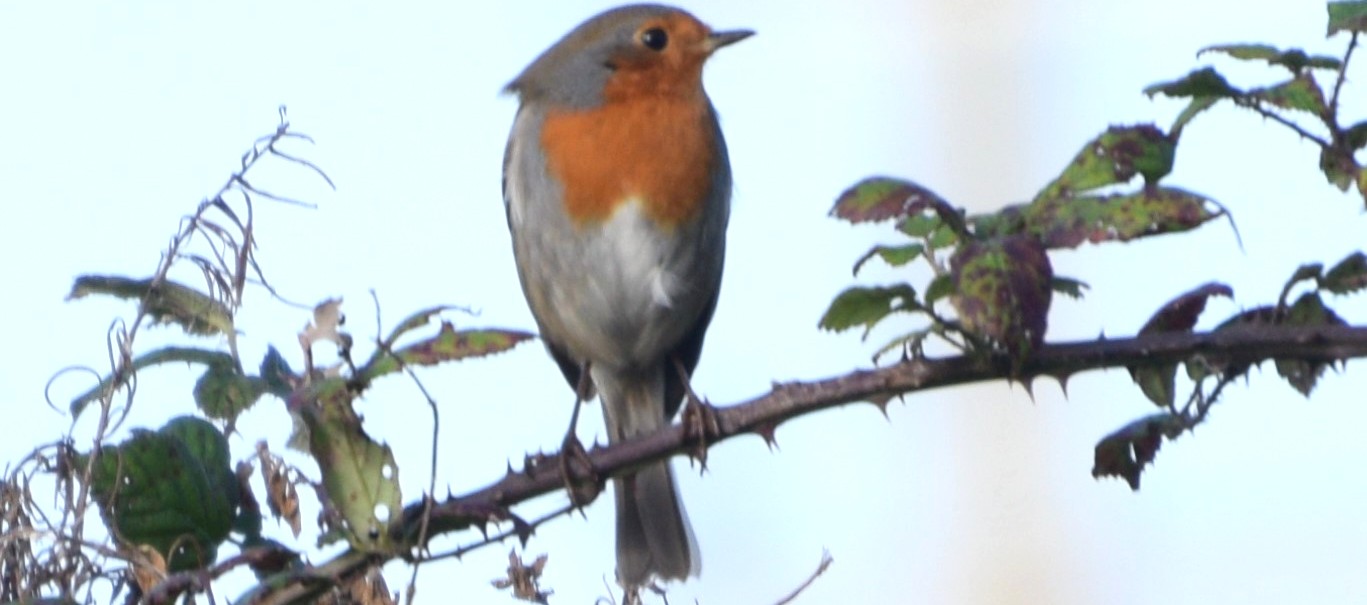
These small, fast predators whizz around the side of the house and bowl over their victims in a whirl of what seem pointed wings — an arial dogfight. The unfortunate tit will be consumed on the grass or caried off. If lucky, or quick, it may drop into the dense foliage of a protective shrub like our box bush. The little birds — the tits, sparrows, robins, siskins and finches — will cower there until one sounds the all-clear.

Every day we see buzzards and red kites, silhouetted against the sky as they soar above us.

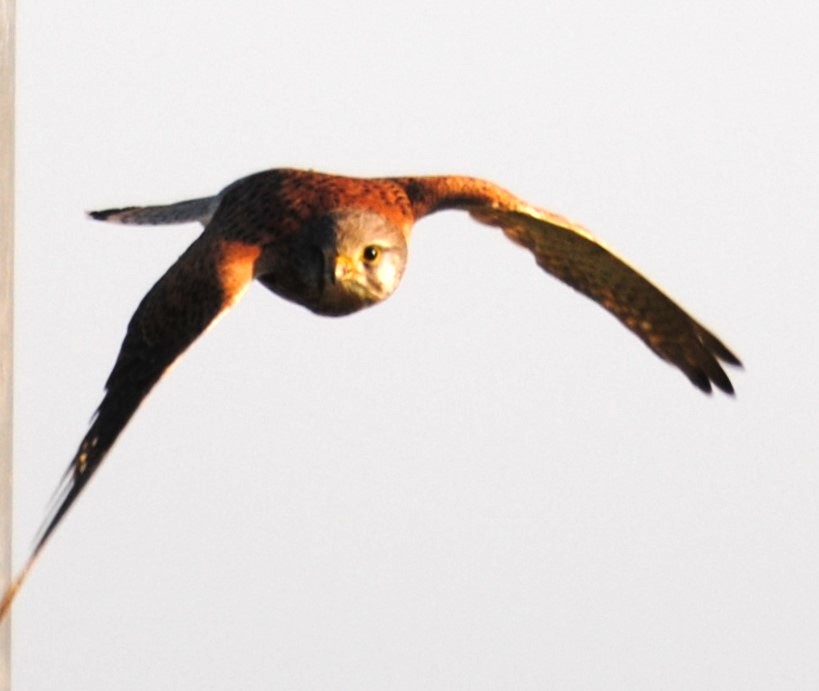
Occasionally we see a kestrel.

The peregrine falcons, thicker set, which are common place in Kettering are conspicuous by their absence in Mid-Wales although we saw this one on the flood plain of the Dyfi estuary and have seen one in the Elan valley.

Photos are a boon to bird identification — do you remember this one — I published it years ago. So blinded by rage was I that I failed to notice the most sought-after bird of prey in this area — the majestic goshawk — eating my last bantam cock under the bedroom window! Goshawks live in the woods and whistle in and out, weaving between the trees, gone before you know it! Much bigger than a sparrowhawk and much less commonly spotted — at least this year.

This year is the year of the sparrowhawk.

Prospering from the largess of the kind pensioners who fill up their small bird feeders — Nature red in tooth and claw!

Standard