British history, Humour, Local History, Travel

Discovering Shrewsbury…

Although I’ve lived within 50 miles of this, the county town of Shropshire, for 20 years, I’ve never really had the time to look at it properly — always rushing for a hospital appointment, changing trains or dashing back for some imperative.

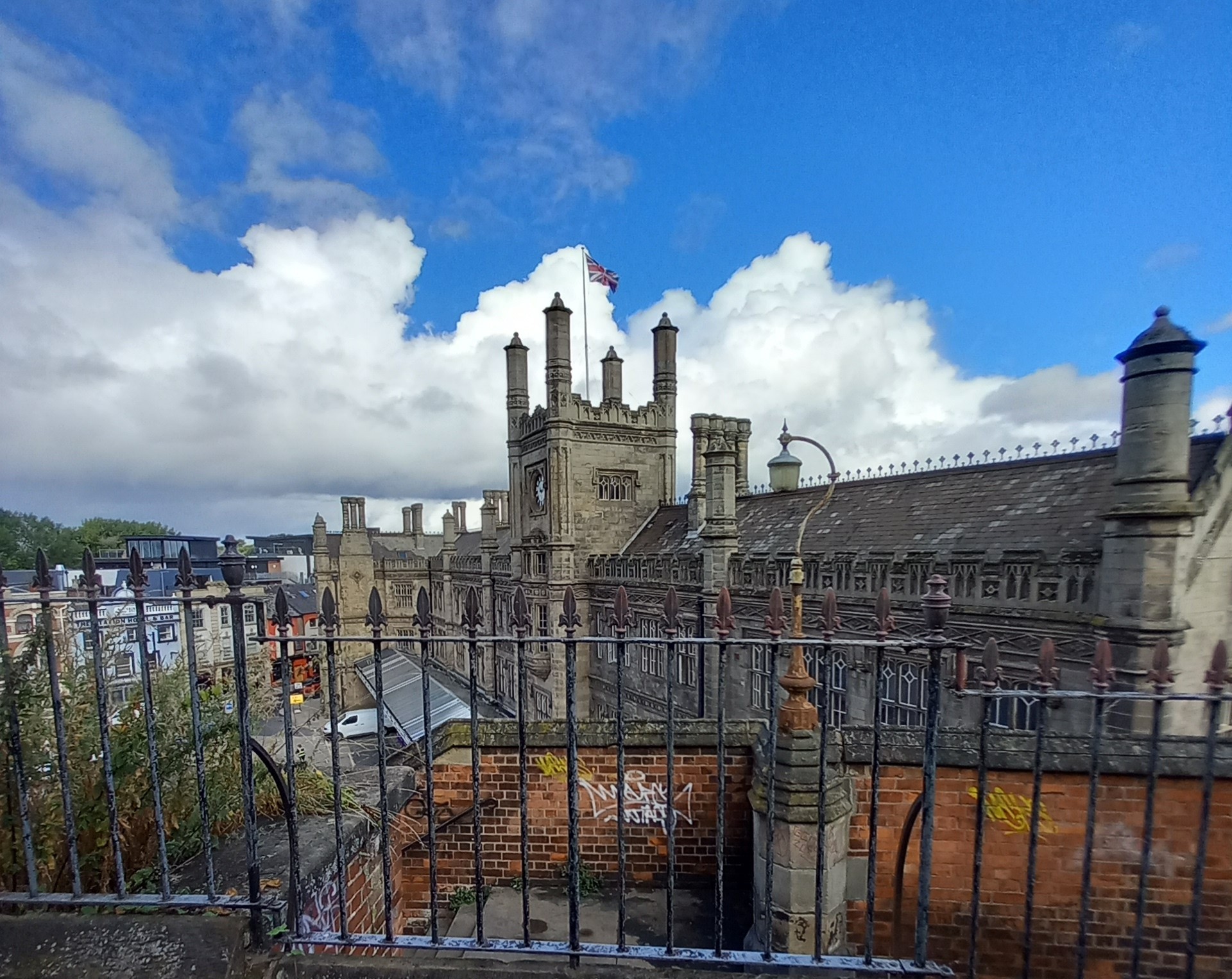
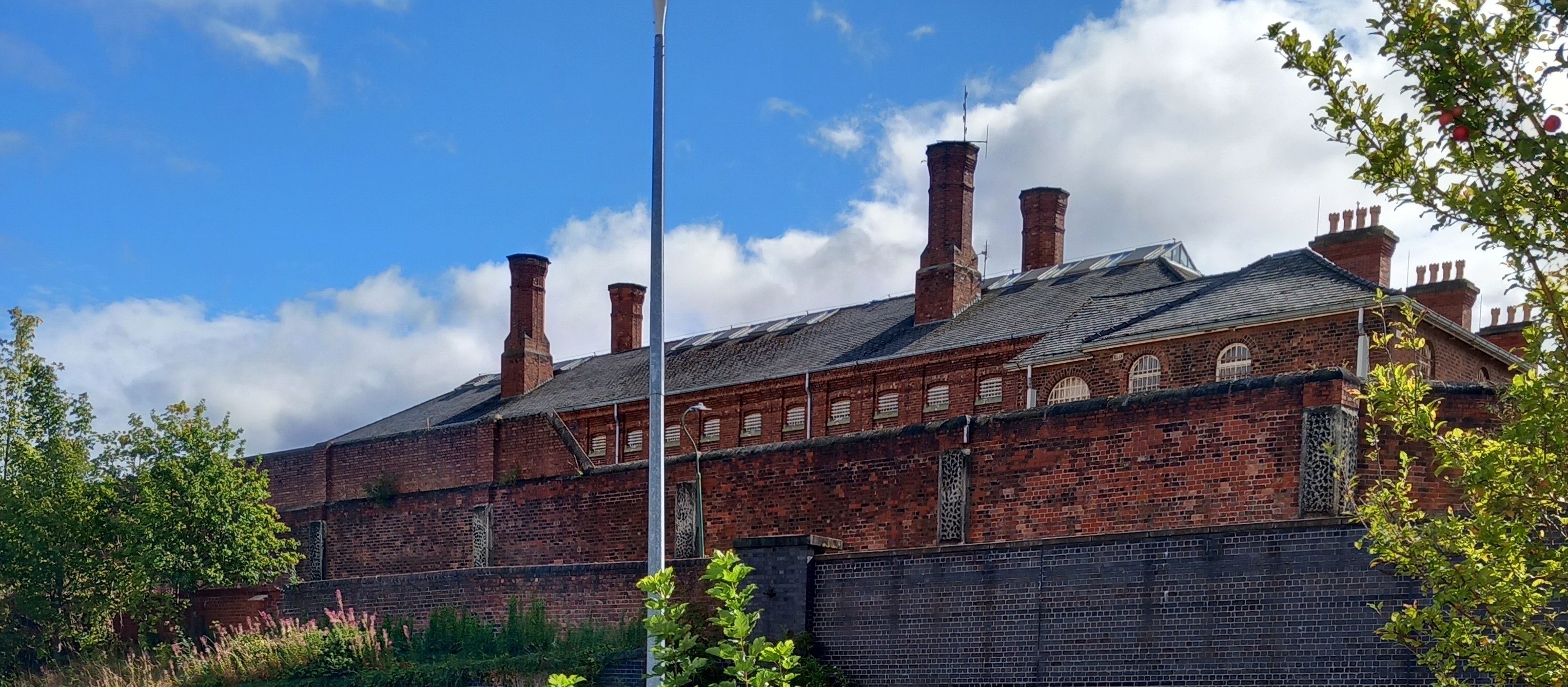
Last week we took my friend, Anne, to catch a train to Yorkshire — she had a tortuous journey ahead so, despite the traffic (we do not expect it in Wales), we opted to drop her at the historic railway station (above) where we ejected her unceremoniously and to much furious and unsympathetic honking. “No cars!” said the entrance to the carpark, “Bicycles only!” Nobody actually mowed us down as I hauled her luggage from the boot and we found the platform up 28 steps (lift out of order) taken at a trot with her heavy bags — fortunately the train was 3 minutes late and we had 15 seconds to spare.

Having found somewhere to leave the car legally, Bill had to buy a ticket which fortuitously brought him to the booking office where, having waved off my friend, I was wondering what to do next and where he might be — it seems for once the stars were aligning for a good day out!

Shrewsbury Prison is a smouldering presence above the carpark, built in 1793 by Telford, designed by local architect John Hiram Haycock and William Blackburn, advised by John Howard the famous prison reformer who looks down from his plinth above the gate. You can book a tour and even stay the night in a cell, “That’s an idea!” says I with my Granny hat on.

Here’s another famous citizen, Clive of India, getting more infamous by the day as we look at empire from a different angle now — still he hasn’t been toppled from his plinth yet.

The town is full of tantalising mediaeval alleyways– note how the common gutter has been replaced by festive commercial waste bins — I miss the piglets, dogs and red kites scavenging on the waste!

The marvellous market has moved indoors but still bristles with prime produce. As we amble around town the clouds are gathering and the tempting aromas start to emanate from the various eateries. Our noses led us to La Mer Rouge for delicious tapas and to watch the torrential rain in comfort. Behind the old market hall is the town museum and art gallery, irresistible!

Mermaids and dolphins vase, made by Walter Crane Maw and co, Broseley (Shropshire) c1889.

Also the findings from Wroxeter, the 4th largest city in Roman Britain (Vironium) just beyond the modern bypass — both to be explored in Granny hat.

Shrewsbury has been an important place ever since, at the gateway to Wales, a strategic and wool trading centre. Fortunes were made.

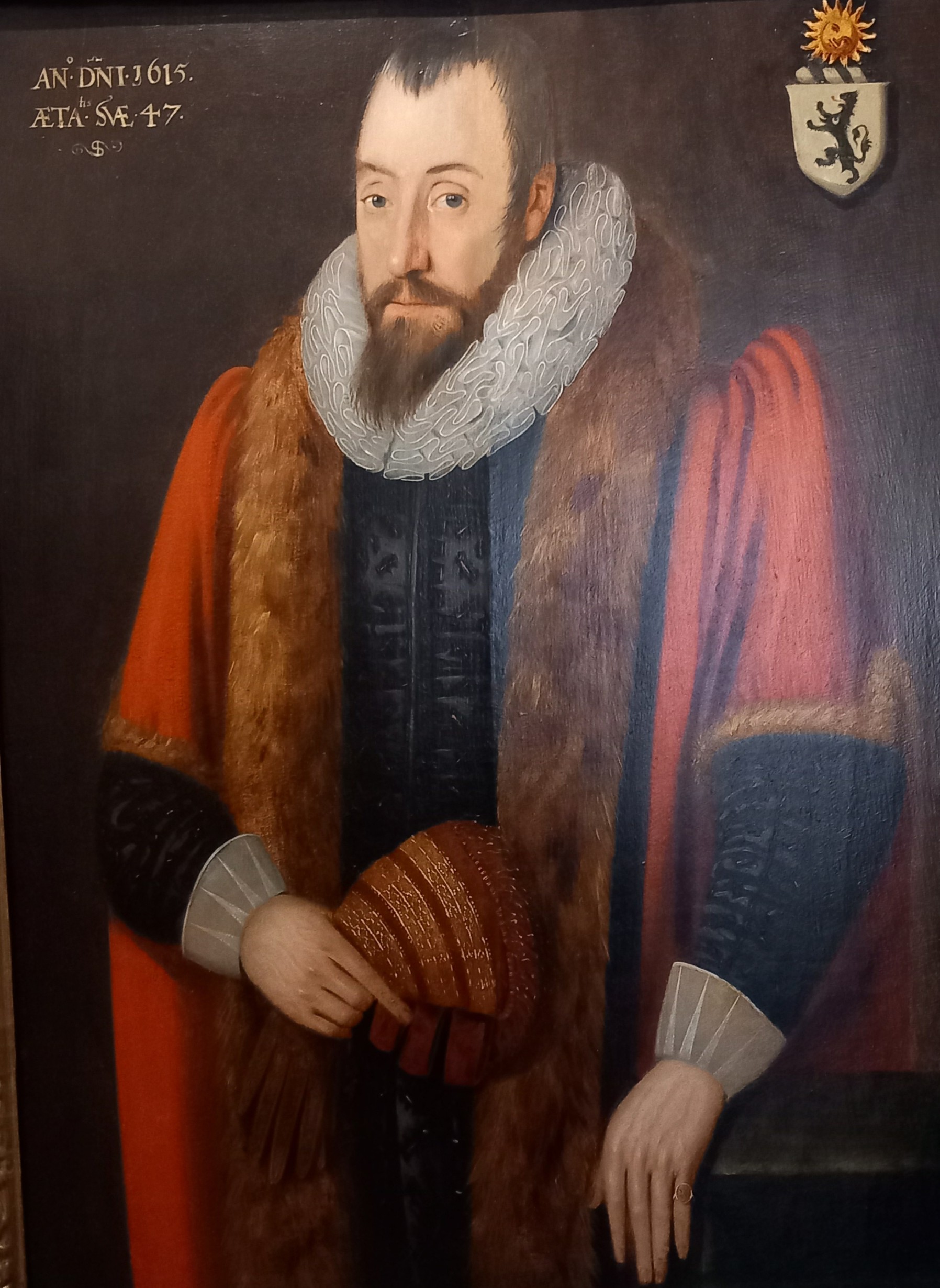
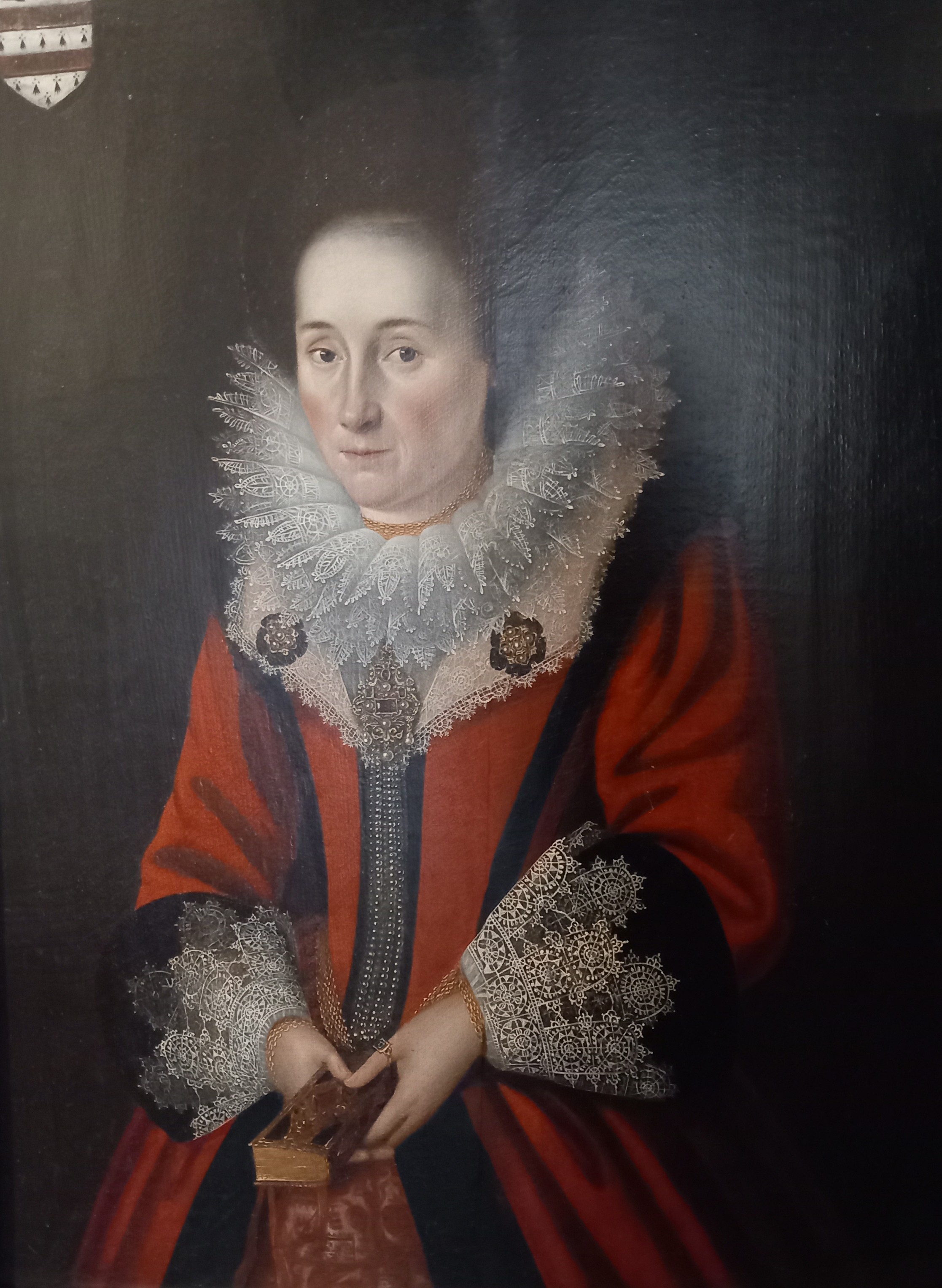
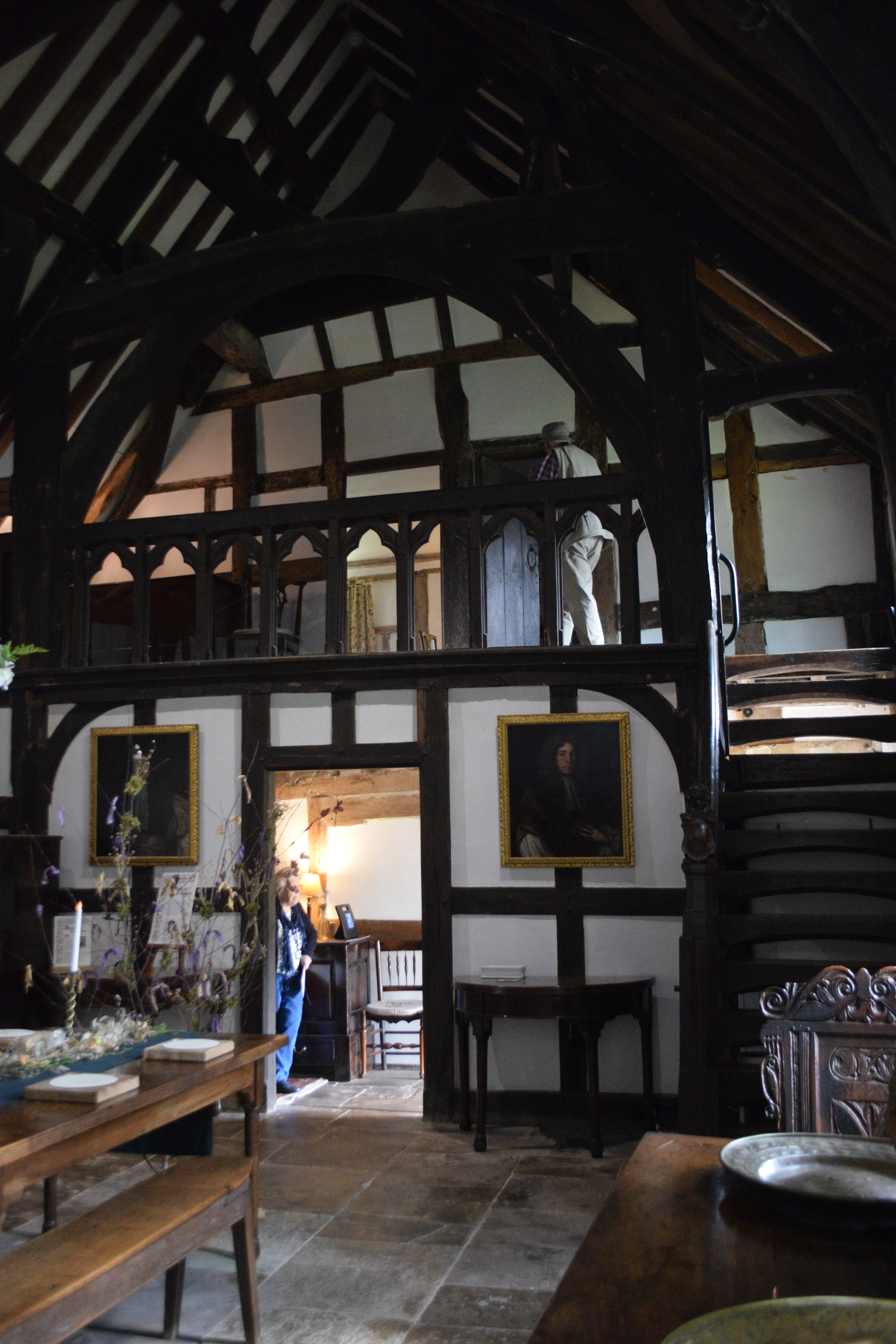
In Stuart times one of these rich wool traders, Thomas Jones, pictured below in 1615, married Sarah Ballard, the educated daughter of the Mayor of Chester. Thomas rose in the local hierarchy as an alderman, then Bailiff and finally Mayor in 1638.

At the beginning of the Civil War (1642-1651), one man, Francis Ottley, seen below with his family in 1636, was appointed Governor of Shrewsbury by Charles I, who called on him to form a regiment of foot. These were divisive times with mixed loyalties. He carried the town along the Royalist path. Francis was appointed Sheriff of Shropshire in 1644 and, as the tide turned, was involved in negotiating the surrender to the Parliamentarians in 1646 after which his estates were sequestrated. He paid a price for his loyalty to the Crown spending the rest of his life fighting to retrieve his estates at Pitchford. However, It seems he negotiated these treacherous times, relatively successfully as his family remained prominent after the war and for centuries thereafter.

It may be significant that Sir Francis Ottley had been criticised by Prince Rupert, when in power, for being too lenient with Parliamentarians — Perhaps that was his salvation… One never knows when the boot will be on the other foot! (personal note)

For all the above, the highlight of our visit was the discovery of the Castle Museum and the history of the King’s Shropshire Light Infantry, a magnificently curated museum deserving another visit and a blog of it’s own.

Standard
Architecture, British history

Moat envy!

I am interested in history and architecture and we visit a lot of National Trust properties. I joined when my friend, Jane, pointed out that they have the best tea rooms and lavatories and are ideal places for a comfort break and a rest when travelling alone! I joined when I was widowed, Bill was already a member — now we do our best to get our money’s worth!

Last week we visited 3 but there was only one I’d care to live in.

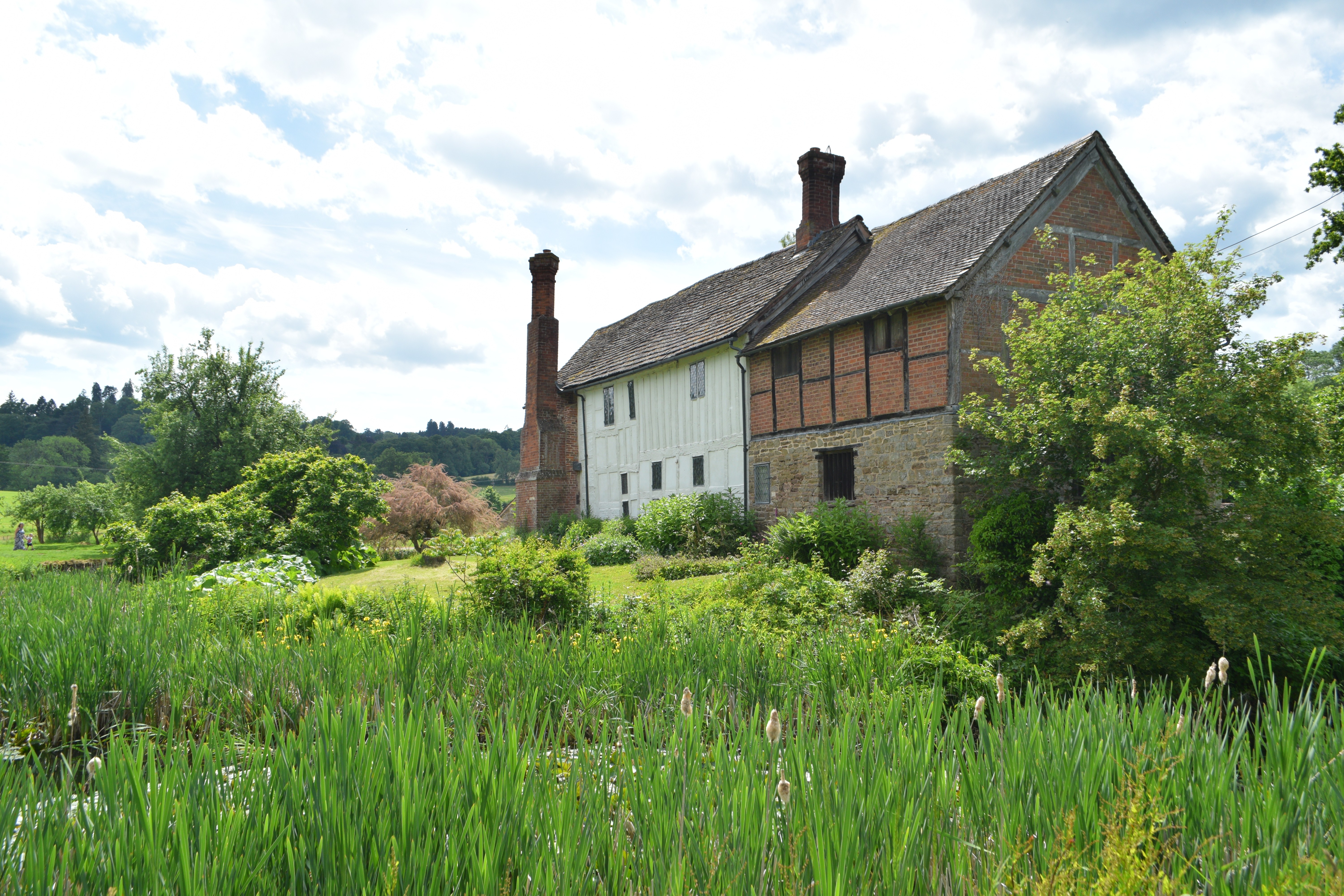
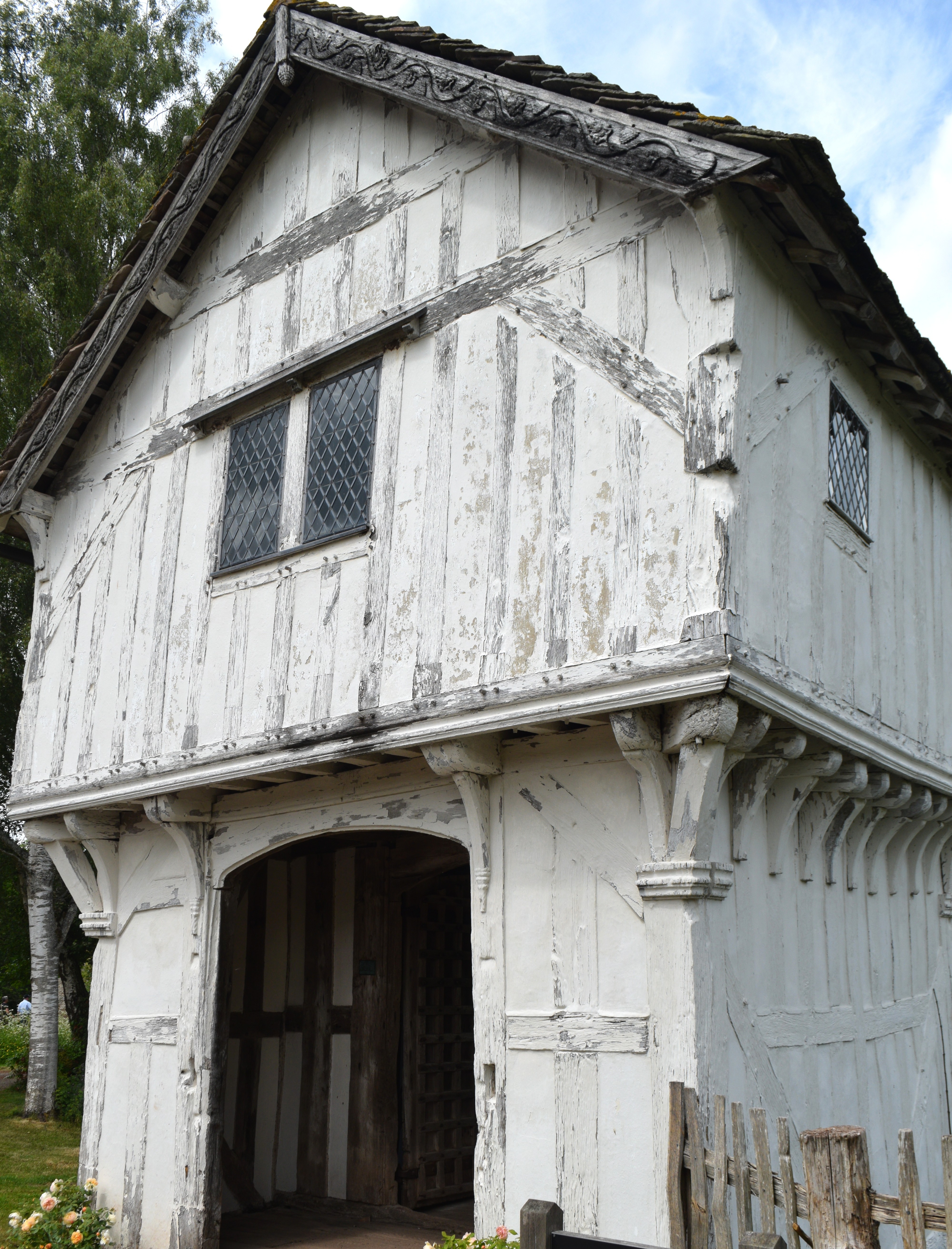
Brockhampton house was built in the reign of Henry VI, about 1425 (before the Tudors), from timber that grew in the Hereford hills. It has settled very comfortably into its surroundings over the last 6 centuries. Sitting on a green island surrounded by lily pads and irises and overflown by swooping swallows and squadrons of house martins.

I love it’s relative humility! No mod-cons; an unapologetic mediaeval family house. But this family thrived on its productive farm (unlike so many of the erstwhile owners of our heritage houses — they did not gamble away their resources or run out of heiresses to marry). The family who owned this house moved out in Georgian times to a new grander manor house further up the estate and this old house was occupied by estate workers. By the Victorian era it was in a parlous state but thankfully was rescued, improved and sensitively restored, under the watchful eye of an admirer, retired architect JC Buckler.

The whole aura of the place seems unchanged; minimal modern intrusions, the coolness and quietness of the great hall on a brilliant summer’s day, the chattering of baby birds in nests under the eaves of the gate house on the bridge over the moat. A sparrow chick peeps out from a chink in the brickwork.

Gatehouse timbers.

Mediaeval Gatehouse

View over the moat to the ruins of the Norman chapel.

Standard
Architecture, History

Visiting the Boston Stump!

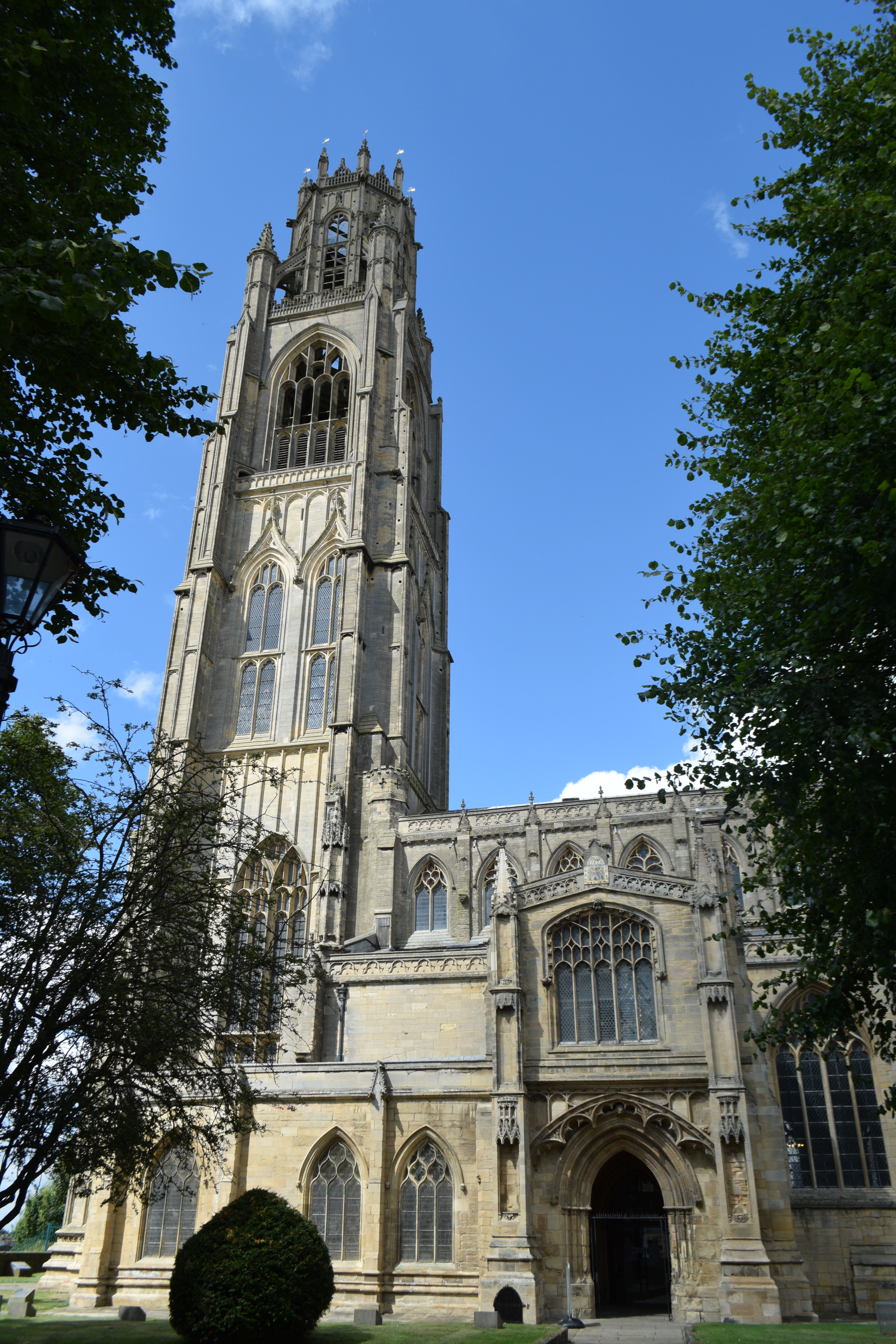
Last week we exhausted ourselves in the heat, tramping around Frampton Marsh on the Wash looking for yellow wagtails. In the distance we could see the only landmark in this flat landscape — Boston stump — the tall tower of Boston’s St Botolph’s medieval parish church . After lunch we went to have a closer look.

I had always thought that this was a cathedral but no, it is a humble parish church!

As you step into the nave, the vastness of it knocks you back and you wonder how this little town in Lincolnshire could possible have mustered the resources back in the 1309 to start such a mammoth project. It took the best part of a century and the tower was added later, by the late 1500s.

The view from the river gives a hint. The River Witham has a short course to the sea and is tidal — Boston, in its day was a major port, serving a rich agricultural area and the merchants were wealthy.

Boston in Lincolnshire, on the Wash — that great bite from the map of Eastern England, was the port from which many Puritans left Britain, notably those in 1630 in the reign of James I, bound for the Massachusetts Bay colony, frustrated by the lack of change in the Church of England — parted from Rome by Henry VIII, but not purged of much that was still Catholic. They took the town’s name with them and were soon followed by their own vicar, John Cotton who became known as the Puritan Patriarch of New England. 166 of his Boston, Lincolnshire parishioners made it to New England.

1660 was the year that marked the end of the Puritan rule of Oliver Cromwell that followed the Civil War and the restoration of the monarchy. Charles II ruled for 30 uneasy years but in 1685 when he died his younger brother James II, personally a committed Catholic, was again a threat to stability and within 3 years the powers-that-be, facing the prospect of another Civil War, invited William (protestant king of the Netherlands) and his queen, Mary ( James II’s daughter) to assume the crown. James’s army deserted him and he fled to France. In 1690 he tried to regain his throne but was beaten at the Battle of the Boyne in Ireland and the rest, as they say, is history — which goes on and on!

These were turbulent years in England. And not much fun for this schoolboy I spotted being beaten — seen on a misericord in the choir.

Standard
Architecture, British history

Powis Castle

It has been very wet of late so when we have a sunny day, we drop everything and head off for a day out!

The Castle is famous since the injection of cash it received indirectly from Clive of India when his eldest son, Edward, married Henrietta Herbert, daughter of the Earl of Powys. The Herbert family were at the heart of the British aristocracy but had fallen on hard times. Edward’s father, Robert Clive was a sort of eighteenth century, colonial oligarch. He had had a brilliant career in India as an administrator of the East India Company, a soldier, politician and adventurer — accruing considerable celebrity and wealth which is just what a medieval castle needs!

Because of it’s association with Clive, I had always thought it dated from that period but I was quite wrong. It was built way back, by Gruffudd ap Gwenwynwyn, a prince of Wales, in the 13th century to defend himself against the princes of Gwynedd — it is one of the few surviving properly Welsh medieval castles. Most of the now famous ones were built by the English King Edward I to keep the Welsh princes in order.

It commands a magnificent view of the country around Welshpool from the terraced Italianate garden.

It is famous for its monumental and historic yew hedges.

The castle is packed with amazing furniture and art works which, sadly, cannot be photographed. There are paintings dating back to Tudor times — well worth the visit.

I was very impressed by the tasteful and historically sensitive lady’s lavatory.

As Bill was by the athletic lady outside the cafe who appeared to be drinking a yard of ale!

Standard
Architecture, British history

Ecclesiastical Surprise

We can never resist an open church door — except on a Sunday.

Recent travels have taken us to Beverley in Yorkshire, a market town (I bought a dress) with 29,000 inhabitants. It has a minster. What is a minster? I hear you ask. I understand it as a throw back to the administrative structure of the Church 1000 years ago — all that has changed but a few minsters remain. Some are cathedrals like York Minster. Some are parish churches with attitude like Beverley Minster!

It is a Gothic masterpiece built between 1220-1425 now dedicated to St John and St Martin.

John was a local boy in the 700s who made good becoming Bishop of York and established a monastery in Beverley. He was credited with many feats of healing and good works and was canonised in 1037 — before the great schism so he is still revered by the orthodox churches!

Martin, better known outside Beverley, was a Hungarian conscript into the Roman army and sent to France. On a cold winter’s day he saw a beggar, almost naked and shivering. He cut his cloak in half with his sword and gave half to the beggar. The beggar returned to him in a dream as Christ and he became a Christian, founding a community and later became Bishop of Tours. A good demonstration that you are never quite sure whom exactly it is that you help or, conversely, that you do down!

Both he and St John had significant biographers — the key to posterity perhaps. One of John’s students was Bede, becoming venerable as the chronicler of his own and earlier ages. PR was always important.

The nave — not surprising that the Minster was used as a set for Westminster Abbey in the film Young Victoria
Detail from above door — amazing collection of statues — 99 outside but late Victorian, although the one of the future Edward VII is a good likeness! Unfortunately the light wasn’t good.
Quire, magnificent woodcarving with 21st century chorister’s mug and music?

A fascinating, beautiful church, though my photographs do not do it justice — well worth a visit.

Standard
British history

Battle of Britain Memorial Flight

The best adventures are unplanned. Yesterday on our way past, we called in to RAF Coningsby for Bill to do a bit of goofing at the end of the runway. It is where the Battle of Britain Memorial Flight is stationed — where they keep planes that survived the Battle of Britain in 1940, that still fly and do the memorial fly pasts on special occasions such as the coronation — though the weather prevented that. We were offered a tour but our guide Julian Maslin apologised because the planes were out — it was the day of the display pilots annual re-accreditation — if we stood outside the Hangar he would tell us about them as they flew past!

At that point, what he had to say was drowned out for a moment as the memorial flight hove into sight from behind the trees.

Well, that was interesting — but what’s this?

Creeping up on the 80 year old Avro Lancaster bomber — it’s one of the display typhoons whose pilot is also due to be re-tested.

Flying along behind at almost stall speed.

He kept his distance as they flew up and down in front of us, and the examiners.

Then along on top! Once the Lancaster had peeled off and landed the Typhoon showed its power and manoeuvrability.

Afterburners firing,

the Typhoon with a banshee wail climbs almost vertically

and loops the loop!

Before streaking past us one last time.

Here’s is her sister, on the ground from 29 Squadron. And a chance to see the Lancaster as she taxies home — a very big bird.

She disgorges her regular RAF crew, who come and greet us, standing on the tarmac. They seem excited by their exercise and relieved to be good for another year.

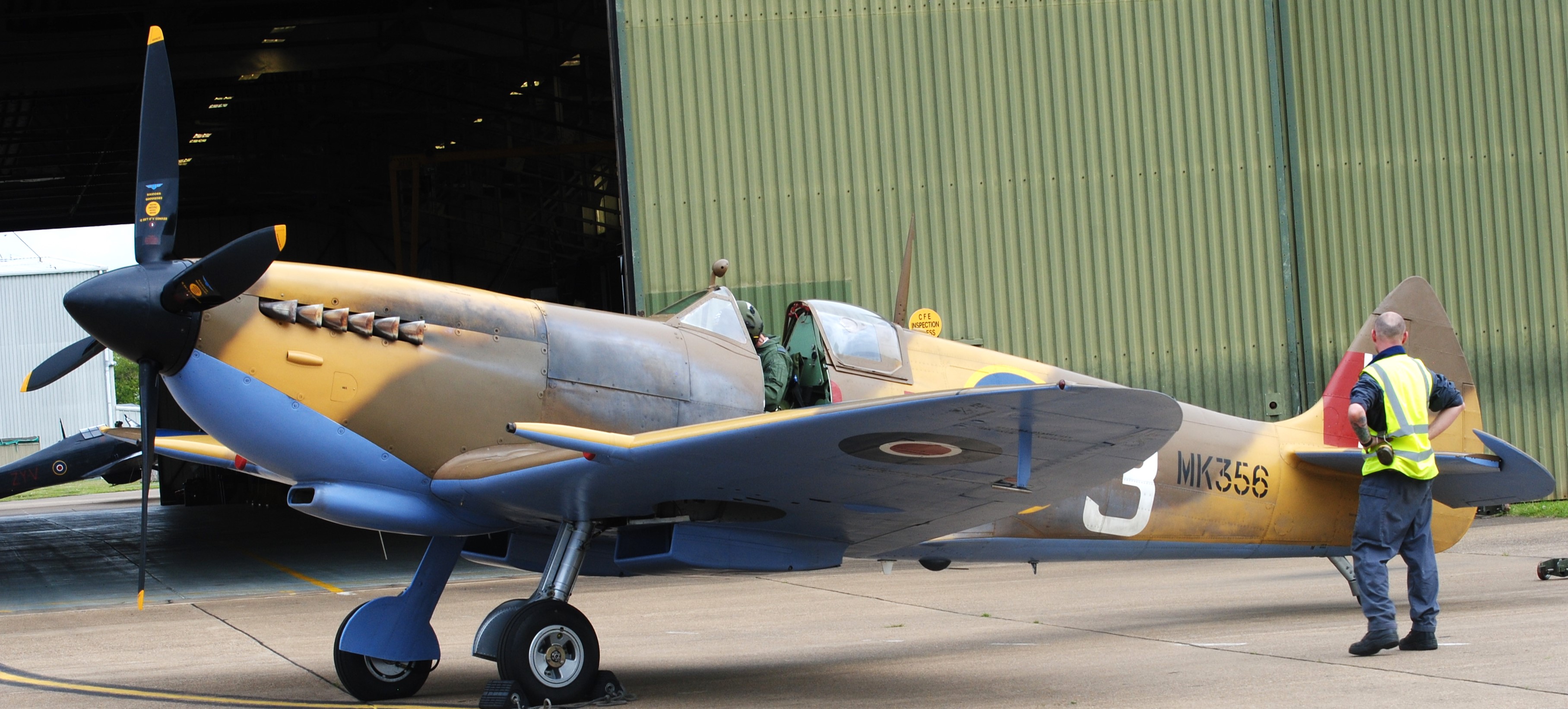
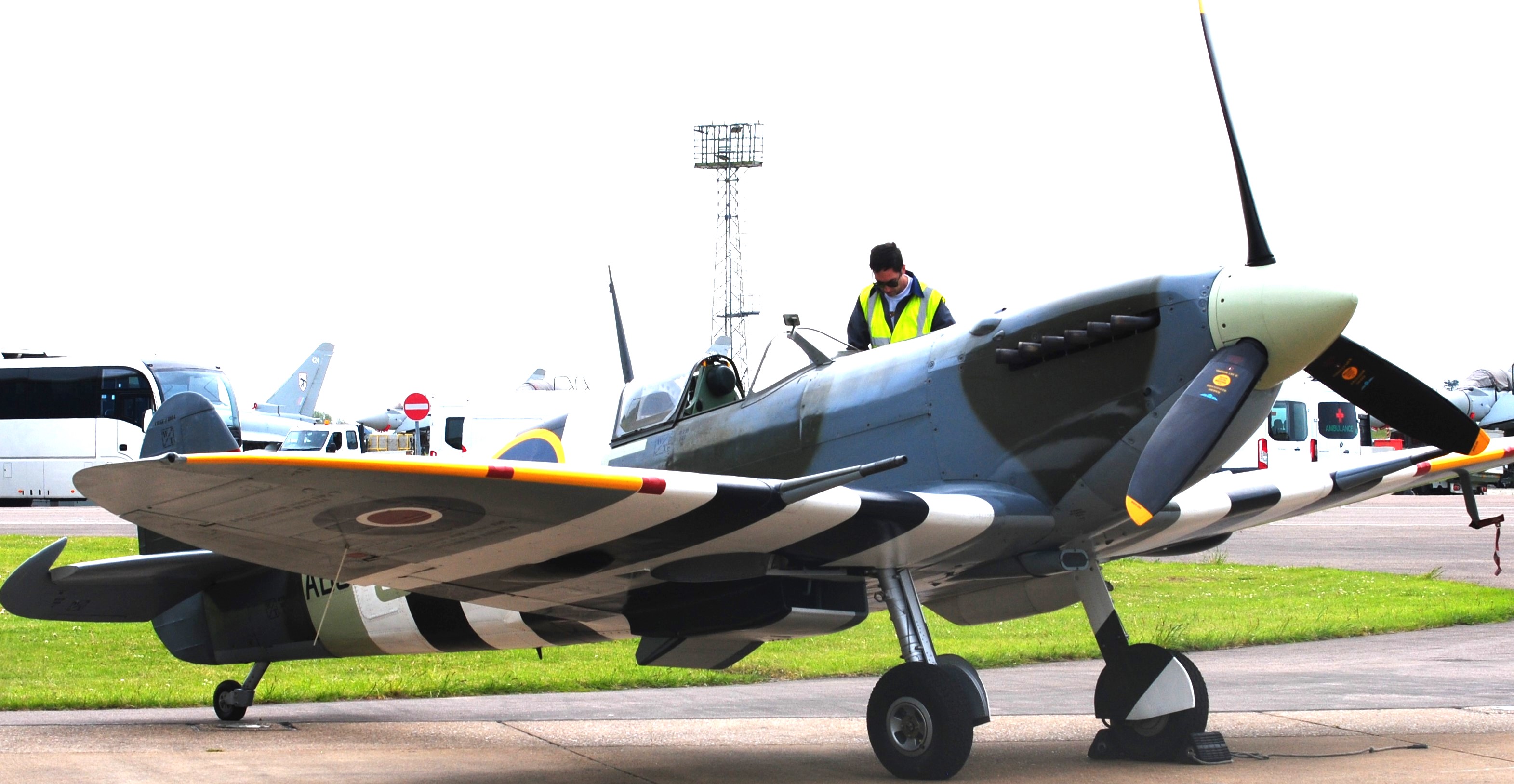
Time to have a proper look at the Supermarine Spitfire, in desert camouflage.

This one is painted for the invasion in 1944, the stripes to prevent it being shot down by friendly fire.

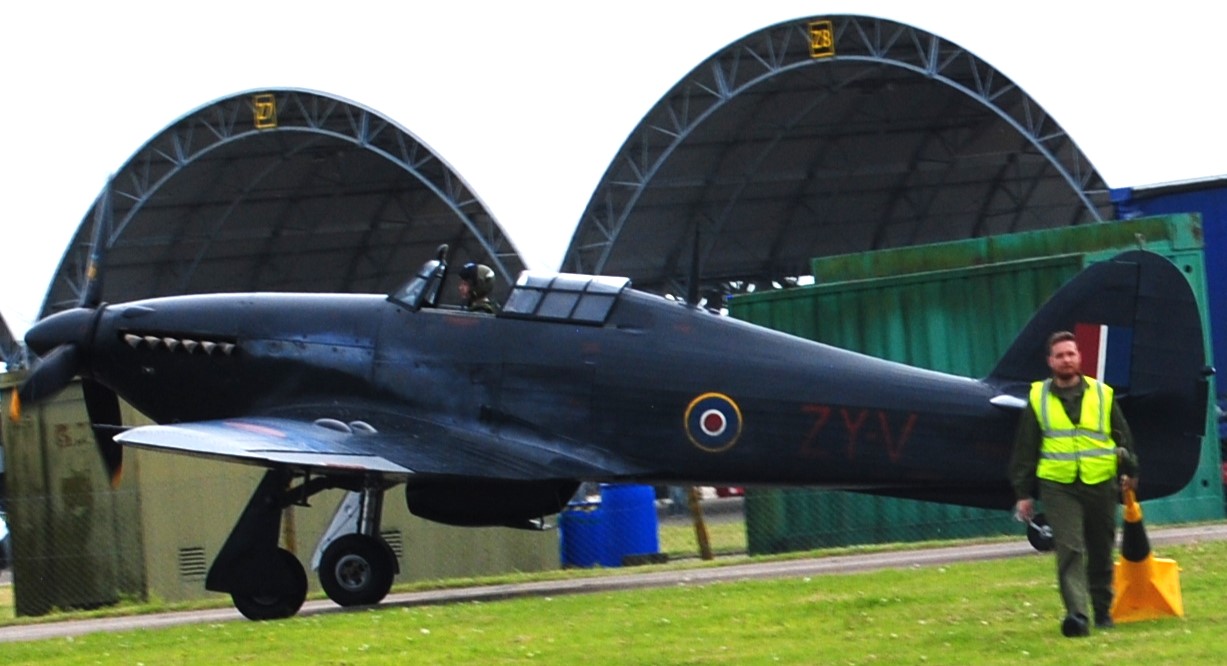
The Hawker Hurricane that was flying is painted black as for night flying as they did over London in the Battle of Britain in 1940.

‘Never in the field of human conflict was so much owed by so many to so few’

W Churchill
Standard
Books, History

Llanidloes — a microcosm of British History!

It’s satisfying to read history that you can fit into your own known world, that talks about the way national and international events affected people living in your own area, that mentions the streets and buildings that figure in your own town! It brings the history to life and should definitely be used in local schools where it will render history more relevant to students. But you don’t have to live in Mid-Wales to appreciate this intimate perspective on history — looking at events from the point of view of one small area can increase ones understanding dramatically and, in a world that focuses on centres of government and is skewed by other agendas, it is brilliant to realise that there are patriots, innovators, captains of industry, revolutionaries, artists, religious philosophers and politicians everywhere, in all communities. It seems Llanidloes is a microcosm for what happens in the whole world!

Published in 2010 by the Great Oak Bookshop, ISBN No. 978-0-9524653-1-7

Standard
Architecture, Art, British history

Looking Back

Sometimes an image will transport you to another time.

The carved bench ends of St Winnow’s Church in Cornwall take you straight back to 1520!

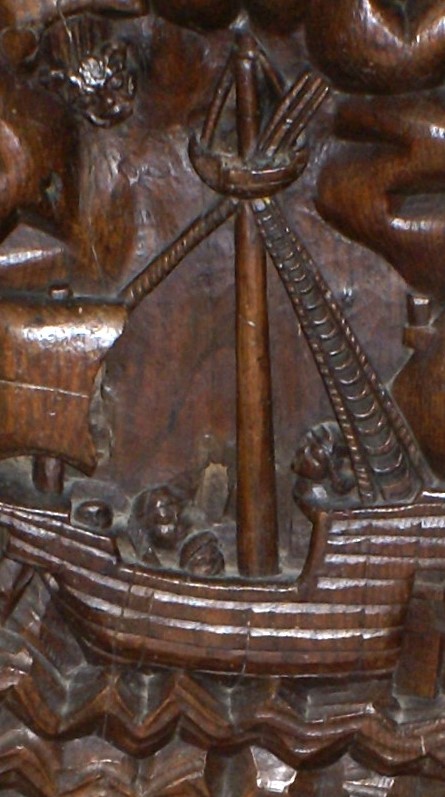
The same place, the Fowey estuary, but 500 years ago. A Tudor boat, like the ones they saw from the church yard, but in a heavy sea, blown by the wind god.

Local craftsmen will have been carving what they knew. Images and icons of the time, emblems, armorial bearings, monograms or, maybe an allusion to a sponsor, perhaps a guild. They were artists so there is more to the work than Christian symbolism — they capture the essence of the time.

According to Todd Gray, A Gazetteer of Ancient Bench Ends in Cornwall’s Parish Churches, these carvings of tools are images of the Passion (above is a hammer and pincers, pillar with cord and 2 whips). With my artisan’s hat on I wonder if they represent carpenters and the ceremonial truncheons — the marks of authority of maybe the constable and the two keepers of the poor-house.

You will note that some of these bench ends are better preserved than others — the church was renovated in 1874 and care was taken to preserve the ancient bench ends at that time.

This is supposed to be the symbol of the martyr Saint Catherine but her wheel should have impaling spikes to inflict her horrible death and be broken by the power of her holy spirit. Could it actually be a nod to the wheelwright who financed this particular bench end? Did he sit here?

As I get older I realise how short is a lifespan. How near we are to 1520 — how nothing changes. Here is the bench end that confirms this. Have you noticed how the archaeologists on TV are obsessed with ritual — I always look for practical explanations — is this chap a sinner or just marking the brewer’s bench?

Standard
History, Rememberance

For the Fallen

They shall grow not old, as we that are left grow old:
Age shall not weary them, nor the years condemn.
At the going down of the sun

and in the morning

We will remember them. extract from For the Fallen by Laurence Binyon

And today we think of all those who have perished in Ukraine and will die tomorrow and in the days to come — another wasted generation, their families and their unborn children.

Standard
British history, Psychology, Thoughtful

Is this a train, a bridge or a river?

In response to my last blog — on rivers, my friend Steve sent me a copy of his favourite river scene…

It set me thinking… As we look out at the world, what we see depends not so much on where we are standing but who we are.

When the children of our reconstituted family were young, I noticed that if they witnessed an event, an altercation in the street, for instance, when they each told me about it they often interpreted it quite differently. It was startling.

My 15 year old step-son came back from town one day and reported, ‘We were going down the Headlands and this hoity-toity lady had a go at a man who was trying to park his car but he wasn’t going to be bossed about by her, he told her where to get off and no mistake!’

Later my daughter described the same incident, ‘We saw this lady, she was a bit like Gran, and when she asked a man to move his car because it was blocking her drive, he went bananas! He was really rude.

Both perfectly nice kids with eyes and ears that worked, heard the same words but what differed was the way they each saw the world — different genders, different characters, different formative experiences, different viewpoint — they saw it from a different angle.

I think we all have an idea of the world and as we look about we mould what we see and hear to fit this view — it is our nature to want to confirm our preconceptions.

So, is this a river, a train, somewhere to fish or a health and safety issue? Steve says it’s 92 Squadron, a Battle of Britain Class locomotive, built in 1948 to a Southern Railway design at Brighton works. Now at the Nene Valley Railway where it is lovingly tended and where you can visit it.

The name commemorates 92 Squadron which flew Spitfires very successfully in the WW2 Battle of Britain, financed from the East India Spitfire Fund.

Card sold in aid of East India Spitfire Fund and salvaged from wreck of SS Gairsoppa which was torpedoed off Galway on a voyage from India to Britain in Feb 1941 — Salvaged because it went down with £150 million in silver bullion!
Spitfire overhead!

Thanks Steve!

Standard