Local History, Uncategorized

Man Eats Dog

I have been writing the biography of a man who lived in Wales through the depression of the 1930s; he was a famous international amateur footballer but also a notorious poacher and wit; I have been reading endless accounts of long forgotten football matches and interviewing his large family and friends, hearing their stories and cobbling together some sort of narrative.  The interesting thing is how it demonstrates the nature of story telling.

When someone repeats someone else’s oft-repeated anecdote it is sometimes difficult to be sure what the point of the tale is.  The chap I was writing about told his children many times about going to help a farmer with the harvest and noticing that the farmer’s dog was nowhere to be seen.  Later for lunch they had a stew of unusual white meat that the original teller of the tale remained convinced was the dog.

Man eats dog — what was the point.  He had repeated the story throughout his life — it had made a big impression on him him.

Was he disgusted?  What did he say it was like?   Quite tasty.

Meanwhile I was struggling with my hero’s poaching, not just the stealing but the ecology, as locally long-extinct species appeared in the family pot and fish roes were boiled up, in the breeding season, for bait.

Then I remembered the poor farmer’s wife with all those hungry helpers come to take in the harvest with no payment in prospect apart from one decent meal and my hero’s narrative reached me over the years.

Image

H.B. ‘Gurra’ Mills in about 1923 — reproduced thanks to his family.

You can access his full biography on the ‘Published Work’ page of this website.

Standard
Uncategorized

Back From The Edge

We’ve been to Ireland looking for ancestors and got more than we bargained for; hot in pursuit of deceased episcopalian ministers, we ran to earth an Andrew Buck.  He was the first of a long line of ordained members of the established church, not the anti-establishment hero I had hoped for.  Nevertheless, in 1742 he had entered Trinity College, Dublin, as a sizar (subsidized student of exceptional ability but humble means).  He became a doctor of divinity but never seems to have had a parish though we found reference to him as being “of the Hibernian Academy”.  This was not a euphemism for University of Life, it still exists.

The modern man at the, now Royal, Hibernian Academy was on holiday; perhaps he was chasing his own ancestors in Spain so, assuming that my ancestor had died, we made haste to search graveyards.

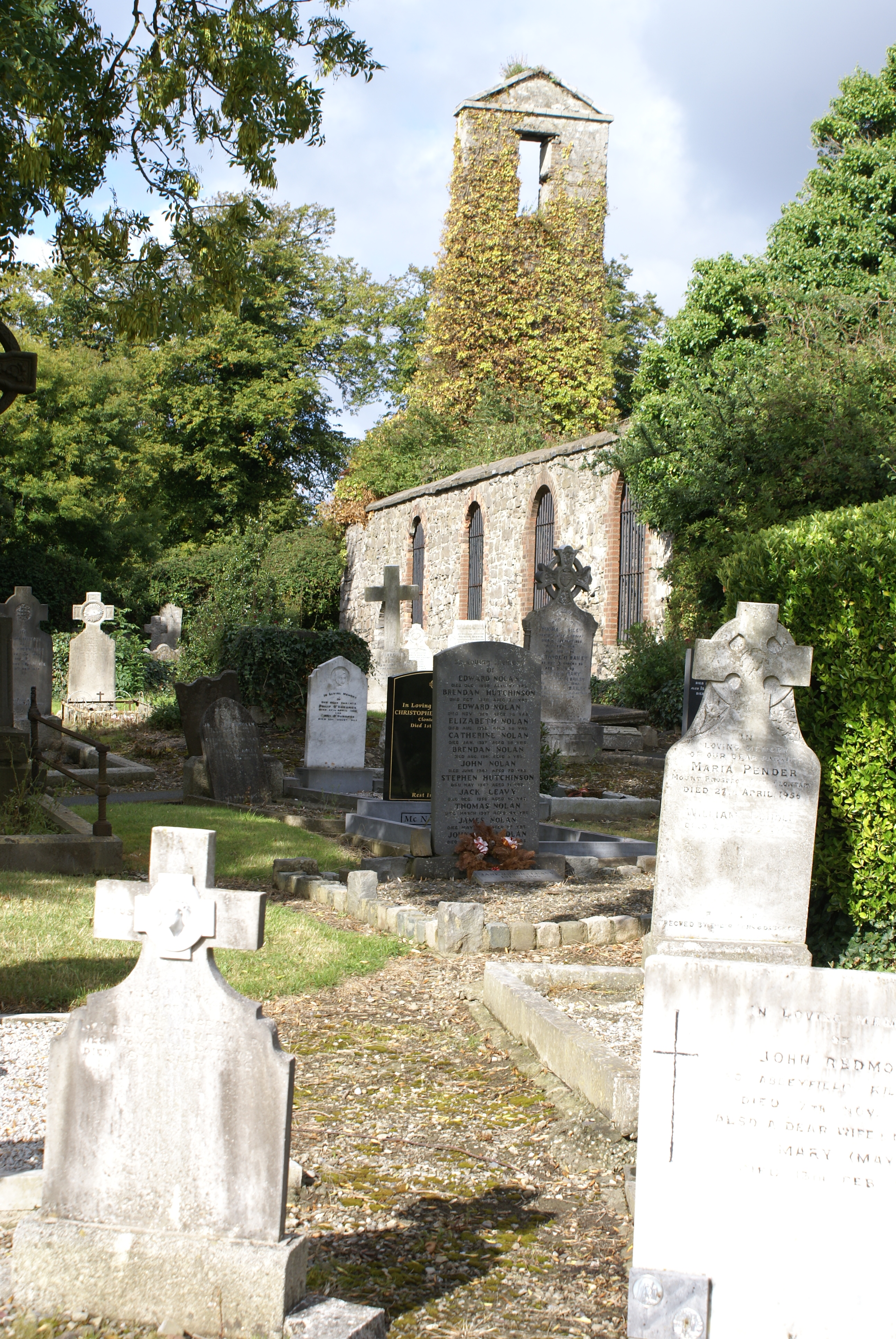
Alan (long suffering spouse/driver/ambulant thesaurus/spare pair of eyes and rememberer of all things important – well nearly all) was triumphant: finding the shattered remains of the gravestone of my Great (x5) Uncle Jonathan in the ruined churchyard in Clontarf.

Ruins of Grt (x5) Grandpa's church, Clontarf

Ruins of Grt (x5) Grandpa’s church, Clontarf

Crown adorns St John's new church, Clonfarf

Crown adorns St John’s new church, Clonfarf

Finding the graveyard had been the hardest part: the first church, of the right name was of the wrong denomination and in the midst of a funeral for which, on a sunny day on holiday, we were inappropriately dressed; we did not stay for tea.  The second church had its roof off and would not let us in.  Anyway, where the graves should have been there were tennis courts with attractive people playing ball.  This was an inter-regnum; the new LADY vicar was to be installed with the new roof and meanwhile, a sinner told us, our relative would be down the road in the ruined churchyard.  There, to be sure, he was, with his wife, my Auntie Anne.

Great(x5)Uncle Jonathan reminds us of our mortality

Great(x5)Uncle Jonathan reminds us of our mortality

We were just as lucky in Limerick where we hoped to track down Andrew’s humble origins; the lady at the Cathedral (Church of Ireland) is still looking but not before remembering the name Jonathan Buck (probable grandfather of the one Alan found in Clontarf).  She had looked him up for an exhibition about silversmiths in Limerick that had recently finished at the Hunt Museum, just down the road.

The young man at the Hunt was delighted; there had been a book of the exhibition – A Celebration of Limerick Silver; it had not sold well; they had reduced it from E40 to E10; he remembered because he had bought loads to give as impressive Christmas presents but there was one left!

Celebrating Limerick silver with Guinness and sandwiches we discovered (shock/horror) the Dutch connection.

We read that, just maybe, the oldest Buck of them all, one George Bockendoght, a victim of abbreviation in the mid 1600’s, was probably imported from the low countries by the Earl of Orrery.  He came to boost the economy after Oliver Cromwell had just personally expelled, one way or another, the skilled Catholic Irish and the Royalist English — it was a bloody affair and to top it all, and to reassure us that nothing has really changed, they had a currency crisis and needed more coins struck!

There we are!  Not descended from a heroic peasant from the wild and beautiful west coast but a new man, arriving in the wake of genocide to institute quantitative easing.

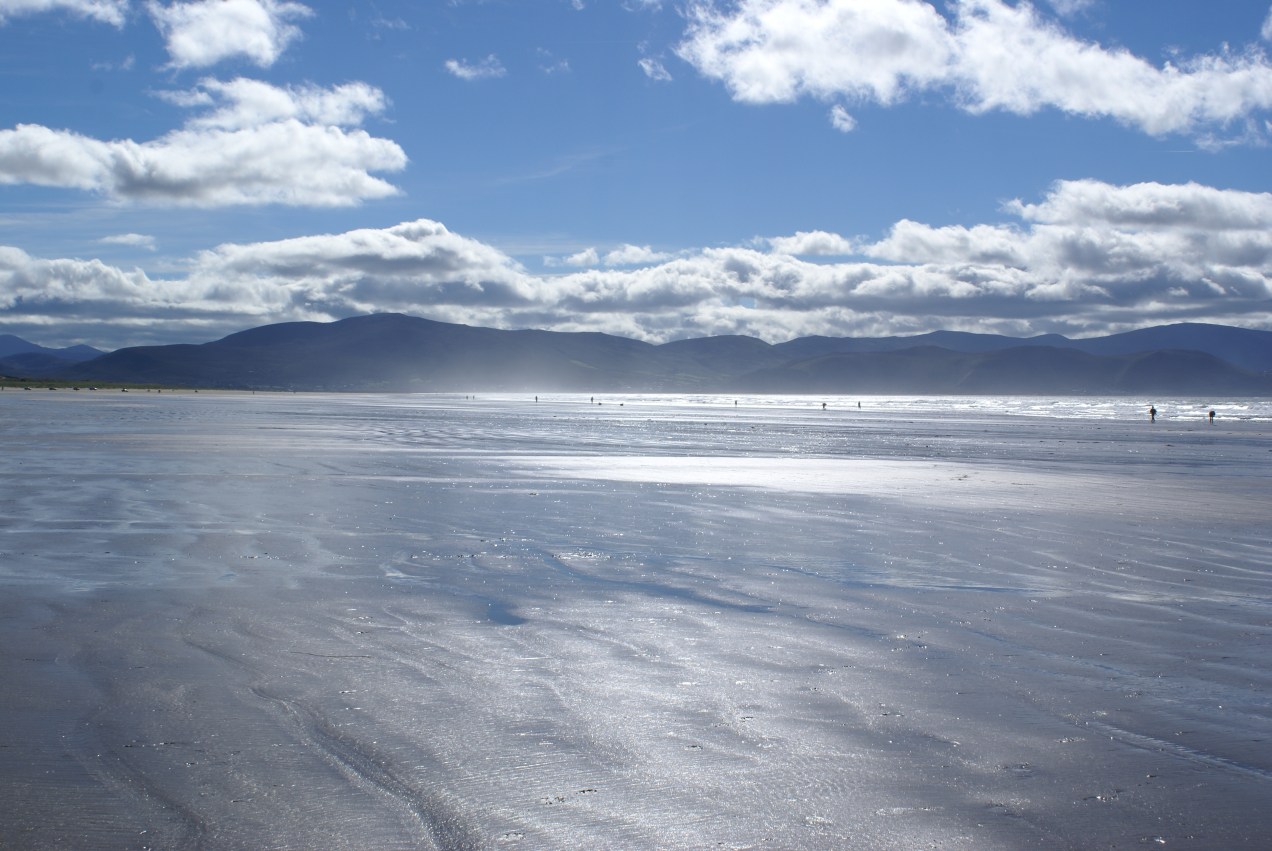
Wild West Coast

Wild West Coast

Standard
Uncategorized

Market Day

SONY DSC

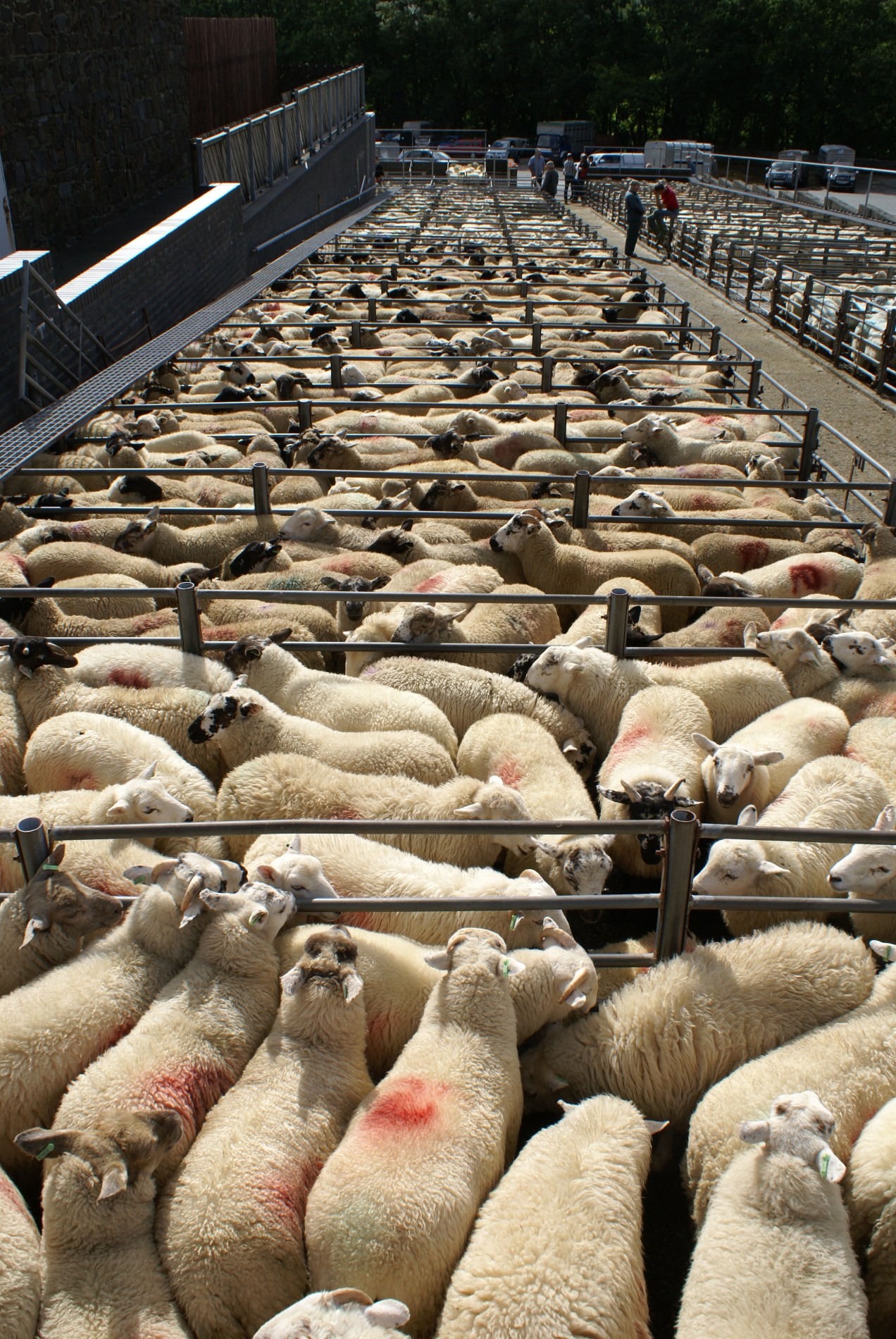
Dolgellau is a small livestock market, yesterday full of magnificent lambs, nearly mature now, trimmed and tidy, clothed in innocence and looking to their shepherd’s face for clues and sniffing the air, which was relaxed.  These were being sold as store-lambs, to go on to other farms, not for slaughter.  The owners were easy, joking, ready to chat.  Cull ewe sales are a different matter, the sheep are left and the farmers have urgent matters to attend to elsewhere, they don’t hang around to see old ewes sold, those they have lambed and pulled out of bogs in the middle of winter or dug out of snow drifts.

Yesterday at Dolgellau, farmers perched on the pen rails, in the autumn sun, and chewed the cud.  They looked at lambs smaller than their own and bemoaned the future for those farming on the edge, on the high, rugged land that you can see from the market, where the mountain pass rises by Cader Idris.

Old men remember the winter of ’47 or riding from Llanbrinmair  to Aberystwyth over the moors without having to open a gate and the sheep court at Dylife where they sorted out the stray sheep once a year.

Young men know that the openness of the country still prevents them controlling their stock as they would like; one cautious man, mindful of recent late springs decided to lamb later, as they used to, only to find that his neighbour’s tup had already serviced half  his ewes!

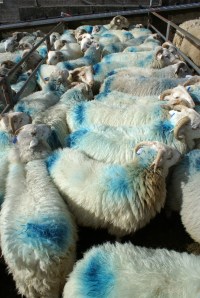
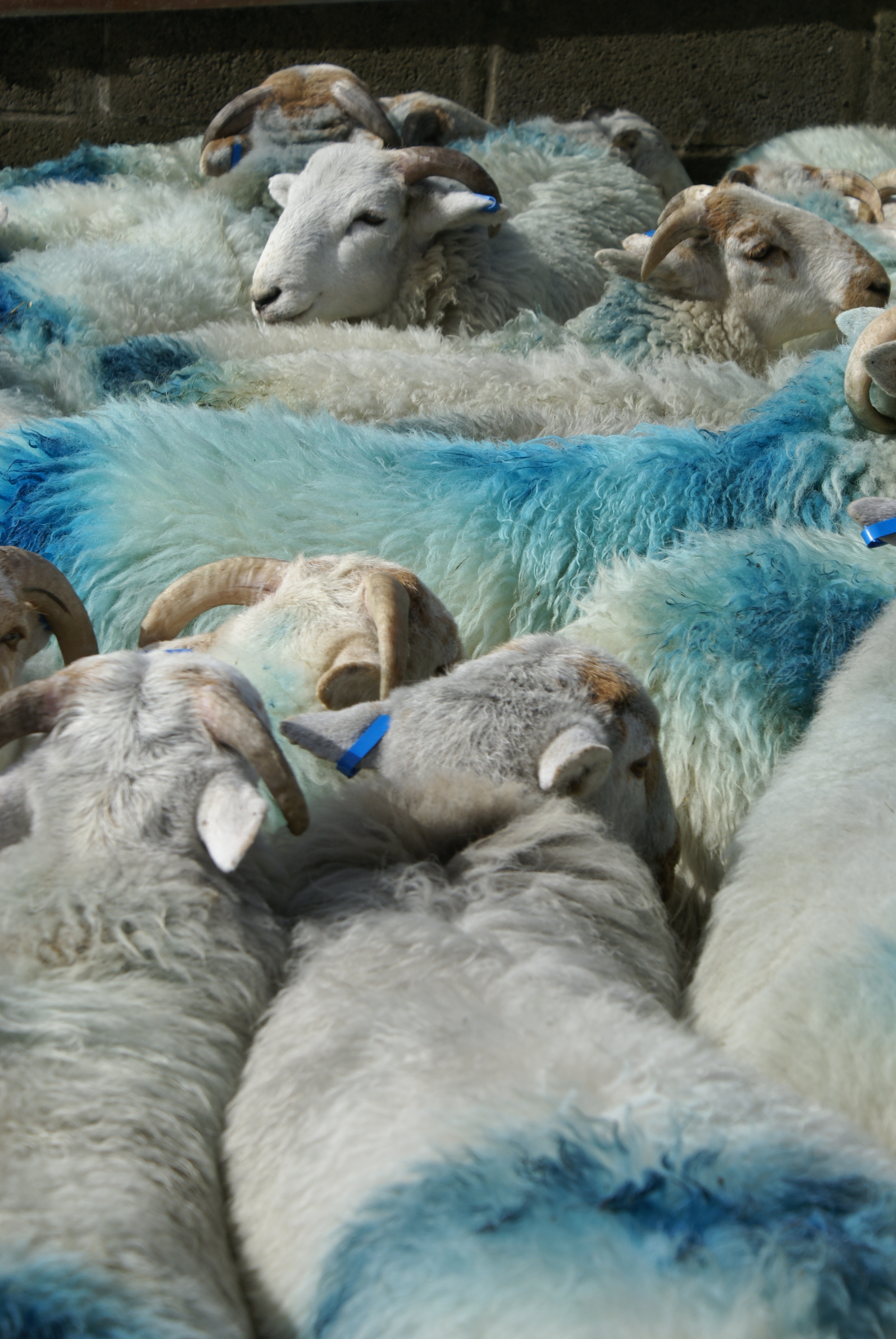
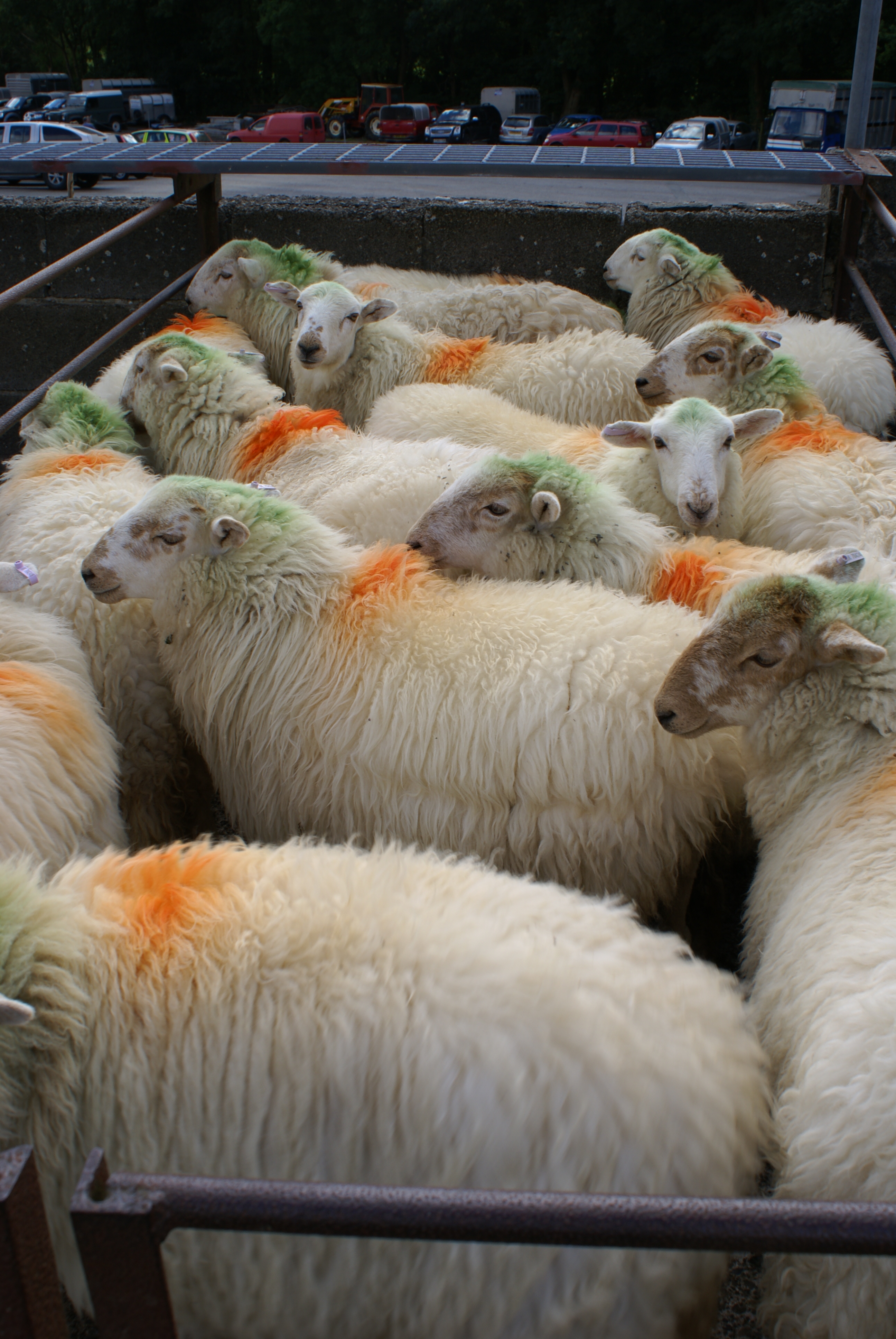
Bold marking helps muster sheep in mountainous ground where the hardy beasts jump stone-walls, hence the colourful pens of sheep.

SONY DSCSONY DSCSONY DSC

Yesterday there were also people showing their pedigree Improved Welsh Mountain  sheep.  Prior to this I had harboured hopes of one day producing a breeding ram but I realise this is folly.  These creatures have huge curled horns; the first and only year that we used a tup with horns the ram-lambs he produced, although as lively as you like, kept hooking themselves in the fences and one died.  Now we always use a hornless male to father our lambs and although not always hornless the offspring have poor horns,certainly not suitable for hanging on fences and not show-horns!

The sight of a large ram walking to heel, on a lead is incongruous, like some strange dog, one that occasionally has a flash of recall and lowers its head, arches its back and kicks out its back legs, like a bison, before turning its head graciously to the camera.  Breeders are flushed with pride but avoid any undue shows of emotion, this is, after all, a livestock market.

SONY DSC

It is a proper manly place, not the sort of establishment where buyers are squeamish about testicles or undocked tails.  In this more rugged terrain, there are enough challenges for young animals without adding to their stress by castrating or introducing infection and anyway, I thought testosterone built up muscle and isn’t that what its all about?

That brings me to lunch, £5 for a massive bowl of casseroled lamb’s liver and bacon with baked vegetables and mashed potatoes, eaten from the bowl with a knife and fork and fit to serve to anyone, anywhere.  And pies and cakes and home-made fruit flans with cream to die for…  But that’s not a problem for the men who still run up these steep hills tending their flocks, who carry sacks of feed,three at a time, and lug fully grown ewes about as if they are tired children and walk rams about on leads.
Standard
Uncategorized

Golden Water

We take nothing for granted; our water which is golden, comes from a well, half a mile from the house up a steep hill.  In the recent relatively dry weather we have cut a track to it so that when filters block or tadpoles appear in the bath we can reach it without angina on our four-wheel-drive, but not so trusty, quad-bike.  We don’t take that for granted either; last winter it also developed a blockage; outside it was seriously sub-zero for months so that ones ungloved fingers froze to the metal gate latches and to the carburetor of a quad-bike. I took the feed to our 30 odd sheep every day on foot, well mainly on foot, quite often on bottom.  In fact I soon rediscovered the joy of sliding back to the cottage on the empty feed-bag, pursued by an excited and snowy-nosed dog and watched by puzzled sheep (pictured).

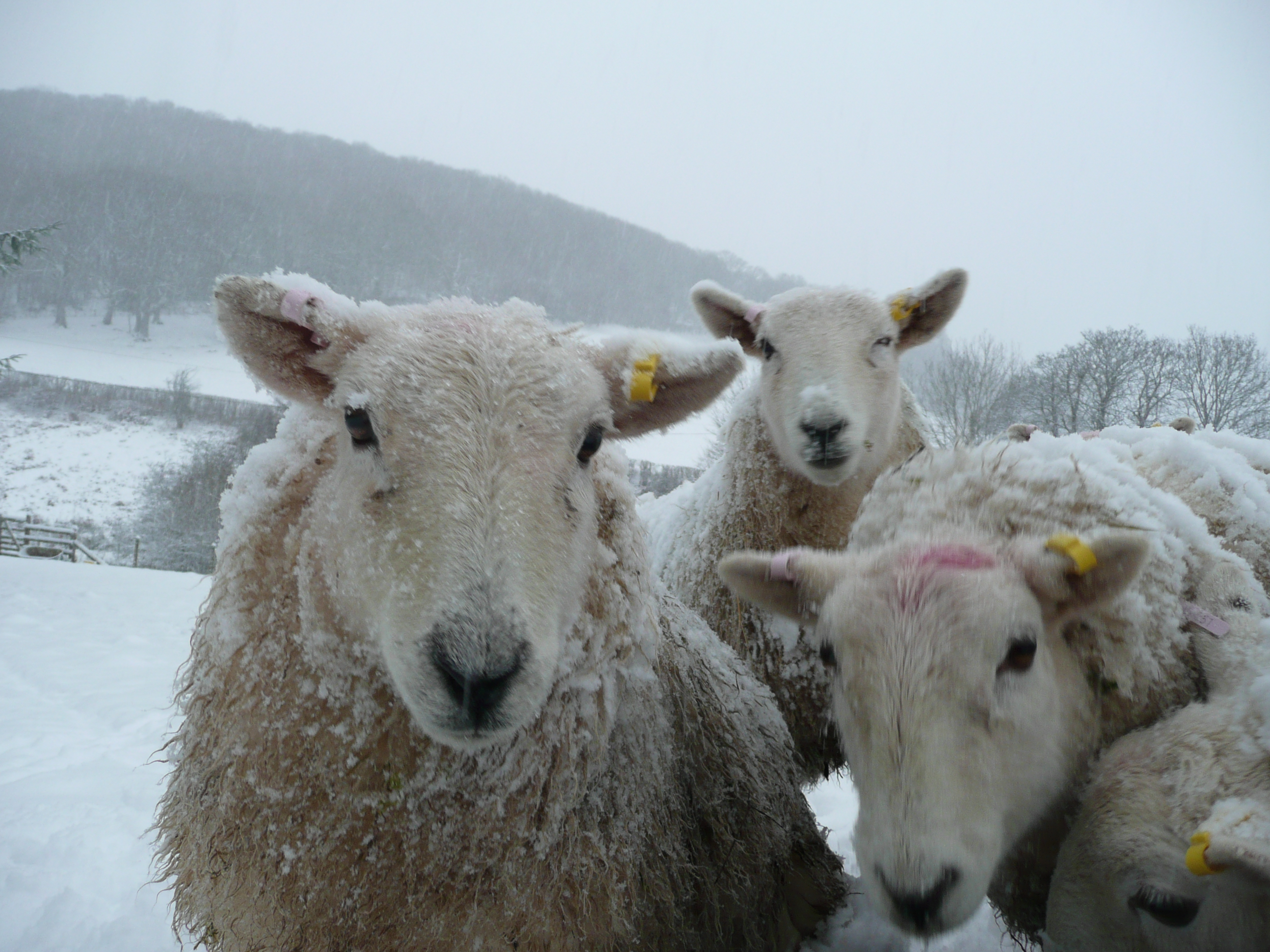
Puzzled sheep

Puzzled sheep

Having beat a track to the well we couldn’t resist a little tinker (like all our neighbors, some of whom are still quite young, we are preoccupied with our flow).  Moreover, my husband, having finished knocking down the bracken of the track with his lover, the ancient Hitachi digger, decided he had to dig a hole. The chances of him finding the pipe leading to the house, which was the object of his quest, seemed unlikely, but within half a day and only three holes, he had succeeded and the flow seemed better than we had dared hope for, as it spouted into the air from the accidentally severed pipe.  Forgetting the mended quad-bike he ran all the way to the well to turn off the stopcock which broke off in his hand.  Already in a state of collapse, he was not thinking straight, he threw open the well, startling the frog and pulled out the top end of the pipe so that the water was saved!

The one thing you have to know about wells is that you don’t need air in the pipes and the one thing that everyone know about Wales is that there is never any shortage of water; it started to rain; the track (45 degrees in parts) became slippery.  Temporary repairs were made to the severed pipe, did I mention that it was 5.30 pm on the Saturday before the bank-holiday, or that we had fastidious guests arriving at any moment.  However, there is always help at hand and there were friends, one with his pump and the other with his generator and there are always bits of baler twine and jubilee clips and me to push and slither (generators are heavy and pumps are playful) but I was sceptical.

The pump, enlivened by the grumpy generator that had not enjoyed being hauled up such a dangerous track, blew off its jubilee clip and soaked the elderly but enthusiastic work force.  Three times the joint exploded but on the last occasion its owner took it in hand, thrusting his thumb over the end of the pipe and nearly disappeared up it.  It was sucking; the air had gone; the syphon was re-established.  The end was  thrust into the well, thumb still attached.  As he pulled out his thumb there was a satisfying slurp and the frog that had been watching from a vantage point, half submerged near the edge of the well started to drift precariously towards the sucking pipe, there was shouting and fumbling and splashing as the flailing amphibian was rescued and the filter re-fitted.

All the bits of kit have now been returned to the neighbors, cleaned and all the temporary modifications undone.  The pipe has been permanently repaired and hardly leaks at all and a new stopcock has been ordered and the flow?  Well, the flow was marvellous for a few days (the pump had blown out all sorts of gubbins) but, you know, the last few days it’s been dwindling a bit.

Standard
Uncategorized

Lambing without the Spring

2013 was a lambing disaster in many hill farms in Wales and in Scotland.   Being, as always, late we had a narrow escape.  Our ewes remained stoically out of doors and all we could do was give them as many calories as we could.  Miraculously they (all but one) were at least two weeks later than even we had planned and the weather had at last warmed up.  The following, published in PenCambria  documents the bitter experience of some of our neighbors.

Lambing without Spring – 2013 (PC)Image

Standard