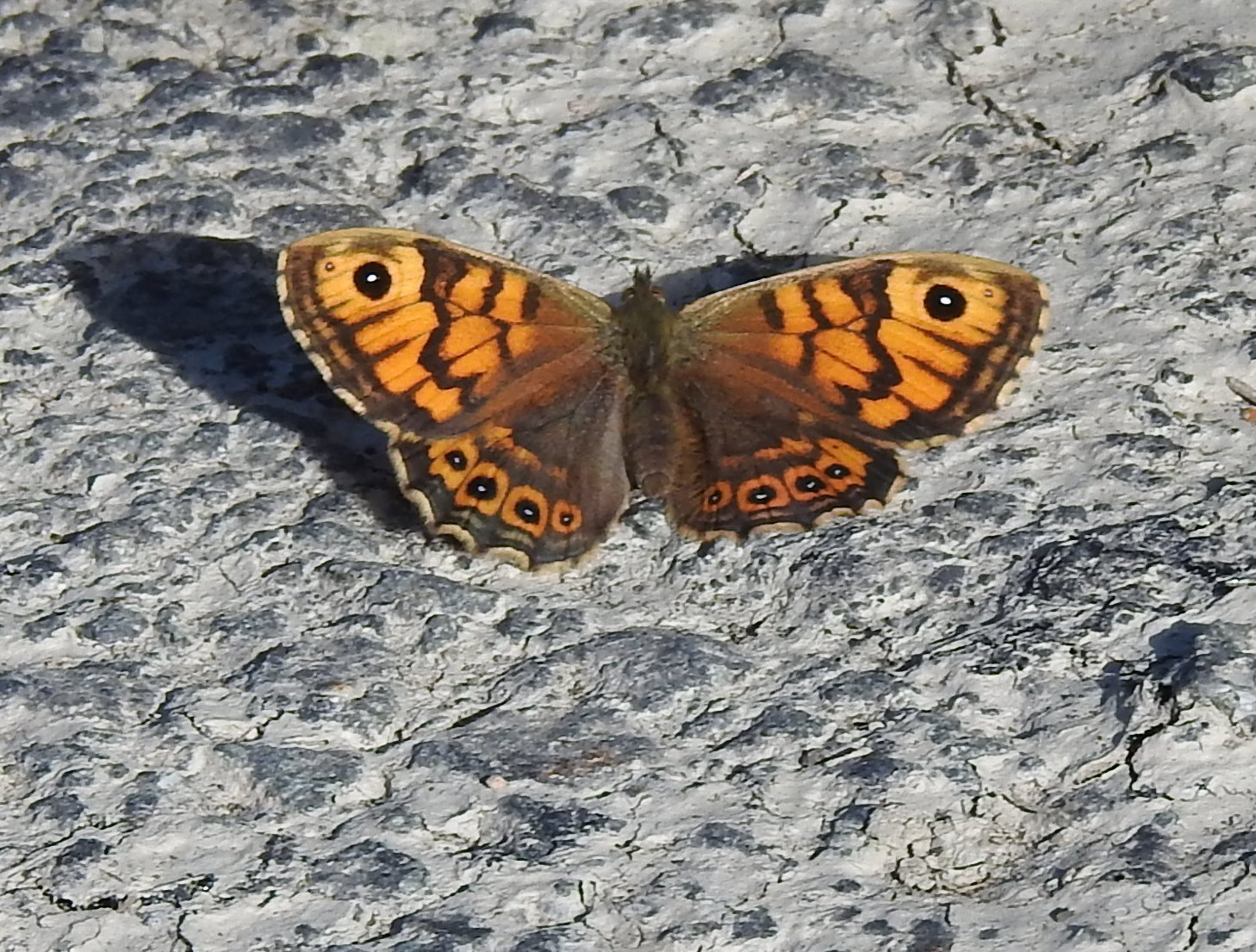
What’s this? A fritillary? No — look at those eye spots, it’s a wall butterfly (Lasiommata megera).
They live in short grassland especially where the sward is broken by rocks, furrows and walls (they like Wales), they are seen on grassy railway embankments and green verges, usually alone. Perhaps you’ll see a male flitting along looking for a female or resting with its wings folded together, showing the mottled grey underside, camouflaged on a rocky outcrop. This one was enjoying the May sunshine with its wings outstretched on the edge of a country lane that has a wide verge (the long acre) waiting to flutter up to waylay a passing female.
Their numbers are dwindling and they represent a high conservation priority as, although widespread in coastal England and Wales, they are rapidly declining. Rare now in central England it was presumed due to loss of habitat because of building and changes in farming, less grazing and the use of insecticides to protect arable crops. But there may be another reason: there is evidence that warmer temperatures are causing generations to hatch out too late in the year to survive.
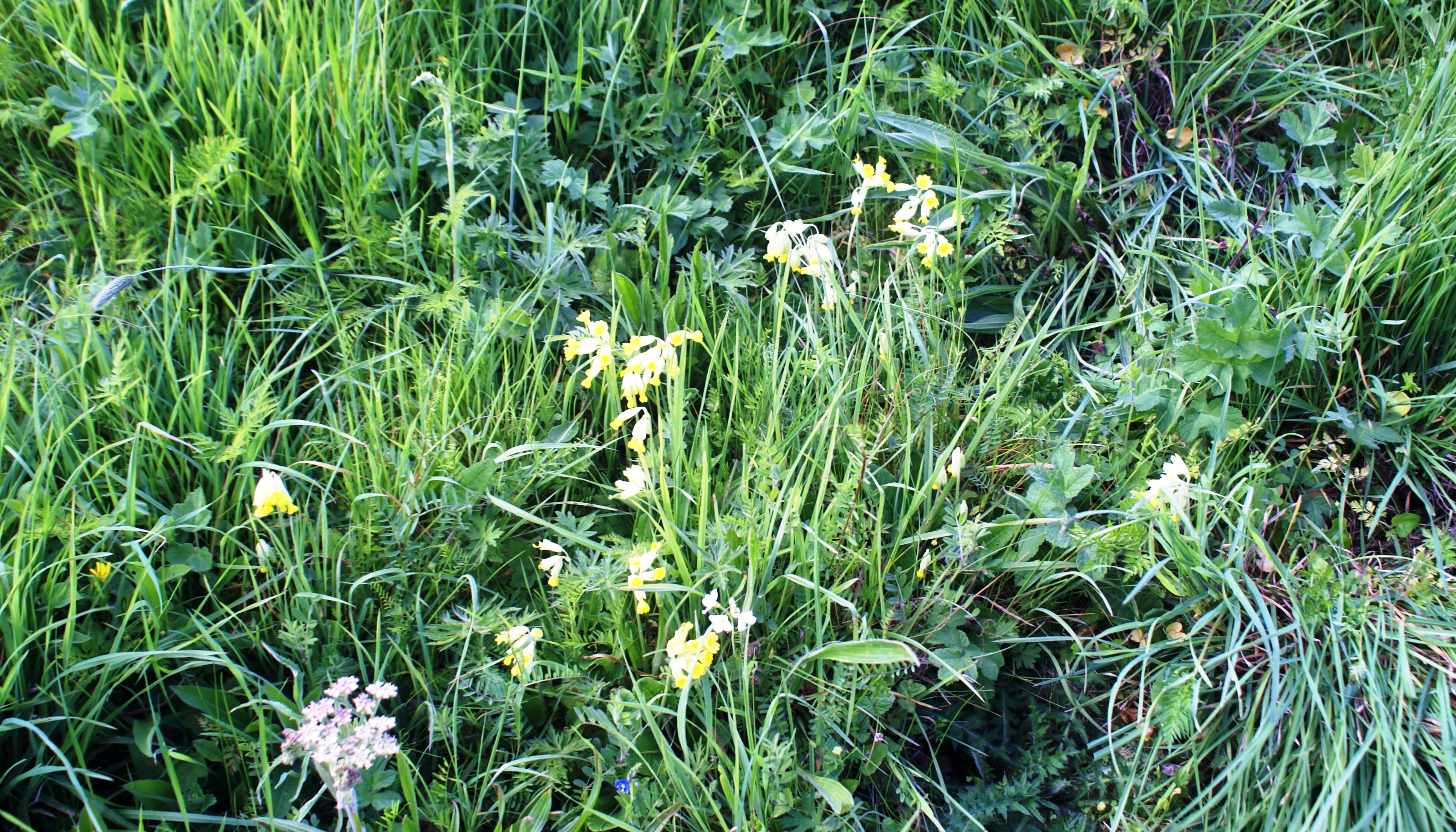
About three years ago everyone here was complaining bitterly about the council not cutting the verges regularly anymore. This year the verges are blue with a resplendent crop of wild hyacinths, self sown or grown from dormant bluebell bulbs which lay waiting for a reprieve from incessant mowing. It’s an austerity bonus! Good for bees!
As our lonely wall butterfly flits off to find a mate it reminds us of the enormous value of our 937 square miles of verges in the UK — twice the size of Exmoor and the New Forest put together — let’s mow them all just once a year and stop spraying and, while we’re at it, please can we turn off all the street lamps!
I have been on the track of John Nicholl who was born in Kirkcaldy on the east coast of Scotland, in 1829, he was my great-great-grandfather. He started life as an apprentice rope-maker (my great granny, who I remember well, had told me he had been a sail maker — not a growth industry at that time — the first commercial steam ships coming into service as the ink on his indenture dried!).
When he was old enough he went to sea, initially on coastal vessels but by 1863 he had become a ship’s master and was sailing to the East Indies (China and Islands of the South China Sea), the US, Canada and South Africa –what a time to be travelling the world but not without its risks!
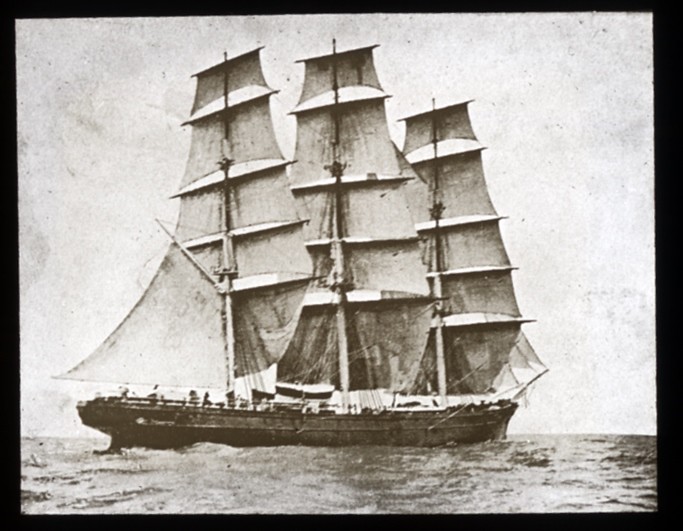
When I was a child I was told that he commanded a tea-clipper, a sister ship of the Cutty Sark and this may well have been the truth. He certainly commanded the Roslin Castle for 3 years, then the Wemyss Castle, a 700 ton, 183 foot vessel with a wooden hull on an iron frame with two masts. The Suez Canal was opened in 1869, until that time the valuable trade in tea from China was conducted with fierce competition taking the perilous route around Africa and the Cape of Good Hope through the dangerous waters of the South Atlantic and the Indian Ocean. Navigating by the stars!
In 1875 he took command of the Aberlady and sailed to South Africa but on 11th November 1877 it was in the Java Sea (South East of Singapore) that disaster struck — the ship was lost in the Gaspar Straits after it struck the Alcest Reef which was named after another famous sailing ship that foundered there in 1816 while taking a diplomatic mission to China (the story of their shipwreck, the marooning of the crew, battles with pirates and eventual rescue is told in Voyage of His Majesty’s ship Alceste by John Mcleod MD, surgeon of the Alceste). The captain of the Alceste was court-martialled but exonerated and later knighted.
My great- great- grandfather was not so fortunate though he survived with at least part of his crew and somehow they got to Singapore where the shipwreck was reported. The loss of a valuable ship, cargo and possibly members of the crew was taken very seriously and he could not have been entirely exonerated by the enquiry which suspended his master’s certificate for 6 months from 11th February 1878 — from the records it seems that for several years he did not work as a master again though until his death in 1885 he continued to serve as a mate on ships bound for the Baltic, British North America, Greenland and Iceland, Spain, Portugal and the Azores and to the West Indies — less romantic destinations on ships which seem to have been larger, iron clad steam ships.
He died at sea in 1885 from cholera aboard a 176 ft steam dredger, the Espana, manufactured in Glasgow and bought by the Valencia Harbour Board. John Nichol was, in fact, registered as it’s master, whether he was delivering the vessel or working it for the Harbour Board is not clear. He was 57.
During all his voyages he was married to Catherine (nee Condie) who stayed in Kirkcaldy bringing up their ten children. The eldest girl Catherine died at the age of 17, possibly from tuberculosis.
Catherine Nicoll 1854-1871
Two of the sons lived into their eighties having obtained good educations (probably thanks to the tea boom) and moved to London. They went into partnership with each other as stock brokers — a safer way to make a living.
Mitchell Nicoll and George Macauley Nicoll
At least two other sons of John Nicoll went to sea. Wemyss Erskine Anderson Nicholl (what a name! I want to find out more about him.) He was drowned at the age of 47 when his ship, the Queen, was torpedoed by a German submarine in WW1, he is buried on Tower Hill in the City of London. Another brother, John Mitchell Nicoll is lost from the record after the age of 24 in 1882 when he had qualified as a first mate. Did he also die at sea or in some foreign port or maybe he left his ship in Canada or Australia or South America to start a new life in the New World — I shall have to start searching farther afield.
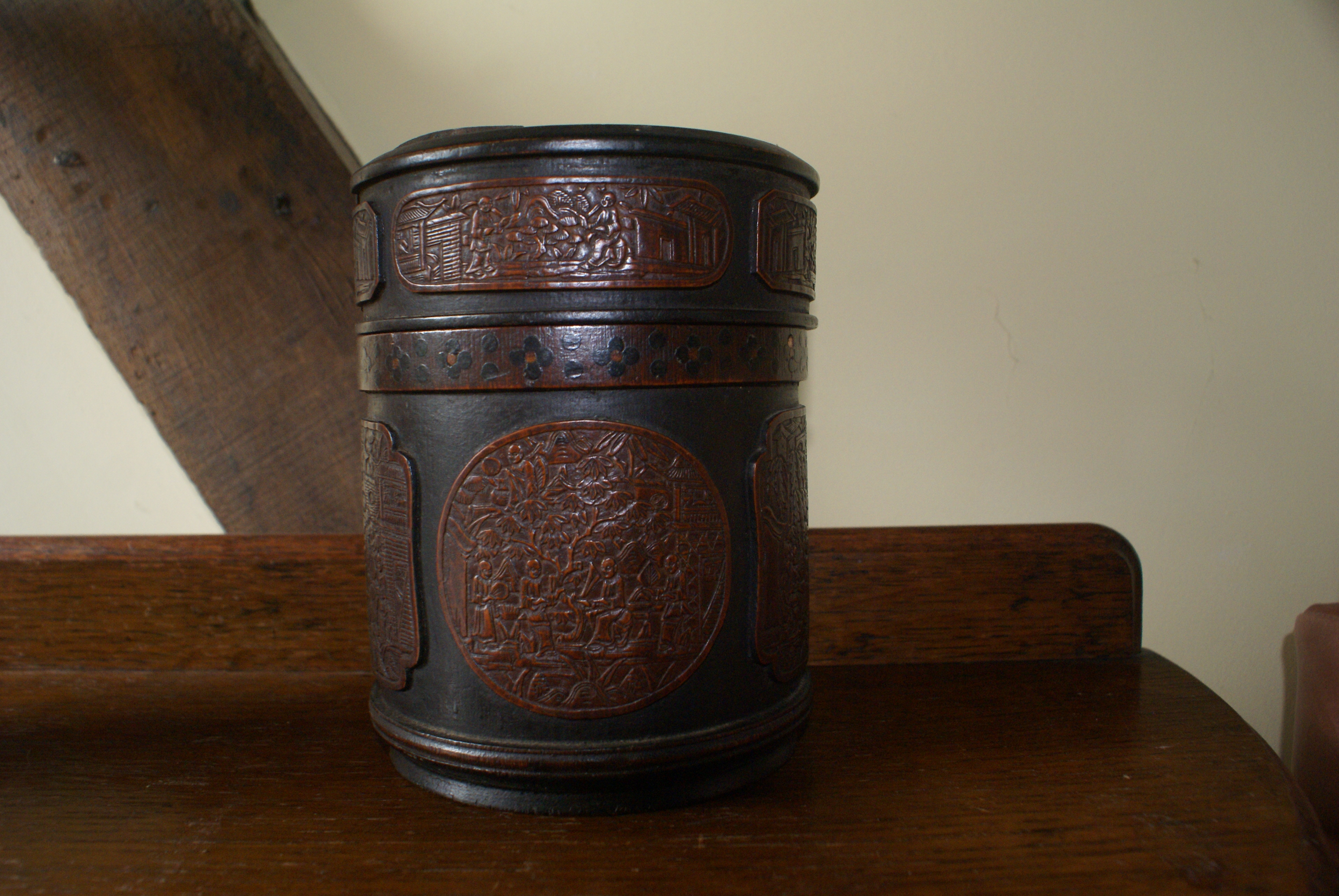
Great-great-grandfather’s sea box. Souvenir from the Orient — John Nicoll’s tobacco jar.
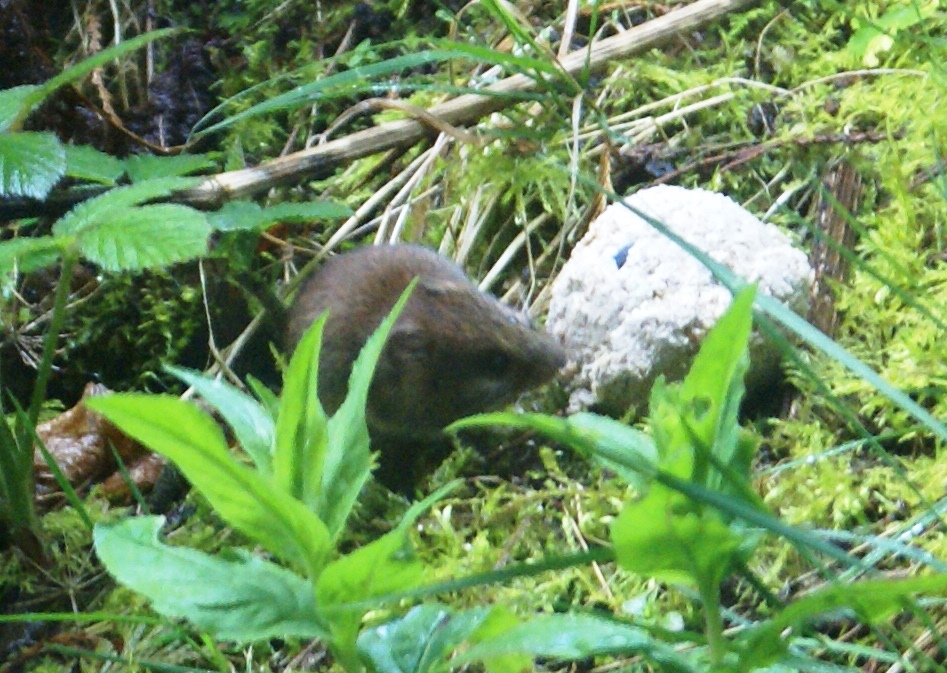
Cheeky bank vole steeling new friend, Thrush’s fat ball (he’s eaten all the bananas!) — bold as brass, six feet away from me.
Gosh! He moves fast, flitting all about the bank –soon the plants will have grown so much that he will be sheltered from the eyes in the sky –buzzards, barn owls and tawny owls. But watch out! There’s a stoat that visits the bank and next door’s cat. Everything is getting much braver since our dog died.
I spend a lot of time looking over my computer and gazing out of the window. Within 6 feet of me and at eye level this is often what I see — my new friend. I don’t know if he can see me but if he can he certainly isn’t bothered — I suspect he is more interested in the handsome reflection that is eyeing him quizzically!
“She’s got rid of those breeding ewes — we won’t have to look at any more pictures of slimy new lambs”
Not so! As with all things in the Garden of Eden — Mother Nature will have her way! The young lady who now uses our land to graze her virginal, adolescent ewes is learning just how fragile is ovine virginity!
Happy Accident 1 and 2, discovered on Wednesday:
They were left in peace in our top field and the others brought down to the fields around the house, I was out. The first thing I knew about what was going on was when I was eating my lunch in the sunshine and heard a strange baa — like a child imitating a sheep — I went to investigate and found a bewildered young ewe with tummy ache. But something was wrong — didn’t I say that anything that could go wrong would go wrong? It’s the 1st rule of rearing anything! She was agitated, as well she might be, and not progressing in her labour. I tried to catch her which only reminded me why I had decided to stop lambing in the first place. I phoned the shepherd, who phoned her dad, who borrowed her dog, who came and caught the ewe.
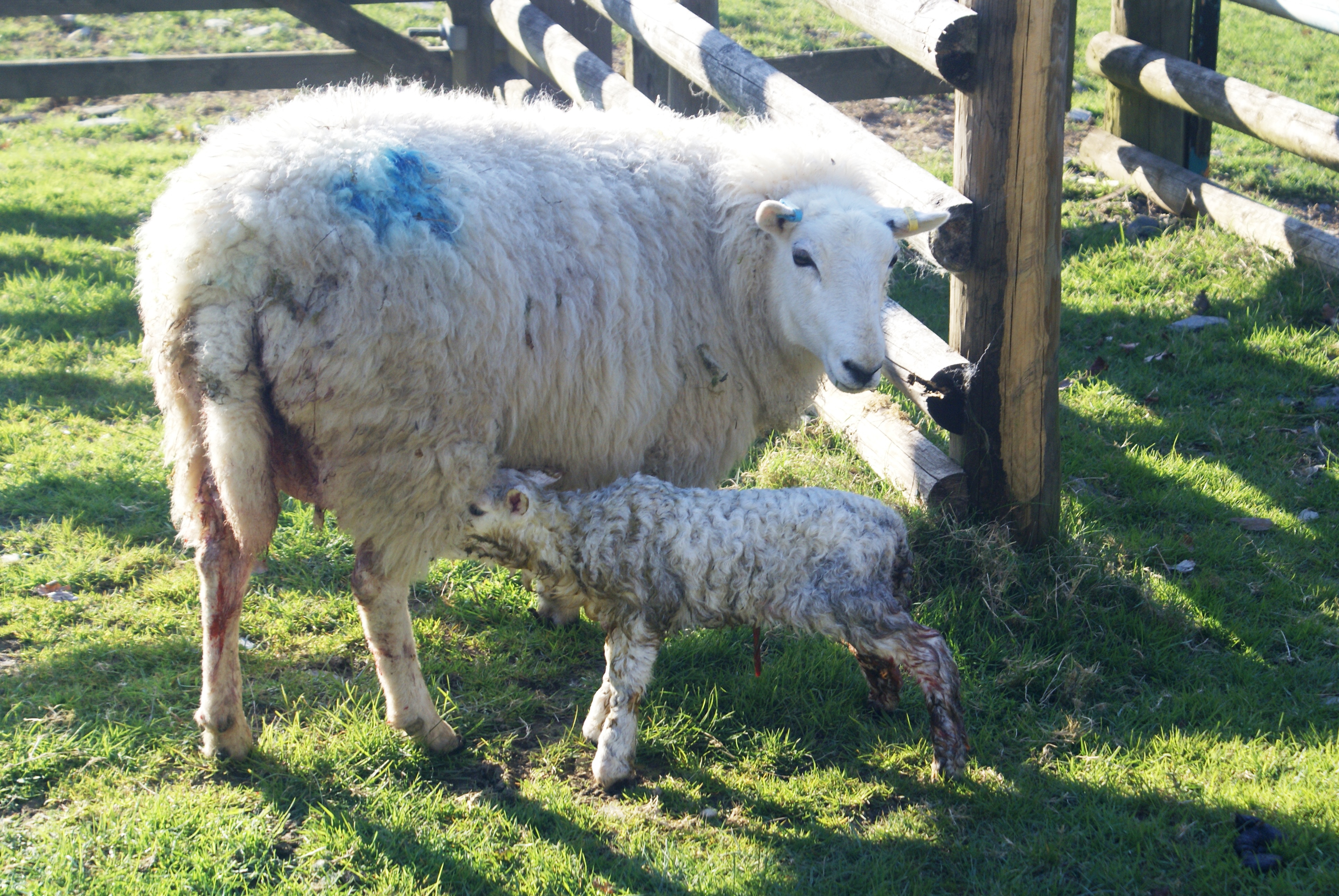
The dog drove the ewe into the pen and Dad and I extracted a very shocked large and strangely khaki lamb with a swollen head and enlarged tongue and initial disinclination to breath but with encouragement she did (Mother Nature was not about to be out-done at this stage!)
Happy Accident no 3 a few hours later –still a bit wobbly — mother much calmer.
After her day job, the shepherd arrived to check the rest — two more wayward adolescents were identified, to be collected tomorrow and taken to the main farm. But guess what?
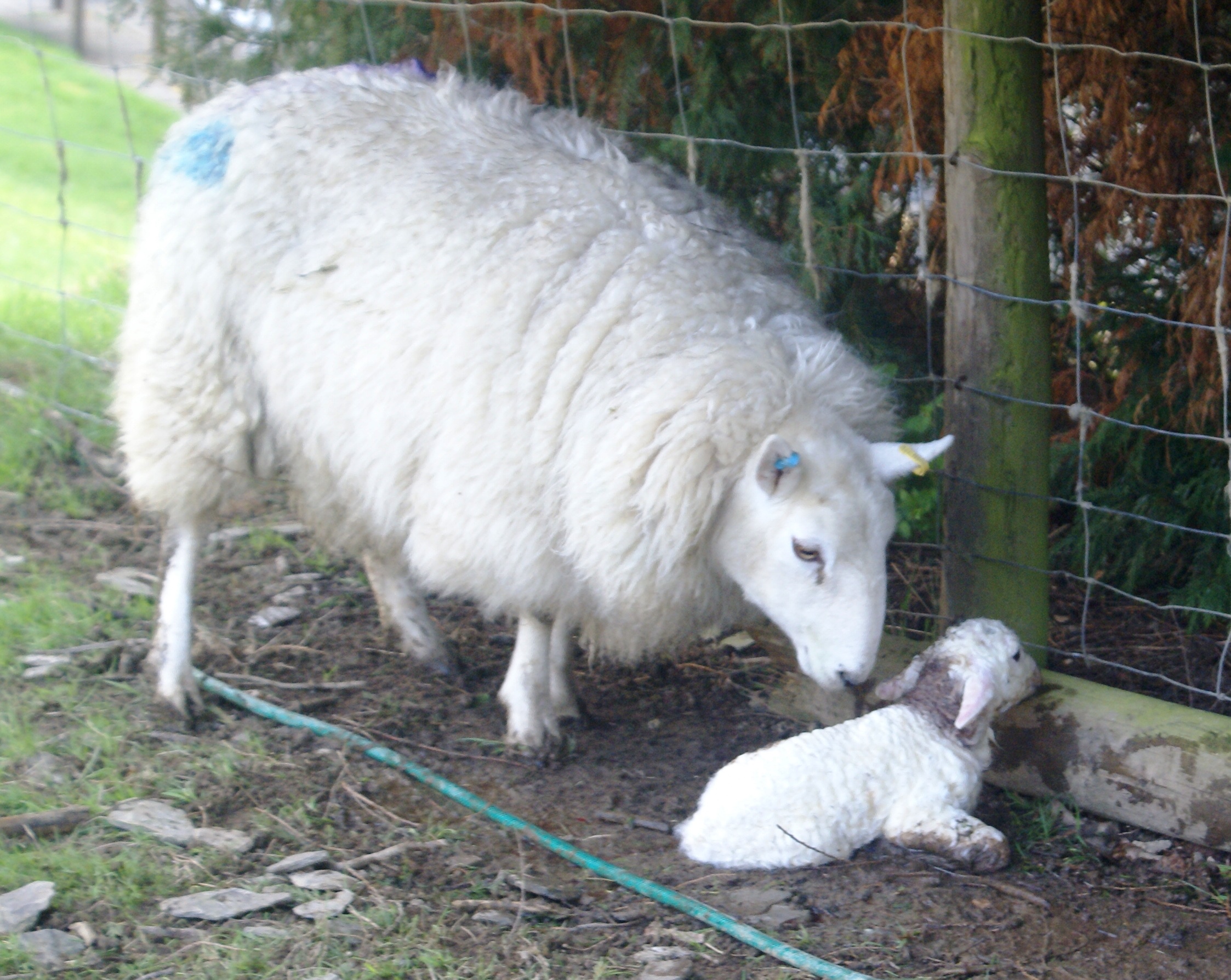
What’s this? Happy Accident no 4!
Now I’m going out to check for No 5!
What a treat it is for me to have some lambs to fuss over! But what strikes me most is how big and healthy these lambs are without all the extra food and care that would normally have been lavished upon them.
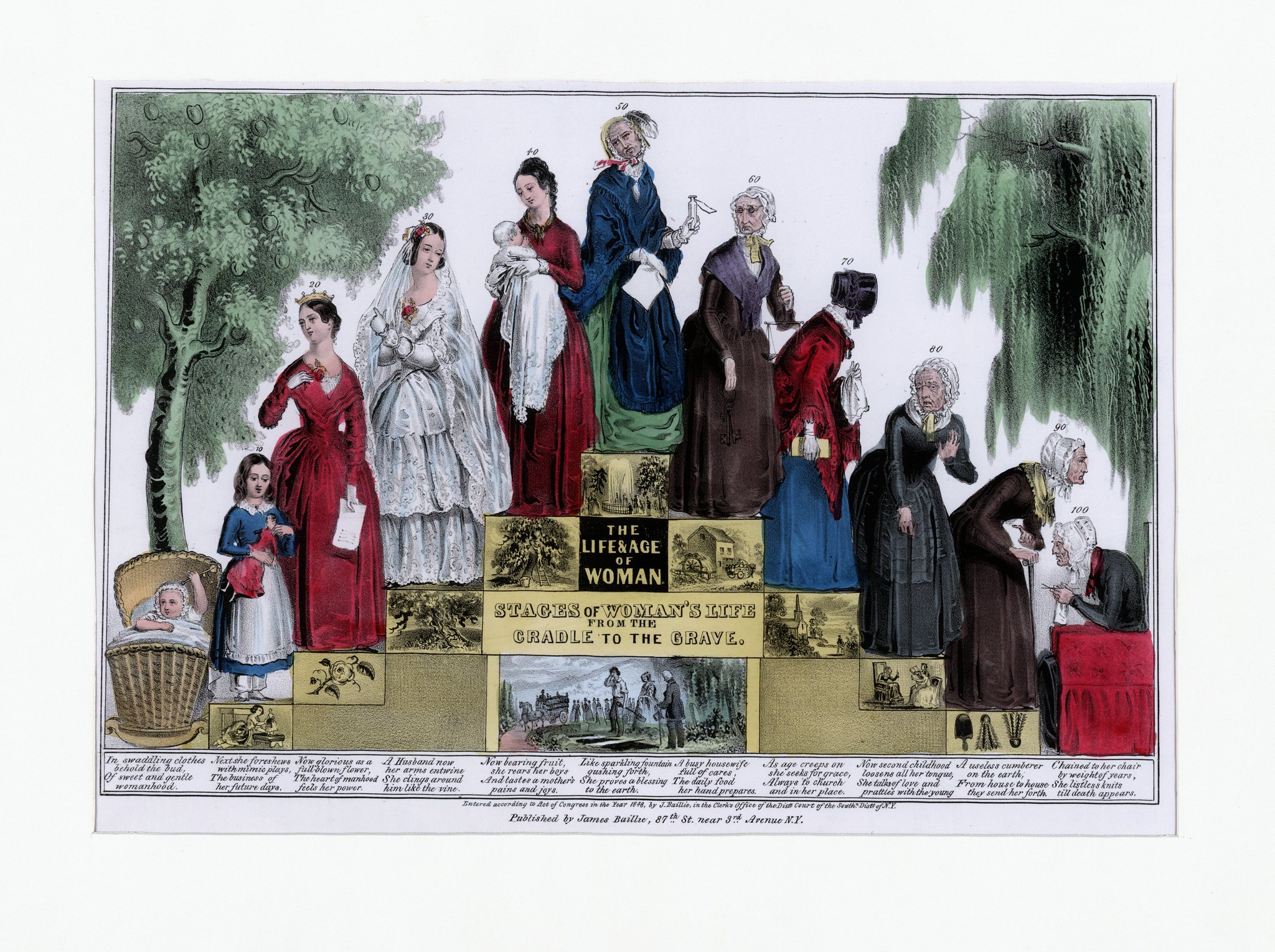
from the Library of Congress photographed by Stuart Rankin(CC BY-NC 2.0) Flickr
Life has chapters but someone else is turning the pages — here’s a brief index!
1 – the bit you can’t remember but you’ve seen it in photographs.
2 – Idyllic childhood gradually eroded by the realization that all is not 100% even in your Garden of Eden. Adults not always all they are cracked up to be! Actually — the sooner you learn this the better.
3 – Teens — driven by so many peculiar drives and preoccupations: BOYS/ girls/ secretions and changes/ dandruff/ dancing/ BOYS/ men/ exams/ driving lessons/ BOYS/ getting drunk/ stoned(not me!)/ paranoid/ poetical/ no money/ weight gain/ weight loss. Generally not very mindful of the bigger picture but navigating that choppy sea with friends in the same boat.
Teenagers by Kamyar Adl (CC BY 2.0) Flickr
4 – (Optional) Suddenly serious about relationships, politics and career (not necessarily in that order). Get qualified/ get married/ read the papers/ vote etc.
5 – Motherhood and child rearing (Optional) — struggling to keep head above water, multitasking, juggling multiple balls in the air (marriage/ finances/ clean socks/ hair cuts/ children/ job/ MOT/ tax returns/ cleaning out the rabbit/ walking the dog/ visiting Granny) feeling guilty about whichever one is about to drop. “Mummy, the cat’s had kittens and they are in my bed! Why’s my bed wet?”
6 — Dropping a ball (inevitable) — Divorce/ Burn out/ Son sets fire to the house/ teenage daughter pregnant (not ours)/ serious illness in the family/ menopause (that was quite a relief actually). Pretty well anything that can go wrong will go wrong and not just for bad people!
7 – Decline — coasting towards retirement with 2nd husband (if you are lucky) — is the work more demanding or are you just getting older? Science, technology and systems generally are starting to evolve more quickly than you seem to adapt. Spend a lot of time shouting at computers, often scratch the car and find it’s always later than you think!
An angry woman: 16th C. misericord, the Collegiate Church of Notre-Dame (Collégiale Notre-Dame), Le Puy-Notre-Dame, Anjou, France
8 — Retirement — Yippee! However did you find time to go to work. Do new things and find you are not as stupid as you thought.
9 — Grandparent and Health Service User — endless peer group discussions about eyesight/ teeth/ bowel screening/ breast screening (Ouch!)/ stents/ knee replacements/ erectile dysfunction/ prostate surgery and how you can’t do anything with your hair since your last chemo! All this is rather unwelcome but is punctuated by delightful visits from little kids that remind you of yourself (and sometimes of your X-husband) and of what a wonderful life it really is.
10 — Widowhood — sudden, though always half-expected because no-one can expect to be happy forever and you did know he was ill although he pretended not to be. Now your children (who are suddenly definitely grown-up) worry (and probably moan) about you at least as much as you do about them. You keep wondering why people are being so nice to you, then you remember. Suddenly you can do whatever you want although you don’t really want but you do it anyway — yesterday I climbed a mountain with a group to look at historical sites, one of those Welsh mountains that are really a huge hill. I was interested in the archeology, the others seemed to be serious, serial walkers — there was talk of Kilimanjaro! It was very cold and steep and I got extremely short of breath (probably not the altitude) and hobbled a good deal on the way down but I walked 8 miles and didn’t die. I’ll tell you about it another day.
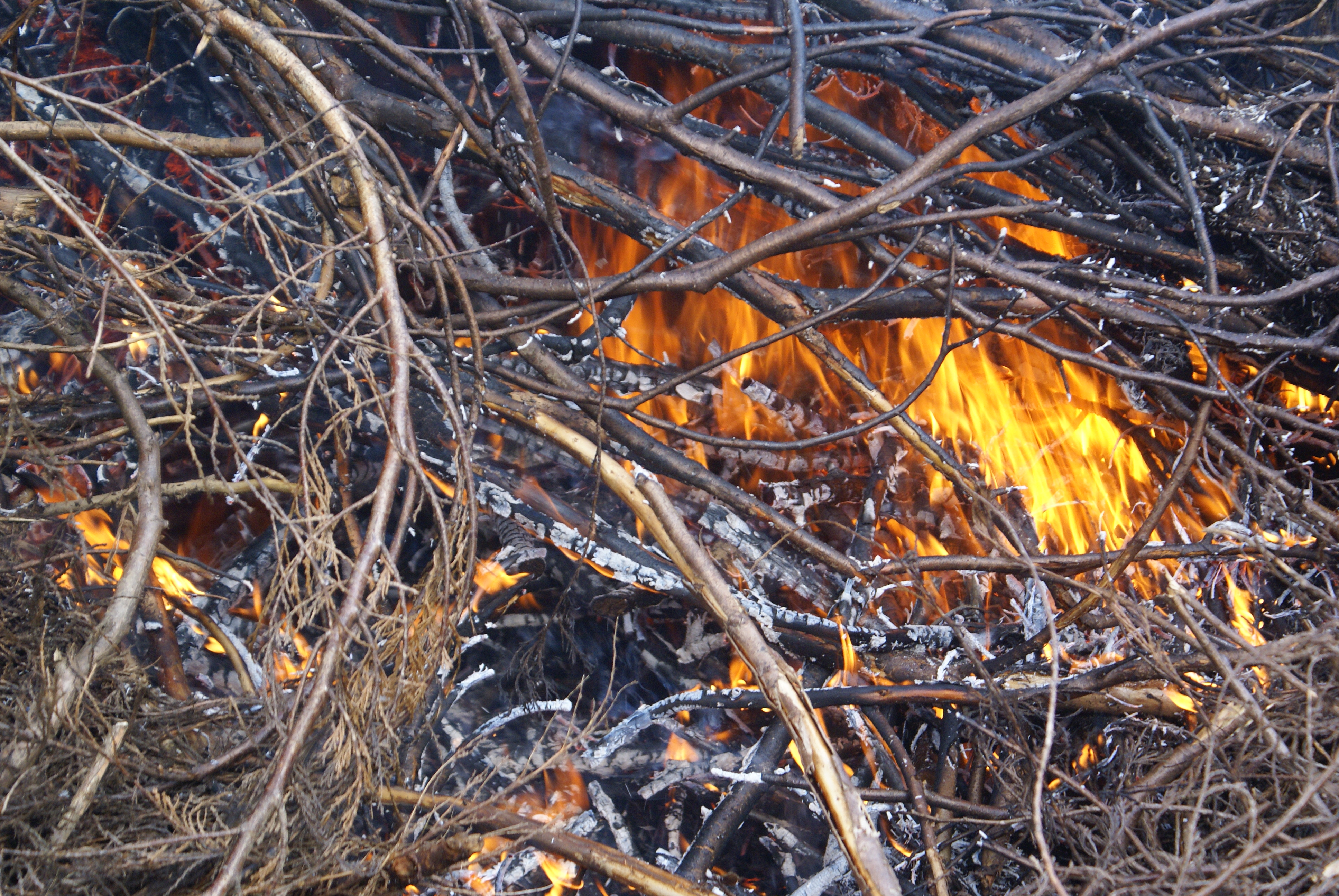
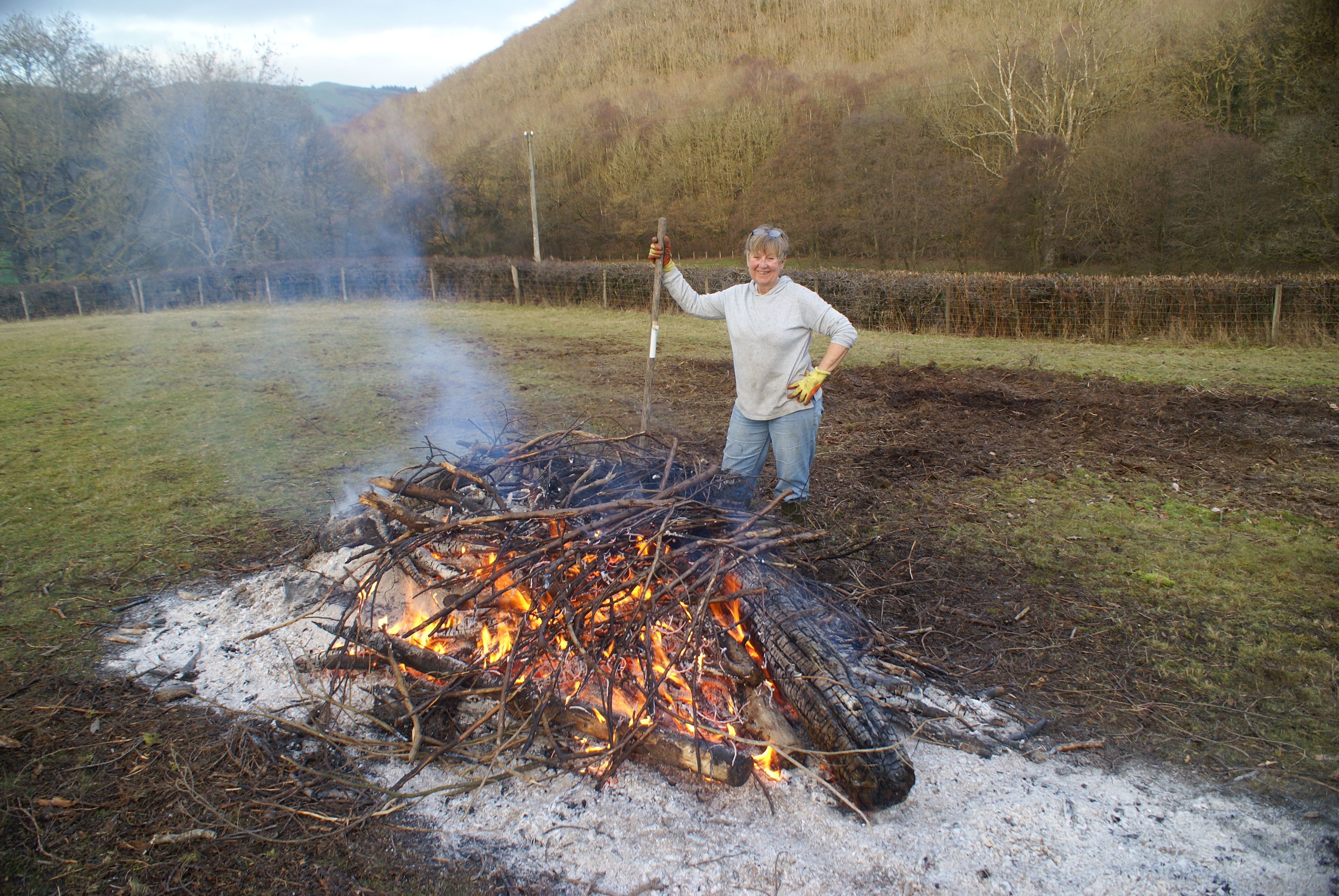
Last autumn it was too dry to burn the brushwood from our extensive hedging operations.
Now, when most years we have snow, I’ve been farming in my shorts! We’ve had the hottest February days since records began (here anyway). There are wildfires on Saddleworth Moor but here the ground is still a bit soggy so Alan announces that the conditions are right for a bonfire!
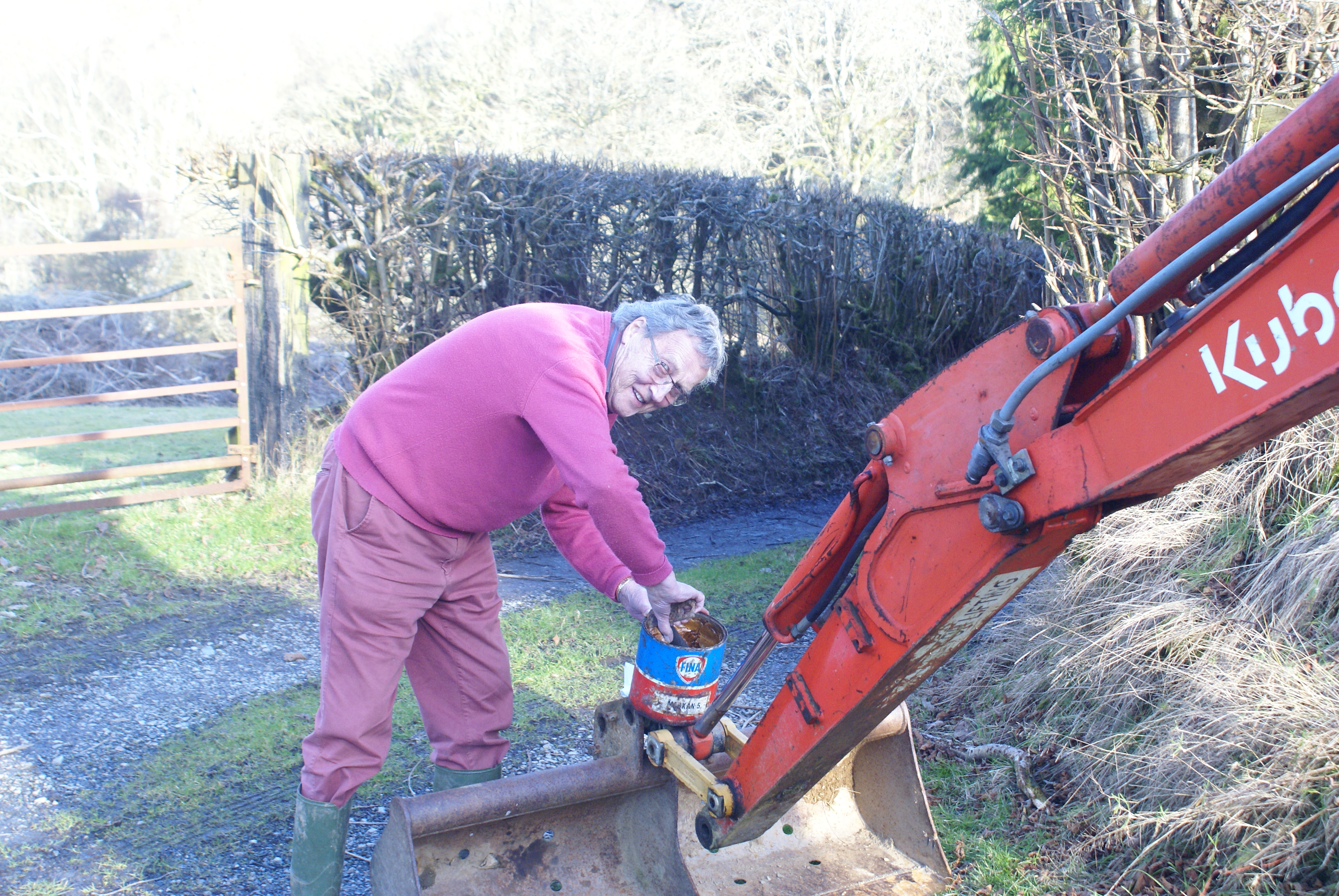
As we had a spot of bother with our last big fire ( see Uncall the Fire Brigade) our friend David takes it upon himself to supervise us, bringing his grab on the big tractor — always exciting for us!
There was a shower over night so it is slow to start.
But, after a bit of encouragement:
We have a spark to work with — piling on the brushwood on an industrial scale!
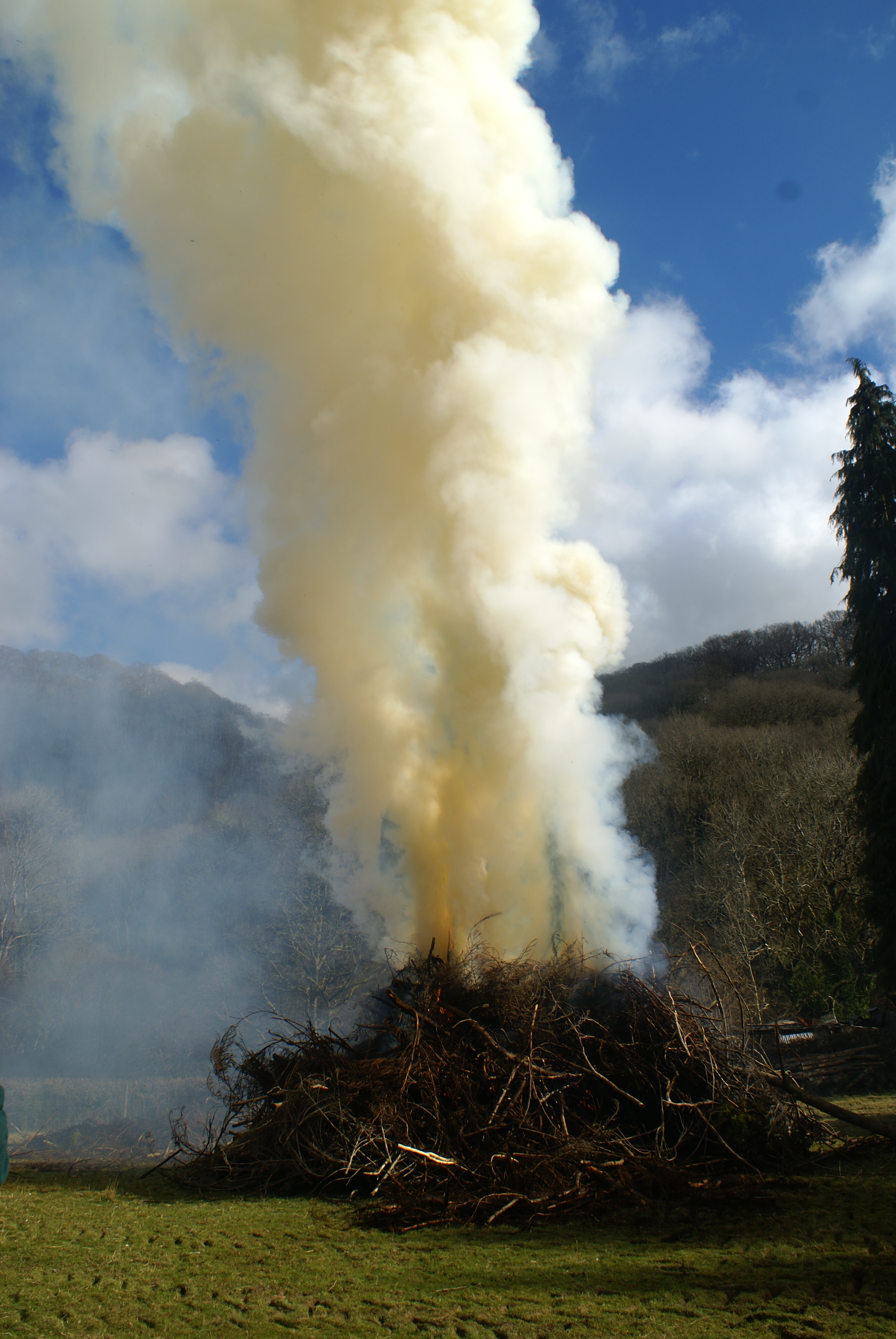
Until we have a decent bonfire!
Satisfying to watch!
It burns all night and no hedgehogs are injured in the making of this fire!
By next day it is manageable by a retired lady with a pitchfork.
Now we are ready for the spring and, you guessed, it’s raining!
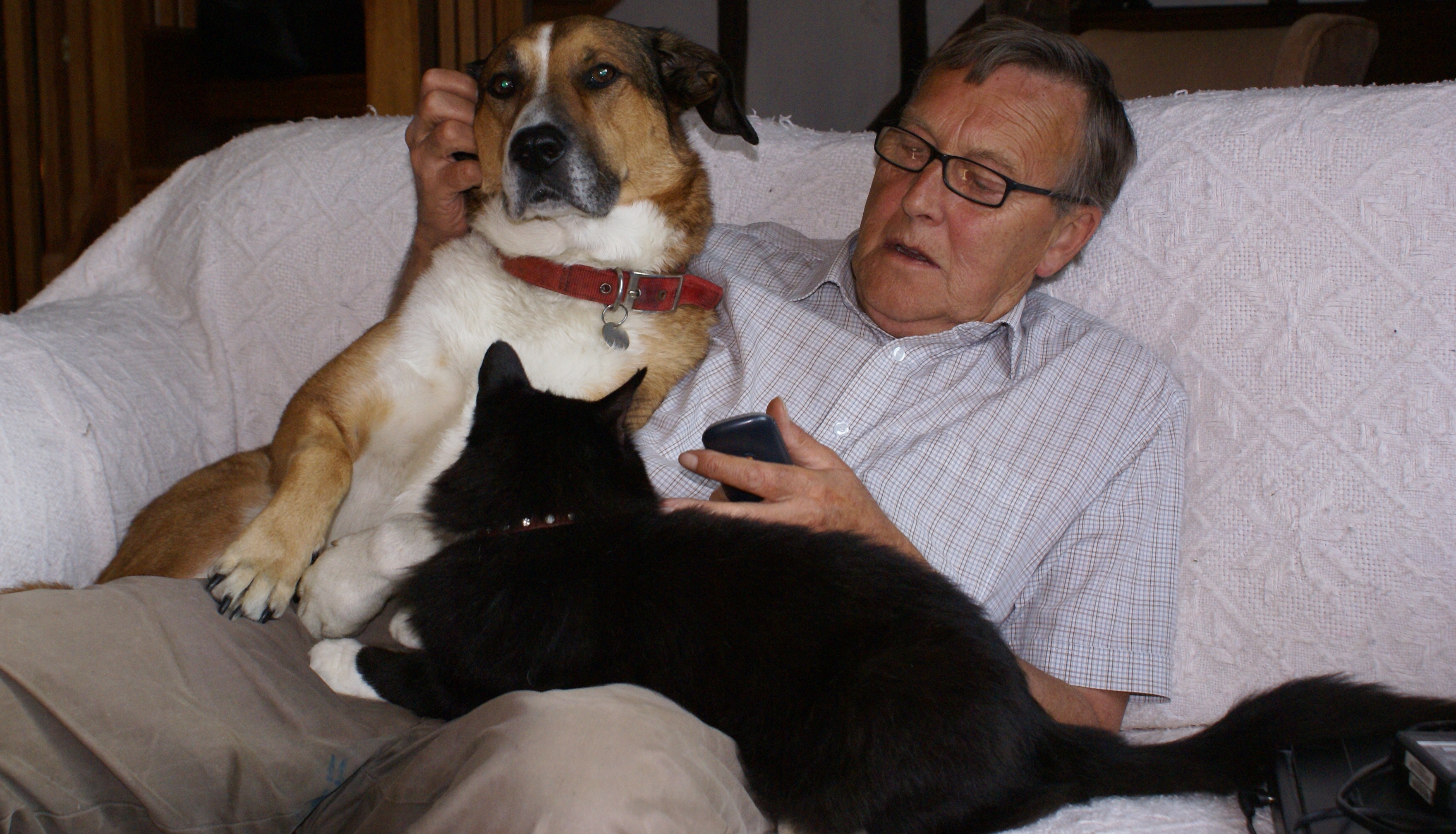
It’s been a difficult winter as several of our good friends have crested the distribution curve for life expectancy and done what we will all do eventually — because of this it hasn’t seemed right to talk about the passing of our dog.
However Pedro was such a special individual he deserves his canine eulogy
Much of his early life is documented in my book Iolo’s Revenge where he looks out from the fly leaf to engage the potential reader just as, in life, he engaged everyone he met –he had extraordinary social skills with eloquently persuasive non-verbal powers — and verbal understanding.
“Not in front of the dog!” my husband would say as we discussed the possibilities of an outing , ” We don’t want to disappoint him.”
It was probably his idea anyway.
He had a way of fixing you with his stare and then glancing at the object of his desire (whole systems of psychoanalysis have been based in this method of communication). His glance would lead you to the path to the woods; his ball on the shelf; my crook when he wanted to look at the lambs; Wellies when he wanted to go to the stream or the beach (he loved the beach) — he knew exactly how to introduce the thought that he wanted into my head: feed the sheep; collect the eggs; walk the dog and don’t forget we are taking next-door’s dog today; it’s six o’clock (I know it is, I’ll feed you in a minute!)
Come on — time to set off!
The thing about dogs is that they communicate on an emotional level, with irresistible sadness when they don’t get their own way and uncontainable joy when they do — and joy is catching. A walk in the woods or a romp in the snow with a happy dog can elevate the meanest mood!
Retrieving a stolen ball on the Gower
Pedro was a family dog:
New Granddog
Good with sheep:
And lambs (he loved baby creatures — he’d bring them in and ask if he could keep them):
Not so good with cats
Protecting Boss from pesky cat (demonstrating sophisticated emotion) Jealous dog — they do PhDs in that.
The first of February was the last day of the season for shooting pheasants in the United Kingdom and presumably the last day for taking pot-shots at innocent little ladies walking in the woods which is what my friend and I were doing that day.
Hoods up against the sharp wind, we leaned on our stout sticks and felt our way through the frozen puddles along the bridal track from Bwlch y Ffridd to Gregynog Hall — so muffled were we that we could have passed for the ghosts of Margaret and Gwendoline Davies, the great patrons of modern art, who will have passed this way a century ago.
“That’s where von Ribbentrop used to stay in the thirties,” said my friend pointing out a building on the far side of the wide valley. I pricked up my ears but before I could question her further we became aware of several large four-wheel-drive vehicles crunching through the snow in the valley below and stopping one after the other to disgorge men with guns who seemed to be scrambling to take up positions along the valley, parallel with our route along the track. “Are they hunting today? Is it a shoot?”
“Shootings over for this year… I think” said my friend.
Young men with dogs and sticks appeared above us in the wood lashing at the tree trunks and clapping.
“Beaters?”
“I think we had better turn back and quickly.”
Bang!
“They are bloody shooting!” In a state of extreme arousal we slid and stumbled our way past the gunmen, along a fusillade that rained lead shot down through the trees like unearthly hail. They weren’t firing at us and probably were 30 feet away but it really was quite exciting!
I bet von Ribbentrop came here for the shooting or perhaps to meet Mrs Simpson (lovers evidently) as they both wooed the future king — it’s a small world.
At home I spend many a happy hour musing on possible sites to land a helicopter –specifically an air ambulance — basically there is nowhere within two miles that is flat or not festooned with power lines or patrolled by ferocious cattle. The only flat place on the farm is where Alan has built an enormous bonfire which was too dangerous to light all summer and is now too wet!
Anyway, as everyone knows, no one ever gets around to being sure that they are ill enough to call an ambulance in the morning. We have our lunch at 3pm and it’s dark by 4 — the Welsh Air Ambulance doesn’t fly after dark which is as well with all the mountains and the above hazards.
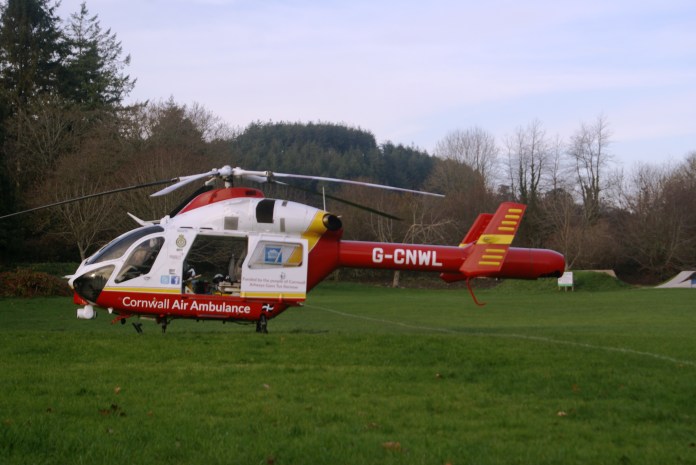
We’ve been in Lostwithiel in Cornwall — on the Fowey River. There was a colossal roar the other day — so tantalizingly loud that Pedro and I had to go and investigate!
50 yards from the house we found the source of the row — a Cornwall Air Ambulance –come to pick someone up from the adjacent medical centre.
Here they are being loaded:
See –it’s already dusk, but note how wonderfully flat it is.
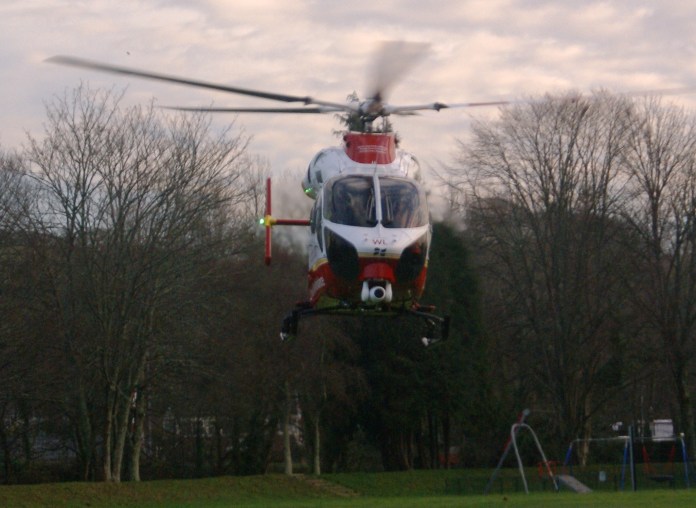
Then it started to roar again and the rotor blades which were drooping started to rotate faster and faster and got flatter and flatter and louder and louder until one thought it couldn’t try any harder — but it did and, as Pedro sank to the ground and covered his ears, it lifted lightly up and turned to face us.
It flew directly at us (must have seen the camera) then rose up in an aerial pirouette —