Communication, lifestyle

‘I’ve never been to London —

–but I went to Birmingham once and I didn’t like it,’ warned Aled before I left, ‘Too many people!’
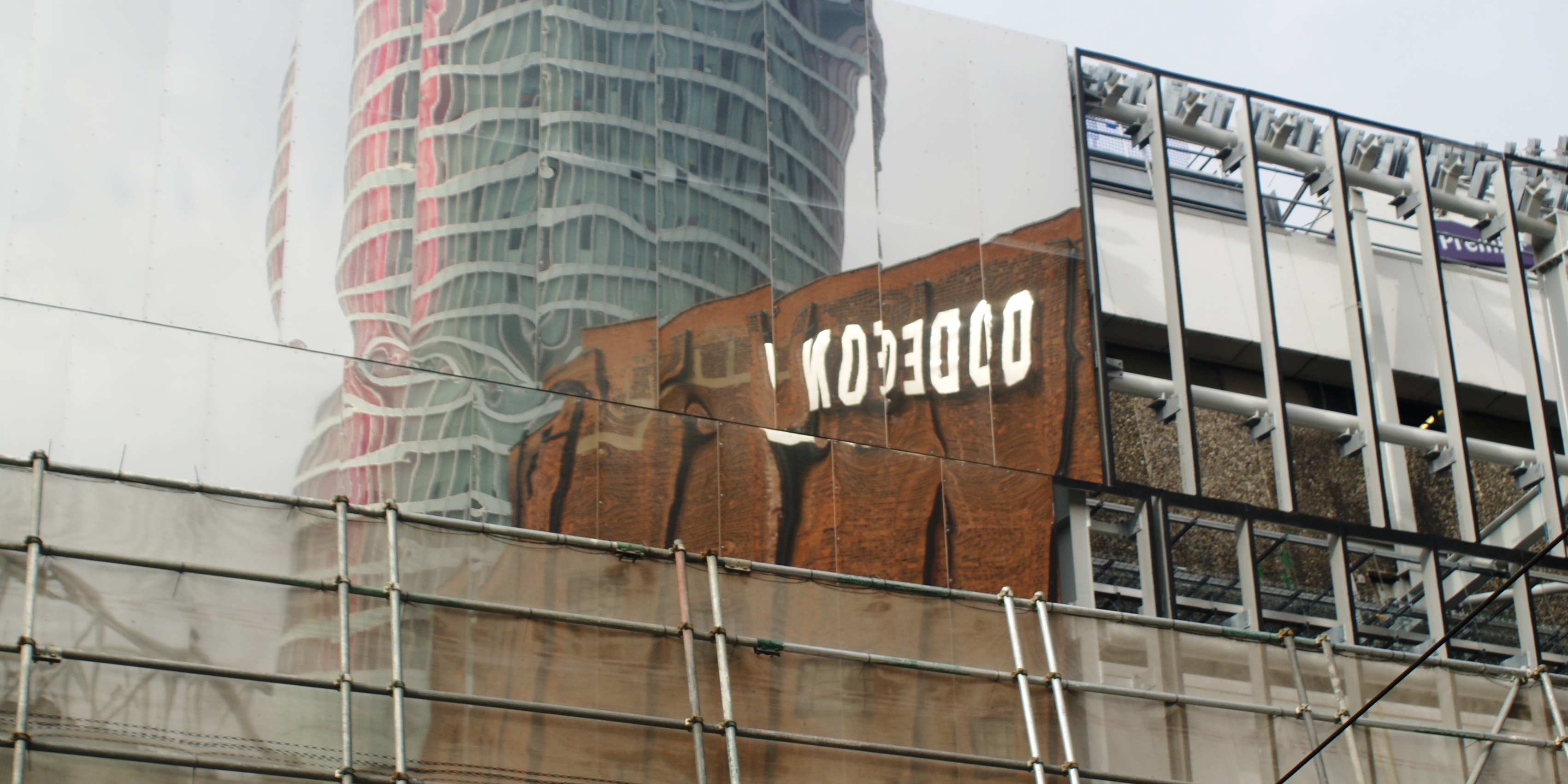
The Rotunda in the Bullring, Birmingham -- reflection on 1960's 'iconic'.

The Rotunda in the Bullring, Birmingham — reflection on 1960’s ‘iconic’.

Birmingham is quiet when I change trains — not quite what it seems.

I am bound to join the World War One remembrance pilgrims to the Tower of London on a suitably wet November day.

People in the rain

People in the rain

The trouble with cities is the constant state of flux where everything is changed each time you visit.

Today, at Euston, they have hidden all the bus ticket machines and amongst all the psychedelic signage the Mayor of London proclaims that contactless debit cards now operate the buses  (they may well do, but they haven’t reached Mid-Wales yet) — and Oyster cards — I have forgotten the one my daughter gave me.

‘Excuse me!’ I say to a passing commuter who spins round, wide eyed.  The young woman with strings falling from her ears has been dragged from a parallel universe into mine and is terrified.  She does not speak, she does not stop.

My daughters have warned me of the danger of my country ways — you have to walk in a bubble, Mum, it’s the only way to survive.  You mustn’t keep invading people’s personal space.

I’m not stupid, I do not ask the two policemen with machine guns and I resist the temptation to point my camera at them — sometimes it flashes automatically.

Okay, I think.  I can do careful.   I approach the next person from the front with my arms close to my body but in full view, I smile but do not show my teeth, ‘Excuse me!  Where can I buy an Oyster card?’

The nice young man directs me to the Underground and down the steps I go — like those on a harbour wall down into a sea of people, swirling about as flows from different directions meet in a turbulent confluence.  I join a current and am carried along.  I am a strong swimmer but I can feel the power and I know that I am not in a bubble.  Crossing the flow, ‘I’m sorry!’ ‘Excuse me!’ ‘So sorry!’ I join an eddy that buffets me back to the steps and up to safety.

Looks like I’ll have to walk — I’m quite good at that.

By the time I get to St Pancras reason has prevailed and it’s quieter.  There are only about two hundred people in the Underground ticket hall and the ways to the exits are clearly visible — I am not phobic — just a normal human being — with instinct.

Here, something strange happens — like an hallucination…   Fireman Sam helps me — really, in his high-vis suit, helmet and visor — he helps me with the machine, the queue behind was getting restive.  I thank him and climb back into the air brandishing my Oyster card and am able to share my local knowledge with several Geordie pensioners who are trying to get on a bus.  They are explaining to the bus driver that they have money — he cannot understand what they are saying and stares nervously from his glass cage.

?????????????????????????????

At the Tower, 800,000 ceramic poppies commemorate our fallen in WW1.  Everywhere I look, their descendants, their grand children, great grandchildren, great nieces and nephews, move slowly and politely, stopping to take photographs and waiting for someone to let them into a place by the railings to get their shot or their selfie — strange.  It’s raining and the poppies seem to miss their mark today but the snake of people, come to see them and be moved,  does not.

In London even the trees are grey, muted by urban substances and the Thames smells, as it did when I was a child, like no other river I know, but at dusk something strange happens.
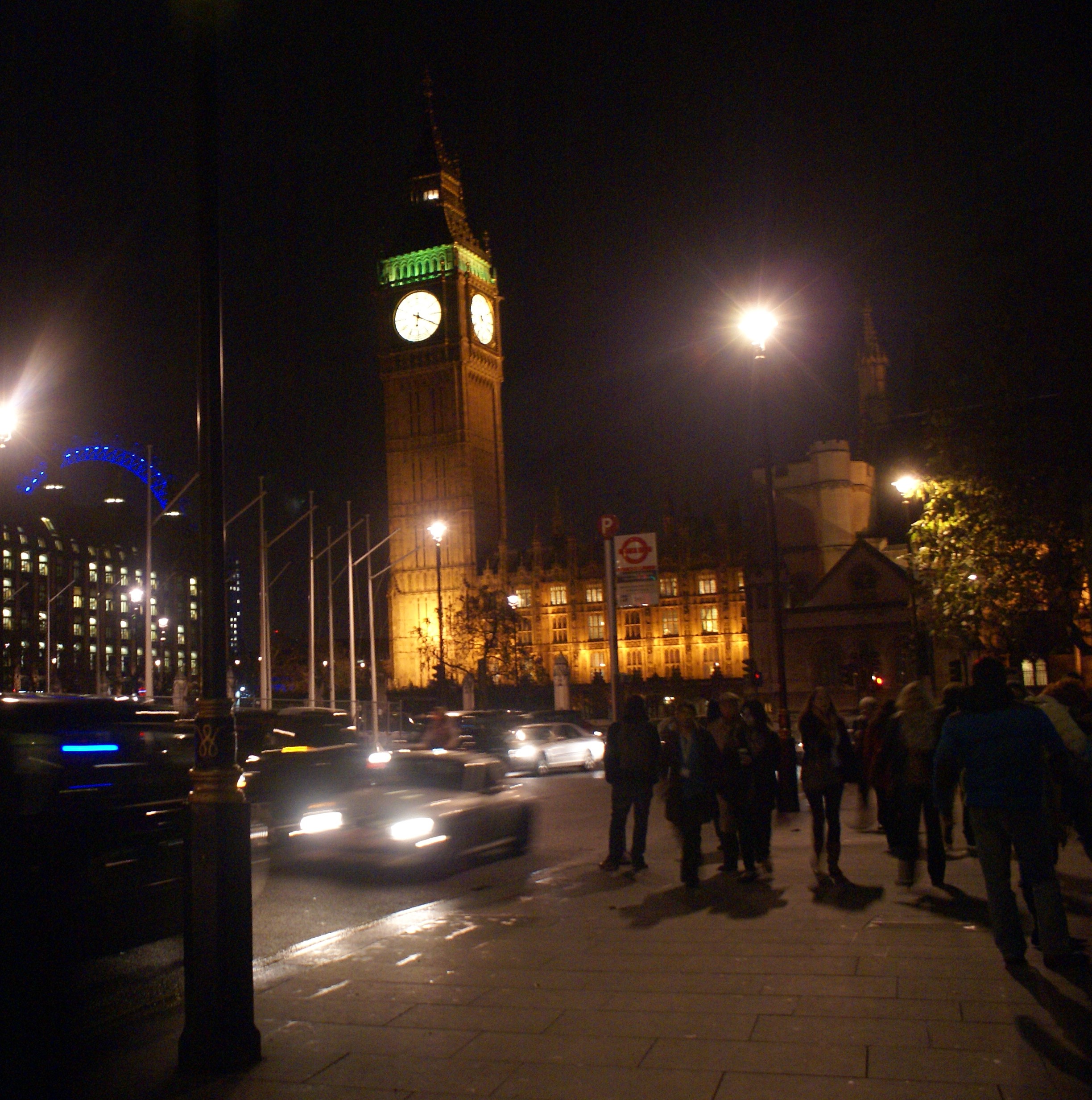
At night there is magic in the city.
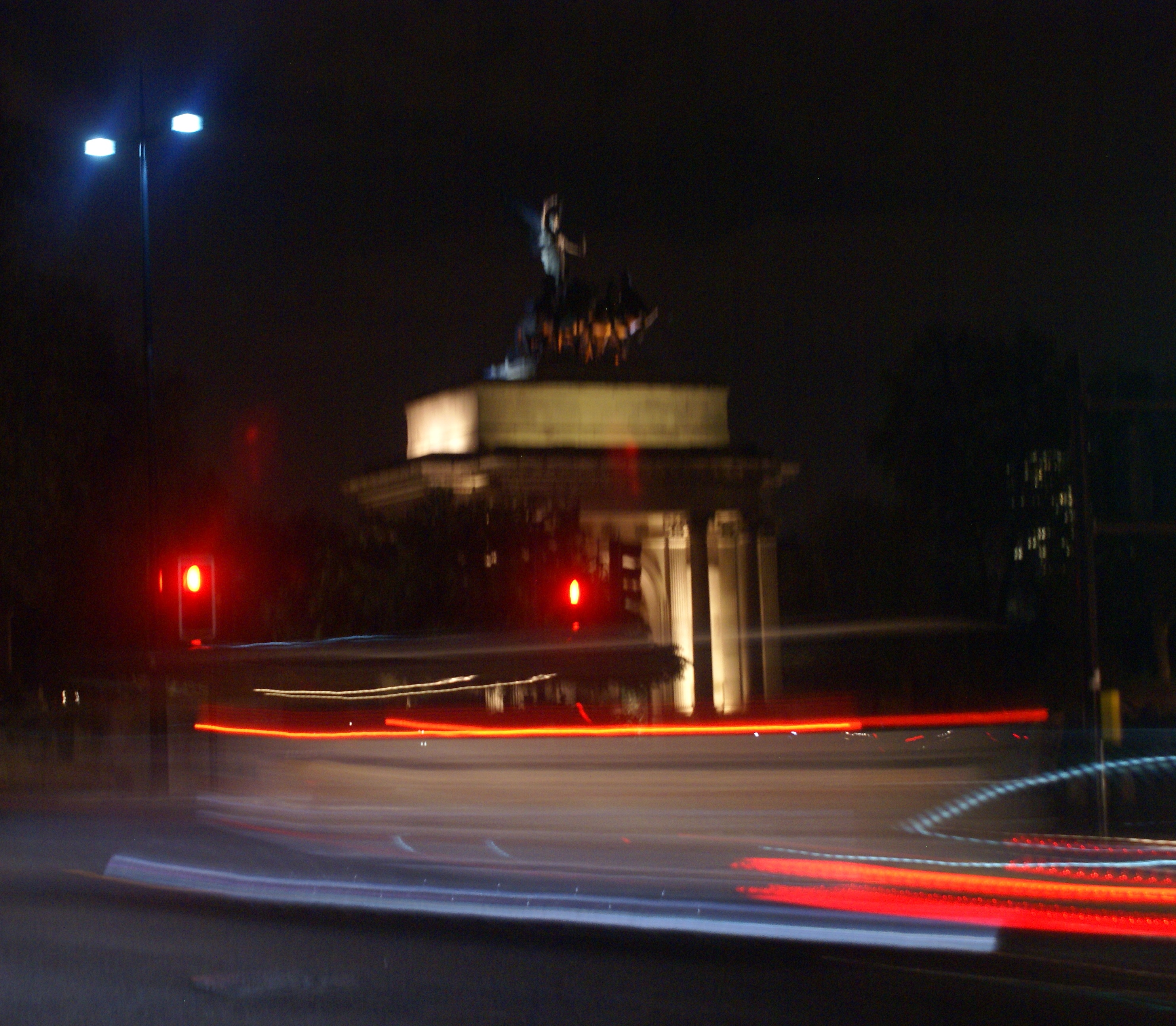
At night there is magic in the city.

?????????????????????????????

?????????????????????????????

Standard
Wales

When the mud boiled —

SONY DSC

— steam rose from the Kennel Field and drifted over flaming puddles.  The whole town had turned out but the flames were so high and the heat so great that 3000 souls, un-marshalled, stood back in a perfect circle 30 yards from the fire and the moon looked down from a safe distance.

In Llanidloes, the little town is still laid out in a mediaeval pattern of tightly packed timber-framed houses within an invisible (long gone) pailing rampart.  Not surprisingly then —  on the fifth of November, or thereabouts, everyone troops over the bridge to the site of the sheep fair, outside the town — beyond the pale (long gone), safe on the far side of the Severn, for the Bonfire Night celebrations.

The centre of town is deserted.

The centre of town is deserted.

What are we celebrating?  One suspects that it is nothing much to do with the goings-on of 1605 — it would be un-characteristic for the local population to be much concerned about events in London and, looking at the scale of our fire, it is as well that Guy Fawkes was not a Welshman or the course of history might have been very different.  It probably goes back much further.

SONY DSC

The fifth of November is the traditional day for turning out the tups, putting the rams in with the ewes, and so is really the first day of the sheep farming year.

SONY DSC

Happy New Year!

'The nails in all those pallets could be a problem at future sheep sales'

At the end of the evening — ‘The nails in all those pallets could be a problem at future sheep sales’

Standard
Hill Farming, lifestyle, Wales

‘There’s a man in the ditch who says he’s got a broken leg!’

erecting Solar Panels

erecting Solar Panels

‘Sorry to bother you but there’s a man in the ditch who says he’s got a broken leg,’

‘Who is it?’ I ask the worried faces at the kitchen door – one is a workman erecting our solar panels and the other is a white faced lad.

‘Can’t remember, he did say his name,’ says the lad, ‘I nearly ran him over! He told me to get you!’

‘Is it Roger?’ I ask over my shoulder, running towards the gate.

‘That’s it!  That’s his name!’

Roger is our nearest neighbour.

Happier times -- Roger caught shooting our rabbits in his dressing gown

Happier times — Roger caught shooting our rabbits in his dressing gown

He is lying face down in the narrow, shallow gully that runs down between his house and the road, he is darkly dressed and mud splattered and still wearing the world weary cricket hat he had on an hour earlier when he had been in our kitchen drinking coffee. He is perfectly camouflaged but the other workman is standing guard to make sure no one else runs him over.

‘What have you done?’

Roger had skidded on the slippery ramp to his cabin and heard his ankle crunch and snap. He had called and called – we were digging with the digger and no one heard.

Noisy digger

Noisy digger

He tried to adjust his right foot into a walking position, felt faint and thought better of it. He shouted some more and no one heard. His wife was out and he didn’t know when she would be back, it was raining intermittently and the sun had sunk behind the tall trees and it was getting chilly so he set off to crawl the fifty yards through the long wet grass to the road. He was on his way, commando style, down the ditch towards his front door and a telephone when the man delivering our cable (fortunately young and on-the-ball) narrowly missed him and got out to investigate.

While the workman calls an ambulance, I wrap him in roof-insulating foil and carefully unlace his boot, it does not seem to hurt him too much.

‘Perhaps is just a sprain?’ he says.

‘Perhaps it is, can you roll over and we’ll have a proper look,’ He rolls over and his booted foot flops into a strangely unnatural posture.

‘Woops! Roll back Rog.’

We remove his boot with the foot pointing in its normal direction – aided by gravity. It is warm and not all that tender or bruised and I can feel several pulses – we wrap it up to keep it warm and await the ambulance. Several vehicles come along – all stop, the drivers get out and join in. One wraps his fluorescent coat into a bundle and puts it under Roger’s head. Someone else gives him a lighted cigarette. A police van arrives, the first we have ever seen in these parts, it is only passing through but the driver waits patiently behind the log-jam of other vehicles and chats.

Roger is feeling quite warm and becoming positively effusive – I’ve noticed this before – something to do with adrenaline, I think – people can seem at their very best when they are quite near to their very worst, it is probably the secret of most heroism — it won’t last!

‘Here it comes!’ the look-out shouts and a big yellow ambwlans sweeps onto the scene — we are chastised for the smoking. Roger is loaded and someone slips his rolling tobacco and papers into his soggy pocket. The doors of the ambulance are closed. I am sent to find some dry clothes – not easy in someone else’s home. I do the best I can. I am then dispatched to find his medication.

Meanwhile his wife arrives, shocked by the sight of the ambulance and surprised to find the paramedic dressing her husband in drag – she retrieves her clothes indignantly and makes haste to procure more macho garb, she also manages to find his pills and off he goes.

Later that night his wife returns from the hospital at Aberystwyth – he is to have his ankle surgically pinned the following day. By then she has washed his wet clothes and pegged them out.

‘What do you think I should do with his tobacco?’

‘He won’t be able to get out, to smoke.’

‘No, I know that — it’s been through the washing machine.’ We both peer into the packet, ‘it’s only a bit damp.’

Get well soon, Roger!

Standard
Neurophysiology, Thoughtful

The Man in the Alley — Seeing Red

They’d been to Ronnie Scots to listen to jazz that was so weird and avant guard that  they wanted to giggle so they left early and got the bus home but something caught her eye — from the top of the bus — in an alley — the shape of someone, slumped.


Thanks to Yuichi from Morioka, Japan [CC-BY-2.0] via Wikimedia Commons

Thanks to Yuichi from Morioka, Japan [CC-BY-2.0] via Wikimedia Commons

They got off the bus at the next stop — I know her, she would have to do that…  And they walked back and found the alley and the man.  He was lying with his shoulders against a bin, in a puddle, the weather was dry — she thought he had wet himself.

The conversation was stereotyped, ‘Are you okay?’

‘Fuck off!’ he just wanted to be left alone, he was probably drunk — they left.

As the young couple walked home the doubts began to hatch.  Was he just drunk?  Was he ill, a diabetic having a hypo, perhaps?  Had he been mugged, stabbed?  Was it blood on the ground, hidden in the shadow and the distorting spectra of the street light?

They phoned the police, who must have been grateful.

Then she phoned a friend who was me and set me thinking about all the puddles of blood and abusive men (and women) that I have tried to help — the insulin enhanced right-hooks I have dodged, ducking and diving to avoid the punches and projectile vomits that pursued me in my previous life.

A friend of ours found a man, collapsed and cold, on the moor — he was barely conscious and could well have said, ‘Fuck-off!’ but the friend for some reason that he will never understand  (he had no particular medical knowledge) asked the man if he was diabetic.  ‘Yes,’  he said and passed out.

That knowledge and hot sweet tea saved his life.

People with diabetes get ill and confused with high blood sugars, they don’t smell of alcohol but do smell of acetone (like alcoholics the morning after) which can be misleading.  Untreated diabetes does not give you hypos, but the treatments can and the hypoglycaemia can make you seem drunk, can come on very suddenly and make you violent, confused and incontinent.  It can rapidly lead to brain damage and death. If in doubt you can always give them sugar — if they are suffering from a high sugar you won’t make it much worse but if they have a low sugar you may well save their life.

As for the blood — blood is one thing in a hospital ward, in a labour room or the back of an ambulance but it is quite another as you follow the drops up a half lit staircase or out of a back door into the dusk.  Then it explodes onto your retina, impacting on your senses like nothing else.  A tiny drop of fresh blood will grab your attention and lead you to the next and the next.

In half-light blood assaults the senses

In half-light blood assaults the senses

We have evolved to follow injured prey, to find a wounded comrade, to see red and know the danger.  This phenomenon always amazes me — makes me remember that I am an animal — reminds me to wear something red to a concert if I want my friend, on the stage, to spot me — explains why I cannot read the cooking instructions, written in white on the scarlet pizza box — the red, you see, just fills up my senses.

Wear something red to be noticed

Wear something red to be noticed

If the man in the alley were lying in a pool of blood, you would have known,  and believe me, you would have smelled the blood!

Look into the half-light and you will see blood.

Look into the half-light and you will see blood.


Standard
Humour, lifestyle

The Journey (not the Destination).


P1040399 (2)

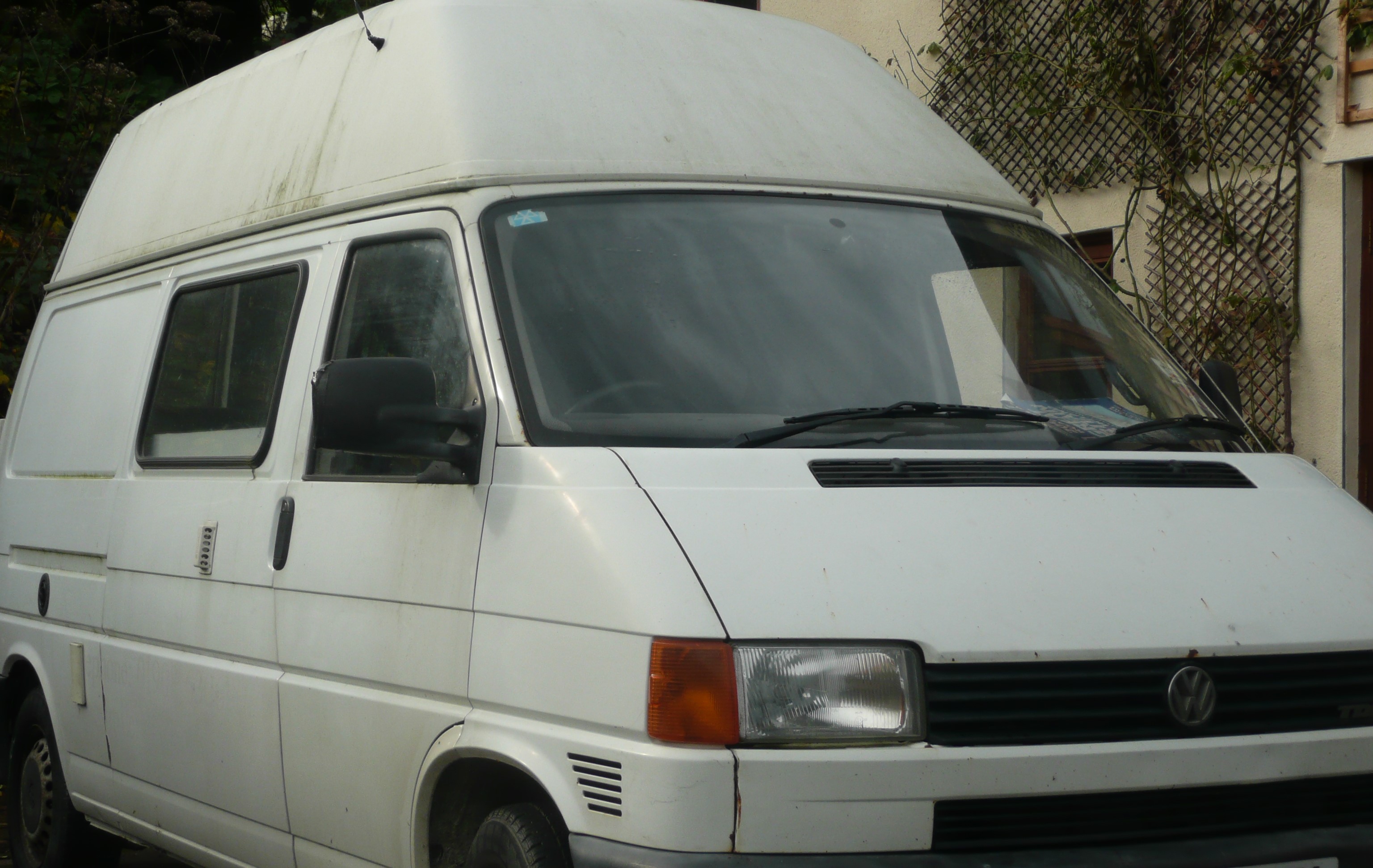
The Pikey van has come out of retirement — an updated version of the genuine Gipsy caravan, rescued from our barn, emptied of animal feed sacks and given a cursory vacuum clean.  We’ve been busy for the last ten years and, as the only completely rat-proof container, it’s been busy too — minding sheep-nuts and sheltering privileged spiders.  Now it’s time for a re-birth, an adventure, a pilgrimage, a journey!

Inspecting the Sea Wall at Burnham on Sea

Inspecting the Sea Wall at Burnham on Sea while the kettle boils

Noisier than we remember, it discourages unnecessary conversation — we nod at Glastonbury Tor as we chug past (it is promised to friend-Silvia for her bucket-list trip to the festival, but we have enough mud in our every day and spend our time trying to avoid crowds).  It hasn’t lost its charisma — land owners pale at our approach.

The Pikey van is explicit, a statement of a philosophy and a tester of prejudice — it is a reminder.  Driving it is chastening, like going round a supermarket in a wheel chair…  ‘Ah… Bless!’ as  the cashier said to me as I tried to pay for my shopping. It is not just our spiders that are normally privileged.  When we drive it, gates close, barriers come down — appeased only by the roundness of our vowels and the friendliness of our dog.

?????????????????????????????


To us, it is cost-effective.  It is a warm and comfortable bed in a light and airy ex-commercial, VW high-top Transporter — old, high mileage– empathic,  no fancy electronics to go wrong and no frilly curtains but it is insulated, ventilated, has running water (usually), a fridge, a cooker and a loo.  It smells of oily rags and dog, but they are our oily rags and our dog.

When parked over night in a municipal car-park it is just another white van and no-one notices it.  Best of all — no one cuts you up on roundabouts — you look as if you mean business — even if it is the scrap-business!  There is no fuss — you don’t have to be endlessly polite or worry about the dog barking if anyone uses the bathroom.  A huge man does not stands over you while you force down the largest full-English breakfast in Cornwall telling you about his most recent coronary.  No one sniffs under the door to see if you are smoking or charges you £15 extra for the dog who is on a diet and doesn’t want the sausages either.

Burnham on Sea -- expecting high tides

En Route — expecting high tides in the Bristol Channel

When you get tired, you can just stop and have a sleep — it is perfect.   You can drive to the beach in your pyjamas and walk the dog while your spouse snores on.

P1040404

Standard
Hill Farming, Humour

Real Sheep with testicles, tails and bloody noses

SONY DSC

It’s October — you knew that – I know it. The sheep know it – the ewes nag me every day about moving them to the flushing meadow, to the best new grass which will remind their ovaries of their perennial duty. They look pitifully at their empty mineral pot and then fix me with dark quizzical eyes that ask, ‘When will the ram arrive?’

‘I know, I know, it’s not forgotten – he’s booked for the ninth of November –as soon as the ram-lambs have gone to market you’ll go to the good grass.’

Everything is late this year, it was such a lovely summer, autumn just crept up un-noticed. The oak trees have only just started to lose their colour and we’ve been so busy with all the soft fruit, cutting timber and wasting hours trying to catch this year’s remarkable ram-lambs (not to mention wrestling with a new computer, new printer, doing the tax returns, the books, the VAT, and sorting out the new solar panels and the old camper van in time to miss the very best summer in living memory!

‘They’ve gone a bit over,’ says the white haired farmer to his grandson, looking at our crop of male lambs gathered in the far corner of their little enclosure at Aberystwyth Livestock Market.   We look at the competition – pen after pen of matched, clean, docile store lambs, tails neatly docked, testicles removed at birth.

‘None to compare with our tykes,’ says Alan, – these farmers are bound to recognise real sheep – they’ve got to feel nostalgic when they see these magnificent little chaps – look at them,’ band of desperados, decidedly not castrated – broken horns, two with bloody noses from fighting – not so small either!.

Ram-lamb 2014

Ram-lamb 2014

They started the day clean and tidy but as all the other sheep in the market were trooping up and down the ramps into and out of their pristine trailers our 18 were making a stand.

We had spent most of the previous day trying to catch them and had retired defeated and were having a glass of wine and preparing ourselves for the ultimate humiliation — calling in the cavalry ( neighbours with dogs and long memories) to help us next morning. I had another glass of wine, ‘I think I’ll have one last try.’

Non-compliant!

Non-compliant!

‘One more last time,’ said Alan — his mantra with the children.

It was after ten, I ventured out alone with the lambing torch – they had never seen the light before. I jiggled the powerful beam on the grass in front of them, they turned and ran. I jiggled the light in front of the galloping posse, it stopped and turned. I stood in the black night – no light pollution where we live – and directed them with my magic jiggly beam, back and forth, slowly, little by little – down to the corner of the field and the entrance to the run that leads to the pressing pen, full of shadow and protection from the light of god. Bingo! The whole lot caught in one go – I closed and tied the gate. It was nearly midnight.

Next morning at first light we constructed an impenetrable funnel between the pressing pen and the borrowed trailer, made of metal hurdles and gates, tied together with baler twine and weighted down with garden furniture – we were transferring Hannibal Lector.

We closed the gate of our newly constructed (not yet patented) sheep-machine onto the ram lambs and we pushed. They compacted a little. They did not advance smoothly up the ramp. They stood – their four wheel drive engaged – they were making a stand – Rourke’s Drift. We pushed harder – nothing happened. The dog whimpered – he has no confidence in us.

Red faced and panting – long past shouting at each other – I climbed in with them, I embraced one, I pulled it up the ramp and went for the next — the first was back down before me. We both tried this — Alan fell over backwards, muddied and split his trousers and broke his wrist – probably only a little bone – he didn’t make a fuss.

Fortunately the trailer had a full height gate half way down – a bulwark (always useful when transferring psychopaths). Eventually we used, I used, a hurdle to separate one individual from the stand and force him up the ramp then, wedging the hurdle behind me, I man-, woman-handled, him through the gate into the front of the trailer. Each time, the moment the gate opened just enough for him to see the sheep already in there he would cease his struggling and go peacefully. The gate only opened inwards – very well designed.

One by one we loaded them, some resisting more heroically than others. That’s why we were late to market ‘You should get up earlier!’ – that’s  why we were not going to take them home – why my husband was raggy-arsed – why I had punk hair and khaki camouflage on my face (no one thought to tell me until evening), why the ram-lambs had the look of Just William and why farmers, who are more experienced than we are, castrate their ram-lambs at birth! .

SONY DSC

‘Will you take £50.50?’ the auctioneer asked.

‘We’d hoped for a little more’, I replied to the sea of un-muddied faces — we’d studied protocol.

‘I’ll offer £50.80 said the handsome young dealer.

‘£51!’

‘£51.50!’ the auctioneer looked for the nod which we gave and he struck the top rail of the pen with his knobbed stick.

Another year over.

‘Diana… Did you count these sheep?’ asked Alan, ‘You see… I only make it 17!’


SONY DSC

Standard
Ecology, Humour, Thoughtful

Frazzled? You’ve got Red Queen Syndrome

The Red Queen by Bill Brooks Attribution-ShareAlike 2.0 Generic (CC BY-SA 2.0)

The Red Queen by Bill Brooks Attribution-ShareAlike 2.0 Generic (CC BY-SA 2.0)

Red Queen Syndrome is running (or riding a turtle) to stand still — the first documented sufferer was the Red Queen in 1871, in  Through the Looking Glass and what Alice found there (I played the White Queen once — it was my finest hour, but a long time ago).  The phenomenon was recognised in 1993 by Matt Ridley — The Red Queen, Sex and the Evolution of Human Nature explored our origins and the need for constant evolution to keep one jump ahead of our competitors, our predators and, particularly, our diseases.  As the Red Queen said,’Now, here, you see, it takes all the running you can do, to keep in the same place.  If you want to get somewhere else you must run at least twice as fast as that!’

John Tenniel's illustration -- 1897 edition of Through the Looking Glass and what Alice found there.

John Tenniel’s illustration — 1897 edition of Through the Looking Glass and what Alice found there.

It’s a long time since I read Ridley’s book and at this distance I can only remember the messages that I took away from it — woven into my own narrative of life — the need for  the greatest genetic variation in a population so that the maximum options are available in case of emergencies (don’t forget Darwin) — those threats which will  inevitably emerge to confound us, due to the constant pursuit of organisms whose job it is to harm or out- perform us.    Oh, and the need for sexual reproduction and our sexual fascination with those most different from ourselves —  Jack Spratt Syndrome! It is the quest for new and useful genes — affording us the greatest possibilities to adapt or die.

This holds for almost everything — from our adaption, through natural selection, to emerging diseases and changes in our environment to our behaviours, technologies, economies, emotions and societies.  Everything is evolving all the time so we have to run to keep up.

As I slow down it seems to be getting faster.

My husband and I watch the prices of oil and electricity increase so we invest in solar panels. We’ll be able to heat our water for free!  But the immersion heater, which we have never used, is not responding — out with the electrical screw-driver — running to stand still — developing new skills.  Bang!

My computer is poorly, a problem in its power pick-up, it cannot be repaired because things have moved on in the 4  years since I bought it — no parts available, not made any more.  I have to buy a new computer — full of innovation — I have to run to stand still, change my behaviour, find all the secret clicks, do everything differently — where’s my e-dictionary — won’t open — connection broken — run troubleshooter — OMG.  Passwords won’t work — ‘Have you forgotten your password?’  No I bloody haven’t.  I will adapt and soon this new computer will seem second nature — I’ll probably even dream within its constraining matrix , but it will go on evolving and eventually (probably quite soon) it, or its successor, will out-run me.

People don’t get too old to do their job — the job evolves so that they no-longer recognise it.  The job out-runs them!

Now I’m going to try to download a picture of the Red Queen which may well take some time.

4228642691_539a578681_o Helena Bonham-Carter as the Red Queen from the film Alice in Wonderland, 2010, by Tim Burton. Attribution 2.0 Generic (CC BY 2.0)


Standard
Hill Farming, lifestyle

Squirrelling Days

The day length is now critical and our harvesting and squirrelling hormones are at an all-time annual high as we prepare for a long wet winter.  This, according to Islwyn who remembers many summers, has been the best ever, so we know that when the rain returns it will punish us!

?????????????????????????????

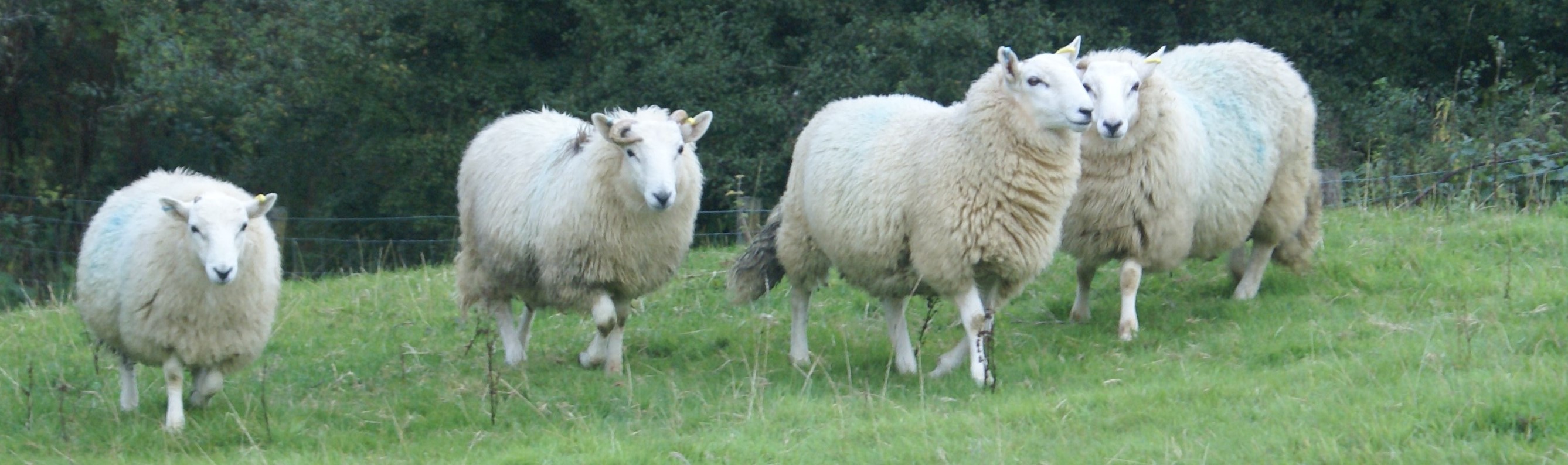
The ewe-lambs have gone — up the hill to Deryn, who bought our lambs at market last year and was pleased to buy them privately this year. She and her husband cross their ewes with a commercial meaty ram to produce fat-lambs for market but need our hardy type to replace their breeding stock.

On the day we take them up, three of their number escape onto the lane, Deryn and I give chase — both ladies of a certain age — as they pass the gate to one of her fields her own lambs stampede down to the gate to see her, led by a tame (bottle fed) lamb — she flings open the gate and lets them all out onto the road where they mill around and sniff at our reticent three who stop in astonishment — as does the middle aged man in the BMW, who had been giving it a burst along the lane.  Deryn turns and walks confidently back to the yard and all the lambs follow without question including the three escapees.  I think lady shepherds often do things very differently from their male counterparts and I am very happy that our ewe-lambs are going to be talked to (they know a little Welsh) and are not going to have to deal with shouting and sticks and snapping dogs in their new home.

The ram-lambs are big and vigorous this year and nearly ready for market.  They have horns this year which has reminded me why we always got a hornless ram to serve our ewes in the past —

Prize Ram-Lamb

Prize Ram-Lamb

— wrestling these little buggers in the hot weather in shorts and a vest (me, that is) to trim them and worm them and insert their ear tags has left me black and blue with strange linear bruises and abrasions on my chest where I clutch their heads to my bosom (linear lesions equated to ‘abuse’ in my previous life).  Catching them is not easy —

Fast Forward

Fast Forward

— the last seven or eight are proving almost impossible and we are reduced to picking them off one-by-one in a makeshift trap.   We are  eating our lunch by the back-door basking in the winter sunshine, with the cats and dog reclining around us.

Guilty cats.

Guilty cats.

We  hear the sound of  horn against  galvanized trough — we stop eating and jump up, me and the galvanized husband, and we rush the 400 yards to tippy-toe the last few steps under cover of the hedge to slam shut the gate, trapping one,two or three ram lambs. After worming them and tagging them we release them into the field with the done-ones and return to our empty plates — the cats are nowhere to be seen and the dog wags his tail at our return.

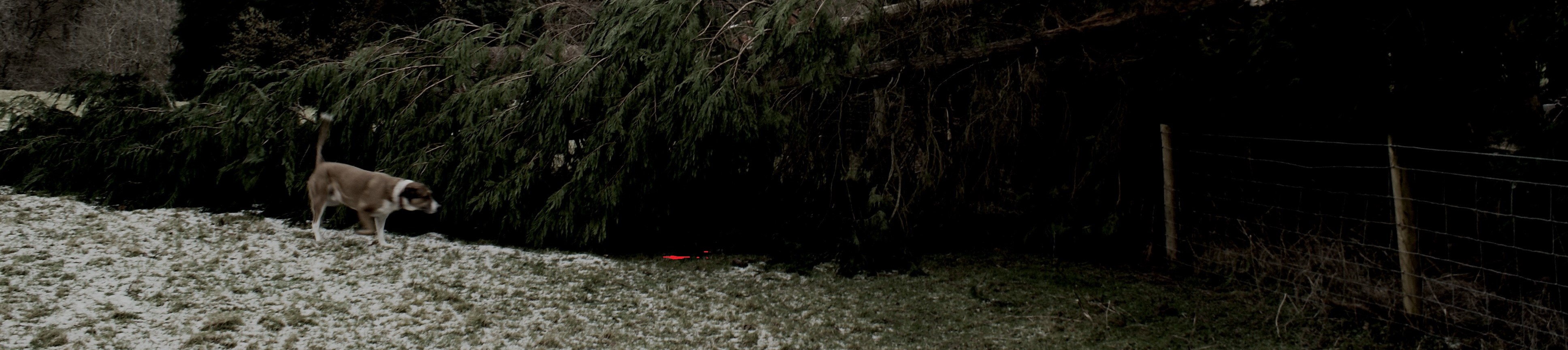
When left alone for a moment Alan prepares to cut down another tree.  He has declared war on Leylandii and is muttering ‘biomass’ — some of ours are 15 meters high and still growing and we have to fell them before they get too big to handle which, in truth,  they have already!

Biomass!

Biomass!

We rope them and cut them at 4M high — they’ll soon green up with ivy and honeysuckle.  This is as high as a man who is probably not as stable as he was, can reach on a wobbly ladder with an anxious wife clutching its base, a chain saw that frequently won’t start and, when it does, cuts out at altitude.  There is cursing and intermittent roaring of the saw, punctuated by fretting of the wife.  But all is rewarded by that sound of cracking wood and breaking branches, the exhilaration as we run for our lives, and that mighty thud…  ‘Where’s the dog!’

It’s okay, he’s here!’

SONY DSC

Then the work really starts as we haul the cut trees to our woodland area to strip the trunks for firewood and burn the brushwood — a reassuring smoke signal to our neighbours that we have survived another day.

?????????????????????????????

The midges have gone so at dusk I can abandon my kitchen with its bubbling cauldron of blackberries, its steeping elderberries and glugging wine jars to  pick damsons to the rhythm of a pecking bird, harvesting nuts from a nearby hazel tree where there is  the rustle  of a squirrel filling its pouch then hitting the ground running, undulating along under the hedge then shooting up another tree.  They are even busier than we are.

?????????????????????????????

Standard
Ecology, Humour

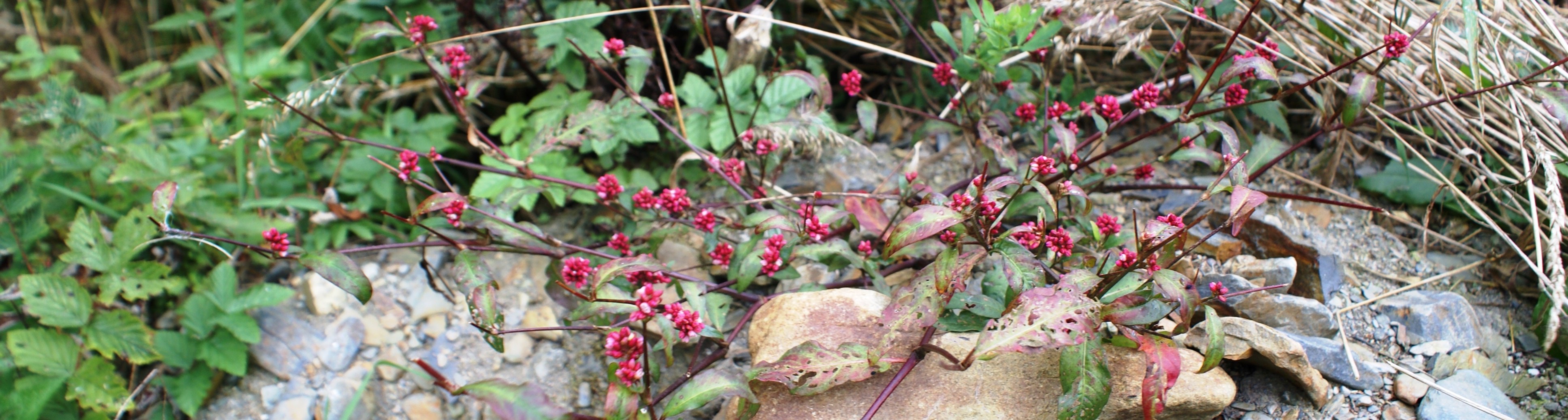
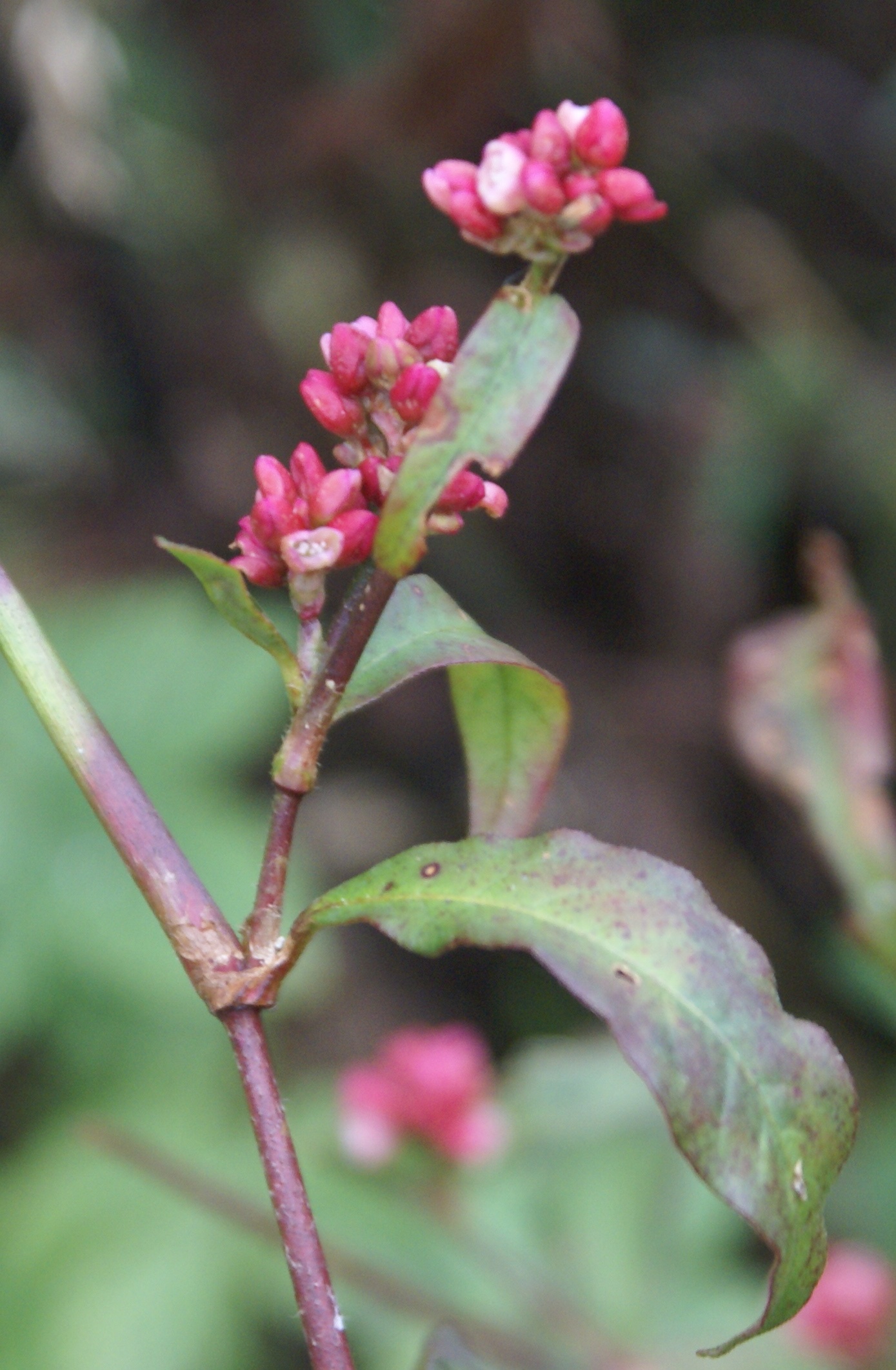
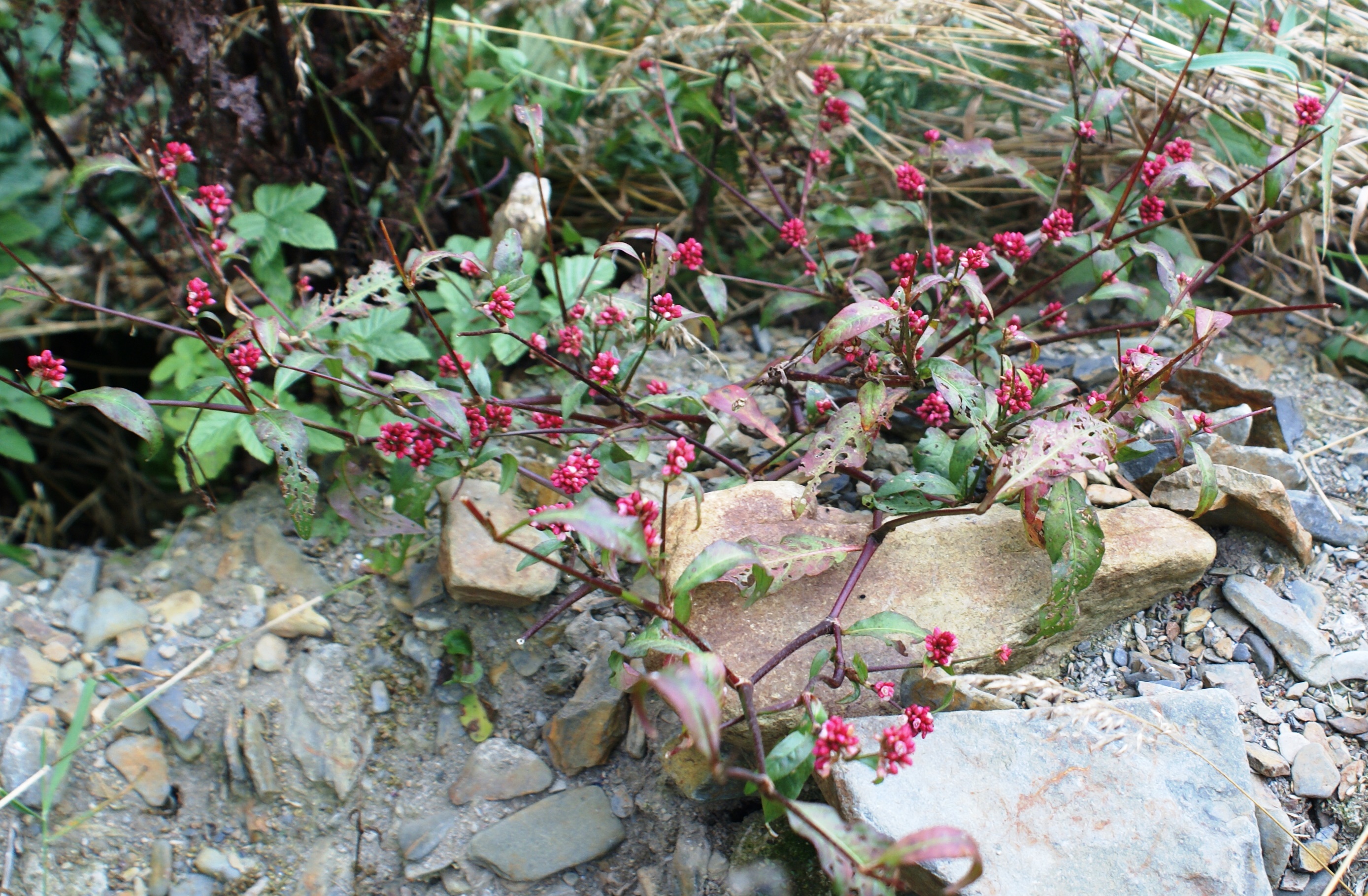
Doricum spotted in Wales!

DoricumWhen faced with plants he did not know my father would confidently pronounce them  Doricums.  ‘Shouldn’t it be Dorica?’ we would ask.

‘No, Doricums.  The word is derived from the Greek, or possible the Zoroastrian,’ he would concede.  Doricums grew everywhere in Hertfordshire — my dad was not much of a gardener.

Last spring we dug some gravel from the stream bed to create a pool to encourage fish, we left the gravel in a heap at the waters edge.  Normally a fox would have placed a walnut whip on its summit — they do this to announce their ownership of all heaps — sand, salt for the roads, compost, even large mole hills — but this mound of gravel has become subject to another interloper — the dastardly Doricum!

Have you seen this plant before?

?????????????????????????????

We have scanned the internet and looked at all our books but to no avail — although it does look vaguely familiar — we guess that it is feral or seriously out of context.

Do you have information about its true identity?

?????????????????????????????

It has been nibbled but not by sheep, this gives it a spiky appearance — we’ve looked up squirrelwort and rabbit-bit in the index of popular names — its not even under badger-nip.

Is this a new species — D. notlikelae?

Addendum: 30.11.2023 St Andrew’s day and Winston Churchill’s birthday.  On reflection this may have been a rather tatty example of Redleg (Persicarias persicaria L.) a member of the dock family.  There is more of it about now and it looks more typical — sorry Dad!

Standard
Humour, Wales, Welsh culture

The Strange Case of the Renegade Lemon.

?????????????????????????????

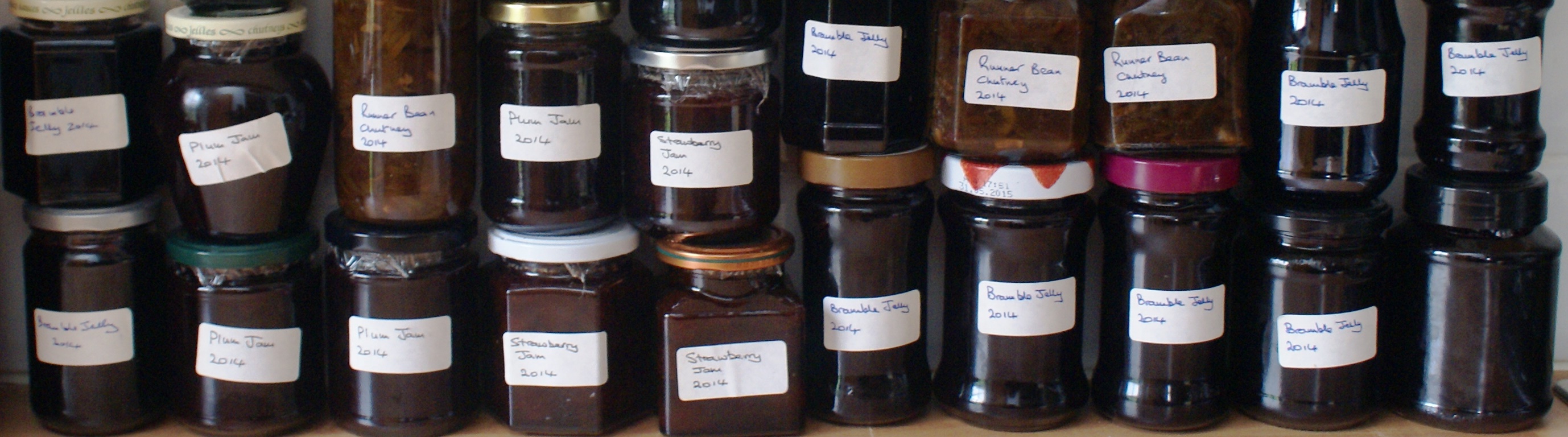
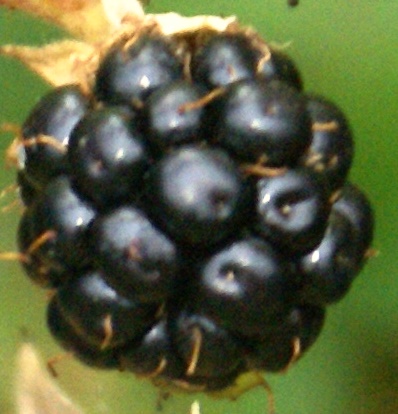
It is that time of year when something in the quality of light, the mist or the day-length, or the heady scent of sun-warmed blackberries in the air, turns the mind to jam. I hardly ever eat jam but nevertheless the compulsion to forage for jam jars in charity shops is irresistible.  One day last week I went home with a complete stranger who thought she might have some spare jars under her sink.

In an area like Mid-Wales where we all spend more time in natural light and so are primitively tuned by the seasons — I am not alone.  I pick up the last bag of sugar from the super-market  — ‘we’ve run out three times this month’. says the lady at the check-out, ‘I don’t know why!’

‘Bake-off!’ says a young man from another planet who is queuing with his minimum-price-per-unit-of-alcohol lager.

‘Jam!’ says the pretty girl with the toddler who is transferring lemons from his mother’s basket onto the conveyer belt.

‘What a useful little boy!’ says I, ‘Lemons!  I need lemons!’  I rush off to grab two — two large unwaxed lemons, I remember it is two because I work out the economics of it ( two large ones  for 80p versus five little economy ones in a net for £2.00 — bastards!)

When I get back to the checkout my husband has arrived and the lady has already put my other shopping through  and is starting on the pretty girl’s– I thrust my two lemons at the lady who adds them to my tally and takes my money as my husband embraces the shopping (bags cost 5p in Wales and I am forgetful and mean) —  we struggle out with arms full of disparate shaped packages and bottles all determined to escape even if perishing in the attempt.

By the time we get home they are more compliant — even the three lemons.  Three lemons!  We’ve only gone and stolen one of that poor girl’s lemons…  And after she reminded me!

Now something very Welsh occurs.

I go to my neighbour down the lane and have a nice glass of Pinotage — that’s not it.  She used to work with the young man buying lager in the previous paragraphs, I recognised him, the one who was chatting to the pretty girl with the toddler — well he would, wouldn’t he?  My friend rings him — he doesn’t say ‘Ah yes, she’s a cousin to my brother’s wife,’ but he does know her sister and, unusually for Wales, he knows her surname which is not Jones — she doesn’t live here but told him that she is visiting  her Dad.  Bingo — we’ve got her.

‘But how did you find me’, she asks somewhat anxiously.  Oh dear, has she come home to Wales to escape a stalker, an abusive husband or the Inland Revenue, has she stolen away this attractive child and come to ground in the middle of nowhere only to be given away by a renegade lemon.

No, she remembers where she is.  She relaxes.  She thanks me for the lemon.

Glenys, the Lemon — that is who she is now, in our local nomenclature, like Dai Bread, the baker, who won the lottery and became Dai Upper-crust!.

?????????????????????????????

?????????????????????????????

Standard