
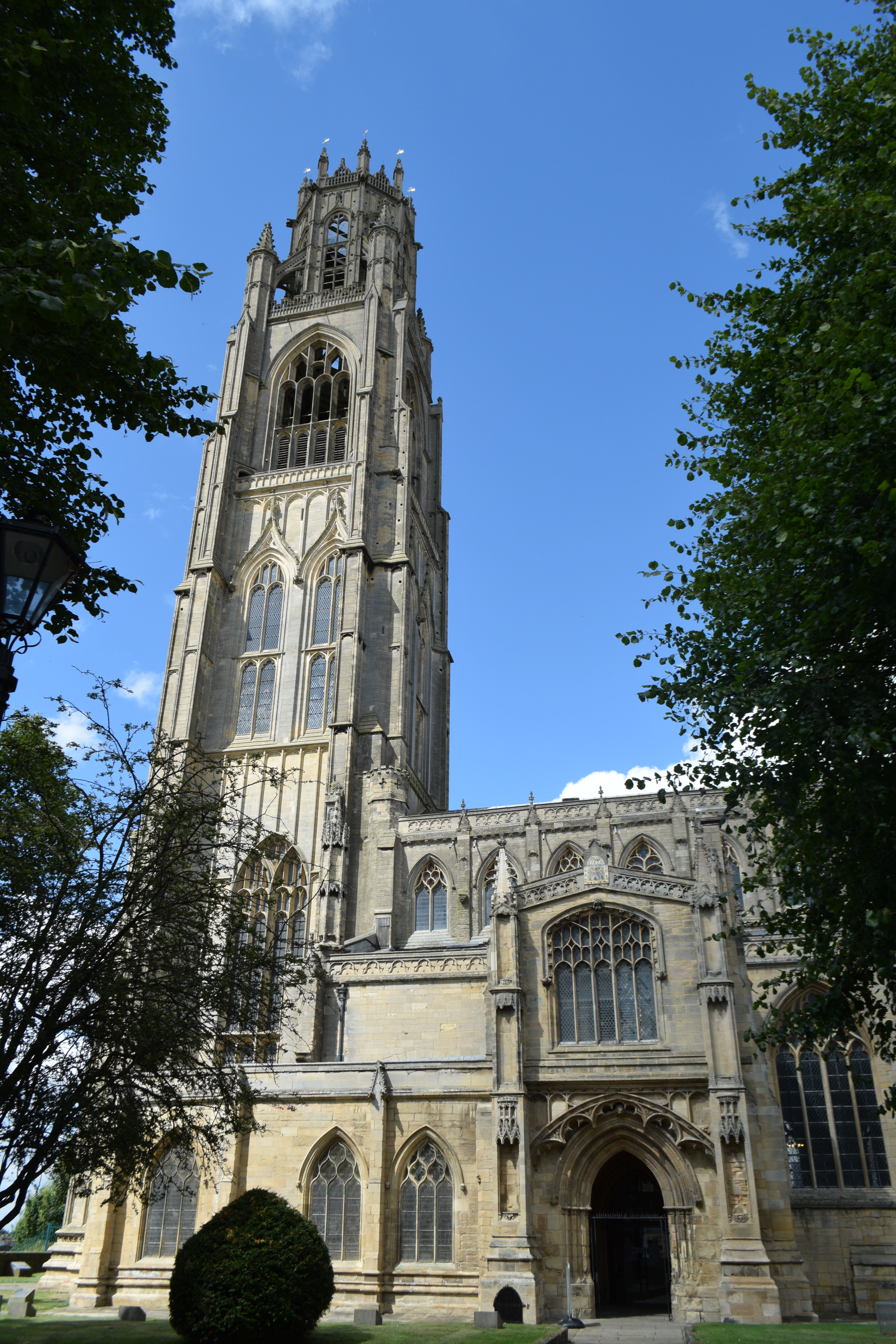
Last week we exhausted ourselves in the heat, tramping around Frampton Marsh on the Wash looking for yellow wagtails. In the distance we could see the only landmark in this flat landscape — Boston stump — the tall tower of Boston’s St Botolph’s medieval parish church . After lunch we went to have a closer look.
I had always thought that this was a cathedral but no, it is a humble parish church!

As you step into the nave, the vastness of it knocks you back and you wonder how this little town in Lincolnshire could possible have mustered the resources back in the 1309 to start such a mammoth project. It took the best part of a century and the tower was added later, by the late 1500s.

The view from the river gives a hint. The River Witham has a short course to the sea and is tidal — Boston, in its day was a major port, serving a rich agricultural area and the merchants were wealthy.
Boston in Lincolnshire, on the Wash — that great bite from the map of Eastern England, was the port from which many Puritans left Britain, notably those in 1630 in the reign of James I, bound for the Massachusetts Bay colony, frustrated by the lack of change in the Church of England — parted from Rome by Henry VIII, but not purged of much that was still Catholic. They took the town’s name with them and were soon followed by their own vicar, John Cotton who became known as the Puritan Patriarch of New England. 166 of his Boston, Lincolnshire parishioners made it to New England.
1660 was the year that marked the end of the Puritan rule of Oliver Cromwell that followed the Civil War and the restoration of the monarchy. Charles II ruled for 30 uneasy years but in 1685 when he died his younger brother James II, personally a committed Catholic, was again a threat to stability and within 3 years the powers-that-be, facing the prospect of another Civil War, invited William (protestant king of the Netherlands) and his queen, Mary ( James II’s daughter) to assume the crown. James’s army deserted him and he fled to France. In 1690 he tried to regain his throne but was beaten at the Battle of the Boyne in Ireland and the rest, as they say, is history — which goes on and on!
These were turbulent years in England. And not much fun for this schoolboy I spotted being beaten — seen on a misericord in the choir.

 dianaashworth