All my bird-watching days I have wanted to photograph a water rail. They are shy, busy birds that skulk in reed beds — people say ‘Oh yes, they are here.’ But they never show themselves to us. Just the occsional flash of a tail feather as they disappear into the reeds. Not even a burst of their alleged piglet-like squeal. Don’t bother to follow the call, as I did, unless you want to inspect your neighbour’s new weaners!
Last week we went to Slimbridge looking for Bewick swans:
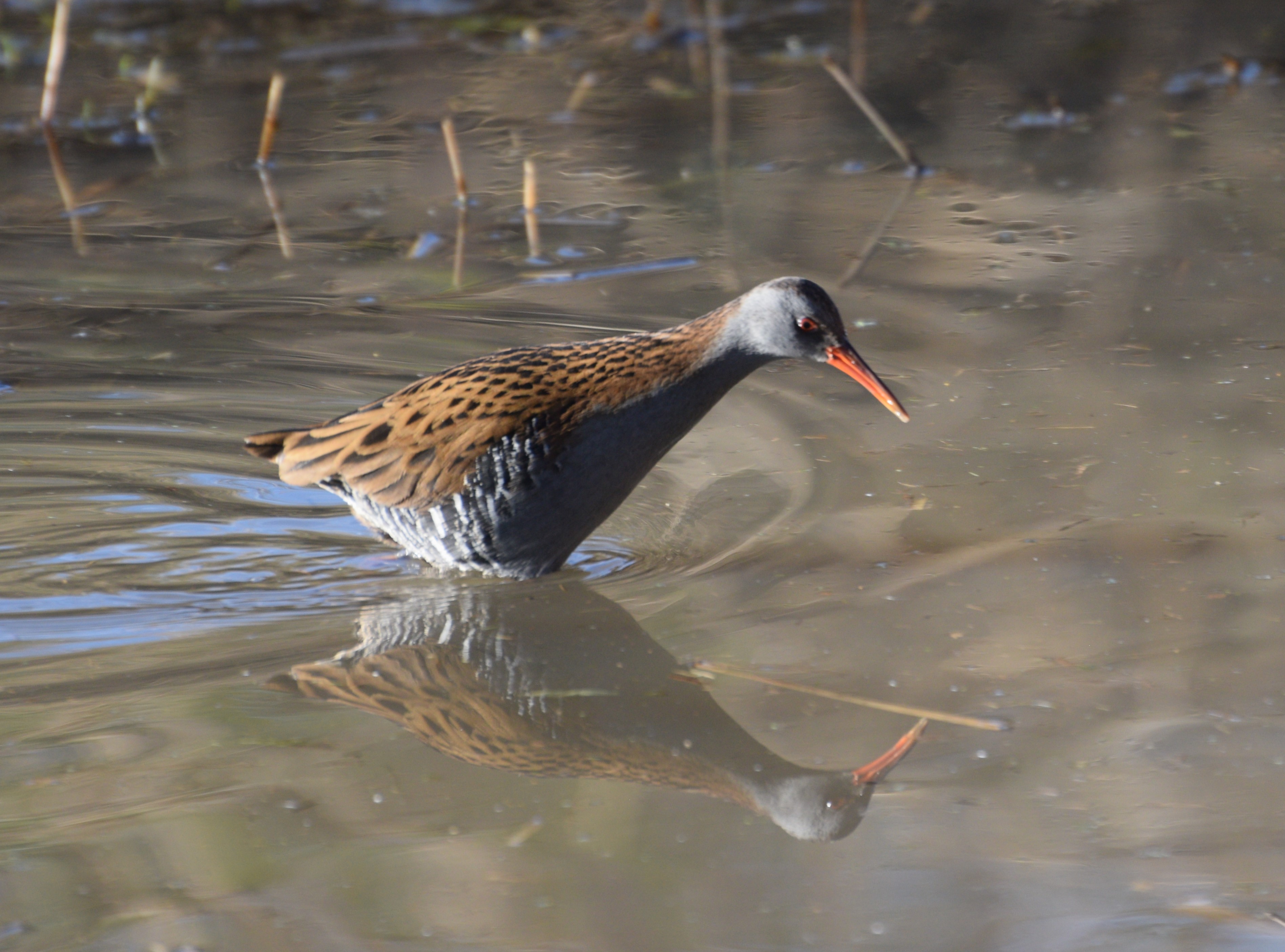
What did we find? A water rail! Bold as brass, trotting around the edges of a shallow pond.
What a beautiful bird and not at all reticent, just very focused on the hunt.
Oh, and what of the Bewicks?
Bewick swans at Slimbridge.
Not many, most were out and about grazing on the surrounding fields. But, what a bonus–
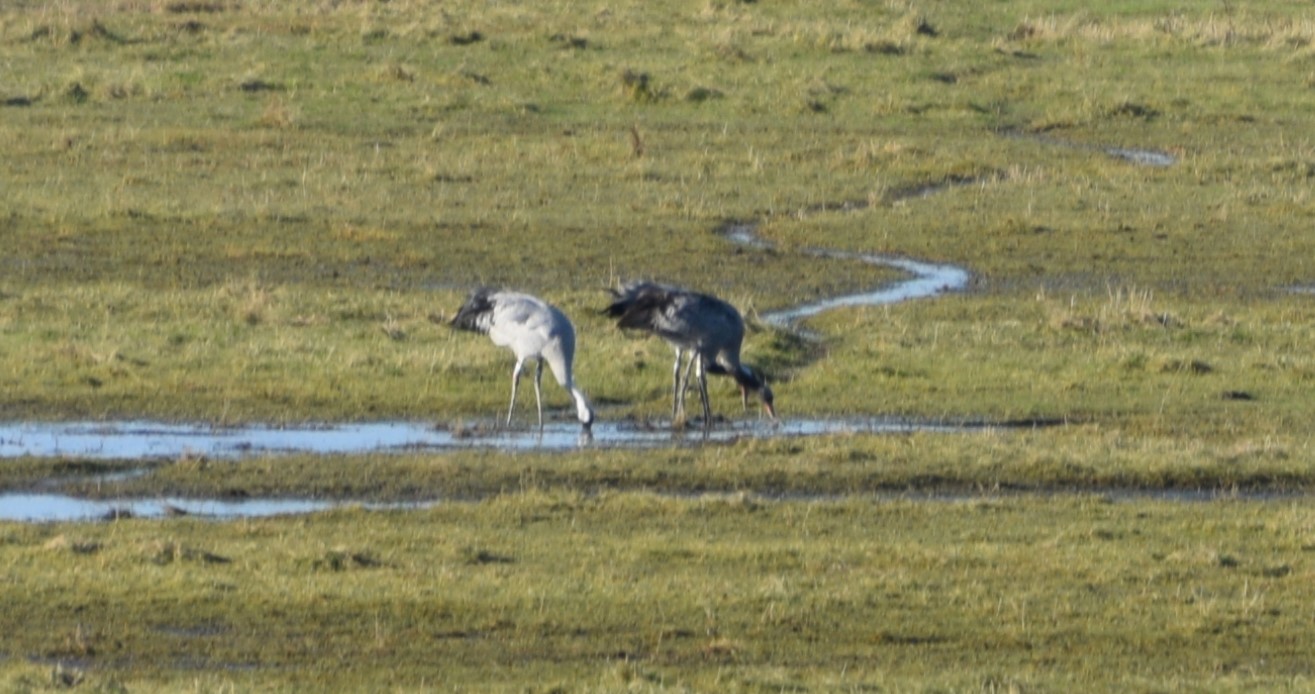
Two of the six wild common or Eurasian cranes we saw, grazing on the marsh.
They were wiped out in the UK in the 1600s and have only been seen again since 1979 — there has been lots of work re-introducing these iconic birds from captive breeding programs. In 2022 there were over 70 pairs breeding in the wild in the UK — mainly in the Eastern counties and the Somerset levels. We’ve seen them in the Nene Washes.
Yesterday, having come to terms with cancelling our visits to grandchildren because of the risk of Corona Virus and facing 12 weeks in lock-down, the collapse of the economy, evaporation of our pensions, disintegration of the world’s infrastructure and the disappearance of all toilet paper (not to mention the possibility of impending premature death), we packed a picnic and set out to find the Whooper Swans out on the Ouse and Nene Washes.
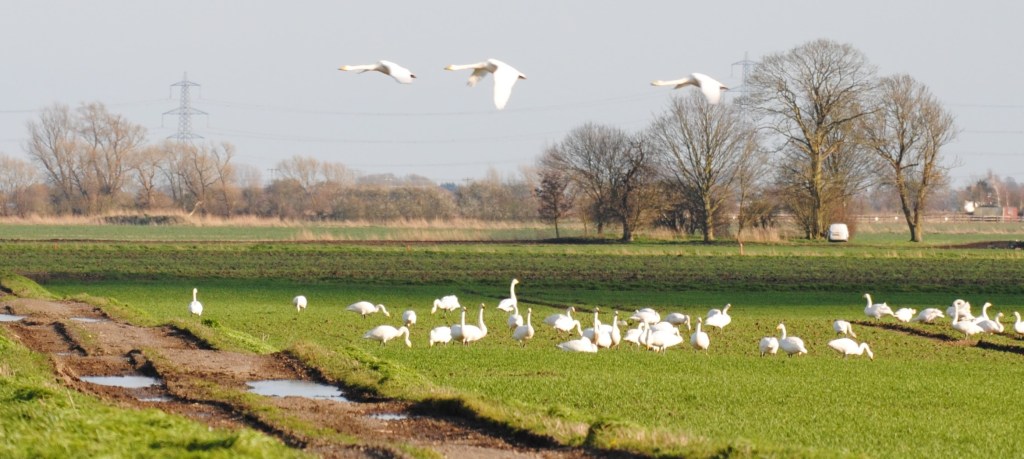
These are areas of fenland fields that are flooded in winter by the waters of the rivers Ouse and Nene in Cambridgeshire, England. This year after the deluge of recent weeks the area was more like an inland sea but we found the Whoopers (Cygnus cygnus) and some Bewicks (Cygnus columbianus bewickii) grazing in nearby fields — nipping any hope of agricultural recovery, literally, in the bud. They are preparing to leave for their breeding grounds in Iceland and Siberia respectively.
Whooper Swans (with the occasional Bewick) grazing.
But, wait a minute, what are these in the distance? Not the swans — behind them!
Common Cranes and Mute Swans on the Nene Washes yesterday, albeit at a distance.
Cranes became extinct in Britain 400 years ago, didn’t they?
Not so! The now inappropriately named Common Crane (Grus grus) evidently reappeared in 1978 — probably when 3 individuals were blown in from Europe. The population teetered for a number of years with slow breeding, but with some migration and a little help from captive breeding, reintroduction and habitat creation it continues to grow. There are now 50 pairs or more.
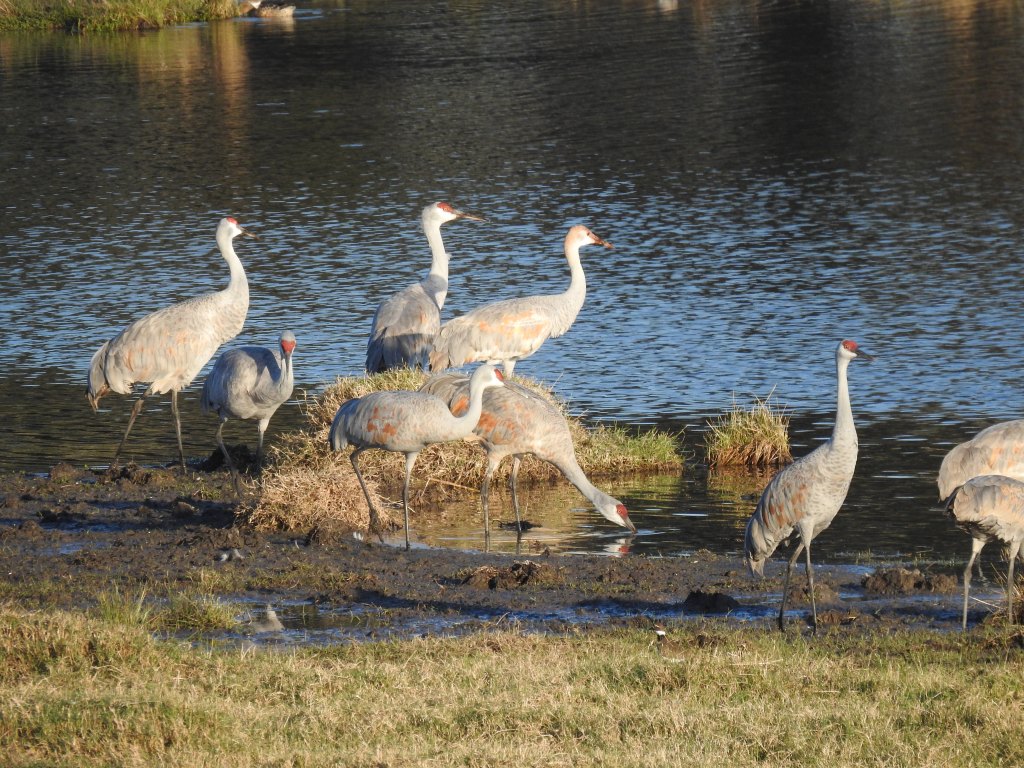
As we watched one of these pairs who were a long way away (mitigation for the poor photo) two more individuals flew in, landing precariously and then displaying to each other just as we had seen Sandhill Cranes do when we were in Texas last autumn. They danced, bouncing from leg to leg with their necks extended backwards, calling and fluffing out their magnificent plumed tails in a bonding exercise — presumably indicating to the other couple that they are no threat.
Sandhill Cranes (Antigone canadensis) — also a very rare visitor to Britain, by Bill Branford (all rights reserved)
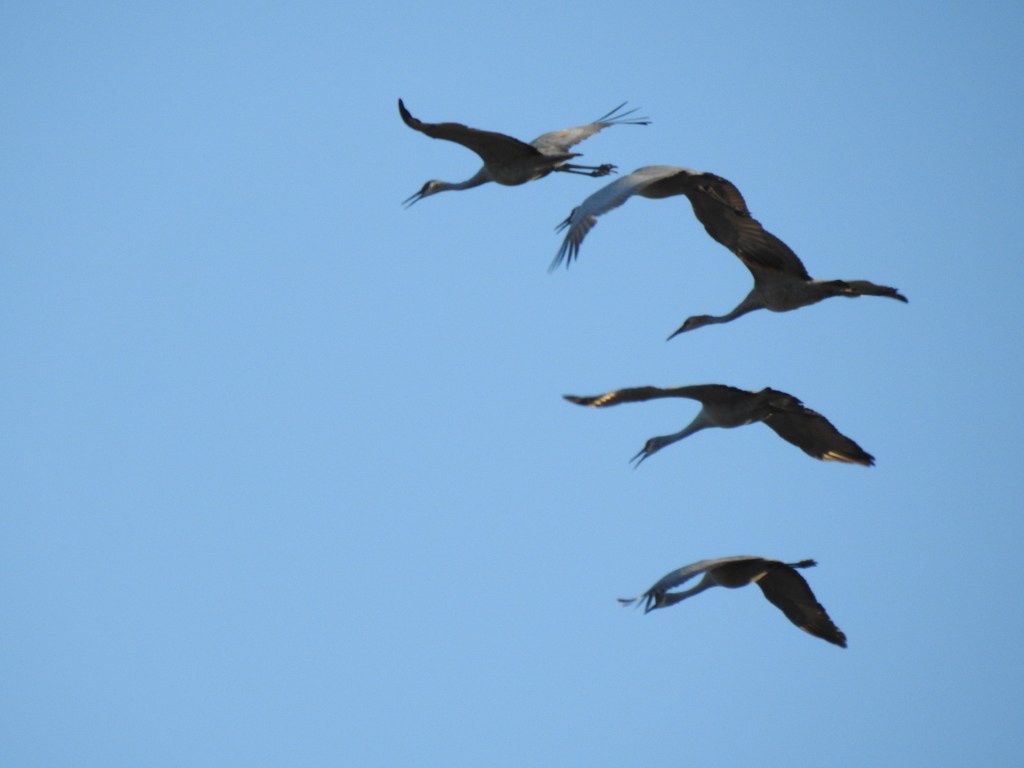
The thought of life after extinction is very comforting just at the moment.
Sandhill Cranes by Bill Branford (all rights reserved).





 dianaashworth