Hill Farming, lifestyle, weather

Antidote to this dystopia

As Russia attacks Poland and Israel bombs Qatar, Bill goes to clean his teeth and shouts “there’s no water!”

“****!” says the householder, “the well must be dry!” Our well has never dried up but, I think to myself as I struggle into my waterproofs, it might have dropped below the outflow pipe.

“It is pouring with rain — it’s rained heavily all night.” says the man brandishing a dry toothbrush. “Surely it must be filling up fast.

“Airlock!” I shout, over my shoulder. Bill is busy filling buckets from the rainwater butts to flush the loos.
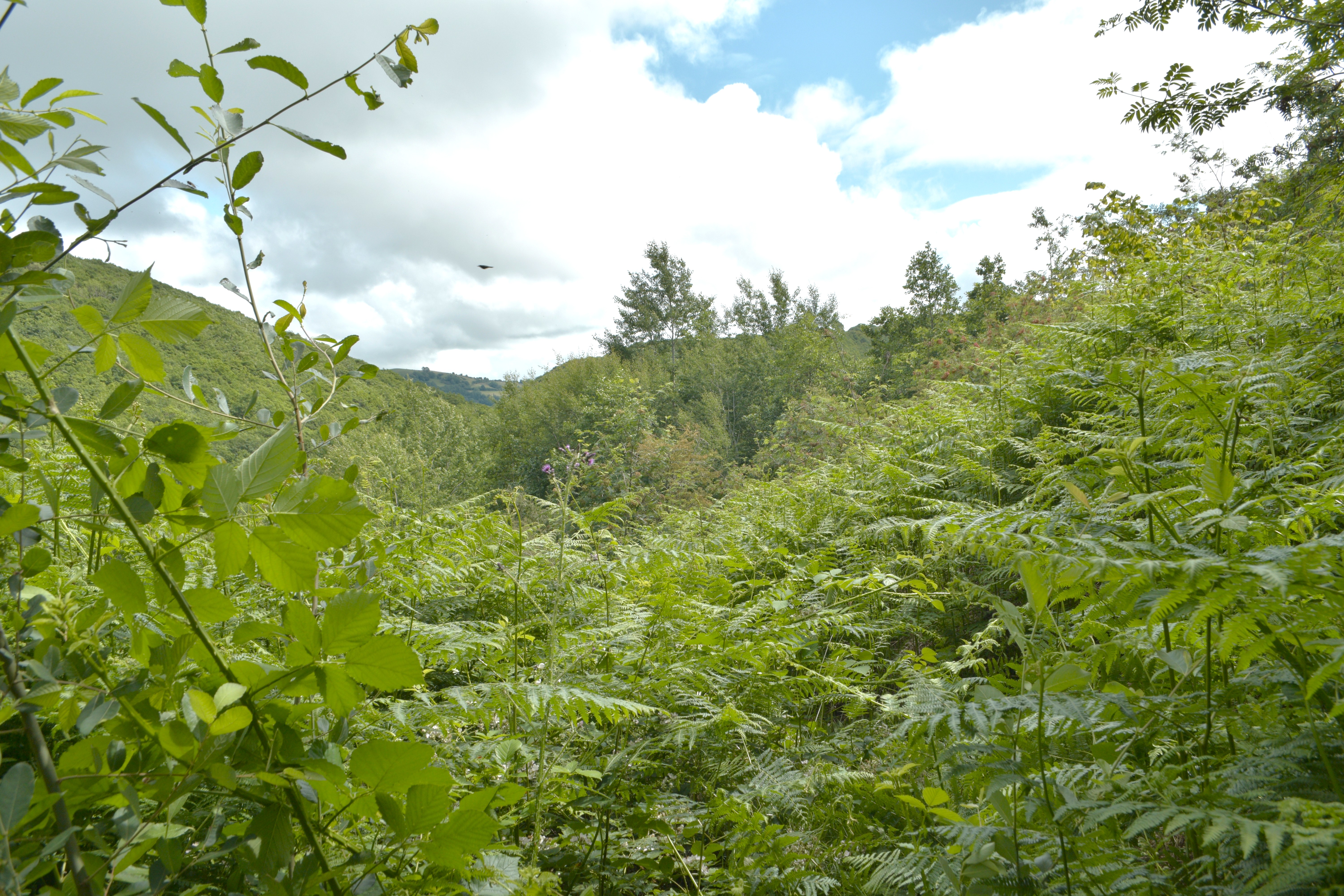
As I stride up the hill I think how low the reservoir was when we passed it yesterday. Here’s the track to our well, we cleared it in June but things grow rapidly here. In June, despite weeks of drought, the water was within 9 inches of the top.

Now I’m not even confident that I can find it — it has gone missing before. I flail my way through the bracken and brambles and here it is… and I have remembered to bring a screw driver to open the cover.

The level is a good 7 feet, 2 meters, down, but the outflow pipe is submerged, can you see it at the bottom of the loop of pipe? The rain is now torrential, I slide back down the steep slope to fetch the kit to clear the area so that I can find the pipe we put in to wash out the dastardly air that has been sucked into the pipe to break the siphon.

Some hours later… Soaked again

A couple of hours of hacking and chopping and the stop-cock and the priming pipe are revealed and their relationship to the well which I photograph to help find them next time. In fact, this whole narrative is about recording events for our successor or, to be truthful, as an aide memoir for ourselves. The stop-cock is down a dark deep hole, longer than my arm, I decide not to mess with it, even if that means all the water goes straight back into the well.

Back to the house for dry clothes and some toast and coffee. “The next phase should be easier as nowadays we can communicate using the mobile phones.” I say. Bill points out that we don’t actually have to open and shut taps to preserve water as we try to fill the half mile of butyl pipe between the well and the house, “it will fill the lavatory cisterns then stop.”

“Oh, I suppose it will.” I say, not convinced, “Still, I’ll take the phone anyway.

Now all that is required is a bucket on a long rope, a funnel and a shepherd’s crook to push the bucket under the water while not falling head first into the orange abyss. I switch on the phone to contact the controller in the house. Rain spots the screen, I wipe it, it goes off — I do this several times before realising that the battery is flat and that my pockets are filling up with water. I tie up the phone in a rubber glove.

Faced with another wet hike back to the house I decide to give it a try anyway. Buckets of water are hauled up, like pussy in the well, and poured into the funnel balanced in the open blue pipe without allowing further ingress of air, this involves nifty thumb work. After 3 buckets full, the funnel stops emptying and the pipe appears to be primed, I screw the cap on, without crossing the thread, difficult with my fingers crossed, and make haste, carefully, to the house, it is important not to break a hip while doing these things.

“The pipes have been gurgling,” says Bill.

Holding our breath, we turn on the kitchen tap… It splutters, it flows!
Standard
Climate, Hill Farming, Meteorology

Grass Roots Meteorology

Not looking at the colour of the grass to determine the dryness of the summer but measuring things oneself to confirm ones suspicions — that’s Science!

We had not lived in Wales very long when we suspected that it was a rather wet climate — I bought a very primitive rainwater gauge and commenced my research (in the spirit of the age of enlightenment and gentlemen scientists (or gentlewomen).

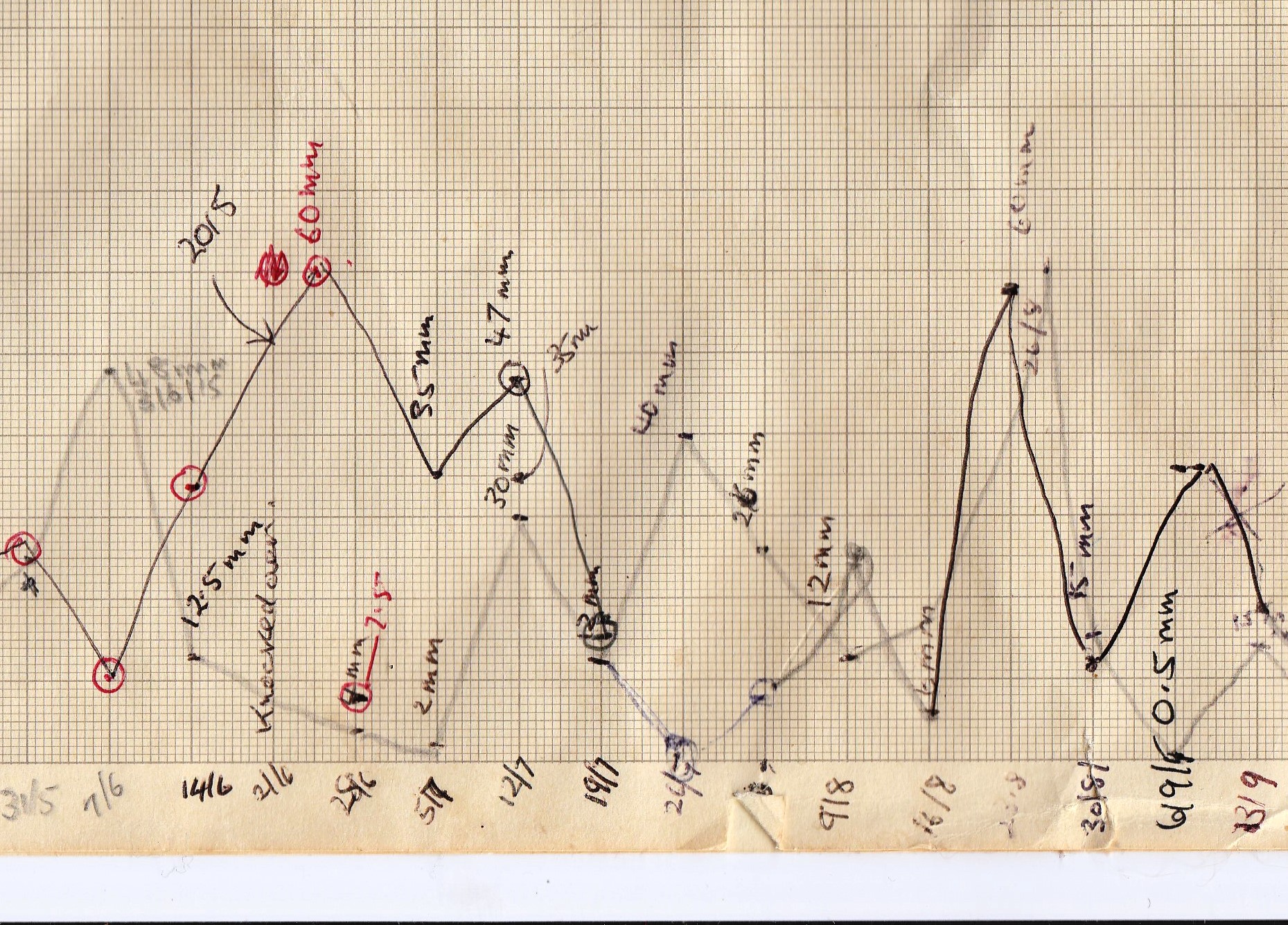
I measured the weekly rainfall for two years until one frosty morning an iceberg formed from the previous days precipitation and split the gauge and terminated the experiment.  However the results were conclusive –approximately 2000 mm (2 metres) of water per year –somewhat less than on the slopes of Snowdon and less than we expected –on balance it felt wetter!

We did prove beyond doubt the proposition — it is a rather wet climate.

We have rain all the year round, more in winter and less (if only slightly) in the spring.

Weekly Summer Rainfall for 2015 and 2016 (in pencil) in mm

mm of weekly rainfall in usual summer

Please note in June 2016 a perching Magpie, attempting to drink, knocked over the whole apparatus.  Okay, it’s not very professional but absolutely authentic.

In contrast  this summer’s record flat-lined until a couple of weeks ago.  There was no rain at all — measured or otherwise.

The poor farmers were carting water to their flocks on the parched hillsides.  The waterfalls were silent and the brooks no longer babbled.  Neighbours were seen lifting their manhole covers and staring forlornly into their wells or struggling up from the dwindling river with buckets of water to flush the loo.

Rainfall is something we, in Wales, take for granted.  We found one of our young farming friends sinking a bore hole last week having come face to face with the real possibility of drought and the previously unthinkable situation — one where he is unable to water his stock.

Our stream did not run dry but our pond stopped overflowing and the level dropped considerably mirroring the huge reservoirs of this area that supply the big cities of Liverpool and Birmingham.  Demand outstripped supply and during the hot weather we are told that the demand in the cities actually increased.  None of us should take our water supply for granted.

SONY DSC

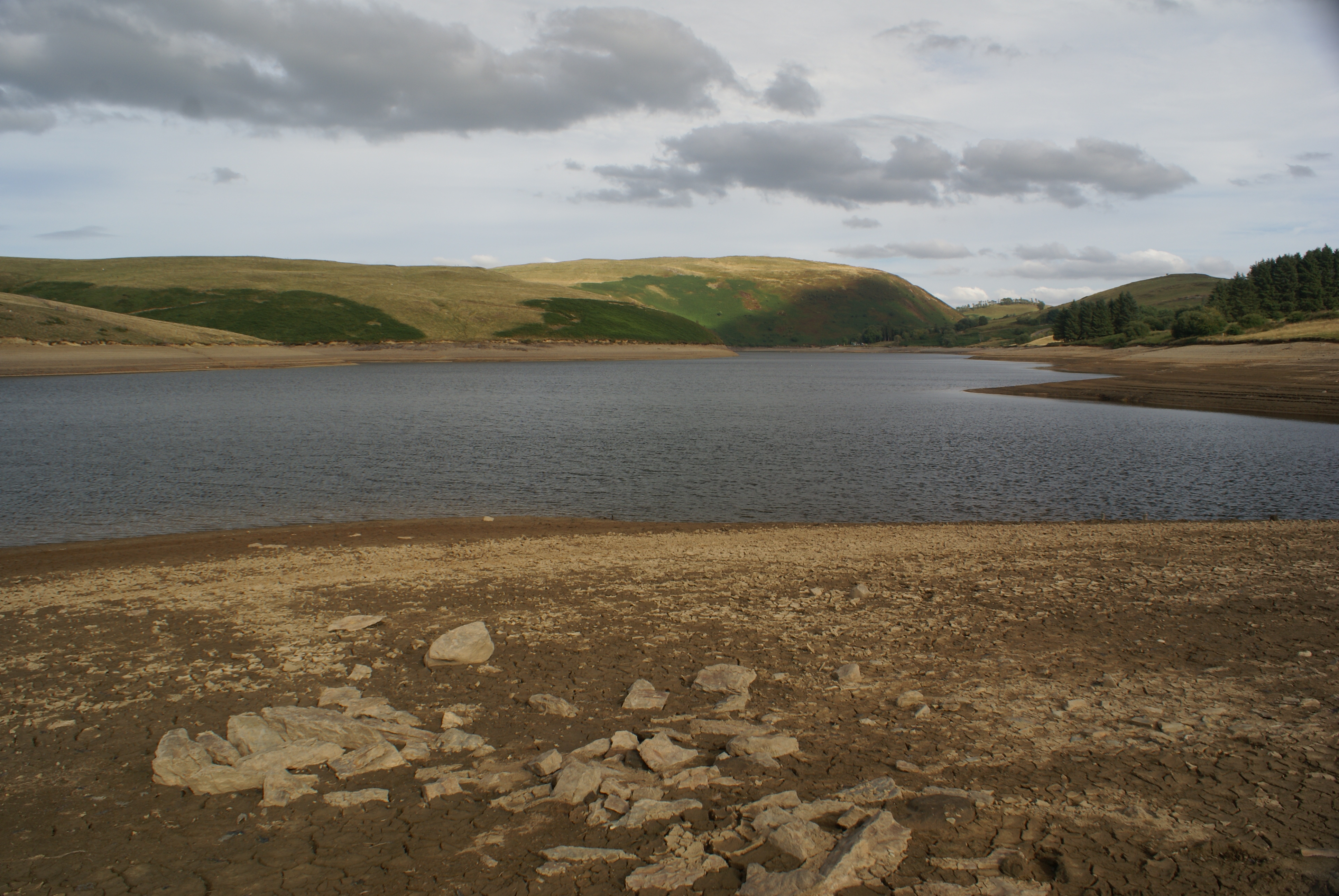
Rocky bottom of the Clywedog Reservoir

SONY DSC

Rare glimpse of remains of Gronwen where our friend Audrey lived before the valley was flooded by the dam 50 years ago.

Standard
Birds, Ecology, Gardening, Wales

Protecting the Innocent

Baby barn owls and Jan

Here they are:  last years baby barn owls safe in the arms of local owl whisperer, Jan, from the Species Habitat Protection Group that monitor the owl box on our land.  I couldn’t show you these last year as their location was better kept under wraps — there are evidently still people out there who will abduct baby barn owls to rear as pets and for sport.

We hear barn owls every night but this year Mum and Dad have not used our box again.  It should be a better year as the dry weather allows the parents to hunt every night.

Two days ago Alan and I went to inspect the osprey nest over the hill.  This year there are three chicks, two male and one female, just about ready to fly, jostling for space in the untidy nest.  The location is well known now so their custodians have made a car-park with a hide which provides many volunteer watchers (and doubtless electronic surveillance).

????????

One fuzzy ‘fish-hawk’

Here are pictures from a previous year from the Osprey Centre webcam in the Dovey Estuary courtesy of the Montgomeryshire Wildlife Trust Creative Commons License .

SONY DSC

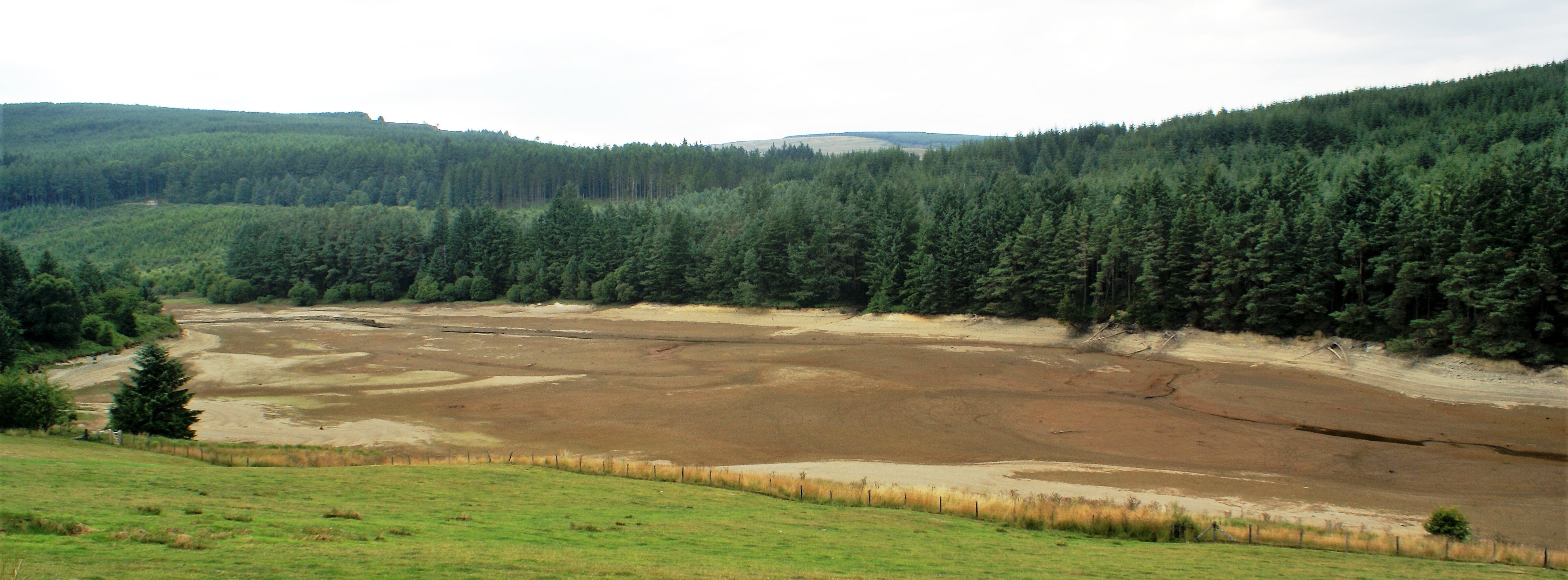
The mother was sitting on the cross-bar above the chicks, when we visited, waiting for the male to return with a big fish.  Below, the reservoir was shrinking fast in our only dry summer for years!

SONY DSC

Whoops — I spoke too soon — with a crash of thunder the drought appears to have ended!

We are reminded that, despite the drought, our habitat is Temporate Rainforest and that our garden, tended only by the Almighty is, this year, very fashionable!

SONY DSC

It would merit a gold medal at any of the horticultural shows — Chelsea, Hampton Court or Tatton Park!

Standard