When you live in one of the wetter parts of our planet it is no good saying “90% chance of precipitation today — I think I’ll stay at home!”
You have to buy decent wellies (with grip) and really good waterproofs and embrace the rain.
Never more so than in the glorious autumn when the quality of the light enlivens the golden palette of the forest floor, set rustling by busy squirrels. The sky between the trees is streaked with flashes of blue from nutting jays.
In the tops of the trees flocks of foraging siskins chatter.
But look under foot!
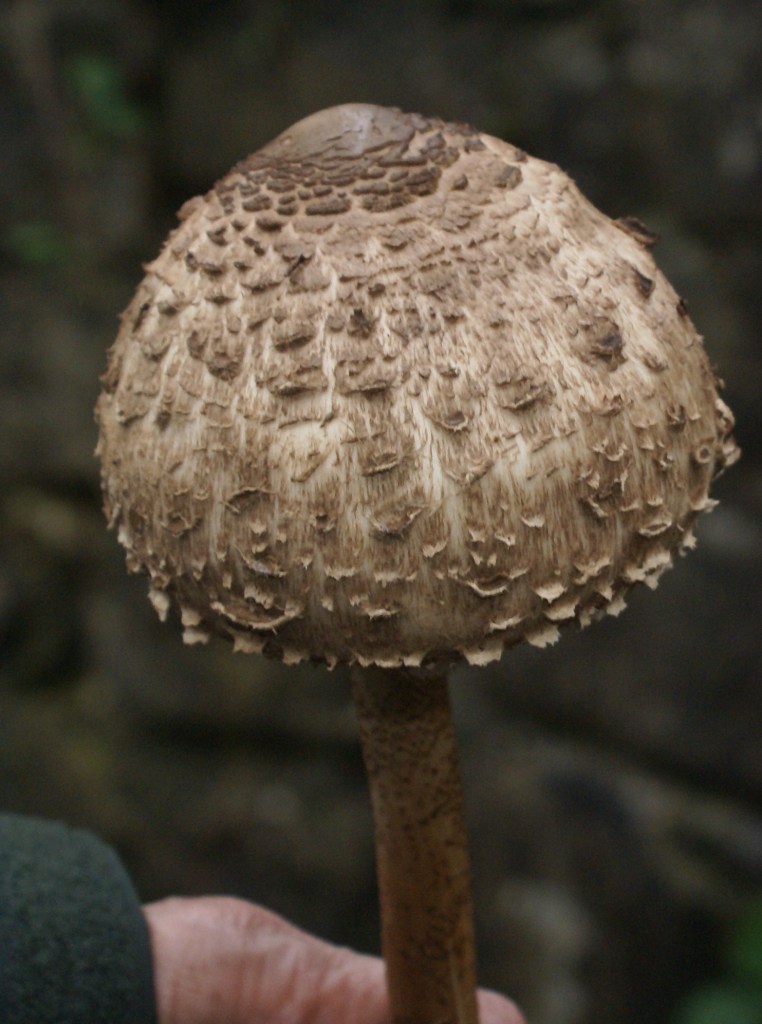
Parasol Mushroom — Lepiota procera
Nature’s bounty: you could fall over this one — something nice for supper! Fried in butter.
Also Field Mushrooms (Agaricus campestris) in profusion but my camera battery was flat so I’ll have to describe the wide ring of domed white delicacies, growing in our field where the sheep shelter, they have pink to brown gills (the mushrooms) so are not Avenging Angels or Death Caps (their gills are white) but beware the Yellow Stainer (Agaricus xanthoderma). These are one reason why you should always forage mushrooms by pulling them out to include the base which can give valuable information for identification. When you bruise a Yellow Stainer, as you might expect, they stain yellow and the flesh at the base is unmistakably bright yellow. They look very like their delicious and innocuous cousin but will make you very sick (thank you U-tube for saving us from that!)
Our Field Mushrooms were a little more watery than the ones you buy and had a faint tang of aniseed — very tasty with butter and lemon juice and no tummy ache!
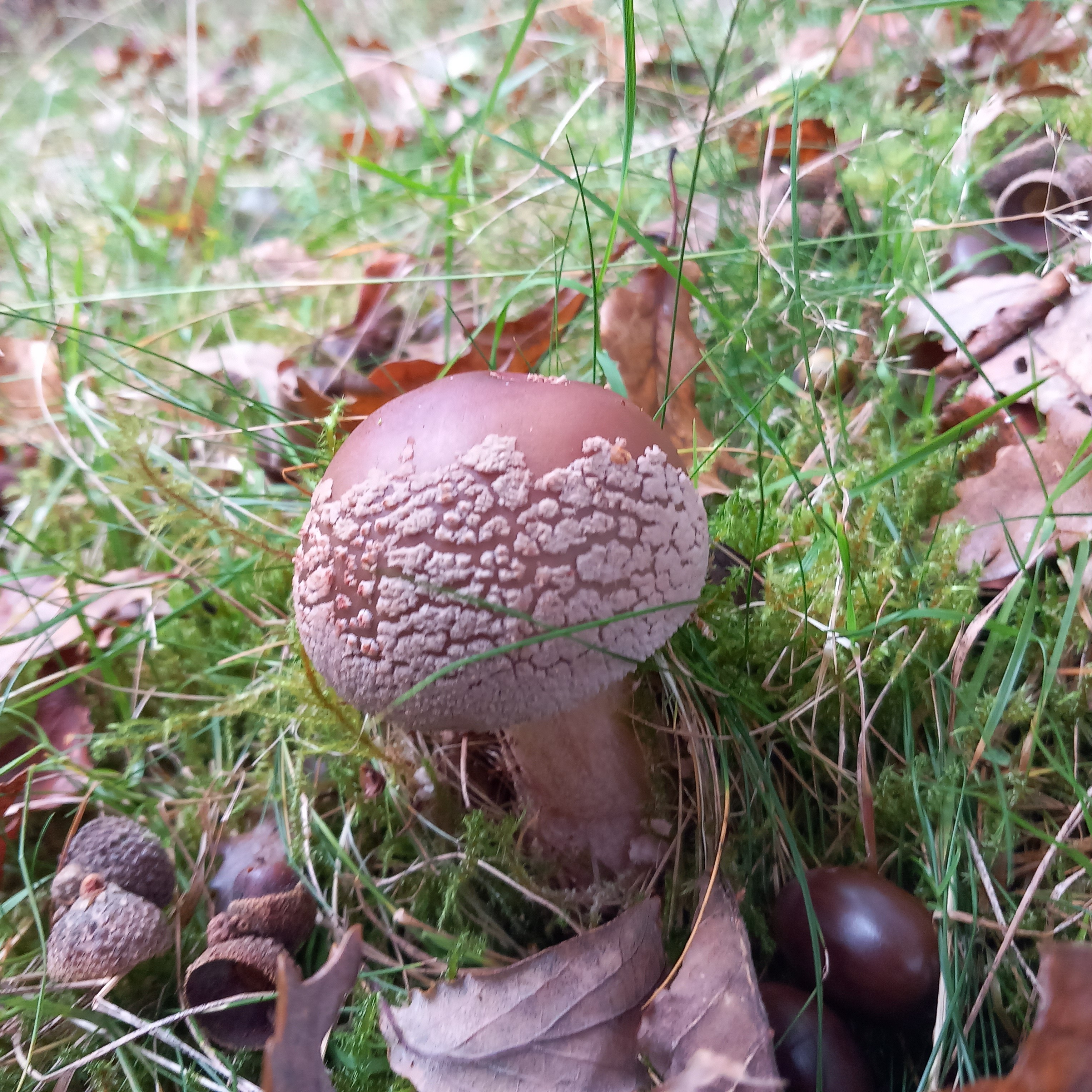
Here’s another you should not eat: the Fly Agaric (Amanita muscaria)
At a distance, in shade, we thought this was a cricket ball.
The woods are magic at this time of year but beware the little people:








 dianaashworth