Birds, Ecology, Hill Farming, Uncategorized

Faux Christmas?

A friend of mine has just returned to the UK having lived for several years on the other side of the globe. She explains her disorientation in time and space on the disruption to her seasons (I have no excuse!). It’s mid-summer here and mid-winter in New Zealand, where those who suffer from European nostalgia have a pretend Christmas.
Here on our smallholding in Mid-Wales we do something similar — opening our gifts on one particular day. It’s exciting. It’s bird-ringing day! Not their necks so that we can roast them with pigs-in-blankets and plum pudding, but counting all the year’s baby birds, catching the fledgelings that are about to leave their nests and, in particular, those in our nest boxes and ringing them. A right of passage — a birdy Bar Mitzvah — we should have a party!
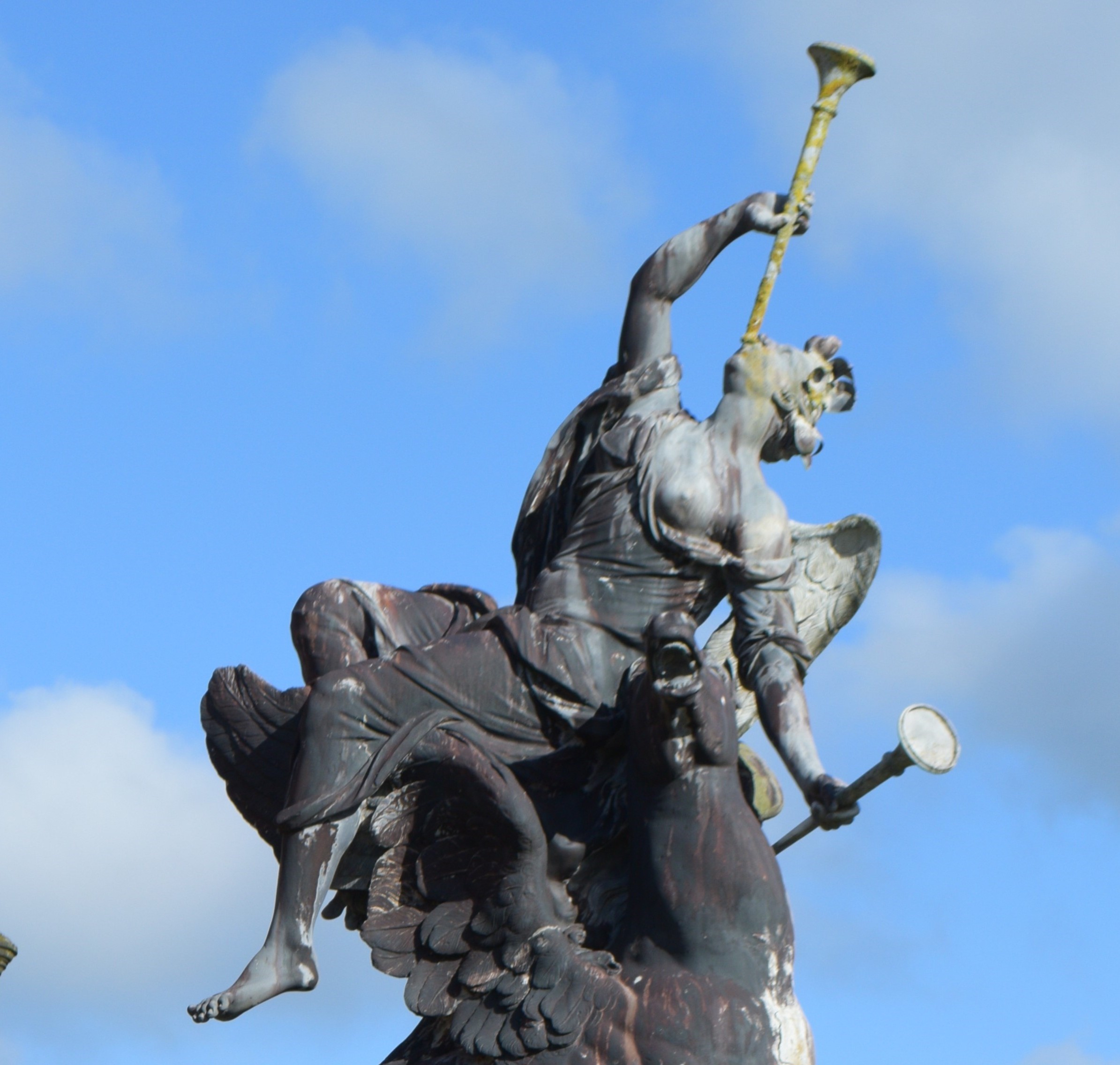
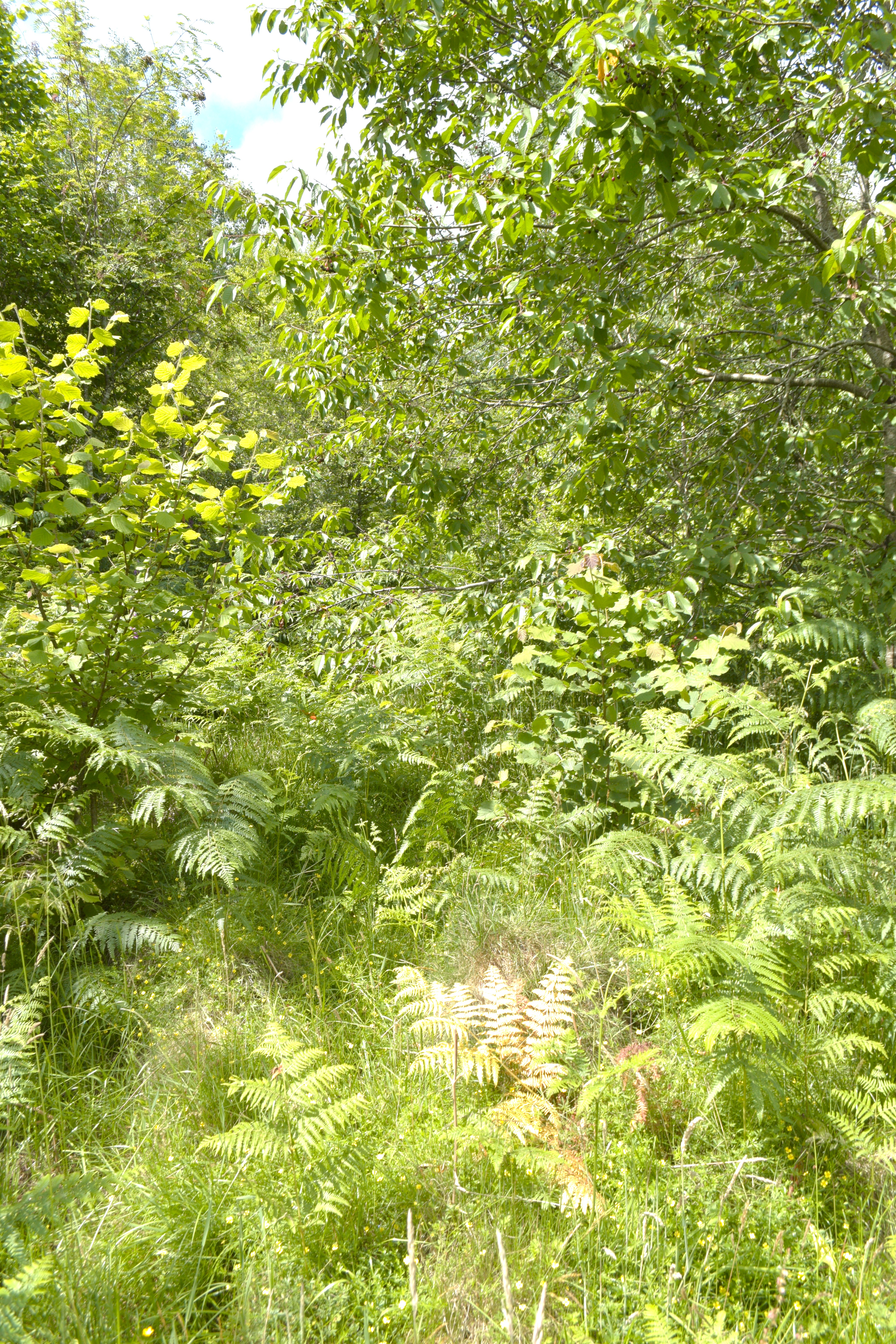
At a time when we feel we will be overwhelmed by the sheer fecundity of our temperate rain forest, it is good to have some positive feedback for our efforts for wildlife. We are engulfed in 8 foot bracken and torn at by wildly flailing tentacles of bramble that reach out across the tracks to grab us as the mower clogs and stalls yet again, which is just as well as it is overheating.
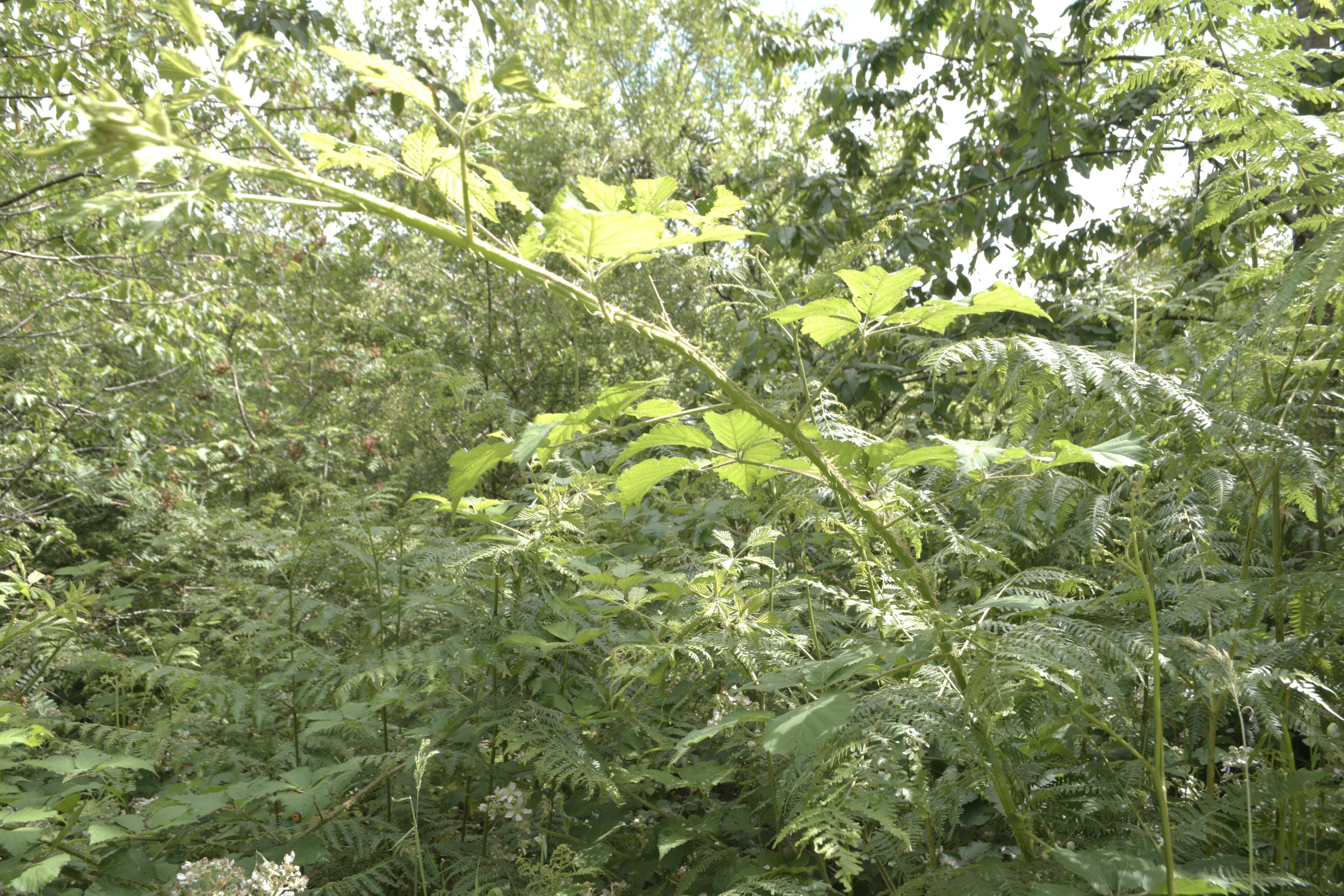
The cloud of buzzing flies that pursue us fails to reassure us that our local biosphere is healthy or that forswearing insecticides was a good idea. But counting birds does.
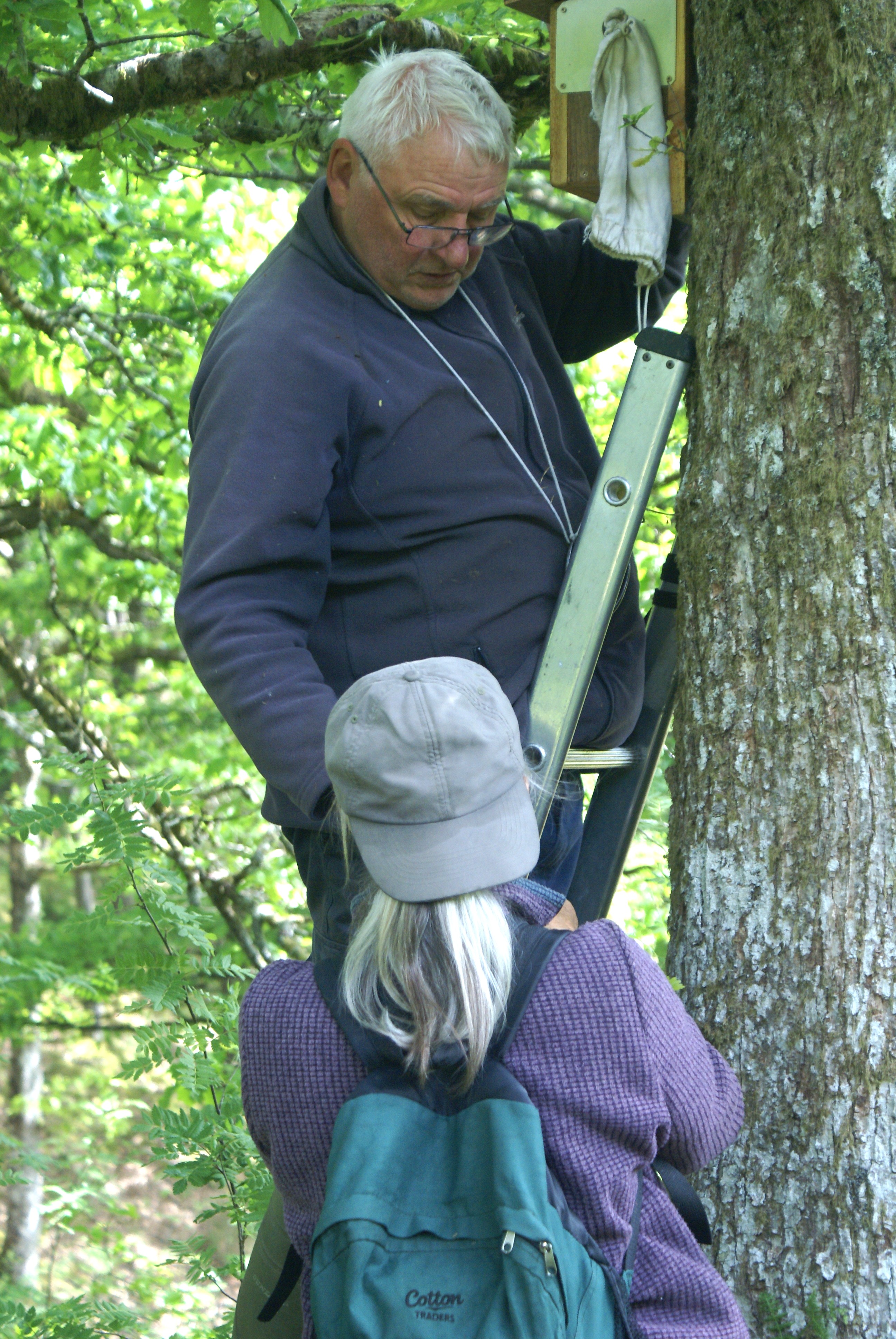
Jon and Jan

The stalwarts from the Habitat Protection group have made their annual visits and this year has been very good for blue tits — 52 chicks from 5 nest boxes. How’s’at for productivity! It represents a lot of caterpillars! Lots of work from this top-of -the-table, enterprising species.

A better year for our “target” species, the more endangered pied flycatcher. They produced 24 chicks from their 5 nests. Up 20% but one of their nests failed completely last year — we suspected a great spotted woodpecker. It’s harder for pied flycatchers as they are migrants and have to co-ordinate their arrival with the weather and the caterpillars, not to mention competing with the locals for nesting sites and finding each other again as the males arrive first.

Pied Flycatcher

There was only one nest of great tits but they produced 7 chicks.

Great tit fledgeling

Three of our 14 boxes were empty; today I noticed a great spotted woodpecker squarking a warning to its own fledgelings — wildlife is a balance.

They also ringed a treecreeper fledgling hopping about and keen to be included. They tend to nest in the holes between the roots of the oak trees and in the deep splits in trunks, we watched one earlier this year taking lots of spiders to a nest on the hill.

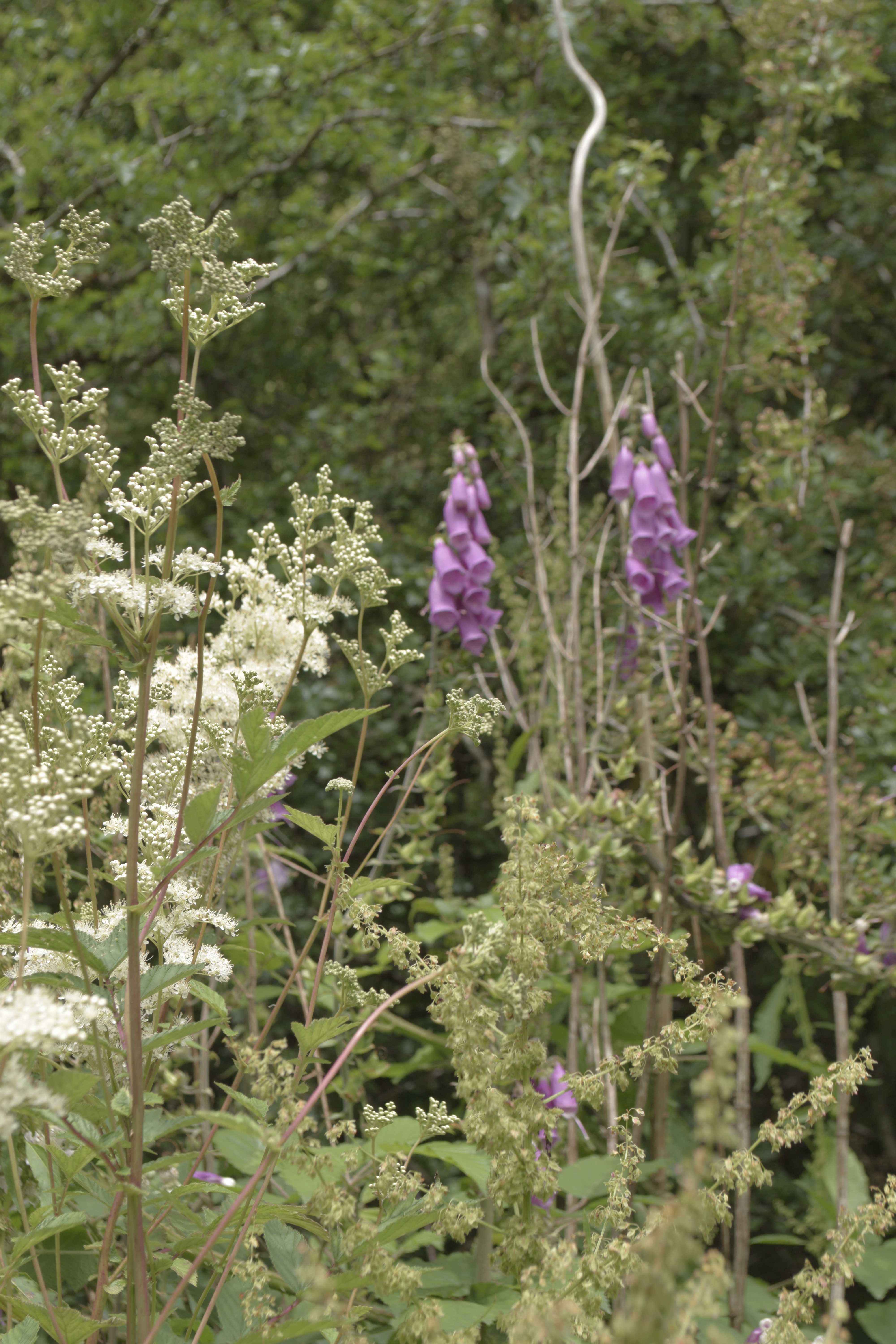
So, inspired by all this avian fertility, we bash on with re-establishing the tracks to maintain some sort of access to our wild areas and woodland and uncover the diversity that is appearing and a weighty crop of rowan berries and wild cherries that are already keeping the blackbirds and thrushes busy.
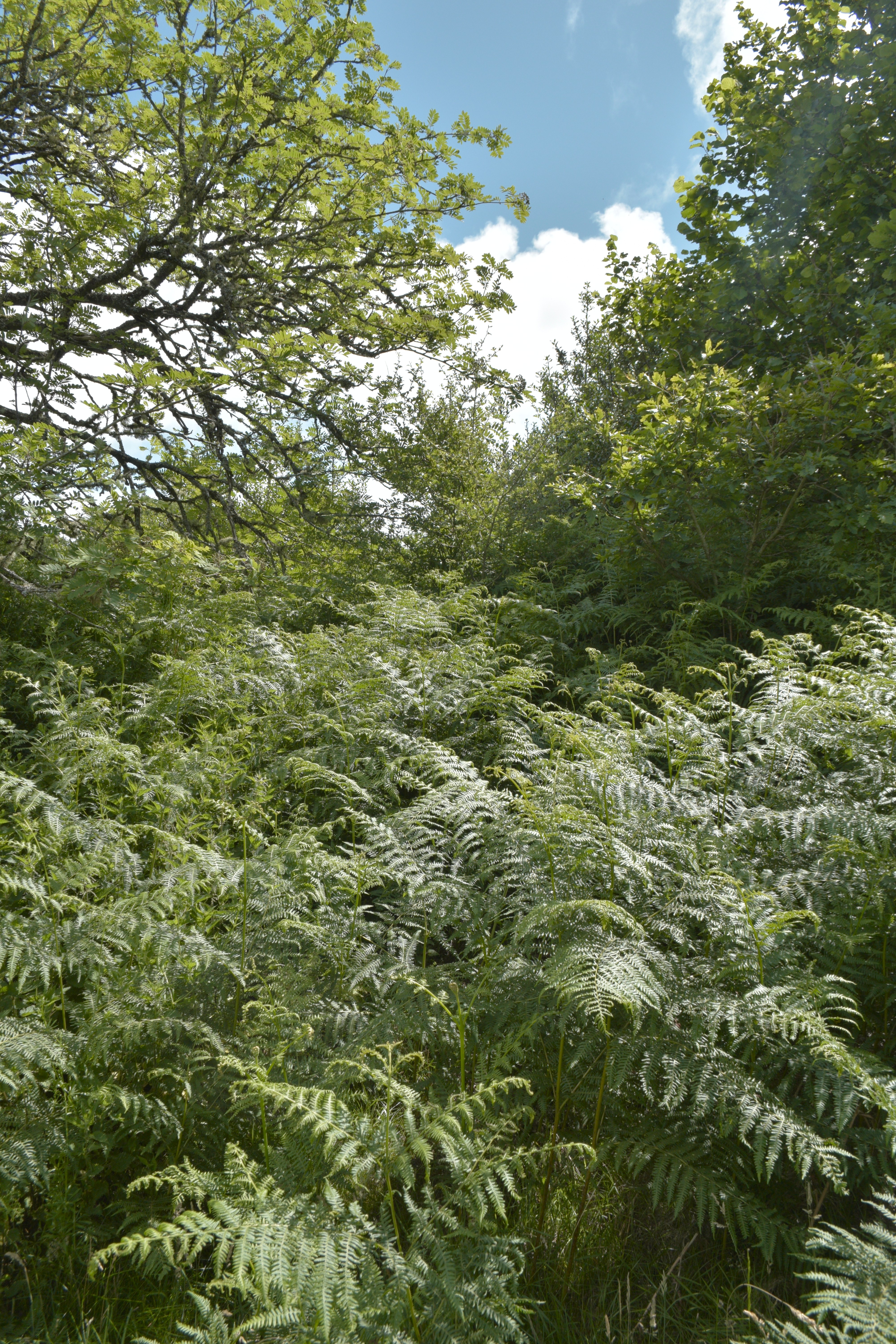
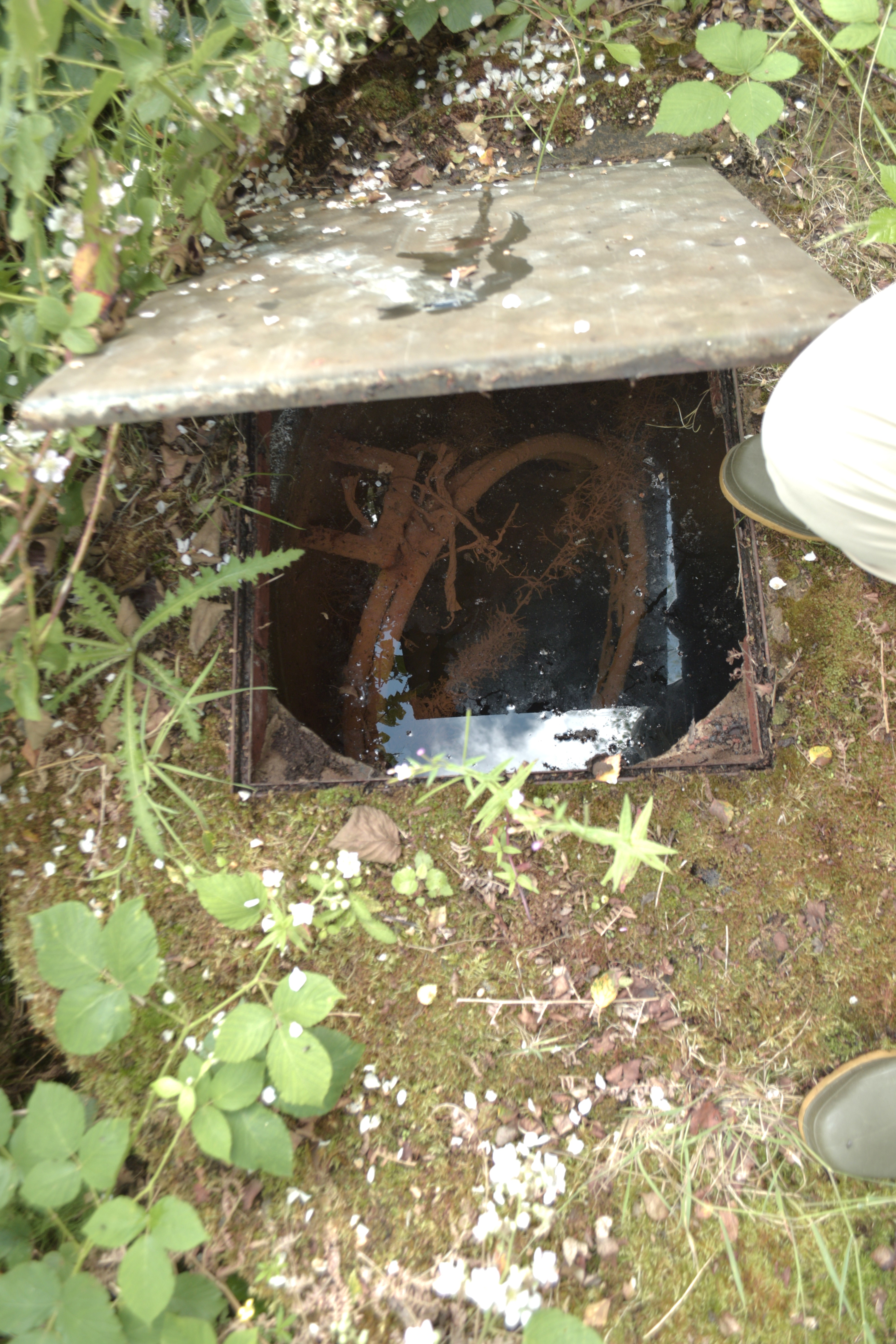
This is the time of the year when we regularly lose our well and it is quite important that we find it in its nest of horsetail ferns and overgrown by all this burgeoning diversity. Here it is and it’s full.

Standard
Birds, Butterflies, Moths

Spectacle in the far South!

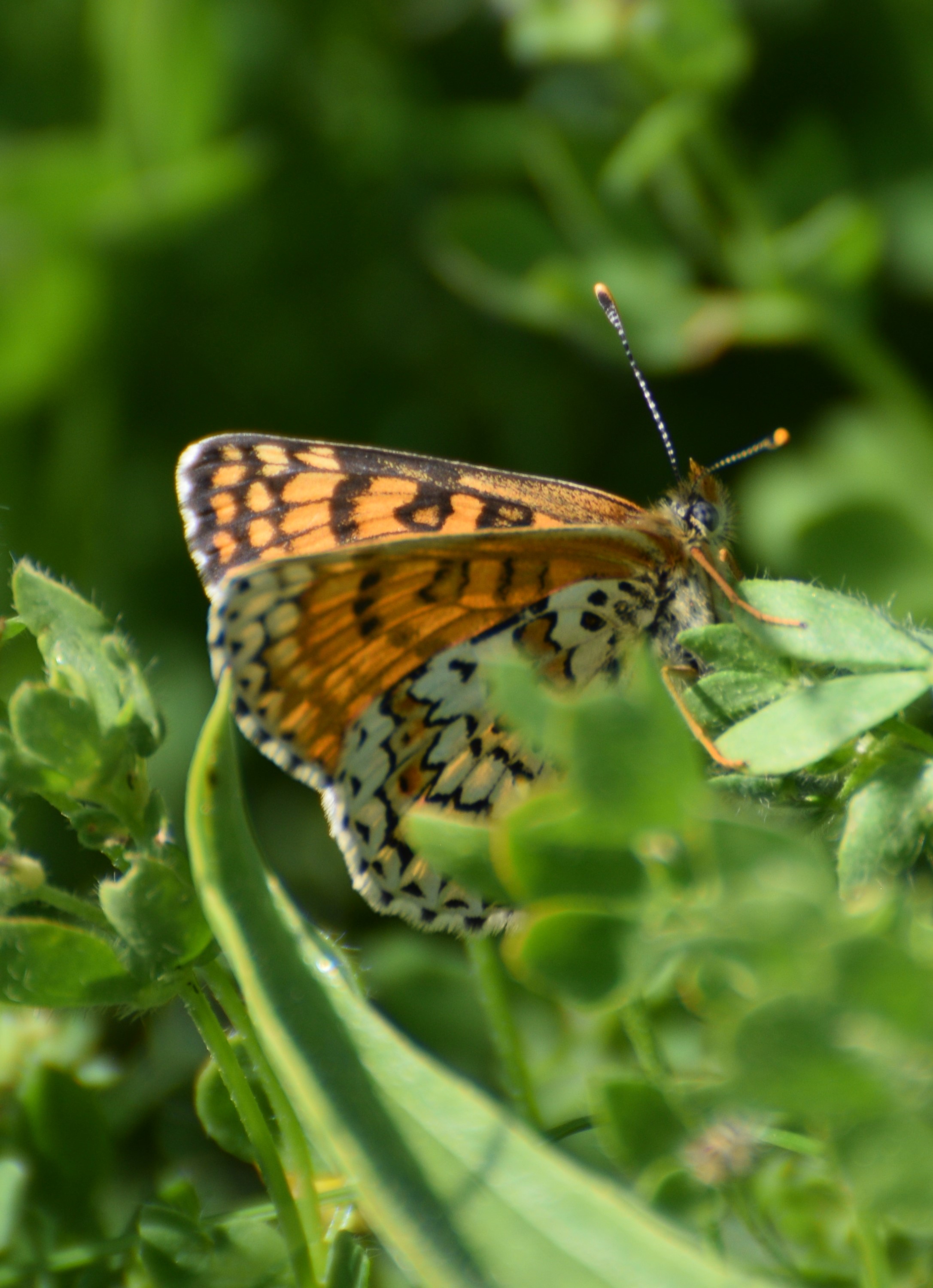
We recently visited the Isle of Wight on a butterfly hunt. The weather did not help much but one sunny morning did yield a few windswept examples of what we had hoped for.

Glanville Fritillary — not seen very often in UK, except in the Channel Islands, Isle of Wight and far south.

Underwing of Glanville Fritillary
A bonus — Caterpillars of Muellin moth — easily spotted because they had eaten nearly all the Muellin — they are so bright that I doubt they taste very nice!

The chalk downs are home to many plants that are unfamiliar to us in the acid West:

Bee Orchid
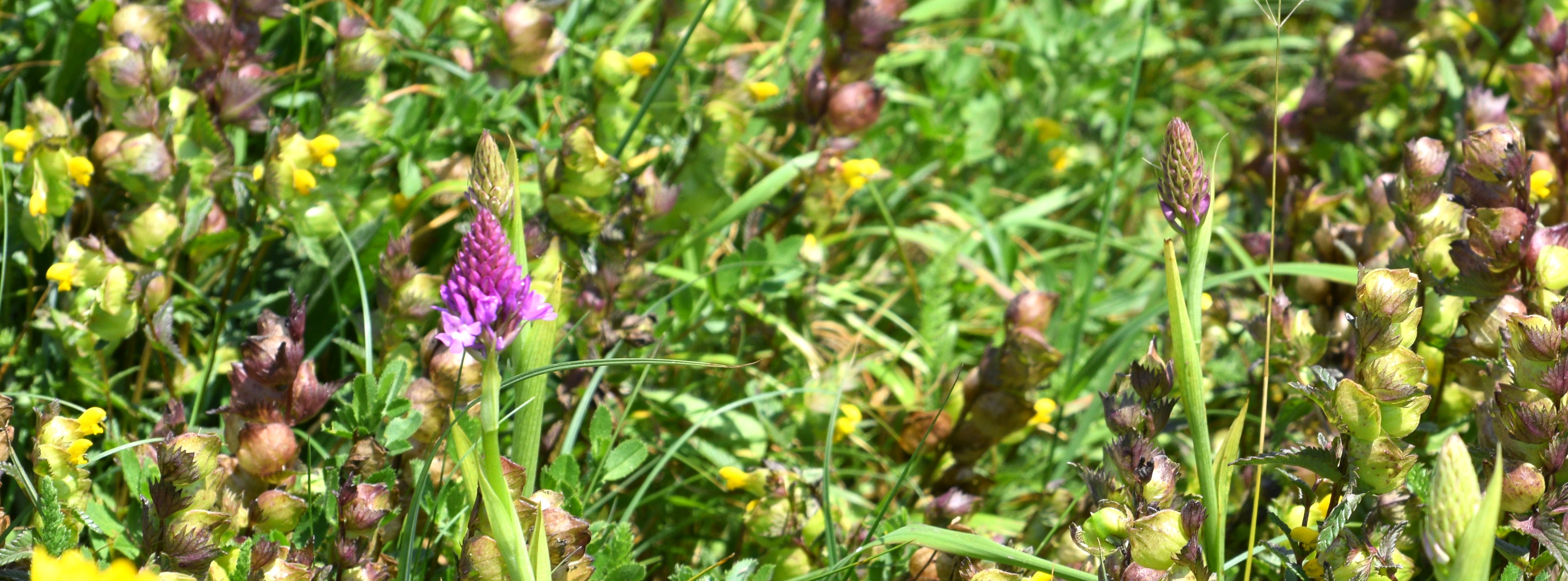
Pyramidal orchids amongst yellow rattle.
Broomrape

We kept our eyes open for white tailed eagles and had a good look at all the likely habitats on the island. At one place we spotted a large, dead, oak tree. As we were looking there was an avian kerfuffle with crows attacking a marsh harrier — we watched fascinated as the harrier returned to its nest among the reeds when suddenly a huge bird swooped down and attacked the harrier, carrying off something which may have been a chick. It carried it up into the oak tree and was almost immediately joined by its mate.

What a fluke, two white tailed eagles in an unpublicized nest. But that was not all — as we looked through the telescope — there was a chick.

Fuzzy image but definitely a chick! Because this may have been it’s first photo-call we have allowed time for it to fledge before publishing the image. What a privilege and adequate compensation for the bad weather!
Standard
Birds, Communication

Birdsong to herald the Spring!

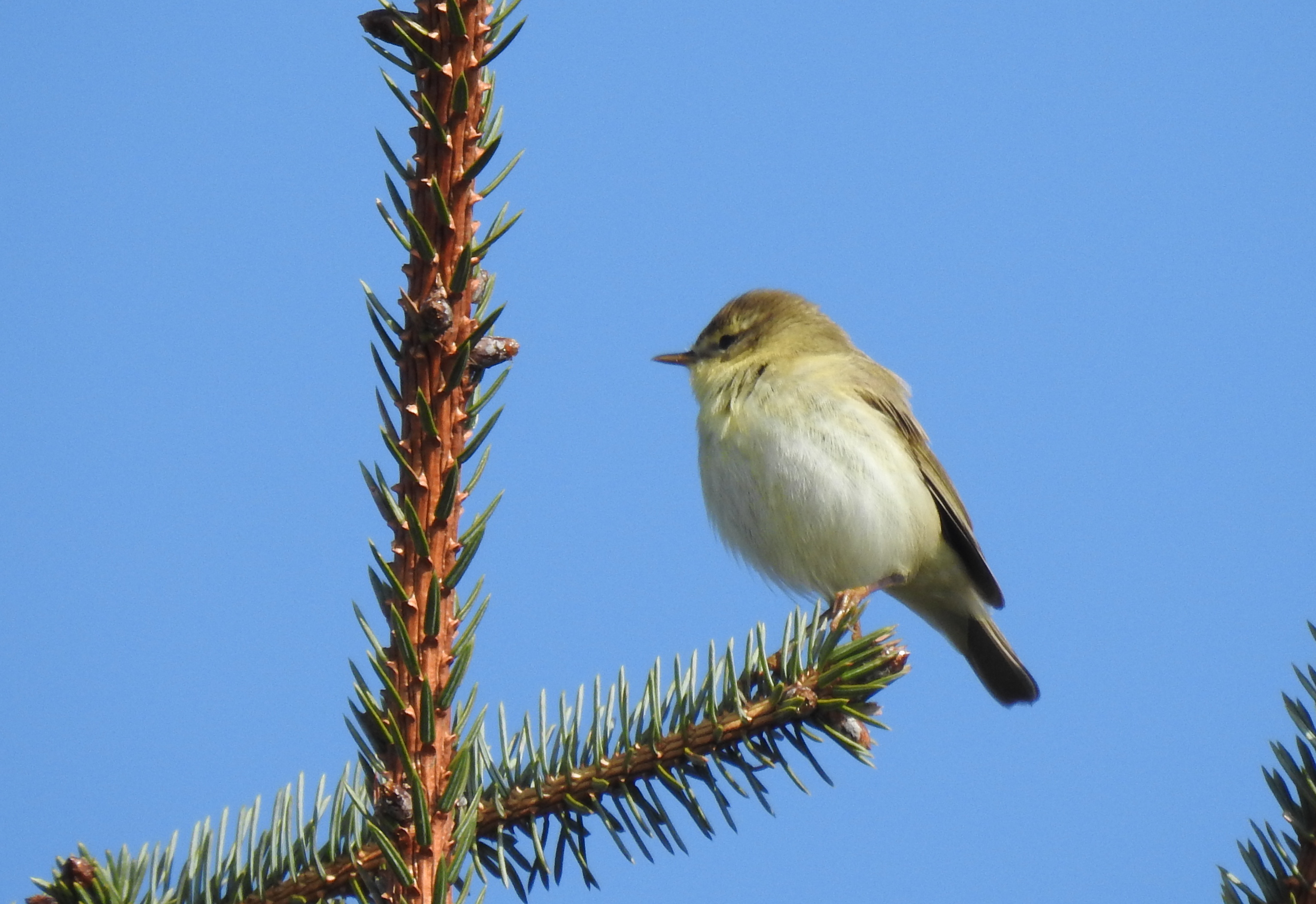
Common Whitethroat

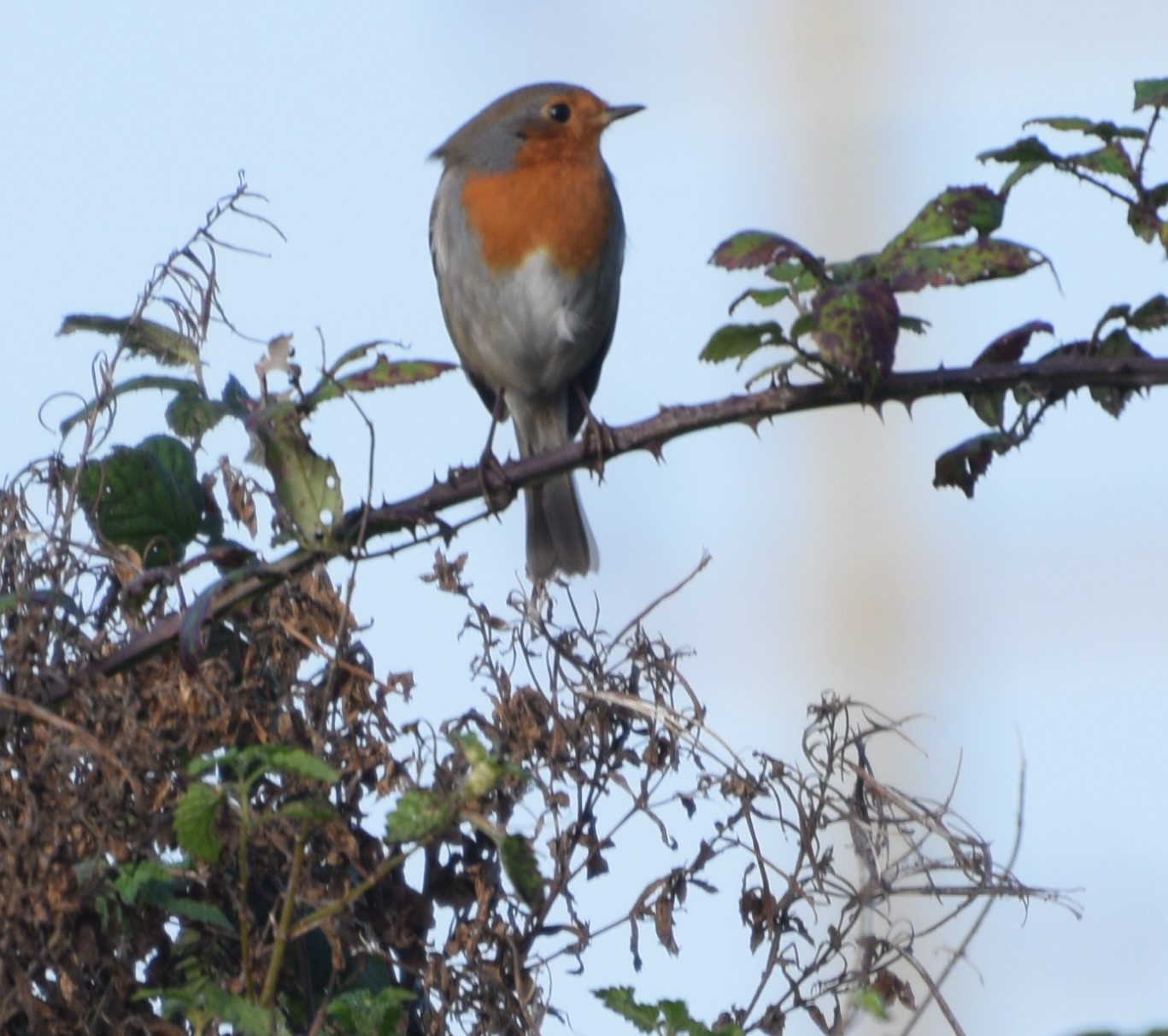
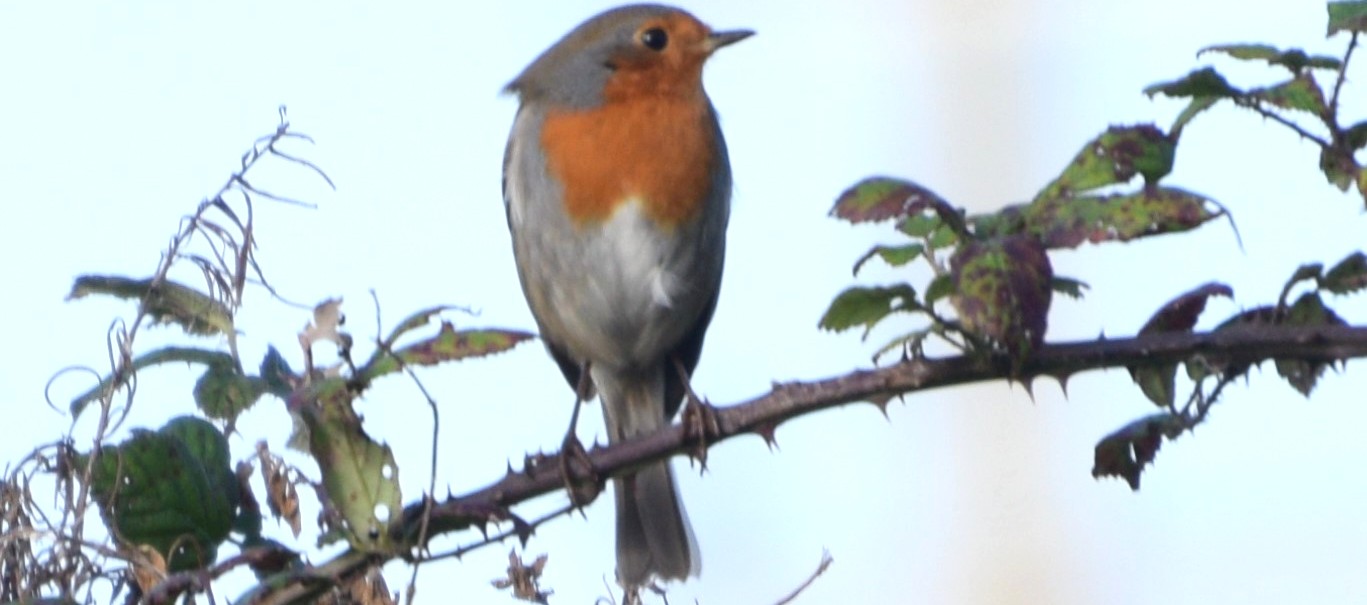
For the last few days we have rejoice in the sound of birdsong and been relieved that so many of our old friends have made it back from their winter quarters to boost the chorus of our native woodland dunnocks, robins and wrens.

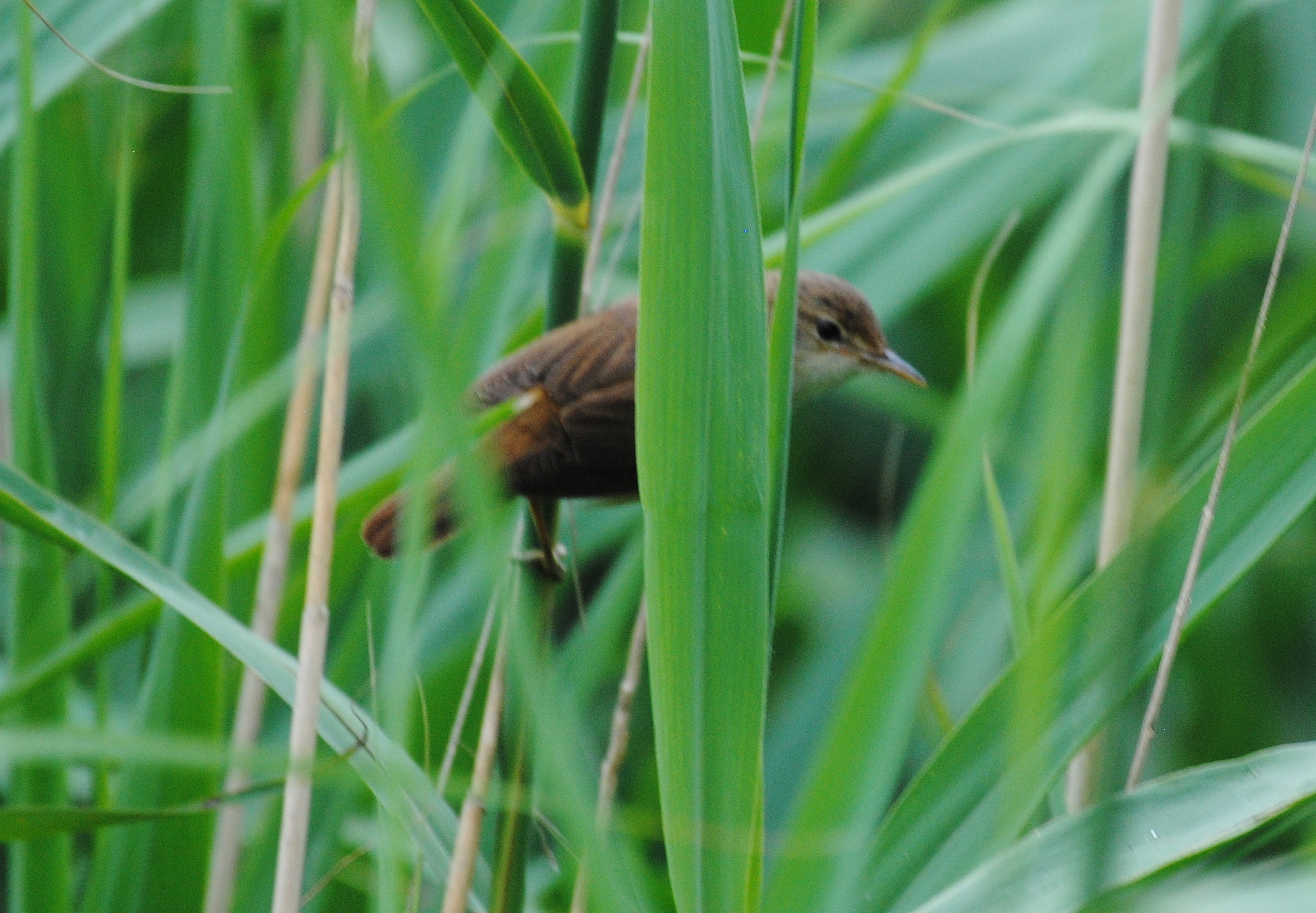
Suddenly the hedges are full of willow warblers in their minor key and the excited, raspy call of sedge warblers who suddenly throw themselves into the air, showing off to the female of his choice. Now the reed warblers join in with their lower, more guarded song. Evolution has taught them to conceal their location and that of their nest. Now they are all singing to attract a mate, all with their own particular refrain.

As you can see, to make things more interesting (with the exception of the reed warbler) they do not usually call from their eponymous habitats!

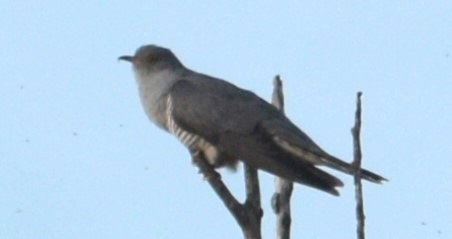
Everywhere we go we listen for the Cuckoo — this year everywhere we go we hear him. We hear him calling from all around but he flies always behind the trees so we cannot see him. This morning the sun was shinning and at last we saw one, here he is shouting from the highest branch, before taking off to advertise himself to the females on the other side of his large territory.

We heard a female cuckoo’s call back, said to sound like water going down a plug hole, to me it is more like the whinnying of a horse. She calls from cover while she stealthfully searches for the nests of any careless reed warbler or dunnock, who has given away her nest and left it unattended.

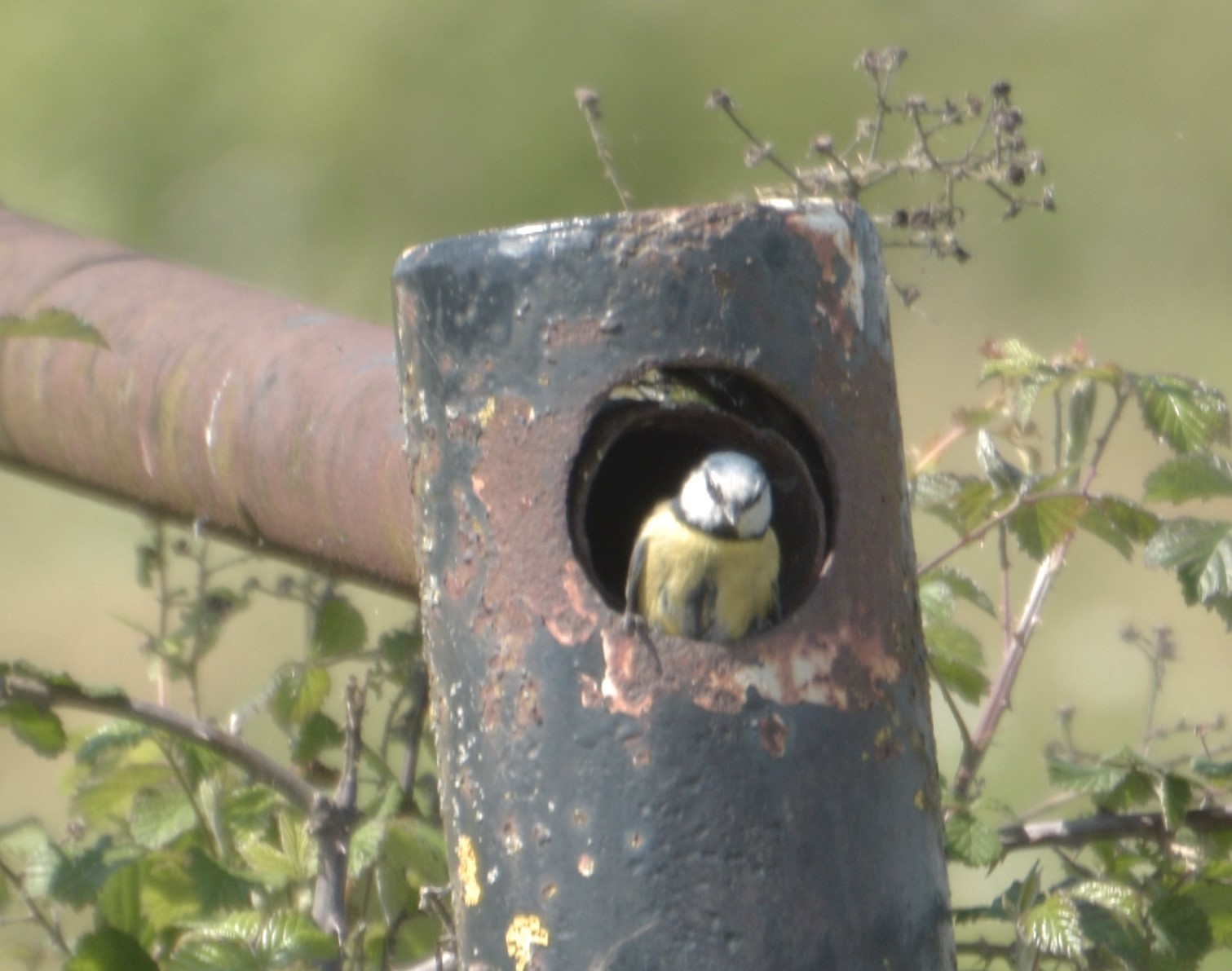
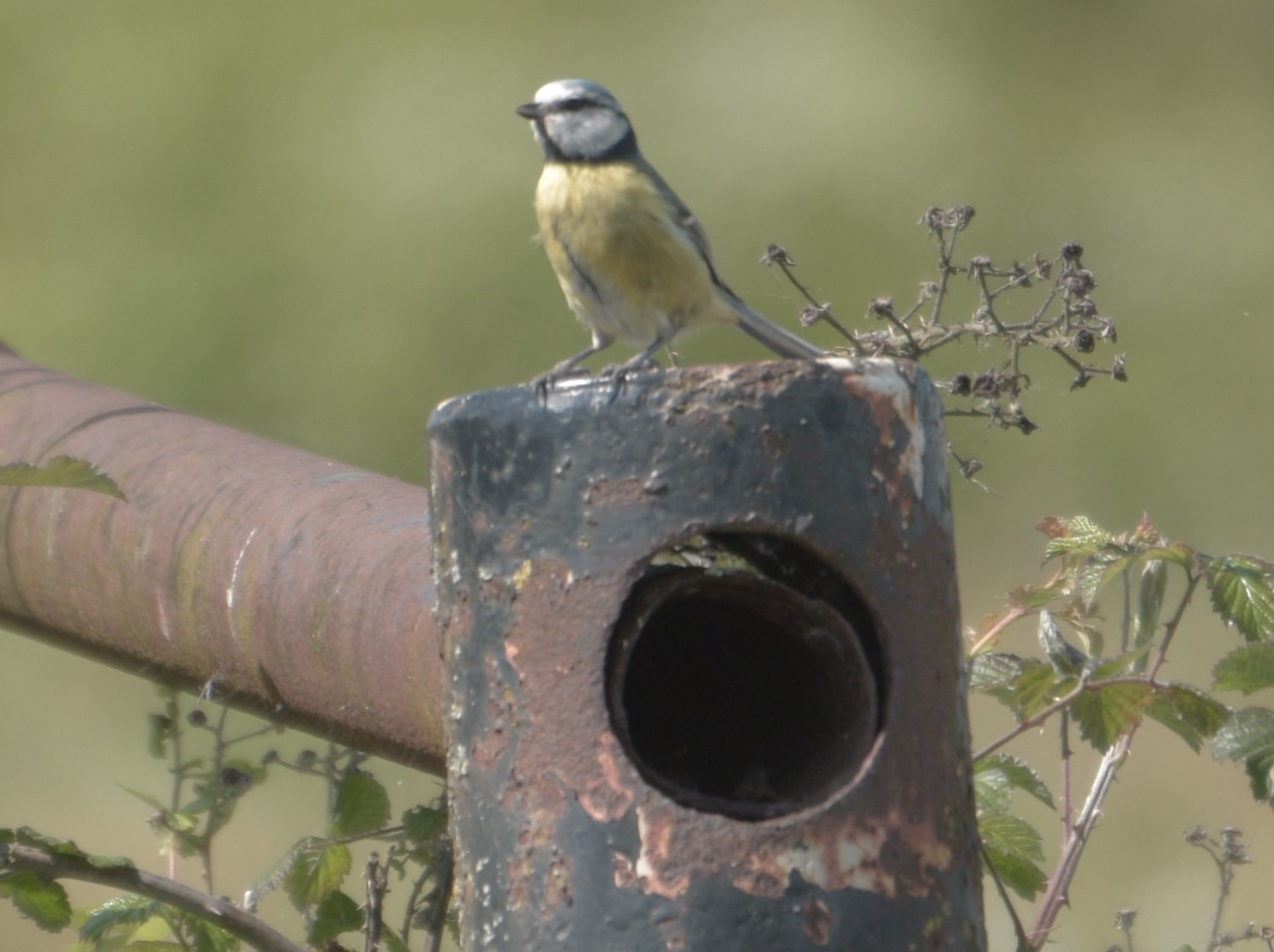
Down by the river we notice something swoop down and disappear into a hole — I stake it out with my camera. What is this?

A Blue Tit, nesting in a convenient rusty post.

One species is well ahead in the breeding stakes —

Tawny owl twins meet the world — sitting in the sun this morning.

Standard
Doggy, Hill Farming, Humour, Literature, Wales, Wendy Wigley

Iolo’s Revenge

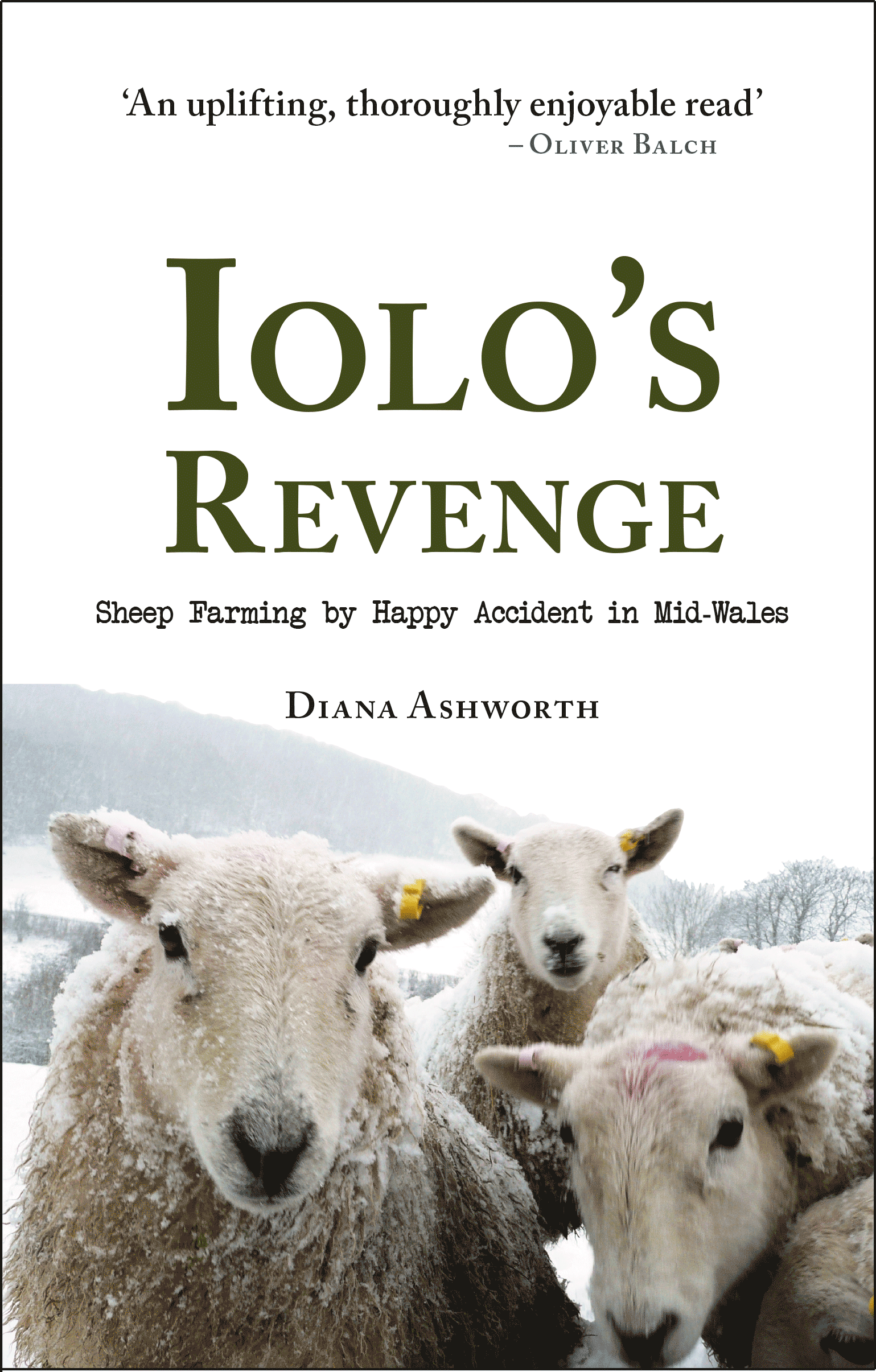
Iolo-cover2

‘They’ll do!  They are the ones I want’, said the old farmhouse, probably in Welsh, and the couple (the ones the old place wanted) were drawn into the life of the place — inspired by its beauty, its creatures, its moods and its stories.

My book, Iolo’s Revenge, Sheep Farming by Happy Accident in Mid-Wales, is published later this week by Logaston Press.  It tells of the abduction of an orderly, retired couple from Northampton to the heart of Wales.

They accidentally buy a derelict farmhouse and almost immediately are adopted by Pedro, a wayward hound.  They had been winding down for a quiet life when suddenly they are climbing on the roof in the midst of a terrible storm, grappling with a homicidal, mechanical digger and wrestling with a huge pregnant ewe in a freezing stream in the middle of the night.

They had never had any inclination to move to Wales or practice extreme farming, nor try to learn Welsh –yet life just takes over and before they know it they have discovered a sense of belonging and community lost since childhood.


IMG_20180305_0002

Iolo’s Revenge is illustrated by Wendy Wigley, a local artist who shares our love of the Trannon Valley and it’s often incongruous images!

SONY DSC Iolo’s Revenge ISBN 978-1-910839-24-9 £7.99 Available from Fircone Books, The Holme, Church Rd, Eardisley,  HR3 6NJ, United Kingdom.   Tel:+44(0)1544 327182

Buy today on-line from:Logaston Press


Standard