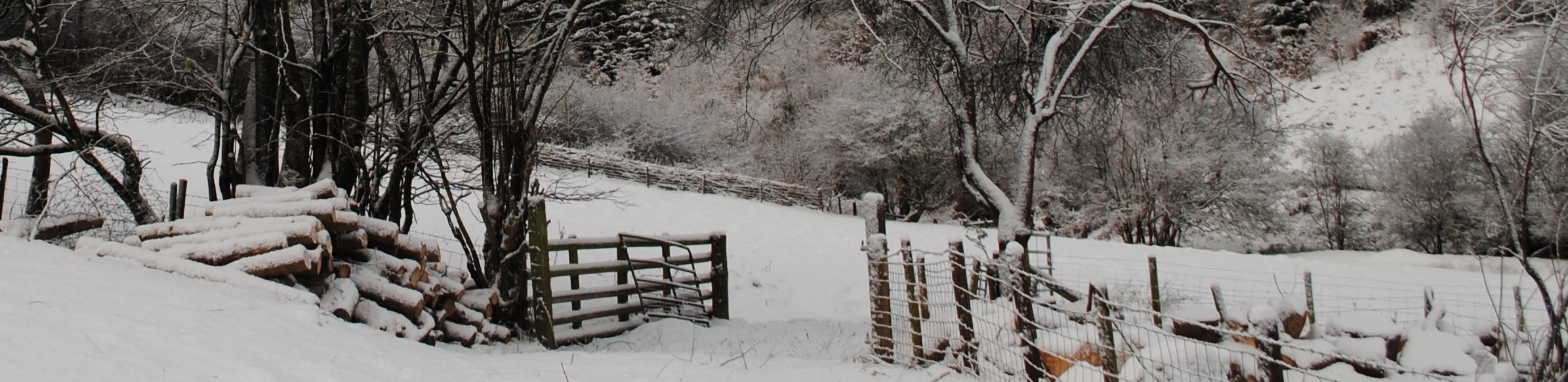
trees

Historic Trees

This cedar at Charlecote seemed particularly monumental, then I read about these trees in Mary Elizabeth Lucy’s autobiography. She lived there from 1823. The beauty of trees is that they have long memories.

and can remind you of days gone by. Like this chestnut tree at Hever Castle, home of Anne Bolyne
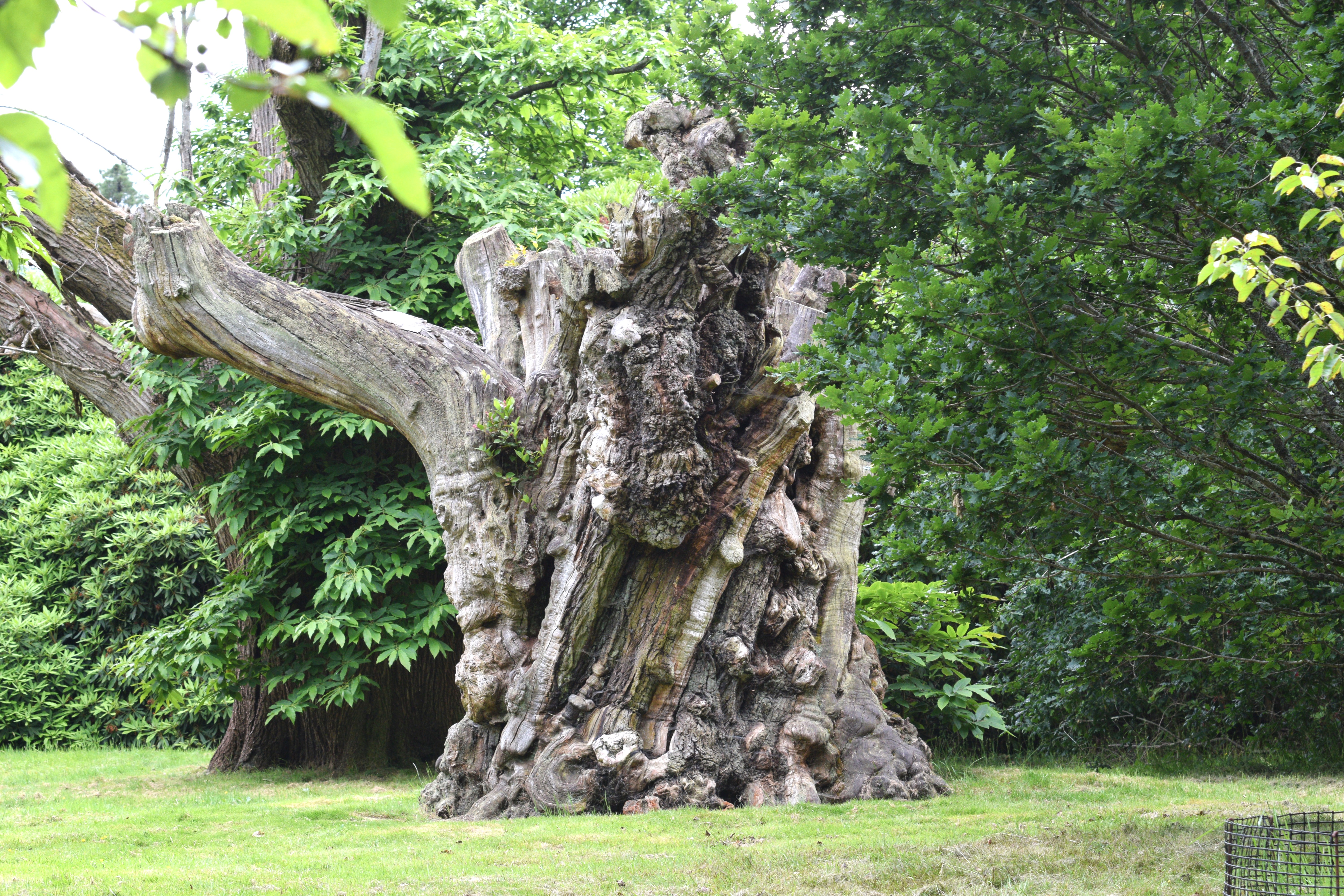
What tales it could tell; Henry VIII, cavorting in its shadow, but it is discrete, it looks away and stays mum, a survivor.

Here’s another survivor; a chestnut at Ightham mote, in Kent. You can tell its a sweet chestnut, even in winter, by its spiraling bark.
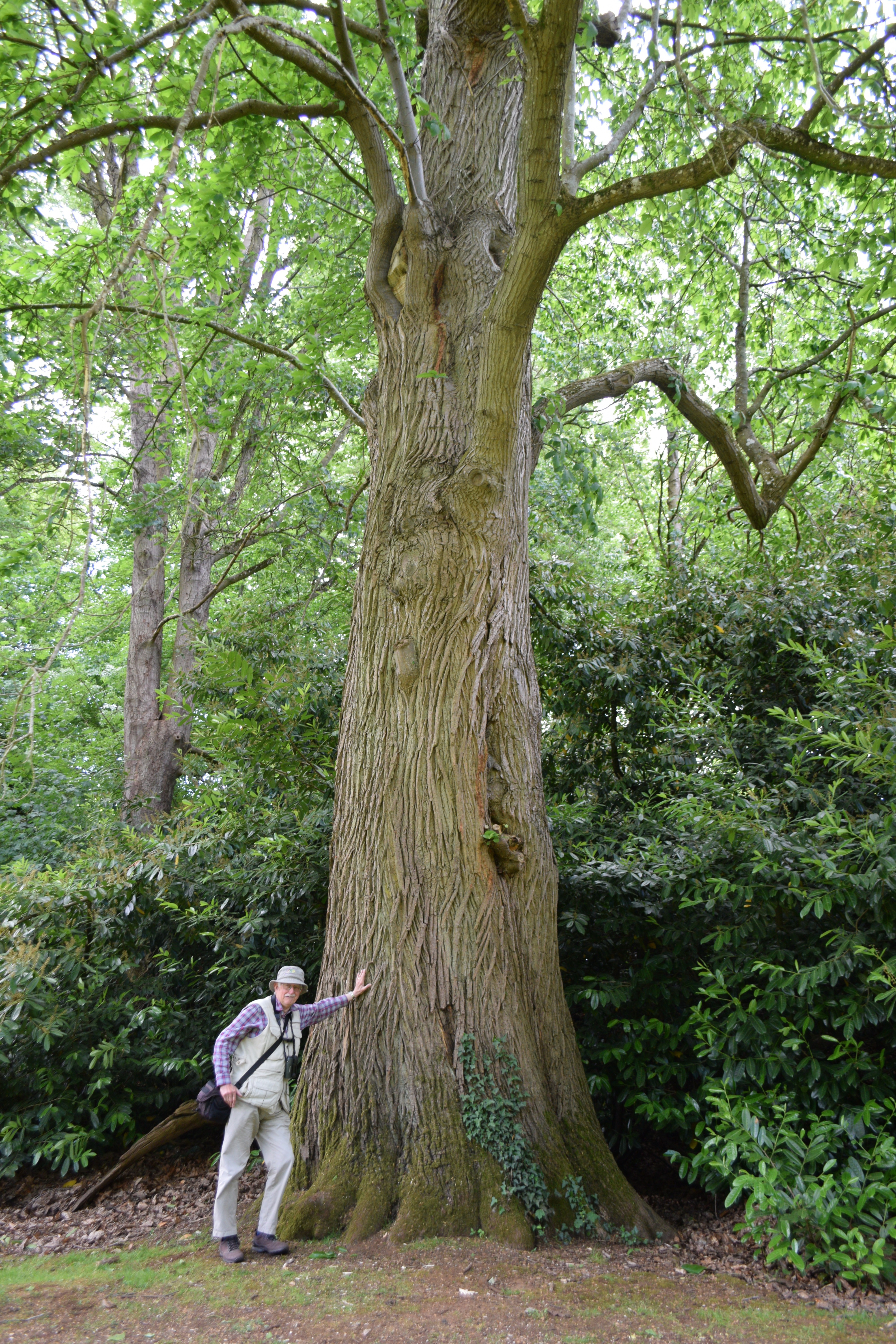
Here’s a relative youngster, not Bill, he’s there for scale — another chestnut, this time at Upton House. The heritage trees at National Trust Properties can be huge but don’t get the attention from visitors that they deserve. It’s usually on the way home that I wish I had brought my tape measure to record their girth and try to work out their age.

Monterey pines at Plas Newydd on the Anglesey bank of the Menai strait, only about the same age of me, but beautifully lopped by the tree surgeons of the National Trust, to grow straight and tall and strong.
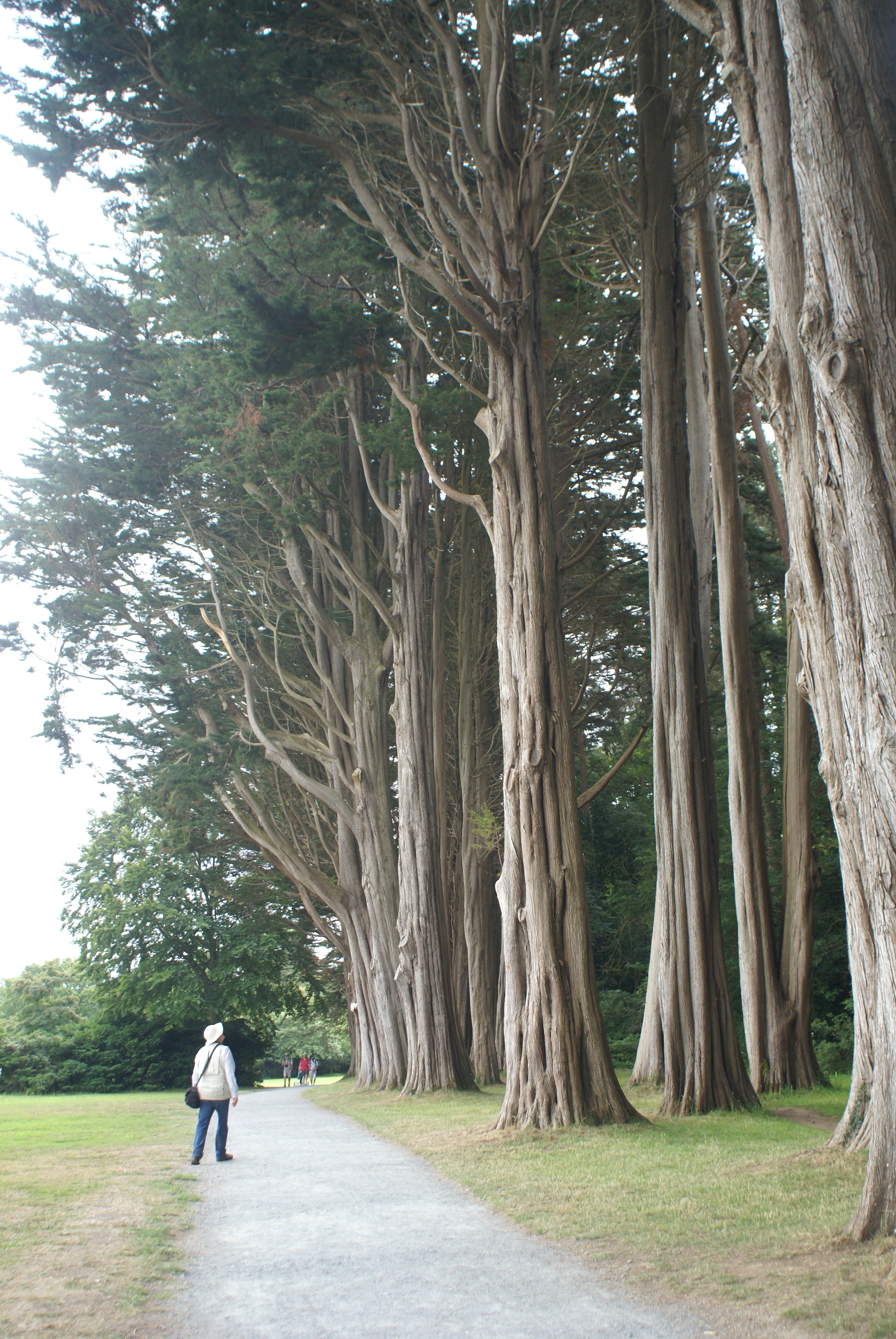
So few of our trees have the room to reach their full potential — or our hedges, for that matter!

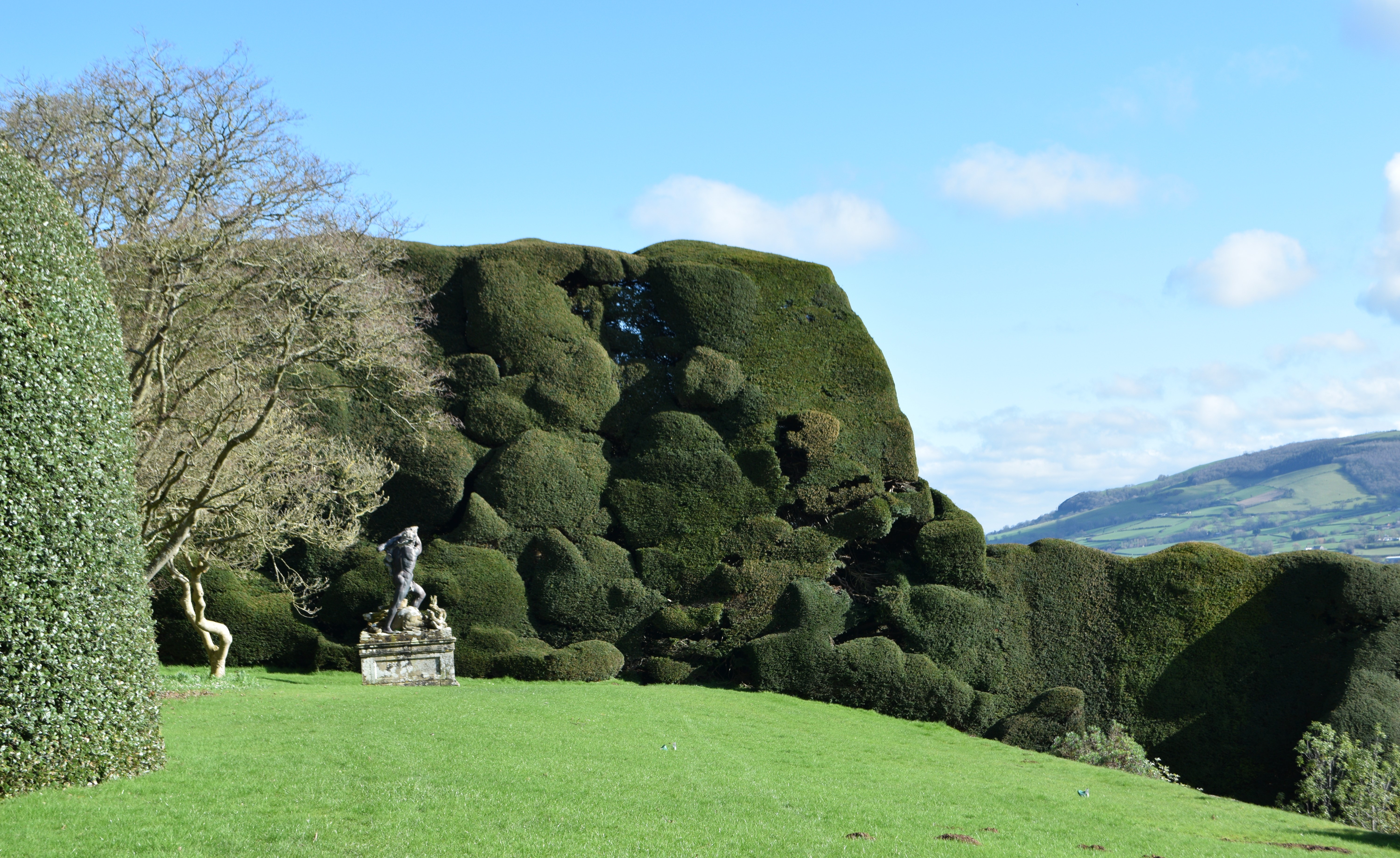
Here’s a hedge with attitude. Yew hedge at Powys Castle.
Standard
Architecture, British history

Powis Castle

It has been very wet of late so when we have a sunny day, we drop everything and head off for a day out!

The Castle is famous since the injection of cash it received indirectly from Clive of India when his eldest son, Edward, married Henrietta Herbert, daughter of the Earl of Powys. The Herbert family were at the heart of the British aristocracy but had fallen on hard times. Edward’s father, Robert Clive was a sort of eighteenth century, colonial oligarch. He had had a brilliant career in India as an administrator of the East India Company, a soldier, politician and adventurer — accruing considerable celebrity and wealth which is just what a medieval castle needs!

Because of it’s association with Clive, I had always thought it dated from that period but I was quite wrong. It was built way back, by Gruffudd ap Gwenwynwyn, a prince of Wales, in the 13th century to defend himself against the princes of Gwynedd — it is one of the few surviving properly Welsh medieval castles. Most of the now famous ones were built by the English King Edward I to keep the Welsh princes in order.

It commands a magnificent view of the country around Welshpool from the terraced Italianate garden.

It is famous for its monumental and historic yew hedges.

The castle is packed with amazing furniture and art works which, sadly, cannot be photographed. There are paintings dating back to Tudor times — well worth the visit.

I was very impressed by the tasteful and historically sensitive lady’s lavatory.

As Bill was by the athletic lady outside the cafe who appeared to be drinking a yard of ale!

Standard