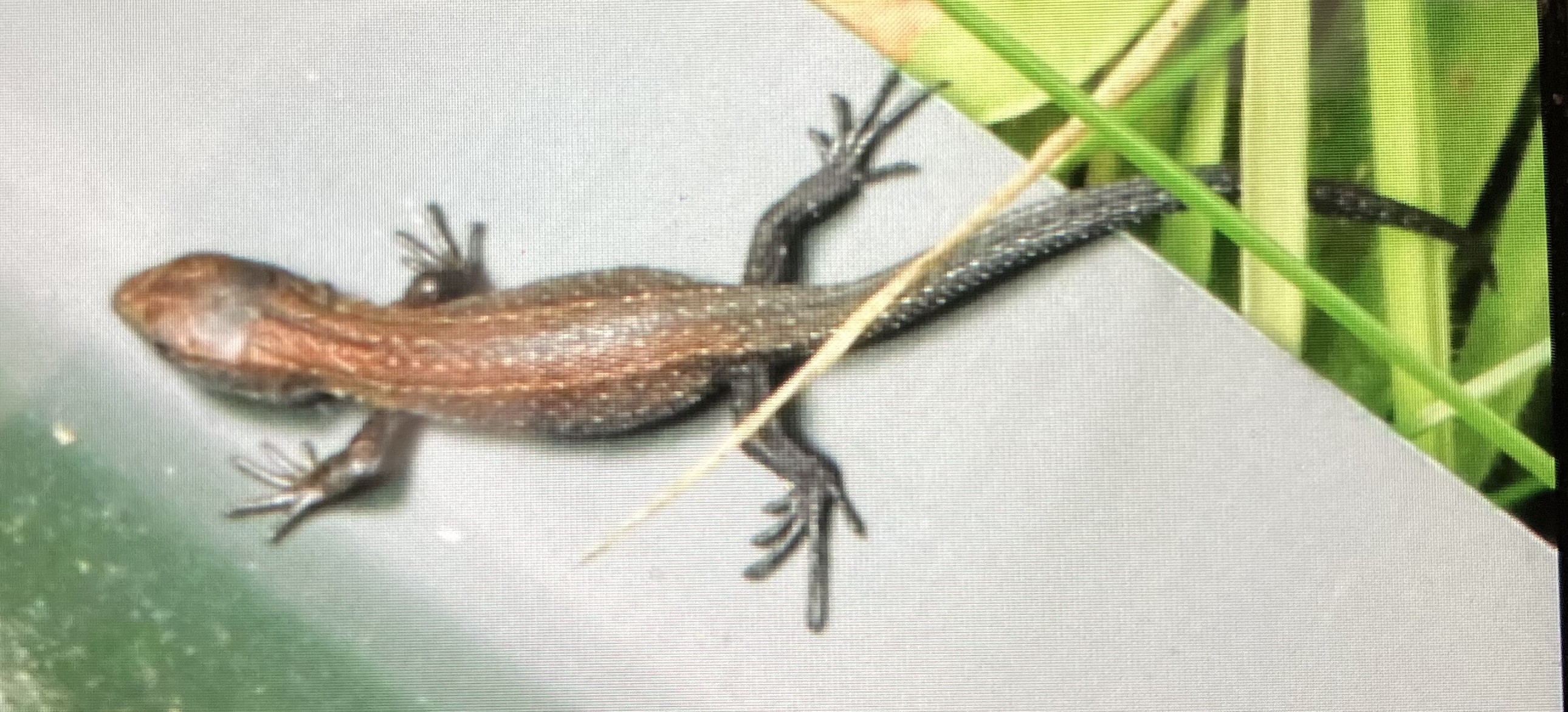
For the first time ever we are aware of baby lizards — tiny black skittering forms disappearing under the compost heap by the pond when we approach — here is one very magnified basking in a short period of sunlight today.
We have put out a piece of corrugated iron by the pond which they seem to like!
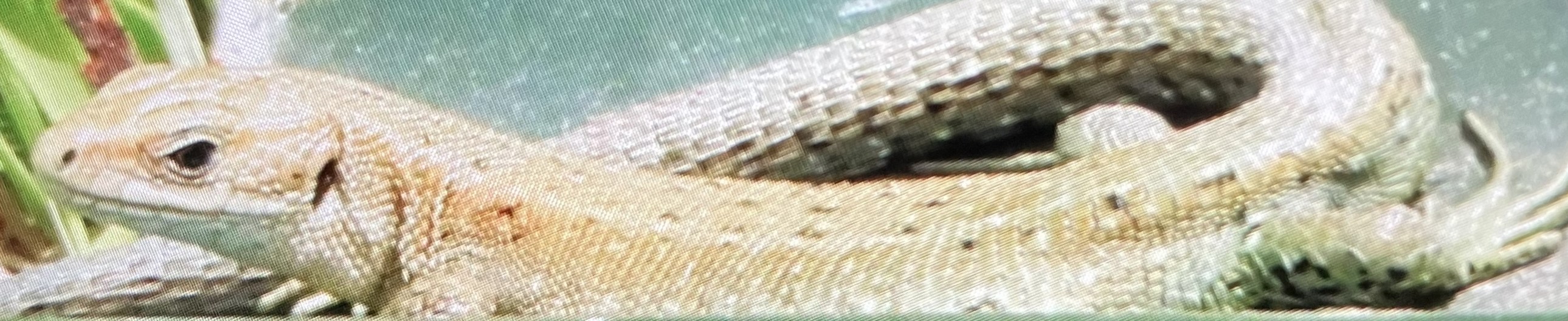
Maybe this is the mother of our little chap — enjoying the corrugated which was intended for slow worms (no sign of them yet!)
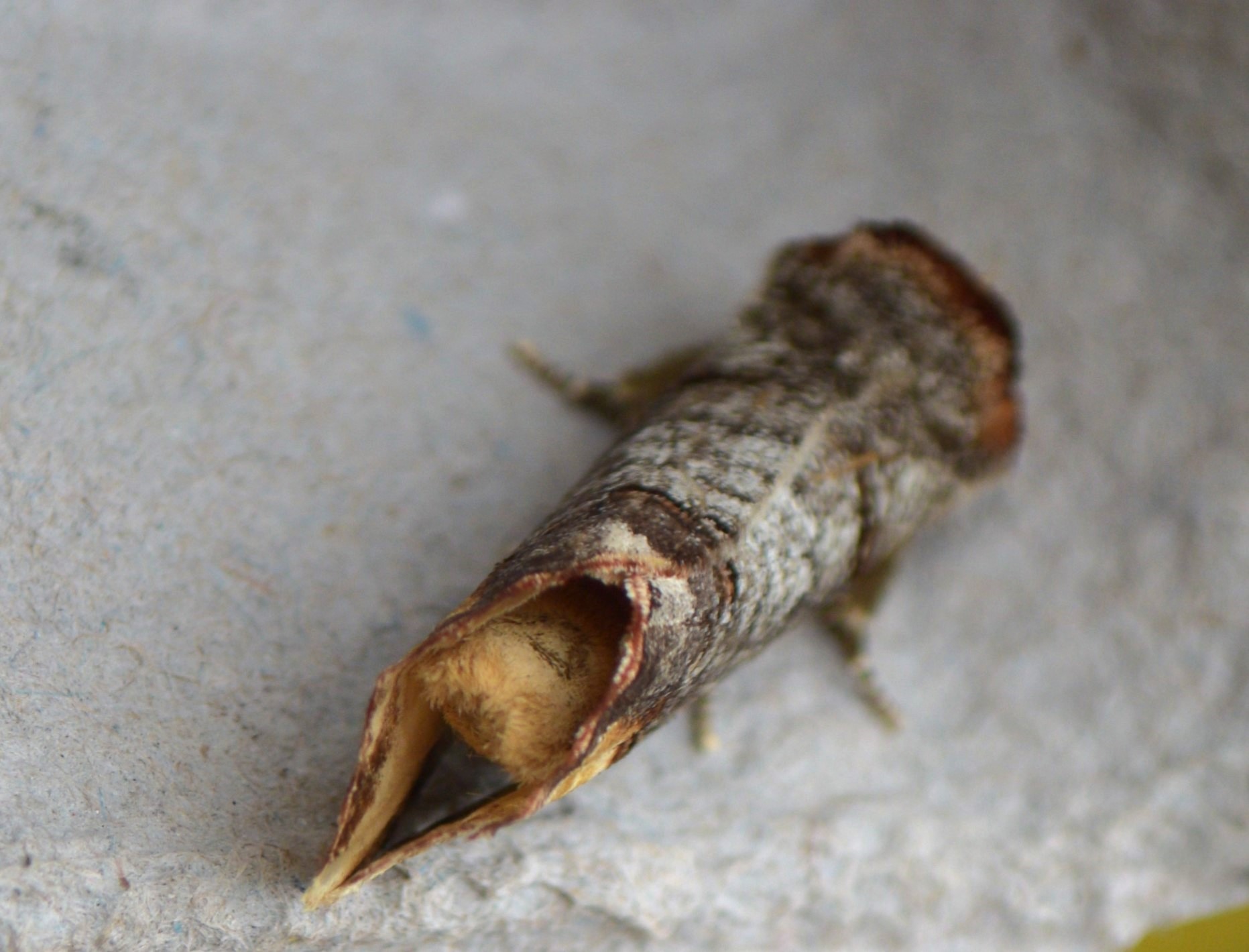
It is amazing what is fluttering around the house in the dead of night. Here are some of the most spectacular.
This elephant hawk moth is not uncommon. Why is it so pink? Well, the food plant of its caterpillar is the rose bay willow herb which has had a very good year and the foliage is flecked with the same pink as its flowers and its moth! The moth doesn’t look much like an elephant but it is relatively large and the markings on its shoulders could be seen as like large ears… maybe.
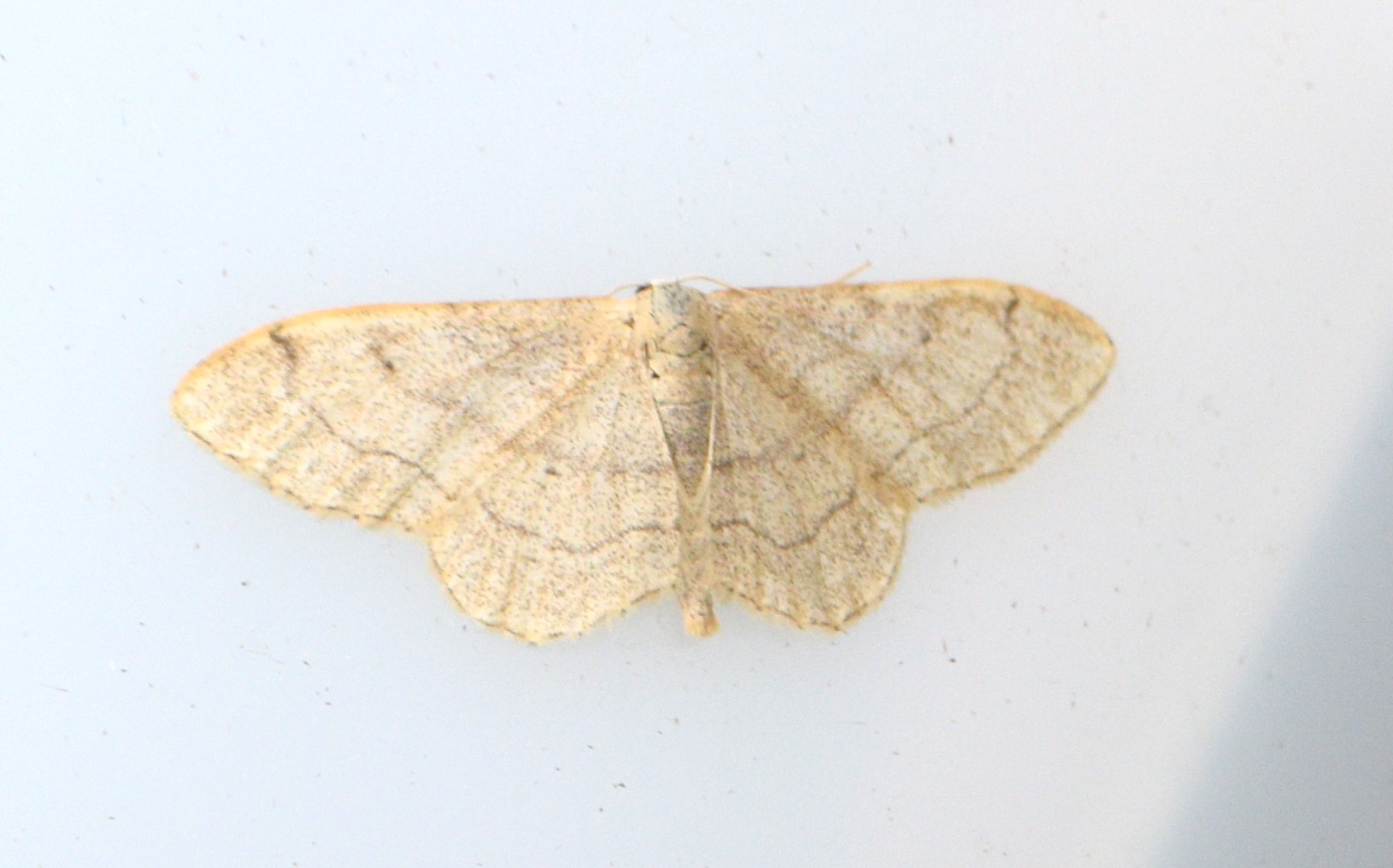
The riband wave moth is one we catch most nights, there are two forms, we are getting the remutata variety, shown here. Their caterpillars eat various plants like dandelions and dock — the docks have also enjoyed the conditions this year.
Another beautiful moth is the light emerald, Campaea margaritata. Its caterpillar eats the soft bark of some deciduous trees, including apple and plum, which might explain why one of our apple trees is looking so peaky.
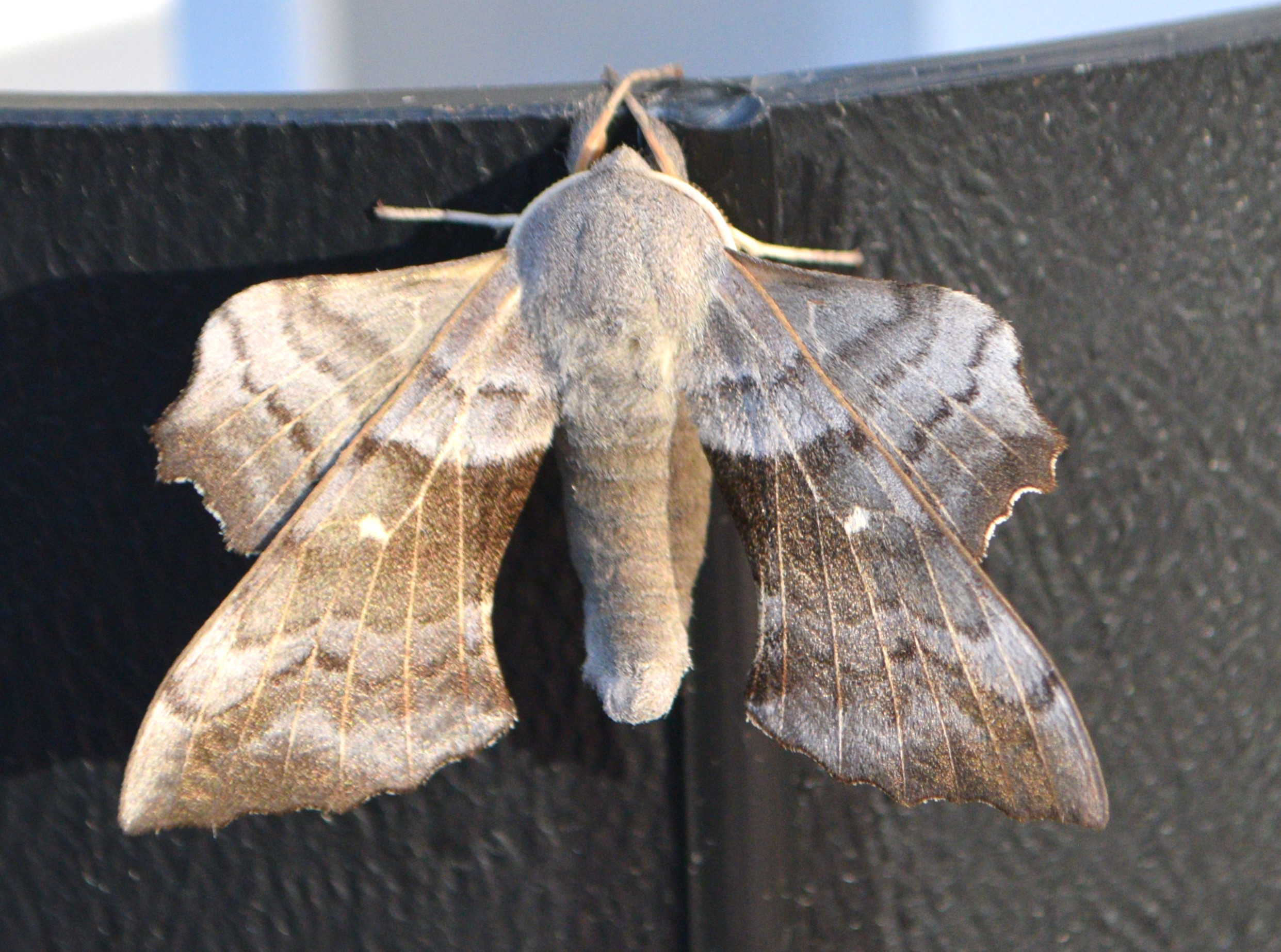
Here is the largest so far, the poplar hawk moth Laothoe populi. Its wingspan is 7-10 cm and rather than having its fore and hind wings linked together, like most moths, these are separate so that, at rest, they lie at different angles and look like a group of dead leaves on the poplars and willows trees that they favor with their caterpillars.
But there is a downside to moth trapping which I say as I try not to scratch my itching face!
Midges! It has also been a very good year for them!
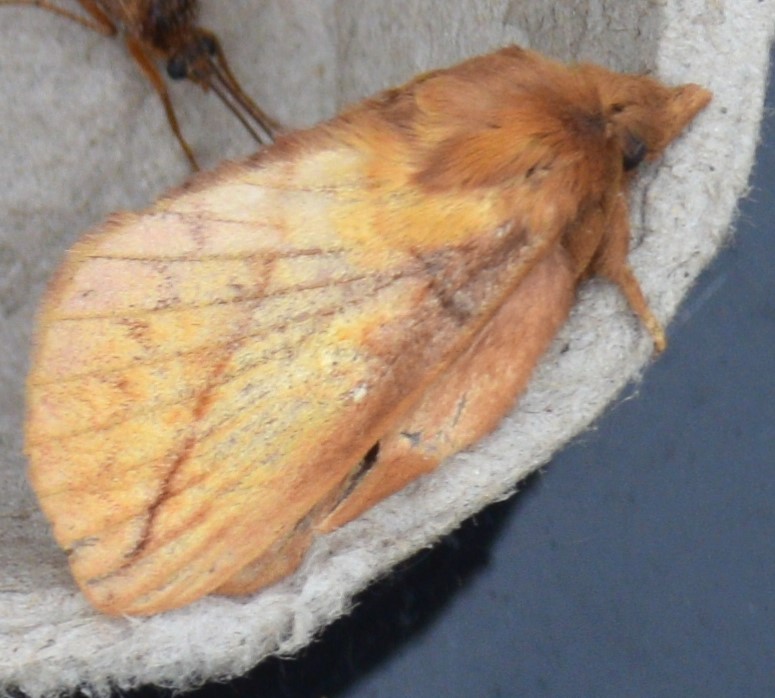
This drinker moth is perched above a sea of dozing midges which swarm up to suck the blood of the lepidopterists!
Here’s a better shot of the Drinker with the ubiquitous caddisfly lurking behind.
We catch almost as many caddisflies as moths — they are not as glamorous as moths but are a good health marker for the environment. Their larvae are aquatic and our stream is pure, we see lots when we pond dip, and they will be providing food for our growing brown trout.
A couple of years ago we saw 20 storks flying over the Lizard in Cornwall looking for a land route to Europe on their way to Africa via Gibraltar — they don’t like flying over sea if they can help it! At that time we were so excited that the photos were accidentally deleted! Ever since we have promised ourselves a trip to Knepp in the South to see the storks that nest there.
This year we set off. We couldn’t find the place — we were lost! Then suddenly, above us–
we realized that we had arrived!
Bill remembers, before their reintroduction in 2020, the last stork to nest in Britain was on St Giles Cathedral in Edinburgh 1416. They lost habitat and were hunted to extinction.
They have been re-introduced to Knepp in West Sussex, also to sites in the Cotswolds, Essex, Surrey and Wadhurst Park in East Sussex.
Knepp is a large estate that is being re-wilded. You can read about it in Isabella Tree’s book Rewilding.
We had a glimpse of their long horn cattle but, not exactly free ranging in this part, and no sign of the wild boar or beavers but it is a huge place an we only saw a small part! We are still looking for a turtle dove.
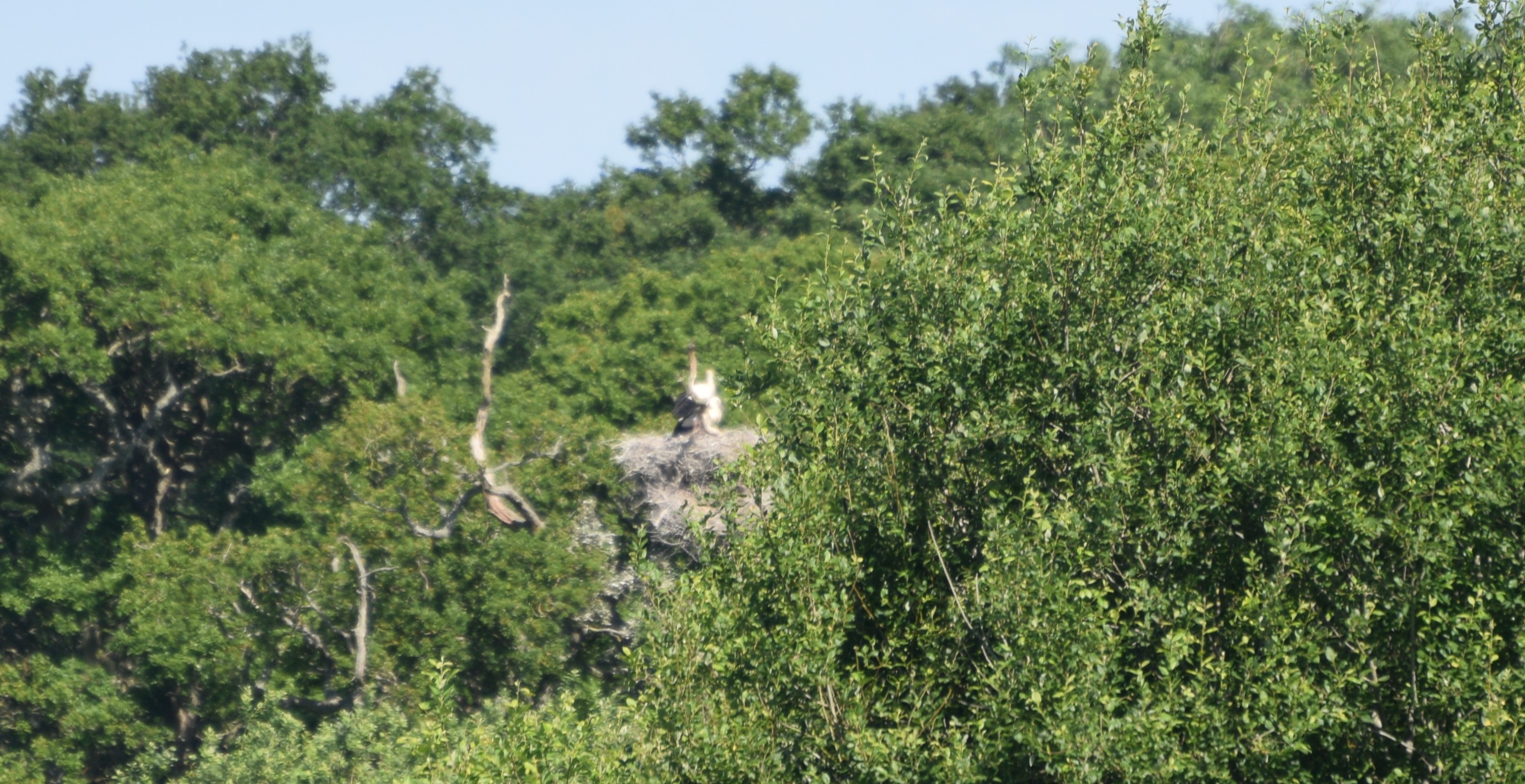
We sat on a rise overlooking the estate where we could see a stork nest.
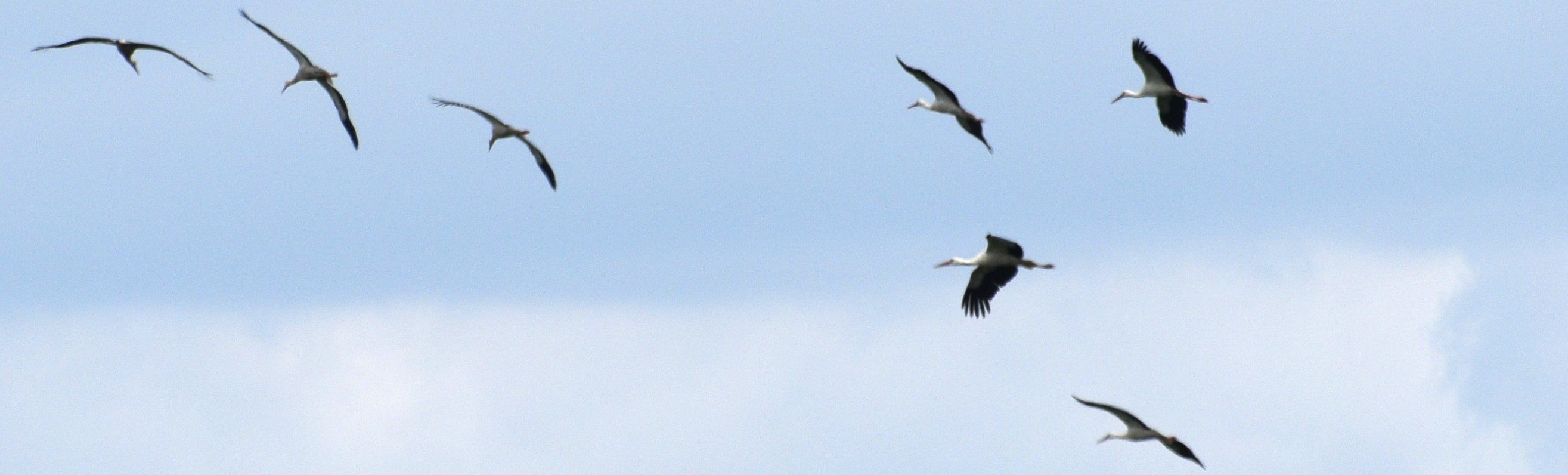
Early in the afternoon there was an eruption of storks taking to the sky — seemed they were changing the guard on all the nests at the same time! Last year 26 storks fledged from 11 nests — it looks as if there will be more this year!
Spectacular birds.
Very interesting experiment in re-wilding, and it is all relative, compared with where we live the small part that we were able to visit on foot, seemed pretty tame! But it was enough to see that it is a spectacular exercise in diversification of farming — loads of visitors, efficiently managed involving minimal staff. They basically ask for a donation for parking and you can walk on the foot paths through the estate. We didn’t take any of the guided tours on offer which are not cheep, nor stay in any of their eco-accommodation — I’d be interested to hear feedback from people who have.
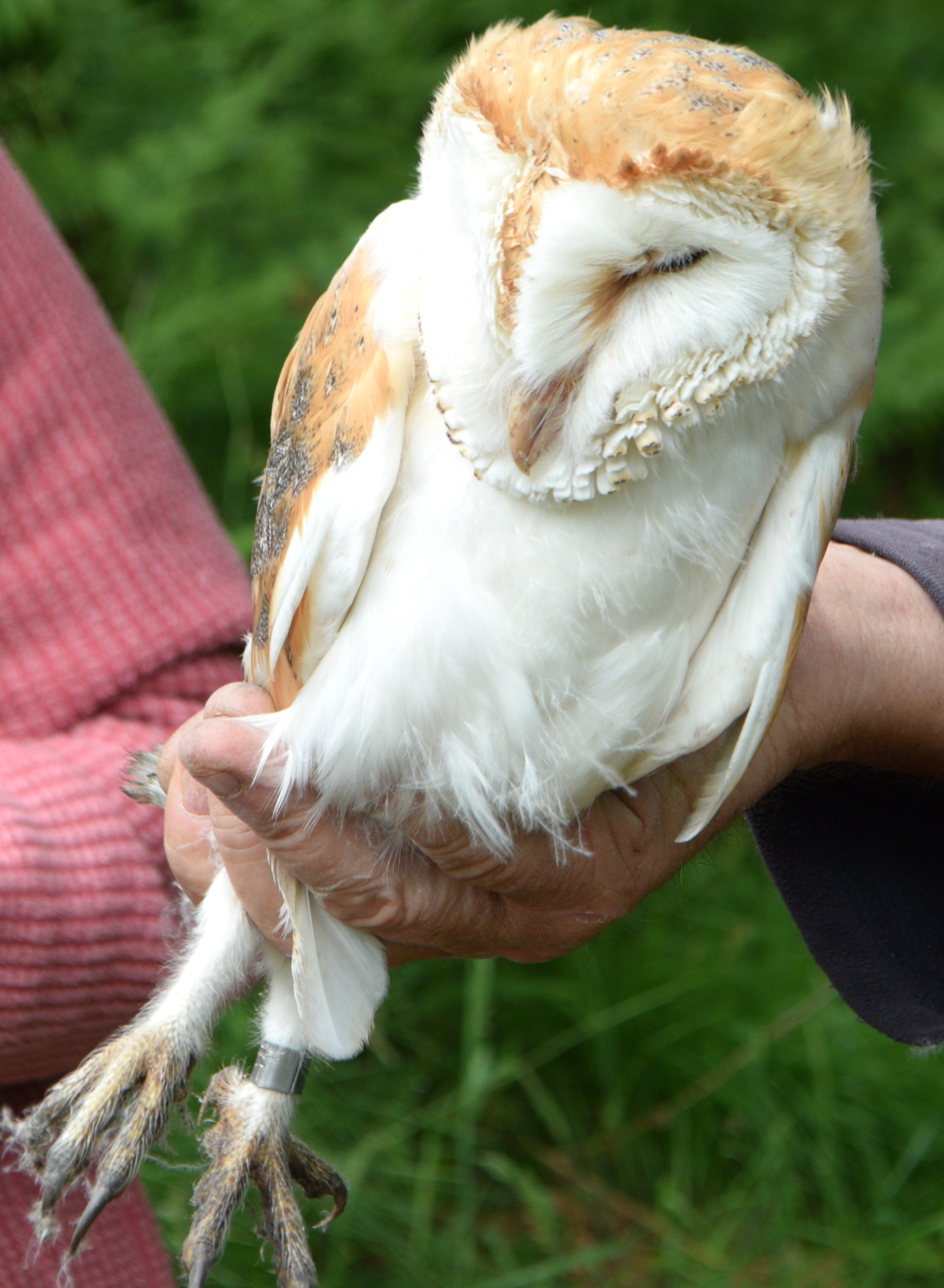
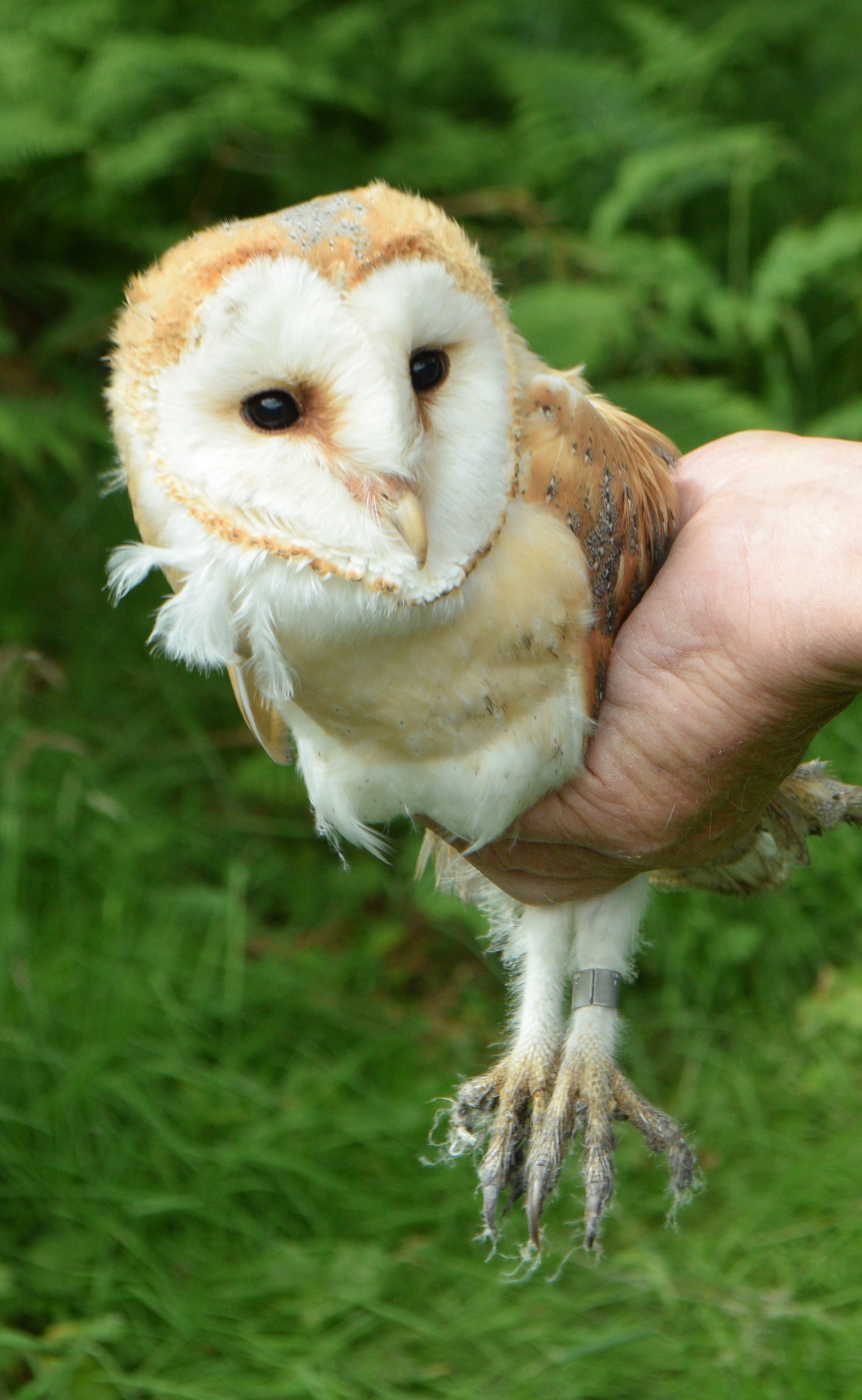
Earlier this year more than 150 barn owl chicks were ringed all over this area of Mid and North Wales by those tireless volunteers that monitor the population. Our box yielded 4 (3 female and one male). Now safely fledged and flying. Today I disturbed a magnificent young bird sheltering from the heavy rain in our barn, perhaps assessing the suitability of the new box we put there, waiting for a tenant for next year.
I’m no carpenter! But watch this space!
Female barn owl, about 7 weeks old.
Maturity assessed by measuring the second flight feather. Females have speckles under their wings.
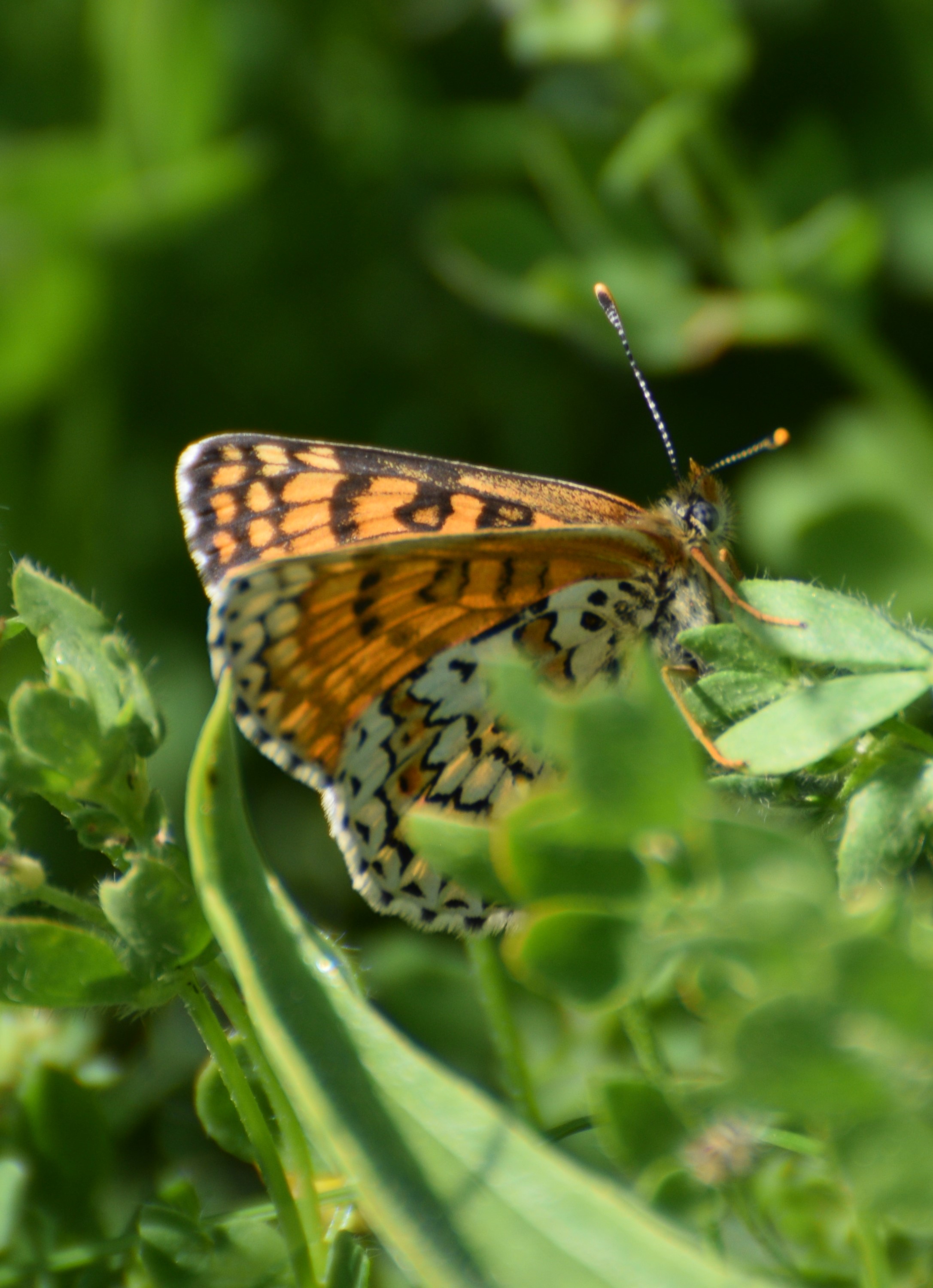
We recently visited the Isle of Wight on a butterfly hunt. The weather did not help much but one sunny morning did yield a few windswept examples of what we had hoped for.
Glanville Fritillary — not seen very often in UK, except in the Channel Islands, Isle of Wight and far south.
Underwing of Glanville Fritillary
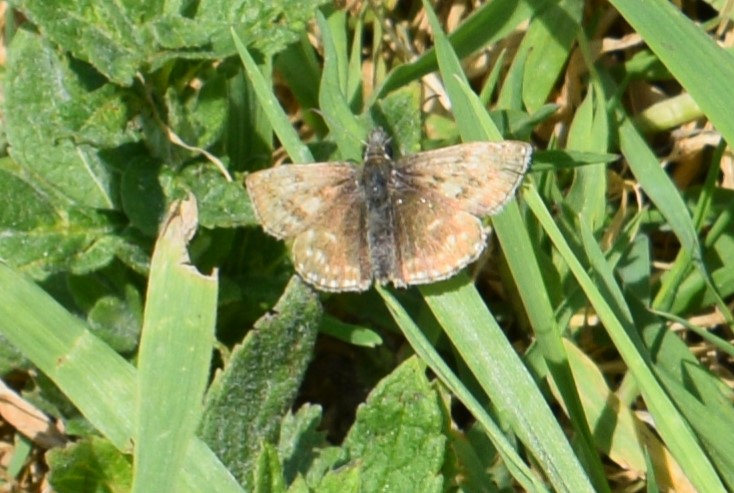
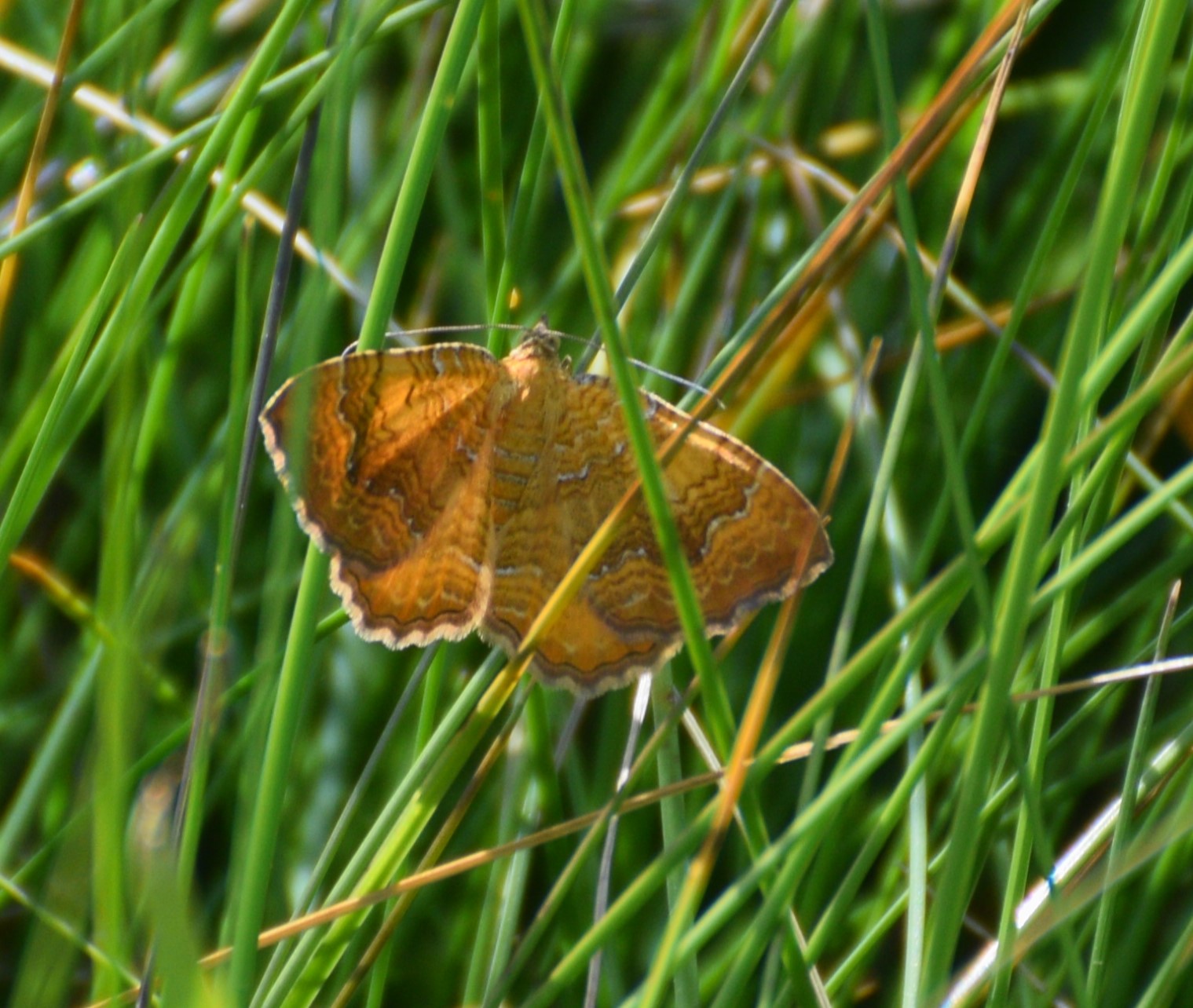
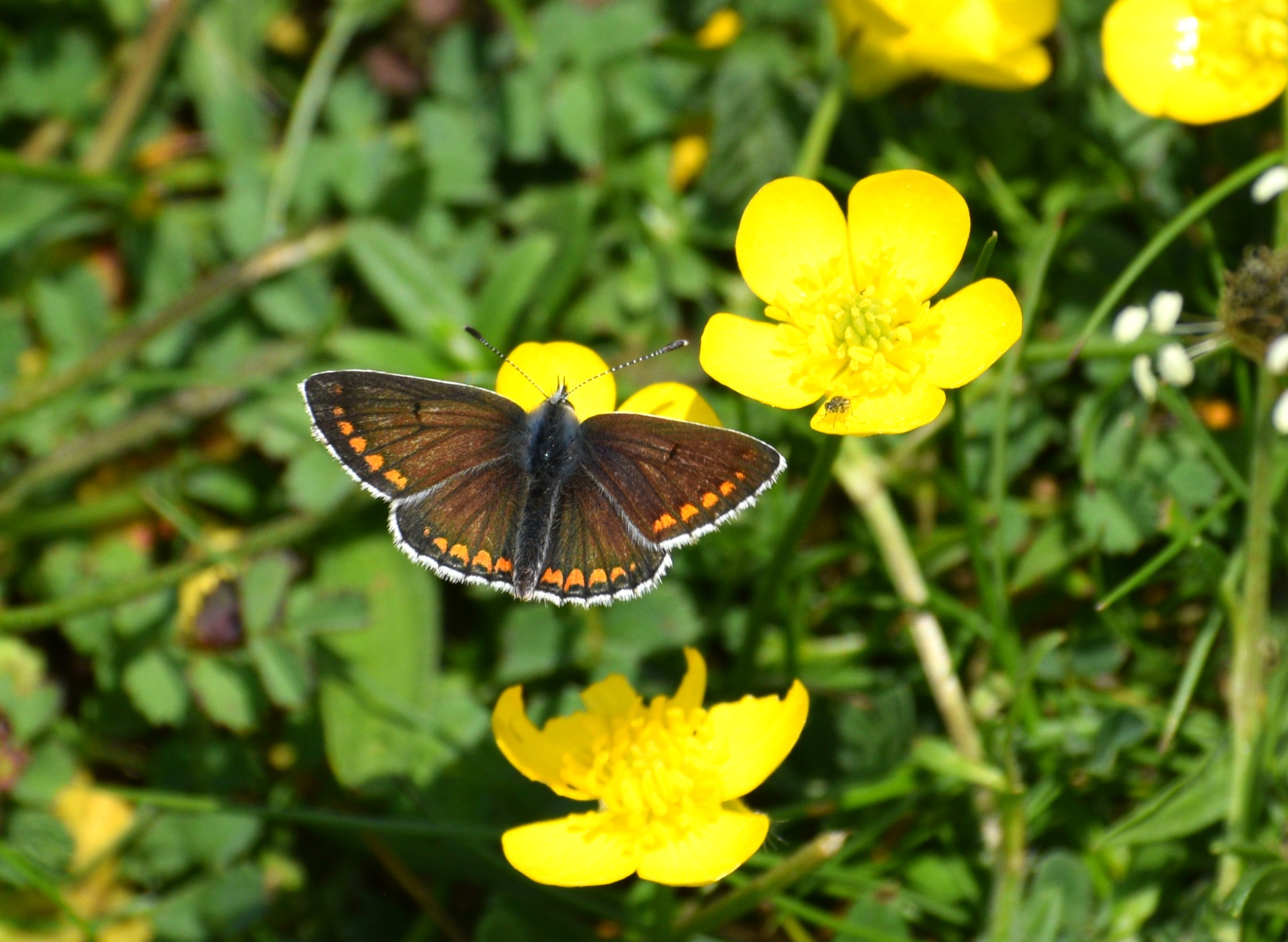
Grizzled skipperDingy skipperYellow shell mothAdonis Blue Adonis Blue underwingBrown ArgosA bonus — Caterpillars of Muellin moth — easily spotted because they had eaten nearly all the Muellin — they are so bright that I doubt they taste very nice!
The chalk downs are home to many plants that are unfamiliar to us in the acid West:
Bee Orchid
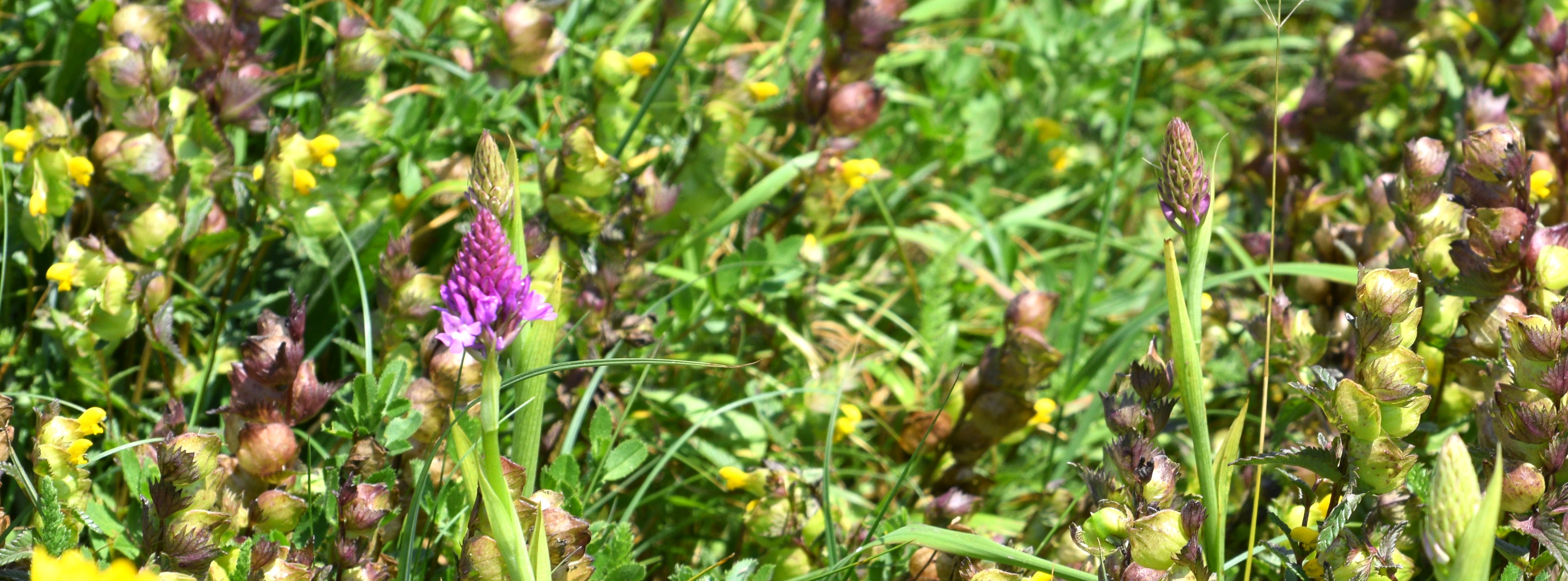
Pyramidal orchids amongst yellow rattle.Broomrape
We kept our eyes open for white tailed eagles and had a good look at all the likely habitats on the island. At one place we spotted a large, dead, oak tree. As we were looking there was an avian kerfuffle with crows attacking a marsh harrier — we watched fascinated as the harrier returned to its nest among the reeds when suddenly a huge bird swooped down and attacked the harrier, carrying off something which may have been a chick. It carried it up into the oak tree and was almost immediately joined by its mate.
What a fluke, two white tailed eagles in an unpublicized nest. But that was not all — as we looked through the telescope — there was a chick.
Fuzzy image but definitely a chick! Because this may have been it’s first photo-call we have allowed time for it to fledge before publishing the image. What a privilege and adequate compensation for the bad weather!





















 dianaashworth