Lambing

Deadly Sins — Two out of seven and counting…

P1050351 (2)

Thousands of pounds have been spent doing research on whether dogs suffer jealousy, so tell me are we the only species that experience pride?

No, don’t go off in search of sponsorship for a project — look at this ewe, posing for a picture with her new lambs — and so she should be proud, these are her 10th and 11th lambs and she’s done it all by herself (not counting the ram) quietly, behind the hedge at dawn.  This year she has even produced a little ewe lamb that we can keep — ewes like this don’t come along very often!

Standard
Humour, Lambing, Thoughtful

Is Gladstone just premature?

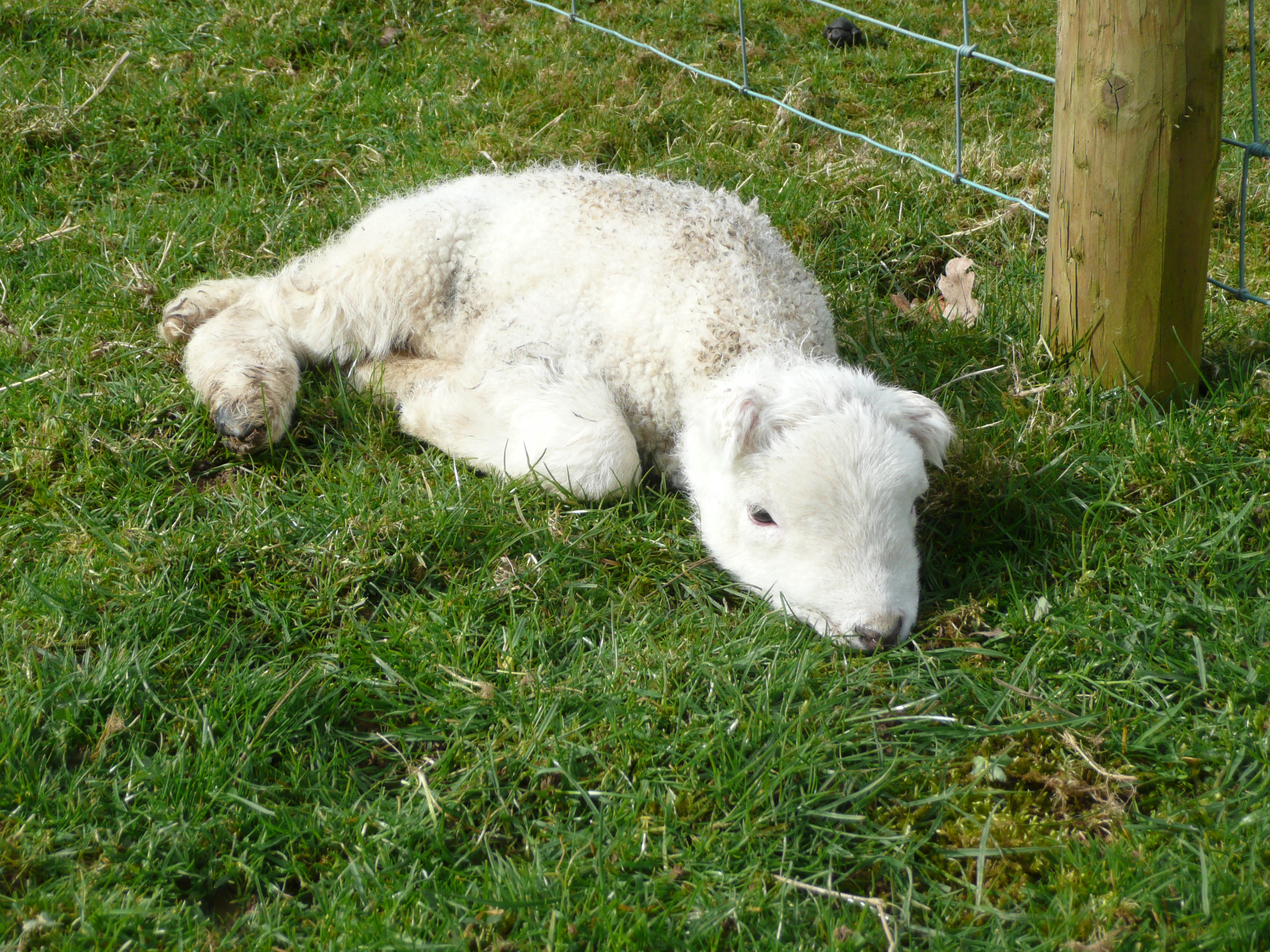
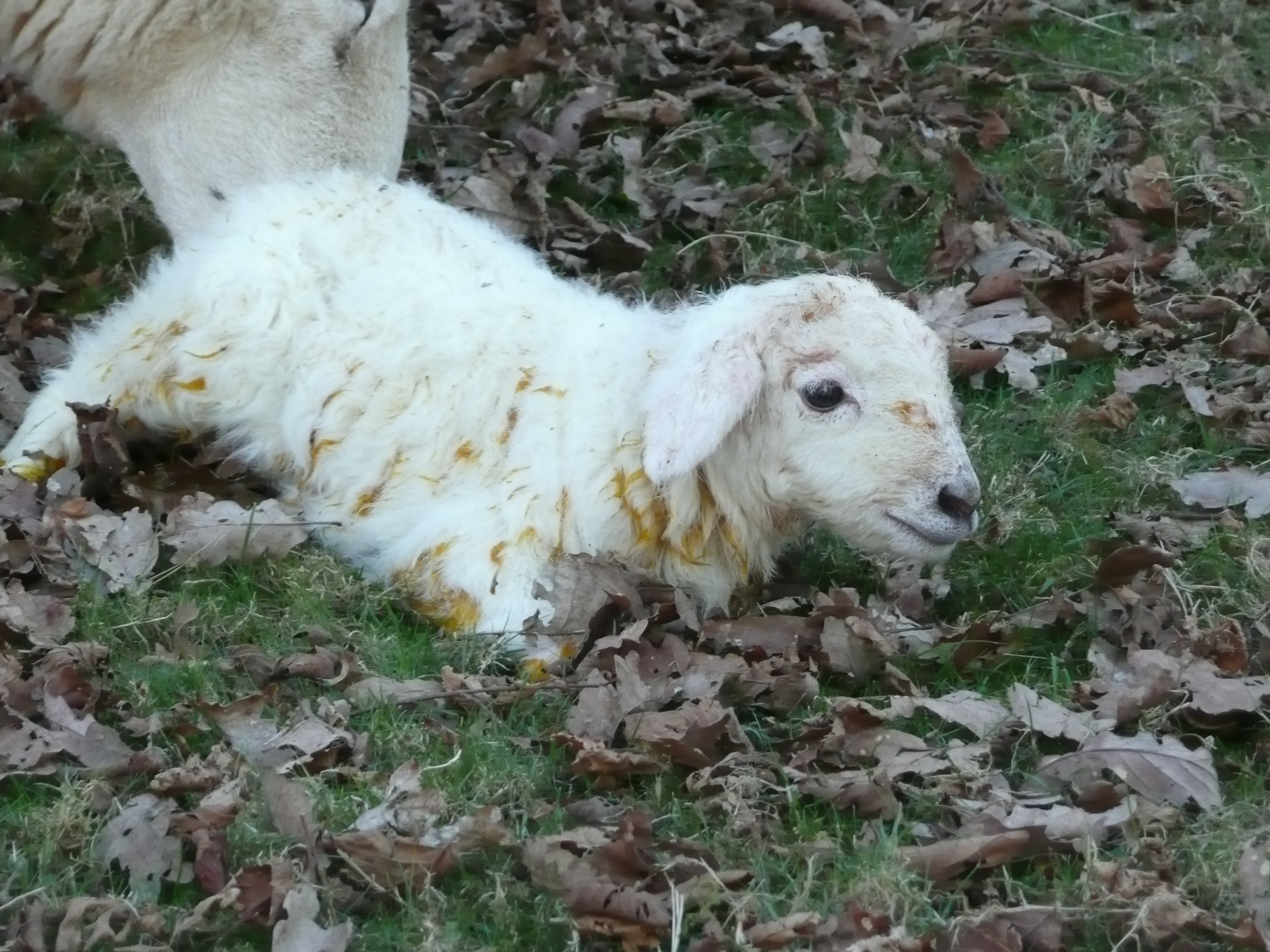
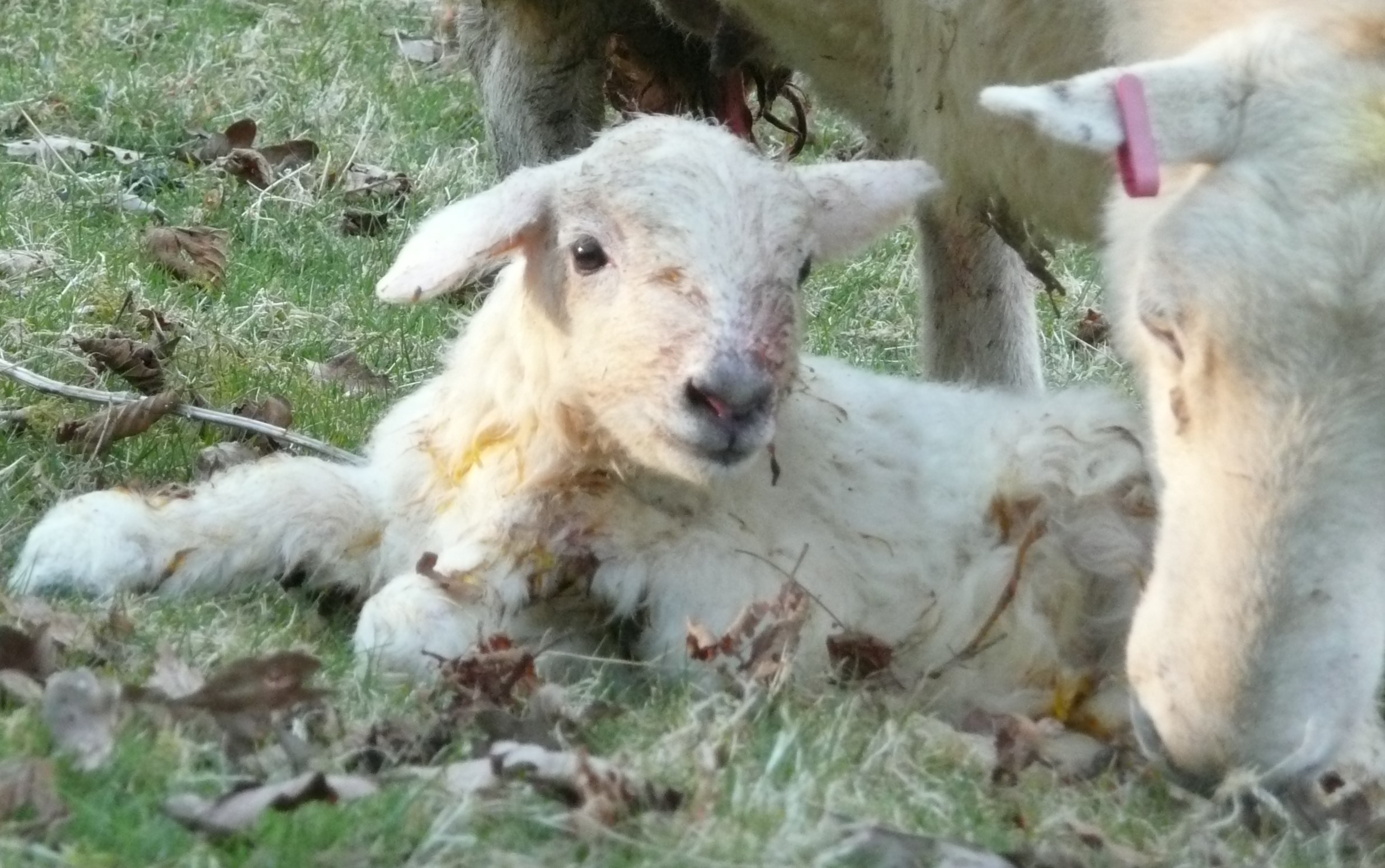
Not the man — the lamb.  Born 3 days ago and left for dead — a bag of bones, floppy and wobbly and unable to hold up her bossed head and with thin inturned lips, no teeth and tiny flimsy ears (scan down to my last blog for the full harrowing tale).

P1050322

As Gladstone’s twin is normal, I’ve been reading about genetic abnormalities and virally induced deformities.  But a friend told me about a ewe who had twin lambs, two lambs by two different rams, of different varieties (a rougue ram had jumped over the fence).  She conceived at different times, the lambs were different maturities and different crosses — the difference in variety of their fathers made what had happened obvious and easy to prove.  So I think Gladstone could be premature even though her twin was not — we had two rams in sequence just in case the first one had missed any ewes.

The same friend has also produced some lambs from implanted foetuses (test tube babies!) although all were inserted on the same day there were 8 days between the birth of the first and the last — maybe little Gladstone’s implantation into the uterus was in some way delayed — eight days would do it — everything is accelerated in sheep.

Food for thought — what do you other sheepy people around the world think?

As I feed her four times a day I know I am looking for reasons why we can keep her but the most convincing evidence for her abnormalities being due to prematurity is the fact that she is improving so dramatically. Please excuse poor quality of the snaps.

Already her posture is better and she can hold her head up.  She wriggles when  feeding and is starting to have attitude — spits out the teat, then wants it back.  She still has teddy bear ears but is starting to look more like a proper lamb.

Standard
Humour, Lambing, Thoughtful

God v. Nature

In my philosophy God and Mother Nature are mostly the same thing — she who knows best in the long run.  But…  Meet Gladstone!

P1050322

Born yesterday lunchtime and not quite right, the second and much smaller of twins — popped out as an after-thought and lay on the grass ignored (Nature knew).  Then ensued much running about, building of pens, pressing of the ewe (that knew too), and the spiflication of an elderly gentleman who held the ewe (who knew) while the elderly lady (who also knew) but tried to milk the ewe (who knew).  The lamb (who was not quite right) was held to the teat and made slurpy noises but nothing came and so they rummaged in cupboards and under beds and assembled the milk-bar.

Meanwhile the lamb got weaker and weaker and visiting farmers (who knew of course) shook their heads and advised euthanasia (only that wasn’t quite how they put it).  ‘Call her Gladstone’, said one amongst other helpful remarks.

‘I know she’s not quite right — she’s got underbite, and no cartilage in her ears and her back is twisted like the toy lamb Alison had when she was little, whose wire frame got bent by too much cuddling — do you think she’ll unbend with time — some babies have funny shaped heads but they come right, or get hair so no one notices…’

Gladstone took to the bottle like a professional and, God bless the ewe who knew — she is amenable, when the spiflicated gent stops holding her she stands and watches me feed the lamb then, bemused, she cleans up the smelly, milky mess I have made of her and takes her off with her other lamb for a rest.

Last night I slept badly wrestling with a moral dilemma of the lamb who will not do — my head rang with advice.  Farmers say ‘the first loss is the easiest’. An old boss of mine used to say ‘we must not strive officiously’, when he meant ‘it’s time for this poor little bugger to meet her maker’

I woke up decisive — no more feeding — it’s up to the Shepherd in the Sky.

The lamb didn’t seem to be breathing — it had been a cold night, I tiptoed to take her body from the pen without the ewe knowing, a little tufty ear twitched, a small black eye opened.  The crooked lamb jumped up and ran to meet me baaing for breakfast (still a bit wobbly).

P1050324

I went indoors to think about it while I made her breakfast.

Death is always the same but who knows how life will turn out — that’s the trouble with euthanasia.

Standard
Hill Farming, Lambing

In Praise of Older Females

Last year she had her 8th and 9th lamb, both large (10lb and 11lb).  She is now 8years old and last year I wrote in my lambing record, after I’d helped her lamb in the open, ‘No fuss’.

My shepherding friends sing the praises of a young flock and tell me to cull the old ewes but that doesn’t seem fair if they are healthy and productive and easy to handle so I stick to my guns.

Today was Number Thirty’s due date and, sure enough, she took herself off after lunch to the top of an otherwise empty field but, oddly, she was making a lot of noise — not a labour type baa (some of them are quite noisy, just like some women, but she isn’t usually one of those).  Nor was it a bubbly, talking to a lamb baa — it was a loud calling baa (like when one sheep has crossed the stream and calls to the others to come too.

I went up and sat in the sunshine on the bank and she quietened.  After 20 minutes or so I thought I’d go and get the evening feeds ready but as I walked down the hill she started calling again so I went back, and she stopped.  It seemed she wanted me there — don’t ever tell me sheep aren’t intelligent.

She laboured on but things did not seem to be progressing as they should despite strong and prolonged contractions.  Alan came and took one look and went off to put on his waterproof trousers.

I caught her during a contraction and could feel the two front feet and the muzzle with a swollen protruding tongue, the lamb was moving but huge and it didn’t want to budge.

Alan got back and we caught her again easily and this time he held her and I heaved, holding so tight to the hooves that I thought I might damage them and easing the head out.  The feet kept slipping from my grasp and I had forgotten to bring a towel.  I pulled off my T-shirt and dried the legs with it then used it to hold them.  She contracted, Alan urged her on, I pulled with all my might and at last could feel it coming — the legs extended, the head was free and shoulders were born and with a slither and a gush of orange, meconium stained liquor the mighty leviathan arrived – one ear up and one ear down but breathing.

P1050310

I laid it down by its mother’s nose and though prostrate with exhaustion and still will an Alan around her neck, she licked its muzzle and it gave a little bleat and she gave her bubbly baa.

Half an hour later Alan had gone to the pub and the  lamb was all spruced up and had had a feed and Number Thirty was as lively as anything and in no hurry to re-establish the normal distance between the species.  She had her supper while I (in a clean top) weighed the monster — 14 lb.

We sat for a while on the steep bank — ewe, lamb and shepherd. Two farm trucks came down the lane which is on the other side of the little valley overlooking our field.  The first flashed its lights and the second honked its horn and wound down the window and waved. I don’t know who they were but they were acknowledging a special moment that they recognised.

P1050316 (2)

Lesson learned: next year I really must get them scanned so as not to overfeed the singletons.

Standard
Hill Farming, Lambing

Pink Balloon but No Celebration.

Lamb Friday -- all white and fluffy now.

Lamb Friday — all white and fluffy now.

Even in the Welsh Hills fewer and fewer farmers lamb out in the fields — most do it in the shelter and warmth of large sheds with pens and good lighting and enough sheep to make it worth while and to have someone there day and night.

We are an anachronism — I stumble around our fields with torch or hurricane lamp listening to the sounds of the night — for the soft bubbly baa of a ewe calling to her new-born lamb or the hysterical rhythmic baaing of a frightened young ewe, lambing for the first time.  By and large our sheep do not lamb in the hours of darkness — one of the advantages of not having the lights on all the time — their circadian rhythms are undisturbed, even if ours are not.  Our lambs usually arrive at first light.

P1050289 (3)

Last night, though, was an exception.  It was clear and frosty and there was a huge bright full-moon casting weird shadows over a black and white world.  I was woken by a bleat at half past one in the morning and went to investigate.

Up in the corner of our steep field was one of our first-time ewes running after two lively new-born lambs.  I’d been worried about her as she had been large and uncomfortable and had had a large swollen udder — it was bare of wool and oedematous so that it looked  translucent, like a large pink balloon.  This should have made more of an impression on me.

Anyway I was very relieved to find that she had delivered without any trouble and that the lambs were so lively and went back to bed…  Mistake!

At dawn Alan counted the sheep and called me — only one lamb at foot and something white on the ground.

Sure enough there was a dead lamb on the ground but the young ewe still had her two lambs, one was tucked up behind her.

After failed attempts to resuscitate the perfect, cold, dead ram-lamb, we had a roll call and tail inspection of the other ewes in the field — no one had any signs of having delivered a lamb.

The two lambs born in the night were exploring their leafy environment and I was pondering on missed opportunities and lessons to be learned:

1.  Be particularly vigilant on bright moonlit nights when the light level is high and when all night can seem like just before dawn.

2.  An udder like a pink balloon may herald triplets (quite rare in our breed).

3.  Remember to wait a while after delivery as it’s the last, often smallest, lamb that slips out unnoticed or sometimes just rolls off down the hill and gets overlooked when the ewe has so much new to deal with.

Standard
Hill Farming, Sheep, Uncategorized

The Worrying Case of the Good Friday Lamb

Considering it was born just after dawn with cloud resting on the hilltop and rain dripping from the trees, our first lamb seemed reasonably robust — it was standing but, ‘It looks a bit torpid,’ Alan said as he handed me the binoculas.

We watched — it had done the two most important things — it had breathed and it was on its feet but it would not suckle.  Our most skittish ewe had delivered it onto the moist leaf litter behind the hedge and it teetered around under its mother’s belly looking for something (it did not know what) but it tired and slumped down onto the wet grass when its mother pawed at it ominously  with her foot.  It stood again and she nudged it backwards along her side. Half heartedly it butted the ewe’s back leg, missing her udder, failing to let down any milk and not sensing the teat at all.  Again it flopped down in the mud.  This happened over and over and the ewe looked pitiful — uncharacteristically she let me come very close.

Something would have to be done — the lamb was getting weaker, the ewe was pawing at it more roughly, more desperately.

Worried ewe -- over 2 hours and the lamb has not fed

Worried ewe — over 2 hours and the lamb has not fed

A makeshift pen was constructed nearby and I carried the lamb into it, it was female, her mother followed without any fuss — even human mothers comply with their attendant’ suggestions when at their wit’s end.

Makeshift pen

Makeshift pen

The lamb didn’t like being picked up and a little surge of adrenaline probably did it good.  As I placed it on its feet, it ran to its mother (now restrained by a hurdle) it butted her udder, which is what they do when they run home for safety, and I squeezed the teat which squirted the lambs face with milk — she latched on immediately and fed.

P1050274

Full stomach, ears up, baa working, bowels working, bladder working, numbered like Mum (number 12, on the other side) and tummy sprayed with iodine, she is ready for a healthy sleep and not the engulfing drowsiness of hypoglycaemia that can carry off even a healthy lamb if she cannot achieve all three gaols of her birthday — breathing, standing and feeding.

Now she can do them all!


Standard
Ecology, Hill Farming

The Midwife has arrived…

in her black and white uniform.

SONY DSCWho called her?  Nobody knows.  But she knows: she knows exactly when every baby is due and she moves in a day or so before to watch over the mother.

Unlike her human counterpart she has no concern for the mother, she is here to collect the placenta and the membranes.  There’ll be no rotting flesh on our fields to attract predators.  All will be whisked away by the midwife bird.

She, or he, has been working up the valley following the wave of lambing which creeps up with the warming air and the growth of the grass.  The first sign  of her presence is a smear of wool on the field;  she has taken the liberty of pulling some wool from a ewe’s back to line her own nest and leaves a little on the grass, alarming as she chose the wool marked with red marker — does the colour of blood attracts her?

Magpies are hated by most farmers because of their partiality to another delicacy: they will peck the eyes from dead sheep and sometimes from not-quite-dead sheep and even from the head of a partially born lamb.

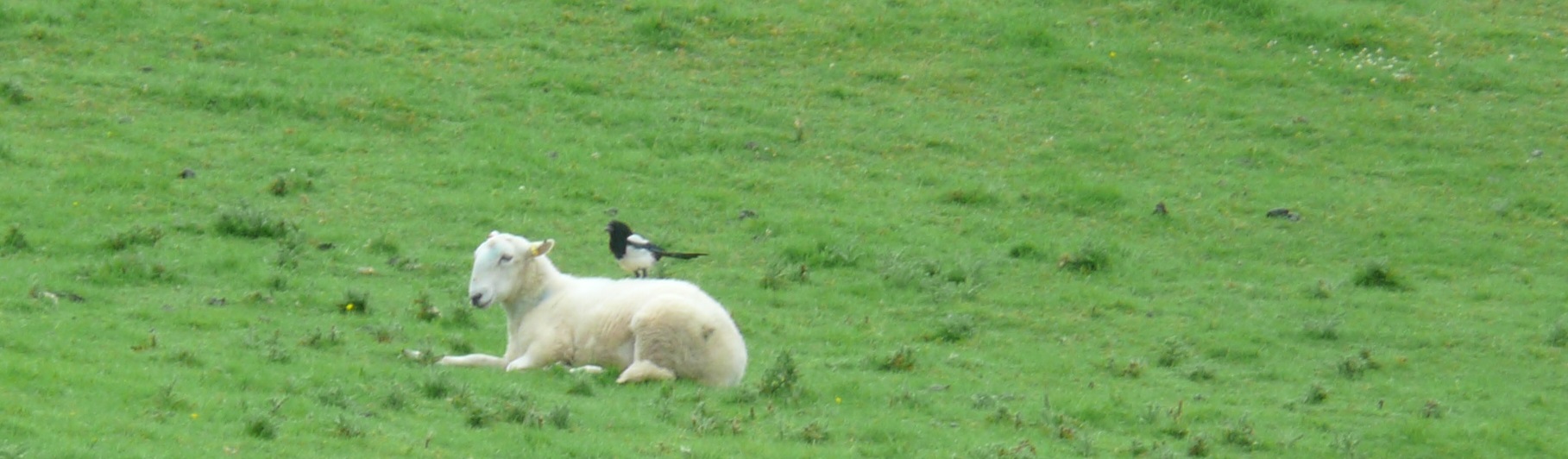
This upsets farmers (not surprisingly) but the flash of this bold and watchful bird will often alert him to a miscarriage, premature lambing or a fallen ewe and you can see magpies on occasions, perched on the back of a sheep, patiently picking out maggots from soiled wool which, if left, would attack the skin and eat into the sheep’s flesh causing rapid septicaemia from fly-strike and death if untreated.

Magpie looking for parasites and maggots

Magpie looking for parasites and maggots

The midwife bird is here to warn you that lambing is nigh — ovine tempers are frayed but the fields are drying out nicely so

SONY DSC

brace yourselves for an avalanche of lambs.

Standard
Astronomy

Grass-Root Astronomy

What do you do when you are caught out by a 95% lunar eclipse of the sun — you watch it as Galileo might have and as your granny did — projected onto the wall of the house through her colander!

P1050218 (2)

Hover over images for explanation or click for a slide show —

But that’s not all — other shadows are temporarily weirded —

Nature taking artistic liberties during the eclipse

Nature taking artistic liberties during the eclipse

The camera, without a view finder, gave a image without damage to the retina

Solar Eclipse 20/03/2015 seen in Wales

Solar Eclipse 20/03/2015 seen in Wales

Standard
Art

The Soul of the Soulless City

It stopped me in my tracks, that image, with a gasp
(I turned to see if anyone had noticed).
It had reached out from the wall and grabbed me.
Like a snake in the grass – really, not a metaphor,
but a primitive reaction.
As I passed, the picture had crept un-noticed through the corner of my eye, into my brain, and hit a trigger – KAZAM and spinning round, amazed,
I recognised the view —
the exact view from my earliest childhood, or so it seemed —
though I’ve never been to New York.

Soul of the Soulless City by CRW Nevinson ()

Soul of the Soulless City-CRW Nevinson

Creative Commons Licence

Wide-eyed and gripped by New York in 1920 and never so moved before by art, I was perplexed.

Even more so when I found this!

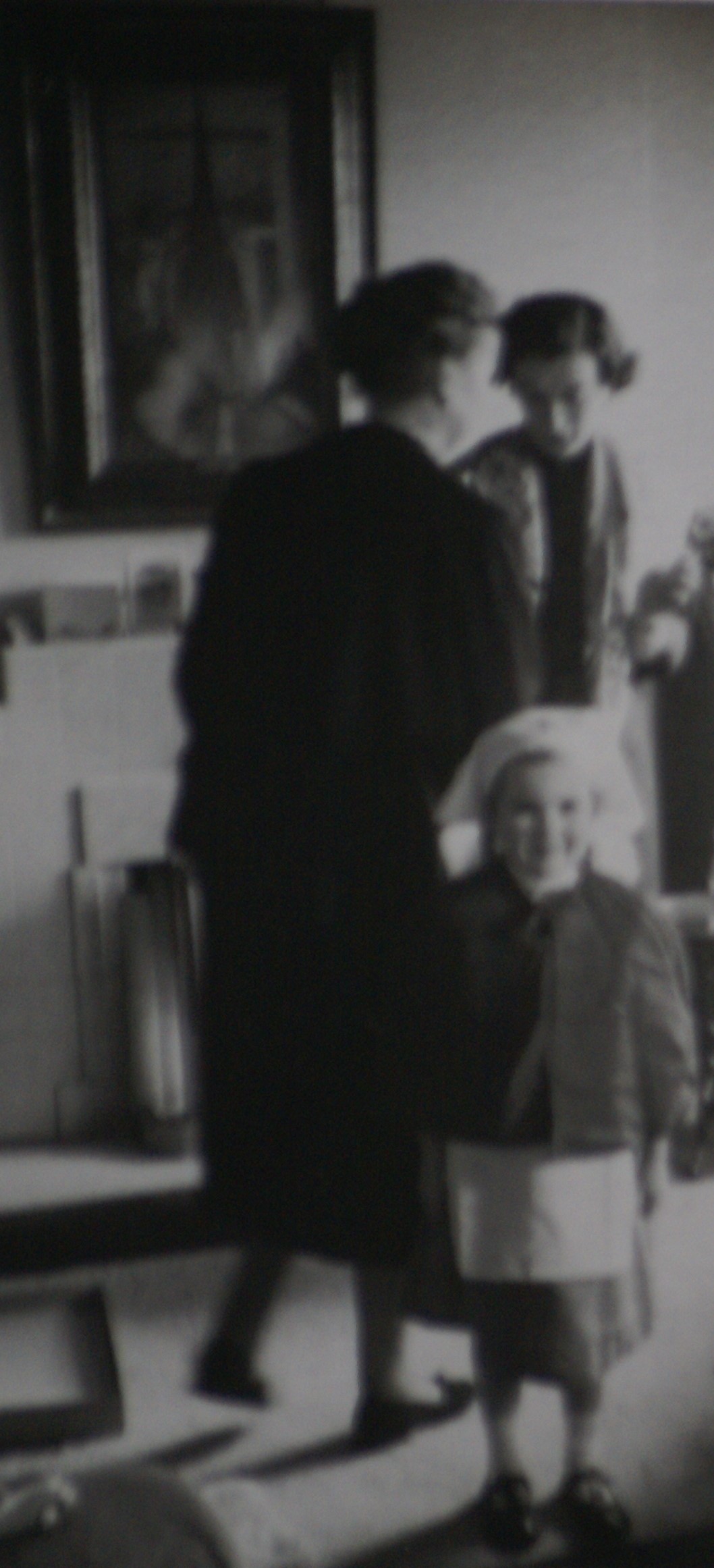
Roofs of New York CRW Nevinson in my grandparent's flat circa 1955

My Mum and Dad with the Roofs of New York by
CRW Nevinson, in my grandparent’s flat circa 1955

You see — it’s not the same image at all — just an essence, the blowing steam, the style, and I was a child when I last saw that picture. But still I spun round when I saw through the same eyes, sixty years later — the eyes of CRW Nevinson.  What does this tell us about art?

Here I am looking the other way!

Essentially unchanged

Essentially unchanged

P.S  The artist renamed the picture which is now on show at the Tate Britain when he fell out with American critics years later, it had been New York — an abstraction, it became The Soul of a Soulless City.   This explains the disparity between the positivity of the image and the negativity of the title, I don’t believe he thought the city soulless when he painted it!

My grand-parents picture was sold many years ago — perhaps to a conciliatory American.

Standard
Ecology, Humour

Eye shine — you shine but I don’t

I spend a lot of my time with individuals who see the world through very different eyes.

For a start their eyes shine at night, not with avarice or the holy spirit but with any light that they catch in their eye —
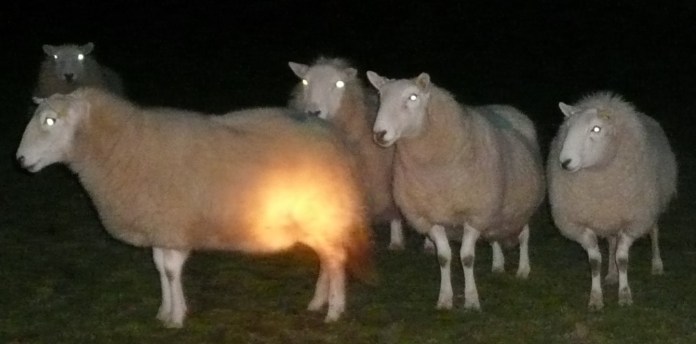
Eyeshine in Welsh Mountain Sheep

Eyeshine in Welsh Mountain Sheep

You see they are a prey species and they stand out all night in the darkest fields uneasily looking out for wolves and rustlers so they need to see in the dark.  One of the adaptions that many nocturnal mammals have made is to acquire a tapetum lucidum, a biological mirror behind their translucent retina, so that light stimulates the retina as it falls upon it and stimulates the retina’s photosensitive cells again as it bounces off the mirror layer heading back the way it came — this helps them to see in the dark.

So when you go out in the field at night with your torch and all the sheep turn to look at you because they think you are something spooky, all their eyes light up with intense pale green light, all directed at you, which is definitely spooky.

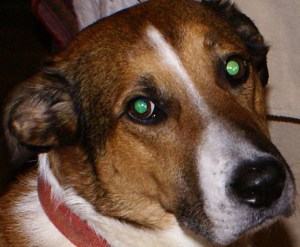
Dogs have a tapetum lucidum too — this one shines bright green.
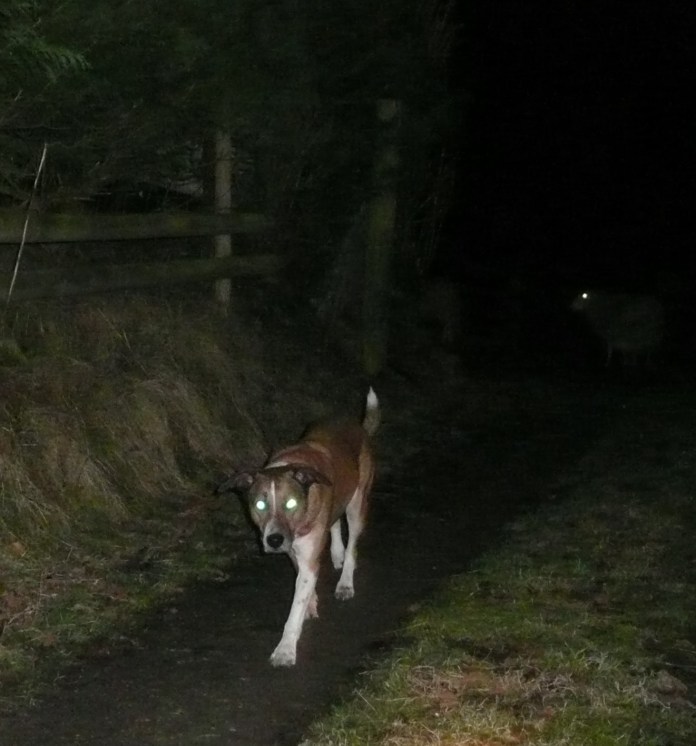
P1050160 (2)

There’s a sheep behind him.  Foxes have eyes that glow green, different species have variation in their tapetum lucidum and glow differently — hunters who went out lamping for rabbits and foxes (I think it’s illegal so they don’t do it anymore) will tell you they can tell what they are shooting by the shade of the eyeshine, as they charge around in a truck with a lamp on top picking up eye glow and shooting things — very fortunately humans do not have a tapetum lucidum, otherwise more of them would get shot.

Cats are famous for their glowing eyes and that is where I got into trouble.  I spent a happy evening flashing and snapping at our cats, trying to demonstrate their eyeshine and  their strange lozenge shaped pupils that constrict down to a tight vertical slit in bright light — you see one of the problems for these creatures, who are adapted for the dark, is managing bright light.  Mainly they shut their eyes.
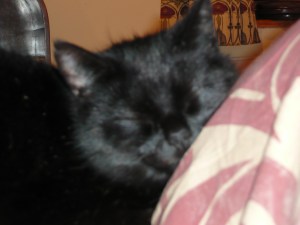
Cat dealing with bright light

Cat dealing with bright light


Minutes after this unsuccessful photo-shoot, Midnight (our short haired black cat) started doing something very strange and alarming, kicking his right foot out then grabbing at his mouth with both his paws as if trying to pull something out of his mouth — he did this repeatedly making a peculiar slavvery noise. There wasn’t anything in his mouth or throat, he wasn’t salivating or retching and there was no sign of a bite or sting on his lips.  The other cat and the dog looked worried and followed him round fussing as he repeated his odd stereotyped gestures, like non-verbal Tourette’s Syndrome.  OMG he’s been out and got a head injury, or a brain tumour…   Or epilepsy due to flashing lights.

There then ensued a period of research on the internet.  While the cat twitched, quietly now, on its chair by the fire, the other two animals sat upright on the floor next to him watching anxiously.

By the time my husband had got home I had cracked it — Feline Hyperaesthsia Syndrome…  Can be provoked by stress ( like being chased around the house with a flashlight).  This is a diagnosis of exclusion and mindful of vet’s bills we adopted an expectant policy — we’ll watch and expect it will get better.

It did — for twelve hours or so he looked spaced-out between twitches that gradually got less complicated and with longer gaps between them– first the kicking disappeared, than the grabbing at his mouth, then the licking of his lips gradually stopped and he had a long sleep.  Then he woke up and had a large breakfast and has been fine since.  We didn’t photograph any of this — we thought I had done enough harm.

Returning to the great mysteries of the mammalian eyes that follow me daily —
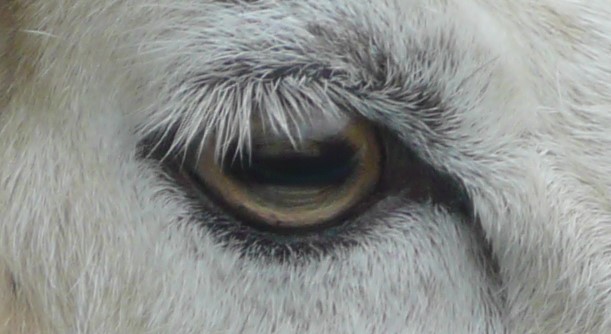
Horizontal rectangular pupil and fetching eyeshade of pale lashes

Horizontal rectangular pupil and fetching eyeshade of pale lashes

 Why do cats have vertical pupils and sheep horizontal ones?

They both need to be able to restrict the bright light of the mid-day sun.   Cats need very sharp vision, right in front of them and the potential to use a whole cross section of their lens (this has complicated optic reasons to do with putting back together the spectrum that bending light tends to produce), thus they need a vertical slit because they are predators and they pounce on little creatures right in front of them.

Sheep need a more global view of the world, they live on grassland and need to be able to spot movement all around.
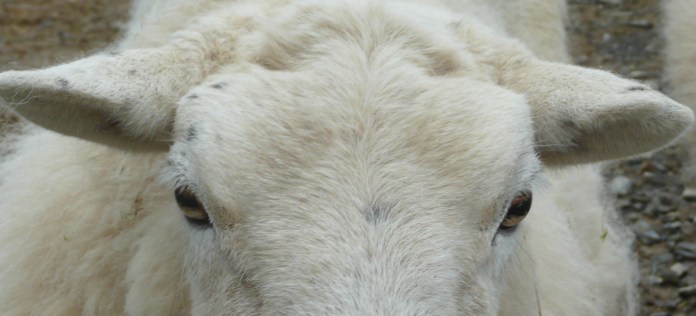
P1050147 (2)


With her protruding eyes and wide pupils, she can see from right in front and to right back along her flanks.  Provided she walks in a slight zig-zag, which they do, she can see all around herself, even in bright weather when her pupils are constricted — she couldn’t do this with a vertical pupil.
SONY DSC

Dogs have round pupils like us but can see in the dark — they have reflectors at the back of their eyes which shine but are not so sensitive to the light that they need slit pupils to protect themselves by day — I suspect this is because at night they see mainly with their noses!

Standard