Climate, Ecology

Wet, wet, wet!

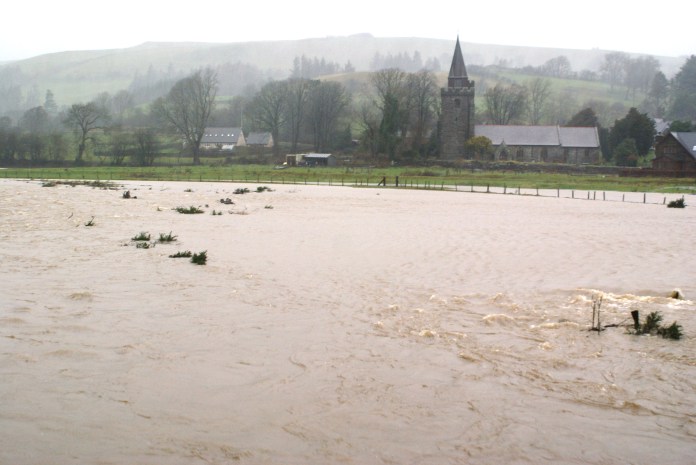
It’s all down to the Jet Stream.  It’s not a media construct, concocted by those who pull our strings to add weight to the recent climate change demonstrations — to boost the low-carbon economy and bolster sales of renewables.  In fact the media haven’t even noticed that parts of the UK have dropped from sight — at first just soggy then gone — submerged.
SONY DSC

Llangurig church earlier today, in the Upper Wye Valley

I  can’t quite work it out — it’s warm and the grass is growing but it just won’t stop raining — I know it’s Wales but it’s poured, unremittingly for three weeks — 260mm and 60 of those in the last 24 hrs — and if it slips any further ( the Jet Stream, that is) it will all be snow and we’ll be living in Canada…
P1060547

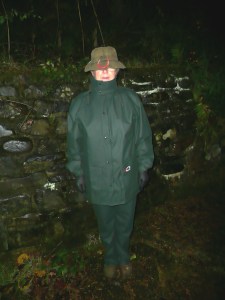
We’ll need a skidoo and not just new industrial water-proofs.

It’s not just the media that has been pre-occupied with more momentous events — I only noticed when I went out for some milk and had a Dr Gloucester moment.  Splashing through puddles in my little car, it suddenly felt as if I were driving through treacle and the outside world disappeared under the wave that enveloped the windscreen.  Where was the road?

SONY DSC

Today on the back-road from Llangurig to Llandrindod Wells.

It reappeared only to disappear again almost immediately as I realised that I was wearing the wrong vehicle — I went home and changed.
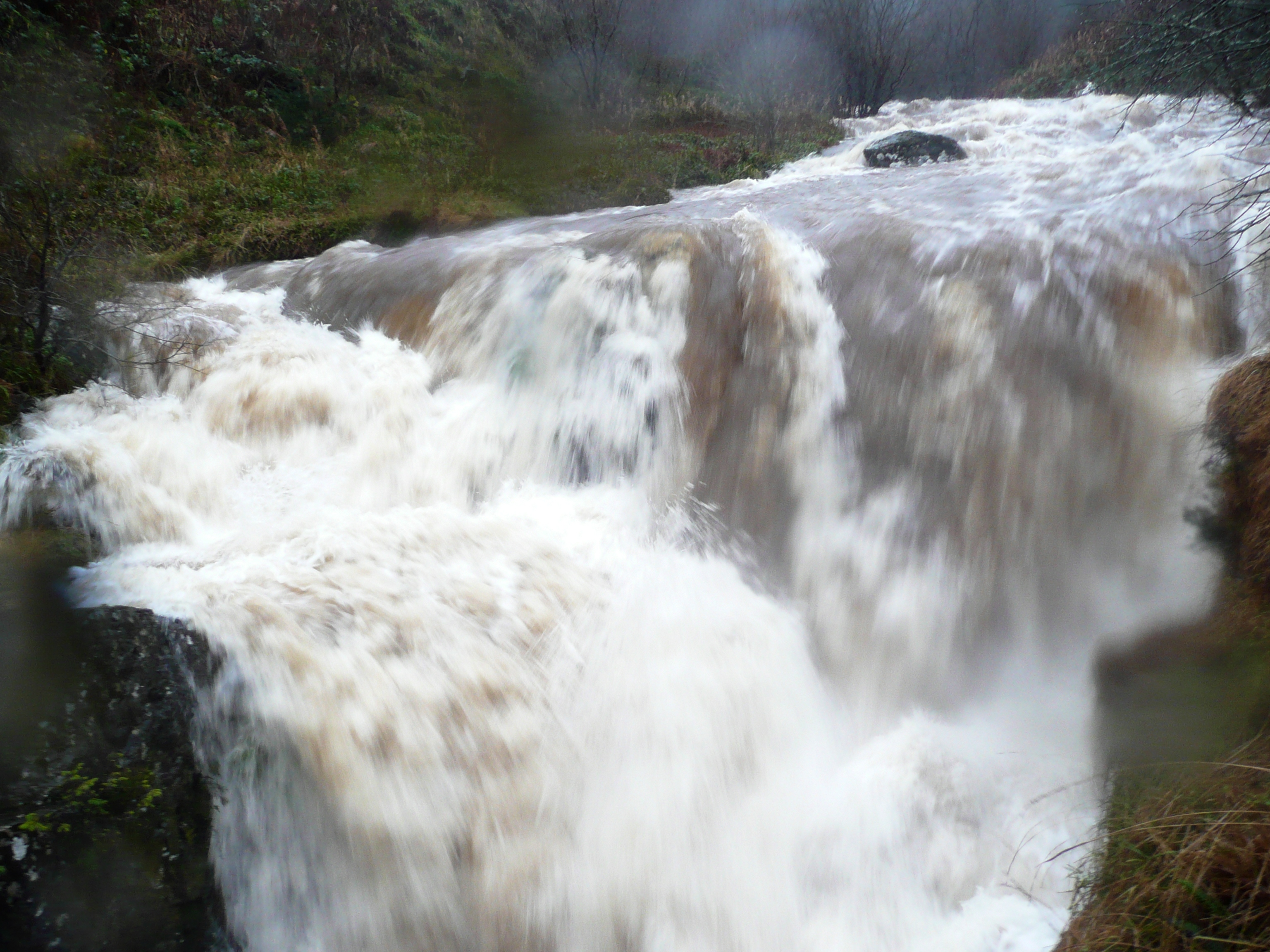
Severn Break-Its-Neck, today, about 3 miles from the source.

Severn Break-Its-Neck, today, about 3 miles from the source of the Severn.

Alan put on is red woolly hat and we set off in our truck to intrepidly go and be amazed by the awesome power of water.

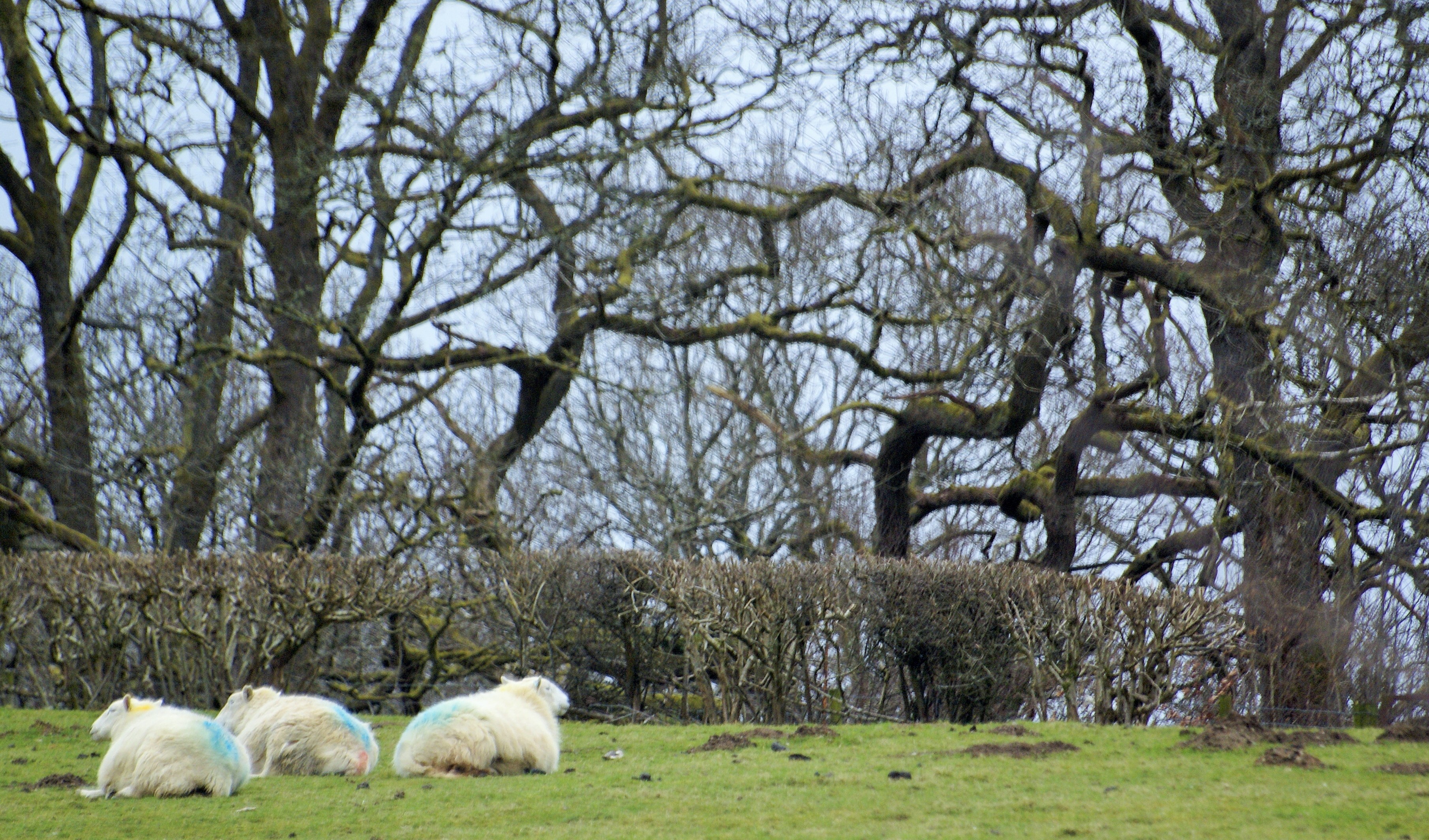
Everywhere sheep were damp and disgruntled.

Disgruntled sheep often with almost horizontal ears!

Disgruntled sheep often with almost horizontal ears!

In Staylittle (Stay-a-little as it used to be called and which is a much better name) the water was rising.
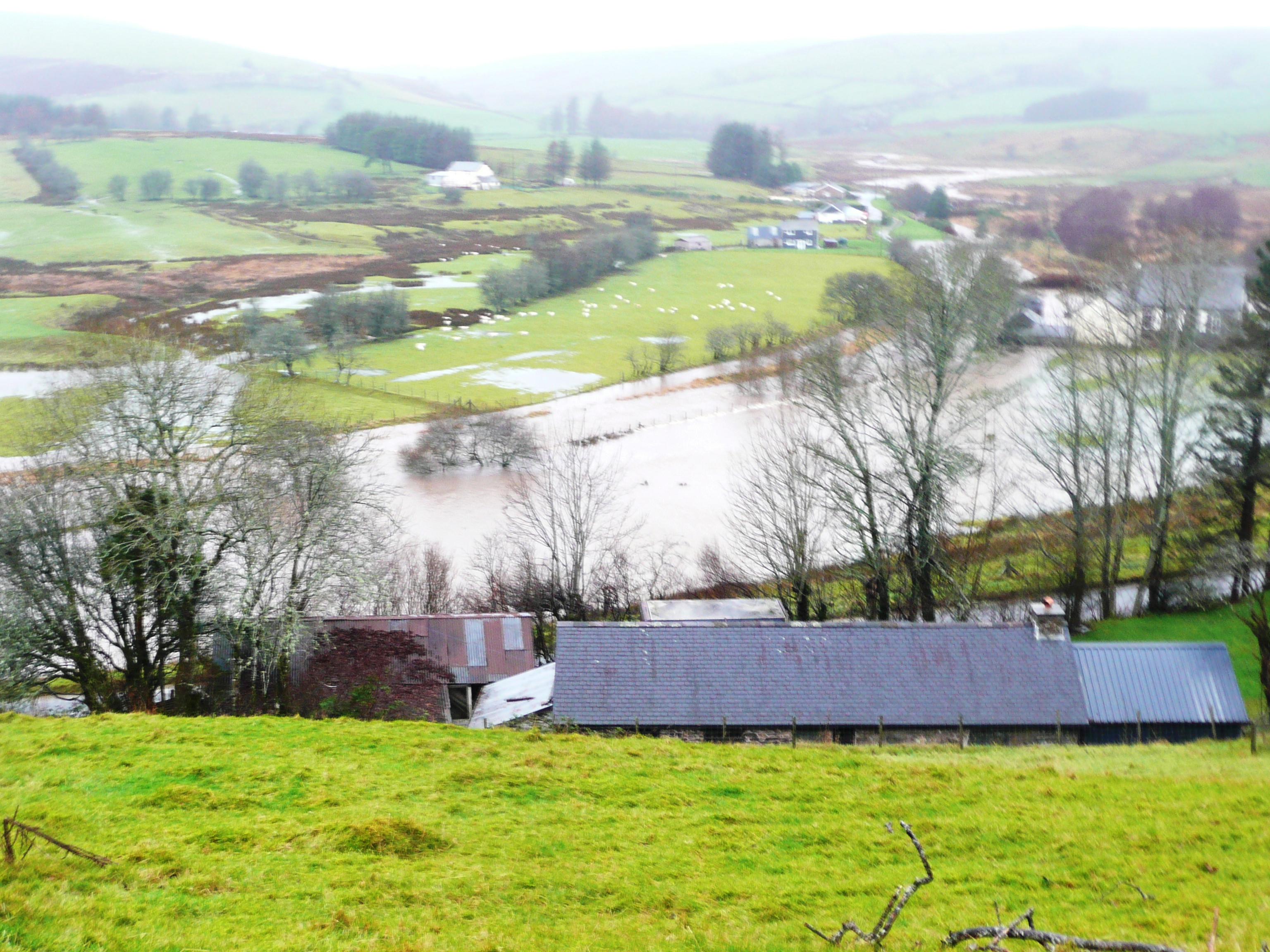
Rising water

Rising water

By the Clywedog Reservoir, used to regulate the flow in the Severn, men from the Water Authority watched.

I’ve told you this before, but you probably won’t remember: the Wye and Severn rivers both start within about a mile of each other on a hill just up the road from here.  Llangurig is the first town on the Wye and Llanidloes is the first on the Severn.

Wye Valley about 6 miles from source

Wye Valley near Llangurig about 6 miles from source

Both these towns are very near the sources of their rivers which go on down their respective valleys gathering volume and momentum — we have never seen them rage so much and so soon and so we fear for the communities downstream.  Today, while I was taking these photos of the river by the Old Mill, I met the architect who was looking at the flats, converted about ten years, and he told me that he had never known the arch (which you can’t see — but you should be able to see) to be submerged completely before.

It’s all a bit worrying — the rain has stopped now but everywhere roars with draining water.


Standard
Ecology

A Walk in the Woods

s

It’s a misty morning in Mid-Wales, the air is still and the leaves are silent and the weather has been unusually dry so even the streams are muted.

SONY DSC

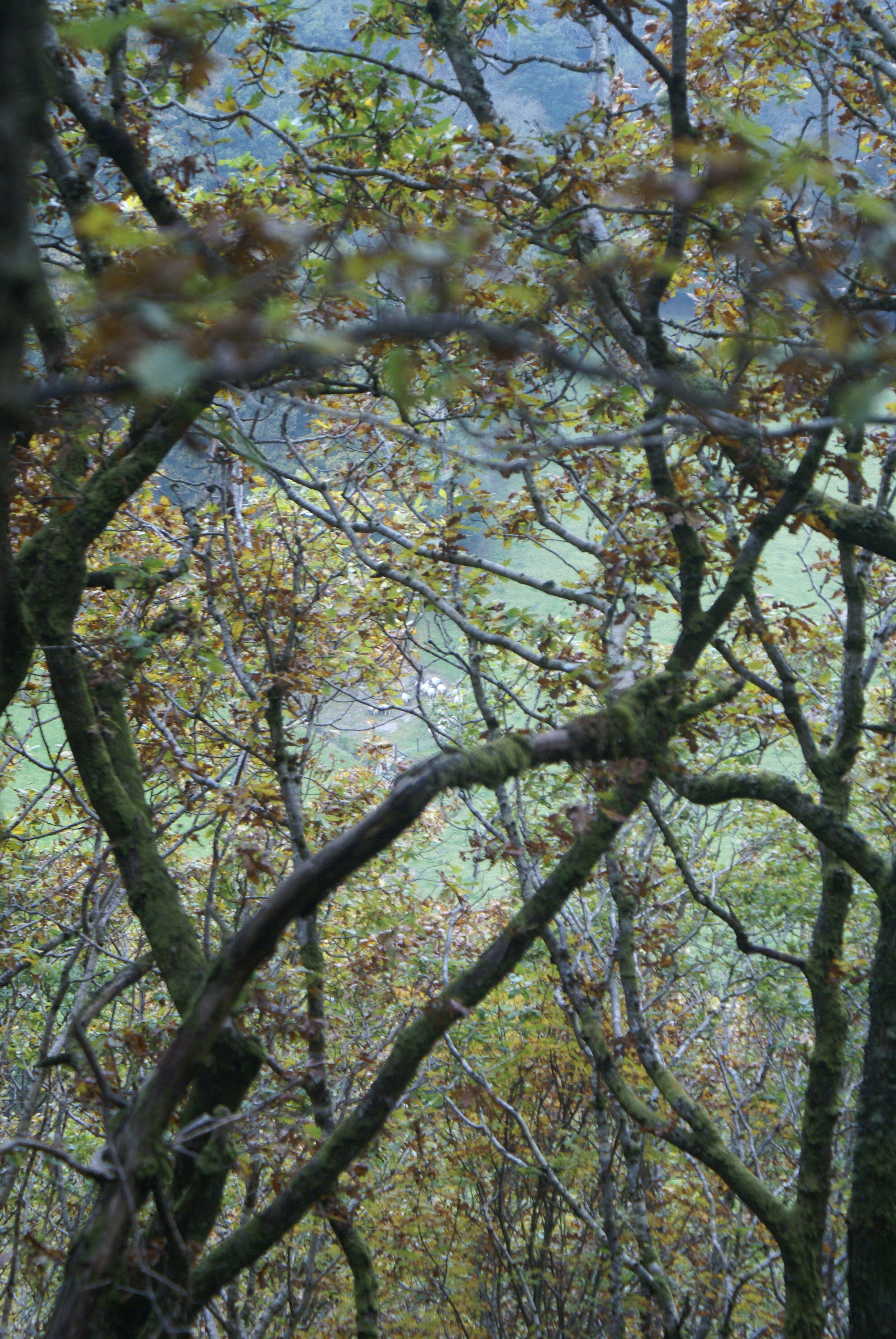
There is a distant sound of dogs beating distant woodland for foxes — there are no shots but the sheep are wary and cluster in the gully on the opposite side of the valley.

SONY DSC

See how this landscape rises all around you carrying the sheep and cows into the tops of the trees.

Trannon Oak Woods

At the edges of the wood where the tree canopy is less and bracken grows the first tentative frosts are turning the woodland floor amber and, as the giant branched fronds die back, the undergrowth of shamrocks, covered since May, bask anew in the pale daylight.

Shamrocks

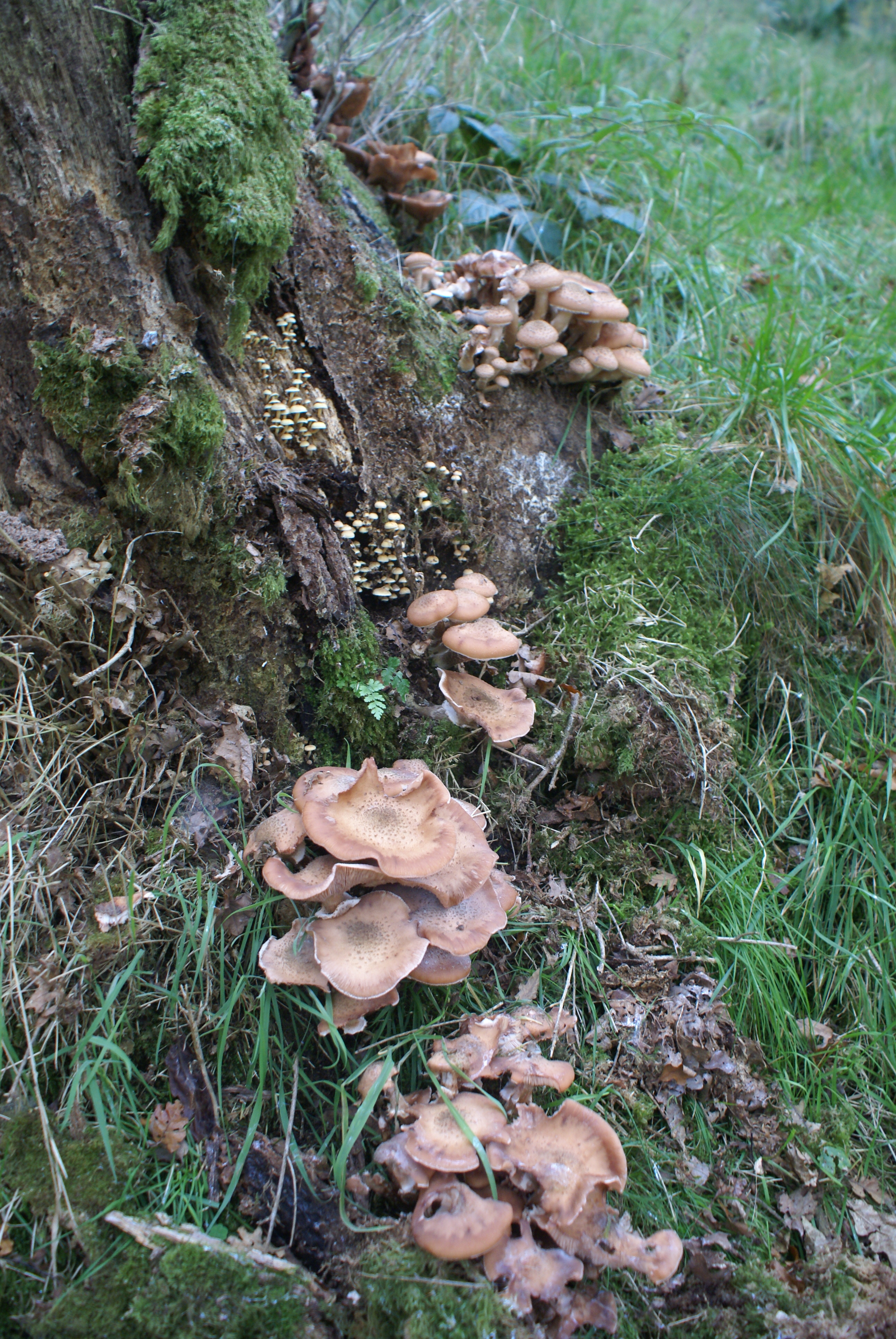
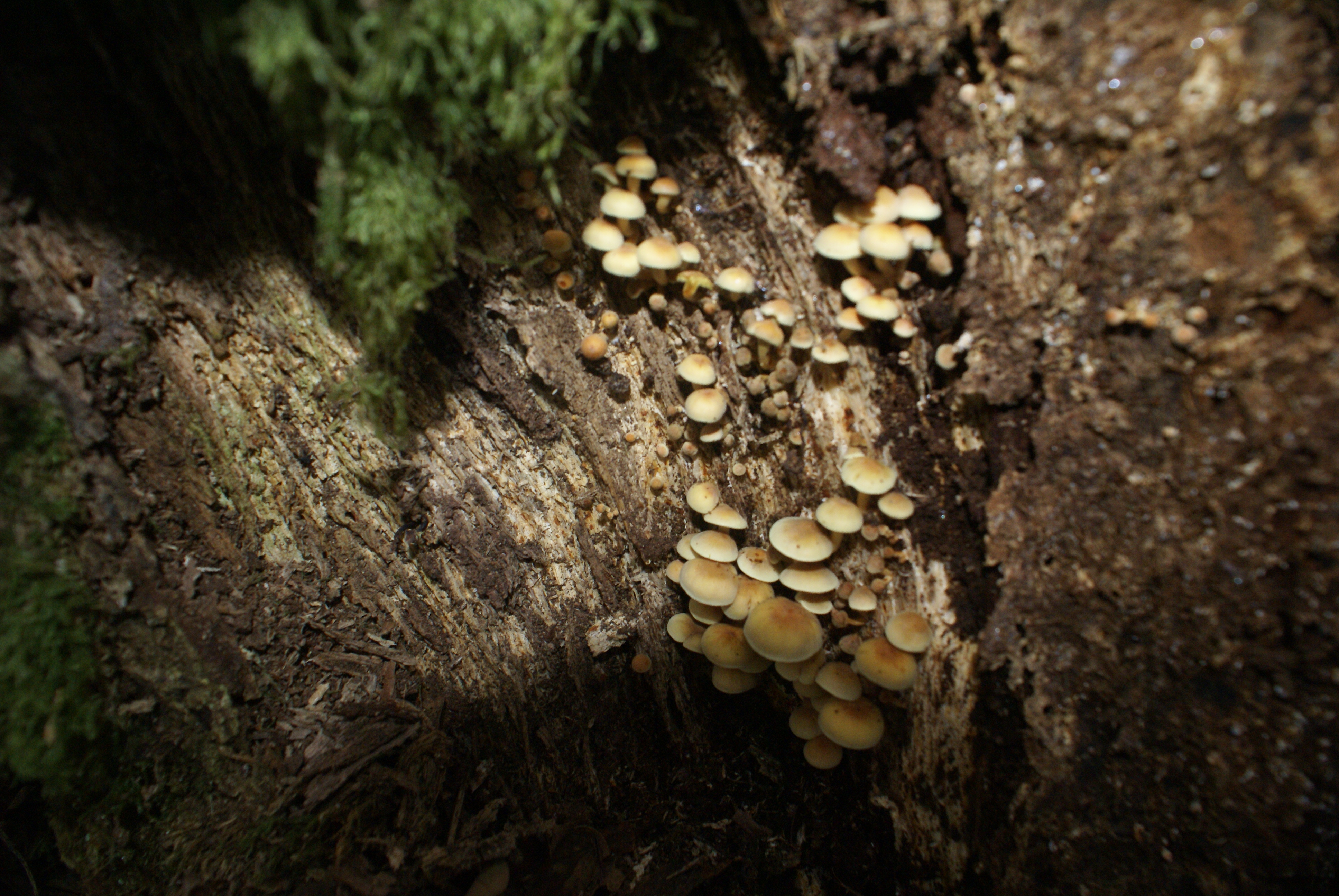
This is the season for fruiting fungi.

SONY DSC

Oak Woodland fungi

Soon the weather will change and a heavy frost will let loose the seasonal showers of  leaves that fall like snow and drift and swirl in the spicy air. For the time being they hang on.

SONY DSC

Standard
animal psychology, Ecology

The Cynic and the Bunny

SONY DSC

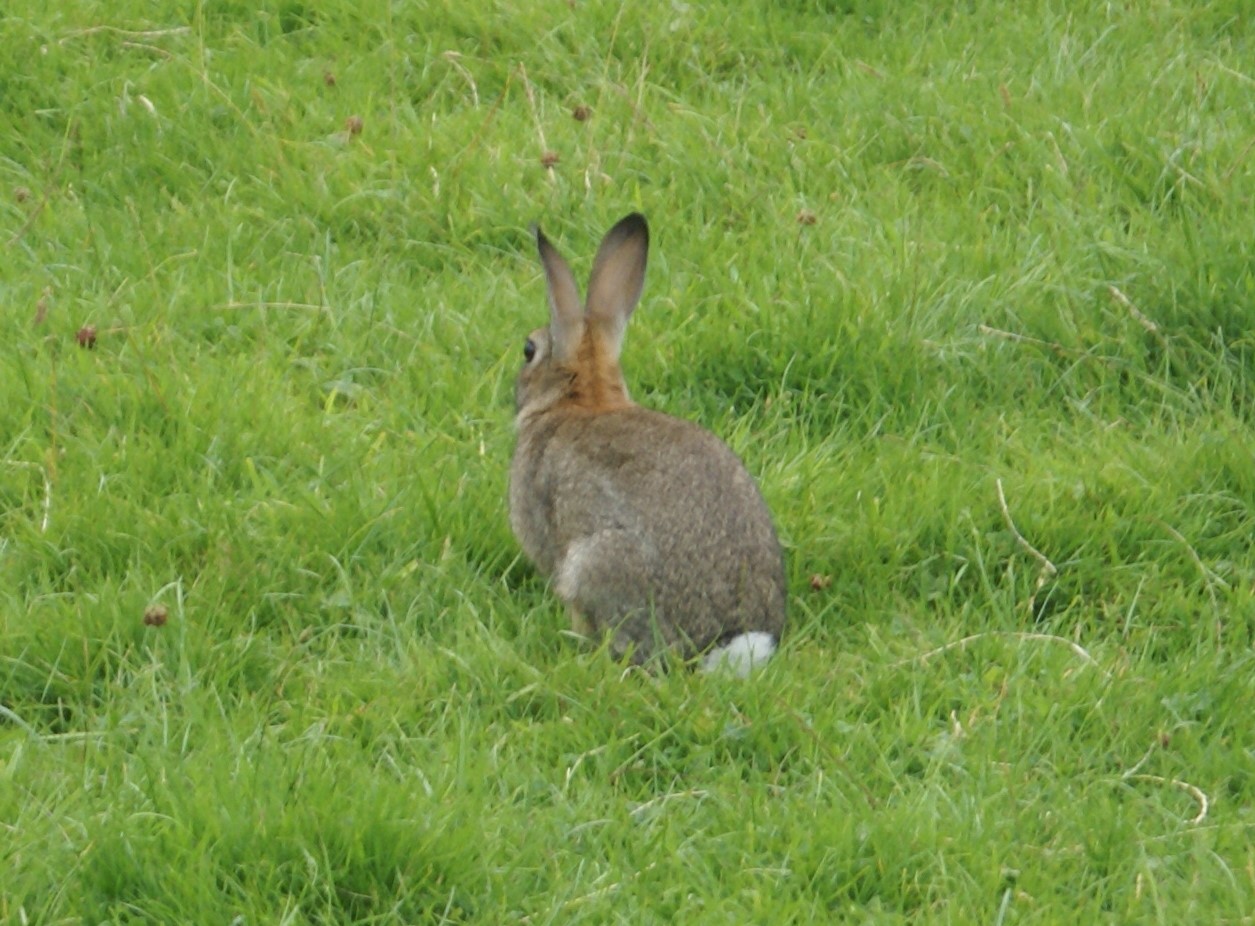
Here’s the Bunny — he’s started hanging around our yard — not very sensible as you know we have killer cats who eat a baby rabbit  a day at this time of year.  This bunny is larger than the ones they usually catch but he would still fit through the cat-flap so he’d better look out.

SONY DSC

He sits (he could be a she)  and he watches (can you see that his eyes are arranged like a sheep’s, so that he can see almost all around himself) so he knows I’m there — clomping up behind him in my wellies.  He doesn’t lollop off until the dog bounds up to sniff him.

SONY DSC

Off he lollops with his bobtail flashing

Pedro, the dog, can kill rabbits, but all he wants to do with this one is sniff it — perhaps he needs to know exactly what it is as it is behaving in such a peculiar way — this bold bunny.

When Pedro was young he used to bring in live baby rabbits, we called them punk rabbits as he licked their fur into spikes, he would put them down in front of us and cock his head enquiringly, ‘ Can we keep it?’ he seemed to ask.  They were all liberated into the big outdoors and probably eaten by the unsentimental buzzard — ‘This rabbit tastes odd!’

Next time I see the bold bunny, I’m inclined to feed it some sheep nuts; perhaps this is how rabbits were domesticated or, more likely, it’s a sick rabbit — it’s wits dimmed by disease and protected from predation by the instinct of predators not to eat infected meat (unless they really have to).

It doesn’t seem to have any features of myxomatosis, its eyes are clear and not running with pus, it has no obvious tumours, though now I come to think of it, that cheek is rather chubby.  British rabbits are supposed to be getting some degree of resistance to myxomatosis which we haven’t seen since we’ve lived here but I still remember the short-lived delight I had as a child — being able to run up to a furry creature and it not to run away and my mother’s panicky ‘Don’t touch it!’

Perhaps I will offer it some sheep nuts if I see it again — you never know — hope might triumph over cynicism, just occasionally.

Standard
animal psychology, Ecology

Opportunist crime in the South West

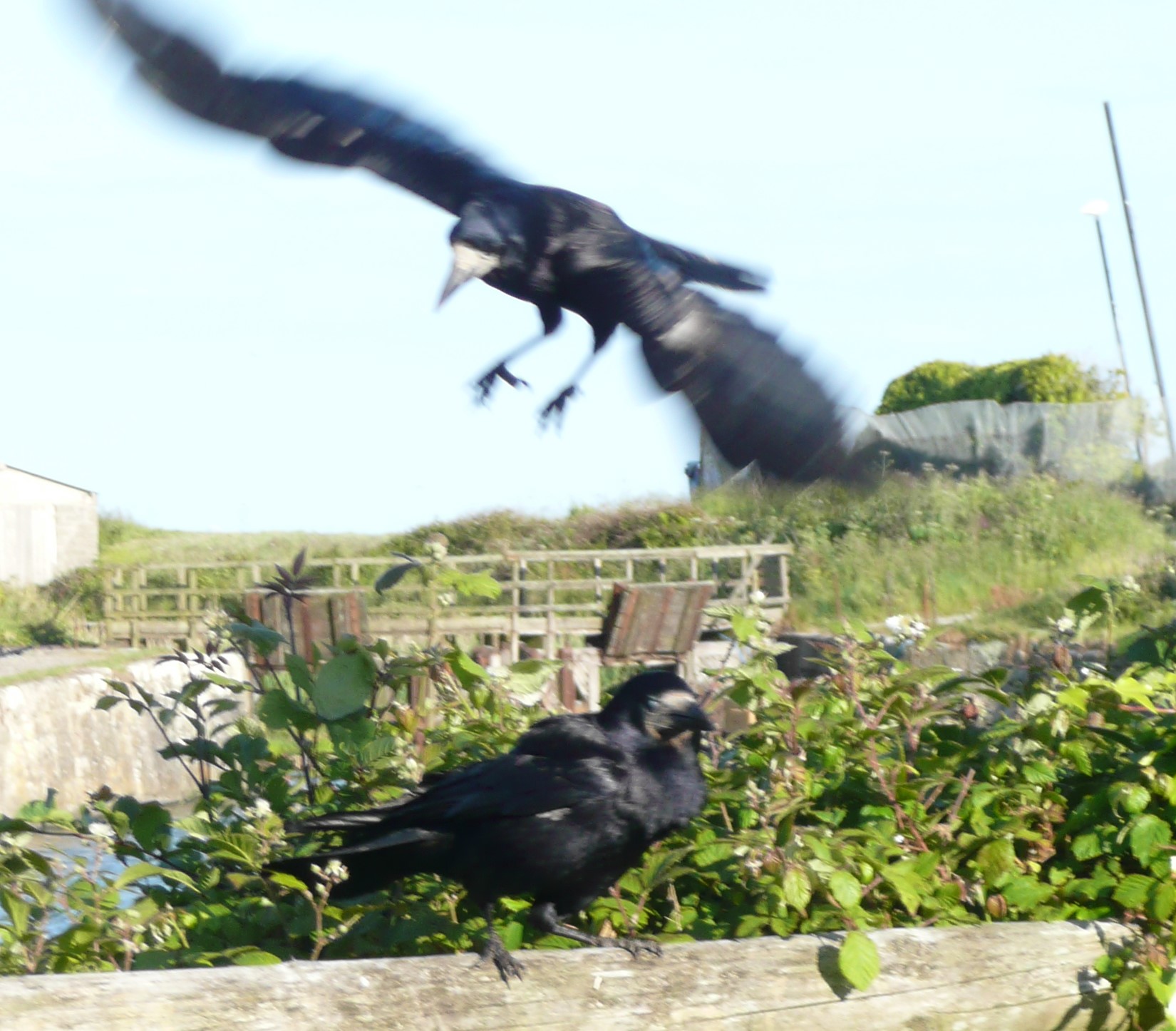
Mastermind and Lookout

Mastermind and Lookout

P1050691 (2)

At The first opportunity they swoop

P1050693 (3)

They divide the loot.

Intrusion from a rival gang

Intrusion from a rival gang

P1050694 (2)

Rich chippings!

P1050695 (3)

Bold, remorseless and organised

Never underestimate the adaptability of a Corvid — this gang of rooks cooperate to exploit the opportunities at the beer garden at the Ship Inn, Pentewan, Cornwall, ousting the traditional scavengers.

Standard
Ecology

Nymphs and Shepherds

Just two years ago we put the bung into the plug hole of our newly dug pond and let Nature do the rest.

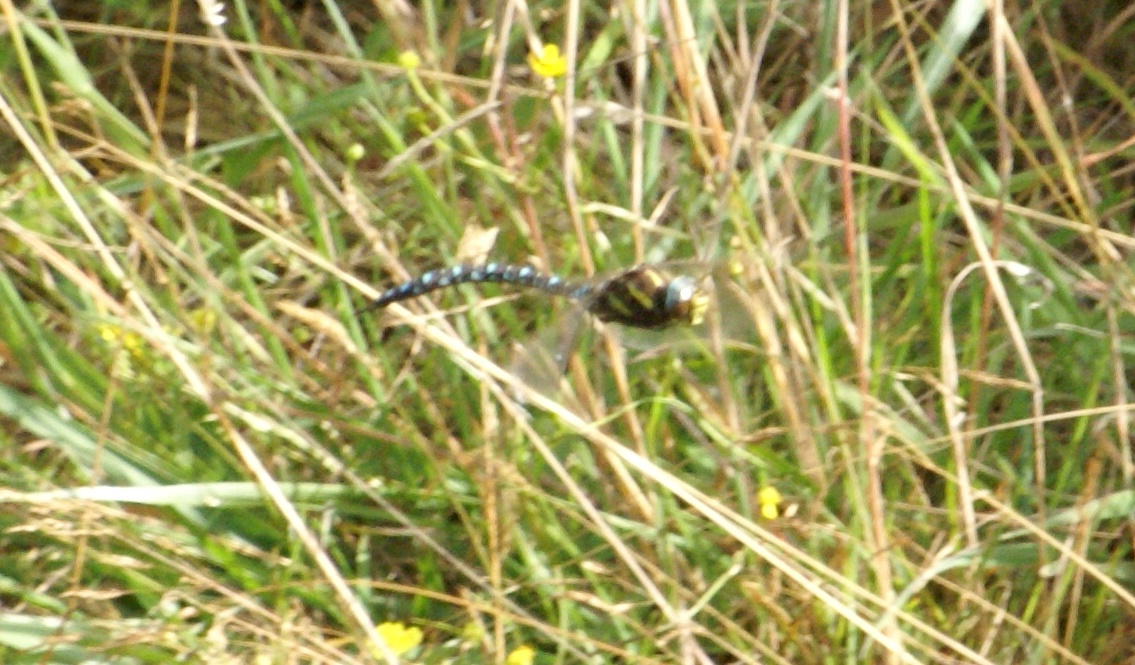
Common Hawker Dragonfly defending his new territory.

Common Hawker Dragonfly defending his new territory.

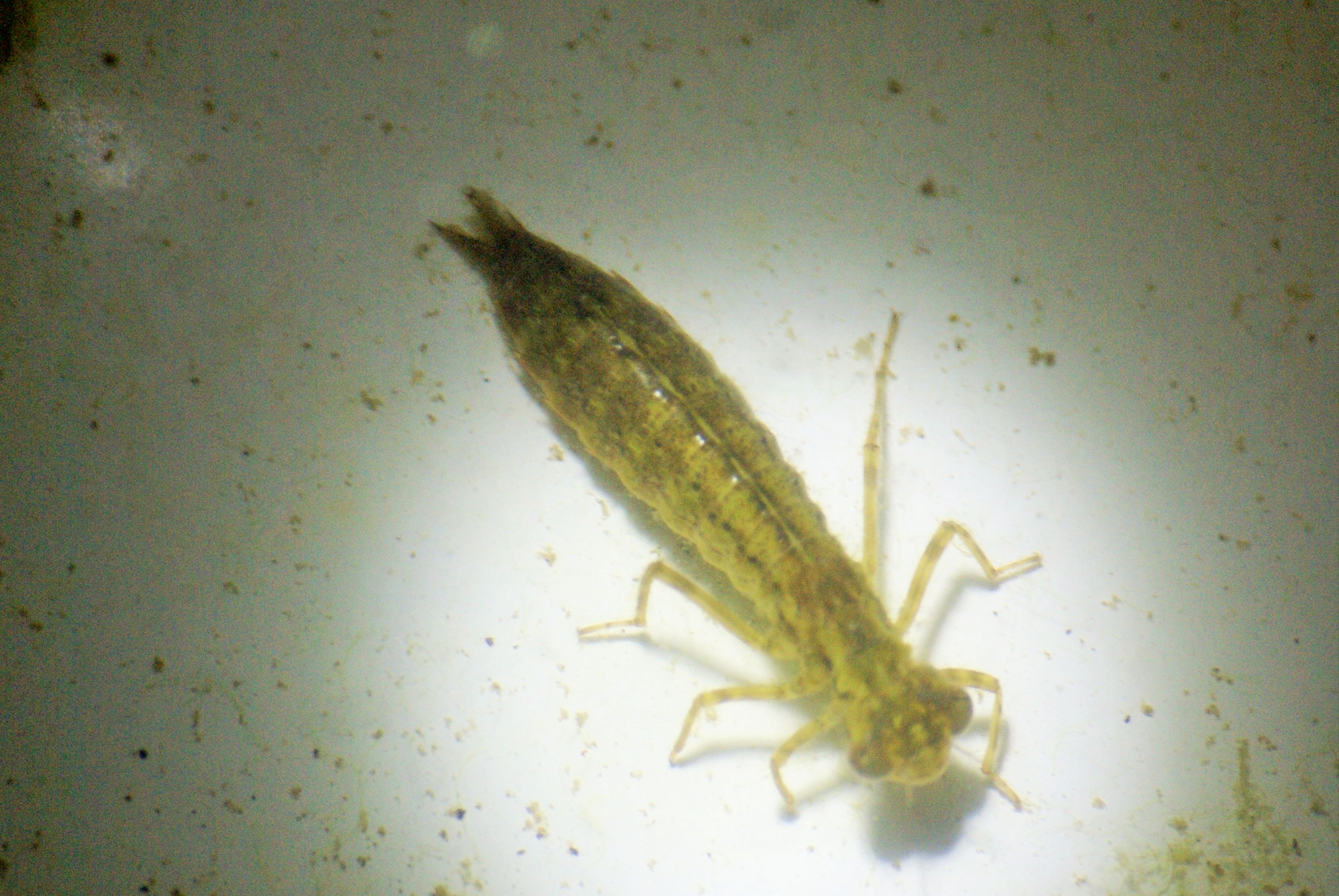
Last summer this Common Hawker Dragonfly patrolled its banks and skirmished with intruders for the territory, occasionally looping the loop with a yellow spotted female of his species who must have gone on to lay her eggs in the water, because look what we just found!

Aeshna juncea -- Common Hawker Dragonfly Nymph

Aeshna juncea — Common Hawker Dragonfly Nymph

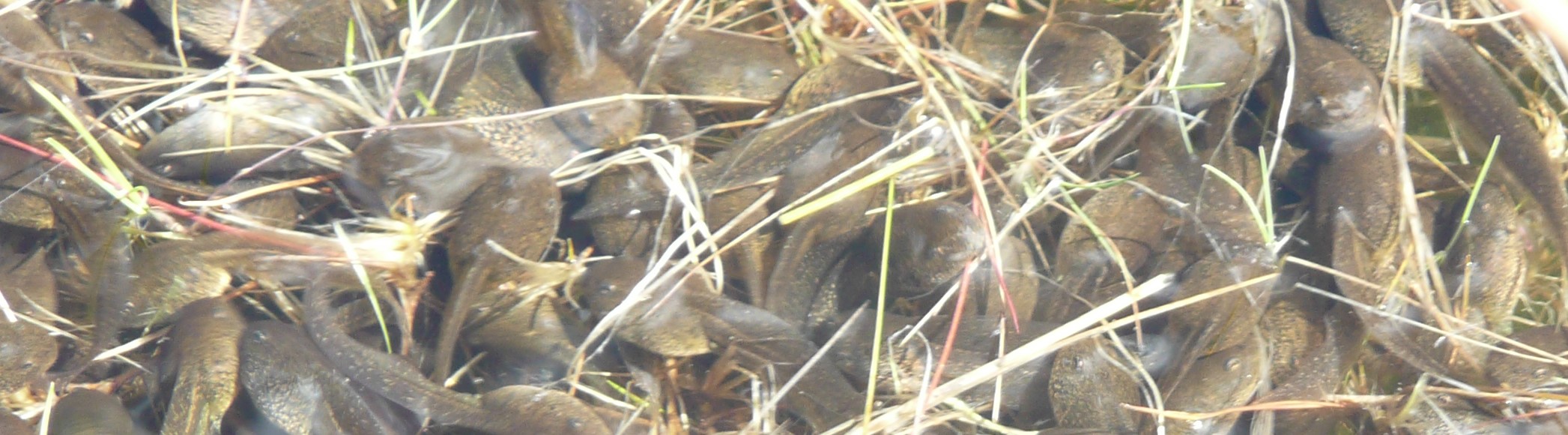
And that wasn’t all — the water is alive with biological activity, a million tadpoles whizz around our pond-dipping bucket, getting in the way and obscuring our view of the newts and myriad nymphs — not so easy to identify in life because most of the pictures are of exuvia (the dried up skins of the nymphs, abandoned by the adults after they emerge).   The harder you look the more nymphs appear and all are interacting — some snapping at passers by, others knocked over by a clumsy water beetle — a microcosm.

Here are a few that my grand-daughter helped sort out and photograph–

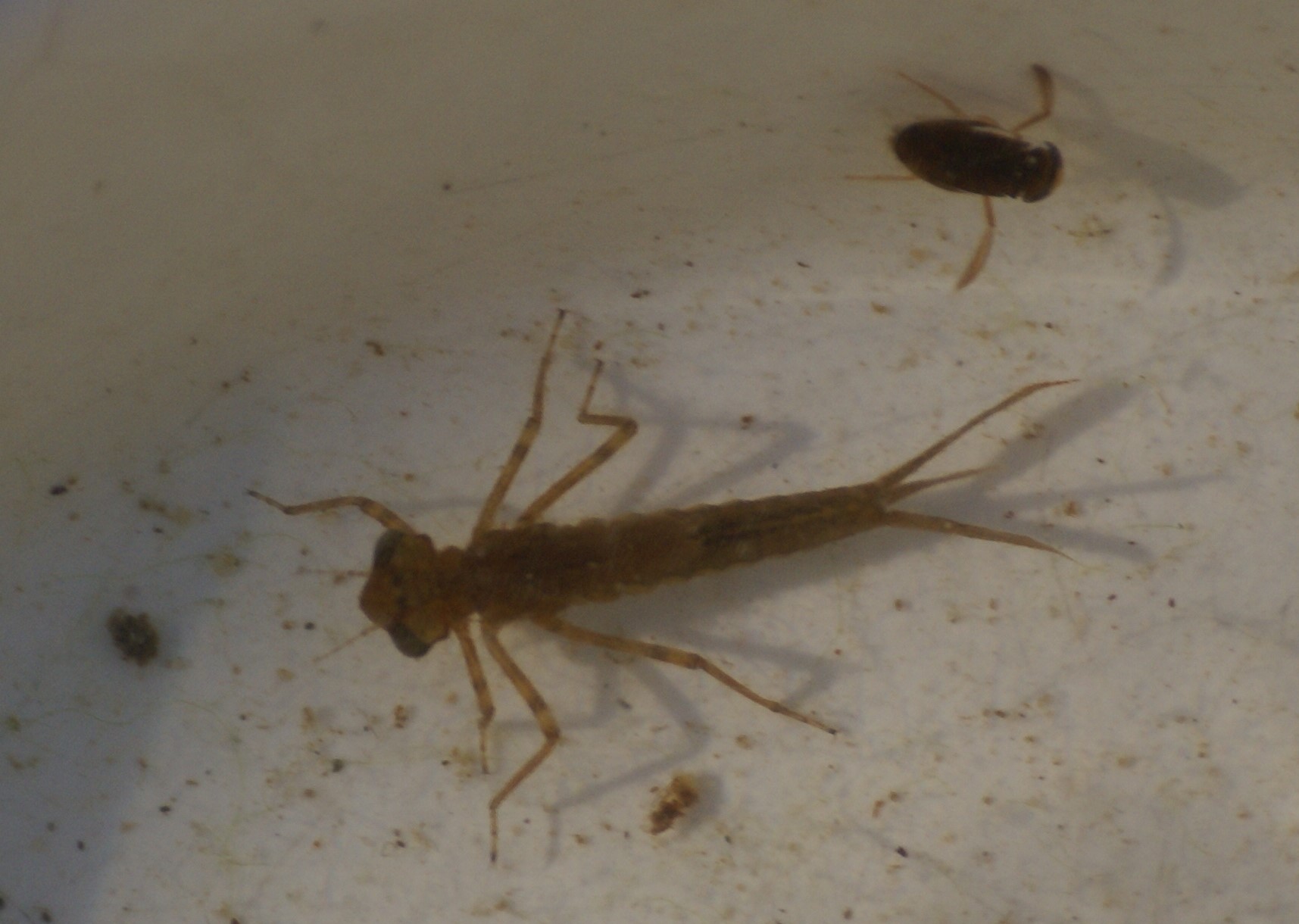
Damselfly nymph -- probably Enallagma cyathigerum being buzzed by a Common Water Boatman

Damselfly nymph — probably Enallagma cyathigerum being buzzed by a Common Water Boatman

The identification is more to do with common things being common and having seen a lot of the adults flitting about last summer — here’s one of them —

Common Blue Damselfly (probably).

Common Blue Damselfly (probably).

Blue and Azure damselflies are tricky to distinguish — especially when they are alive!

And what about our friend Libellulia depressa, the Broad Bodied Chaser, the first Dragonfly we spotted by the new pond (often the first to colonise a new pond, said the book, and they were) —

I think this could be one of his offspring

Fat bottomed nymph -- maybe an early Chaser (Libelullia depressa) or a Darter (Sympetrum spp.)

Fat bottomed nymph — maybe an early Chaser (Libelullia depressa) or a Darter (Sympetrum spp.)

Please comment if you think I am wrong in any of my identification — I may well be, but you have to start somewhere!

Standard
Ecology

Spring Building Boom

Spring creeps slowly up our valley and in the last  week we have had 70 mm of rainfall, which is not at all unusual, but yesterday the sun came out.P1050503 (2)The new vibrant verges have splashes of bluebells and the pond surface trembles with life as the tadpoles jostle for a place in the sun.

Tadpoles jostle for the sun's warmth

Yesterday the first orange tip butterflies flitted between the pink flowers of the lady’s smock, the cuckoo called from the thicket on the hill and a tiny frog had his first taste of fresh air, albeit with the assistance of the author.

P1050483

I put him back where I found him.

But best of all –yesterday our swallows returned, flapping at our bedroom window  as the first rays of the sun struck the front of the house, they used to nest in this barn until we made it our home and ten years later still try to return to the beam above our bed.  We close the window and reluctantly they swoop off and renovate last year’s nests in the wood shed and perhaps accept our offer of a beam in the new barn.

The house martins that built their nest under the north facing eaves last year for the first time are back in force, at least two pairs.  Last year’s nest fell down in the winter but it looks as if they are preparing to rebuild.

The house sparrows are back in the hole behind the downspout that we left for them when we re-pointed (not because it was difficult to get at) and, needless to say, all is quiet on the bird-box front.

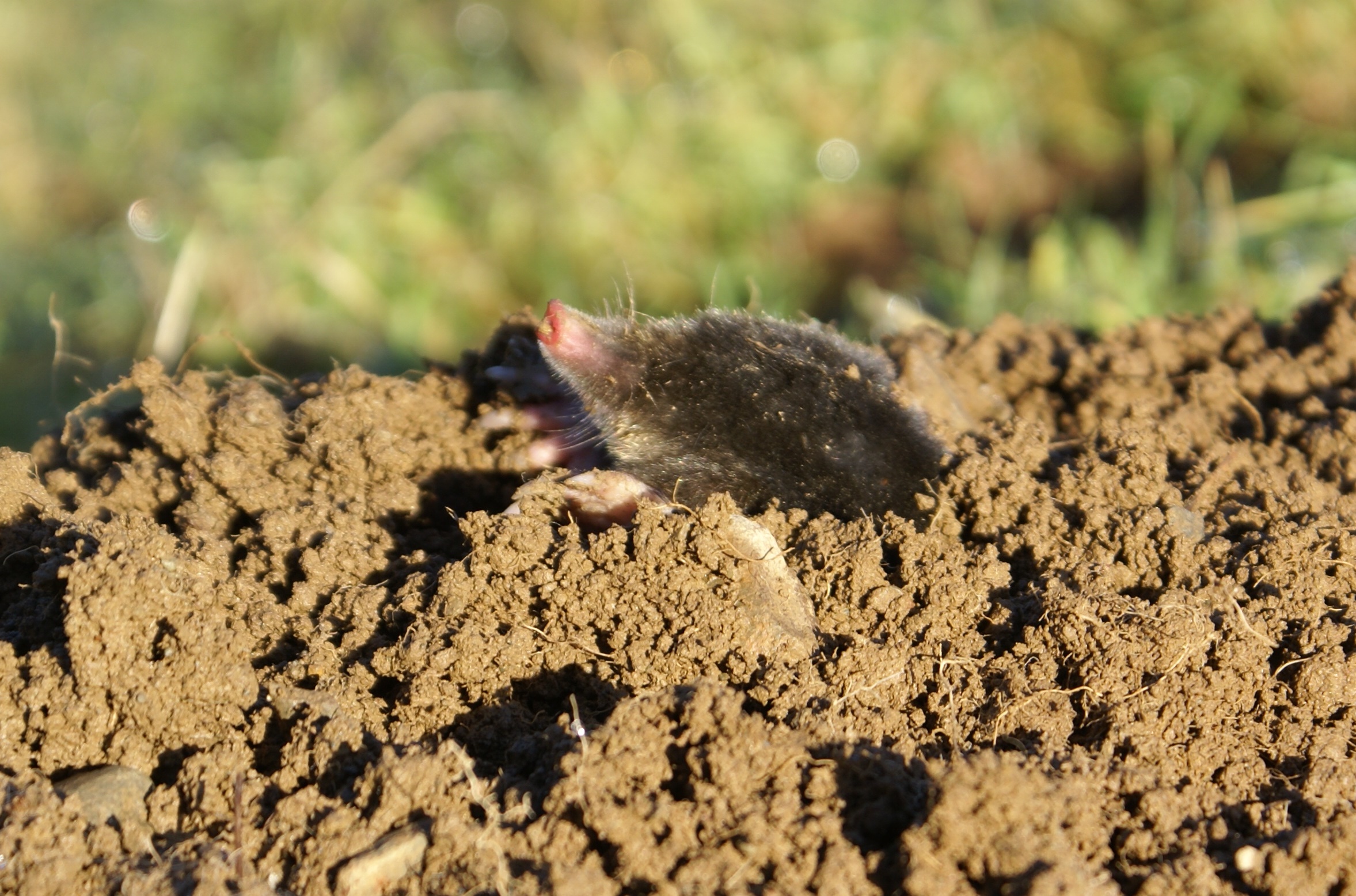
The moles have been busy re-boring their runs and Alan, not convinced by my argument that their efforts improve the drainage of our fields and that they should be left to get on with the job, stomped off to knock down mole hills. By tea time the mole hills were no more than a memory, smears on the pristine sward.  By breakfast today, with monumental earth moving ability, they had rebuilt three or four in each field, shifting hundreds of times their own weight in wet earth.  My admiration for the little velvet suited engineer is not well received by my spouse!

Rare sighting of mole. Is it still raining?

Local Hero!

Standard
Ecology, Hill Farming

The Midwife has arrived…

in her black and white uniform.

SONY DSCWho called her?  Nobody knows.  But she knows: she knows exactly when every baby is due and she moves in a day or so before to watch over the mother.

Unlike her human counterpart she has no concern for the mother, she is here to collect the placenta and the membranes.  There’ll be no rotting flesh on our fields to attract predators.  All will be whisked away by the midwife bird.

She, or he, has been working up the valley following the wave of lambing which creeps up with the warming air and the growth of the grass.  The first sign  of her presence is a smear of wool on the field;  she has taken the liberty of pulling some wool from a ewe’s back to line her own nest and leaves a little on the grass, alarming as she chose the wool marked with red marker — does the colour of blood attracts her?

Magpies are hated by most farmers because of their partiality to another delicacy: they will peck the eyes from dead sheep and sometimes from not-quite-dead sheep and even from the head of a partially born lamb.

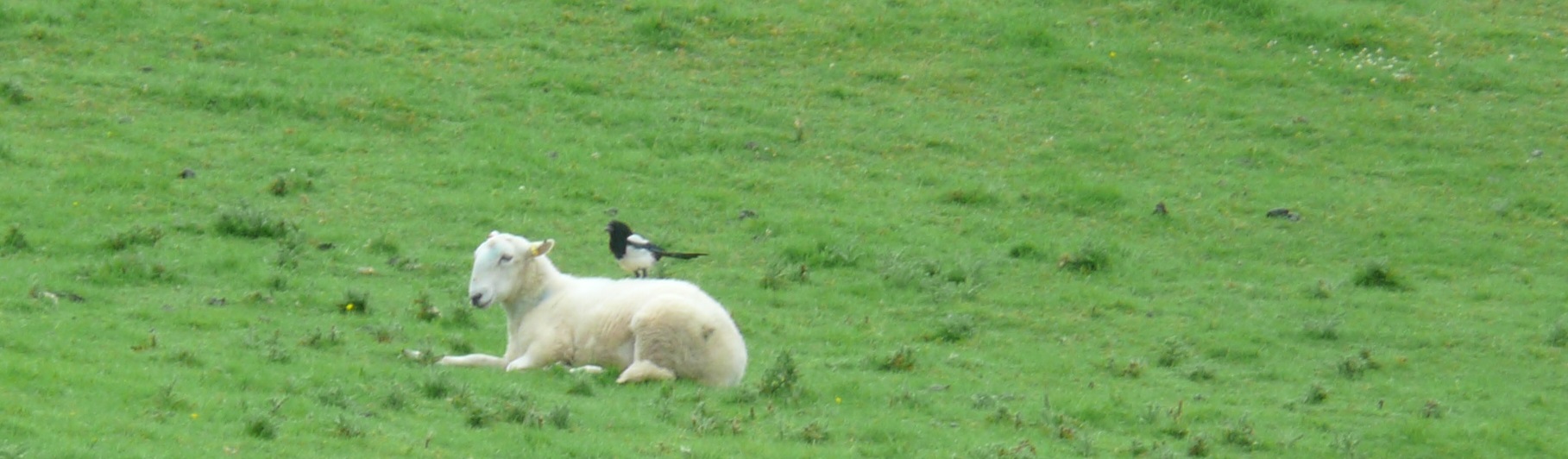
This upsets farmers (not surprisingly) but the flash of this bold and watchful bird will often alert him to a miscarriage, premature lambing or a fallen ewe and you can see magpies on occasions, perched on the back of a sheep, patiently picking out maggots from soiled wool which, if left, would attack the skin and eat into the sheep’s flesh causing rapid septicaemia from fly-strike and death if untreated.

Magpie looking for parasites and maggots

Magpie looking for parasites and maggots

The midwife bird is here to warn you that lambing is nigh — ovine tempers are frayed but the fields are drying out nicely so

SONY DSC

brace yourselves for an avalanche of lambs.

Standard
Ecology, Humour

Eye shine — you shine but I don’t

I spend a lot of my time with individuals who see the world through very different eyes.

For a start their eyes shine at night, not with avarice or the holy spirit but with any light that they catch in their eye —

Eyeshine in Welsh Mountain Sheep

Eyeshine in Welsh Mountain Sheep

You see they are a prey species and they stand out all night in the darkest fields uneasily looking out for wolves and rustlers so they need to see in the dark.  One of the adaptions that many nocturnal mammals have made is to acquire a tapetum lucidum, a biological mirror behind their translucent retina, so that light stimulates the retina as it falls upon it and stimulates the retina’s photosensitive cells again as it bounces off the mirror layer heading back the way it came — this helps them to see in the dark.

So when you go out in the field at night with your torch and all the sheep turn to look at you because they think you are something spooky, all their eyes light up with intense pale green light, all directed at you, which is definitely spooky.

Dogs have a tapetum lucidum too — this one shines bright green.

P1050160 (2)

There’s a sheep behind him.  Foxes have eyes that glow green, different species have variation in their tapetum lucidum and glow differently — hunters who went out lamping for rabbits and foxes (I think it’s illegal so they don’t do it anymore) will tell you they can tell what they are shooting by the shade of the eyeshine, as they charge around in a truck with a lamp on top picking up eye glow and shooting things — very fortunately humans do not have a tapetum lucidum, otherwise more of them would get shot.

Cats are famous for their glowing eyes and that is where I got into trouble.  I spent a happy evening flashing and snapping at our cats, trying to demonstrate their eyeshine and  their strange lozenge shaped pupils that constrict down to a tight vertical slit in bright light — you see one of the problems for these creatures, who are adapted for the dark, is managing bright light.  Mainly they shut their eyes.

Cat dealing with bright light

Cat dealing with bright light


Minutes after this unsuccessful photo-shoot, Midnight (our short haired black cat) started doing something very strange and alarming, kicking his right foot out then grabbing at his mouth with both his paws as if trying to pull something out of his mouth — he did this repeatedly making a peculiar slavvery noise. There wasn’t anything in his mouth or throat, he wasn’t salivating or retching and there was no sign of a bite or sting on his lips.  The other cat and the dog looked worried and followed him round fussing as he repeated his odd stereotyped gestures, like non-verbal Tourette’s Syndrome.  OMG he’s been out and got a head injury, or a brain tumour…   Or epilepsy due to flashing lights.

There then ensued a period of research on the internet.  While the cat twitched, quietly now, on its chair by the fire, the other two animals sat upright on the floor next to him watching anxiously.

By the time my husband had got home I had cracked it — Feline Hyperaesthsia Syndrome…  Can be provoked by stress ( like being chased around the house with a flashlight).  This is a diagnosis of exclusion and mindful of vet’s bills we adopted an expectant policy — we’ll watch and expect it will get better.

It did — for twelve hours or so he looked spaced-out between twitches that gradually got less complicated and with longer gaps between them– first the kicking disappeared, than the grabbing at his mouth, then the licking of his lips gradually stopped and he had a long sleep.  Then he woke up and had a large breakfast and has been fine since.  We didn’t photograph any of this — we thought I had done enough harm.

Returning to the great mysteries of the mammalian eyes that follow me daily —

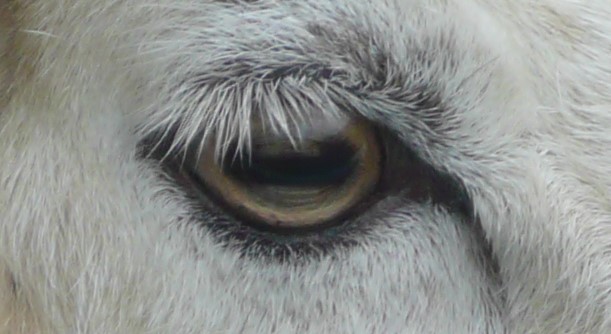
Horizontal rectangular pupil and fetching eyeshade of pale lashes

Horizontal rectangular pupil and fetching eyeshade of pale lashes

 Why do cats have vertical pupils and sheep horizontal ones?

They both need to be able to restrict the bright light of the mid-day sun.   Cats need very sharp vision, right in front of them and the potential to use a whole cross section of their lens (this has complicated optic reasons to do with putting back together the spectrum that bending light tends to produce), thus they need a vertical slit because they are predators and they pounce on little creatures right in front of them.

Sheep need a more global view of the world, they live on grassland and need to be able to spot movement all around.

P1050147 (2)


With her protruding eyes and wide pupils, she can see from right in front and to right back along her flanks.  Provided she walks in a slight zig-zag, which they do, she can see all around herself, even in bright weather when her pupils are constricted — she couldn’t do this with a vertical pupil.

SONY DSC

Dogs have round pupils like us but can see in the dark — they have reflectors at the back of their eyes which shine but are not so sensitive to the light that they need slit pupils to protect themselves by day — I suspect this is because at night they see mainly with their noses!

Standard
Ecology, Humour

Kissing Frogs


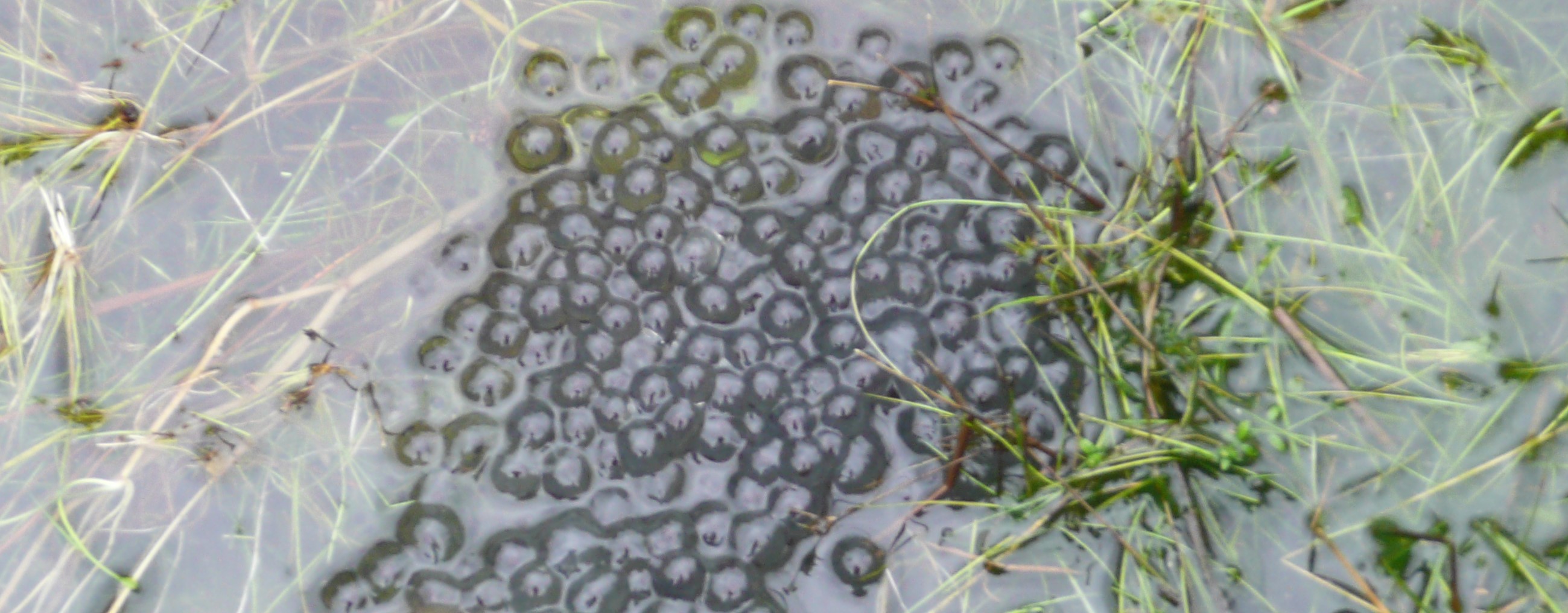
Now is the time to look for signs of Spring and here, where there is still snow in the shadow of the hedges, we haven’t seen a bulging bud.  But the birds know something’s up!  They have a sense of anticipation and an irritable awareness of their territory — the robins are scrapping and the chaffinches have started to sing and me?  Well, I go out every morning to look for frogspawn and on the morning after Valentine’s night — there it is!

P1050051 (2)

Something for our newts to eat.

Newt

Otherwise things look quite wintery though the moss is strangely spruced up and vibrant.

It’s making the most of the early sunlight before being caste into shadow by the burgeoning verdure that will soon overwhelm it — the uncurling fronds of the ferns  and bracken and the canopy of oak leaves.

And the lichens are looking shaggy after a winter unfettered by the competition and unbroken by the resting bottoms of weary ramblers.

P1050082

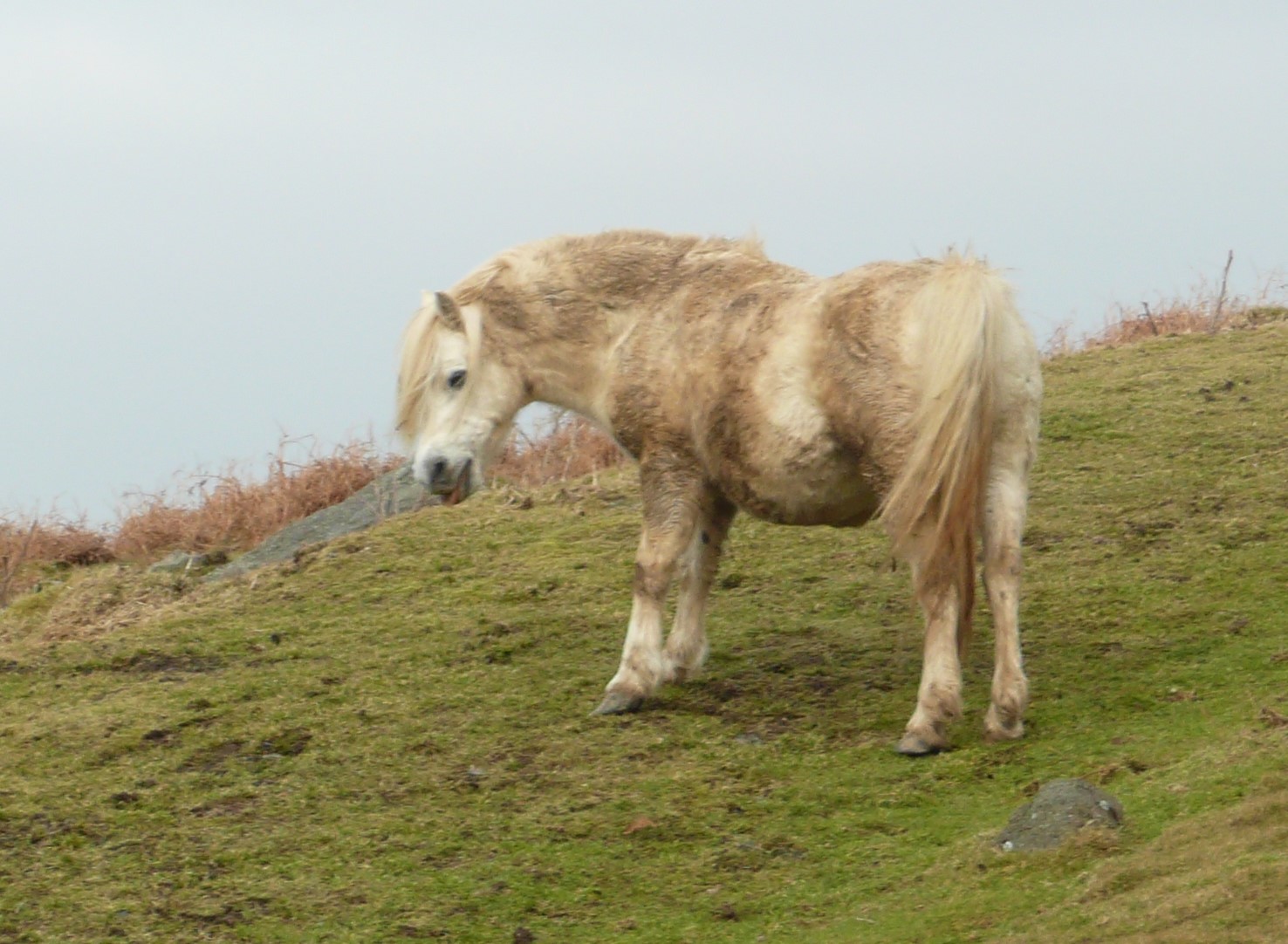
The wild unicorn on Van Hill still has his winter coat and hasn’t started yet to get his new horn when he will hide in the woods like the moss.

P1050098 (2)

Standard
Ecology, Hill Farming, Humour, lifestyle

Hearts of Oak

‘The measure of a man’s importance is the size and number of his woodpiles’.

I was told this fact many years ago in rural France — it made a great impression — so contradictory was it to the progressive philosophies of my young French friends that I found it oddly reassuring — and still do!

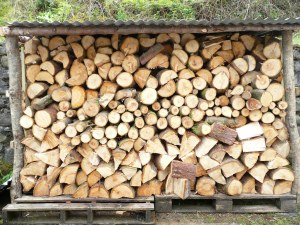
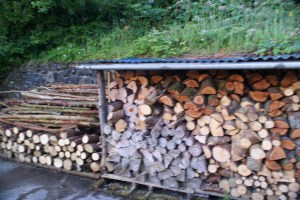
We have woodpiles — burning wood when you have lots of trees is great but trees need cutting down and they don’t go quietly, they have a lot of stored energy and can lash out ferociously.  They need logging and drying and wood burns amazingly quickly so you need loads and plenty of room for storage.  We have an old barn, thirty feet by twenty feet already full of timber.
Last back end (as they say in Lancashire) we culled a Leylandii hedge, grown 40 feet high in a blink of Mother Nature’s eye. We cut off the branches and burned the brush-wood —
SONY DSC

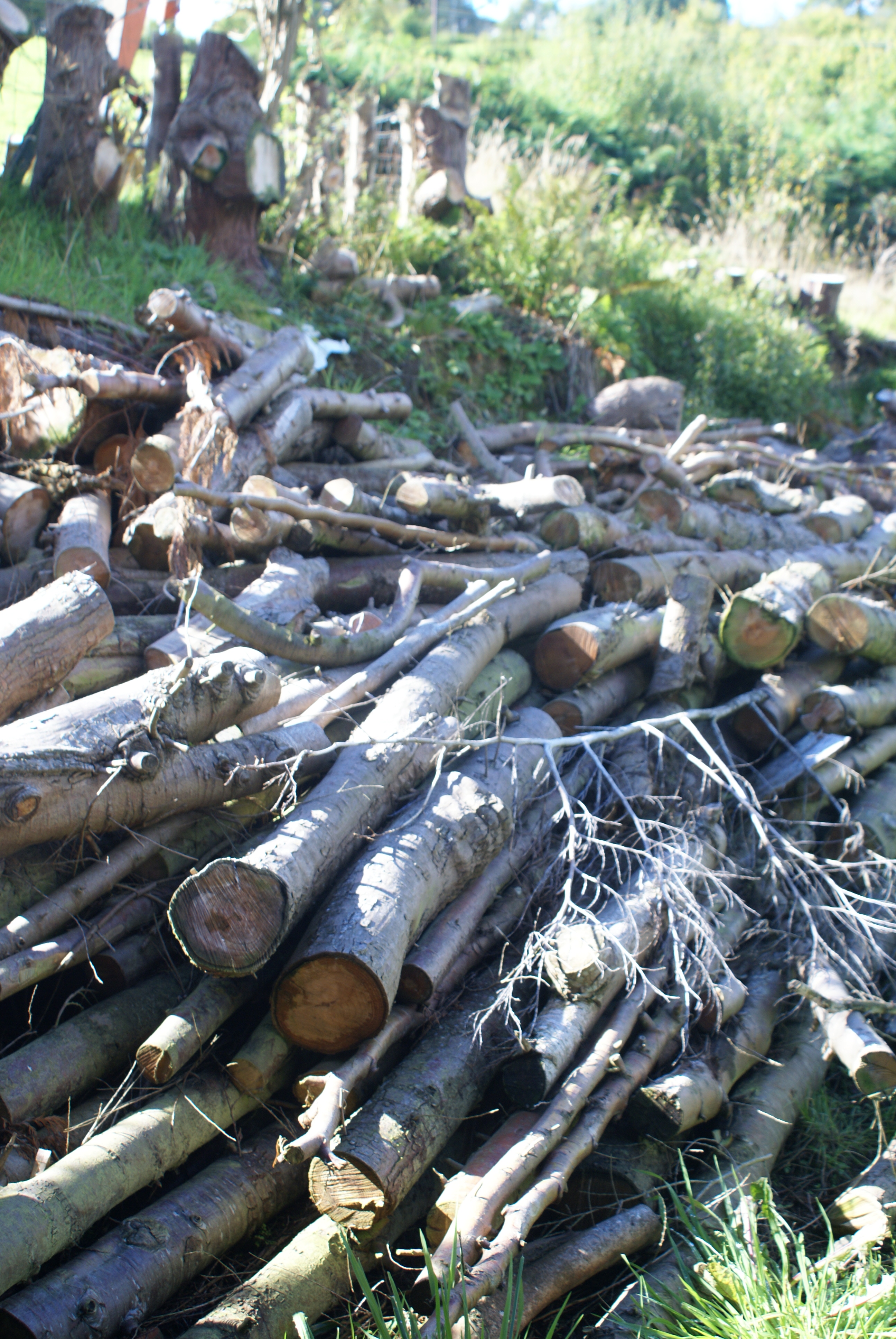
— but when the exalting roar of the chain saw had stalled for the last time we were left with a daunting amount of timber — a mountain where our new workshop was waiting to be built.

SONY DSC

There it lay until last week when we were taken in hand!

Not by the Forestry Commission or the satellite snooperage of Rural Affairs, Wales (it was nothing to do with illicit romance in the hills) — it wasn’t even our very grown-up children who, though they never tidied their rooms, now worry about the state of their decrepit parents.   No, it was a  young neighbour (well relatively young) who knew that all we needed was a tiny push, a little encouragement.

‘I’ll come and help you on Tuesday — I’ve nothing much on this time of the year — I’ll be with you at midday.’

We refused, we protested, we were tempted, we said he’d have to have lunch (would there be meat? — Yes), he accepted, we capitulated, it was arranged and, in the intervening few days, we got on with what we should have been doing for months!

By the time Tuesday came we had started two new woodpiles and that day something strange happened — tree trunks scudded over the ground, whizzed through the air, crashed into trailers, flattened the saw trestle and just about spifflicated two pensioners temporarily under vigorous new management.

Chainsaws started willingly and logs marched to the music of the Sorcerer’s Apprentice jumping happily onto the new woodpiles.

By evening, by some miracle of effort and teamwork, well mainly one man’s effort (we helped as hard as we could and tried not to get in the way) we had uncovered the bare earth where our new workshop is to be sited.

crop

Temporarily repaired trestle on the almost cleared site — Digger just watched and didn’t help at all.


It’s a miracle.  Just another of the miracles of living here — Thank you David!

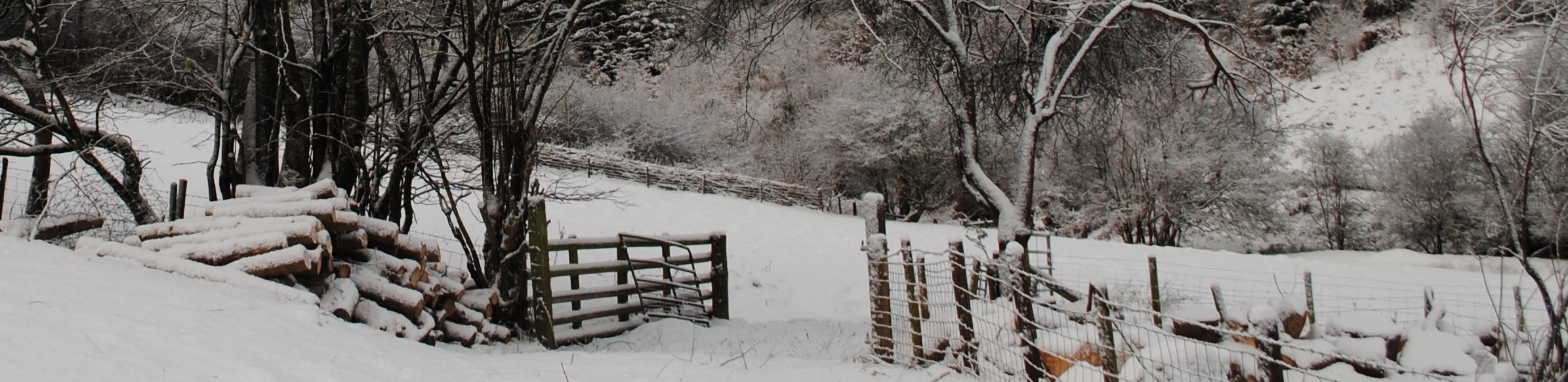
One of new woodpile waiting to be sheeted.

New Woodpile


Standard