Hill Farming, lifestyle, weather

Antidote to this dystopia

As Russia attacks Poland and Israel bombs Qatar, Bill goes to clean his teeth and shouts “there’s no water!”

“****!” says the householder, “the well must be dry!” Our well has never dried up but, I think to myself as I struggle into my waterproofs, it might have dropped below the outflow pipe.

“It is pouring with rain — it’s rained heavily all night.” says the man brandishing a dry toothbrush. “Surely it must be filling up fast.

“Airlock!” I shout, over my shoulder. Bill is busy filling buckets from the rainwater butts to flush the loos.
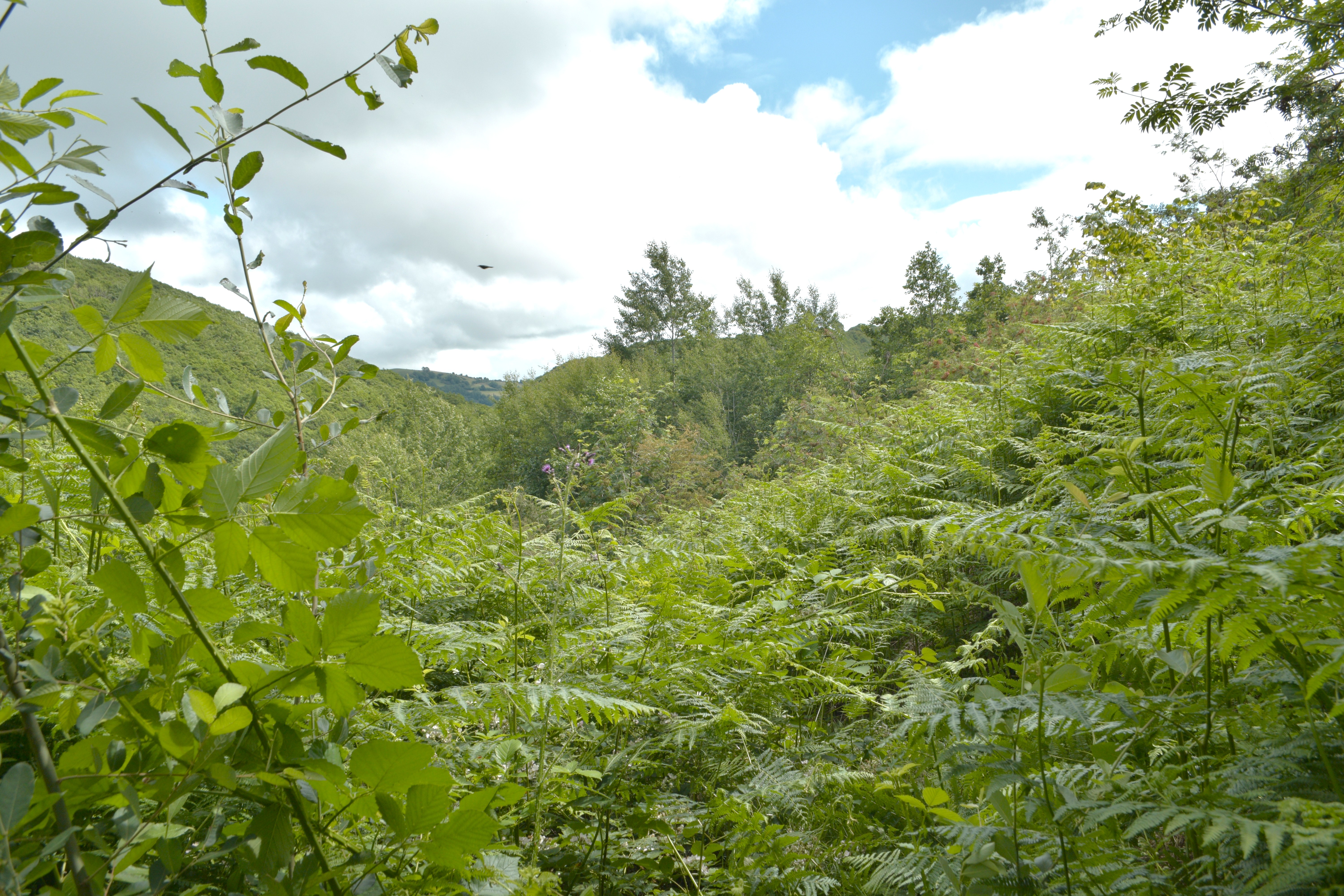
As I stride up the hill I think how low the reservoir was when we passed it yesterday. Here’s the track to our well, we cleared it in June but things grow rapidly here. In June, despite weeks of drought, the water was within 9 inches of the top.

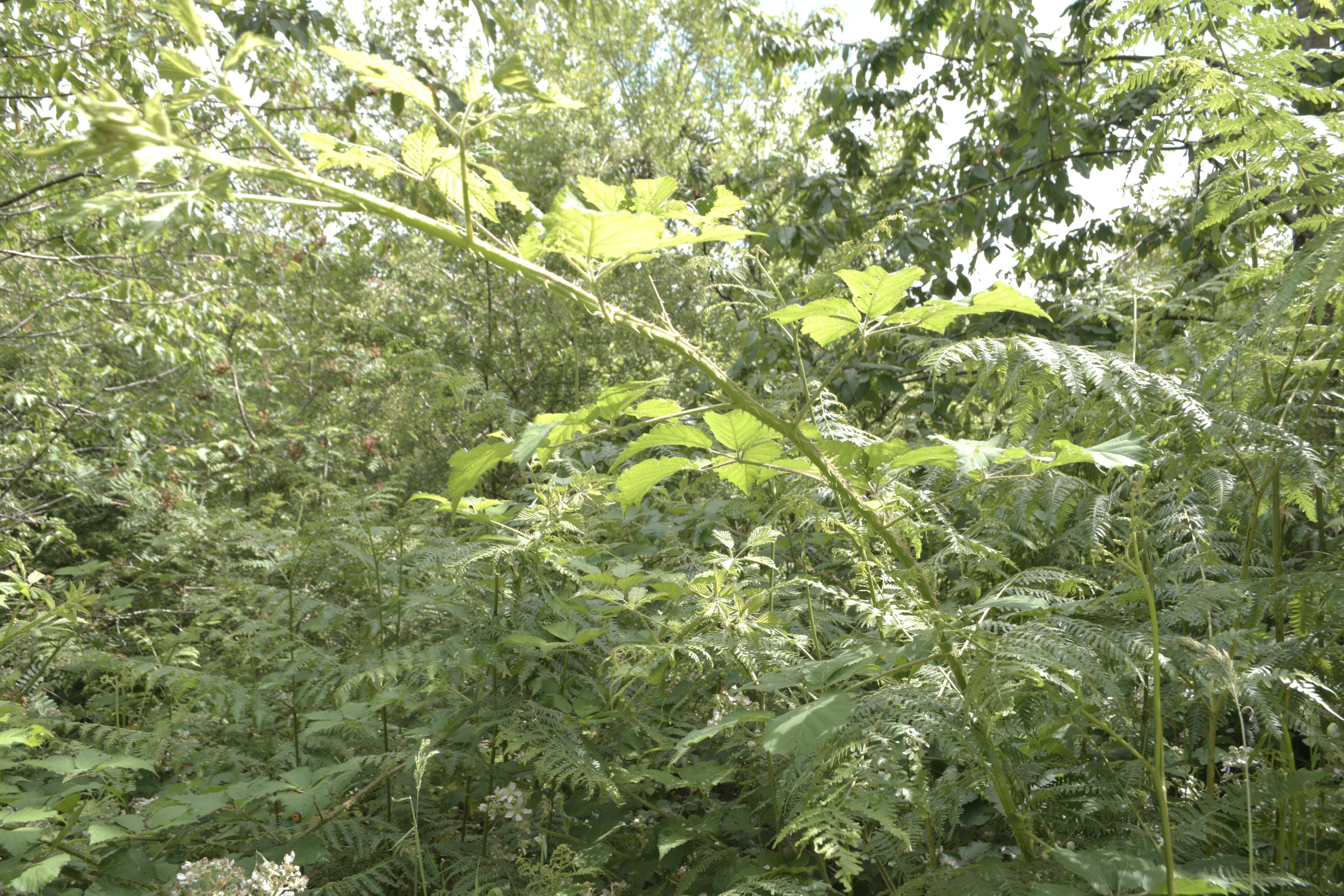
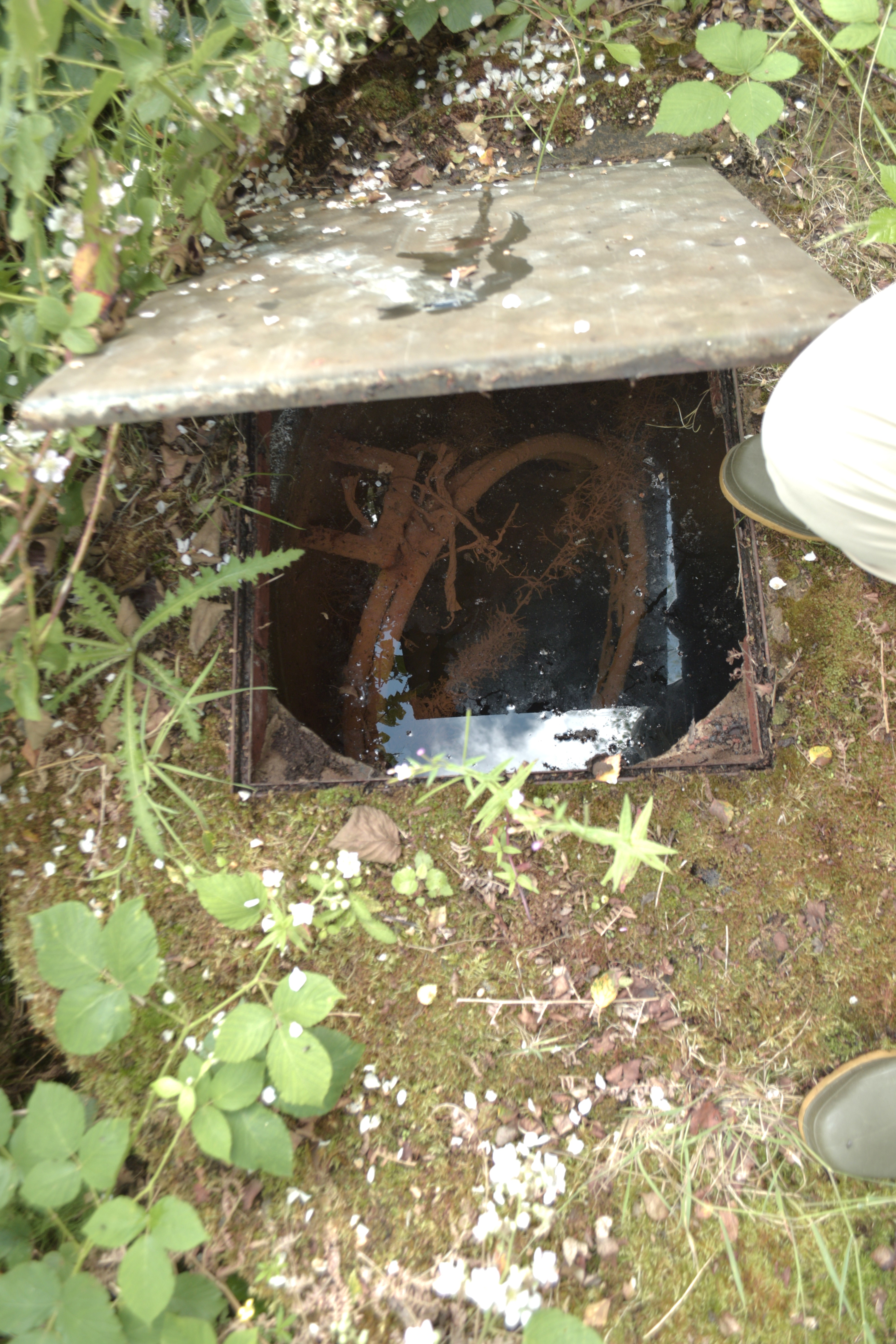
Now I’m not even confident that I can find it — it has gone missing before. I flail my way through the bracken and brambles and here it is… and I have remembered to bring a screw driver to open the cover.

The level is a good 7 feet, 2 meters, down, but the outflow pipe is submerged, can you see it at the bottom of the loop of pipe? The rain is now torrential, I slide back down the steep slope to fetch the kit to clear the area so that I can find the pipe we put in to wash out the dastardly air that has been sucked into the pipe to break the siphon.

Some hours later… Soaked again

A couple of hours of hacking and chopping and the stop-cock and the priming pipe are revealed and their relationship to the well which I photograph to help find them next time. In fact, this whole narrative is about recording events for our successor or, to be truthful, as an aide memoir for ourselves. The stop-cock is down a dark deep hole, longer than my arm, I decide not to mess with it, even if that means all the water goes straight back into the well.

Back to the house for dry clothes and some toast and coffee. “The next phase should be easier as nowadays we can communicate using the mobile phones.” I say. Bill points out that we don’t actually have to open and shut taps to preserve water as we try to fill the half mile of butyl pipe between the well and the house, “it will fill the lavatory cisterns then stop.”

“Oh, I suppose it will.” I say, not convinced, “Still, I’ll take the phone anyway.

Now all that is required is a bucket on a long rope, a funnel and a shepherd’s crook to push the bucket under the water while not falling head first into the orange abyss. I switch on the phone to contact the controller in the house. Rain spots the screen, I wipe it, it goes off — I do this several times before realising that the battery is flat and that my pockets are filling up with water. I tie up the phone in a rubber glove.

Faced with another wet hike back to the house I decide to give it a try anyway. Buckets of water are hauled up, like pussy in the well, and poured into the funnel balanced in the open blue pipe without allowing further ingress of air, this involves nifty thumb work. After 3 buckets full, the funnel stops emptying and the pipe appears to be primed, I screw the cap on, without crossing the thread, difficult with my fingers crossed, and make haste, carefully, to the house, it is important not to break a hip while doing these things.

“The pipes have been gurgling,” says Bill.

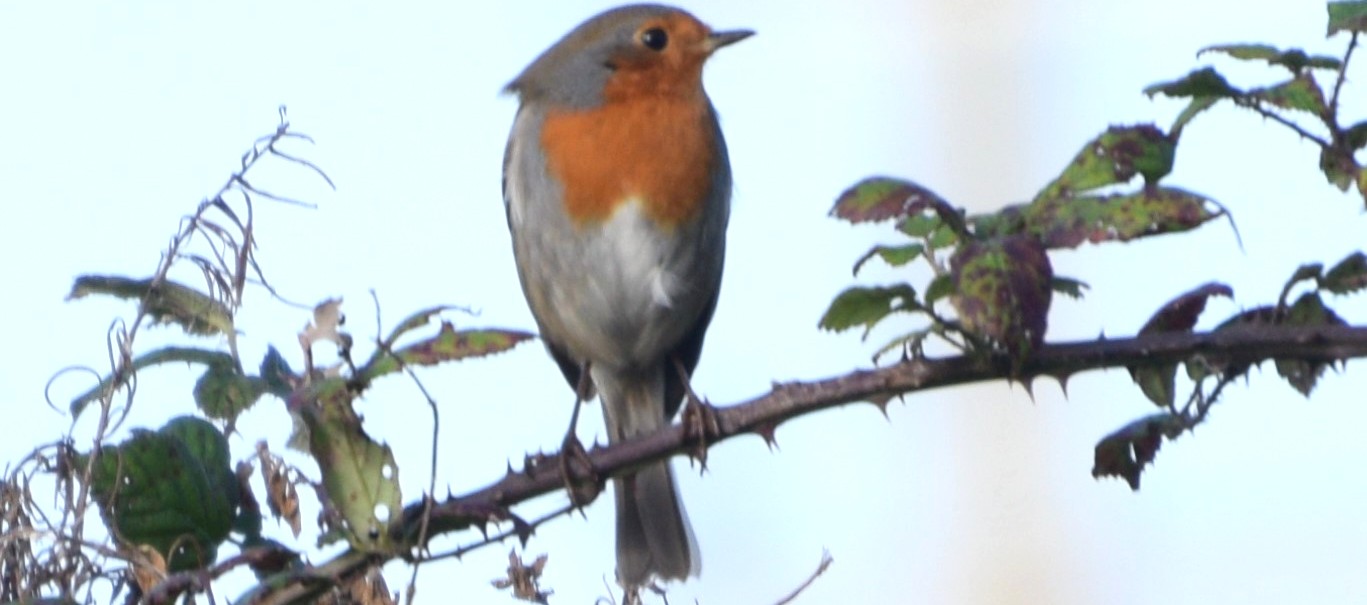
Holding our breath, we turn on the kitchen tap… It splutters, it flows!
Standard
Birds, Ecology, Hill Farming, Uncategorized

Faux Christmas?

A friend of mine has just returned to the UK having lived for several years on the other side of the globe. She explains her disorientation in time and space on the disruption to her seasons (I have no excuse!). It’s mid-summer here and mid-winter in New Zealand, where those who suffer from European nostalgia have a pretend Christmas.

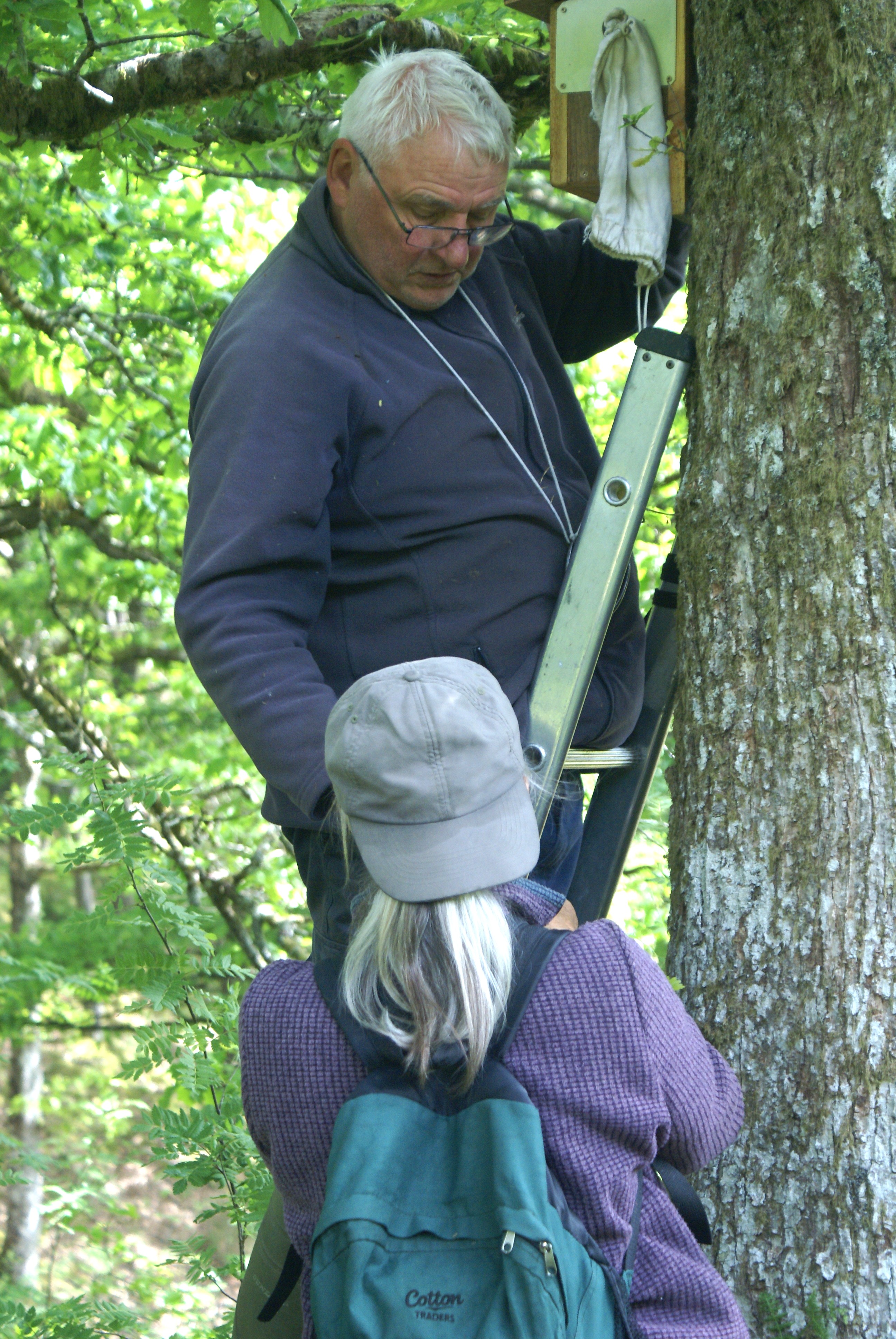
Here on our smallholding in Mid-Wales we do something similar — opening our gifts on one particular day. It’s exciting. It’s bird-ringing day! Not their necks so that we can roast them with pigs-in-blankets and plum pudding, but counting all the year’s baby birds, catching the fledgelings that are about to leave their nests and, in particular, those in our nest boxes and ringing them. A right of passage — a birdy Bar Mitzvah — we should have a party!

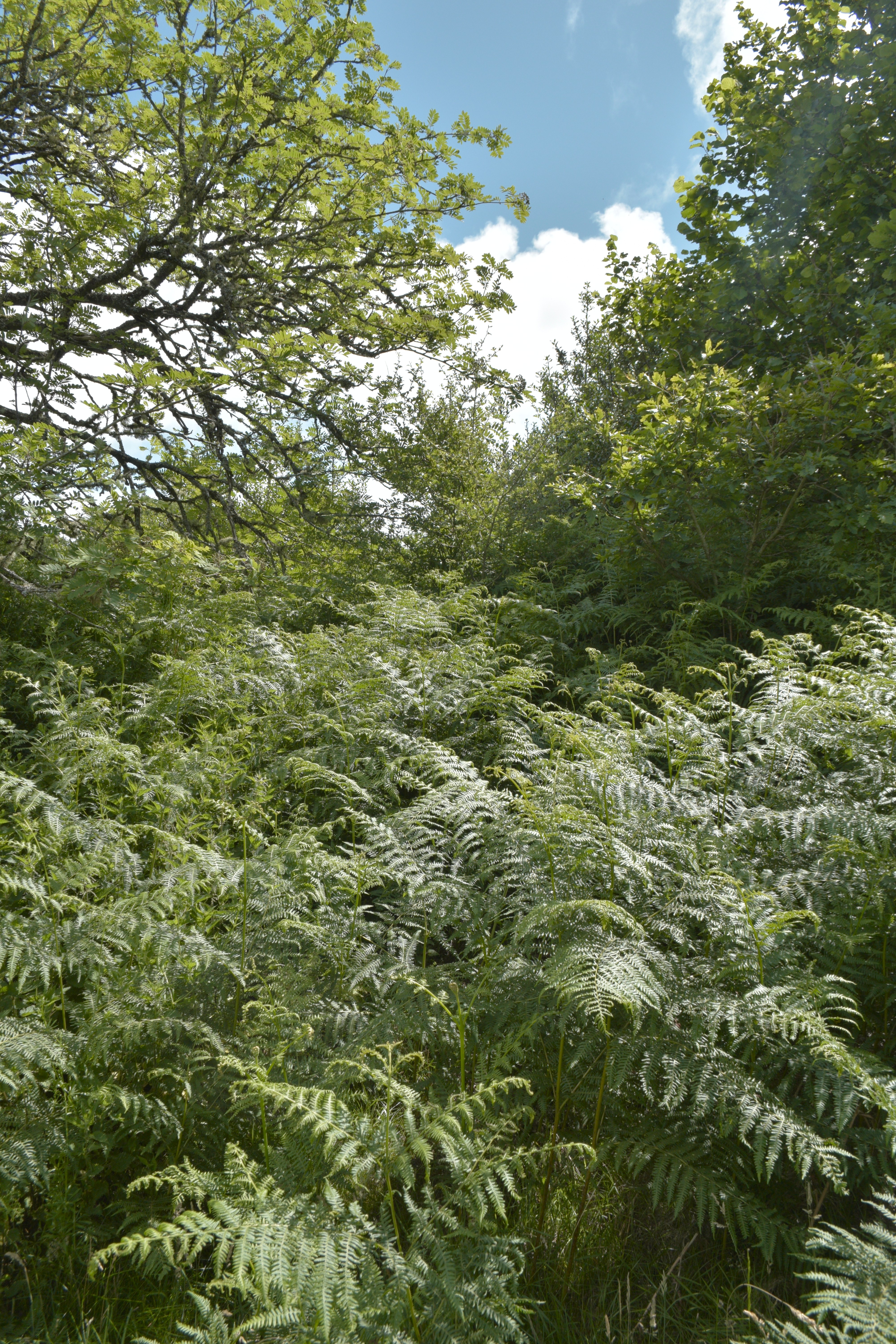
At a time when we feel we will be overwhelmed by the sheer fecundity of our temperate rain forest, it is good to have some positive feedback for our efforts for wildlife. We are engulfed in 8 foot bracken and torn at by wildly flailing tentacles of bramble that reach out across the tracks to grab us as the mower clogs and stalls yet again, which is just as well as it is overheating.

The cloud of buzzing flies that pursue us fails to reassure us that our local biosphere is healthy or that forswearing insecticides was a good idea. But counting birds does.

Jon and Jan

The stalwarts from the Habitat Protection group have made their annual visits and this year has been very good for blue tits — 52 chicks from 5 nest boxes. How’s’at for productivity! It represents a lot of caterpillars! Lots of work from this top-of -the-table, enterprising species.
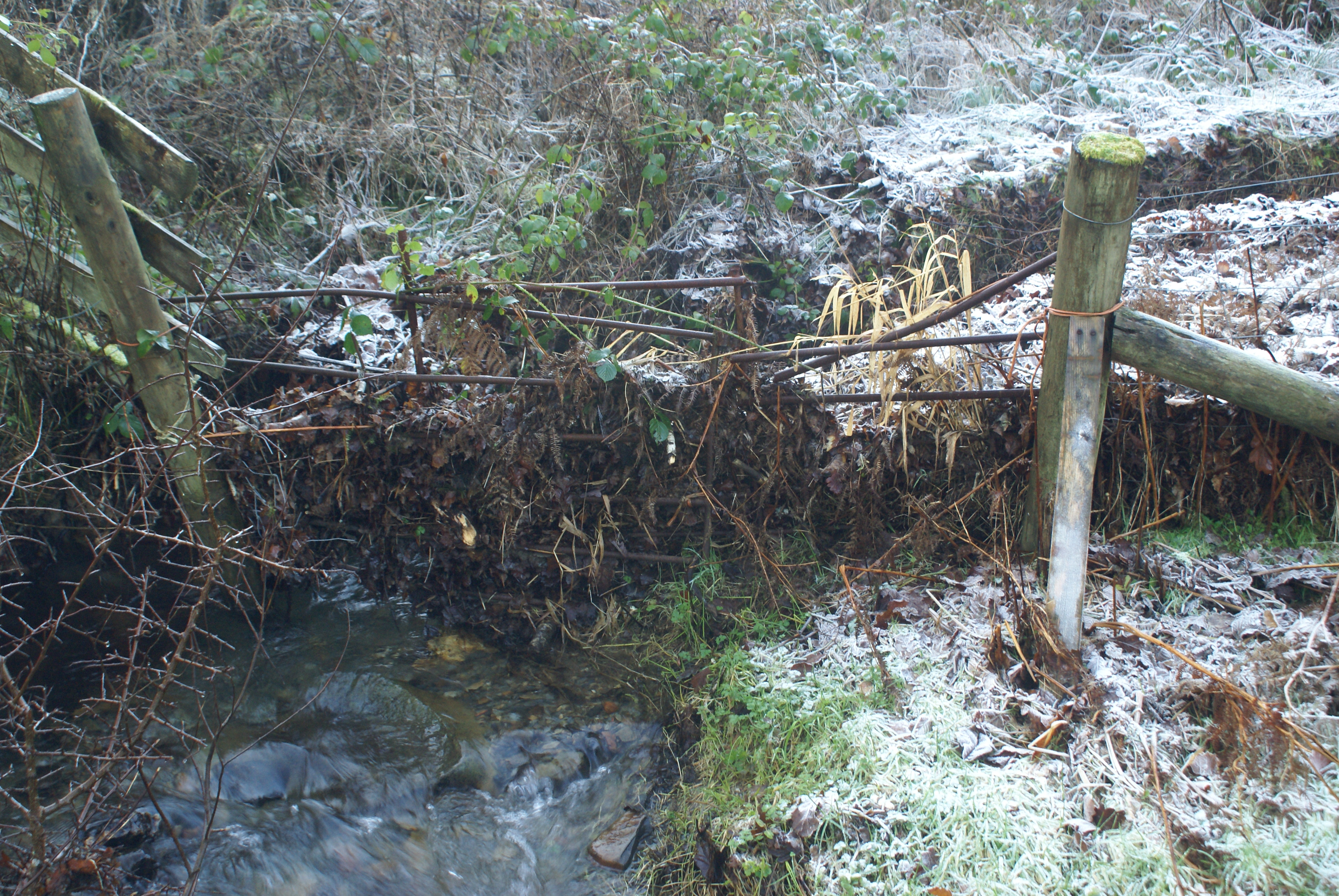
A better year for our “target” species, the more endangered pied flycatcher. They produced 24 chicks from their 5 nests. Up 20% but one of their nests failed completely last year — we suspected a great spotted woodpecker. It’s harder for pied flycatchers as they are migrants and have to co-ordinate their arrival with the weather and the caterpillars, not to mention competing with the locals for nesting sites and finding each other again as the males arrive first.

Pied Flycatcher

There was only one nest of great tits but they produced 7 chicks.

Great tit fledgeling

Three of our 14 boxes were empty; today I noticed a great spotted woodpecker squarking a warning to its own fledgelings — wildlife is a balance.

They also ringed a treecreeper fledgling hopping about and keen to be included. They tend to nest in the holes between the roots of the oak trees and in the deep splits in trunks, we watched one earlier this year taking lots of spiders to a nest on the hill.

So, inspired by all this avian fertility, we bash on with re-establishing the tracks to maintain some sort of access to our wild areas and woodland and uncover the diversity that is appearing and a weighty crop of rowan berries and wild cherries that are already keeping the blackbirds and thrushes busy.

This is the time of the year when we regularly lose our well and it is quite important that we find it in its nest of horsetail ferns and overgrown by all this burgeoning diversity. Here it is and it’s full.

Standard
Friendship, Hill Farming

Vengeance!
Our not so imaginary neighbor, Iolo, continues to exact vengeance for the naive notion that we might have what it takes to be hill farmers. The inspiration for this character is, in reality, a humorous and generous man, but one who cannot bear to see things, that should be done, left undone. He, like us, is now ancient but his drive and energy are legendary.

Woodpile 2015

Recently we have seen him anxiously eyeing our log pile — cut 9 years ago. Bill said, ‘I can see it is worrying him’, and well it might — all that useful timber edging over the limit of well seasoned into the realm of porous, wet and rotting, something should be done!

When I see one of the younger members of his family, I do something — I arrange for them to come with their tractor saw-bench and chop it all up so we can stack it in the dry for burning in the wood burner next winter — rates were discussed. ’Dad will want to supervise — it’s his kit but he’s not very well at the moment — we’ll arrange to come when he’s better’.

That was all Iolo needed — next day, shortly after a frosty dawn, we heard a strange noise, ‘That can’t be a night jar? It sounds like a distant chain saw?’

There he was, not a tractor in sight, but Iolo attacking our log pile like a man possessed. The worst thing about a chain saw is starting it — once roaring away only a fool would stop it — Iolo is no fool, so on he roared while, shamed, we carted the great cheeses down to the new wood pile and graded and piled them in the dry.

Great inroads — couldn’t photograph the master at work — too busy carting.

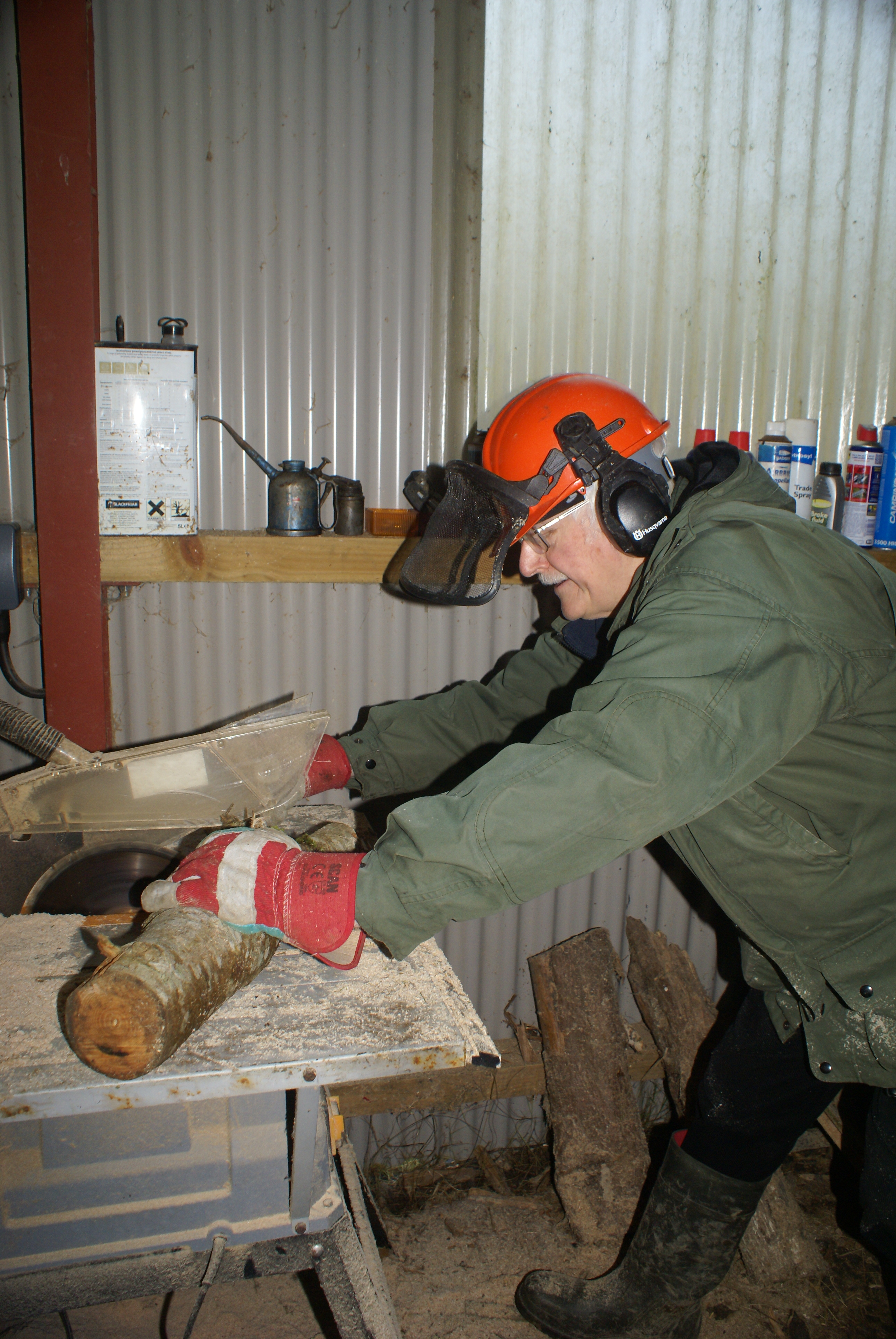
Later we re-possessed the shared log-splitter from Roger, next door, and after a refresher course and explanation of recent modifications we split the big ones — no splinters, no fingers removed! 

Standard
Butterflies, Ecology, Hill Farming

Back on the Farm and a Moral Dilemma!

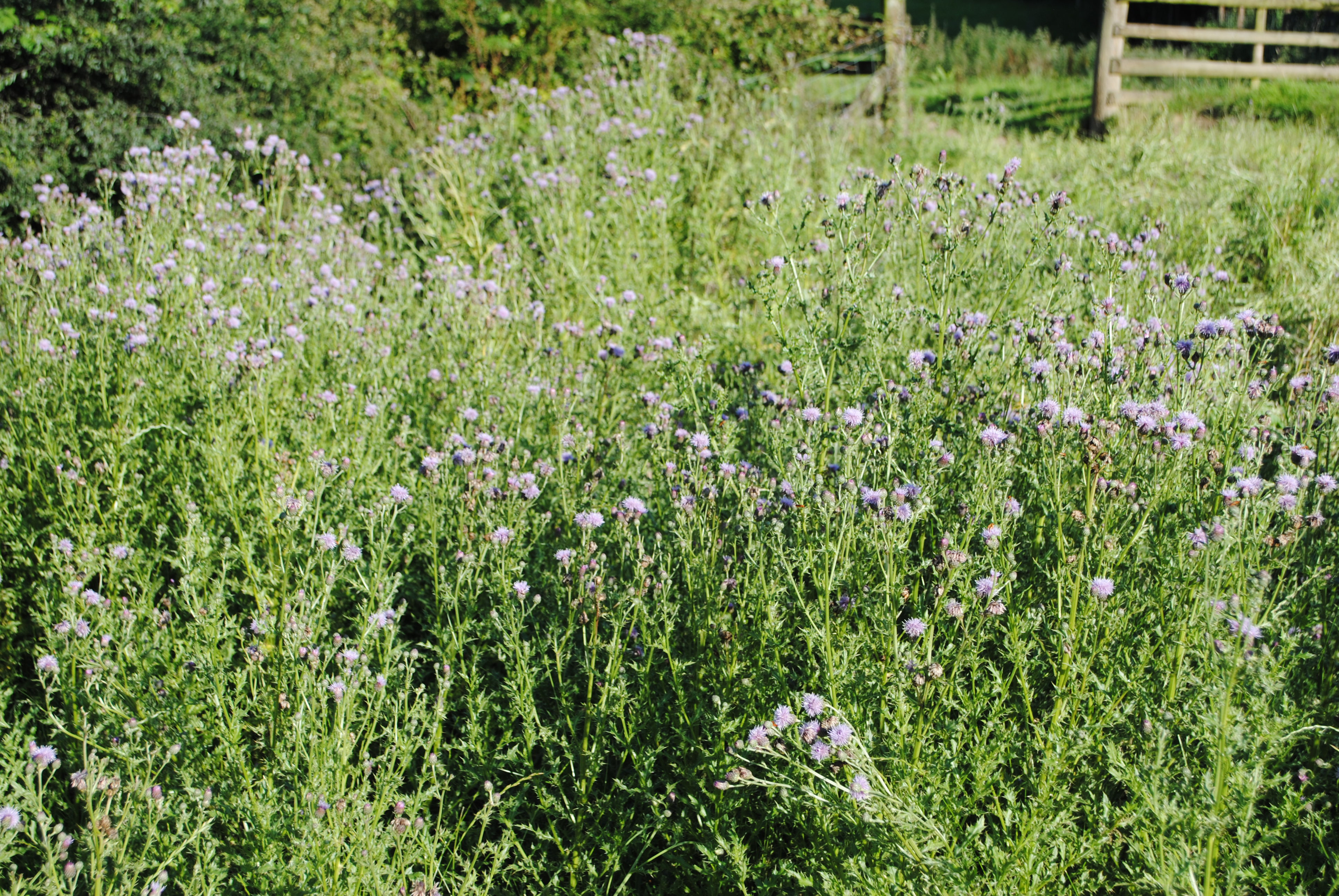
The hot dry spring was just what our thistles yearned for — they grew and grew. While our neighbours sheep gather in the shade it is time for us to deal with the thistle plague.

I was told by those who know:

Cut in June, they will grow back soon,

Cut in July they will surely die.

So we held our nerve, but once into July we have waged war on the thistles, Bill pulling the topper behind the quad bike and cutting every accessible thistle. 10 acres of thistles — not bad for a septuagenarian with no previous farming experience! It’s wonderfully adaptable, the human race.

All this time I have been busy managing and hiding in my cool office doing important paper work. But now the rains have started, waves of torrential rain coming in from the west, and the family are due next week so we are running out of time. Its all hands to the scythe and the sickle in the corners and the precipices where the quad bike cannot reach.

But wait!

There is a problem. In the sunny periods, between the showers, the butterflies and bees and hoverflies and beetles and flies come out as well as us. Finding most of the thistles gone without trace because once cut the sheep gobble them up, this profusion of insects settles on what is left.

The thistle beds are teaming with insect life, buzzing and fluttering and slurping up the nectar.

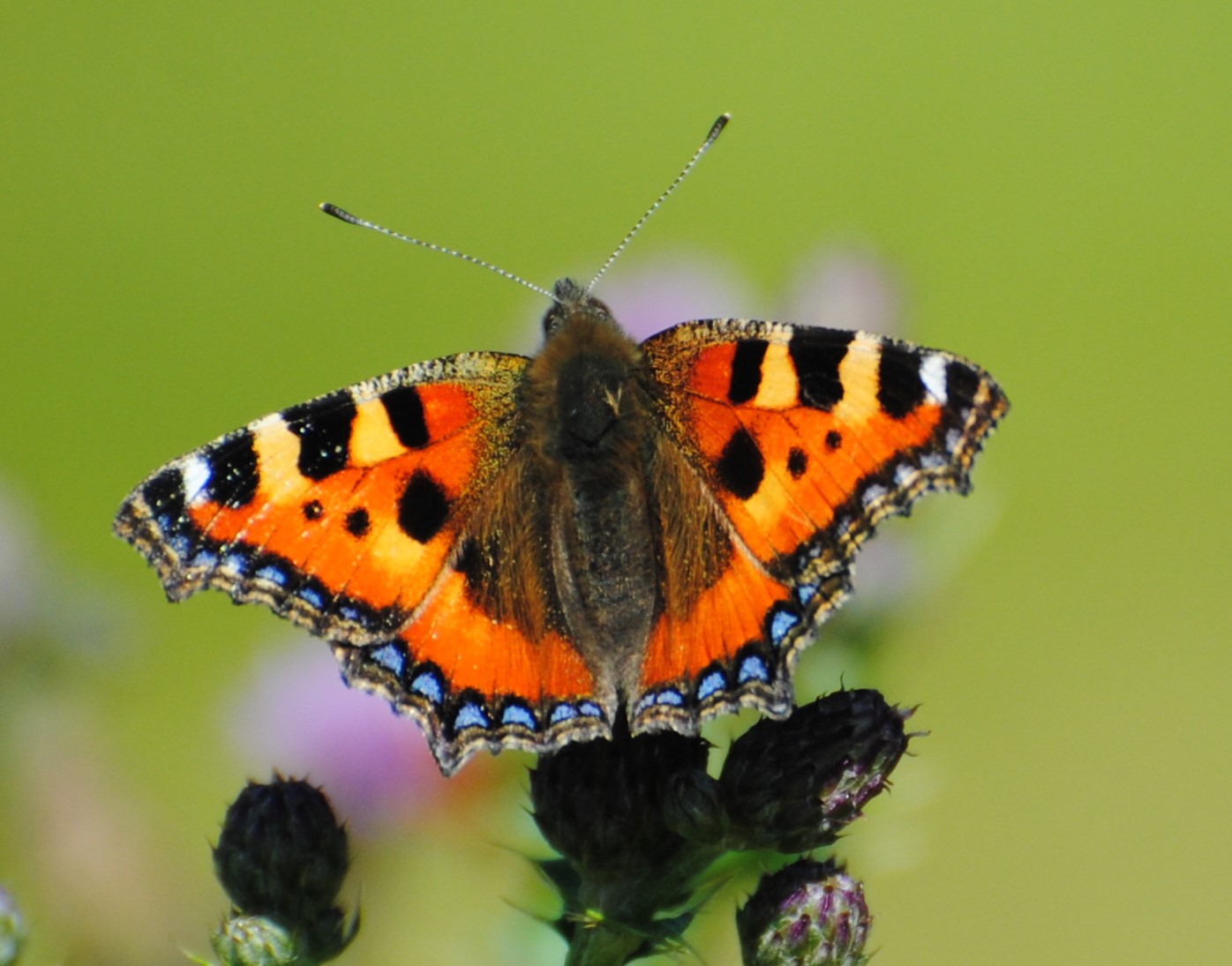
Just by the barn we saw about 20 pristine new small tortoiseshell, meadow brown and comma butterflies.

Small Tortoiseshell and friends on thistle.

One look at this beauty and guess what? We have decided to leave the edges for a while to give the butterflies a chance to mate and lay their eggs. Oh dear, the caterpillars feed on nettles — we’ll have to leave them as well!

Standard
Hill Farming, Sheep

Nemesis

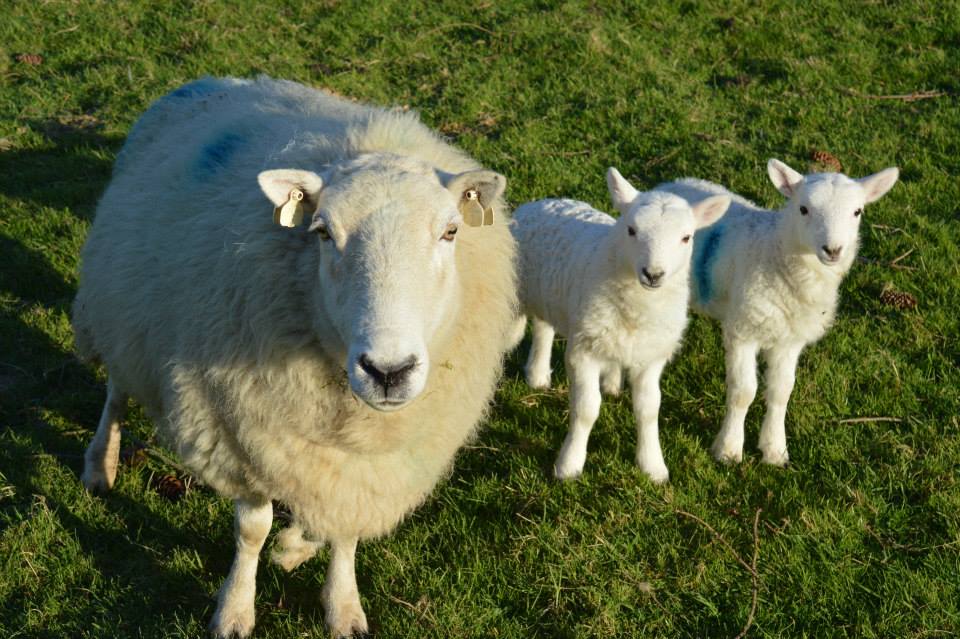
We gave up sheep-keeping in our seventies to preserve our mental and, increasingly, our physical equilibrium.

Now the sheep that roam the land around our house belong to Lisa who is young and fit and has 2 tail wagging dogs schooled in the mystic art of ovine manipulation. She comes and does what needs to be done, shouting words of encouragement to her enthusiastic assistants which would raise eyebrows in the lane if anyone was there… No one is there. I watch nostalgically, bending to give my new knee a reassuring pat.

Here she is, counting them after tupping.
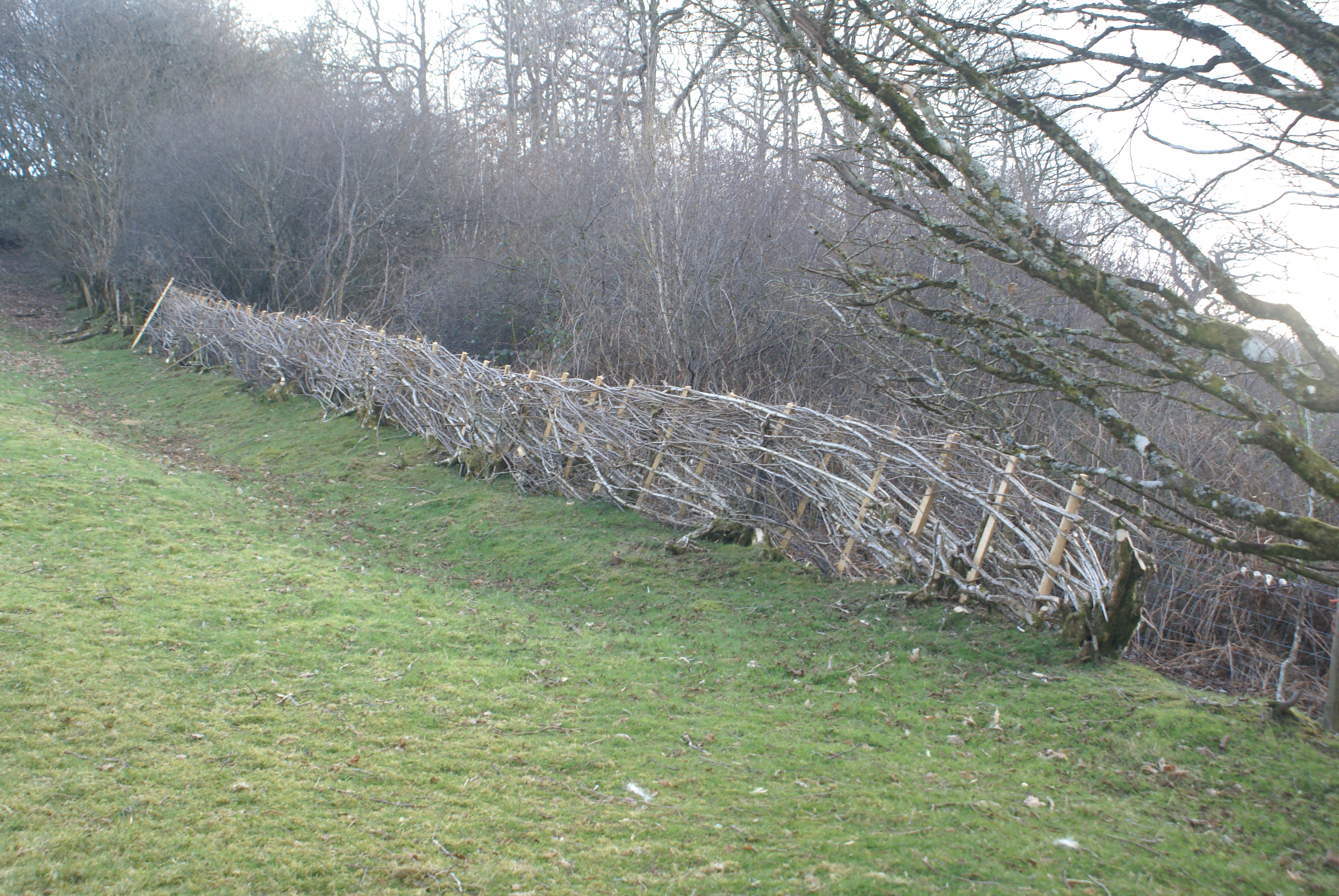
During the winter she and her dad laid a hedge and later moved the fence to the front of it to protect it — we cleared away the debris.

Those ewes all went home to lamb and have been replaced by yearlings

Here they are arriving

Come bedtime we hear a furious baaing — one must have got its head stuck in the fence again. I do not ring Lisa, I don’t go to bed and think “It’s a grown up — it’ll be okay and it’ll be easier to extract in daylight!’ By force of habit I grab my lambing torch and slip on my waterproof trousers over my pyjamas – (slip? That’s a joke — I wipe the sweat from my brow and look for my wellies.)

There she is, by the light of the torch, not with her head lassoed by the fence but trapped between the newly laid hedge which is definitely stock-proof and the new fence. Proper examination reveals that she must have entered the woodland two fields farther up the 45 degree slope, admitted by a wobbly post — I think I will extract her by driving her back into the woodland by dint of my personality then down the hill and in through the gate at the bottom. Simple! Better open the gate first. What about the other 34 sheep. She is very keen to re-join them so I will pen them in the direction that I want her to go. I’ll do that first. Much re-setting of gates and rushing about ensues. By the time Bill comes out to see if I have fractured my femur yet, the other sheep are safely stowed in the field below the house, baaing occasionally and enjoying the excitement. The gate to the woodland is open.

From my side of the fence I drive her up hill to release her from the hedge — it works but she continues up hill. I climb over and drive her down, the other sheep baa and she heads towards them, re-tracing her tracks and forcing herself between the hedge and he fence again.

Now Bill involves himself in earnest. He rattles the fence and whacks the hedge with a stick. The young ewe turns and forces her way up hill again leaving much of her fleece hooked on the hedge. I am placed at the top end of the laid section of hedge ready to turn her as she escapes from its grasp and drive her down to the gate. I shine the torch, wave my stick and bellow — as she passes I drop my tools and lunge at her neck and we proceed, she with her four-wheel-drive, me horizontal, my arms clamped around her neck. The brambles grab at me but are no match for this determined yearling. We continue our down hill trajectory in the pitch black. I decide she should go alone and let go — she is after all going in the right direction.

I am lying in a hazel thicket quite comfortably below the low branches, I shout to Bill that I am alright and to tell him to position himself to make sure that the infuriated sheep that is hurtling towards him turns right into the field at the bottom and not left up into 6 hectares of dense woodland — not easy as I had the torch. I hear crashing undergrowth and expletives. It goes quiet. I retrieve the torch sustaining only minor head injuries.

Woodland, even woodland that one knows, looks very different at night — quite magical and strange. As I walk down though the woods the bracken and bramble give way to a mossy floor with darkness stretching out between the trees in all directions, there is the sound of bird’s wings as I pass and the occasional shriek and tawny owls are calling to each other around the margins of my perception. Bill is ominously silent now.

It is raining, he is sitting dishevelled on the bank, the gate is still open. There is no sign of my nemesis — she turned left! We turn right and retire to bed, leaving the gate open for her.

Next morning she is in the field behind the house asking to be reunited with her sisters — I close the gate to the woodland then re-unite them.

Nemesis — you can tell she has attitude!
Standard
Hill Farming

Making a Mountain?

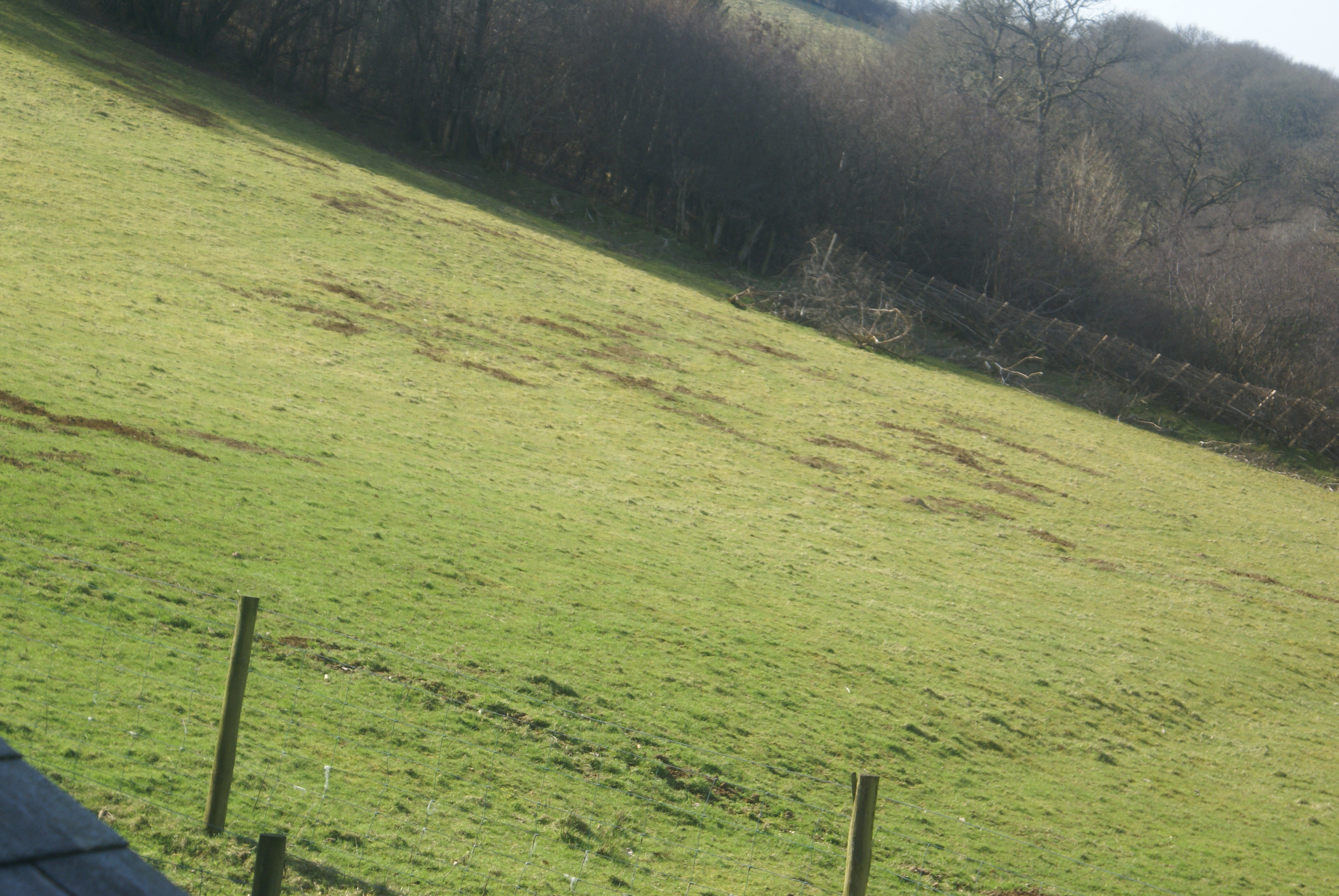
The little men in velvet jackets have been busy over winter and the sheep have eaten most of the grass and gone home to lamb.

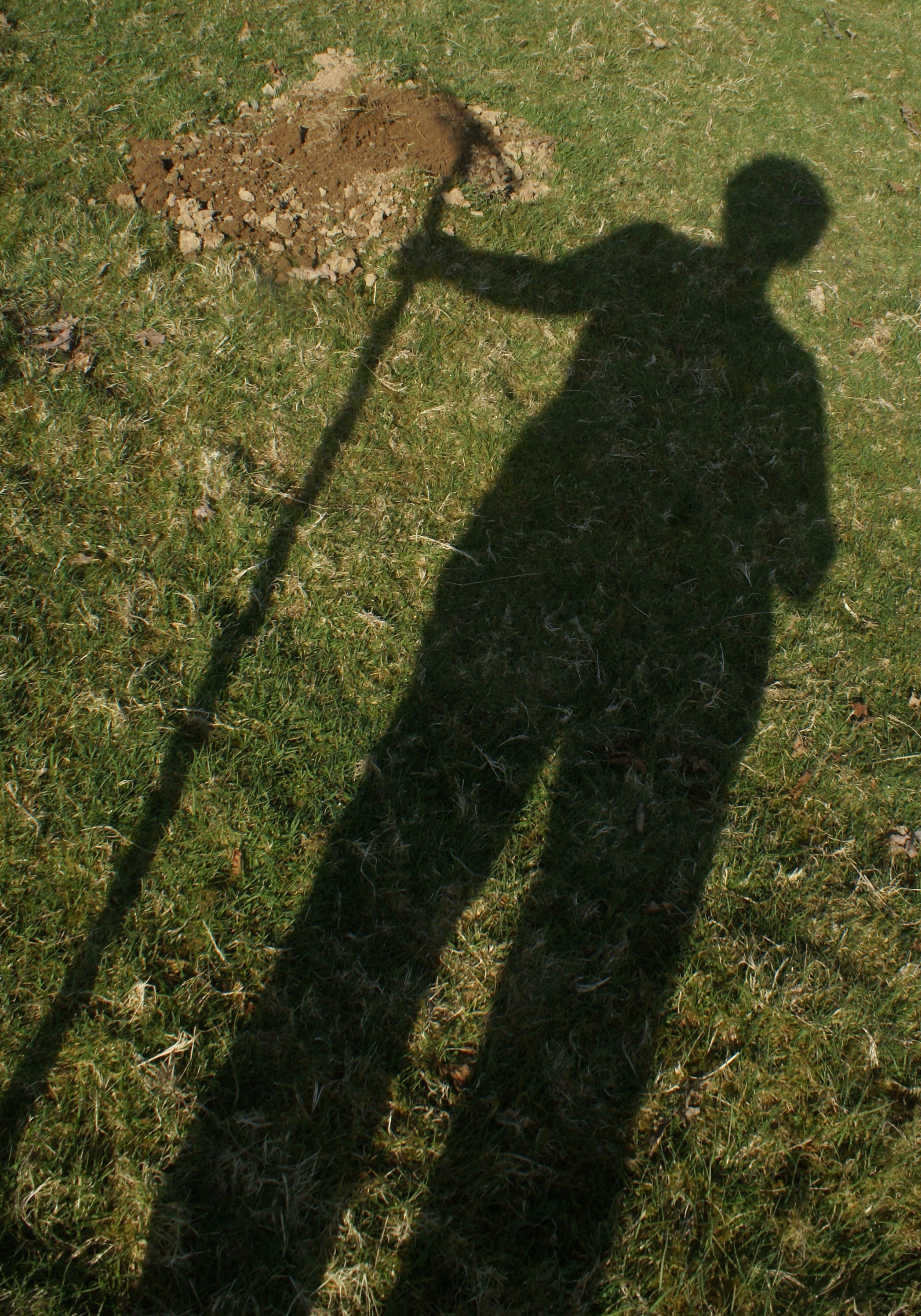
So it’s time to get in the jolly giant to rake the molehills.

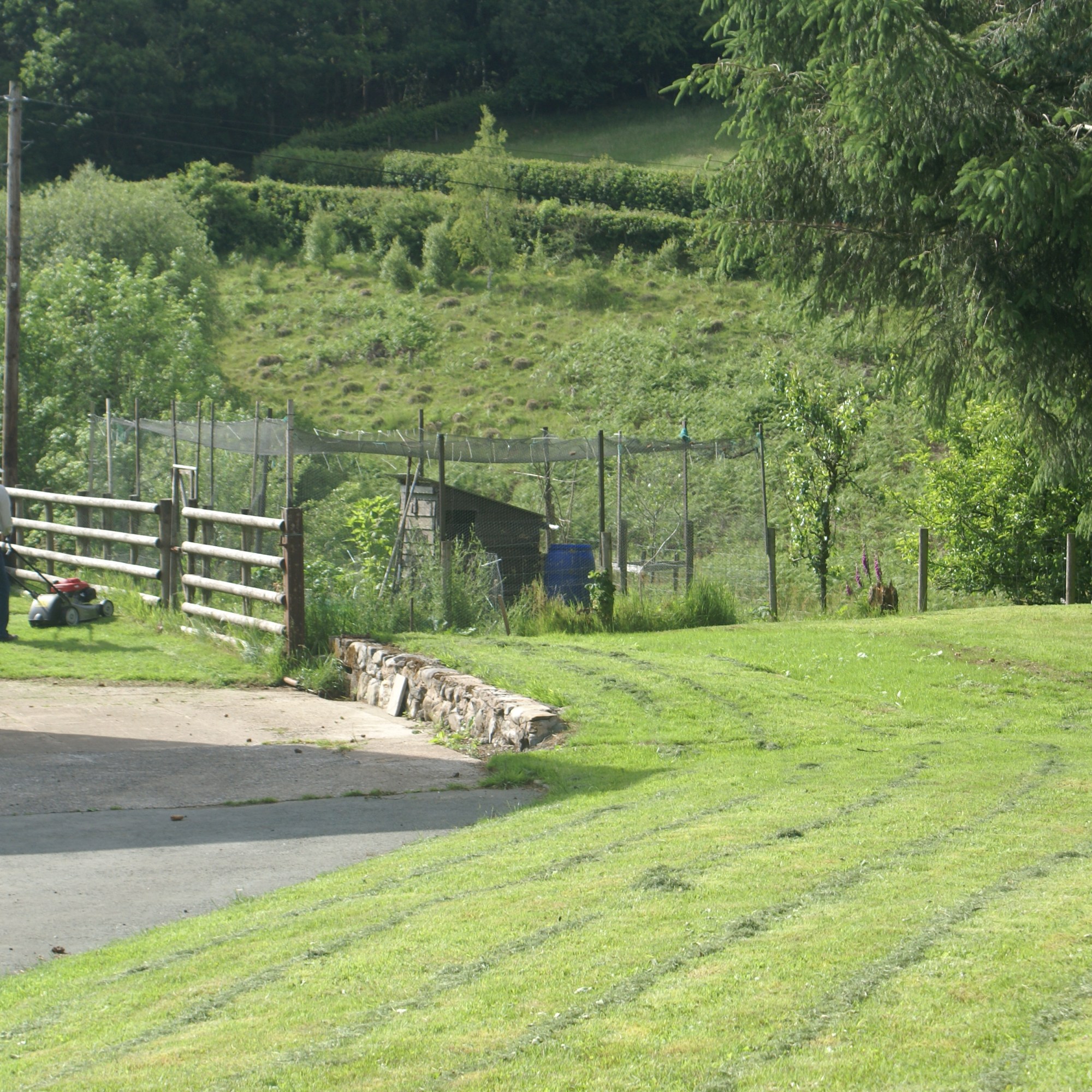
There, that’s better — that’ll soon grass over. Note the newly laid hedge!

One hour later!

Brand new molehill!

What is the point?

Standard
Farm engineering, Hill Farming, lifestyle, Pest-control

Squirrel Wars!

Yesterday Hefin came and fixed our roof. A squirrel had found a hole in the soffit(the timber under the eves) and had moved into the roof space above the bathroom for the winter months. It was disturbing Bill as he cleaned his teeth, by moving its furniture around in its garret, reorganizing the insulation and planning to rewire the electricity. Something had to be done —

— while squirrel was busy stealing the bird’s peanuts, Hefin sealed up the hole!

Invisible mend!

Today I was sitting in the bathroom contemplating the infinite when I was disturbed by the sound of someone dragging a concrete block across the roof. I rushed downstairs adjusting my clothes and burst out of the front door, ran around the house in time to see it. Evicted squirrel was perched on the roof above the mended soffit grasping the edge of the corner most roof-slate with both his little hands and heaving with all his might. I screamed. He paused and looked down at me enquiringly without releasing his grip on the slate. I yelled, I picked up a stick and beat the side of the house. He made a snap decision, stopped his attempted incursion and leapt the 8 feet into the nearest tree. Aha! So that is how he gets up!

Who? Me?

So here we are again in the land of imperatives. Not for us a good read or a spot of light editing with out feet up. We spent the morning up the slithery bank mindful of all the historical figures who have fallen to their death from trees. Wielding Great-granny’s Edwardian long-tom and our state-of-the-art long handled clippers and pruning saw, we have removed the treacherous elder that was allowing squirrel to leap across onto our roof.

Job done!

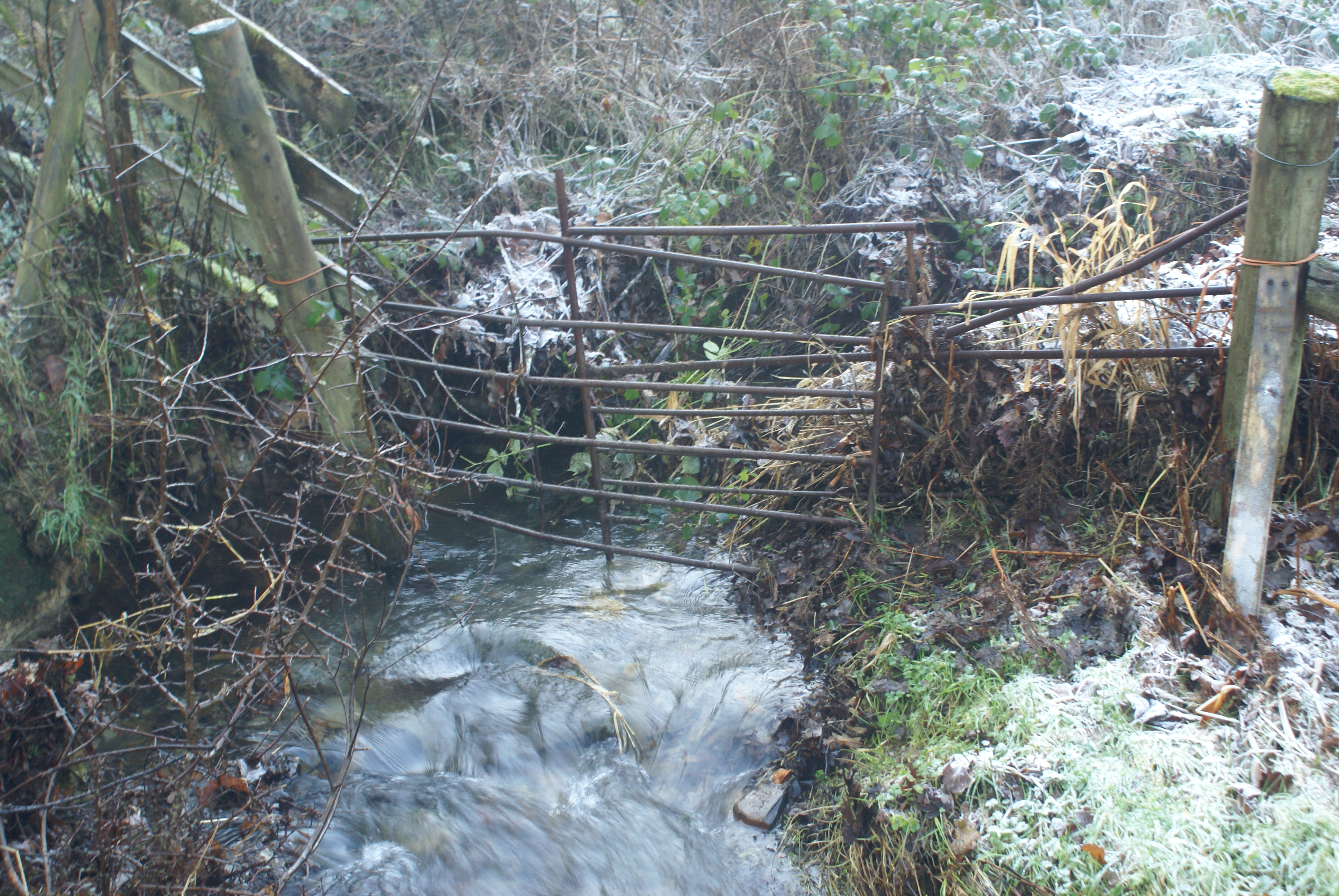
Transporting the brushwood to the heap we notice that the rickety sheep fence where it crosses the stream has, in our recent absence been busy turning itself into a dam by weaving sticks and leaves into itself and catching lots of silt. The whole construction now being frozen solid and ready to stand up to the force of the water when next in flood until inevitably it will collapse allowing the water to flow down the valley and the sheep to flow up into our precious re-wilding habitat.

Beaver technology

Another imperative! To stand up to my reconditioned knees in freezing water and demolish the half built dam.

It’s good to be home!

Standard
animal psychology, Hill Farming, Sheep

First and Last

Yesterday a sudden and sad thing happened. Our first lamb and oldest ewe died.

Orphaned and raised in the house and then the yard, long before it was tarmacked.

I made foolish promises to her at that time but I kept them! Here she is after her retirement bathed in evening light in the twilight of her days.

She died yesterday, on the farm, as promised — from birth to death she had personal attention and we shall all miss her demanding, cantankerous ways. She was an object lesson in how not to treat a domestic animal! Always first in and last out — if danger threatened and the flock ran away Aby ran towards the back door.
Only a few days ago she broke into the barn knocking things over and messed where Bill was destined to tread. Relaxed mother of 10 lambs all were delivered by the back door.
RIP Aby (2008-2021)
Standard
Ecology, Health and safety, Hill Farming

Rural Detox!

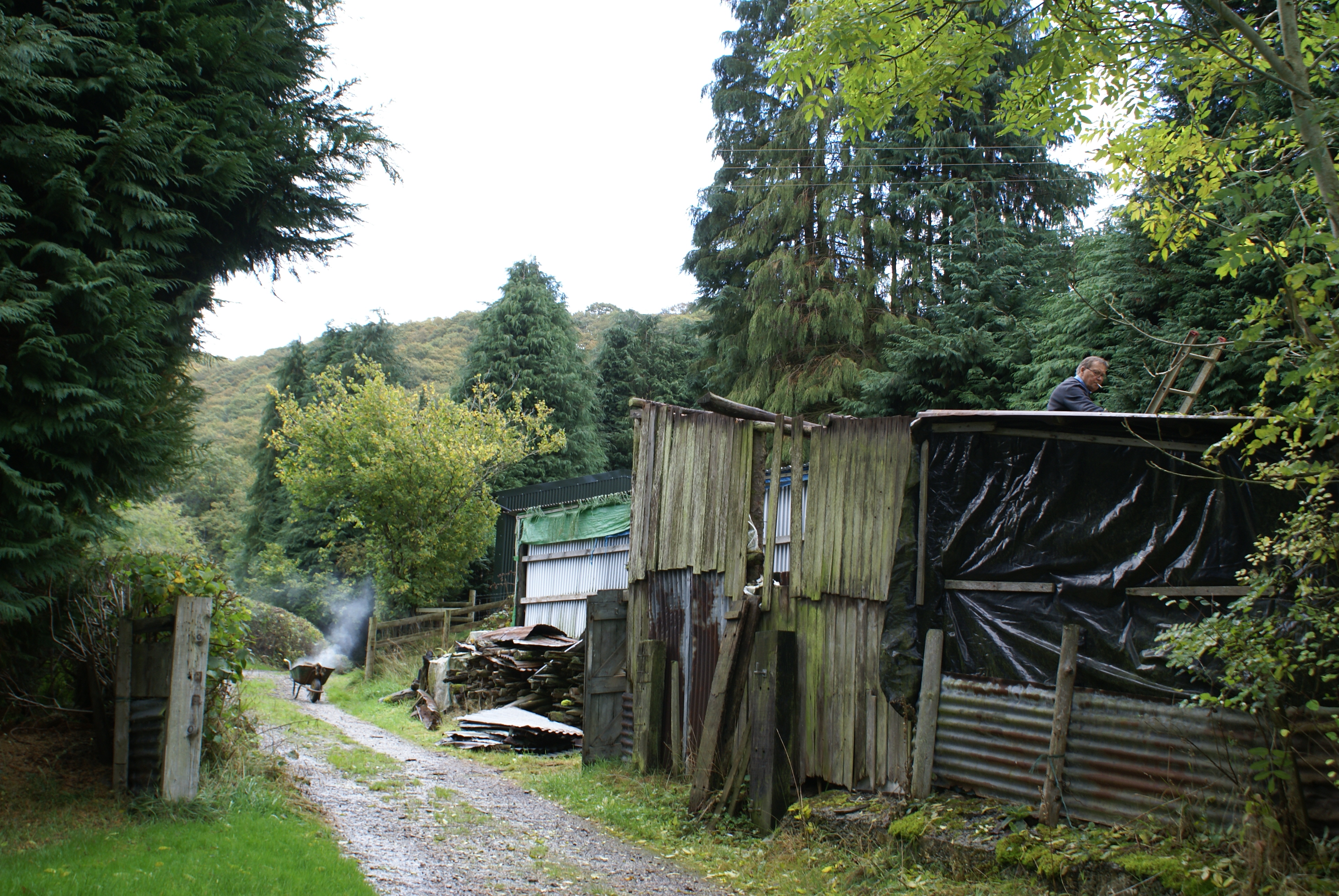
Do you remember the old barns we inherited when we bought this farm — here is Alan starting to demolish the tractor shed!
The area at the back remained a gathering ground for scrap metal and all the bits and pieces that might just be useful in the future!

But the future is now!

We took a look at the older stuff and I accepted the proposition that it might just be asbestos, took some to the tip and had it checked and confirmed that it was asbestos. They thanked me for my offer but said they didn’t want it — at any price. At this point it could have stayed behind the shed for another 20 years but no, with the help of a friend with a digger we have sorted and stacked it and tomorrow an approved contractor is arriving, at immense expense, in PPE to double bag and remove same to a place of safety (actually controlled un-safety) after which I will get a certificate!

Ancient Asbestos
Roof tiles that no-one wants to recycle

And look — space for a new barn!

Sadly — the large ash tree has been reduced to produce — logs
and kindling!

Tomorrow the man will come to measure up for the steel frame of the new barn and we will order the wooden cladding, the painting of which will be another new diversion.

Standard
Corona Virus Lockdown, Hill Farming

Adapt or Die!

Reappraisal, re-purposing and a lot of digging:  that is what we have been doing during the corona lock-down as we wait to see what Nature throws at us next.

When Bill and I renewed our friendship we had just come through difficult times having both recently lost much loved spouses after long illnesses.  In the past we’d worked together for many years so knew we got on and are still getting on in both senses (three score years and ten!)  We also lived in and are rooted in different parts of the Britain, he in England, me in Wales.

As the Corona Pandemic started to unfold it became evident that movements would be restricted but I think we had already made a leap of faith and  here we are — locked-down together in Wales.

I had sold or re-homed all my stock (apart from my dear old pet “lamb”, Aby seen below in her new role as artistic muse!) We should have been making the most of our new found mobility…  Lisa runs her sheep on the land now.

SONY DSC

Recent portrait of Aby — lady of leisure.

But there is still a lot to do and so much better with a willing helper!

I’ve always believed when you run out of space what you need to do is sort things out, de-clutter and find the space that you had just mislaid!  We have tidied the tools.

SONY DSC

We have processed the remains of the demolished, unsafe, storm damaged and rotten barn and removed the remains of the rat infested container — taken down in the nick of time.  All the higgledy-piggledy timber we have cut and stacked.

We have surveyed the fences and arranged for all the wobbly ones to be reinforced by new posts now that contractors are free to come. We have removed the debris.

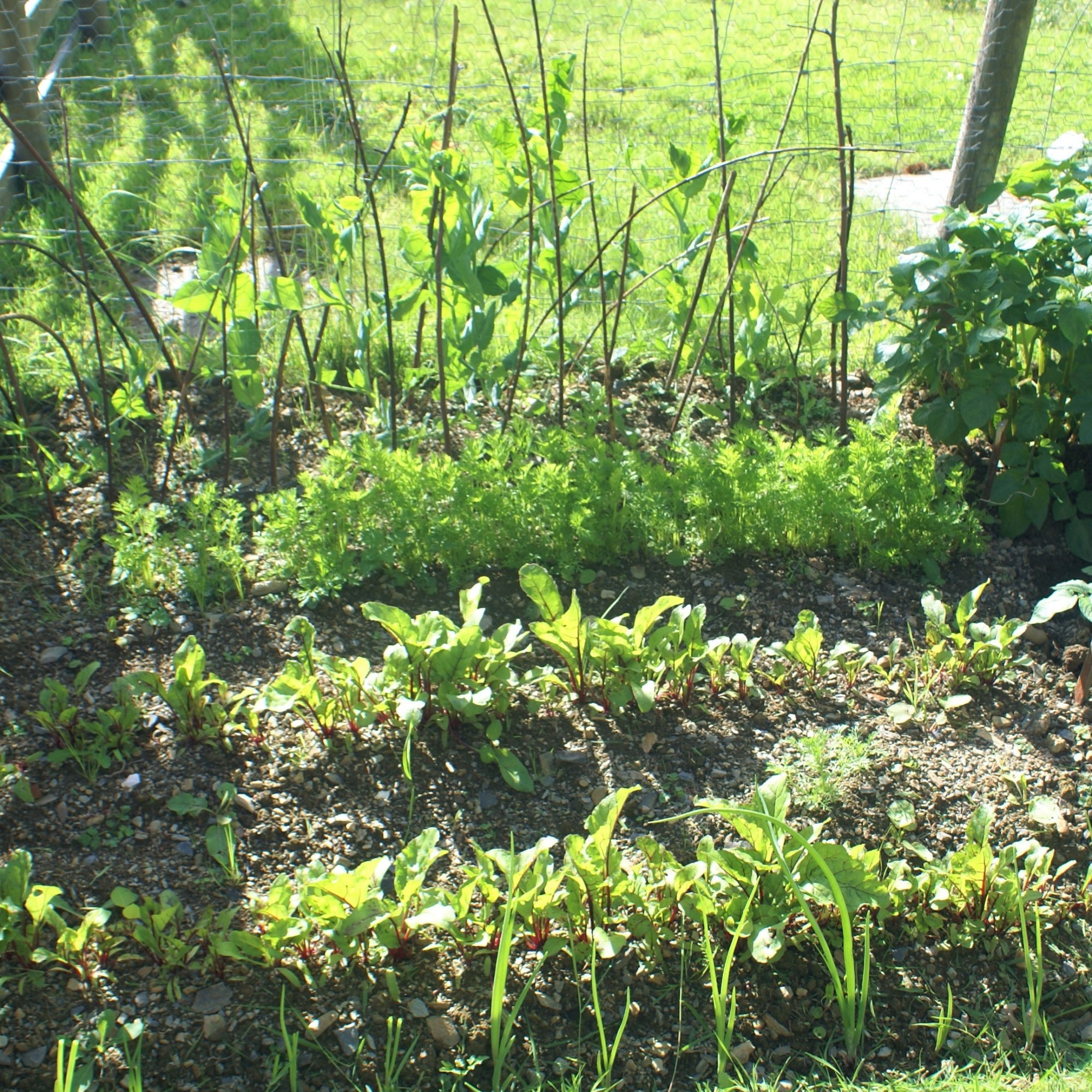
I have repurposed the now deserted chicken run — digging vegetable beds and converting the coop into a potting shed.  The feed troughs that are no longer needed have been filled with compost and planted with lettuce, onions, coriander and radishes. Brought up on Beatrice Potter I’ve always identified with Peter Rabbit!  Not any more — I’m  Mr McGregor.  As the new baby rabbits gathered in awe around my magnificent courgette plant, I rushed to the now tidy shed and put my hand directly on the  roll of chicken wire, grabbing the staples with the other, and made haste to increase security.

The grass from the chicken run was raised like an old carpet and re-laid on the scar that was left by the container and seeds sown where it would not stretch.

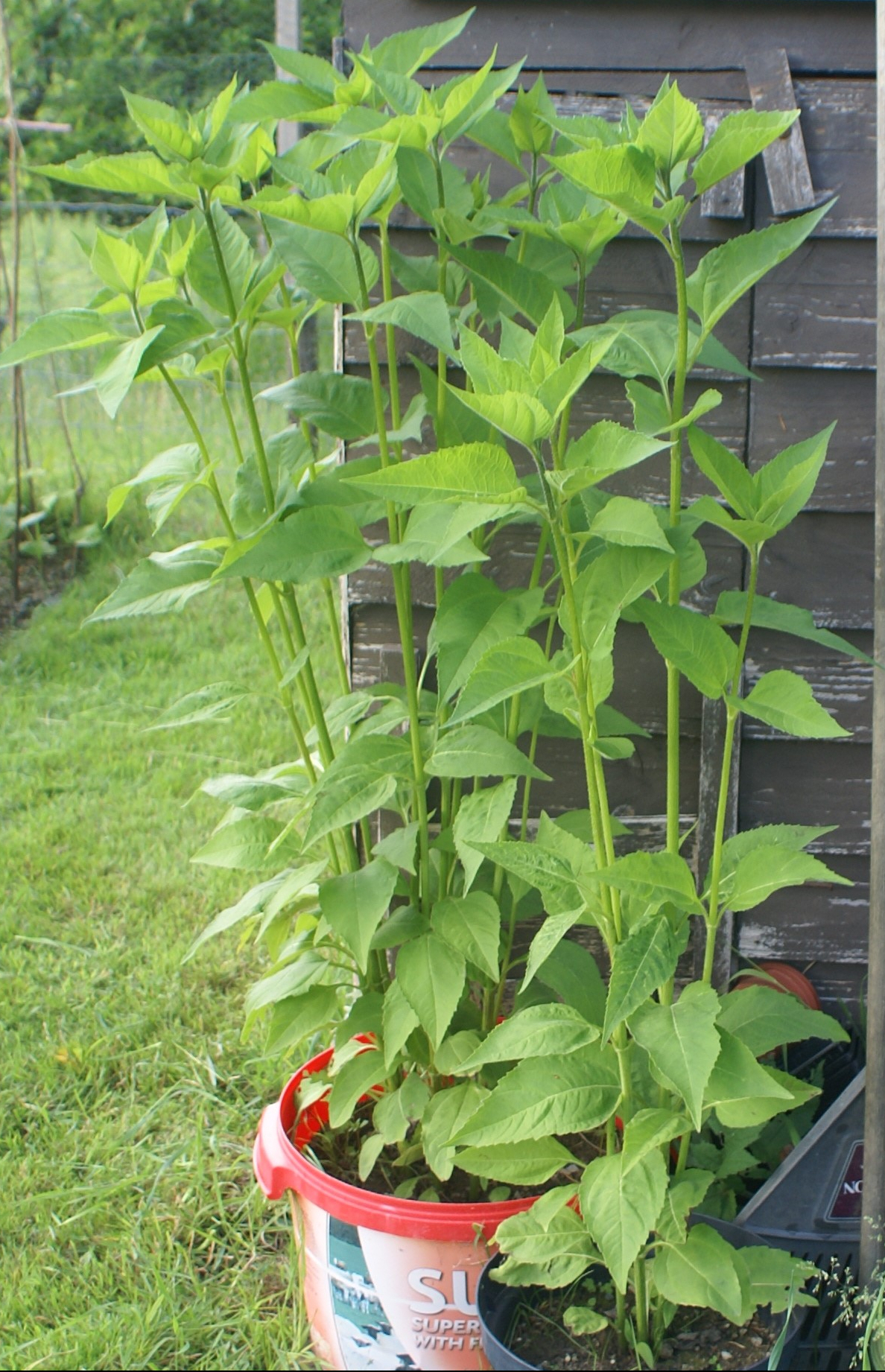
The compacted stony ground within the chicken run, the only rabbit proof area, has been dug and re-dug and fertilised and planted. The seedling beans got frosted the night after they were planted out (I’m on a learning curve) and the onions got mowed (so is Bill) but it all looks more promising than any of my previous attempts at gardening. The Jerusalem artichokes left over from a recipe that gave us hurricane levels of wind are growing fantastically — a mixed blessing.

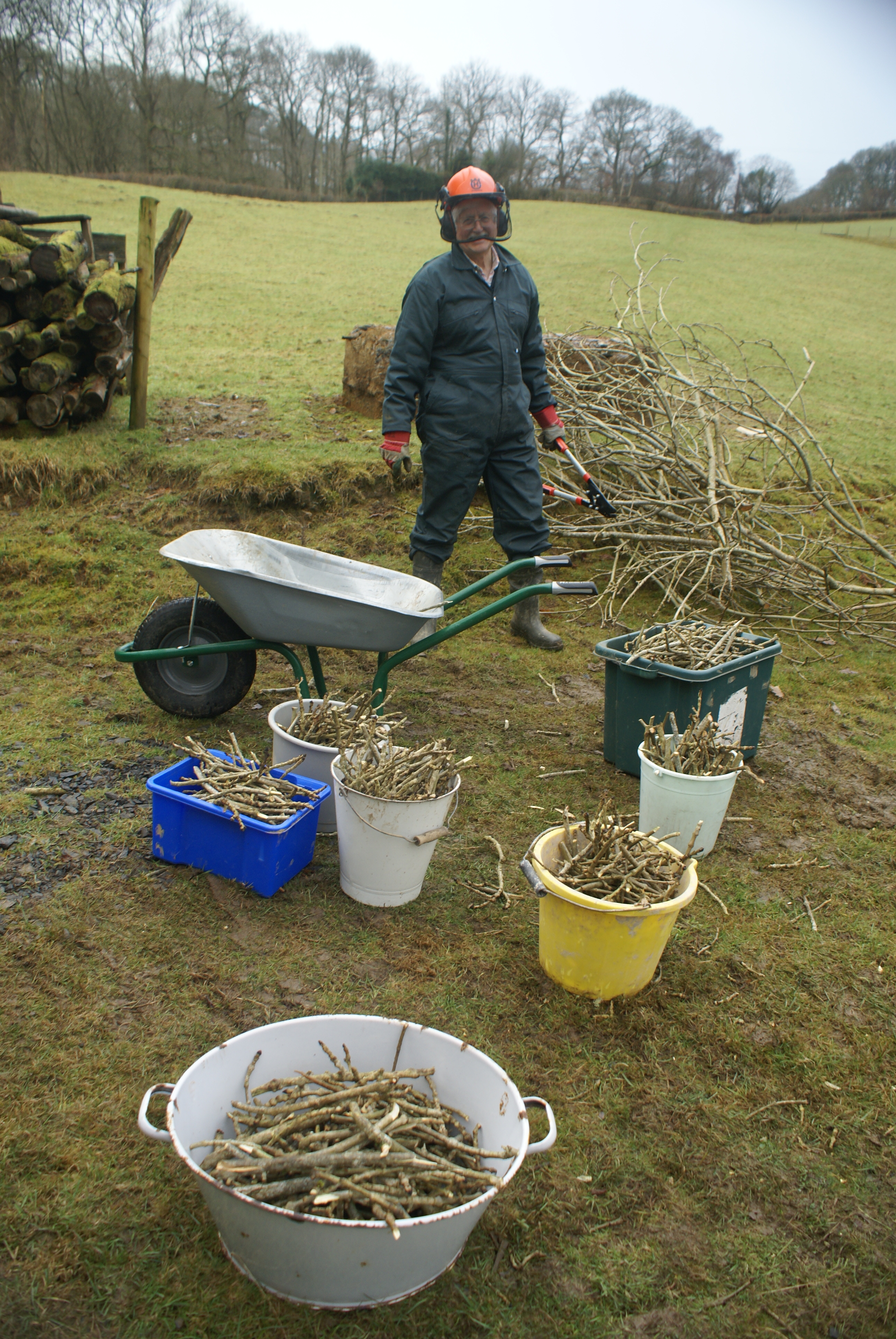
Bill has cut the bracken and the thistles on the pasture with the new topper pulled by the newly serviced quad-bike without mishap and I cut the ones on the steepest banks by hand.

During all this time nature has entertained us. The birdsong is less deafening now as this years fledglings hop about in the low branches and the parents flit about busily feeding them. Kites soar above as two buzzards and a magpies skirmish in the field over one less rabbit for me to worry about. Neither of us have ever witnessed the Spring unfolding in such detail and the weather has never been so good.

Jerusalem Artichoke
Salad planted in feed troughs

Standard