Hill Farming, lifestyle, Welsh language

Why Welsh is an up-hill business.

Getting around this time of the year is not always easy.

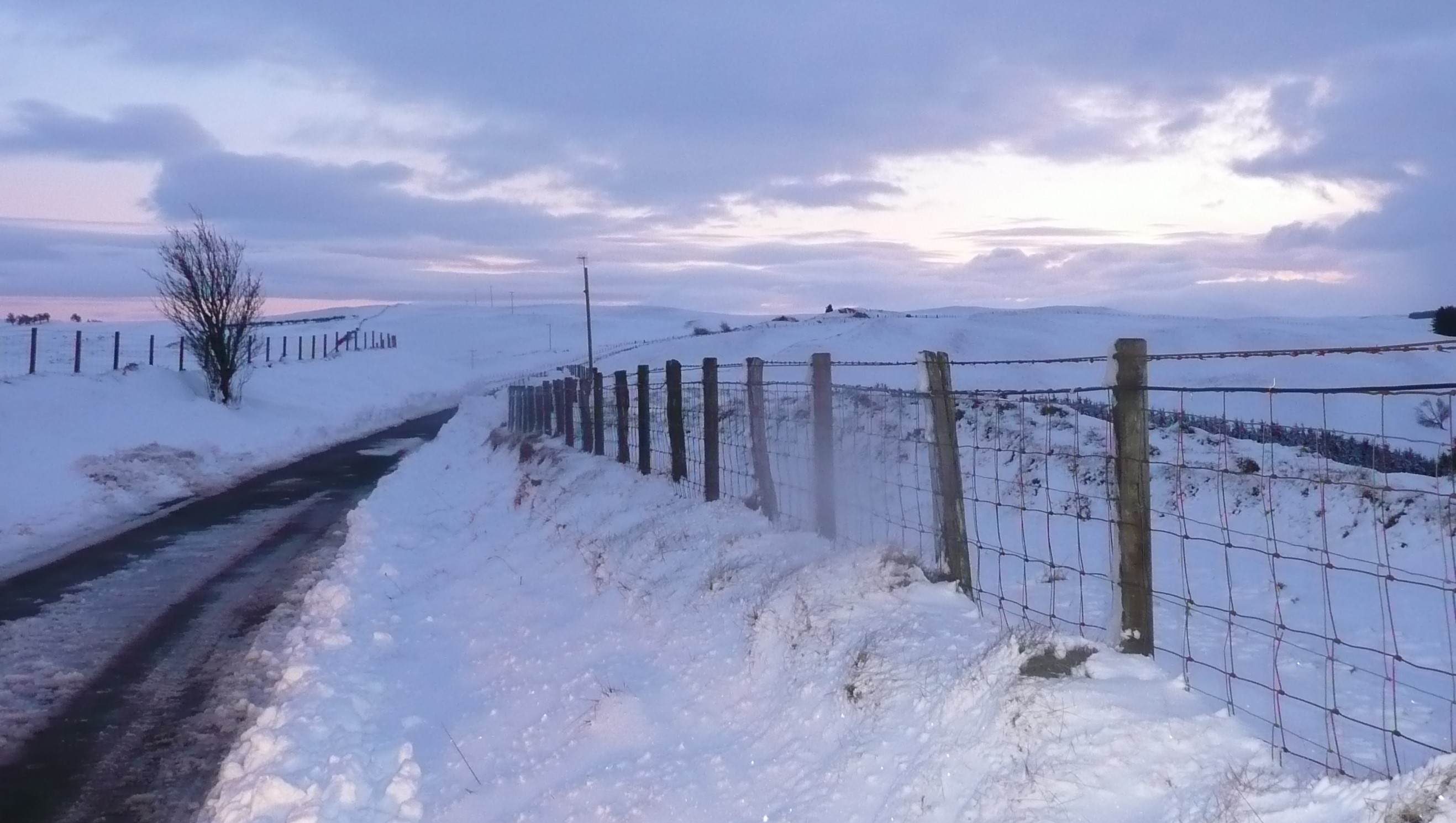
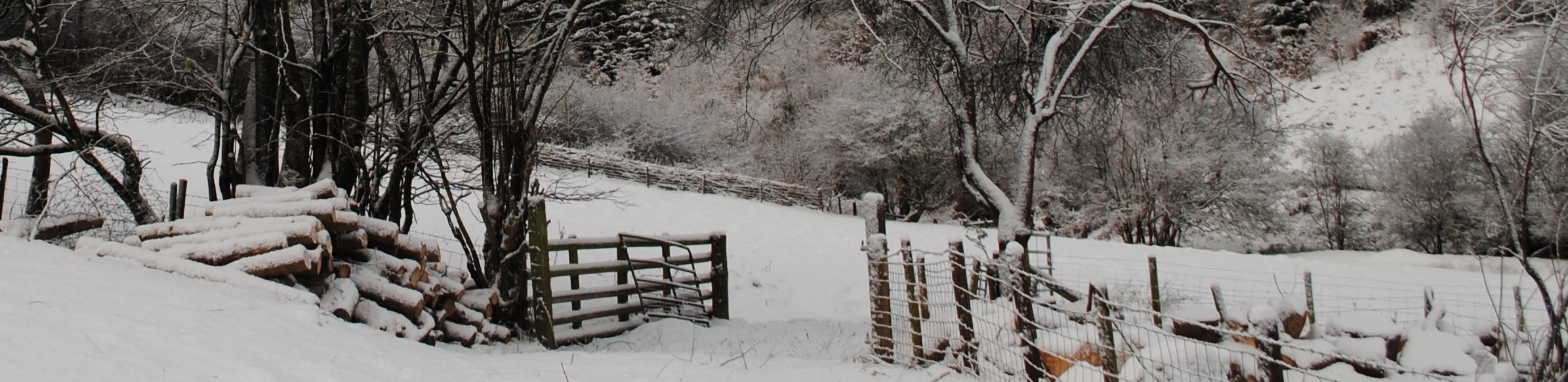
Winter near Staylittle.

Winter near Staylittle.

My problem is that when I venture out alone it is usually dark so I can’t see the little icons on the second, magic gear knob — the one that engages the four-wheel-drive. So after I’ve had a little slide I have to stop and look for the light switch and maybe also my bifocals.  But the problem is, for the occasional night driver, when you get your head in just the right position to see the hieroglyphics on the knob, your own shadow falls exactly on that very same knob — spooky?.  You can drive one hundred miles at night in Wales and only see five other cars but when you are stopped on the back road to Staylittle, rummaging for your reading glasses, another car will blind you with its headlights and, finding you stationary on a mountain pass in the middle of the night, the driver will get out, or at least wind down his window, to ask you if you are alright and discern with his knife sharp perception that you are definitely not alright, but then, probably you never were.

084I go to Delife to have my Welsh lesson.  It is beyond Staylittle which used to be called Stay-a-little, a much better English name for such a friendly place, albeit a tad exposed and chilly in winter, on the west side of our hill where the weather comes in from the Atlantic, whistling up the Celtic Sea, carefully avoiding Ireland, to dump its full ferocity on the Cambrian Mountains where we live.

You wouldn’t think that language had anything to do with altitude but it has!  In the sheltered valleys of Mid-Wales only the road signs are still bilingual; the indigenous population was long ago polluted by generations of English speaking in-comers, who passed by on their way to Ireland but dallied, drawn by the beauty of the place and the passion of the people and the strangeness…  Nothing is more sexually enticing than strangeness (good old genetics, it just loves difference) so they stayed and fell in love and intermarried and, with the collusion of the government, bought up their children to speak English.
Farmers don’t marry for love; they marry for land, nothing is more alluring to a farmer than three hundred acres of prime pasture and so the farming families who are rooted in the land have not intermarried to the same extent.  They live on the hills and they still, by and large, speak Welsh.

The frontier between these two foreign lands, with their amazingly different languages, runs around the edges of the hills at about 200M and that is why I go to Delife for my Welsh lessons.  Although the Government pays lip-service to the promotion of the Welsh language, with the recent round of cuts, my previous class folded.  But, up in the hills where neighbours still chat in Welsh and the sort of folk who settle there want to join in, a kindly lady minister is running a class in a pub, without training (I assume), or vetting, or funding, or overheads, or fees, or forms, or appraisals, or even cake — it is the only class that I have ever come across that is not struggling for numbers.

Dyna beth od — Tybed pam

That’s odd — I wonder why!

030 (3)

Standard
lifestyle, Psychology

Gender Bender — the trailblazers!

Despite the explosion in categories of gender and sexuality, it makes me sad when I read of the difficulties that young people can still have when they fail to fit their particularly allotted stereotype.

I don’t have many gender issues – I’m sure I’m not the only woman who feels that she is in drag when she dresses up to go to a wedding but I’m fairly happy in my skin, albeit a bit baggy, and I’ve never really been convinced that being born female has held me back —  I’m still a tomboy but more often than not I’ve had more pressing problems than the trappings of gender. I’m just relieved to have been born in my time and place and to have had the privilege of a career and a house full of children.

In the early days I rather enjoyed being a novelty – for that is all I was — an ostensibly normal woman (looking quite young) practising a traditionally male profession reasonably competently – not some sort of child prodigy or weird intersex.

I think I’m saying that not fitting a stereotype should be a pleasure and not an unavoidable burden, laced with self-doubt and self-loathing, but the pressure to conform may be getting greater.

My understanding of sexual attraction is that it is mainly related to features associated with fitness to breed but women’s magazines project anorexic models as the norm — women who surely never ovulate naturally. I used to think that fashion photographers must all be gay (perhaps they are) and were promoting an android and defeminised image of women to gratify their own sensibilities — you really do wonder who their target audience is. The adolescent boyish look has given way to pale childlike look so that you wonder about the demographic of the person who finds it attractive — the paedophile or the necrophile? What is going on here – is the heroin-addict look really so attractive in a woman?

Image is all.  The normal woman promoted in the media is still seriously under weight but now almost universally has large, firm and strangely inappropriate bosoms–

Thanks to Barbie Fantasies (CC BY 2.0)

Thanks to Barbie Fantasies (CC BY 4.0)

— it was a novelty on Strictly Come Dancing to spot a single pair of small, normally jiggling breasts, ones that might, sometime in the future, actually lactate!  The owner would be mortified.

Fourteen year old boys display their abs on Facebook and will soon be complaining about their short stature due to premature fusion of their long-bone ends and acne caused by their anabolic food supplements.

Thanks to Peter Taylor's Memorabilia Birmingham (CC DY NC 4.0)

Thanks to Peter Taylor’s Memorabilia Birmingham (CC DY NC 4.0)

Buying clothes for teenage girls was never easy – the wrangle over school shoes, and it’s no comfort, when years later they proudly display their bunions, to say ‘I told you so!’

I worry about the sexualised wardrobe of many very young girls –Boob-tubes and Cuban heels for six-year olds, not to mention lewd and provocative statements emblazoned across their chests.  I worry about what this says about these innocents to men of more traditional cultures. Fourteen year old girls may run rings around boys of their own age and culture but they are still innocents in the real world.

A woman in her twenties with a normal Body Mass Index ( not media-skinny or food-industry-obese) who chooses not to wear sexualised clothes is not weird or threatening. She is normal by her own parameters and probably a lot more healthy and sexually attractive ( fit to breed!) than the Barbie doll look-alikes that our image-makers and advertisers foist upon us.

This Christmas I had great difficulty selecting a gift from a local supermarket for a two year old – to my surprise, the shop had two sections for this age group – one, camouflaged, for little boys with rockets and guns and action men and construction sets with pictures of little boys building bridges with their Dads ( so they must have been taken on a Wednesday or an alternate week-end). In the fluorescent pink, girl’s department, there were tea sets and pots and pans, little plastic microwaves that pinged, ovens and kitchens, severed plastic heads to make-up, Barbies and little princesses with tiara’s.  I felt ill.

I know I really just needed to find a better, independent toy-shop.  Time was short and the only safe gift for any child, it seemed, was  a cuddly creature, a zoo or a farm – but even the dinosaurs had been castrated!  What gender confusion will that create in our two-year-old’s psyche?

Thanks to David for  his image of Joan of Arc from Meridan Hill (Malcolm X) Park (CC DY 4.0)

Standard
lifestyle

Christmas Goes West

Turmoil comes in waves and these times of upheaval are our most creative — this is what I tell the children (it is no comfort to them).

It is Christmas and our five grown-up children (now that’s a strange concept) and their partners all seem to be facing new challenges.  Four now have various commitments in the West Country — work, homes, other family and friends, so to make it easier to all be together this year — Mum and Dad (and Pedro) go West.

Rhayader decorations

We entrust our pregnant ewes to a responsible friend — a rare thing!  Then we buy Tupperware and fill up the old camper van with plastic containers of Christmas, glance at the long term weather forecast and set off to The Gables — a rented house in Tywardreath, Cornwall.

But first, as Responsible Friend has noticed a hazard in the field in which we feed the aforementioned precious ewes, we have to fill in the seventy meter trench that we dug for the solar panel cable.  I use the word trench appropriately as torrential rain renders it a living memorial to life on the Somme in World War One.  The week before we leave for the West we slither and shiver, often up to our knees in mud.  Alan’s relationship with Digger is tested almost to destruction (not a bad thing, they were getting far too close) as her solenoid trouble makes her very temperamental and unreliable so that she often refuses to work at all and sits facing the prevailing storm with her windshield broken, getting her seat wet — but then we all have wet seats.

SONY DSC

Cornwall is dry and comfortable, camellias bloom in gardens and ragged robins in the hedgerows.  As shop assistants glower at befuddled shoppers and cars queue to enter and leave the supermarket car parks of the peninsula, sensible folk walk their wet dogs on nearby Par Sands where the China Clay factory breaths steam into the clear chilly air.

SONY DSC

Carols are sung at the Pub.

The Sun comes out on Christmas Morning.


Christmas Day

Christmas Day

The silvery sun makes it imperative to get out and make the most of the short days.

Festive meals are served for various permutations of family and friends.

P1040759 (2)


The wind changes, coming in from the North West, we pack up the left overs and drive home avoiding the Black Mountains, but not the traffic, to arrive home as the cold freezes the first dusting of snow into a crisp sugar coating over everything.

P1040768 (2)

Standard
Communication, lifestyle

‘I’ve never been to London —

–but I went to Birmingham once and I didn’t like it,’ warned Aled before I left, ‘Too many people!’

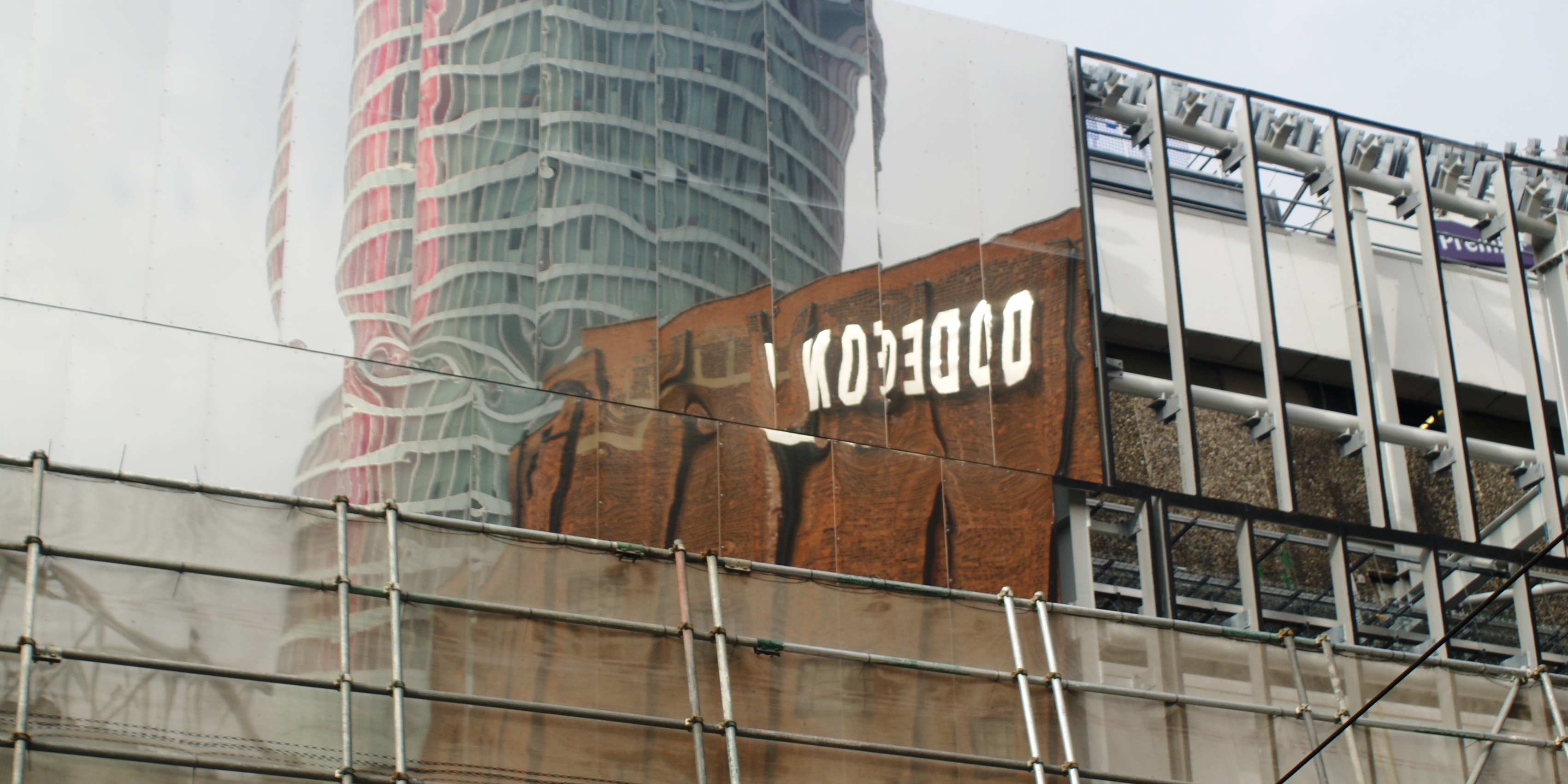
The Rotunda in the Bullring, Birmingham -- reflection on 1960's 'iconic'.

The Rotunda in the Bullring, Birmingham — reflection on 1960’s ‘iconic’.

Birmingham is quiet when I change trains — not quite what it seems.

I am bound to join the World War One remembrance pilgrims to the Tower of London on a suitably wet November day.

People in the rain

People in the rain

The trouble with cities is the constant state of flux where everything is changed each time you visit.

Today, at Euston, they have hidden all the bus ticket machines and amongst all the psychedelic signage the Mayor of London proclaims that contactless debit cards now operate the buses  (they may well do, but they haven’t reached Mid-Wales yet) — and Oyster cards — I have forgotten the one my daughter gave me.

‘Excuse me!’ I say to a passing commuter who spins round, wide eyed.  The young woman with strings falling from her ears has been dragged from a parallel universe into mine and is terrified.  She does not speak, she does not stop.

My daughters have warned me of the danger of my country ways — you have to walk in a bubble, Mum, it’s the only way to survive.  You mustn’t keep invading people’s personal space.

I’m not stupid, I do not ask the two policemen with machine guns and I resist the temptation to point my camera at them — sometimes it flashes automatically.

Okay, I think.  I can do careful.   I approach the next person from the front with my arms close to my body but in full view, I smile but do not show my teeth, ‘Excuse me!  Where can I buy an Oyster card?’

The nice young man directs me to the Underground and down the steps I go — like those on a harbour wall down into a sea of people, swirling about as flows from different directions meet in a turbulent confluence.  I join a current and am carried along.  I am a strong swimmer but I can feel the power and I know that I am not in a bubble.  Crossing the flow, ‘I’m sorry!’ ‘Excuse me!’ ‘So sorry!’ I join an eddy that buffets me back to the steps and up to safety.

Looks like I’ll have to walk — I’m quite good at that.

By the time I get to St Pancras reason has prevailed and it’s quieter.  There are only about two hundred people in the Underground ticket hall and the ways to the exits are clearly visible — I am not phobic — just a normal human being — with instinct.

Here, something strange happens — like an hallucination…   Fireman Sam helps me — really, in his high-vis suit, helmet and visor — he helps me with the machine, the queue behind was getting restive.  I thank him and climb back into the air brandishing my Oyster card and am able to share my local knowledge with several Geordie pensioners who are trying to get on a bus.  They are explaining to the bus driver that they have money — he cannot understand what they are saying and stares nervously from his glass cage.

?????????????????????????????

At the Tower, 800,000 ceramic poppies commemorate our fallen in WW1.  Everywhere I look, their descendants, their grand children, great grandchildren, great nieces and nephews, move slowly and politely, stopping to take photographs and waiting for someone to let them into a place by the railings to get their shot or their selfie — strange.  It’s raining and the poppies seem to miss their mark today but the snake of people, come to see them and be moved,  does not.

In London even the trees are grey, muted by urban substances and the Thames smells, as it did when I was a child, like no other river I know, but at dusk something strange happens.

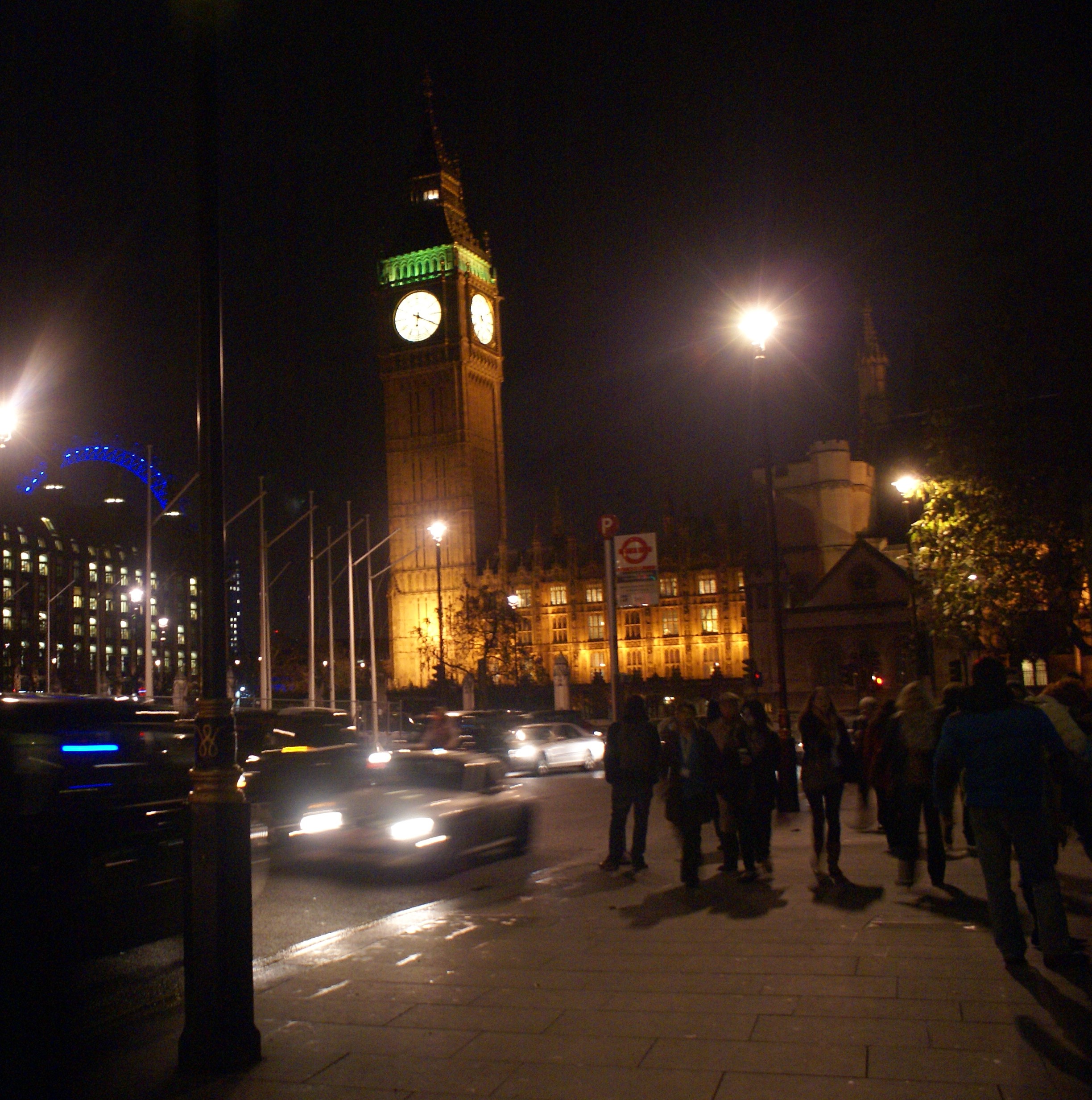
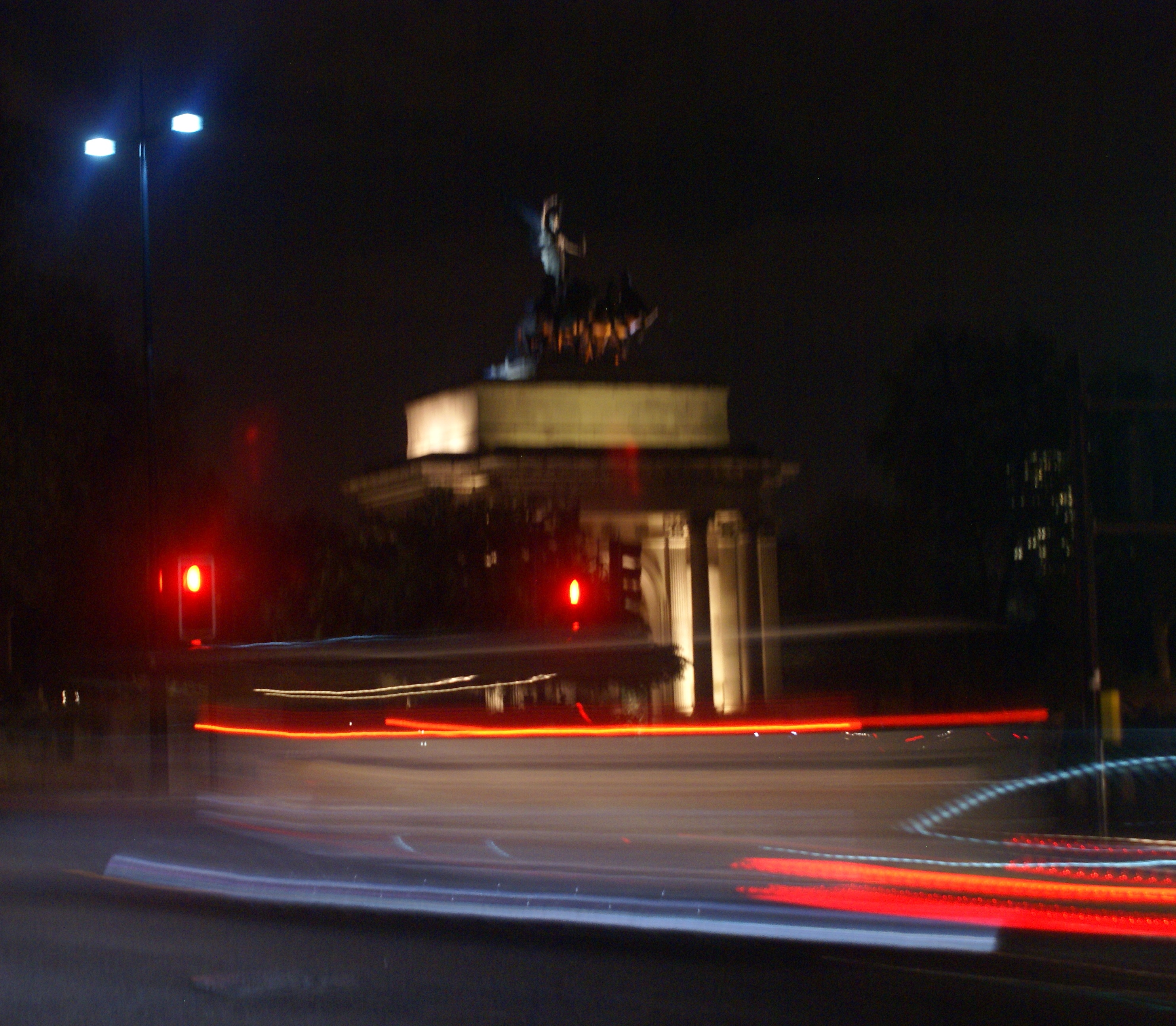
At night there is magic in the city.

At night there is magic in the city.

?????????????????????????????

?????????????????????????????

Standard
Hill Farming, lifestyle, Wales

‘There’s a man in the ditch who says he’s got a broken leg!’

erecting Solar Panels

erecting Solar Panels

‘Sorry to bother you but there’s a man in the ditch who says he’s got a broken leg,’

‘Who is it?’ I ask the worried faces at the kitchen door – one is a workman erecting our solar panels and the other is a white faced lad.

‘Can’t remember, he did say his name,’ says the lad, ‘I nearly ran him over! He told me to get you!’

‘Is it Roger?’ I ask over my shoulder, running towards the gate.

‘That’s it!  That’s his name!’

Roger is our nearest neighbour.

Happier times -- Roger caught shooting our rabbits in his dressing gown

Happier times — Roger caught shooting our rabbits in his dressing gown

He is lying face down in the narrow, shallow gully that runs down between his house and the road, he is darkly dressed and mud splattered and still wearing the world weary cricket hat he had on an hour earlier when he had been in our kitchen drinking coffee. He is perfectly camouflaged but the other workman is standing guard to make sure no one else runs him over.

‘What have you done?’

Roger had skidded on the slippery ramp to his cabin and heard his ankle crunch and snap. He had called and called – we were digging with the digger and no one heard.

Noisy digger

Noisy digger

He tried to adjust his right foot into a walking position, felt faint and thought better of it. He shouted some more and no one heard. His wife was out and he didn’t know when she would be back, it was raining intermittently and the sun had sunk behind the tall trees and it was getting chilly so he set off to crawl the fifty yards through the long wet grass to the road. He was on his way, commando style, down the ditch towards his front door and a telephone when the man delivering our cable (fortunately young and on-the-ball) narrowly missed him and got out to investigate.

While the workman calls an ambulance, I wrap him in roof-insulating foil and carefully unlace his boot, it does not seem to hurt him too much.

‘Perhaps is just a sprain?’ he says.

‘Perhaps it is, can you roll over and we’ll have a proper look,’ He rolls over and his booted foot flops into a strangely unnatural posture.

‘Woops! Roll back Rog.’

We remove his boot with the foot pointing in its normal direction – aided by gravity. It is warm and not all that tender or bruised and I can feel several pulses – we wrap it up to keep it warm and await the ambulance. Several vehicles come along – all stop, the drivers get out and join in. One wraps his fluorescent coat into a bundle and puts it under Roger’s head. Someone else gives him a lighted cigarette. A police van arrives, the first we have ever seen in these parts, it is only passing through but the driver waits patiently behind the log-jam of other vehicles and chats.

Roger is feeling quite warm and becoming positively effusive – I’ve noticed this before – something to do with adrenaline, I think – people can seem at their very best when they are quite near to their very worst, it is probably the secret of most heroism — it won’t last!

‘Here it comes!’ the look-out shouts and a big yellow ambwlans sweeps onto the scene — we are chastised for the smoking. Roger is loaded and someone slips his rolling tobacco and papers into his soggy pocket. The doors of the ambulance are closed. I am sent to find some dry clothes – not easy in someone else’s home. I do the best I can. I am then dispatched to find his medication.

Meanwhile his wife arrives, shocked by the sight of the ambulance and surprised to find the paramedic dressing her husband in drag – she retrieves her clothes indignantly and makes haste to procure more macho garb, she also manages to find his pills and off he goes.

Later that night his wife returns from the hospital at Aberystwyth – he is to have his ankle surgically pinned the following day. By then she has washed his wet clothes and pegged them out.

‘What do you think I should do with his tobacco?’

‘He won’t be able to get out, to smoke.’

‘No, I know that — it’s been through the washing machine.’ We both peer into the packet, ‘it’s only a bit damp.’

Get well soon, Roger!

Standard
Humour, lifestyle

The Journey (not the Destination).


P1040399 (2)

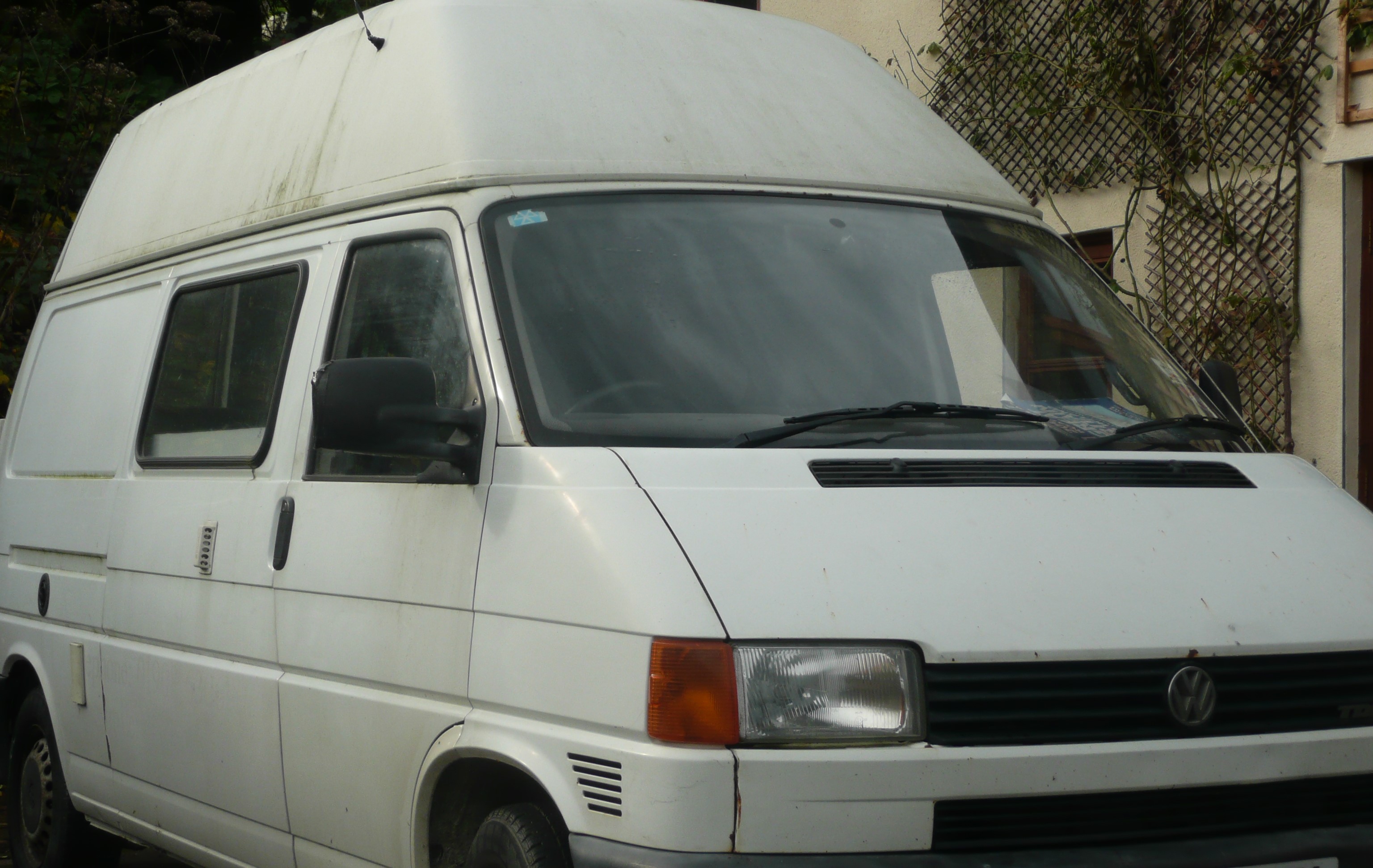
The Pikey van has come out of retirement — an updated version of the genuine Gipsy caravan, rescued from our barn, emptied of animal feed sacks and given a cursory vacuum clean.  We’ve been busy for the last ten years and, as the only completely rat-proof container, it’s been busy too — minding sheep-nuts and sheltering privileged spiders.  Now it’s time for a re-birth, an adventure, a pilgrimage, a journey!

Inspecting the Sea Wall at Burnham on Sea

Inspecting the Sea Wall at Burnham on Sea while the kettle boils

Noisier than we remember, it discourages unnecessary conversation — we nod at Glastonbury Tor as we chug past (it is promised to friend-Silvia for her bucket-list trip to the festival, but we have enough mud in our every day and spend our time trying to avoid crowds).  It hasn’t lost its charisma — land owners pale at our approach.

The Pikey van is explicit, a statement of a philosophy and a tester of prejudice — it is a reminder.  Driving it is chastening, like going round a supermarket in a wheel chair…  ‘Ah… Bless!’ as  the cashier said to me as I tried to pay for my shopping. It is not just our spiders that are normally privileged.  When we drive it, gates close, barriers come down — appeased only by the roundness of our vowels and the friendliness of our dog.

?????????????????????????????


To us, it is cost-effective.  It is a warm and comfortable bed in a light and airy ex-commercial, VW high-top Transporter — old, high mileage– empathic,  no fancy electronics to go wrong and no frilly curtains but it is insulated, ventilated, has running water (usually), a fridge, a cooker and a loo.  It smells of oily rags and dog, but they are our oily rags and our dog.

When parked over night in a municipal car-park it is just another white van and no-one notices it.  Best of all — no one cuts you up on roundabouts — you look as if you mean business — even if it is the scrap-business!  There is no fuss — you don’t have to be endlessly polite or worry about the dog barking if anyone uses the bathroom.  A huge man does not stands over you while you force down the largest full-English breakfast in Cornwall telling you about his most recent coronary.  No one sniffs under the door to see if you are smoking or charges you £15 extra for the dog who is on a diet and doesn’t want the sausages either.

Burnham on Sea -- expecting high tides

En Route — expecting high tides in the Bristol Channel

When you get tired, you can just stop and have a sleep — it is perfect.   You can drive to the beach in your pyjamas and walk the dog while your spouse snores on.

P1040404

Standard
Hill Farming, lifestyle

Squirrelling Days

The day length is now critical and our harvesting and squirrelling hormones are at an all-time annual high as we prepare for a long wet winter.  This, according to Islwyn who remembers many summers, has been the best ever, so we know that when the rain returns it will punish us!

?????????????????????????????

The ewe-lambs have gone — up the hill to Deryn, who bought our lambs at market last year and was pleased to buy them privately this year. She and her husband cross their ewes with a commercial meaty ram to produce fat-lambs for market but need our hardy type to replace their breeding stock.

On the day we take them up, three of their number escape onto the lane, Deryn and I give chase — both ladies of a certain age — as they pass the gate to one of her fields her own lambs stampede down to the gate to see her, led by a tame (bottle fed) lamb — she flings open the gate and lets them all out onto the road where they mill around and sniff at our reticent three who stop in astonishment — as does the middle aged man in the BMW, who had been giving it a burst along the lane.  Deryn turns and walks confidently back to the yard and all the lambs follow without question including the three escapees.  I think lady shepherds often do things very differently from their male counterparts and I am very happy that our ewe-lambs are going to be talked to (they know a little Welsh) and are not going to have to deal with shouting and sticks and snapping dogs in their new home.

The ram-lambs are big and vigorous this year and nearly ready for market.  They have horns this year which has reminded me why we always got a hornless ram to serve our ewes in the past —

Prize Ram-Lamb

Prize Ram-Lamb

— wrestling these little buggers in the hot weather in shorts and a vest (me, that is) to trim them and worm them and insert their ear tags has left me black and blue with strange linear bruises and abrasions on my chest where I clutch their heads to my bosom (linear lesions equated to ‘abuse’ in my previous life).  Catching them is not easy —

Fast Forward

Fast Forward

— the last seven or eight are proving almost impossible and we are reduced to picking them off one-by-one in a makeshift trap.   We are  eating our lunch by the back-door basking in the winter sunshine, with the cats and dog reclining around us.

Guilty cats.

Guilty cats.

We  hear the sound of  horn against  galvanized trough — we stop eating and jump up, me and the galvanized husband, and we rush the 400 yards to tippy-toe the last few steps under cover of the hedge to slam shut the gate, trapping one,two or three ram lambs. After worming them and tagging them we release them into the field with the done-ones and return to our empty plates — the cats are nowhere to be seen and the dog wags his tail at our return.

When left alone for a moment Alan prepares to cut down another tree.  He has declared war on Leylandii and is muttering ‘biomass’ — some of ours are 15 meters high and still growing and we have to fell them before they get too big to handle which, in truth,  they have already!

Biomass!

Biomass!

We rope them and cut them at 4M high — they’ll soon green up with ivy and honeysuckle.  This is as high as a man who is probably not as stable as he was, can reach on a wobbly ladder with an anxious wife clutching its base, a chain saw that frequently won’t start and, when it does, cuts out at altitude.  There is cursing and intermittent roaring of the saw, punctuated by fretting of the wife.  But all is rewarded by that sound of cracking wood and breaking branches, the exhilaration as we run for our lives, and that mighty thud…  ‘Where’s the dog!’

It’s okay, he’s here!’

SONY DSC

Then the work really starts as we haul the cut trees to our woodland area to strip the trunks for firewood and burn the brushwood — a reassuring smoke signal to our neighbours that we have survived another day.

?????????????????????????????

The midges have gone so at dusk I can abandon my kitchen with its bubbling cauldron of blackberries, its steeping elderberries and glugging wine jars to  pick damsons to the rhythm of a pecking bird, harvesting nuts from a nearby hazel tree where there is  the rustle  of a squirrel filling its pouch then hitting the ground running, undulating along under the hedge then shooting up another tree.  They are even busier than we are.

?????????????????????????????

Standard
Humour, lifestyle

Double, double toil and trouble.

Auspicious day? Yesterday I cleaned the house which must have unsettled everyone. Today I could feel it through my feet – bare feet, next to godly feet – feel the silky smoothness of the wooden floors, the springiness of the fluffed up carpet pile and…

?????????????????????????????

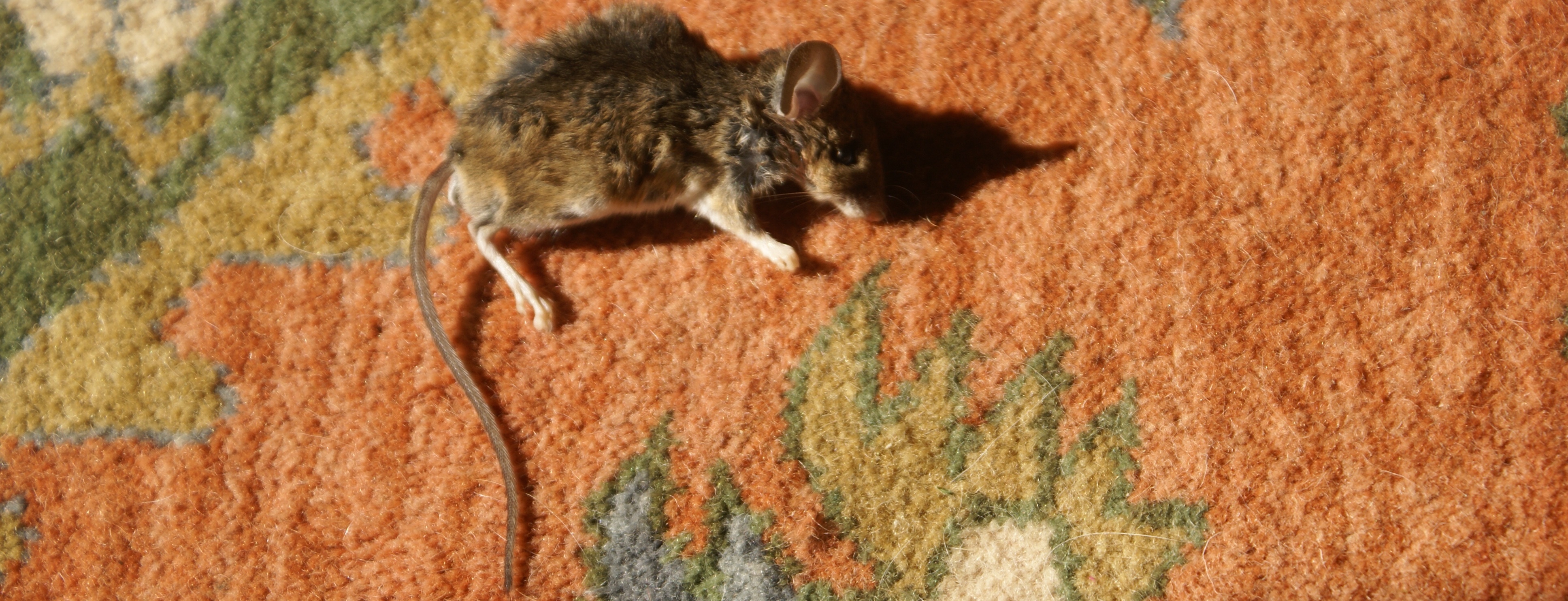
Bless the cats – a field mouse, just what I wanted for my birthday, but not as much as I wanted my breakfast. A bowl of muesli, topped with fruit-salad and —  go on, spoil yourself – some double cream. I’ll eat it in the sunshine.  So I popped it on the table outside the kitchen door but remembered the mouse (other members of the household are more squeamish than I), I picked it up by its tail, went out of the door and hurled the little body towards the overgrown bank (for the thrice mewing buzzard to eat)– not a very good delivery (sad in a cricketing family) – Splash. Luxury dead-mouse muesli!
You see I’d been reading Macbeth — so it was ordained and it set me thinking what else I should add to my birthday breakfast.
We live in Wales – so Dragon scales and it’s a classic recipe so
Eye of newt and toe of frog,
Wool of bat and tongue of dog (all freely available),
I can get hemlock and yew,
but liver of blaspheming Jew?
‘That’s racist!’ interjects the spouse,
‘Just make do with mouse’.
Entrails of a cursing Celt
Would probably suffice –I felt

For offensive antiquary

Insert anathema contemporary

Nose of Turk will no longer work
A politician’s naval I’ll convert.
For Tartar’s lip — a grated betting slip,
Ear hair from a defrocked priest
would be in the spirit of the piece.
Gall of goat and sweat of stoat —
Microwaved in belly of python
And foamed up in a soda syphon…
…That should do it!

May Lambs and cats 014 Black cat

Standard
lifestyle, Thoughtful

How will you die?

Your cause of death depends to a large extent on when you do it and where.  If you are in the US and between the age of 10 and 24 when you die, there is a very good chance (over 70%) that you will die of an unintentional accident, suicide or homicide – so be careful and stop worrying about cancer!

It’s a similar story in the UK, I’ve been browsing the figures from the Office of National Statistics – if you are between the ages of 20 and 34, suicide and injury/poisoning of indeterminable intent (I think that means probable suicide), accidental poisoning (drug over-dose) and road accidents are the three most common causes of death in both men and women.

In childhood, (5-19) road traffic accidents are the commonest cause of death for boys.  Little girls are more cautious — I knew that.

Not until the age of 50 will suicide cease to be the commonest cause of death for men.  Shocking in itself this is a huge tribute to the power of vaccination, antibiotics and sewers.

What about the other end of the spectrum – what are our chances of surviving birth?  In the US infant mortality was 6.15/1000 live births in 2010, worryingly it is increasing and I don’t know why but obesity, diabetes, pregnancies in older women and in much younger women may be contributing.

In the UK infant mortality is at an all-time low of 4/1000 live births but we can probably expect this to rise as it has in the States.

The lowest infant mortality is in mothers between the ages of 30 and 34, the highest in those under 20 (5.5/1000 in UK in 2012).

The UN Population Division figures tell us that if you live in Afghanistan 135.95 babies in every 1000 die within a year of birth, that’s 13.5 in every 100 or more than 1 in 10!

Without modern medical care how many mothers would die in childbirth? Wikipedia gives us an idea — in Dublin between 1785 and 1849 the figure was about 1 in 100 or (for comparison) 1000 in 100,000.  In some institutions the maternal death rate on occasions reached 40%. It has gradually improved with advances in care; in the US in 2008 it was 14 in 100,000 but don’t be complacent the trend is again upwards.

1 in 100 is about the level of maternal deaths that we find today in Somalia – not as good as our sheep standing outside in the rain (but then they do have the benefit of some modern medical care and good nutrition).

In Sub-Saharan Africa the lifetime risk of maternal death from childbirth is about 1: 16, one in every sixteen women will die as a result of the complications of having a baby.  In the developed world the figure is 1 in 2800.

I commend you to go look at your national statistics and think about what they mean – I haven’t even touched on the lifestyle, cultural or political implications – you can do that for yourselves.

Standard