Hill Farming, Sheep

Not a Dying Day

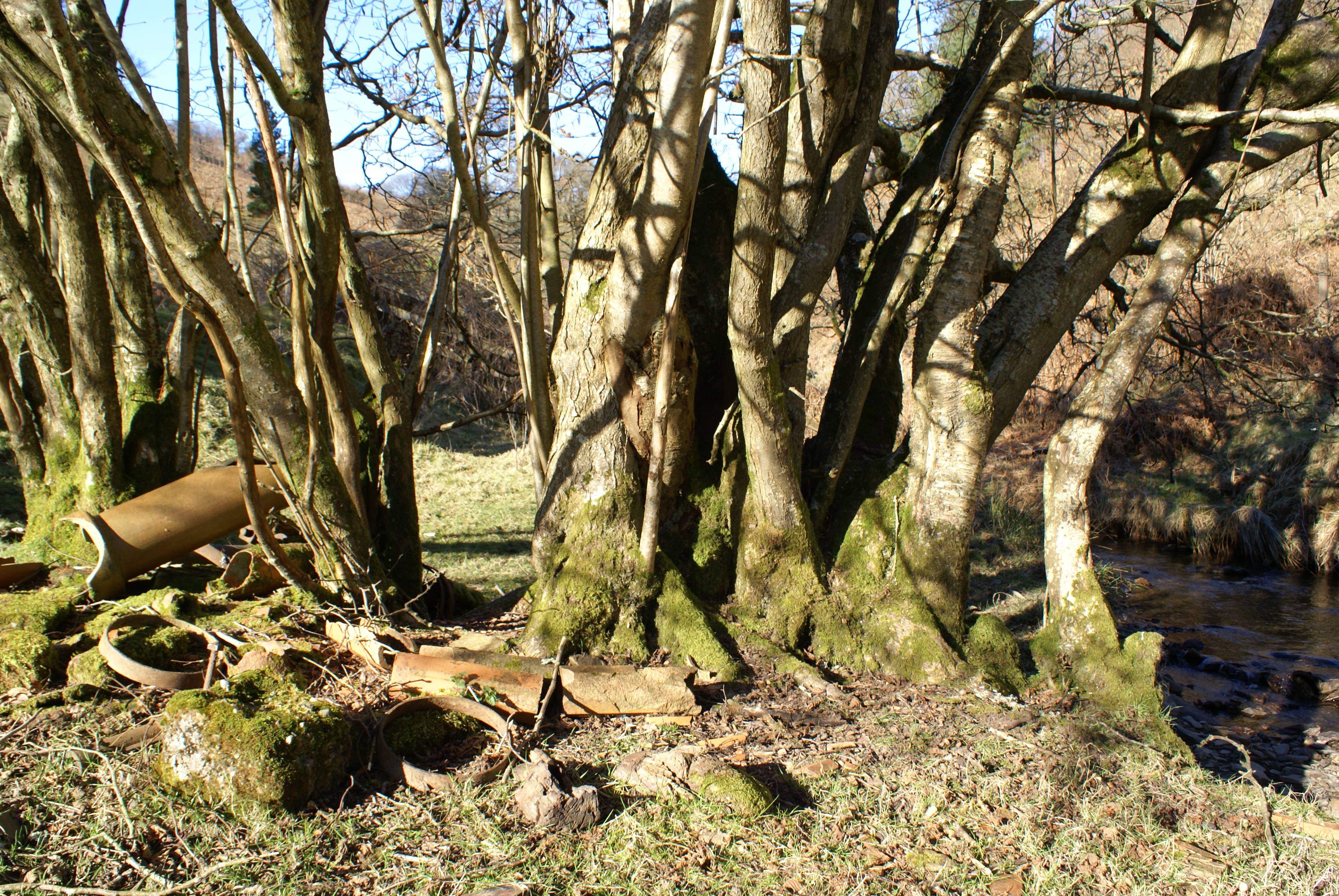
sheltering under the trees

sheltering under the trees

Torrential rain all night — sodden ground but not all that cold — not good lambing weather but ‘not a dying day’ the farmer said as we both looked out across the valley and, for a fleeting moment, the sun came out.

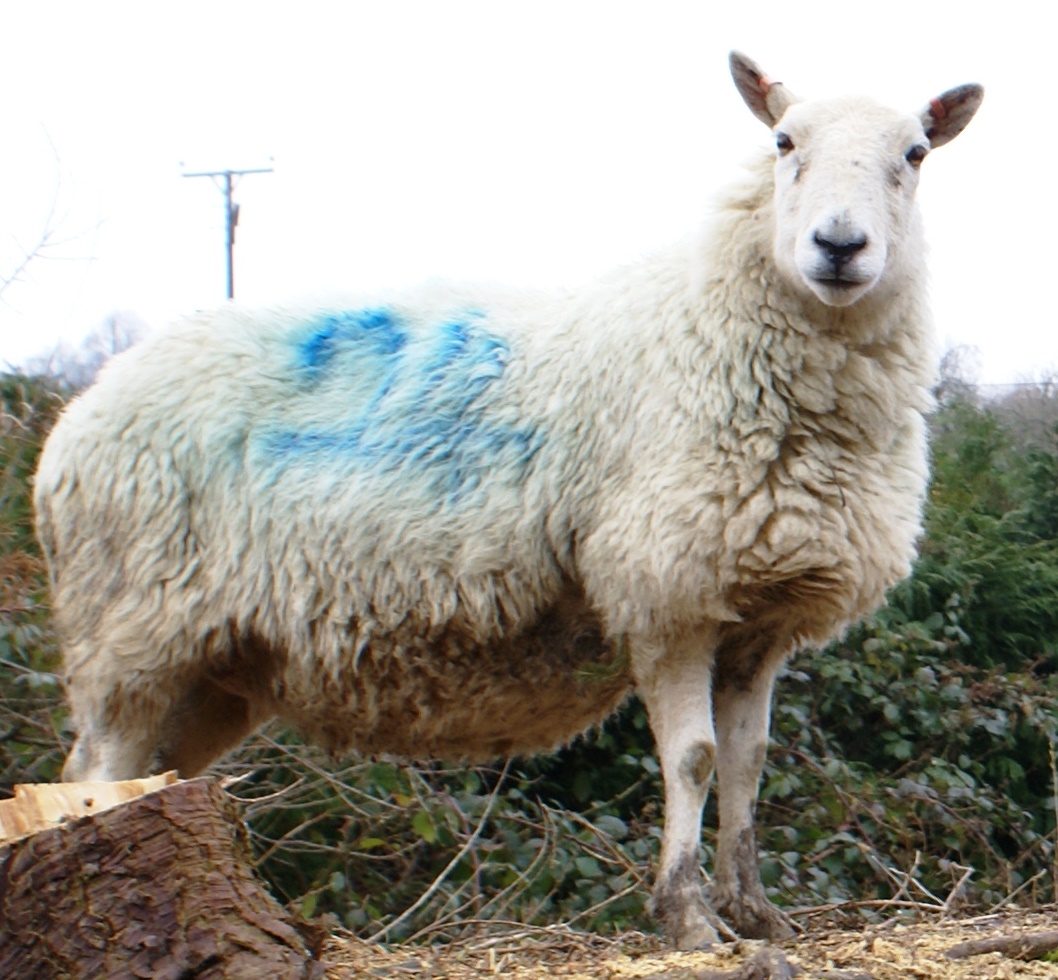
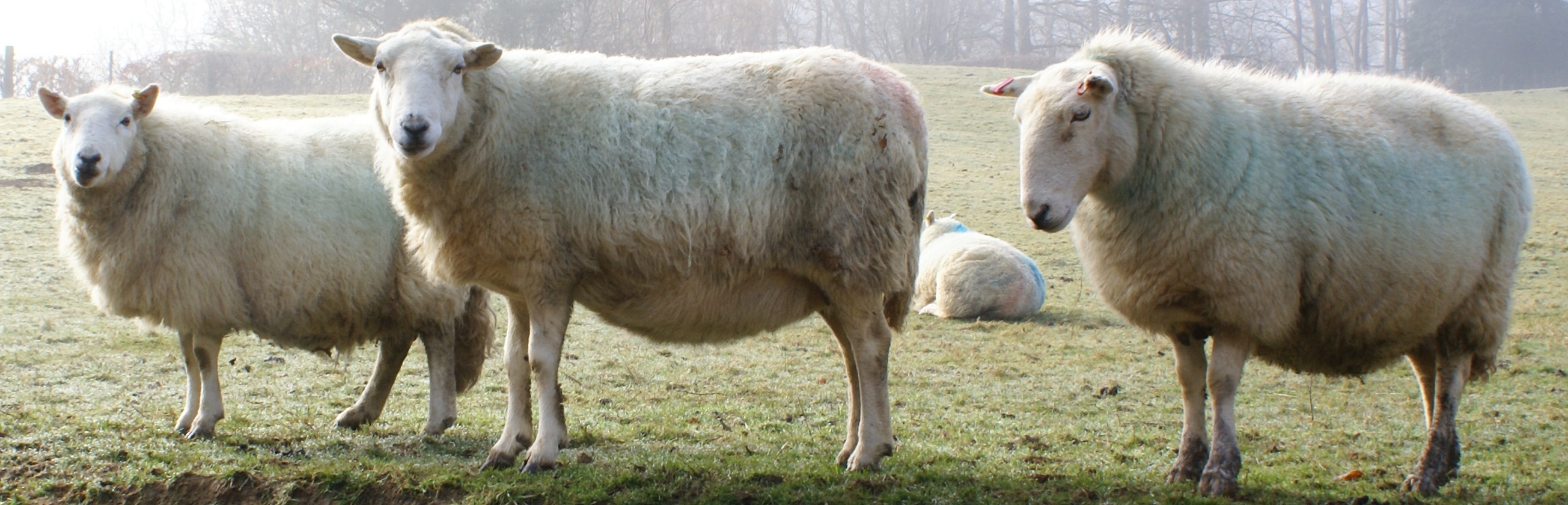
Disgruntled of Mid-Wales -- Horizontal ears -- Aby is not one to hide her emotions

Disgruntled of Mid-Wales — Horizontal ears — Aby is not one to hide her emotions

That was what we needed to hear.

Later in the day the rain abated and someone was baa-ing loudly up by the hedge.  Like humans some of our ewes labour stoically in silence, perhaps with the occasional muted grunt at the very end but some labour vociferously.  Number Twelve is a pretty young ewe, lively and highly strung, she shouts in labour.  Today she shouted that she was at the end of the first stage and I ran out with my binoculars to supervise — that is our arrangement.

They lamb out of doors but not in the laissez-faire, survival-of-the-fitest sense.  We watch and only intervene if they need it and if they need it there seems no problem in them accepting it — I guess it’s all in the timing but our days of chasing the two-headed sheep are hopefully over — that’s a sheep with its own head one end and its lamb’s head sticking out the other.

Ovine obstetrics makes me think of childbirth before the days of modern medicine when more deaths were caused by officious intervention (with dirty hands) than from the complications of birth.  We watch and the more we watch the better we grasp what is normal and what is usual for our individual animals and we do it quietly and from a distance.  Just like humans,  a relaxed and confident mother is the key to a happy outcome.
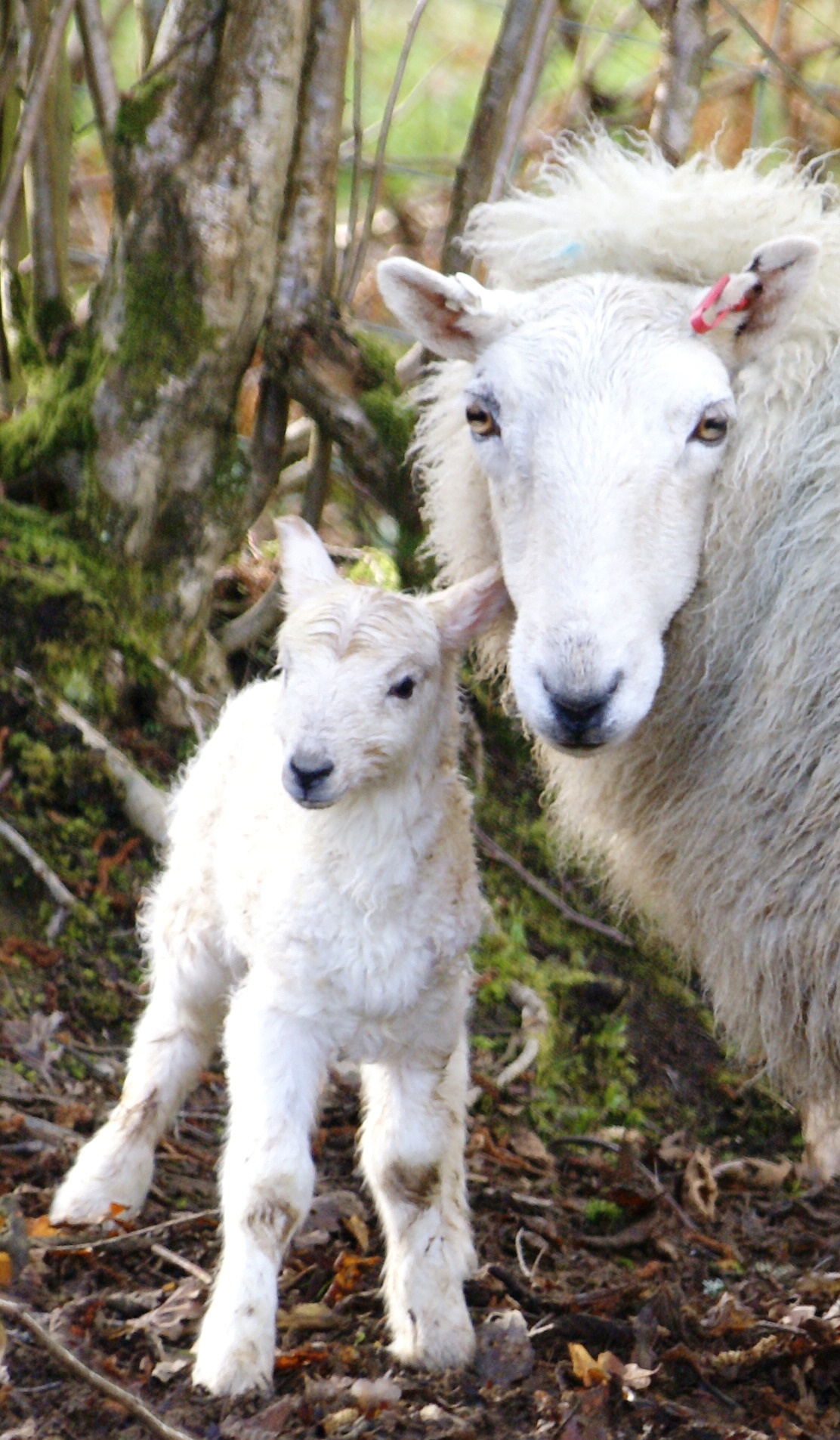
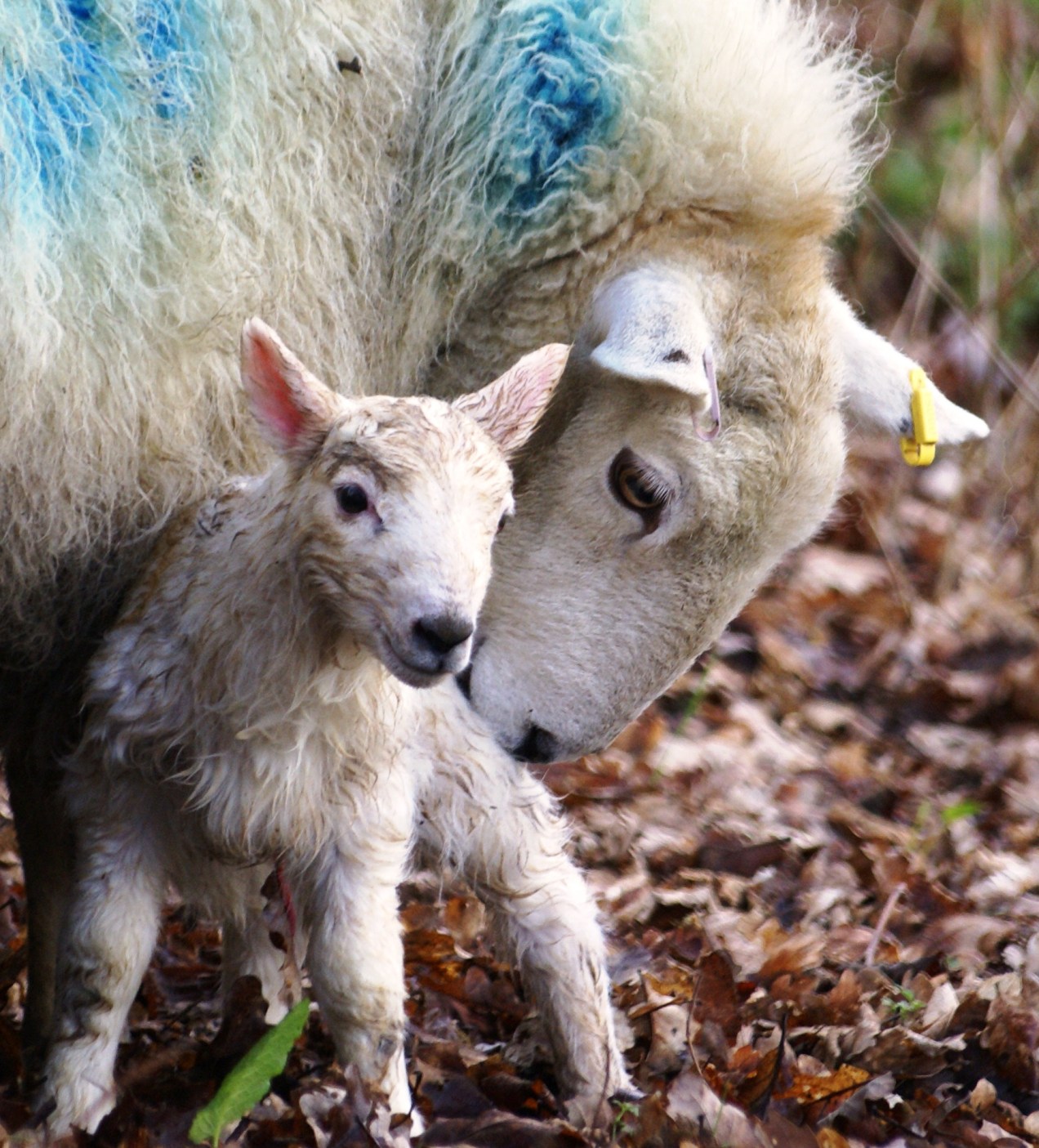
Here she is, first lamb -- shot from the cannon of her healthy young mother midst  a salvo of baa-ing

Here she is, first lamb — shot from the cannon of her healthy young mother midst a salvo of baas.

Next came our friendliest ewe — I don’t know why she is so tame — she’s never been singled out for special treatment — not bottle fed and never ill.  She took herself off into the hedge, as they do, and silently produced a male lamb.

Friendly Sheep has an immense fleece (descendent of Square Sheep) and has thick wool all over her udders — she is perfectly adapted for life in a testing climate but her hirsutism presents a problem for her lamb — lambs are drawn to the teat by its smell and its heat — insulated teats are hard to find.

In the midst of this hunt while I am considering how to wax a sheep’ udder (ouch!) something else happens — something falls to the ground and rolls down the hill — it is a second lamb and the mother is completely unaware of it.  When it bleats she looks up for a moment then goes back to nosing her first.  Second Lamb shakes his nose free from the membranes with an extravagant gesture and bleats again — no response.

I pick up the lamb and clean its face with my hand then give it to the mother who looks pleasantly surprised and interested and she starts to lick it while I grab Number One Lamb and go hunting the teat.  I plug it in and beat a retreat.

Cleaning Second Lamb

Cleaning Second Lamb

By 10 o’clock at night, Second Lamb is teetering about the hillside, meters from its mum, bleating weakly.  I take it to its mother, ‘Not mine,’ she baas and gives it a gentle butt, then a not so gentle butt.

I try again, ‘Not mine — smell it!’

I do , it smells terrible, like something a dog might roll in which is what it must have done on another roll down the hill..

When my husband gets home from his Domino match, dropped off by a farmer friend he says to the friend, ‘Oh God — you know what’ll happen next — it’ll be in our wet-room.’

‘It is already!’

I tell him that I have prepared a pen in the shed and the friend offers us an adopter — a sort of anti-butting crate.  The next hour is spent slippy-sliding up and down the sodden hillside in the rain with Number One Lamb bleating in a bucket and Friendly Sheep following then panicking and running back up the field to something she couldn’t quite remember.

The other sheep are baaing their conflicting advice.  Eventually our old cade lamb, Aby, comes to the rescue and walks with us, Friendly Sheep was reassured and follows to the pen in the barn where we re-unite her with Second Lamb having warmed and dried it and given it a bottle of colostrum and washed its under the tap, dried it with hay and rubbed it on its big brother so that it smells more-or-less right.

Friendly Sheep settles immediately in the security of the shed, knows she has two lambs though she can’t count and is letting the now vigorous second lamb suckle.

Next morning they are a picture of domestic harmony.

?????????????????????????????


Standard
Communication, Thoughtful

A Mammalist view of Words

There are two sorts of individual: those who need words and those that do not. If you are a writer you are likely to be one of the former — but not necessarily. Nonsense! Everyone needs words!
We have a friend who is a bit different, actually quite a lot different, he has a genetic abnormality that affects his ability to use language — the language part of his brain is absent or switched off.

A dog knows some nouns – his name, ‘dinner’, ‘walkies’, ‘stick’, and some verbs — ‘fetch’, and he understands ‘No!’ My dog understands some phrases – ‘feed the dog’, ‘feed the sheep’ and ‘go to bed.’ But he can’t articulate very clearly and, okay, his grasp of sophisticated language isn’t great.

Our friend’s articulation is better, he has the right equipment but his grasp of language is similar. This is quite a disability – but not that much of a disability. He looks different but is physically robust, as strong as an ox, has good balance and co-ordination, is hard working and eager to please – he will dig or sweep or wield an axe all day. He will walk home, day or night, mile across the fields and is never out of work and rarely short of money. He also has terrific social skills, notwithstanding his appearance and people’s often negative response to him for all the above reasons.

The thing is: he has a very well developed grasp of the non-verbal, knows exactly what is going on, who likes who, who doesn’t and who would stab you in the back – ‘Bad man!’ And he is right. This is another reason folks are wary of him. I’m not sure about the workings of his sense of humour but he loves to laugh, he rejoices in laughter, is attracted to it, infected by it, bathes in good humour when it surrounds him.

His life is very difficult – he loves to be in a social setting but social settings increasingly fear those who are different and finds excuses to exclude them.

It’s a shame I cannot transpose his perception of the world into words for you because, if I could, it would have the emotional intelligence that would stun you and there would be no bull-shit.

Words are very blunt instruments.

This brings me to the thought that set me off on this tack. People that haven’t always lived with animals find it odd: the concept of personality in other species and that is only because we depend so much on language. It means we miss a lot.

Standard
Communication, Disaster, Ecology

Media Miasma

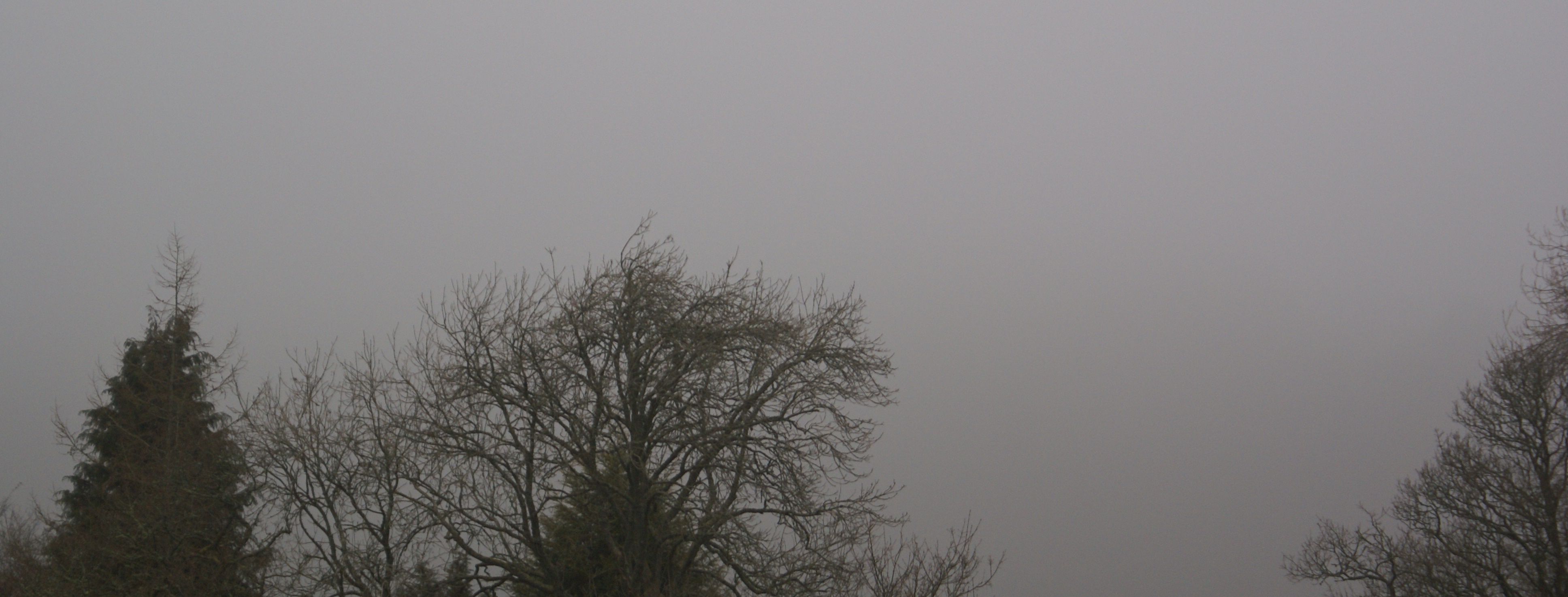
It all started with a sunset –here in the hills it’s the one thing we miss but there it was — harbinger of more weirdness to come.

?????????????????????????????And the media was full of it — southerly winds scooping up all the industrial and vehicular effluent from France and Spain (didn’t think they had much) and funneling it over Eastern England to dump it there with a load of sand from the Sahara and produce the worst air pollution for aeons.

Thank goodness it wasn’t going to affect Wales — so where is the hill?

?????????????????????????????It was there yesterday!

Now you see it

Now you see it

Now you don't

Now you don’t

And there is a slight metropolitan smell — yes, definitely diesel fumes.

If it’s this bad in the West it must be cataclysmic in London.

Panic phone call to daughter in central London where the weather-man’s air quality map is scarlet, we are green.  ‘Pollution?’

‘Yes, pollution — the worst for years — a real pea-souper!’

‘What are you on about,Mum.  No, really Mum, I walked home to Wandsworth and it was a bit misty by the river — that’s all.’  Her husband had been in Canary Wharf — up a skyscraper — hadn’t noticed a thing.

‘Not even the people collapsing with asthma and heart disease?’

‘No Mum.’

That’s odd.


Standard
Hill Farming, Humour, Sheep, Uncategorized

Long Multiplication

?????????????????????????????

Our sheep are blooming — all except one.  The 19 ewes are due to lamb from about the 5th April, we expect one or two each day for a fortnight (we were watching the ram carefully) and now  we are watching the ewes very carefully and feeding them well.

Number Twenty-four is giving concern.  She is under-weight — skinny in fact (perhaps she’s barren this year) — and the others are bullying her and pushing her away from the trough.

Looking poorly

Looking poorly

She was one of ten that we bought from a friend at six months old, they were very good, hardy ewes but. after last years lambing which followed a terribly wet winter and blizzards in the spring, we decided to reduce the size of our flock — the catch-phrase at the time was sustainability. We don’t like parting from our stock so when the original breeder, who had had heavy losses, offered to buy them back we were very pleased but we did keep one — Number Twenty-four.  We have figured out that the loss of her cohort (the little battalion of half-sisters that she grew up with) has knocked her down the pecking order of the flock.

Not only was she thin but now she was scouring (no — not cleaning the yard — it’s farm-speak for having diarrhoea).  So we forgot our amateur psychology and got her in and treated her for worms and fluke and kept her in the garden for extra rations (and daffodils and to prune the roses — the scouring has stopped and she has perked up.

Perked up

Perked up

Sheep are amazingly gregarious — a flock animal — but also amazingly adaptable. If they can’t get to the flock and, believe me, they will usually find a way to escape separation, they will find a replacement.  That’s the trouble with sick sheep — no sooner have you put them in the yard than they are sneeking in the back door or standing on the veranda watching TV through the window. This week Twenty-four has been sitting by the bonfire watching us burn brushwood.

Now in the morning when I go to the post with the dog and (if I haven’t fed them) the two cats, Twenty-four  tags along too.

When is a sheep not a sheep?

When is a sheep not a sheep?

Standard
Ecology, Hill Farming, Humour

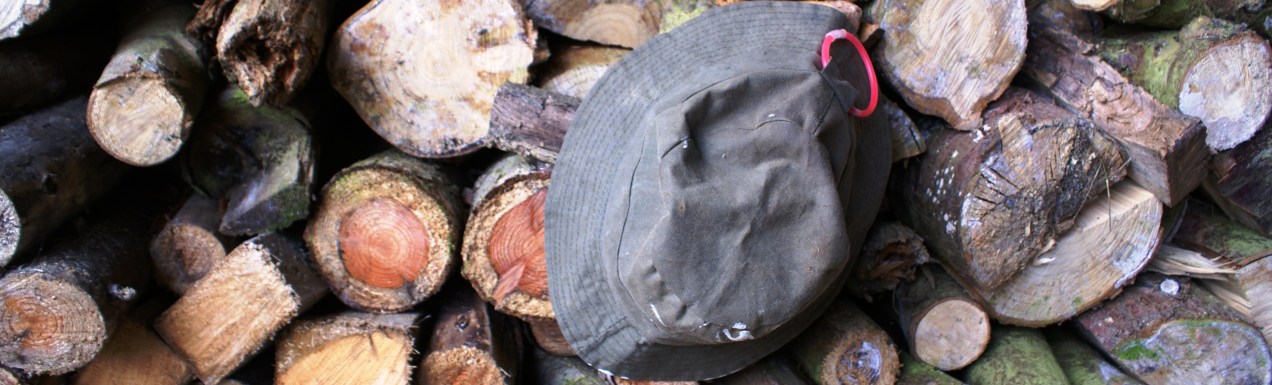
Habit-hat

SONY DSC

‘Where’s my hat?’

‘It’s become a habitat — entropy has had your hat.’

‘Why did you let it?’

”The storm wet it, I just let it dry — in the woodshed.’

‘The mice did the rest.’?????????????????????????????


Standard
Communication, Humour, Neurophysiology, Thoughtful

Changing the Matrix of our Thought

I think that using IT –information technology, laptops, i-phones, satellite boxes and the like – is changing the way we think: changing the actual nuts and bolts of how we think – I think we are enhancing certain neural pathways in our brains and probably neglecting others, the old ways.

Some of us do this with greater ease than others.

For example, when humans detect incongruity in their world  (a soldier knitting or a little old lady pumping iron) we tend to laugh[i], incongruity is the core of humor.  When a train of thought leads us up a dead end, when the system of reasoning we are using doesn’t work, won’t extrapolate – we don’t bash on — we laugh and feel better and then we try another route.  We don’t right click and we don’t get frustrated.  Think of a joke, think why it is funny and you will probably see this.  Laughing protects us and we like to do it so we don’t hang on to trails of logic that don’t hold good — we giggle, abandon that menu and look for a new one — right clicking isn’t so enjoyable.

Sometimes when I’ve been on the computer late at night I dream within the computer’s matrix – it is disturbing – last night I couldn’t get out of Google.  We think in lots of matrices (superimposed restraints) – I’ve only just learned to think in Punctuation – for sixty years I did free thought.

Now, when I go to sleep, I can find myself dreaming in Word, with embedded commands out in the open, kicking my thoughts into shape, but not my shape, they direct the very narrative of my dream – it is weird and it is food for thought.


i] see the work of Marvin Minsky

Standard
Ecology, Hill Farming, Humour

Happytats for Birds and Bats

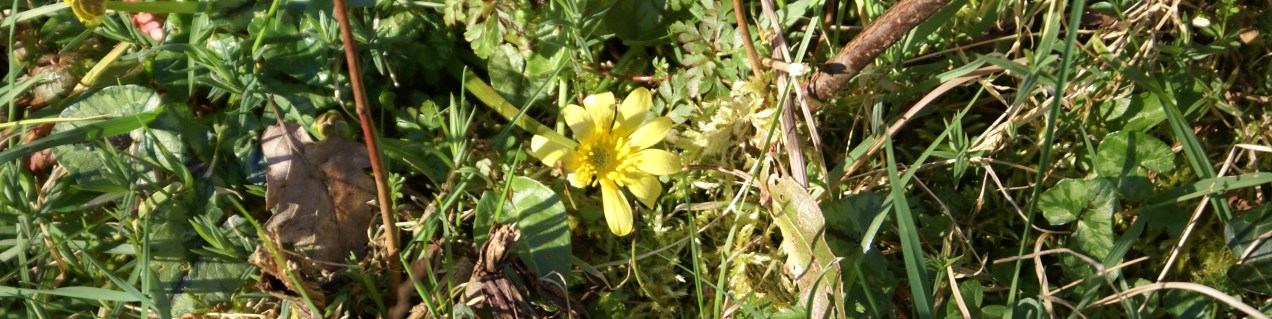
In a sheltered dimple on the far bank of our stream, facing south, we have spotted the first three tiny yellow lights that herald the Spring — they are ranunculi, brilliant buttercups with pointed stellar petals — broaches on the tweed of winter.  At this signal the woodpeckers have begun to drum.

It's a struggle to be first

It’s a struggle to be first

There is perfume in the air and overhanging the water, hazel catkins are dancing in gusts of March wind and the sunshine makes long shadows.   Clouds of frogspawn drift across the pond, strangely not reflected in the sky.

There is birdsong and the hum of passing wings.  The female pheasant from last year has reappeared.  Magpies are bickering and squawking in the field and above a circling buzzard mews so I go to check the sheep — a buzzard sees or smells a labouring ewe from high in the sky and will dive and swerve and snatch the precious afterbirth from the squabbling crows — but not today.

They will have to find some other quarry and that has reminded us that it is time to put up the bird boxes and the bat boxes that we made last winter.

?????????????????????????????

Prime real-estate – detached timber homes of French oak (offcuts from the office shelves) and other experienced material (hundred year old doors) deconstructed by a son and now born-again bat boxes with loft-ladder access from below (not shown).

We have sited them all carefully.  For bats: on the flight-path through the wooded glade at different heights for different species and facing for the morning or the evening sun.

The bird boxes face North-East, shaded and protected from the prevailing wind and sited with great thought, and not a little argument, about the specific requirements of the intended tenant whose name is penciled on the side – a test of avian literacy.

Do you think the mouse that was squatting in a bat house while it waited in the barn (avoiding the cat that sleeps on the rick) will find it up the tree?

Never overlook the importance of opportunism and untidyness in habitat creation!

Last year Great Tits reared a brood in this bag of kindling in the woodshed

Last year Great Tits reared a brood in this bag of kindling in the woodshed

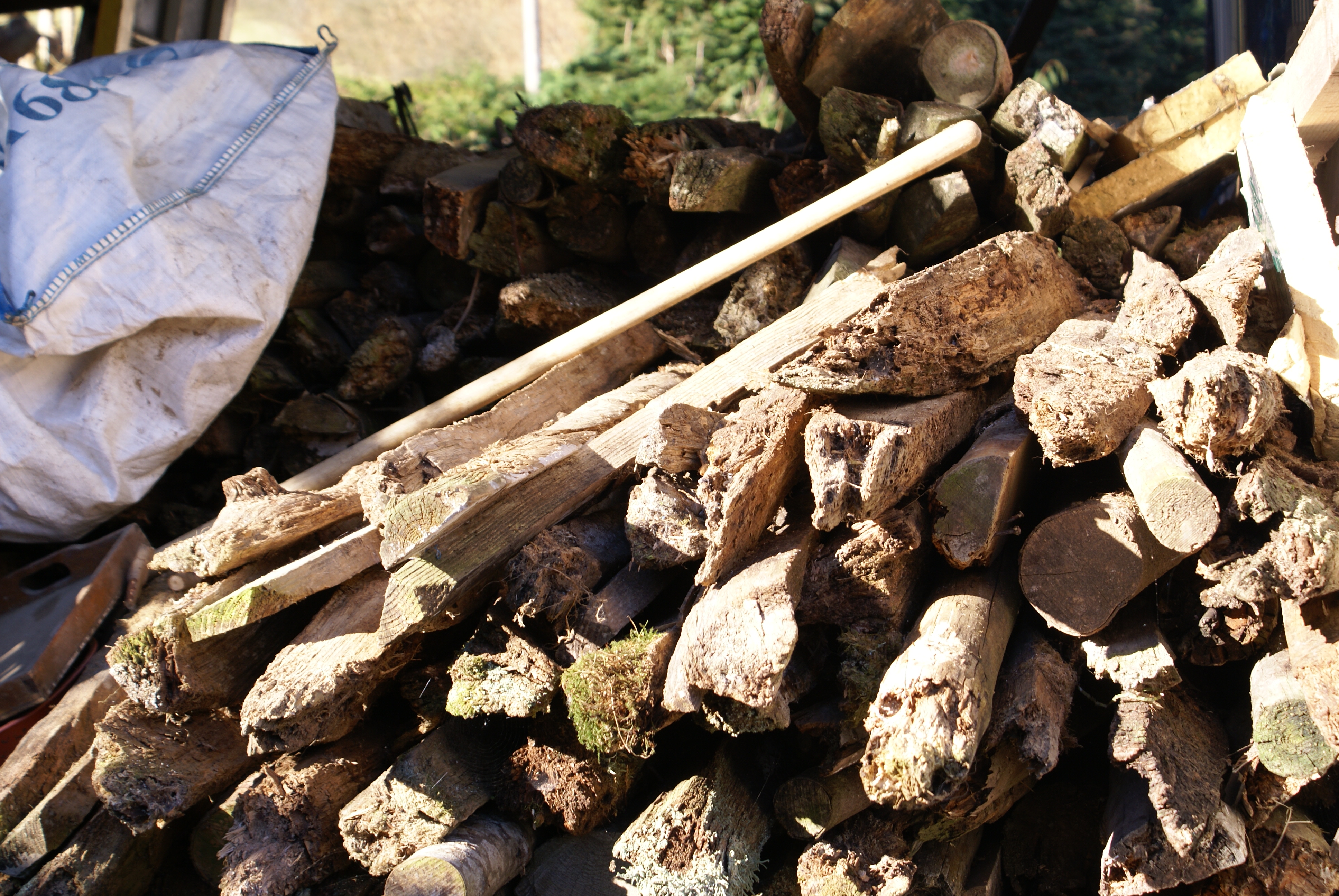
We like the look of this old farm junk -- what will move in?

We like the look of this old farm junk — what will move in?

Standard
Hill Farming, Sheep, Wales

Square Sheep

Eighteen sheep jostle me as I try to count them again, ‘Stand still!  Sixteen, seventeen, eighteen.’ There should be nineteen – nineteen beautiful (well to me they are), pregnant ewes of the hardy Welsh Mountain variety.  ‘One of you is missing – what’s happened?  What’s going on?’  No one answers.  Well, they all do, they baa but they are looking curiously at me.

?????????????????????????????‘What’s the hold up!  Get the nut’s out!’ that is what they are baa-ing.

?????????????????????????????Sheep always stick together.  I scan the hillside.  On the crest of the hill, only just visible, by the edge of the field where the oak trees overhang there is something ominously wool coloured.

‘Oh no!  I can’t bare it!’ only the day before I had boasted about our low mortality.  I had tempted fate…  Pride comes before a fall…  Axioms jostle truisms in my head as I stride up the hill pursued by baas.

By the time I reach the gate of the top field I can see the large, motionless body of a sheep, with its legs in the air, like an upturned coffee table,  ‘Please God,  not a dead sheep.’  At that moment one leg gives a twitch – I run the last hundred yards up hill.  Is she sick – in her death throws or is she cast?

Cast is when a sheep gets onto her back – for some reason sheep don’t work very well when they are upside down.  It’s quite an advantage for the shepherd – if you want to do something to one you can turn it over and it won’t struggle – it’s not such an advantage to the sheep.  Once they get onto their backs they can just lie there with just a few little kicks until they die.

This sheep isn’t dead.  She is hugely pregnant.  I check her ear tag:  9229.  She is Square Sheep, that is her name – they are not supposed to have names but she is one of our oldest and cleverest (though not today) and she has a magnificently heavy fleece which makes her look almost as wide as she is long – hence Square Sheep.

I gently and slowly roll her downhill until she is the right way up and she struggles to her feet, staggers sideways, falls over and rolls onto her back again, straight back to inverted coffee table.

This time I roll her to nearly the right way up and hold her there for a few minutes talking to her encouragingly and thinking about twin-lamb-disease and the staggers and all the other falling-over conditions that can afflict a sheep.  Once she has calmed down I loosen my grip and move away.  She struggles slowly to her feet and stands for a while before moving away unsteadily, tacking and with splayed legs, like a sailor back on land after a long voyage.

In the distance a quad bike revs, the cavalry is coming, and below the other sheep stand, an ovine smear across the field, watching us walk slowly down.  All eyes are fixed on the old ewe as her confidence increases and her dignity returns.

?????????????????????????????Square Sheep — Fully recovered

Standard
lifestyle, Thoughtful

How will you die?

Your cause of death depends to a large extent on when you do it and where.  If you are in the US and between the age of 10 and 24 when you die, there is a very good chance (over 70%) that you will die of an unintentional accident, suicide or homicide – so be careful and stop worrying about cancer!

It’s a similar story in the UK, I’ve been browsing the figures from the Office of National Statistics – if you are between the ages of 20 and 34, suicide and injury/poisoning of indeterminable intent (I think that means probable suicide), accidental poisoning (drug over-dose) and road accidents are the three most common causes of death in both men and women.

In childhood, (5-19) road traffic accidents are the commonest cause of death for boys.  Little girls are more cautious — I knew that.

Not until the age of 50 will suicide cease to be the commonest cause of death for men.  Shocking in itself this is a huge tribute to the power of vaccination, antibiotics and sewers.

What about the other end of the spectrum – what are our chances of surviving birth?  In the US infant mortality was 6.15/1000 live births in 2010, worryingly it is increasing and I don’t know why but obesity, diabetes, pregnancies in older women and in much younger women may be contributing.

In the UK infant mortality is at an all-time low of 4/1000 live births but we can probably expect this to rise as it has in the States.

The lowest infant mortality is in mothers between the ages of 30 and 34, the highest in those under 20 (5.5/1000 in UK in 2012).

The UN Population Division figures tell us that if you live in Afghanistan 135.95 babies in every 1000 die within a year of birth, that’s 13.5 in every 100 or more than 1 in 10!

Without modern medical care how many mothers would die in childbirth? Wikipedia gives us an idea — in Dublin between 1785 and 1849 the figure was about 1 in 100 or (for comparison) 1000 in 100,000.  In some institutions the maternal death rate on occasions reached 40%. It has gradually improved with advances in care; in the US in 2008 it was 14 in 100,000 but don’t be complacent the trend is again upwards.

1 in 100 is about the level of maternal deaths that we find today in Somalia – not as good as our sheep standing outside in the rain (but then they do have the benefit of some modern medical care and good nutrition).

In Sub-Saharan Africa the lifetime risk of maternal death from childbirth is about 1: 16, one in every sixteen women will die as a result of the complications of having a baby.  In the developed world the figure is 1 in 2800.

I commend you to go look at your national statistics and think about what they mean – I haven’t even touched on the lifestyle, cultural or political implications – you can do that for yourselves.

Standard
Democracy, Local History, Wales

Time warp

Llanidloes hasn’t changed much in two hundred and fifty years.  Take away the cars, cover the yellow lines with horse manure and replace the plastic awnings of the market stalls with canvas ones and you could be back in 1749 when John Wesley, evangelical Nonconformist rode into town and stood and preached on the stone by the market hall where dogs today, as they have for centuries, cock their legs.

?????????????????????????????

?????????????????????????????

1839 was the year that the people of the town rioted because three London police constables were sent to arrest the leaders of the town’s Chartist union.  The Chartists believed in one-man-one-vote, a secret ballot, annual elections, pay for Members of Parliament and the abolition of financial and property qualifications for MPs and that each parliamentary constituency should contain the same number of voters.  That is all.  The authorities were so unnerved that the little town of two thousand people was occupied by the military for twelve months.  It had taken five days for the troops to arrive in this remote part of Wales and this was known as the ‘Five Days of Freedom’, our ‘Celtic Spring’.

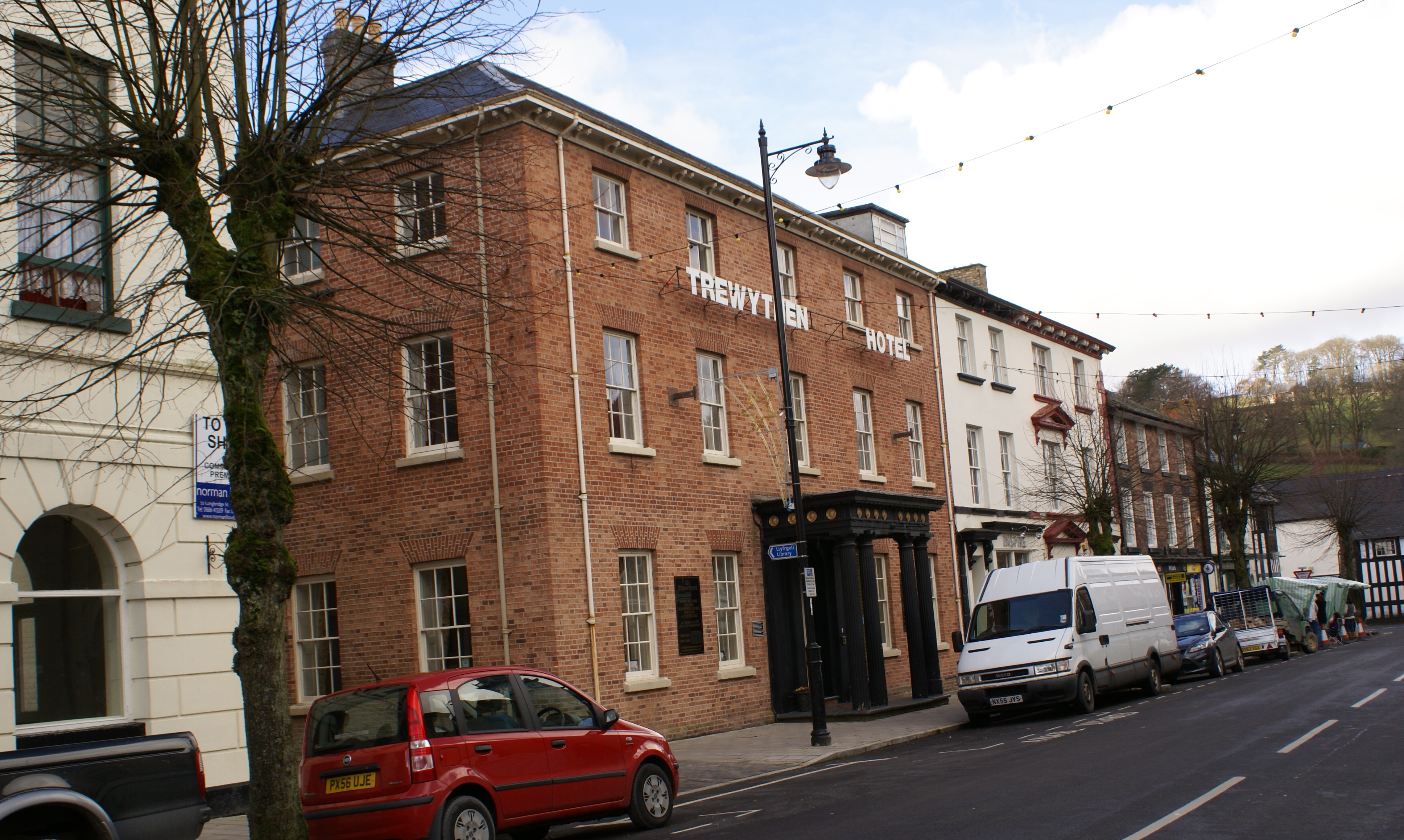
Townsfolk stormed this building to free the Chartists

Townsfolk stormed this building to free the Chartists

Yesterday was St.David’s Day, and the market was held as it is every Saturday and has been for centuries:

It is the first town on the River Severn, set in the most beautiful countryside, a good place for the dawn of democracy and a cracking place to do your shopping.  The small independent shops and market stalls, between them, can  service the towns every need.

Standard