Architecture, British history

Ecclesiastical Surprise

We can never resist an open church door — except on a Sunday.

Recent travels have taken us to Beverley in Yorkshire, a market town (I bought a dress) with 29,000 inhabitants. It has a minster. What is a minster? I hear you ask. I understand it as a throw back to the administrative structure of the Church 1000 years ago — all that has changed but a few minsters remain. Some are cathedrals like York Minster. Some are parish churches with attitude like Beverley Minster!

It is a Gothic masterpiece built between 1220-1425 now dedicated to St John and St Martin.

John was a local boy in the 700s who made good becoming Bishop of York and established a monastery in Beverley. He was credited with many feats of healing and good works and was canonised in 1037 — before the great schism so he is still revered by the orthodox churches!

Martin, better known outside Beverley, was a Hungarian conscript into the Roman army and sent to France. On a cold winter’s day he saw a beggar, almost naked and shivering. He cut his cloak in half with his sword and gave half to the beggar. The beggar returned to him in a dream as Christ and he became a Christian, founding a community and later became Bishop of Tours. A good demonstration that you are never quite sure whom exactly it is that you help or, conversely, that you do down!

Both he and St John had significant biographers — the key to posterity perhaps. One of John’s students was Bede, becoming venerable as the chronicler of his own and earlier ages. PR was always important.

The nave — not surprising that the Minster was used as a set for Westminster Abbey in the film Young Victoria
Detail from above door — amazing collection of statues — 99 outside but late Victorian, although the one of the future Edward VII is a good likeness! Unfortunately the light wasn’t good.
Quire, magnificent woodcarving with 21st century chorister’s mug and music?

A fascinating, beautiful church, though my photographs do not do it justice — well worth a visit.
Standard
nature, Spiders

Walking on Air and Hazardous Sex!

Drinking my coffee in the sunshine today I disturbed a spider that was sunbathing — she ran across the table then appeared to scamper through thin air, horizontally, a metre or so to the bushes. I looked more closely and there was her escape wire — a single strand of the finest silk only visible as it moved in the breeze and caught the sun.

What an amazing material spider silk is — strength, elasticity, organic, recyclable — I spent the rest of the morning reading about spider’s webs.

Then we went out to look for butterflies but look what we found!

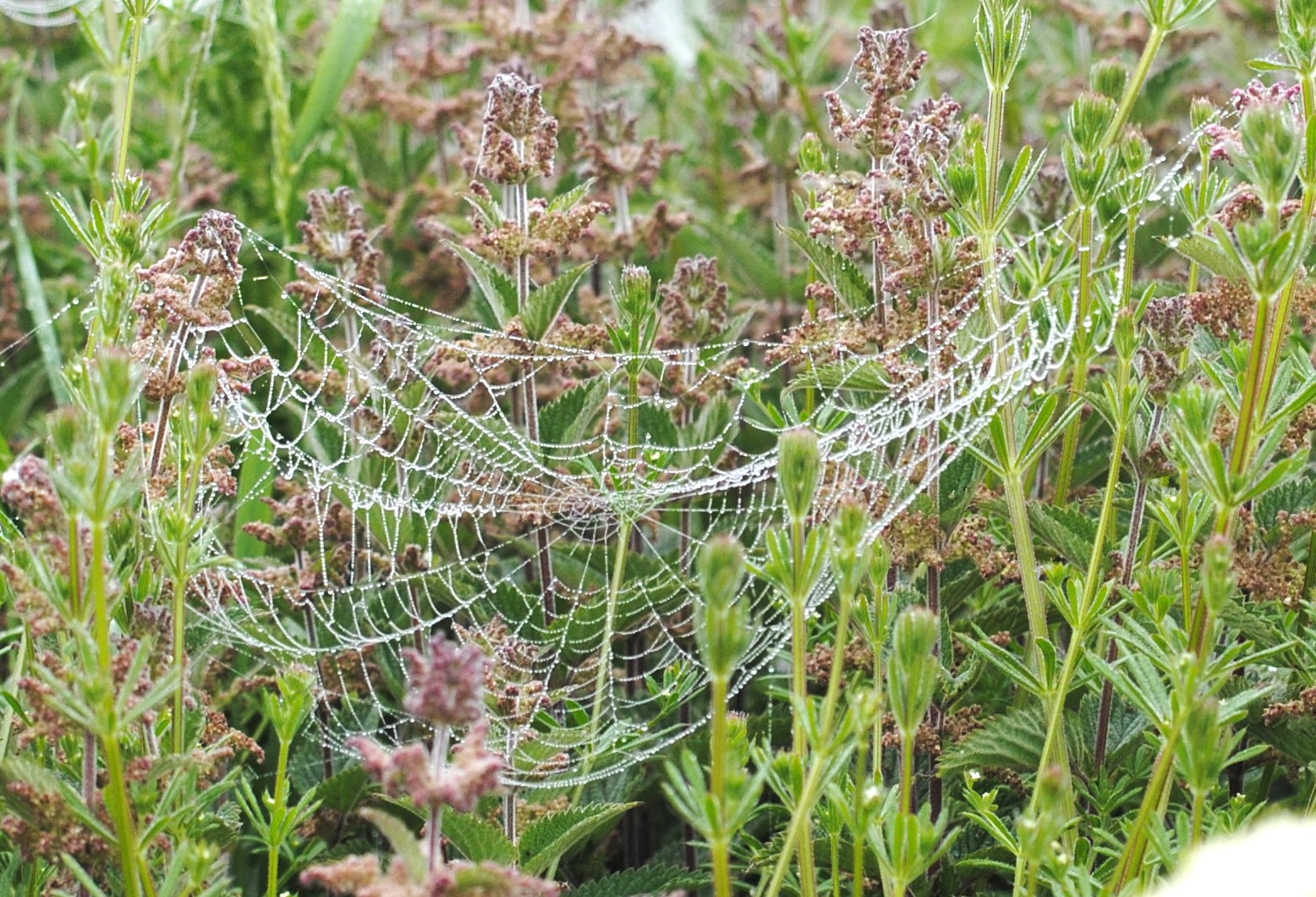
A mysterious web in hawthorn scrub, and guarding it… Look carefully.

A nursery web spider — she makes a secure three-dimensional pen for her babies until they can fend for themselves. If you don’t believe me — see them magnified!

These will soon have used up all the yolk with which they hatched, be able to produce their own silken threads and catch tiny flies and each other — Mum will release them before there is too much cannibalism and they will disperse to complete their own life cycle. In the UK they live about a year, hibernating during the winter. Mating is hazardous for the males who have evolved various ploys to avoid being eaten by their mate like offering gifts of food to distract the female and also playing dead! Survival of the fittest — only the really clever ones mate more than once!

Standard
Aviation History, Family History

How to Fly (for Grandchildren)

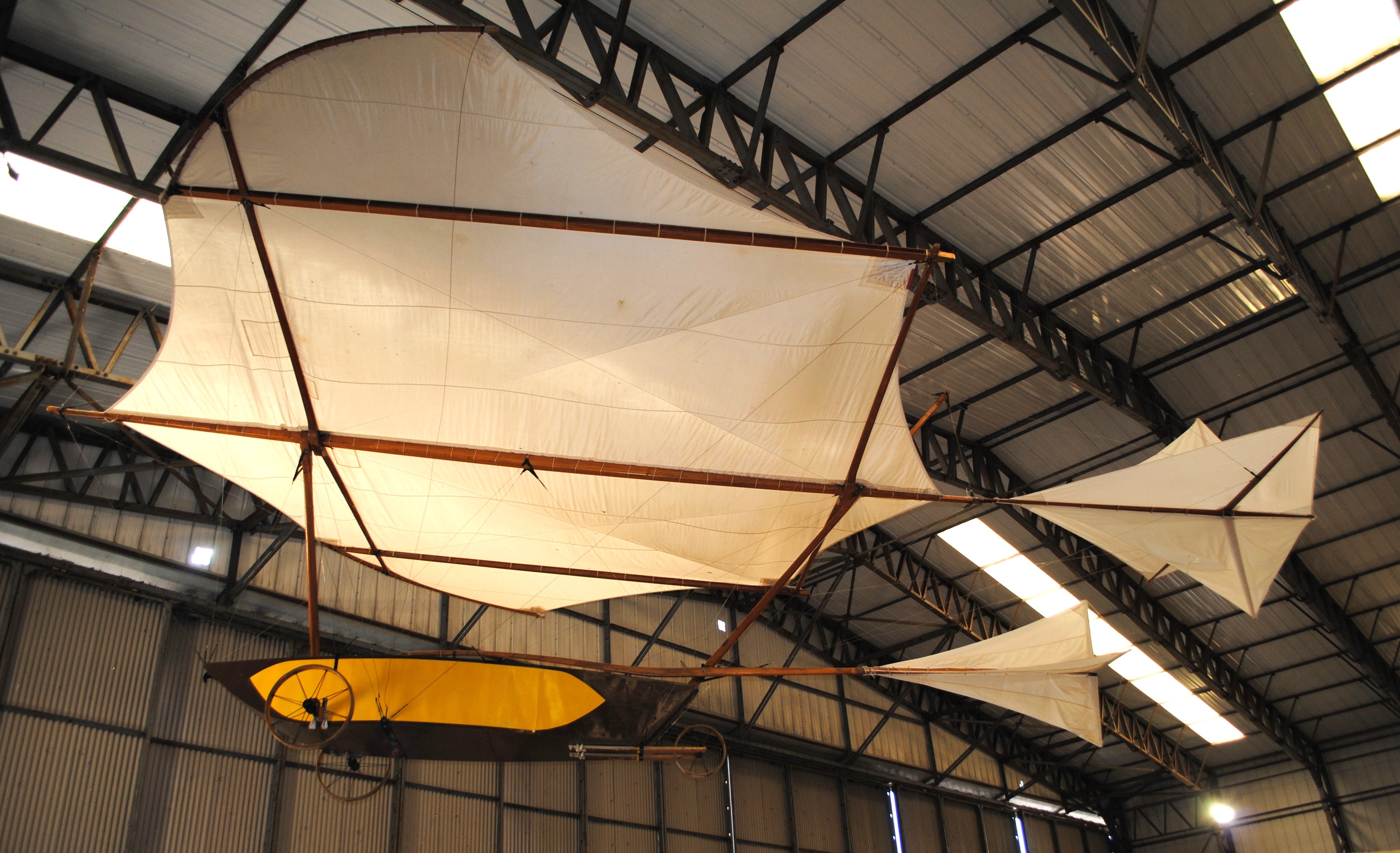
I called my grandpa Buckie. When he was born there were no aeroplanes — they hadn’t been invented but 50 years earlier a man called George had had an idea and he built a glider — this is how it looked:

It actually flew and was called George Cayley’s governable parachute. It was very scary so George sent his coachman up in it who afterwards was so shaken up that he stomped off and said he would never work for George ever again!

When Buckie was 4 years old, in 1903, two brothers called Orville and Wilbur in America built the first proper aeroplane — it looked like this:

Wright’s Flyer

The two wings gave it lift, they were shaped so that when it moved forward the air moved faster over the top and with higher pressure underneath the whole thing wanted to lift. It was made to move forward by an engine that drove two propellers in front of the wings. The first day it flew, each of the brothers had a go, Orville flew 37 meters then Wilber flew 260 meters.

By the time Buckie was 12, planes looked like this:

Mercury Monoplane 1911

By the time Buckie was 17 he had joined the Navy, because there wasn’t yet a Royal Air Force, and he would actually fly a Sopwith Camel like this one in the First World War.

F6314: Sopwith Camel

Flying was very dangerous then — Buckie crashed 16 times. He was quick-witted and lucky and lived until he was old but still drove his car very fast.

Standard
Birds, Ecology

Crisis in Paradise!

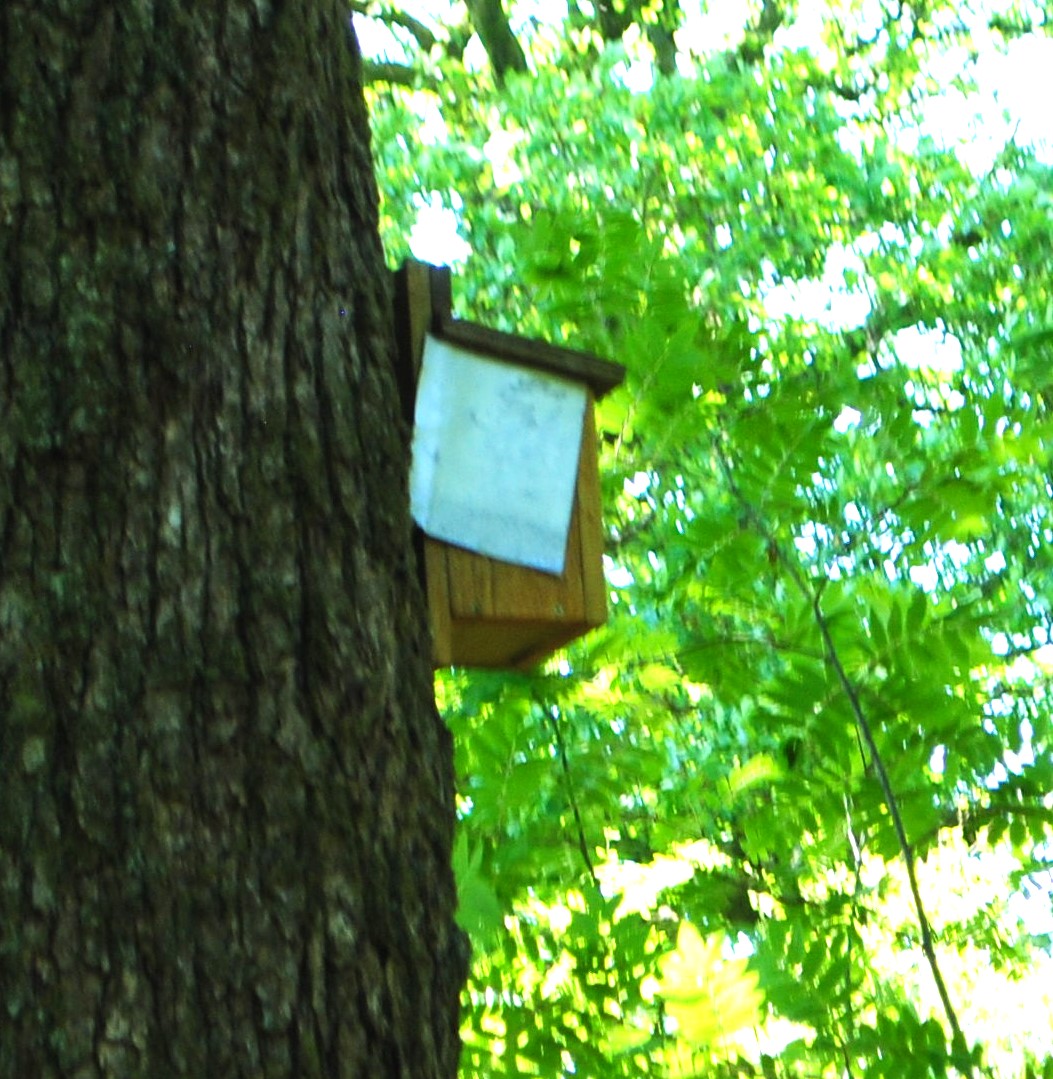
This is not how a bird box for our precious pied flycatchers should look — it has a perfectly good metal reinforced entrance hole facing the front. This box has been illegally modified — but by whom?

Number one suspect! Greater spotted woodpecker. But amazingly when checked by the intrepid bird ringers, it still contained 5 warm eggs.

The cunning woodpecker will be back to raid this nest once the chicks have hatched — no time to waste!

Last week Bill chastised me for cluttering up the new garage with a sheet of aluminium rescued from the back of a discarded electric fire — it was just what we needed and after an hour of wrestling with a blunt hacksaw and only minor injuries we had a patch. At first light we advanced upon the box, silicon gun in hand, 12 foot ladder under arm. As I wobbled up the ladder a female pied flycatcher whizzed out through the hole in the side of the box. I lobbed my silicone-sticky armour-plating over the hole and withdrew. Mother bird was mystified!

Then ensued the horrible second thoughts that occur when one interferes with Nature — visions of abandoned eggs, of feathers stuck to silicon, of a gormless bird permanently baffled by the loss of her new improved access, etc.

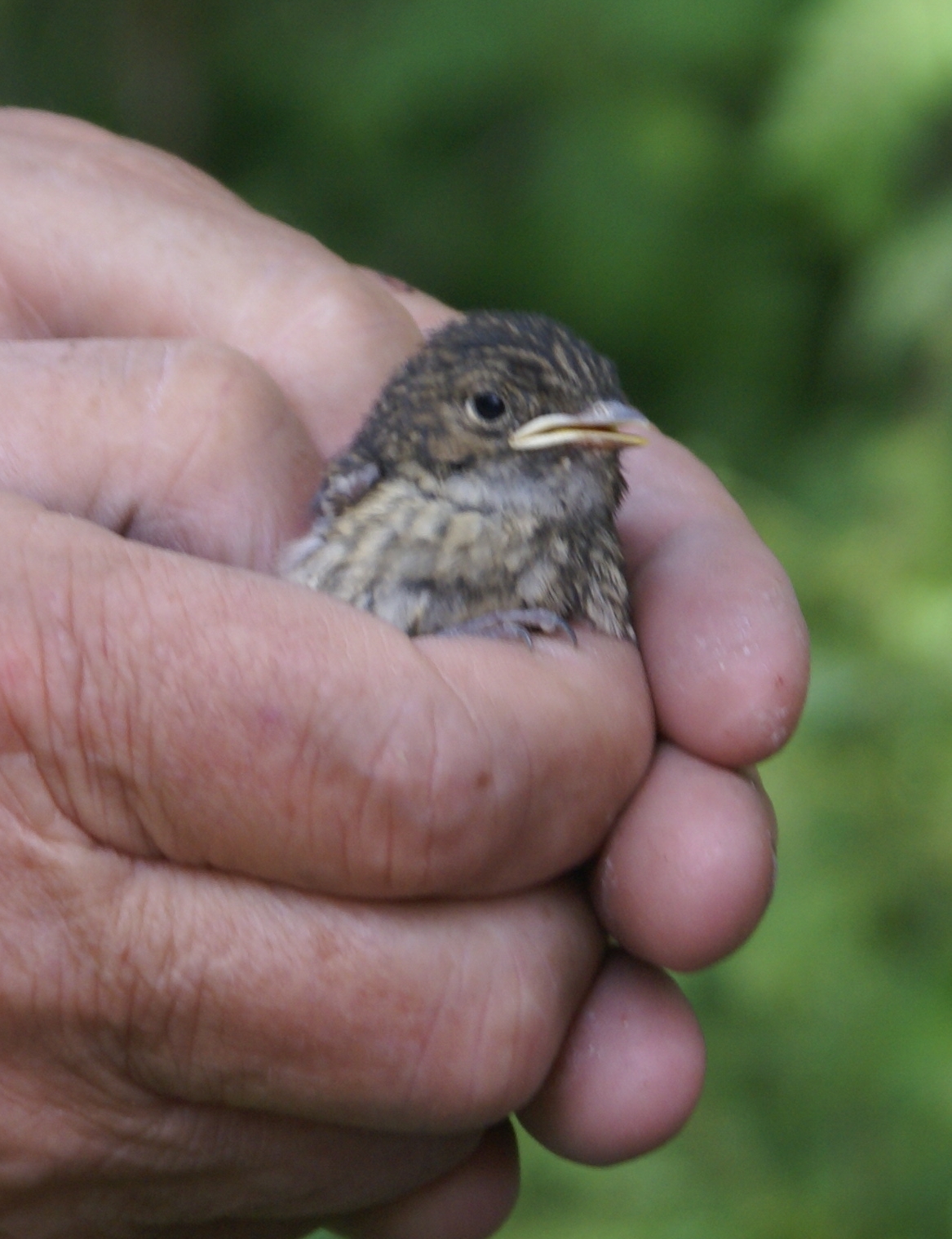
5 days later the ringers returned — she was sitting on chicks — we did not disturb her.

Standard
Writing

Good News from Su and Richard Wheeler, at Logaston Press.

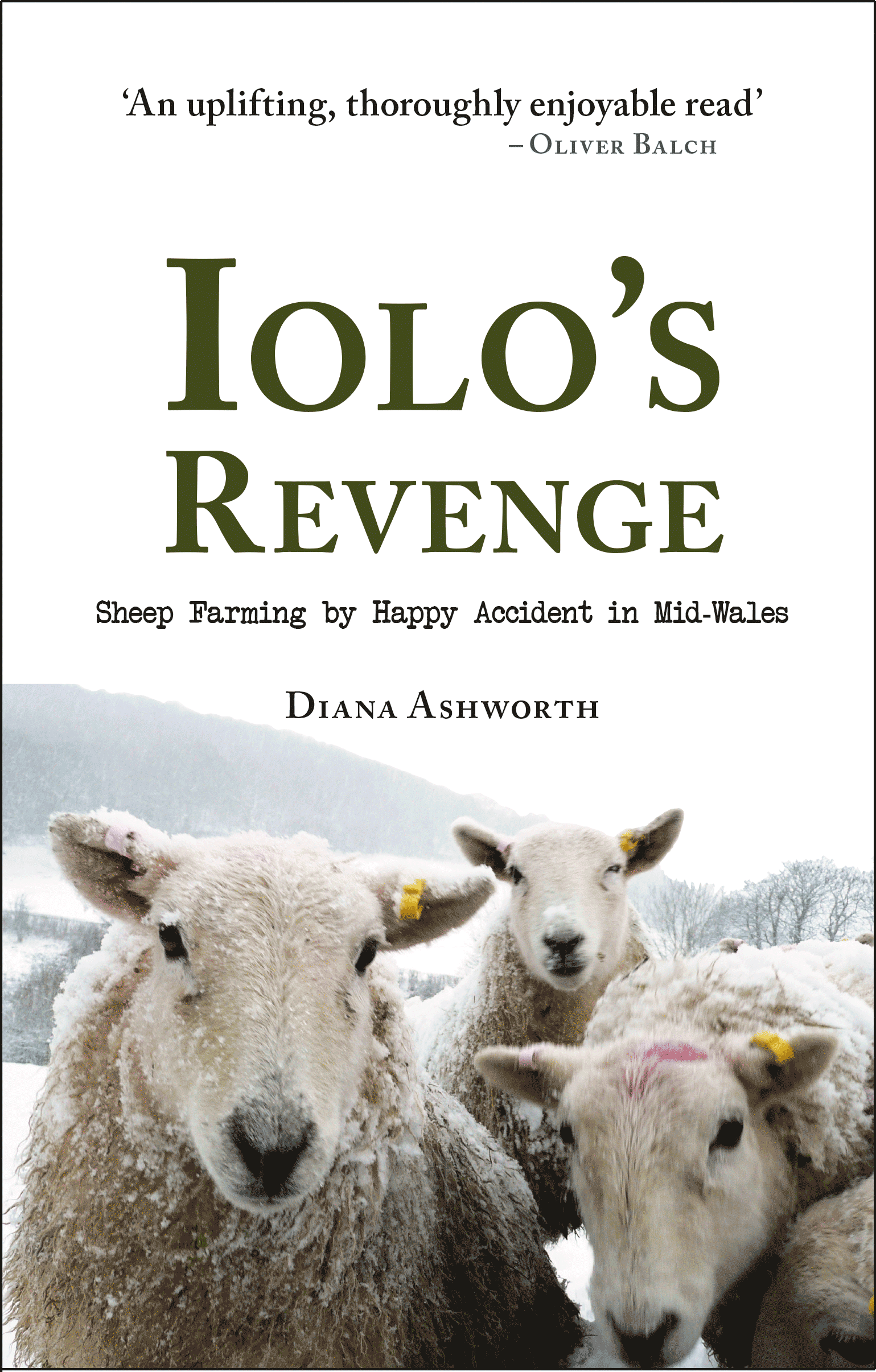
They are reprinting my first book, Iolo’s Revenge again (5th impression!) because, they say it just sells and sells! I’m sure this, in part, is due to their efforts and reputation as publishers, for which I am very grateful and also to Wendy Wigley for her delightful illustrations that lift it to another level!

 Iolo’s Revenge ISBN 978-1-910839-24-9 £10 Available from Fircone Books, The Holme, Church Rd, Eardisley,  HR3 6NJ, United Kingdom.   Tel:+44(0)1544 327182

Standard
British history

Battle of Britain Memorial Flight

The best adventures are unplanned. Yesterday on our way past, we called in to RAF Coningsby for Bill to do a bit of goofing at the end of the runway. It is where the Battle of Britain Memorial Flight is stationed — where they keep planes that survived the Battle of Britain in 1940, that still fly and do the memorial fly pasts on special occasions such as the coronation — though the weather prevented that. We were offered a tour but our guide Julian Maslin apologised because the planes were out — it was the day of the display pilots annual re-accreditation — if we stood outside the Hangar he would tell us about them as they flew past!

At that point, what he had to say was drowned out for a moment as the memorial flight hove into sight from behind the trees.

Well, that was interesting — but what’s this?

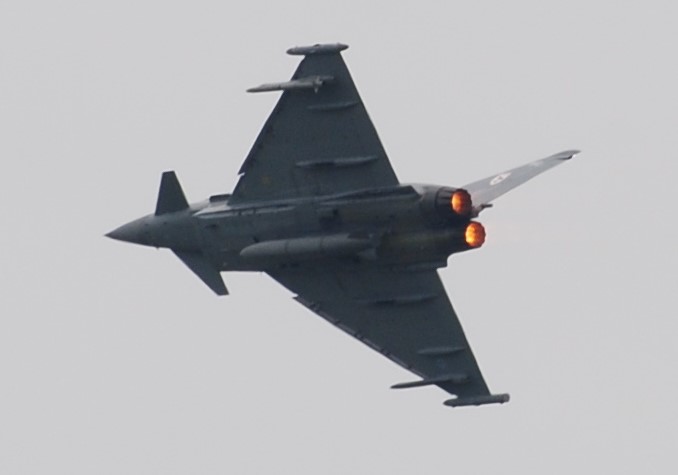
Creeping up on the 80 year old Avro Lancaster bomber — it’s one of the display typhoons whose pilot is also due to be re-tested.

Flying along behind at almost stall speed.

He kept his distance as they flew up and down in front of us, and the examiners.

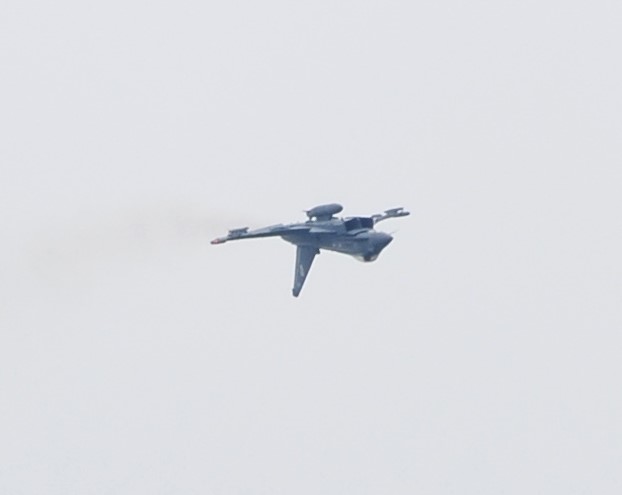
Then along on top! Once the Lancaster had peeled off and landed the Typhoon showed its power and manoeuvrability.

Afterburners firing,

the Typhoon with a banshee wail climbs almost vertically

and loops the loop!

Before streaking past us one last time.

Here’s is her sister, on the ground from 29 Squadron. And a chance to see the Lancaster as she taxies home — a very big bird.

She disgorges her regular RAF crew, who come and greet us, standing on the tarmac. They seem excited by their exercise and relieved to be good for another year.

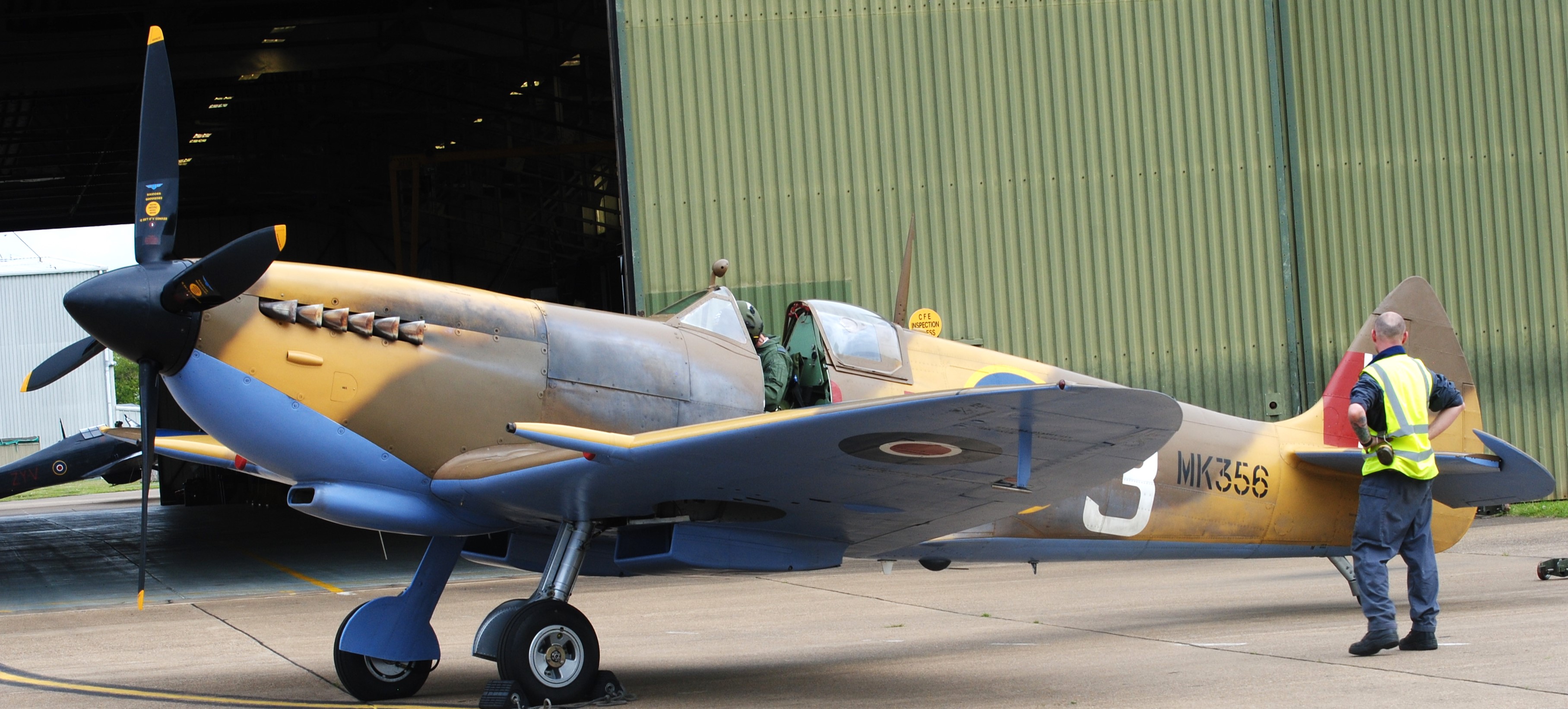
Time to have a proper look at the Supermarine Spitfire, in desert camouflage.

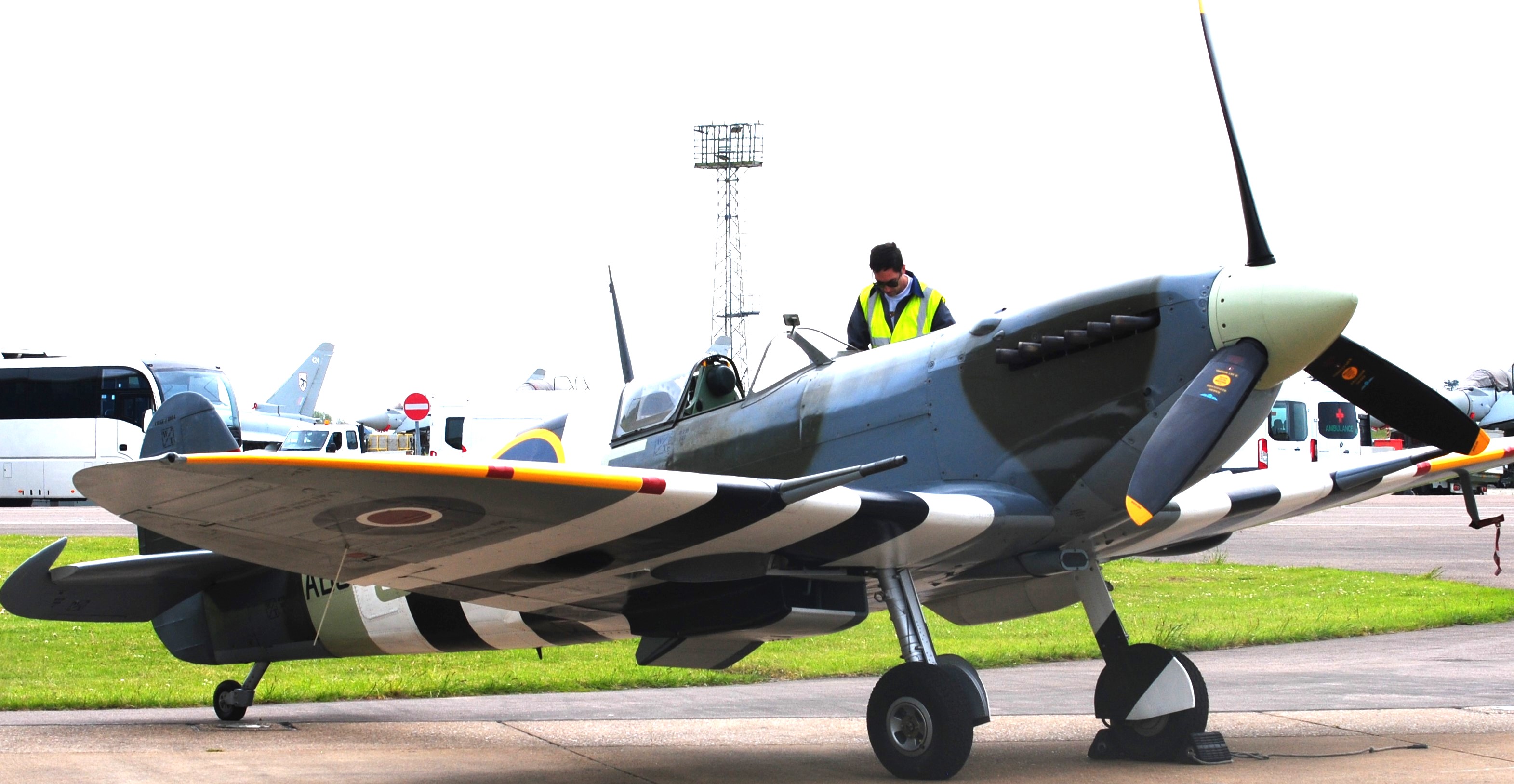
This one is painted for the invasion in 1944, the stripes to prevent it being shot down by friendly fire.

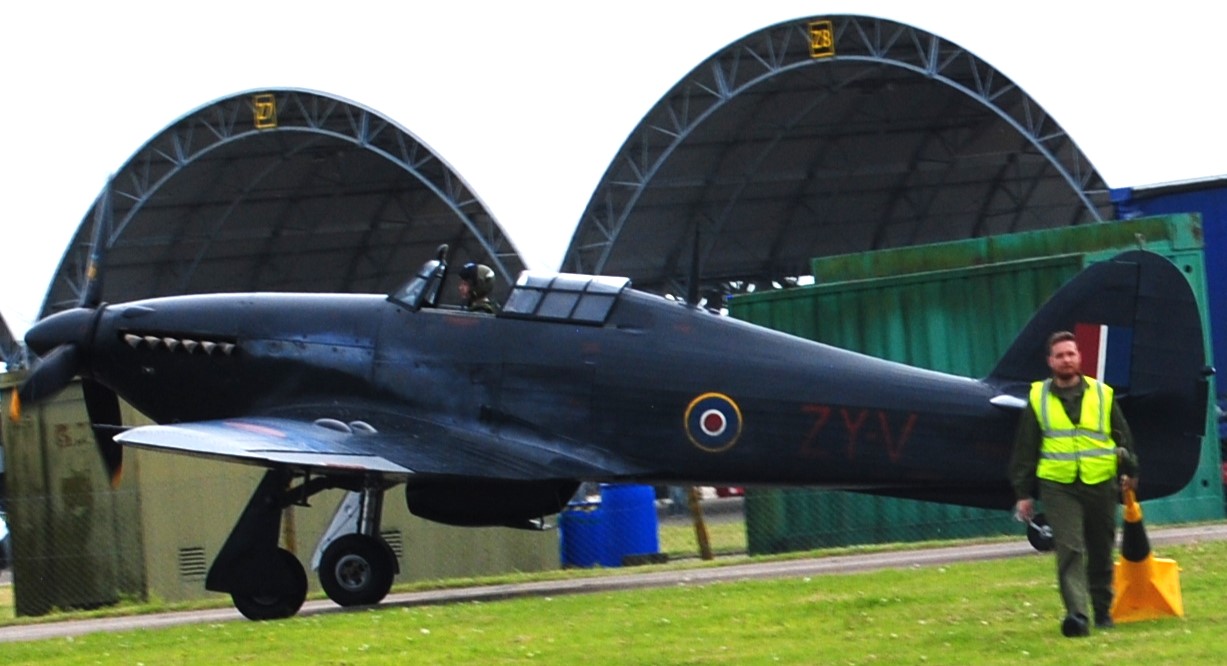
The Hawker Hurricane that was flying is painted black as for night flying as they did over London in the Battle of Britain in 1940.

‘Never in the field of human conflict was so much owed by so many to so few’

W Churchill
Standard
Ecology

Red Squirrels

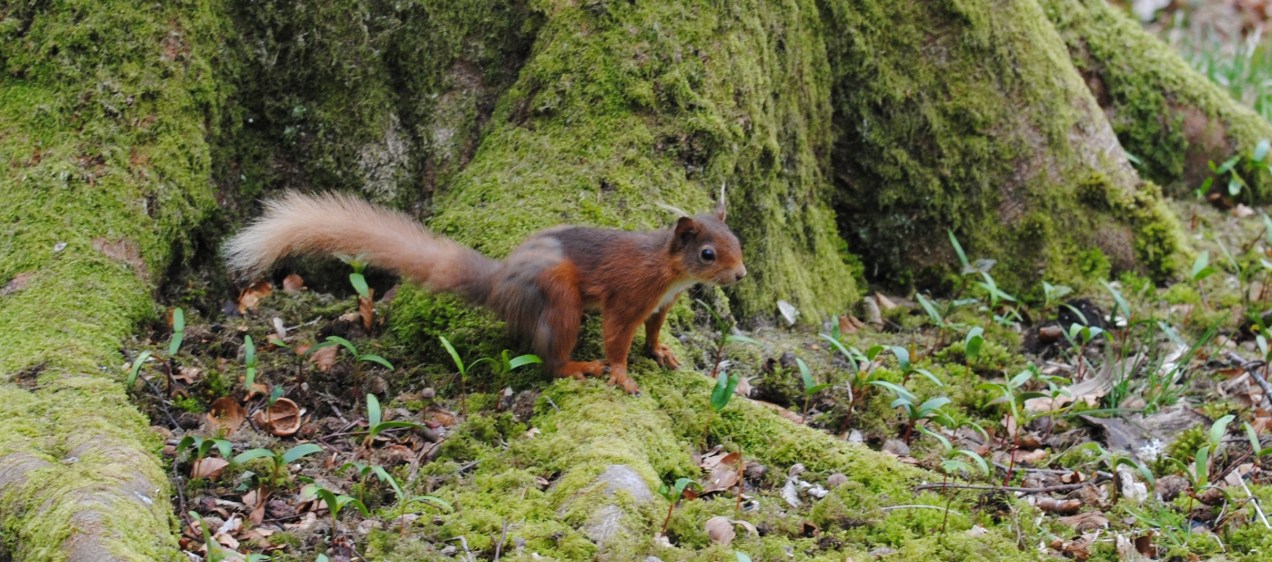
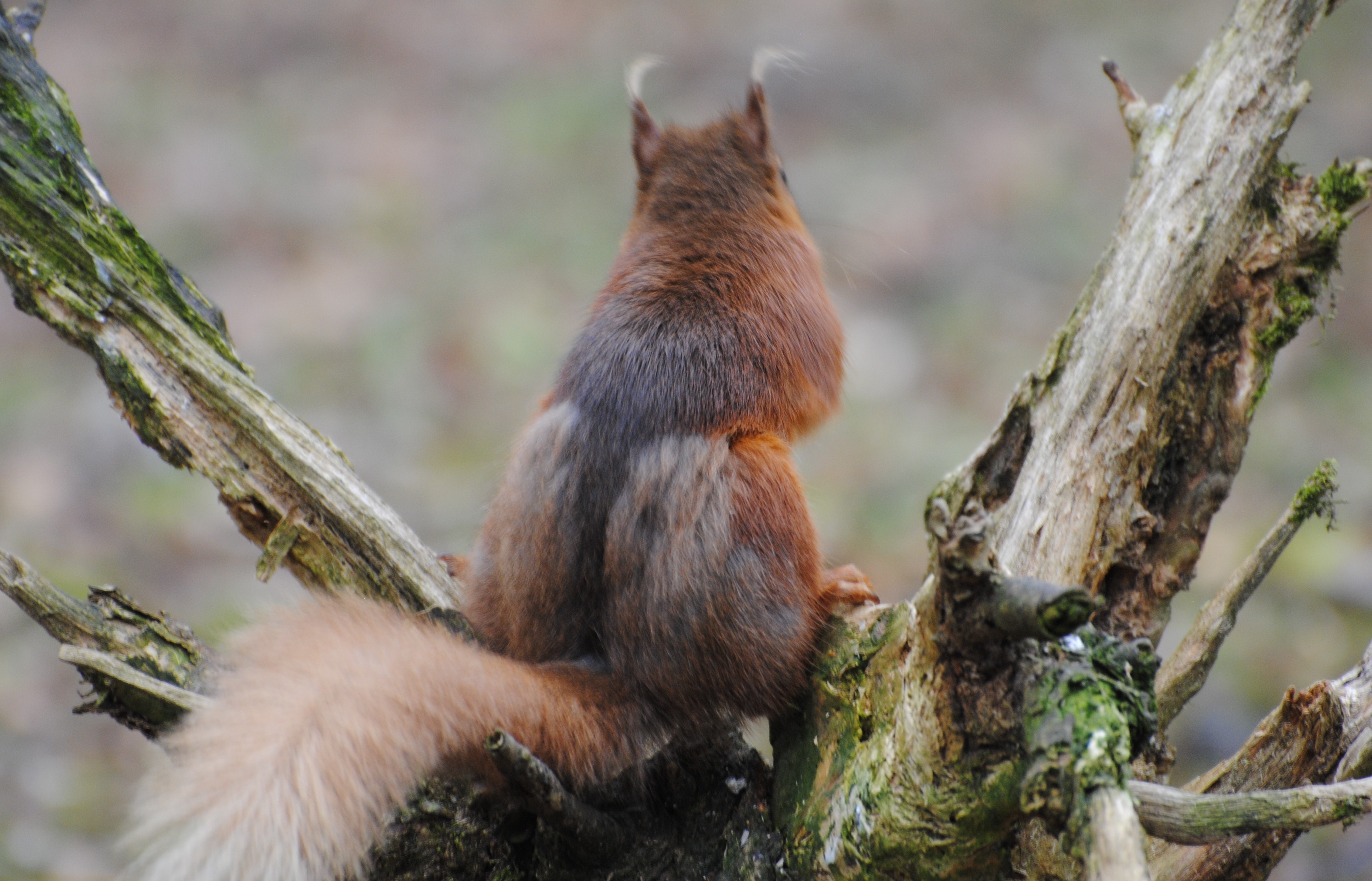
Red squirrels (Sciurus vulgare) are hard to find — they are almost extinct in England. They survive on Anglesey, North Wales and in parts of the Highlands and islands of Scotland, where isolation has saved them from the scourge of squirrel pox, carried by the successful grey squirrel (Sciurus carolinensis) that raids our bird feeders but it’s not as simple as that.

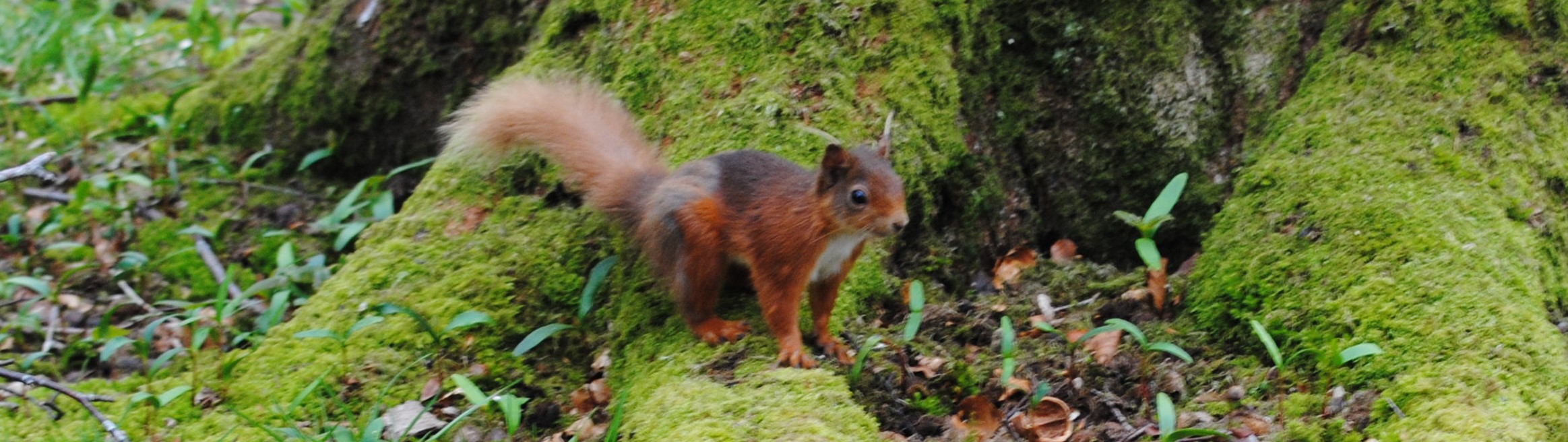
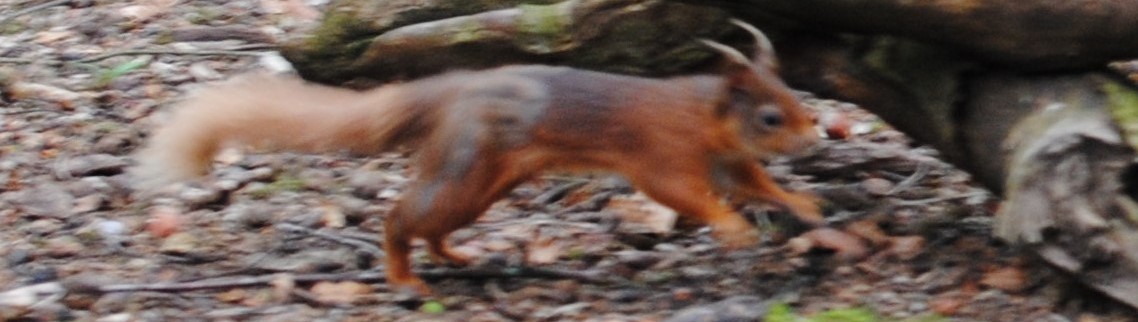
Last week we visited some in Abergaty, Stirlingshire, Scotland. They are agile, lively creatures.

Happily their populations in Scotland are stabilising, despite one problem — poor memory — I sympathise.

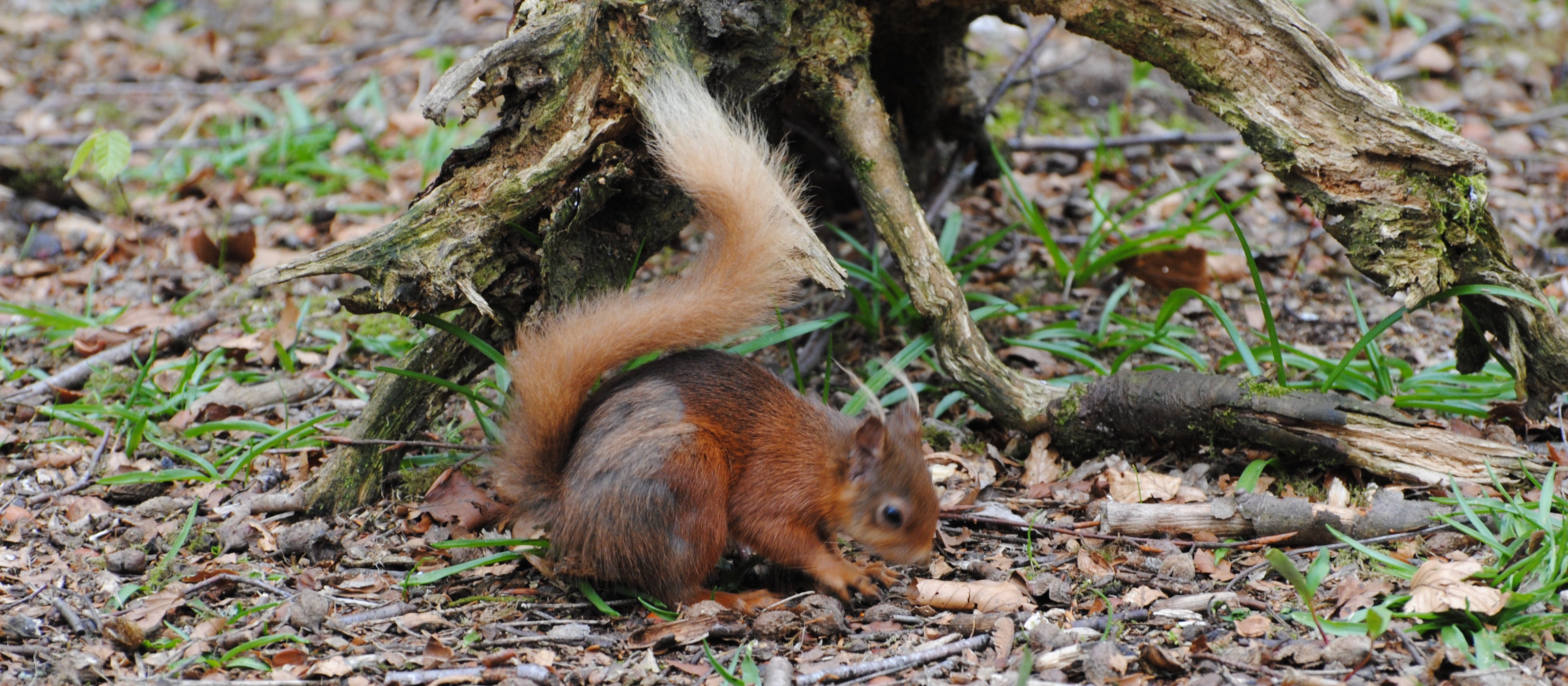
When they have too many nuts, like this one, they hide or bury them and, more often than not, they can find them when times are hard. The grey squirrel has better spatial memory and finds far more of his hidden caches of nuts. The squirrels we saw were busy burying theirs.

Another problem for them is predators, we saw a goshawk over their wood and several buzzards. That is why these have developed to be so alert, they do no have eyes on the back of their heads but you can see from this one that the position of the eyes right at the side of the head (like a sheep) must give 300′ plus vision.

One great positive for the red squirrel is that in recent years, with increased protection and understanding, there has been a resurgence of the pine marten. These ferocious predators evidently have a taste for grey squirrels or perhaps they are just easier to catch than the red, being less nimble in the tree tops, and heavier.

Thanks to Dani Kropivnik, CC BY-SA 3.0 https://creativecommons.org/licenses/by-sa/3.0, via Wikimedia Commons for his picture of a pine marten. We were not fortunate enough to see a pine marten — perhaps next time.

So these busy little creatures are doing alright!

Standard
Birds, Ecology

Black Grouse — a last look?

When we first moved to Wales, someone told me that there were still black grouse on the Gorn Hill, East of Llanidloes — I have never seen one there. We have been to the Cairngorm mountains in Scotland to find them.

The females are grey, often called greyhens and keep themselves tucked away, camouflaged and out of sight in the rough.

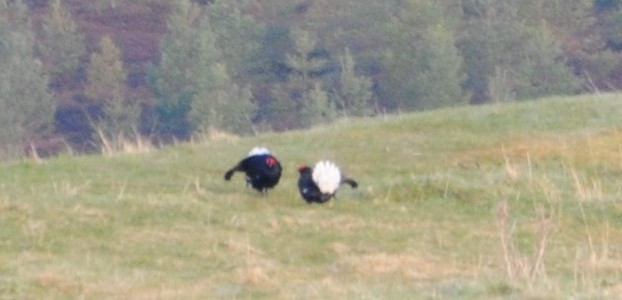
The blackcocks have no such inhibitions during the mating season when they are seen in their traditional display grounds lekking — that’s the best time to spot them, posturing and showing off their spectacular plumage, strutting their stuff, tails flared, while calling with a bubbling pigeon-like coo. They meet on traditional grounds, clearings on tops of rises — here we were lucky enough to see about 8 males but there may have been more on the other side of the hill. We could view them with long lenses from a public road — a lot of the previous leks are so threatened that visitors are actively discouraged. This is about as far West as they live but the species is distributed in a wide swathe across Eurasia as far as China. In Russia leks can attract 200 males.

Here they are confronting each other in pairs, like a knock-out competition where the winner gets to mate with the females who have been watching from the scrub, assessing their strength and fitness to breed — not that they take any part in rearing or protecting their offspring! Once mated the females fly off and hideaway to hatch and rear their young alone. I wonder if some females select for intelligence and mate with the cunning young blackcock who sneaks around the margin of the lek and woos the greyhens while the macho males are busy trying to impress each other?

See Wimoglen video published on YouTube

From what we had been led to expect we felt very lucky to see black grouse this year — let’s hope it won’t be the last time.

Standard
Birds

Redstarts in Mid-Wales

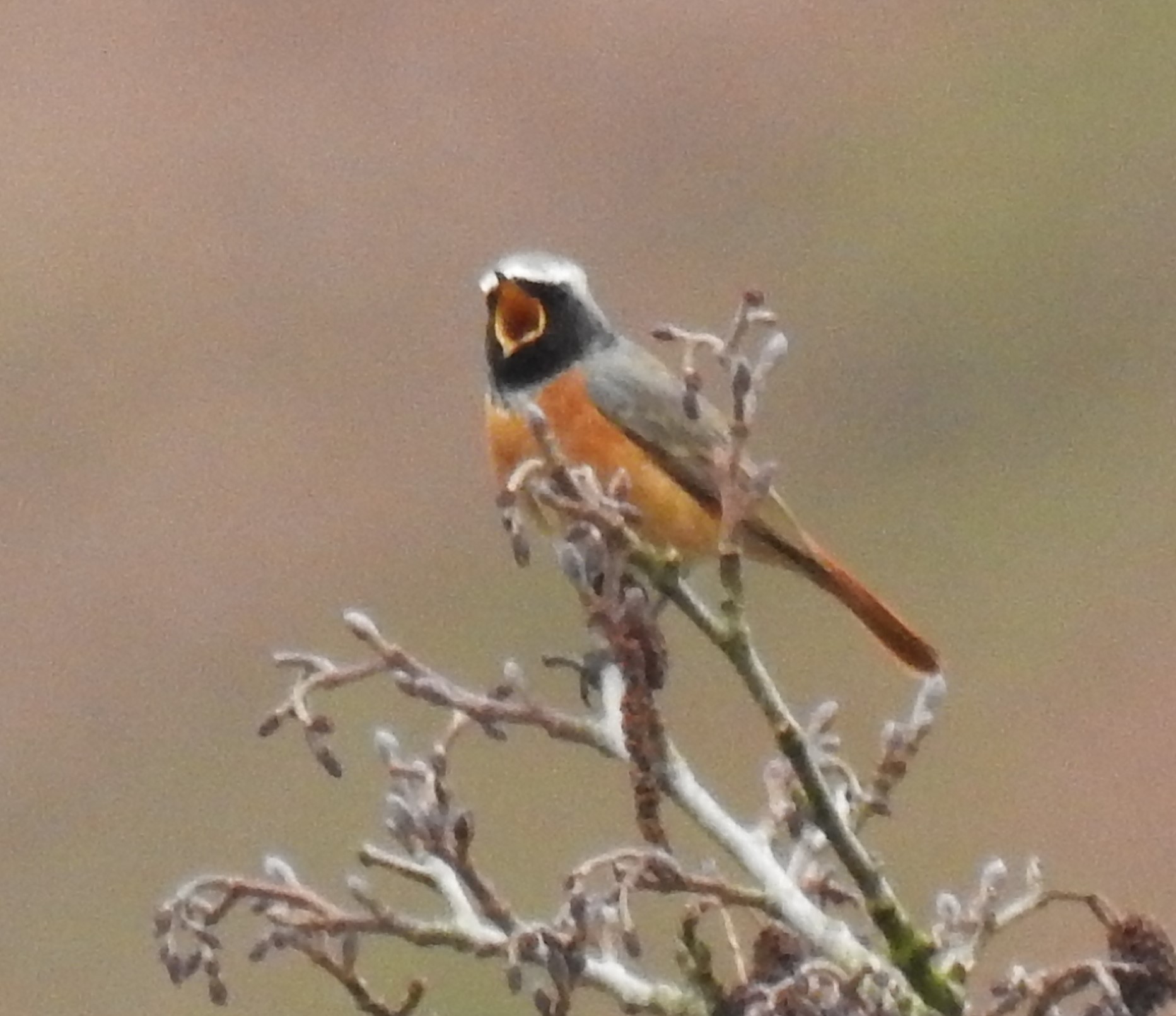
Spotted yesterday at the base of Fan hill by the carpark at the Bwlch-y-gle dam, this beautiful common redstart, singing his heart out.

Last week a black redstart was spotted in Carno. Rare in this country, on the continent it fills the same garden niche occupied by the robin here. There robins remain a woodland bird. Perhaps we will see more black redstarts if the summer temperatures continue to increase in the future.

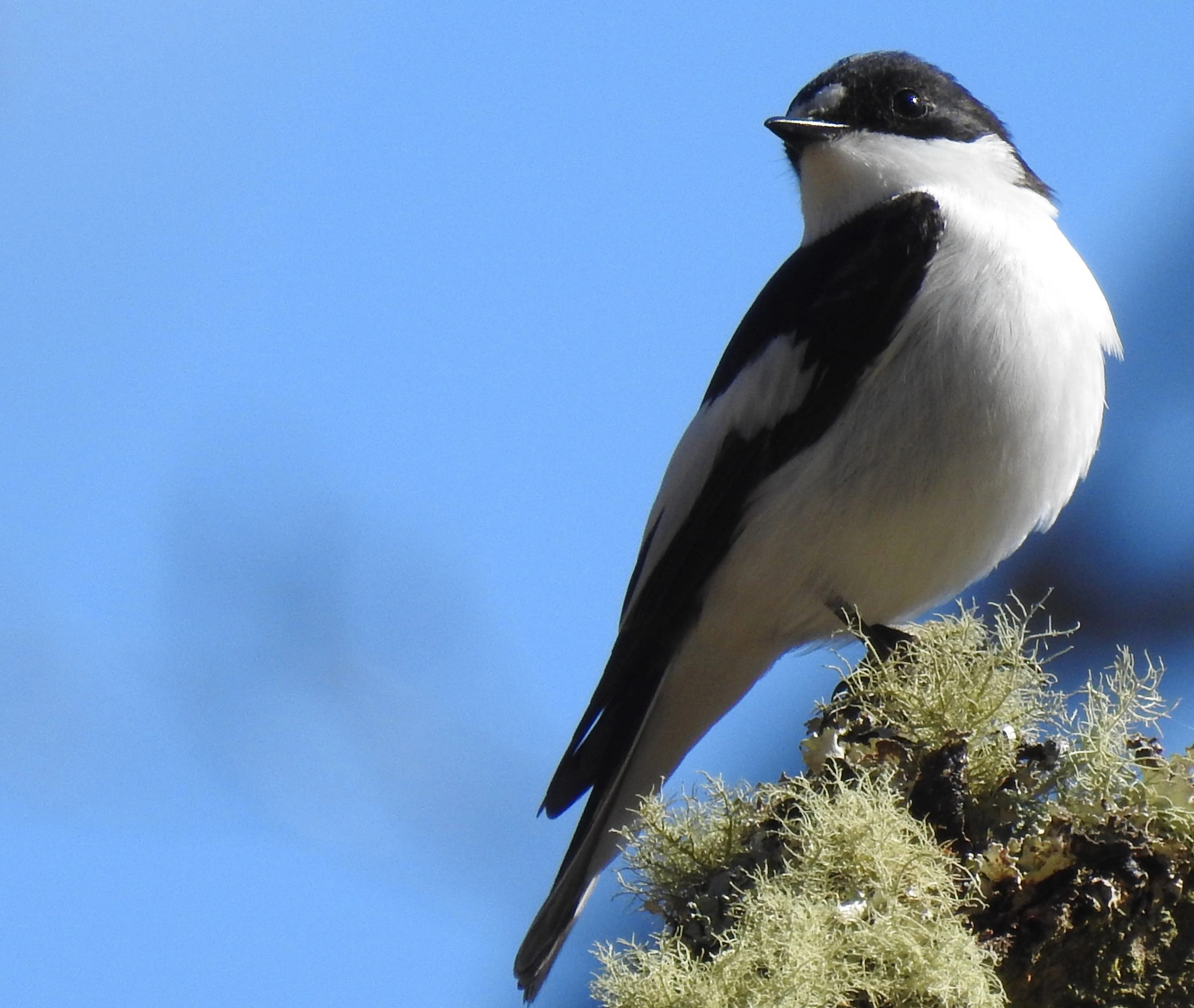
The summer migrants are piling in, the male pied flycatchers have arrived and are claiming their territories including the nest box that was so successful last year — they are furiously defending potential nesting sites, squawking at any intruders while awaiting the arrival of the females.

Here is our noisy pied flycatcher waiting for his mate.

Standard
Birds

Good News! Pied Flycatchers have Returned!

Spotted in Gwernavon woods, Llawr-y-glyn, Powys yesterday (13.04.2023) the first pied flycatcher to make it back from Africa through the gales and rain — the day before that it snowed and hailed here. The male bird looked in very good condition, plump and lively — probably fluffed up trying to keep warm.

No sign of last years swallows returning yet but some have been seen in Y Fan, just over the hill

Where are our babies? The swallows from the beam in the barn.

Last years pied flycatcher fledgelings were ringed so we might be able to spot them if they make it back — here’s hoping.

Tomorrow the rain will stop and we will look for the northern wheatears — I shall feel very much better when they are all back in their summer quarters even though I know many individuals will have been lost!

Standard