Have I found an old masterpiece in my loft?
Not quite, but just as exciting.
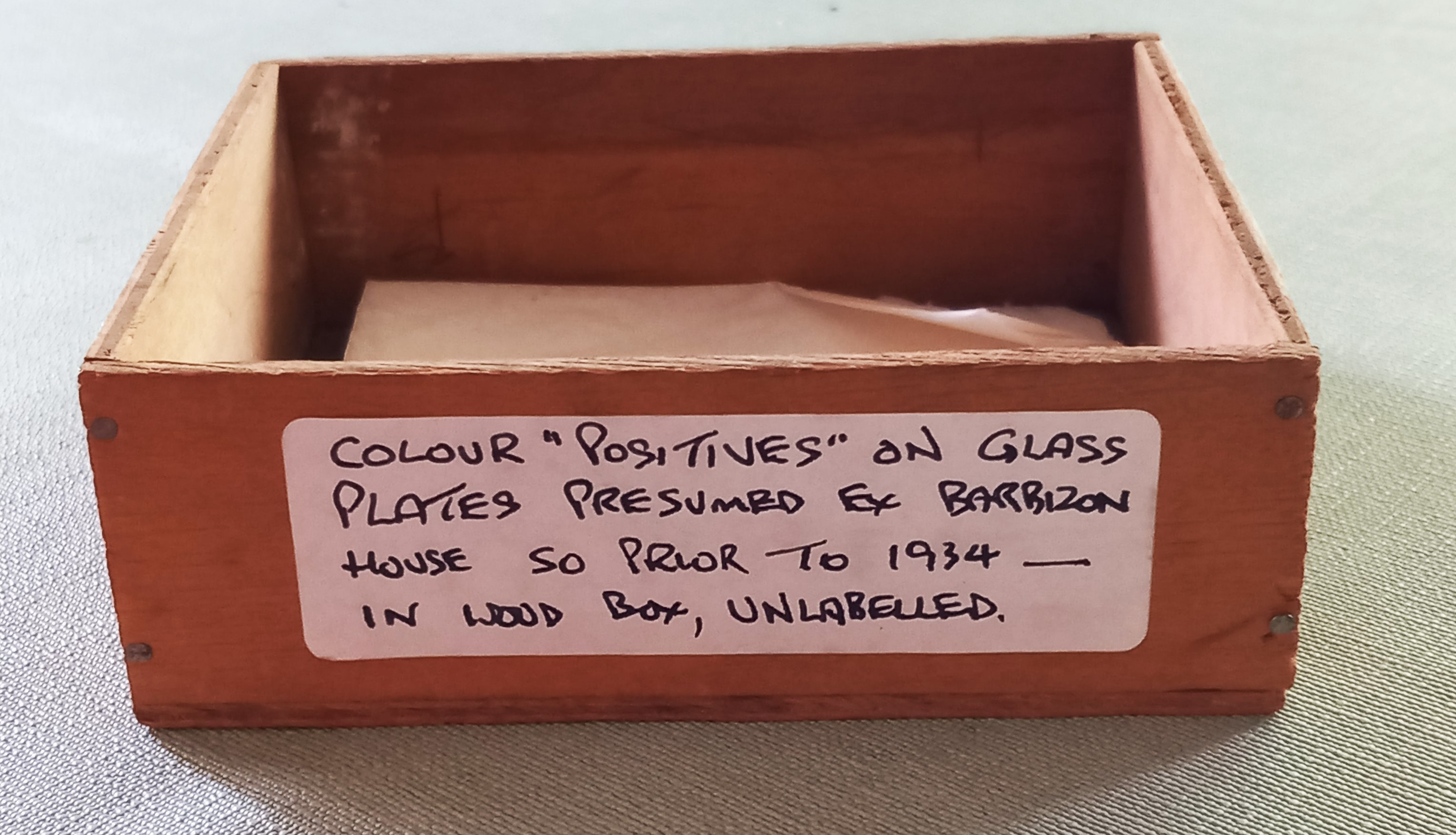
I decided to sort out my grandfather’s bureau which I’d been meaning to do since my father died in 1992 and I found this little box which Dad had meticulously labelled when going through the same process after his own father’s death in the early 70’s. It contained colour photo slides on glass. I held them to the light but couldn’t make out the subjects but they definitely weren’t holiday snaps. Was I to pack them back in the draw and leave them another 50 years and a new generation?
Curiosity got the better of me! I managed to get them printed.
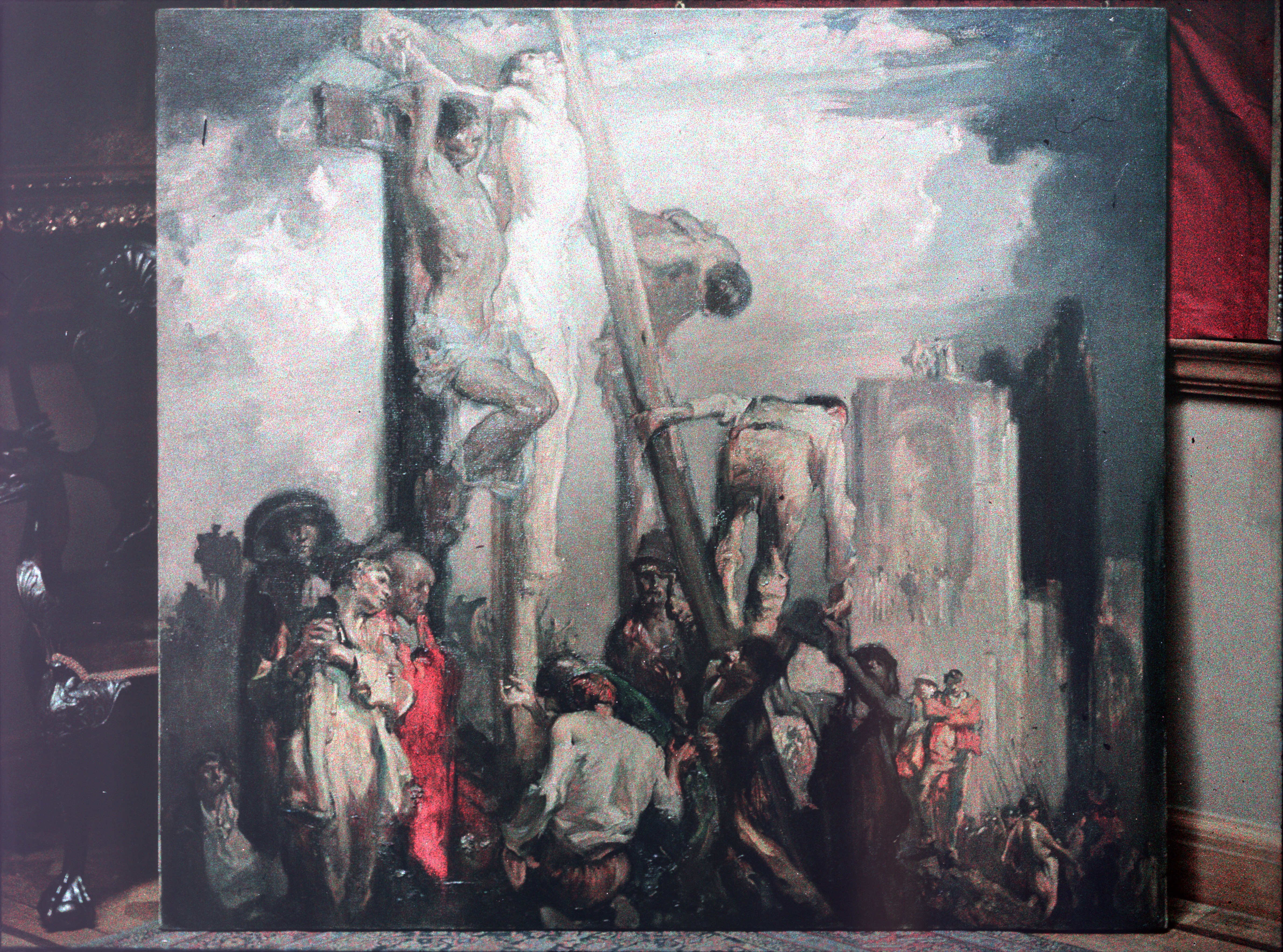
Firstly — a harrowing picture of the crucifixion, clearly a large oil painting, unframed and leaning against a chair, by an artist I recognised. My grandfather, as a young man had been involved in representing and selling this man’s work before 1934 when he worked with his wife’s cousin David Croal Thomson, at the London gallery, Barbizon House. It was during the depression and eventually went bust. The artist was Sir Frank Brangwyn (1867-1956) who I have heard described as the Welsh National Artist. The actual painting survives and I have tracked it down today to Glasgow Life Museum, but not precisely enough for us to be able to visit it.
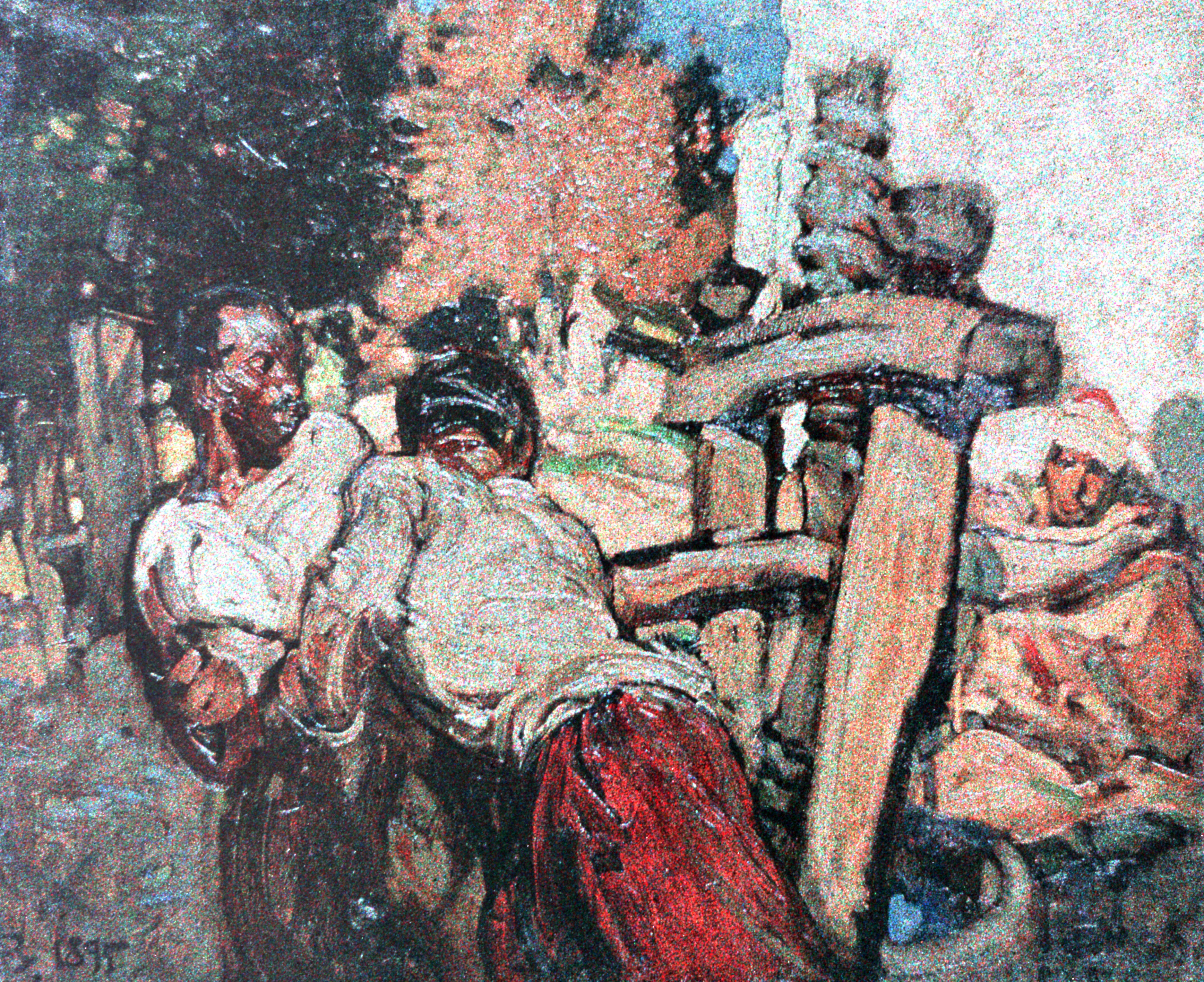
As a young man Brangwyn travelled widely, sponsored by a shipowner who allowed him to go on a freighter to Istanbul. Fascinated by the colour and diversity of the scenes he saw, he continued to paint around the world, visiting Zanzibar, South Africa, Egypt, Turkey and Morocco. This scene from another painting photographed by my grandfather, A.F. Buck, shows the pressing of maybe olives in North Africa.
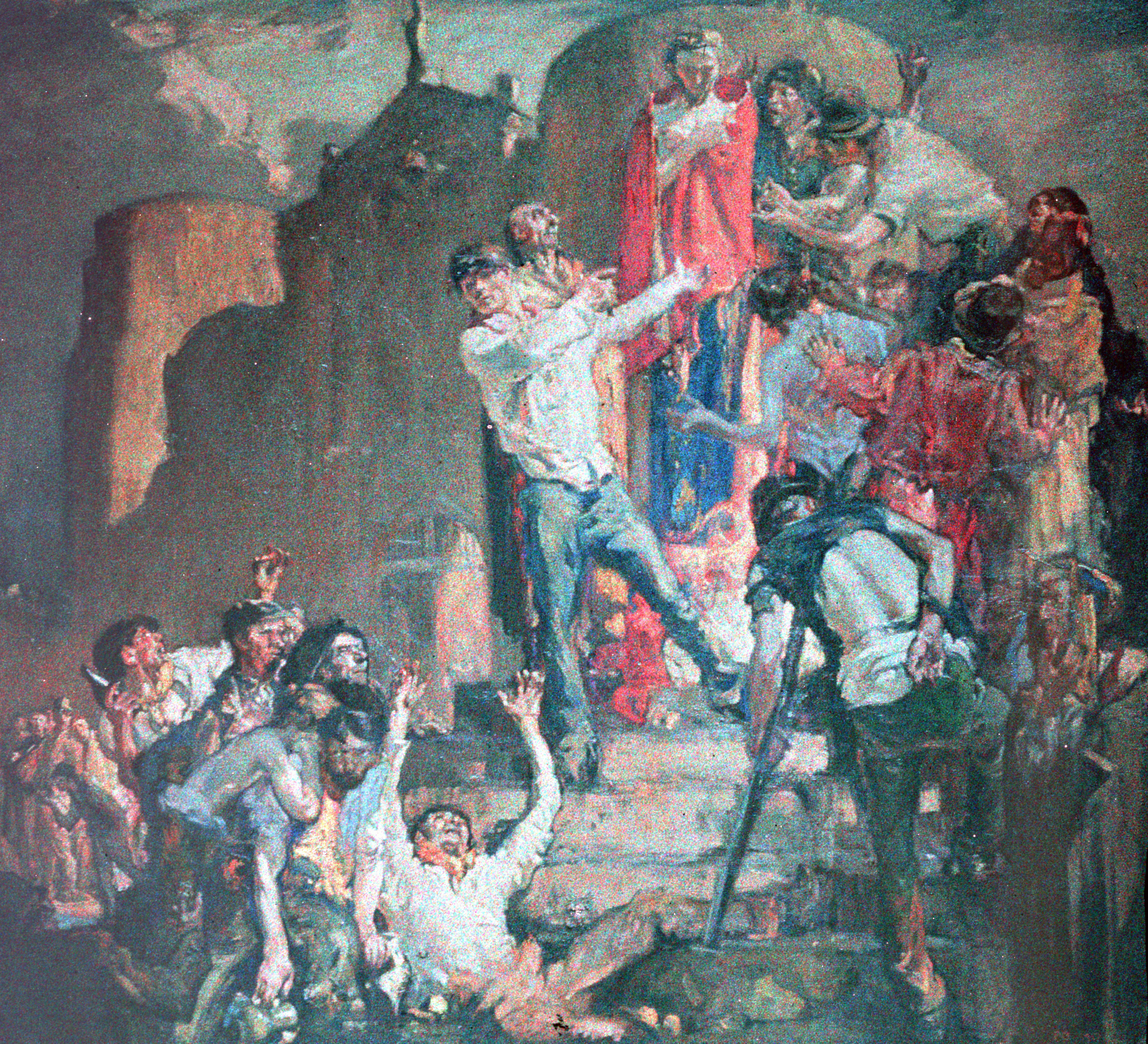
Above is another harrowing religious scene; rather melodramatic, is this to do with Jesus healing, the chap with the crutch is in etchings I have seen of Lazarus. I don’t know where this one has ended up. Does anyone recognise it? The costume reminds me of someone.
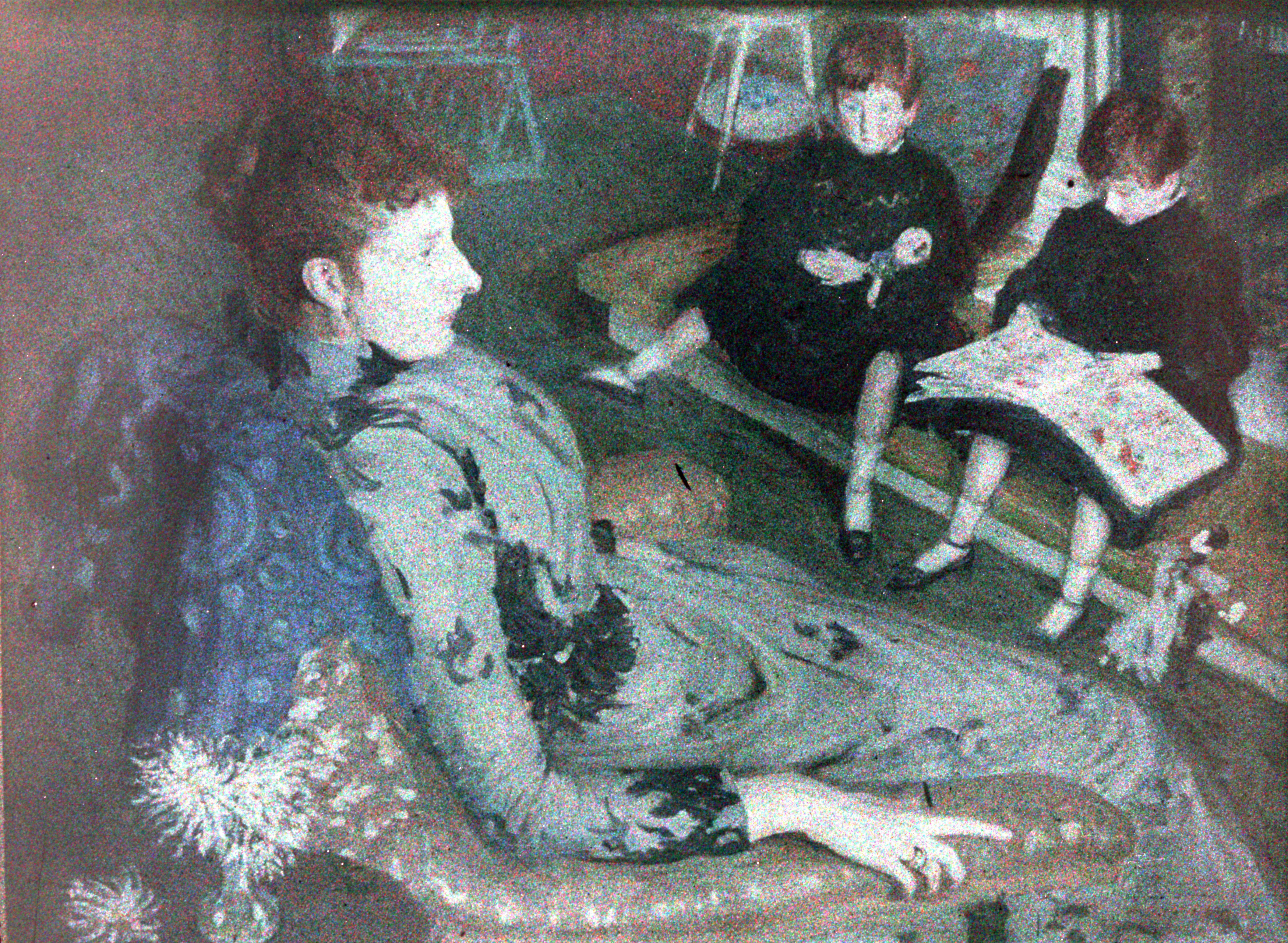
Lastly, there are several shots of this mysterious and uncomfortable looking lady with her two children. I cannot work out who she is but I know that my Grandfather’s cousin by marriage, David Croal Thomson was quite keen on having his children painted by the famous artists of the era. I remember a particularly beautiful painting (long since sold) of Evelyn in a bluebell wood by Whistler, very “Pre-Raphaelite” with the family’s red hair! Could this be DCT’s wife and 2 of the children? Anyway she doesn’t look too happy about it, I’m sure her corset was killing her — I doubt she liked the image. Perhaps it was consigned to an attic somewhere!
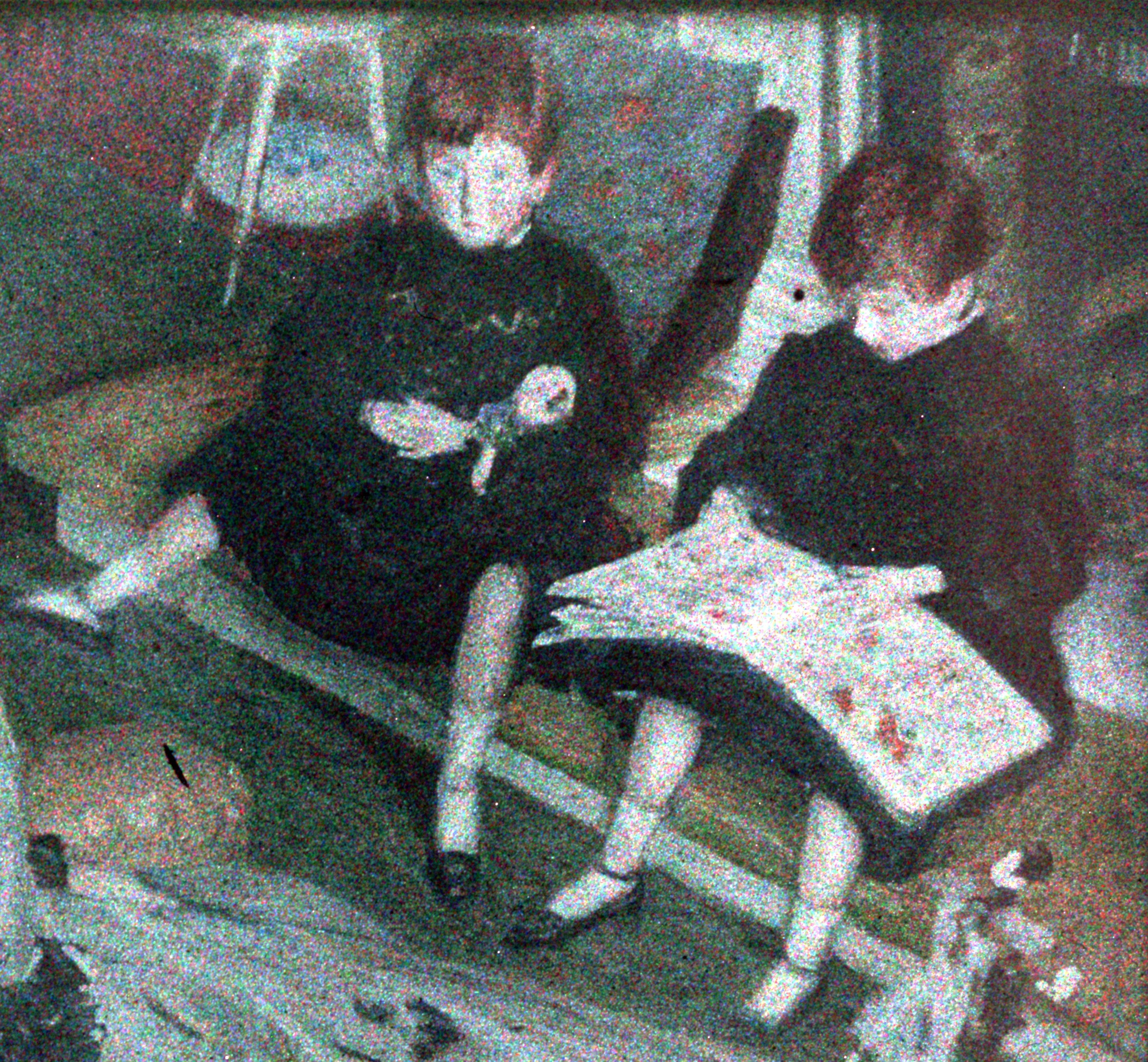
I think they could be either gender, if you find them in your attic: the painting is by Sir Frank Brangwyn!