It is amazing what is fluttering around the house in the dead of night. Here are some of the most spectacular.

This elephant hawk moth is not uncommon. Why is it so pink? Well, the food plant of its caterpillar is the rose bay willow herb which has had a very good year and the foliage is flecked with the same pink as its flowers and its moth! The moth doesn’t look much like an elephant but it is relatively large and the markings on its shoulders could be seen as like large ears… maybe.

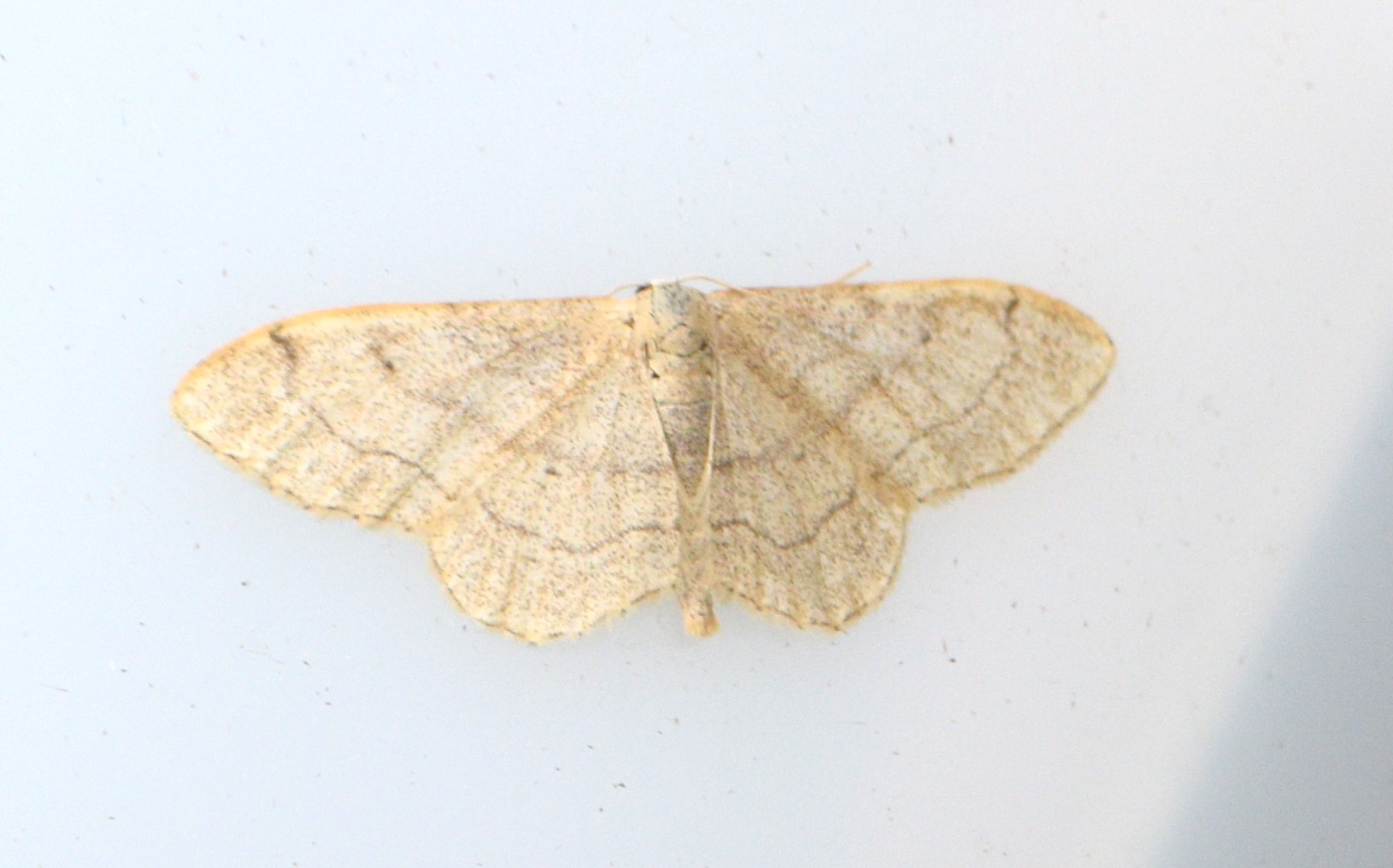
The riband wave moth is one we catch most nights, there are two forms, we are getting the remutata variety, shown here. Their caterpillars eat various plants like dandelions and dock — the docks have also enjoyed the conditions this year.
Another beautiful moth is the light emerald, Campaea margaritata. Its caterpillar eats the soft bark of some deciduous trees, including apple and plum, which might explain why one of our apple trees is looking so peaky.

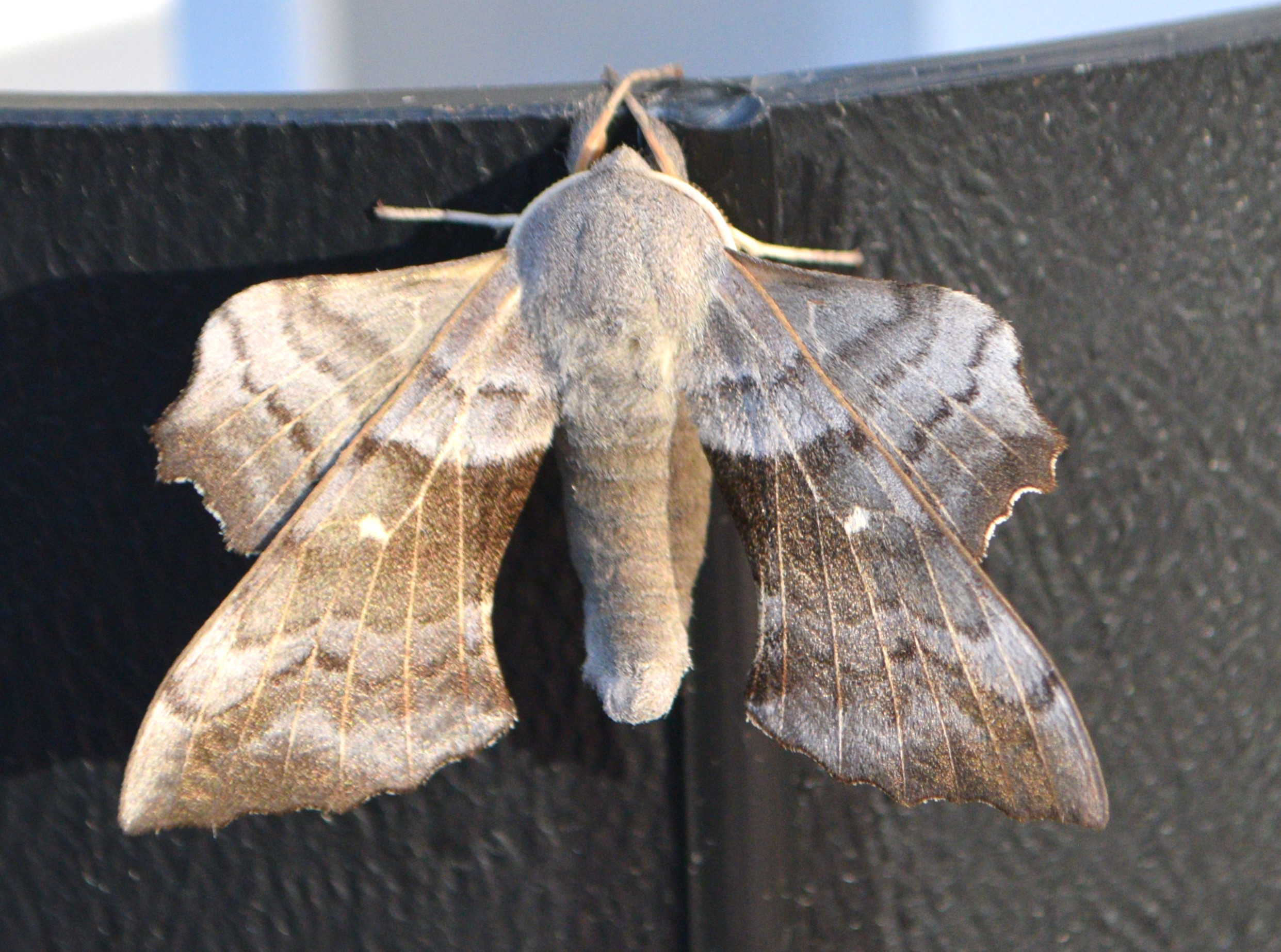
Here is the largest so far, the poplar hawk moth Laothoe populi. Its wingspan is 7-10 cm and rather than having its fore and hind wings linked together, like most moths, these are separate so that, at rest, they lie at different angles and look like a group of dead leaves on the poplars and willows trees that they favor with their caterpillars.

But there is a downside to moth trapping which I say as I try not to scratch my itching face!
Midges! It has also been a very good year for them!

This drinker moth is perched above a sea of dozing midges which swarm up to suck the blood of the lepidopterists!
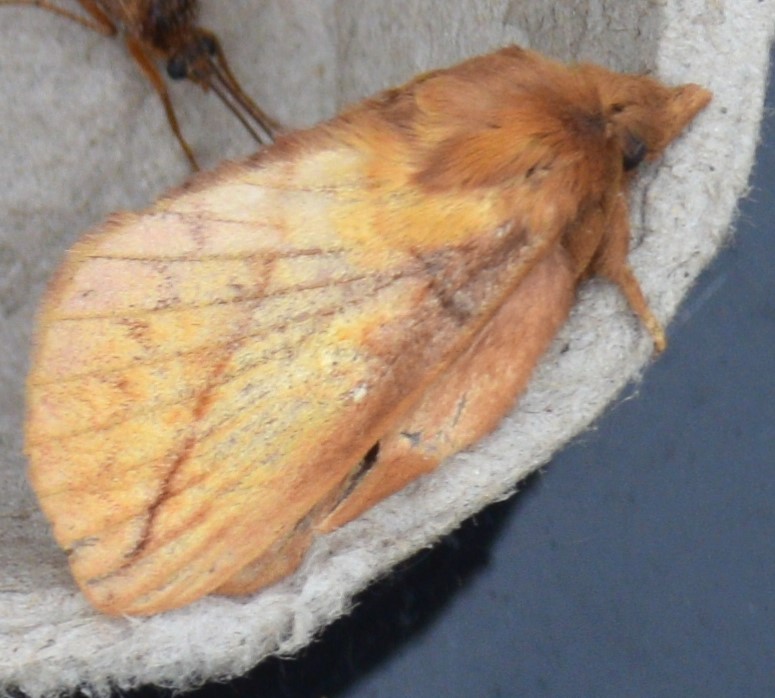
Here’s a better shot of the Drinker with the ubiquitous caddisfly lurking behind.
We catch almost as many caddisflies as moths — they are not as glamorous as moths but are a good health marker for the environment. Their larvae are aquatic and our stream is pure, we see lots when we pond dip, and they will be providing food for our growing brown trout.
 dianaashworth