Hill Farming, Lambing

Progress Report!

Several of you have asked what happened to the poor little lamb that rolled in pooh and got rejected because it smelled like a dead badger.

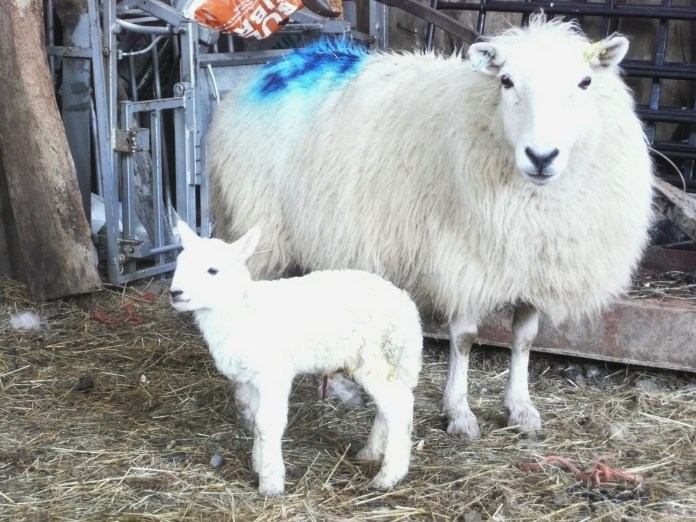
After two harrowing days (for me) in the adopter, the ewe couldn’t tell her large washed and dried lamb from the smaller lamby lamb and they all left together.

SONY DSC

Interestingly the mother seemed less stressed in the adopter than she had before when she was having to constantly fight off smelly alien lamb and protect her lovely lamby lamb from the atrocity.

Also she liked the catering arrangements in the adopter — so much so that at feeding time she now brings her two lambs back into the shed and into her pen to be fed and so that I can weigh them!  Sheep like routine!

SONY DSC


The rest of the time they are outside with the other twins.

SONY DSC

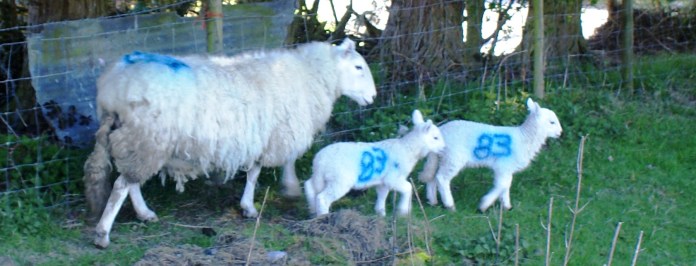
Some of this years twins playing out.


Standard
Hill Farming

Puddle-duck Investments!

There is a story that farmers tell all over the world – it goes something like this:

‘a farmer had a family so he bought a cow to provide milk but it gave more than they could drink so they made butter and cheese to sell at the farm-gate but this left them with lots of buttermilk and whey so they bought some pigs to drink the buttermilk and whey but the pigs produced lots of muck so they brought a pooh-digester to produce gas for green energy but they got too hot so they built  chicken sheds to heat with all the green energy but the chickens produced loads of guano so they bought a pelleter and sold the guano pellets as fertilizer and used them on the farm to boost production of root crops but the supermarkets wouldn’t buy the misshapen ones so they bought some sheep to eat the swedes and parsnips and mangle-worzels (which they added because they liked the name) but the sheep produced meat and wool (and a lot of gas) and they were left with the sheep-skins so they opened a tannery which needed lots of water so they build a dam which made a big lake and it seemed a shame not to keep some fish so they stocked it with trout and people came to catch the trout and in hot weather they wanted ice cream so they bought an ice cream machine but they didn’t have enough milk so they had to buy another cow…’

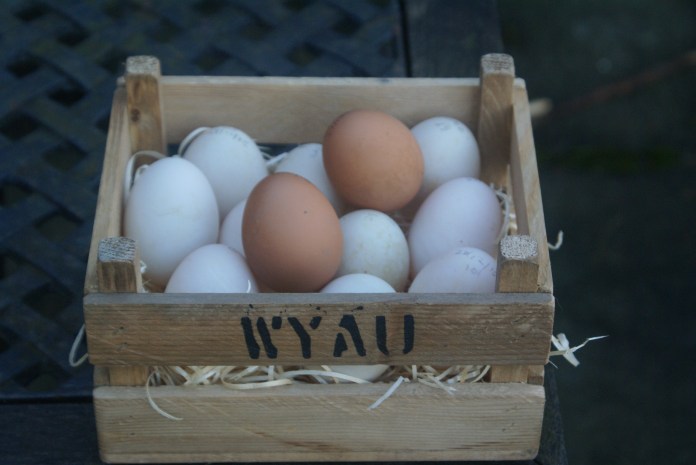
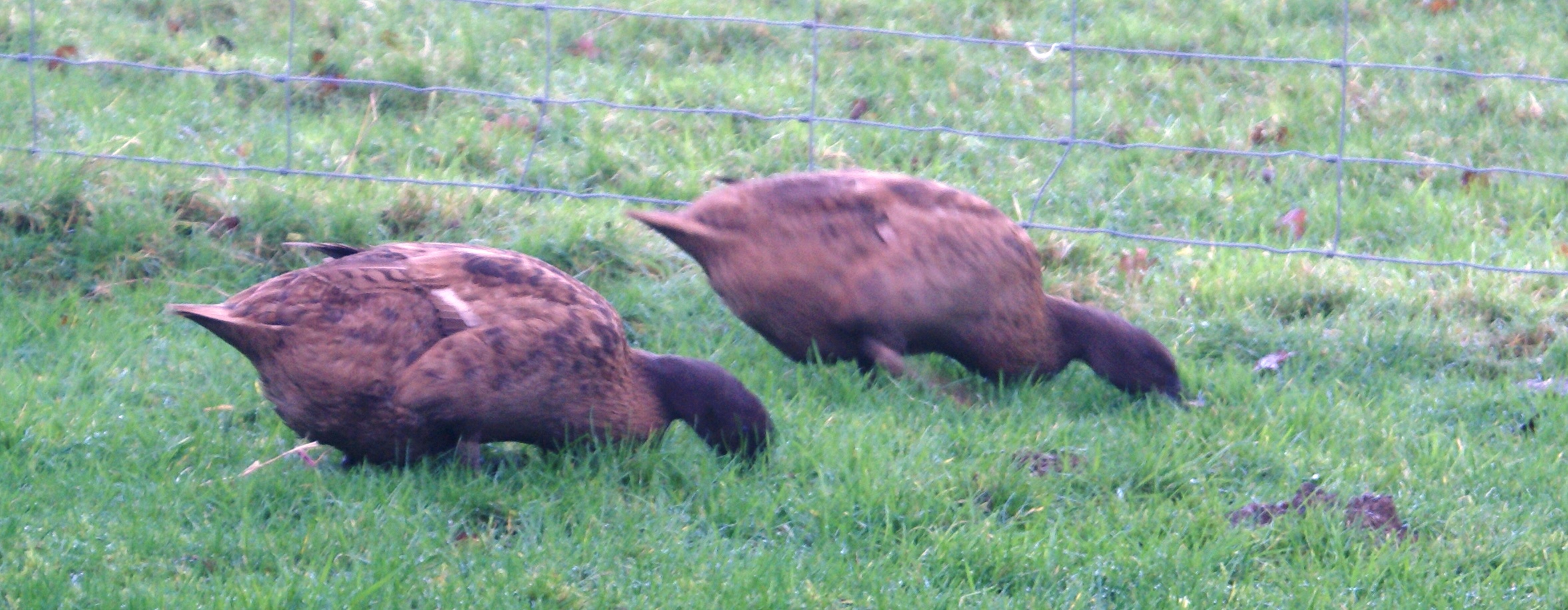
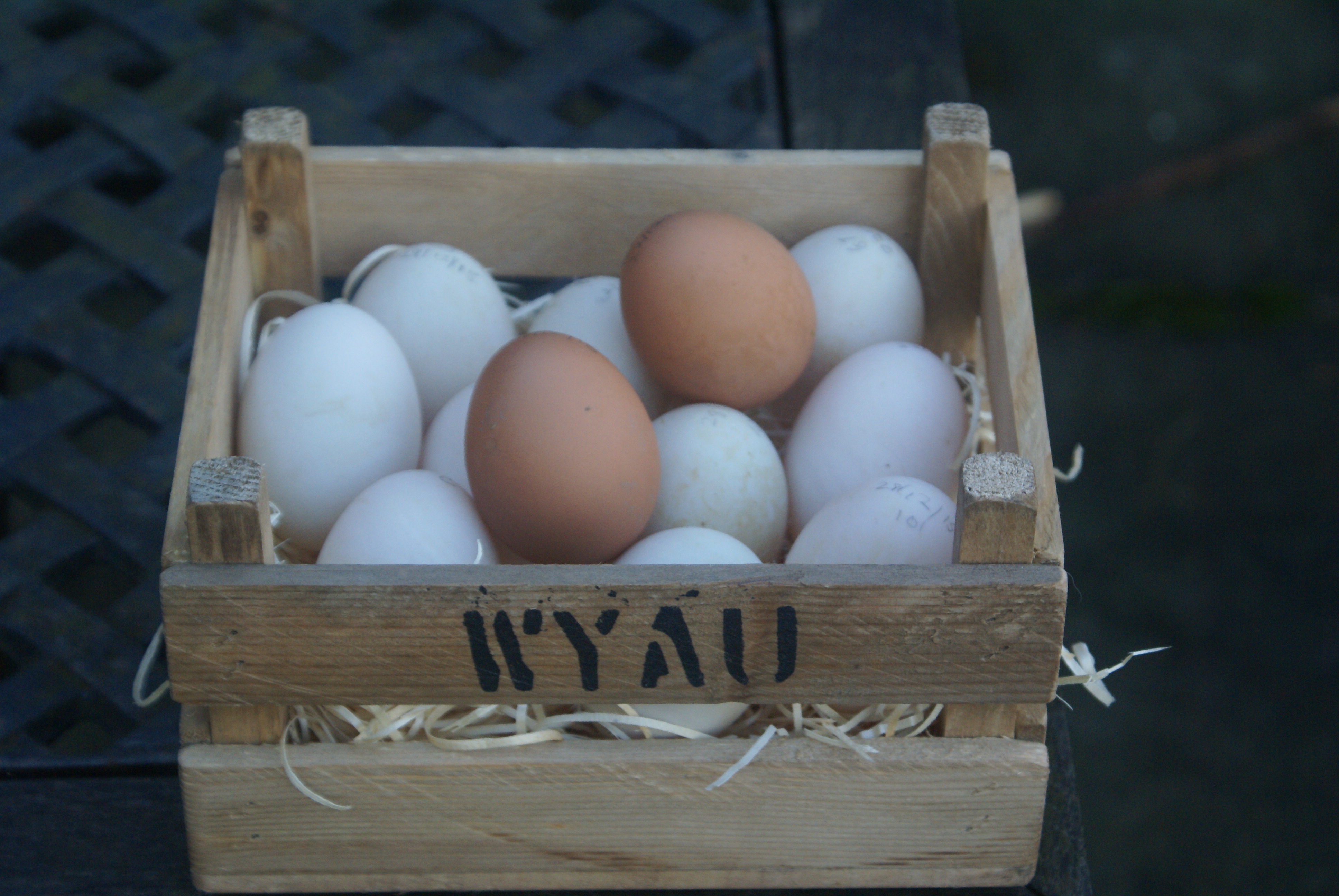
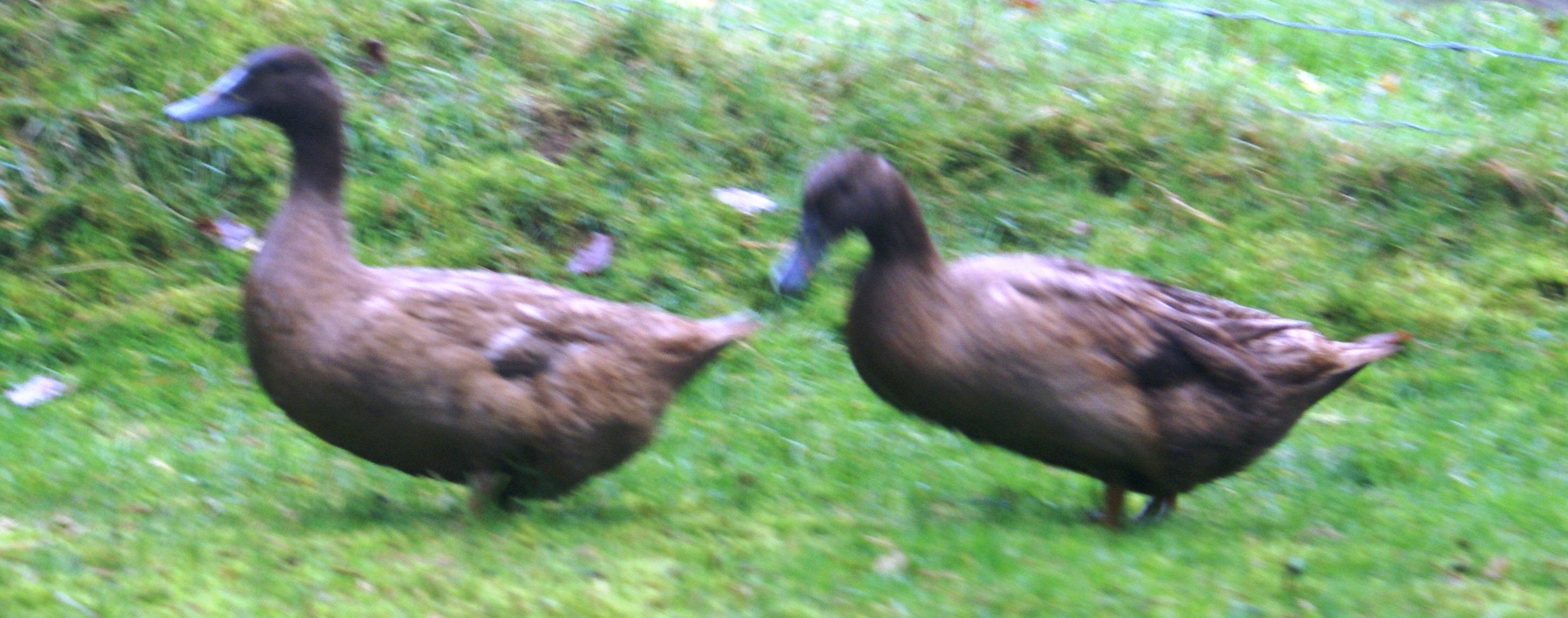
We bought two ducks and since last October they have produced 280 eggs which is more than we can eat (we have two hens as well) so we’ve opened a farm-gate shop.

Welsh Eggs


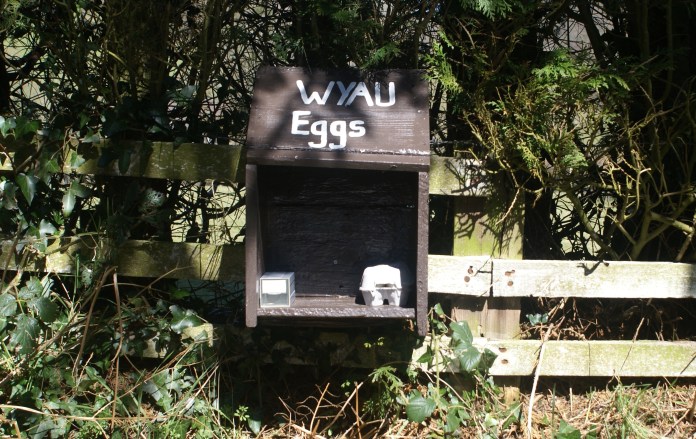
Here it is.

SONY DSC


Like all businesses it has to be promoted.

Rustic slate signs — farmers in Wales use anything that is available.

Our friends down the lane did the same with their hen’s eggs and business is so good and demand so great that they have already had to buy more chickens.

We sold our first six eggs yesterday and within an hour we had a telephone call (our egg-boxes carry all the require traceability information) from the purchaser wishing to bestow unsolicited praise upon our product!

We fear this may be the start of Puddle-duck Investments — a global agri-industry (see above – farmer’s tale).

Standard
animal psychology, Hill Farming, Lambing

Snatched within minutes of birth!

What a tragedy when a baby is taken from its mother…  But spare a thought for the perpetrator — sometimes they are victims too!

Two new lambs are born before dawn, they are lying with their new mother under the hedge — both healthy.  Above the hedge I spot another ewe so, before marking the new lambs, I go to check the other ewe.  She is licking the ground and chewing on membranes in the grass; from her rear dangles other membranes and her large udder is streaked with blood — she has obviously just given birth, but there were no lambs.

I hunt up and down behind the hedge — there is no trace. Several neighbours have been troubled by a predator this year.

Damn!  Damn!  I should have been up earlier — That damned fox has had a new born lamb…

Unless…  Something in the manner of the ewe with the two lambs, below the hedge, had not been quite right — as I approached her she had looked excited, not wary, she had given me that Oh-good-time-for-breakfast-look.  Sheep that have just delivered usually have more on their minds.

I rapidly fashion a pen out of hurdles and lift the new lambs into it then let the new mother in and examine her pristine rear — it is clean and dry, she has stolen these lambs.  More accurately she has kindly fostered them after they rolled through the hedge, probably because of over-enthusiastic cleaning by their old mum.

I return the lambs to number 1 mum who looks doubtful.  She smells the first lamb and nuzzles it but pushes the other gently  away, it rolls through the hole in the hedge and bleats.  Foster mother screams from the pen and tries to jump out, collapsing the whole caboodle.  The lamb rushes to her and suckles.

Plan B — I carry the lamb down the not inconsiderable hill (up and down which I have now been running for some time) The foster ewe follows me complaining and I shut her in a more substantial pen, then re-patriate the lamb, which is surprisingly vigorous, with its real mother.  ‘Not mine!’ says the real mother and knocks it over.

‘Yes, it is.’

‘No it isn’t  — look!’ she’s pushed it through the hedge and it’s running amok, bleating and several of the other ewes are coming up to investigate, including Number 19 who was involved in a custody battle a couple of years ago.

‘I think it might be mine,’ says Number 19,’ I do vaguely remember giving birth,’ she sniffs it, ‘Yes! It’s definitely mine!’

That’s it!  I’ve had enough — I bundle the troublesome lamb over the fence, reunite it with it’s real mother and sister and then we painstakingly  walk them, with much arguing and to-ing and fro-ing, the long way round to the barn where I shut up mother and both lambs in a small pen.

After such a long and tiresome walk so soon after giving birth on the frosty hillside where it is now raining, the sight of a warm, dry pen and a bucket of feed persuades the mother to concede, ‘Alright they both might be mine, but I still don’t like the look of that big one very much!’

She has now fed both lambs and Alan has bought me a cup of coffee, but still the cries of injustice from the kind, obliging foster mum can be heard — I hope she has her own lambs soon.

And to reassure any farmers reading this, just to be absolutely sure, I go and find the placentas and they were both above the hedge.
SONY DSC

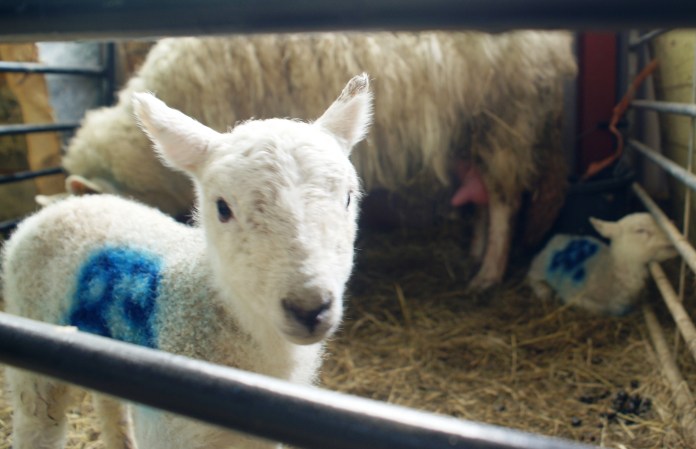
The following morning things are not looking good.  The mother is butting the larger lamb who is starting to look wary of her.

‘Smell her,’ says the mother, she’s not mine!’

I sniff  her — she smell terrible, like a dog that’s rolled in rotting fox-pooh.  I sniff the little one — she smell all lamby and nice.

So, while waiting for a friend to bring us a lamb-adopter, I wash the offensive creature with clean warm water — she doesn’t like it much, then I dry her with kitchen towel and finish her off with her sister’s woolly back, then we exercise the human lamb-adopter who has come to investigate — he holds the ewe and the big hungry lamb has a feed and we squirt her with milk.  The mother is sniffing them both now and looking confused — hopefully she can’t count.  We withdraw and hope for the best.
Standard
Hill Farming, Humour

Nature’s scam

Don’t be taken in – it’s a scam – Mother Nature’s attempt at PR!

Daffodils have absolutely nothing to do with the Spring –

they are harbingers of disappointment – raisers of false hope!

At least, that’s what they are in Wales.

SONY DSC

They have been out for two weeks and our hill is overflowing –

not with the sound of lambs and birdsong –

but with gurgling springs – excess ground-water spewing out of rabbit holes –

and the baas of disgruntled sheep, pained by the muscular effort of holding back the inevitable.

SONY DSC

They watch the weather forecast on the wide screen telly, through the picture window,

but anyway they know about these things and no one wants to drop a new born babe –

plop, into a puddle – so they are holding on until there’s a break in the cloud.

And meanwhile they blame me, and by the way, this hay is damp.

SONY DSC

Our single antediluvian lamb is chasing chickens now.

Ducks, Splish and Splosh (named Flip and Flop in dryer times) look on and say,

‘Well what do you expect – laying lamb-shaped, wooly eggs that are not waterproof!  This mud is delicious,’ and off they dibble-dabble.

Standard
Hill Farming, Lambing

05/04/16 — 04/04/17

New Finelambcial Year —

P1060910

Beginning of our farming year.

Yesterday our first lamb arrived — not under the hedge where all self-respecting Welsh Mountain lambs are supposed to disembark but in the back of our nice dry barn into which her mum had sneaked before dawn and where I nearly fell over them when, just as the first birds were waking, I went in to fill the hay cratch.  You see — the God of the incompetent-elderly over-reacted to our recent pyro maniacal episode by damping everything down with unnecessary thoroughness so that we are now back in our quagmire.

First steps

Undaunted (sheep hate being on their own) and as soon as I had re-organised everything to provide a lamb-friendly, hazard-free environment  with fresh Lenor straw, buckets of water and concentrate in her own private accommodation, this young mother took her lamb out into the rain and tentatively tippy-toed through the  mud that surrounds the barn to show her off to the other ewes, now shut for safety’s sake on the other side of the fence. As it was several ran up to the fence baaing ‘Is that my lamb?’

SONY DSC

Now we wait for a play-mate.

Standard
Hill Farming, Humour

Un-Call the Fire Brigade!

Have you ever tried sliding up a slippery pole – it’s not easy, and that’s why you can’t un-call the fire brigade. Once they set off – bells ringing and sirens wailing they are totally committed and it would be churlish to stop them.

Yesterday we had a grass fire – unbelievable after six months of incessant rain, but I’ve always said that Mid-Wales is well drained and we’ve had a chirpy breeze in the last few, sunny days — we’ve even generated a little electricity. We’ve been out and about, trimming back the hedges so they don’t poke you in the eye during lambing, and sweeping up the moss that the ducks have been conscientiously collecting since October – a good time for a bonfire!

P1050450 (2)

One little splutter from the heart of the fire – that’s all it took, perhaps a superheated egg that slipped in with the straw from the chicken coop or an ink cartridge that tumbled from the not too tidy desk into the waste-paper basket with all the bank details that have to be burned. Anyway there was a bang and something small and very hot flew from the fire onto the bank.

The next thing we knew there was a pool of low level flame engulfing my stamping husband.

‘We need water!’ shouted Alison, who has come to stay, for a rest.

We fill up a bucket then realise that the fire is near the stream so run towards it with buckets – we make a human chain – but it only has two links and angina rapidly ensues as we run up and down the steep bank, up which the suddenly stiff wind is wafting the flames with amazing enthusiasm.

Alison’s partner who is stamping and beating the flames with a branch is now disappearing in a pall of choking smoke and the other link in my human chain is chasing her dog who has come to join in.

‘It’s out of control!’ shouts Ali.

Now there’s a moot point here – she could have meant that the dog was out of control. But the situation looked pretty dire to me and the temptation to have a little run on the flat was too much for my bursting chest so I ran to the house to call the Fire Brigade.

‘Emergency – which service do you require?’

‘We’ve got a grass fire, out of control!’ I pant.

Do you require the police, ambulance or fire service?

‘Why would I want the police or… Oh yes. Fire service!’ (You can tell I’ve been trained to deal with crises.)

Now I had not consulted before taking this action. I am usually a team player and I admit that this was not a simple oversight – I knew that my husband would have argued against involving a third party – even as he was being transported from me on a cloud of smoke he would be saying, ‘Nonsense! It’ll be fine.’

I had taken a unilateral decision for which I would be chastised for the rest of time… Especially as when I returned to the scene, the men had equipped themselves with spades and the large yard broom and at last appeared to have the advancing edge of flame under control – although my broom was smoking.

I ran back to the house and that is when I discovered that you can’t un-call the Fire Service.

All I could do was put the kettle on.

(Seriously though, our Fire Service is voluntary — they came very quickly  and we are very grateful and sorry if I wasted their time (and please note the personal pronoun).

Standard
Hill Farming, Humour

Bailer Twineology

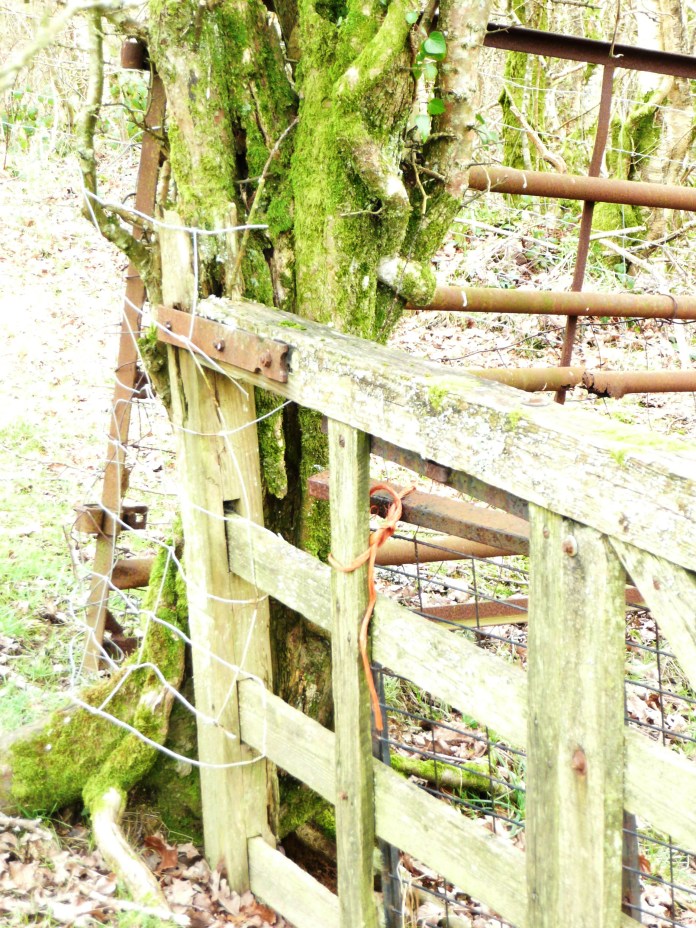
P1060832

This gate is modern but not up to the specification required to withstand a rampaging pensioner in a six-ton digger.  It should be taken off and straightened (by a pacified person in a mended digger) and rehung by newly welded hinges on a brand new post without a rotten bottom but….

It’s winter, it’s cold, the ground is very wet and it’s getting dark etc.

So, in the short term we are thrown upon the traditional method…

Bailer twineology…

Actually its a’fusion’ technology — using nylon twine in the traditional way — although don’t forget that nylon has memory (which is more than you can say for the farmer) — It remembers how to undo itself so you should lock the knots — ironically that means reef knots and not Granny knots!

The farms around us are particularly tidy and I fear that they are losing the ancient skills!

Here is a detail from a grade two listed traditional sheep fold — note the use of growing, self reinforcing, timber and many different technologies — all with their own integrity!

P1060838

Corner of Grade two listed sheep pen!

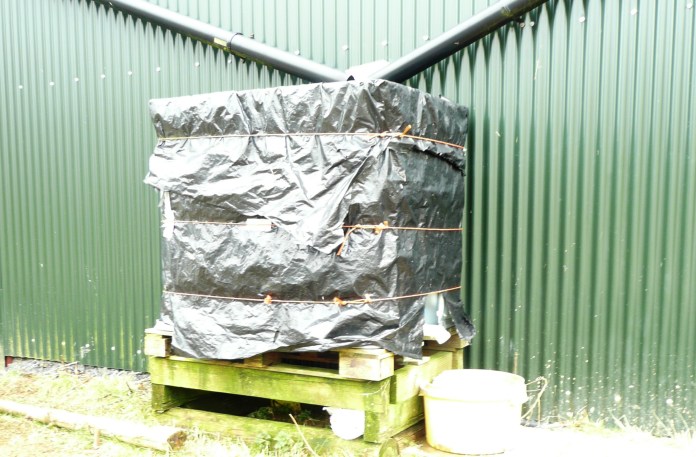
We try to keep these skills alive in a modern context  such as the algae-prevention modification of our rain water harvester!

P1060855

Wrapping the white plastic tank in black plastic prevents algae growth.


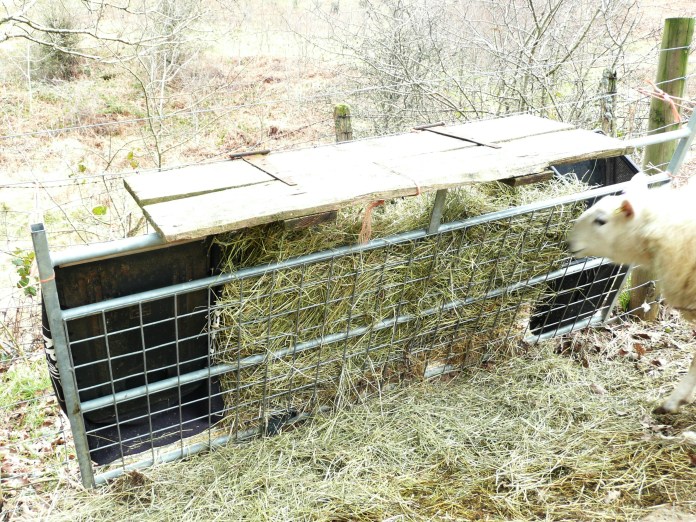
I am most proud of my four-minute-cratch (patent pending).

P1060836

It was erected in four minutes in a hail storm when snow was forecast.  I am particularly pleased with the use of grass collection bags from the lawn mowers to stop the sheep getting their feet stuck and injured when trying to climb in the ends.  The back is formed by the fence, the front is a hurdle and the top is half the oak door of the old pig sty, all held together by, guess what?  Bailer twine!

P1060818

Standard
Hill Farming

Predator Proofing

Last night, late, we arrived home from a weeks holiday in Cornwall so, only now, it is safe to mention the feverish activity that preceded our departure for the far south-west.  It’s not that we feared cyber initiated incursions during our absence; it is that we do not believe in tempting fate.

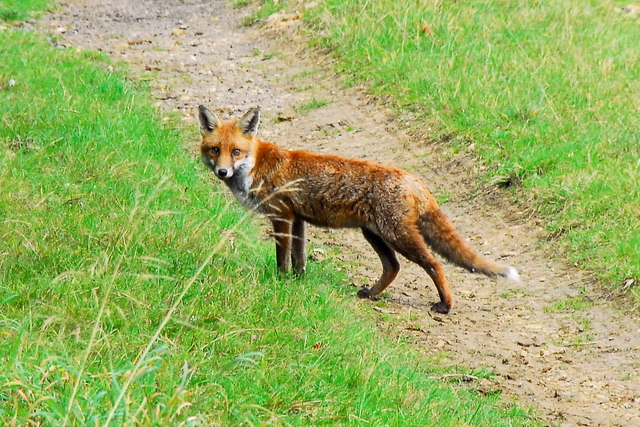
Fox by Julian

Creative Commons Licence [Some Rights Reserved]   © Copyright Julian Dowse and licensed for reuse under this Creative Commons Licence.

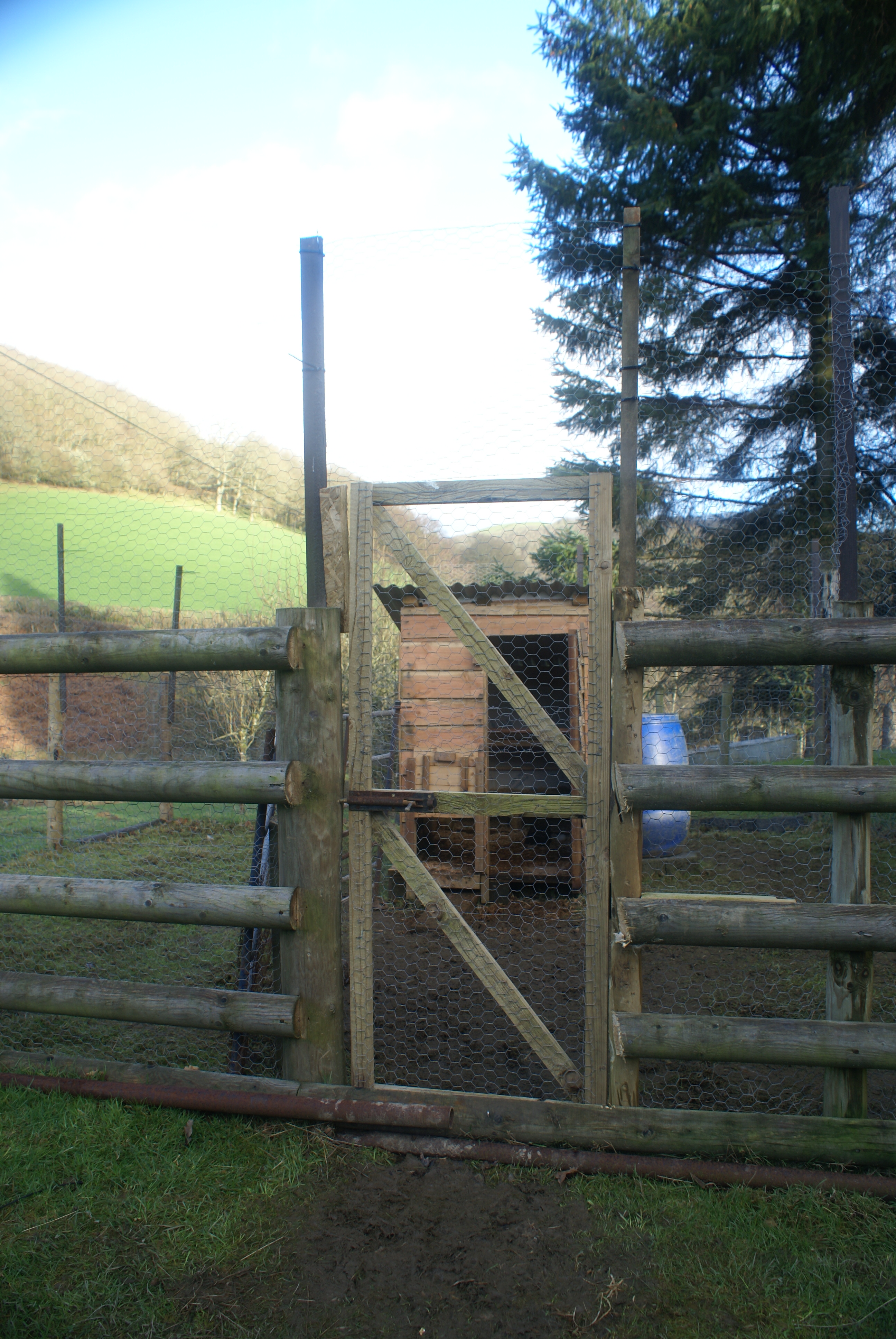
Now we are back I can risk telling you that we were predator-proofing.  We struggled in the torrential rain to make the poultry fox-proof  and badger-proof before entrusting them to a friend to tend daily.  We erected 8 ft high double fences with embedded roof slates buried and wired around the base and heavy scaffolding poles also fixed at the base to discourage tunnelling.  Alan vetoed the purchase of electric fencing — God forbid — that is plan ‘B’.   Phase Two will encompass the netting roof which will be necessary when we have chicks — to keep out the magpies and buzzards (but I haven’t mentioned this to Alan yet).

Poultry run

Poultry run

The cats had not left home this time and were in-doors waiting for us on our return  — the one dubious benefit of heavy rain.

I immediately donned my wellies and went out to shine the repaired torch through the chicken-wire window of the new coop.  The chickens were on their perch, one with its head cocked quizzically to one side and a brown egg smashed on the floor beneath her — ‘point of lay’ but still hasn’t got the hang of it quite.

The ducks were also on the floor of the coop, carefully preening the last of the day’s mud from their feathers in a scene that reminded me of our bathroom on a  Friday evening when our five children, then teenagers, were still at home.

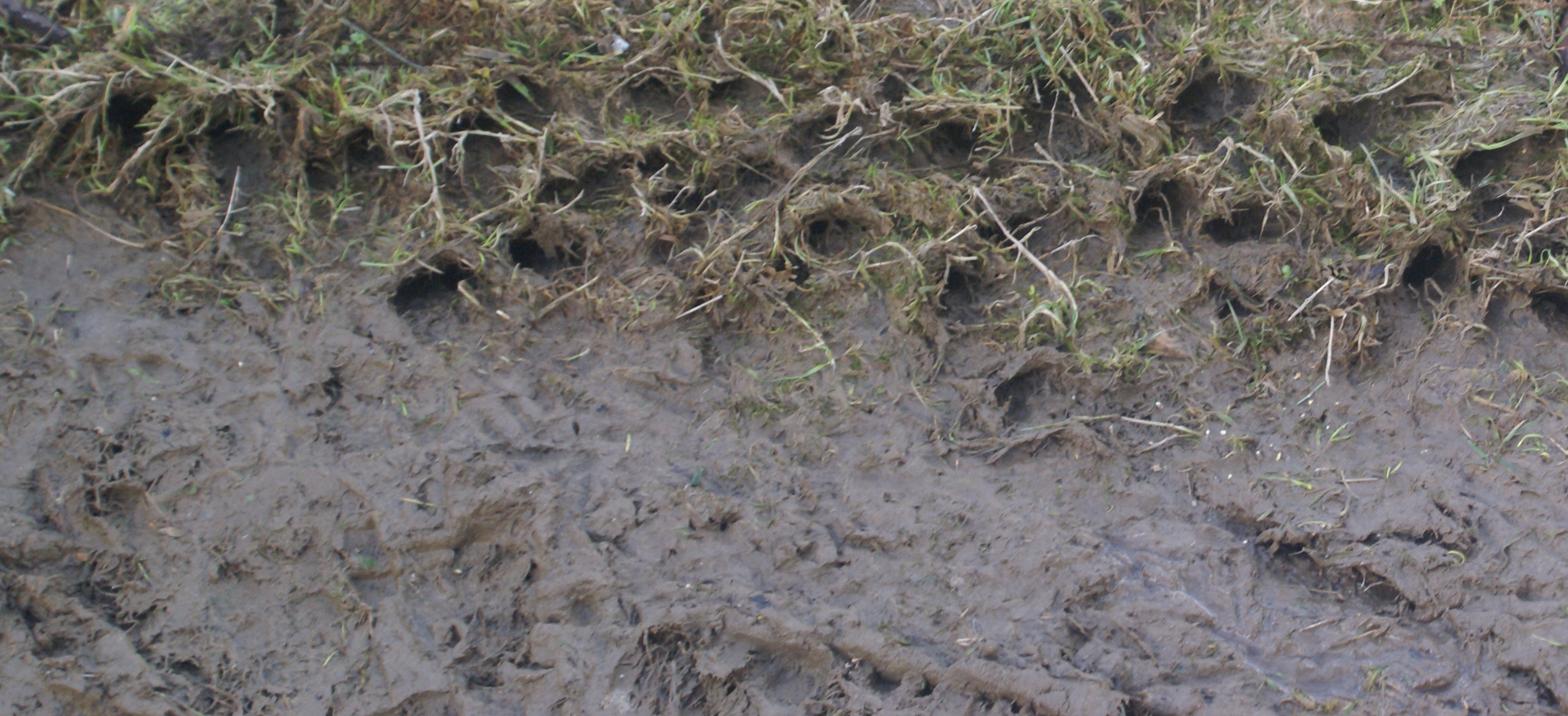
Outside the coop in the new predator-proof poultry run something strange has occurred — a 25 foot square enclosure of pasture has undergone some sort of cold fusion.  There is, it seems, a complication of keeping predators out and it is keeping poultry (especially ducks) in.  In one week, two ducks have carefully liquidised the chicken run.

Puddle Ducks at work

Puddle Ducks at work

Carefully ducked ground

Carefully ducked ground

They meticulously probe the soft soil for grubs and wriggly things, repeatedly washing their bills in any standing water they can find — puddly land becomes a morass in no time — they are very conscientious!

Compensation!

Compensation!

This morning, bright and early, I  counted the sheep huddled by the fence and found one too many —  that’s odd!

There was one stray sheep on the other side of the fence trying very hard to blend in with ours — they do so hate to be alone.

In this wet weather sometimes, in the dips, the tension in the wire fences lifts the fence posts right out of the ground and some of the ewes are quite clever at encouraging this process, particularly if there is nice grass on the other side.  This seems to account for our new ewe — she has been returned.

Casually hoofed mud -- quite different

Casually hoofed mud — quite different


Standard
Climate, Hill Farming

Too rough for ducks!

SONY DSC

Our stream in summer

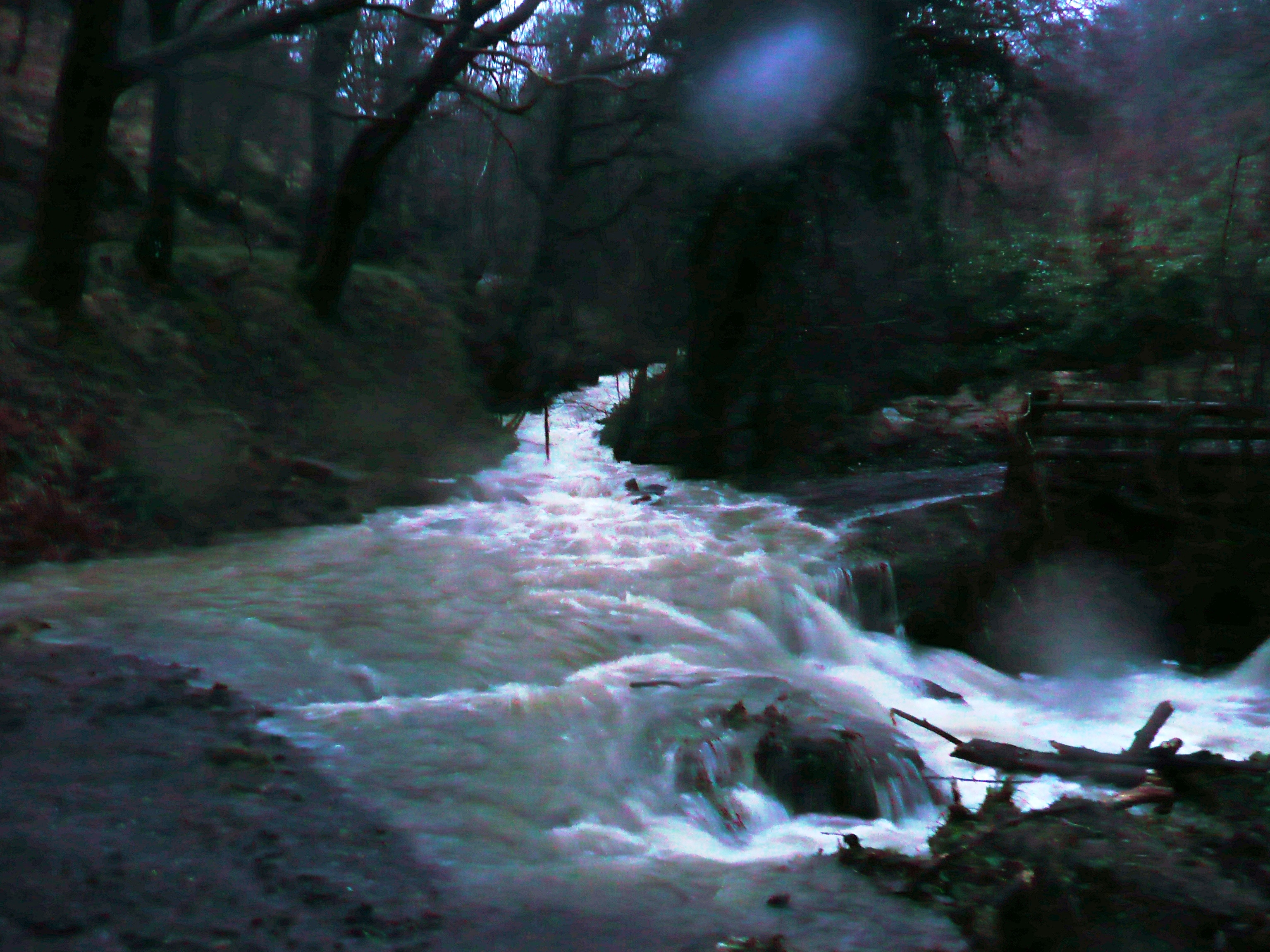
The exceptional rains continue, the ground is saturated, the reservoirs are overflowing and the rivers are in flood. It’s worse further north and it’s bad enough here.

P1060690 Our little stream

Same  stream today!

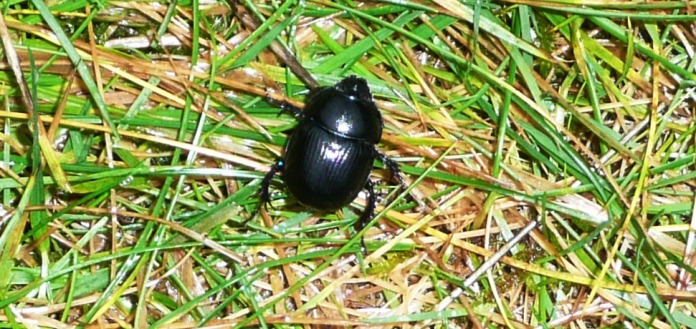
Last week, unusually for December,  I saw a Dor Beetle on the path — moving to higher ground, I thought, ahead of the flood.

P1060520 Abandon Home

Just in time, as it happened, before water started to spew out of the burrow.  In the valley bottoms the water table is higher than the ground so mole hills erupt with water, like volcanoes, and if you stab the ground with a stick it may spurt at you.

P1060715

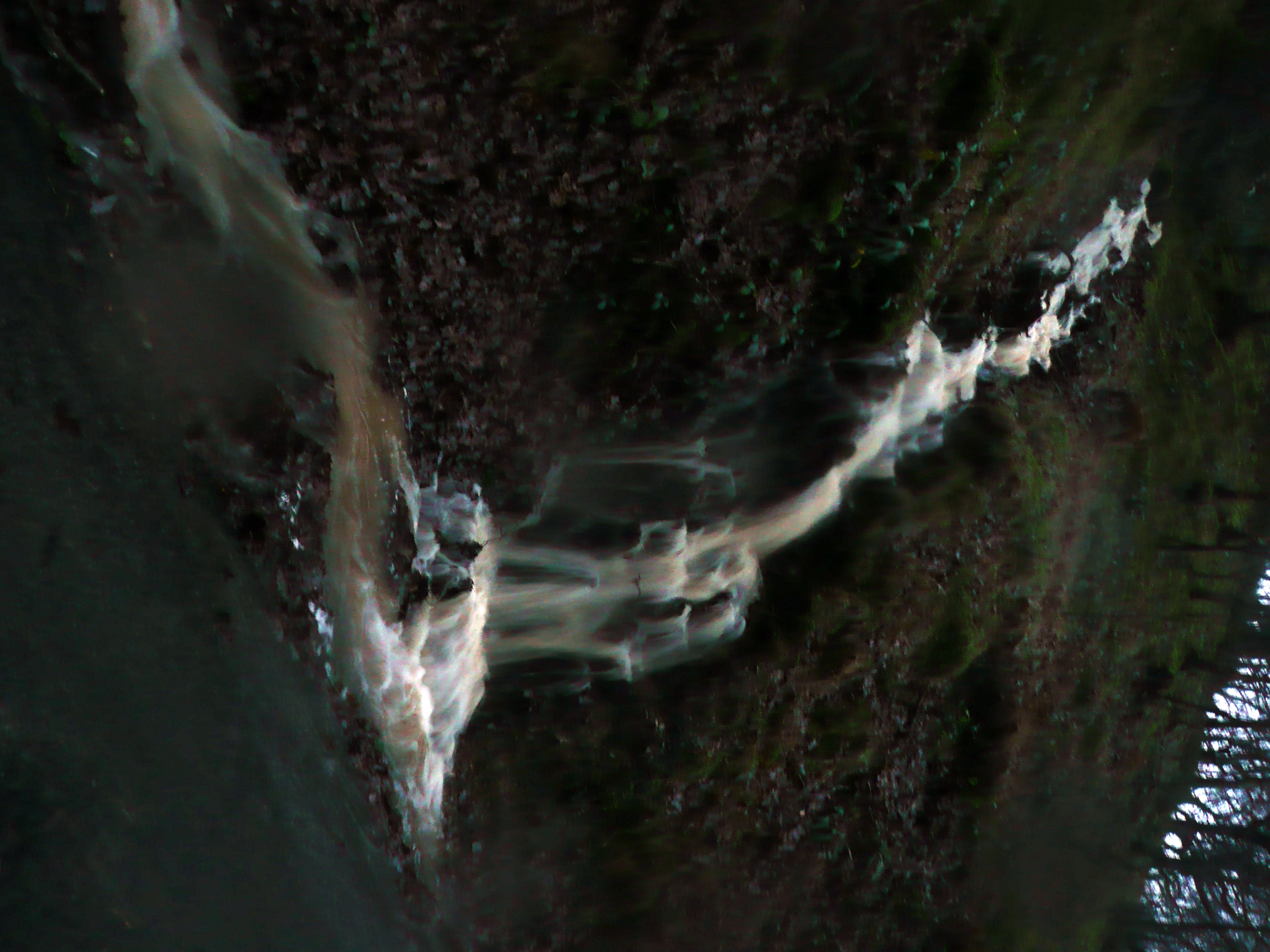
Water is running everywhere.  Waterfalls appearing where they do not normally belong.

New Waterfall

Impromptu waterfall

At dusk this evening the chickens put themselves to bed but the two ducks were nowhere to be seen. They weren’t in the sodden field, nor in the yard, not under the truck and not in the barn or in the road which has turned into a torrent.

The lane

The road


Way to a neighbours house, cut off by stream

Way to a neighbours house, cut off by stream

The torch wouldn’t work and the hurricane lamp blew out, but somewhere, above the storm, there was a distant quacking.   The two ducks had strayed into the wetland (well — it’s all wet at the moment) and become separated and were calling to each other over the stream.  As I approached through the aspen and alder, one panicked and tried to cross the raging stream (remember, their wings are clipped), next minute she was in the churning, muddy water, whizzing downstream, spinning and flapping, quacking and squawking.  I was downstream of her so, holding on to a tree, I managed to lunge at her as she approached and flip her unceremoniously onto the muddy bank where she disappeared into a holly thicket before I landed, splat, where she had just been.  Traumatised (both of us) I carried her home over the bridge and reunited her with her friend, who came running to meet us.

Fuzzy Ducks

Tomorrow, I think they had better try their new enclosure — it’s too rough for ducks!

Standard
Hill Farming, Small Holding

Chicken Fiasco

We live in the Northern Hemisphere, that means, as I write, it is autumn.

SONY DSC

In Britain we do something very strange in autumn.  We turn back our clocks an hour, to give us more daylight in the morning and less in the evening (is that right?)  It started in the war when someone decided to put the clocks forward in the spring giving us long balmy summer evenings in which to ‘dig for Britain’ and increase agricultural production.  Ever since we have been moving the clocks back and forth and generally confusing ourselves.

Last week-end was the time designated to move the clocks back (we are all supposed to do it at the same time) —  not that  the hours of daylight are impressed — they have continued to dwindle along their inevitable celestial way, getting shorter and shorter, leaving less and less time for the farmer’s chores, and we have to cope with the disturbance in our routine wrought by the hour change — waking too early, hungry at all the wrong times,  confused animals, missed liasons, getting to the dentist at the wrong time and general discombobulation.

I blame this for the chicken incident.

Speckled hen

Last week-end we went to Rutland for a wedding and Alan (who is thus culpable) noticed a sign saying

‘Point of lay chickens for sale’

Now anyone who knows anything about chickens knows that they stop laying in winter, which in the Northern Hemisphere comes shortly after autumn.  The purchase of chickens at the point of lay in autumn is pointless — they, the chickens, will quite likely be eaten by hungry preditors during the long, dark, eggless winter months and you will never see the fruits of your investment.

Note to self — buy chickens in spring.  But sometimes one just wants to do something extraordinary.

Meet our new chickens:

Hens and ducks

Those astute amongst you will have noticed something strange about two of them.

We did not lose our powers of reason entirely in Rutland — we noticed the huge pile of eggs on a box in the corner of the strangely muddy yard — duck eggs.

‘Oh yes,’ said the lady, ‘very good layers — our ducks, and they go on laying through the winter’.

So instead of four hens, we drove home with two grey hens (a Speckled and a Bluebell) and two Khaki Campbell ducks, shut in the boot of our camper-van.

We learned something new almost immediately as strange smells emanated from the rear of the vehicle unsettling the dog — ducks, unlike chickens, do not evidently switch off automatically when placed in the dark, they can see in the dark and they can squeeze through surprisingly small holes.

When we got home we had two chickens but no obvious ducks.  After the removal of several panels, the mattress, and parts of the bed we found them, gone to ground, between the water tank and the chemical toilet (obviously not liking to pooh on the plastic sheets and newspaper that we had put down for them in the boot).

This week, while I shampoo the camper van carpet, Alan (partly culpable) has been constructing a new pen and coop for the production of the most expensive eggs known to man.

Meanwhile I have a nagging worry about the ducks — raised commercially from day old chicks in a yard with only shallow trays of water and small puddles and without the benefit of proper parenting, we may well have to teach them to swim.  Life is full of new challenges…

Just now the chicken alarm went off — clucking wildly because two buzzards were making a low reconnaissance flight over the temporary poultry pen — I, but not the dog, was out there in my pyjamas in a trice.

Where had I got to?  Getting to know ducks.  They have laid 9 eggs in just under a week and are very meticulous with their ablutions taking a good hour to do what Granny called ‘a stand-up wash’ every morning  then they flap around drying their wings.

They are very easy to herd, which is good, and although they are not supposed to, they put themselves into the coop at dusk with the chickens, even though they don’t seem to like them very much.

Once the new coop is finished we will start on the floating pontoon for the duck-house…   If they can swim!


Standard