Hill Farming

Lamb and Blackberry

If you walk in the hills much in Wales you will occasionally encounter a strange, unpleasant smell.  Your impulse, honed over myriad generations, will be to head in the opposite direction because it is the smell of death.  If you are inquisitive you may poke around with a stick while holding your breath and you will find the decaying flesh hanging from the still-articulated skeleton — there will be lots of interesting insects and if you look carefully, with your CSI hat on, you might notice the brambles wound around the body.

You see, brambles grab sheep — they wrap them in their tentacles and the more the sheep thrashes and twists the firmer it is held — it does not last long.

Sometimes they escape

Sometimes they escape

Don’t fret — most places are so thoroughly grazed that the blackberries never get a hold — it’s when the sheep sneak into places they are not allowed that the trouble starts — when they get into woods where they are not supposed to go.

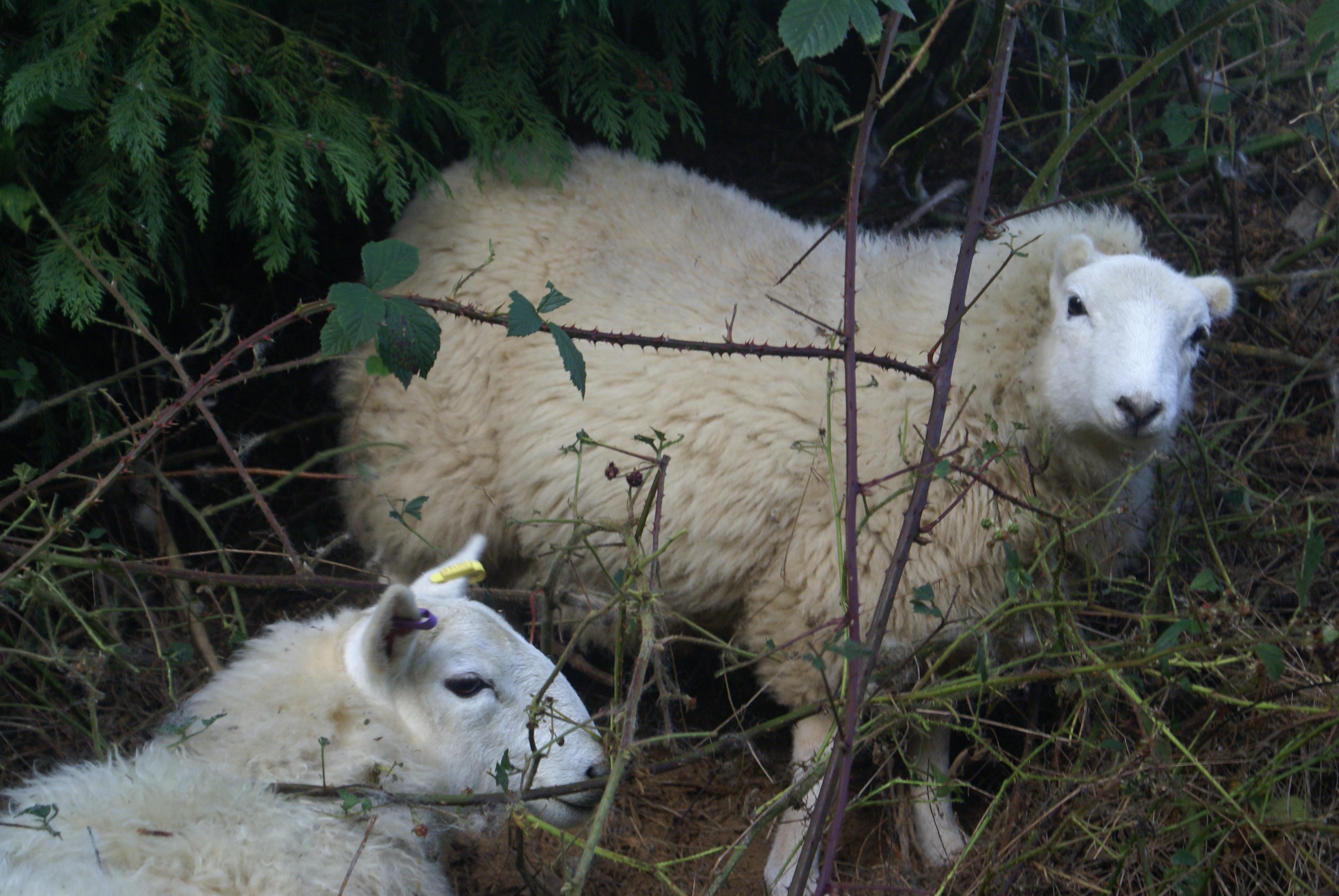
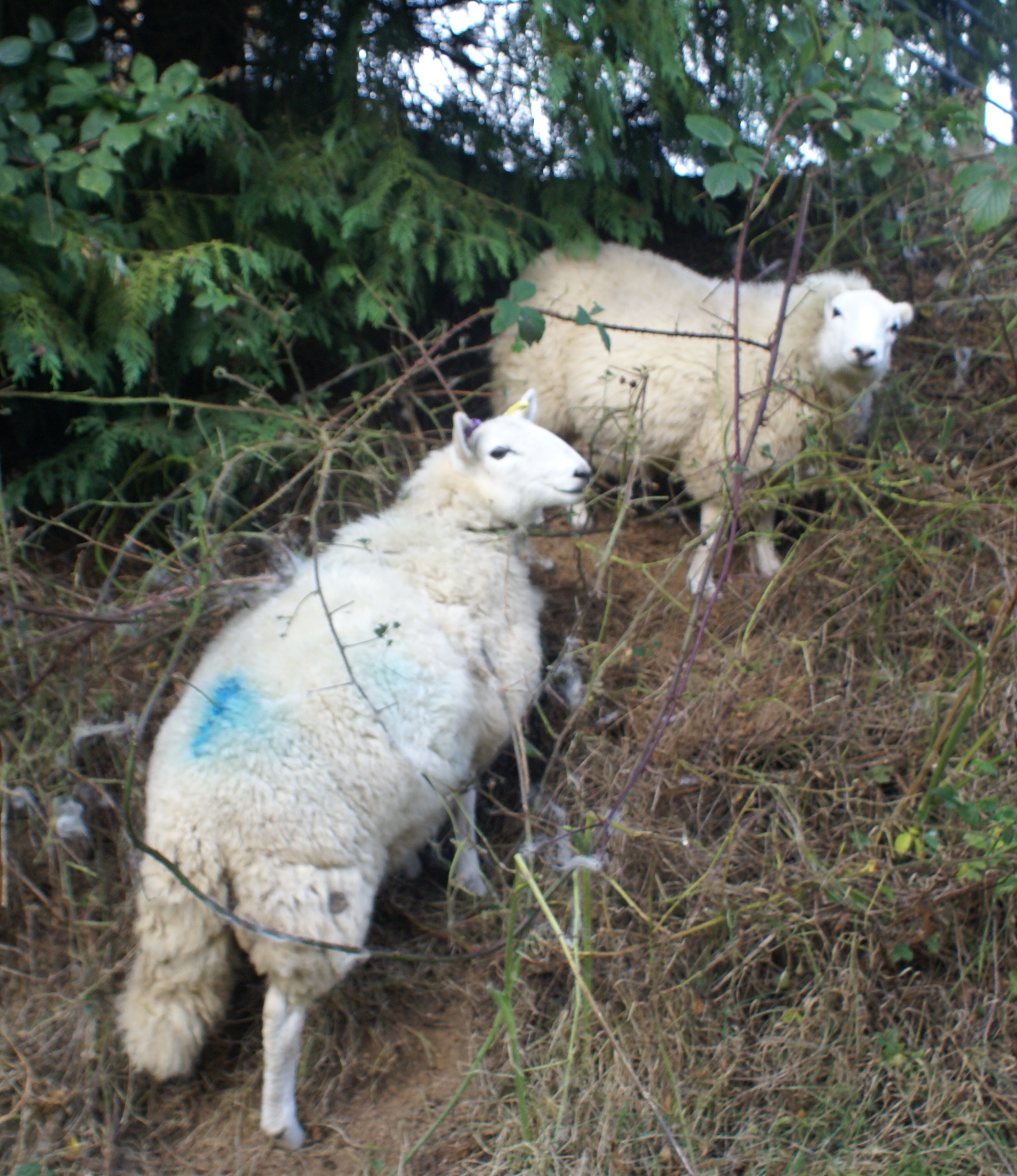
Stuck!

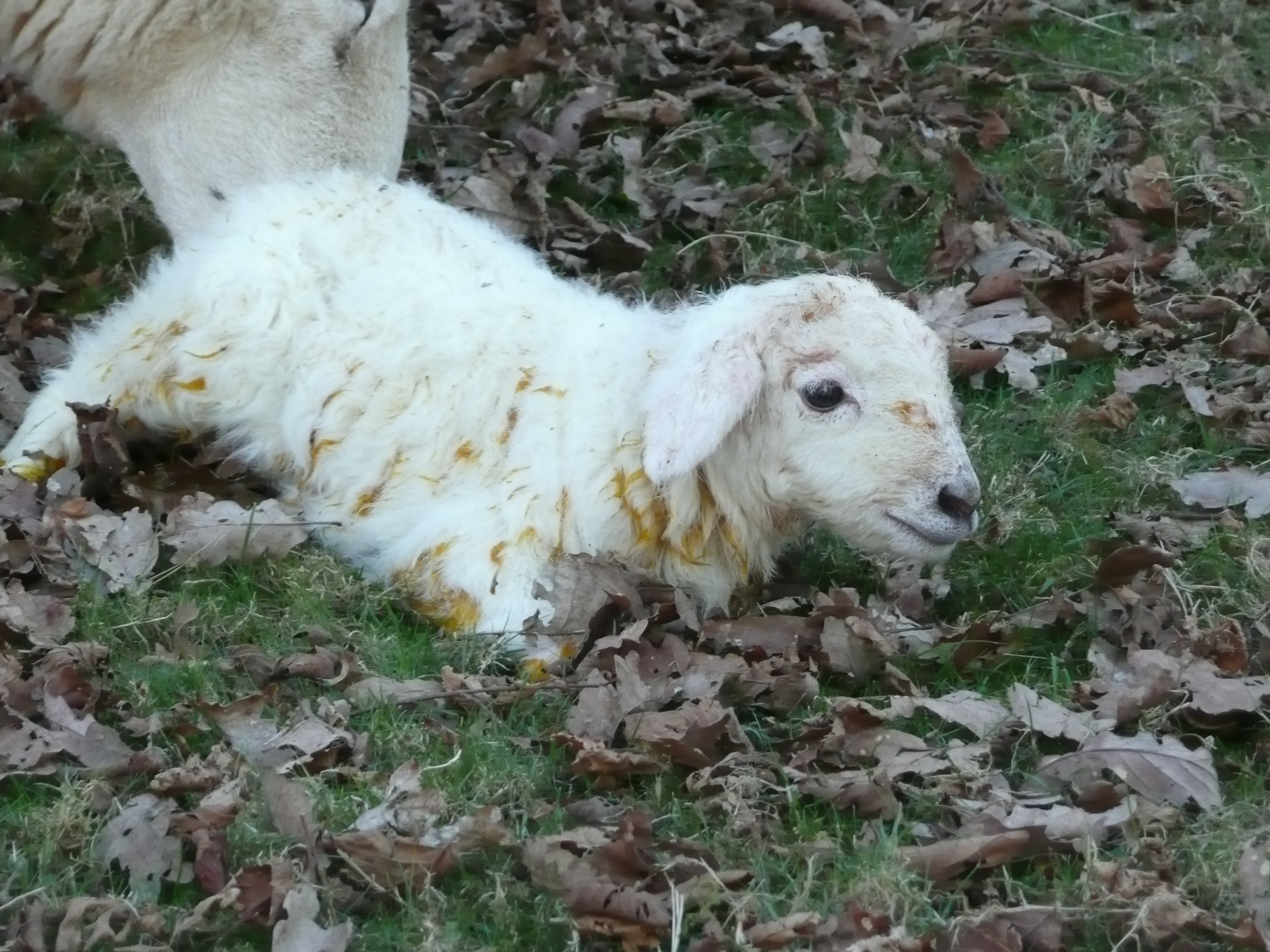
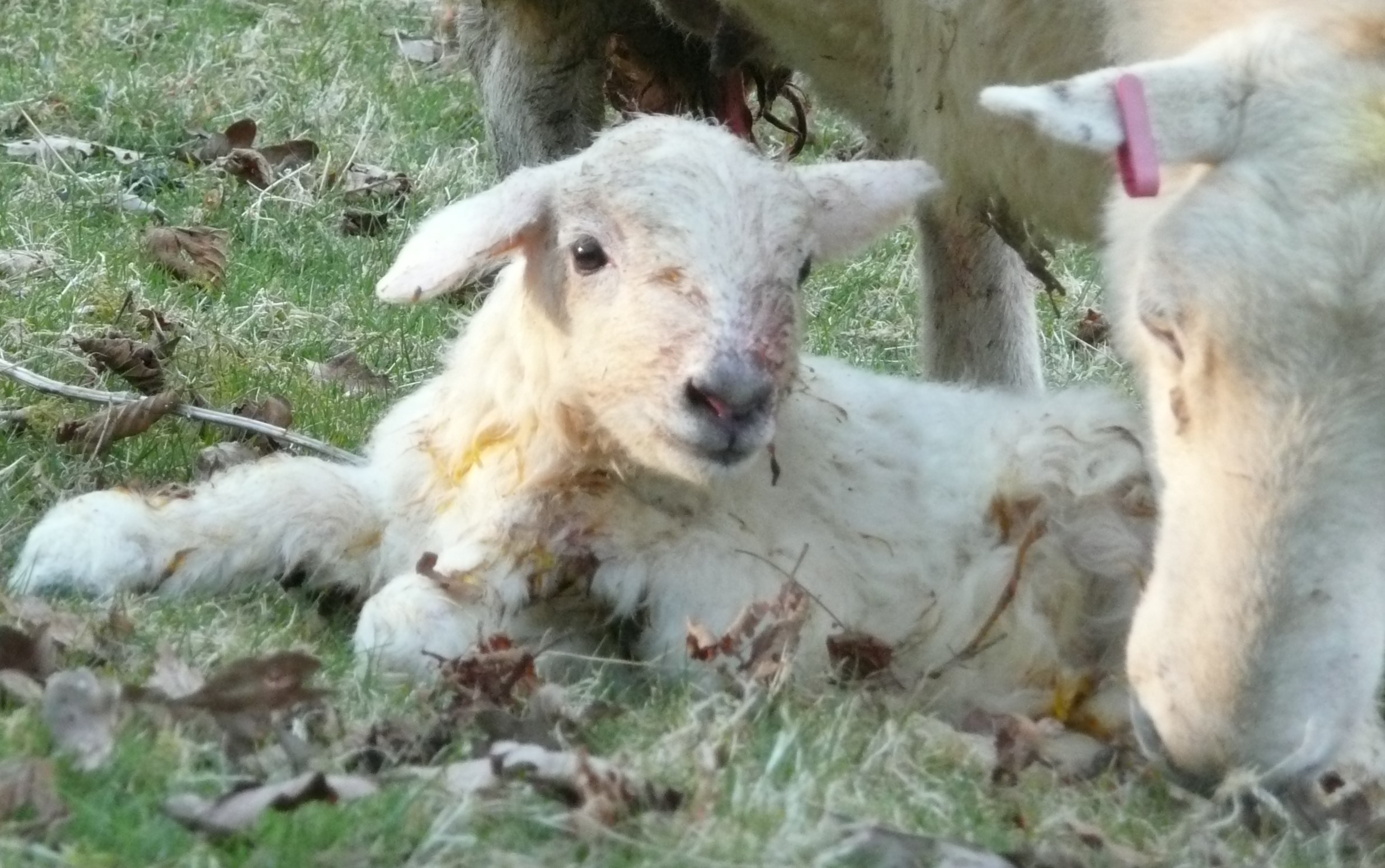
Here’s Gladys (you remember Gladys — the floppy, pig-mouthed ewe lamb with teddy-bear ears who wasn’t prepared to die as everyone knew she should). She is still testing the limits of survival.  Her baaing has dragged us out of bed — she and her friend are stuck — doesn’t look impressive because they have already eaten all the leaves and the thorny twine that binds them is embedded in their thick fleeces but they cannot get away and have to be cut free and the prickly problem painstakingly unravelled with much kicking and wriggling — thank goodness they are not fully grown!

Standard
Hill Farming, Humour, lifestyle

Suddenly Summer!

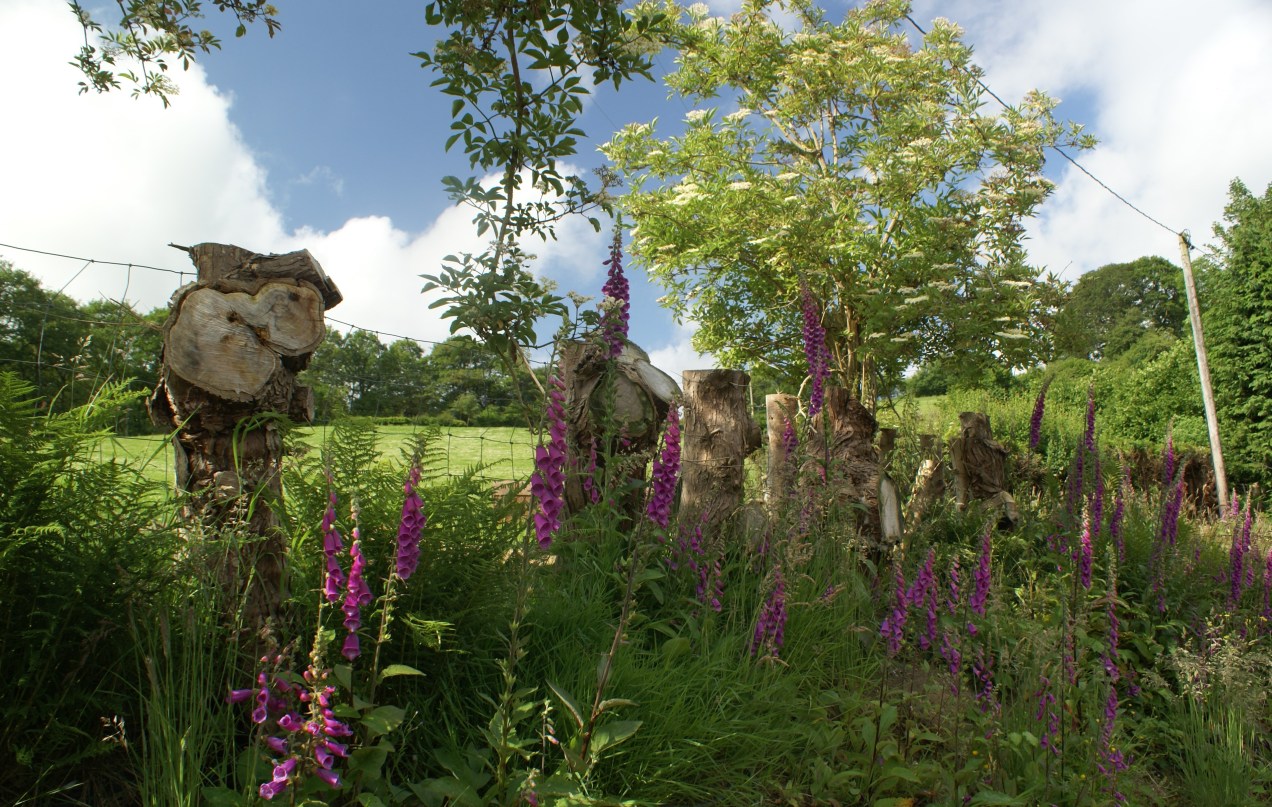
‘We’ll do that in the Summer!’ we say, ‘In the long balmy days, free of water-proofs and wellies; when the sheep look after themselves and we can enjoy all the things that drew us to this place.’

Summer

Summer

‘We’ll do it after shearing, and after we’ve wormed the ewes and caught all the lambs and sprayed them against “fly strike” and after we’ve immunised them all (it’s too hot to tag their ears yet), and after we’ve sprayed the nettles and cut the thistles (and Alan’s mended the rough cutter — and by the way, the dish-washer’s broken), meanwhile we’ll spray ourselves with midge repellent and cut the thistles by hand — will you sharpen the sickle and the bill hook.

Digger rests, engulfed in Summer

Digger rests, engulfed by Summer

And while our rough cutter waits for Alan  and the digger with its poorly track awaits attention from the mechanic, all around us grass grows, you can almost hear it, and men work through the long days into the nights to cut silage and bale it all before the thunder storms come.  The mechanic rushes from farm to farm to keep the wheels turning.

The bracken, which should have been cut by now, stretches to the sky and spreads to shade the sheep, who far from being relieved by the removal from each of a couple of kilograms of organic insulation and carpet fibre, are now bothered by the sun.

SONY DSC

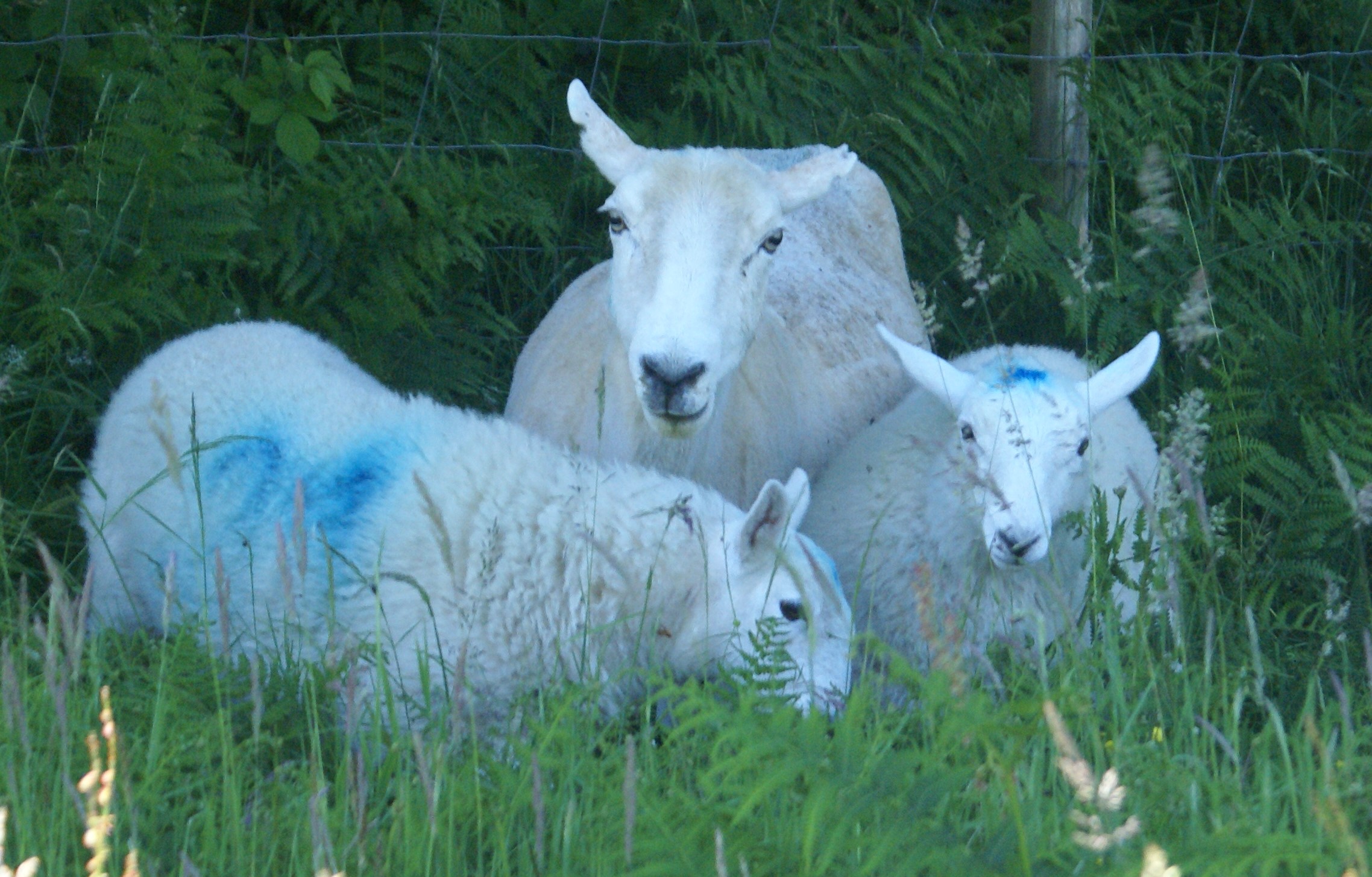
Seeking shade in summer pasture

SONY DSC

Sheep shadow

They use their bodies to mark out the exact outlines of trees on the hillsides — sheep shadows, and they pant and look at me accusingly as we might ask the Almighty why we have to suffer so at the hand of cruel destiny.

We sheared them on the day before the heat wave struck and as I walked into the first hot summer sun  where they had been lying the buzz was deafening so that we looked about for a cause (continuing the biblical) — a plague of flies had hatched that day and roared in anticipation.

That day we lead them through the woodland to our upper field where the orchids grow and where there is hardly a fly in this shady pasture — like us, they don’t know how fortunate they are.

Orchid in the Summer Pasture

Orchid in the Summer Pasture

Standard
Hill Farming, Lambing

Intruder!

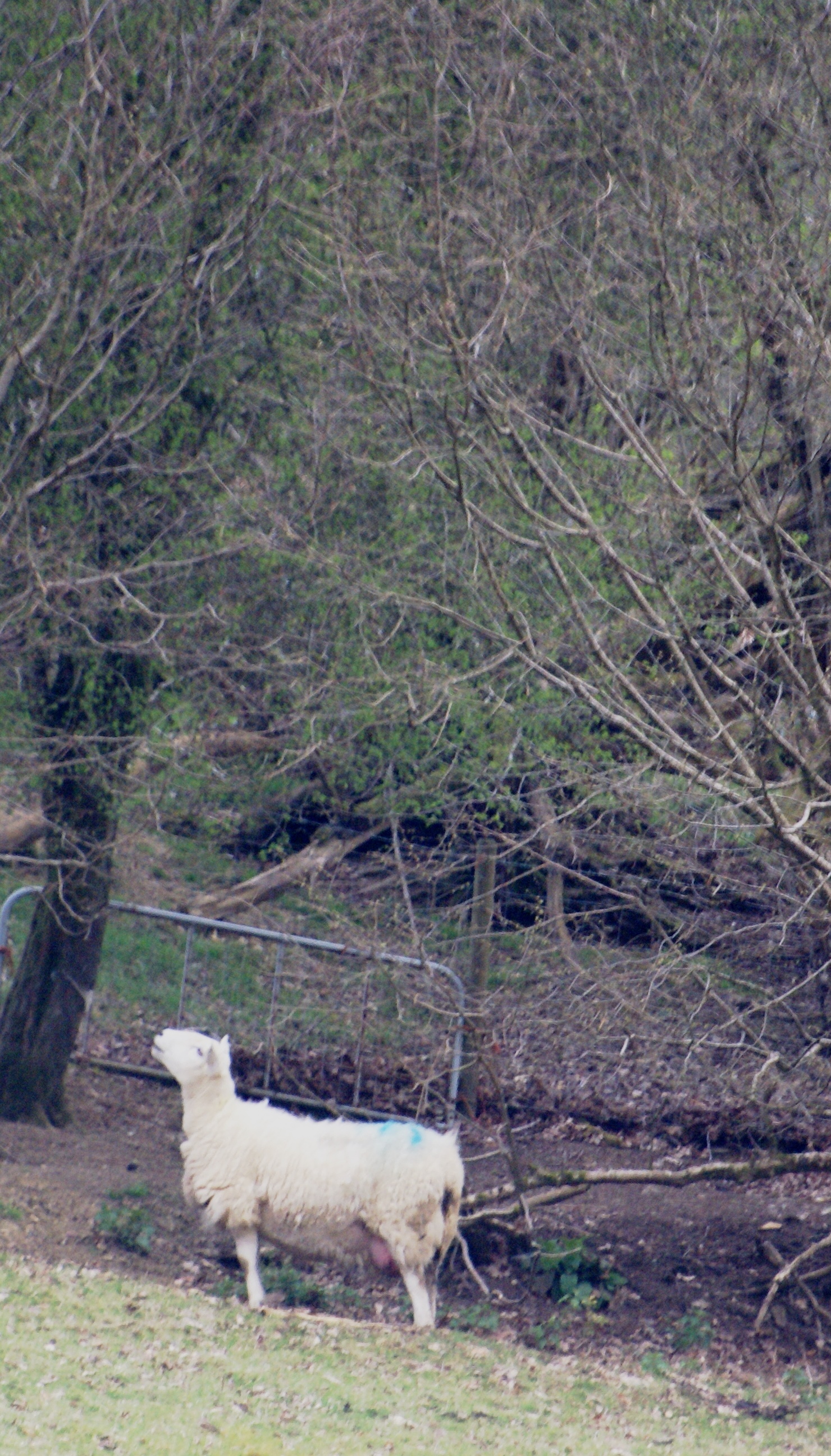
Birdwatching Ewe

What is bothering this ewe?

Apparently in early labour, suddenly she sniffs the air and looks up into the trees.  She is completely distracted from the job in hand and agitated — whatever it is, she does not like it!

SONY DSC

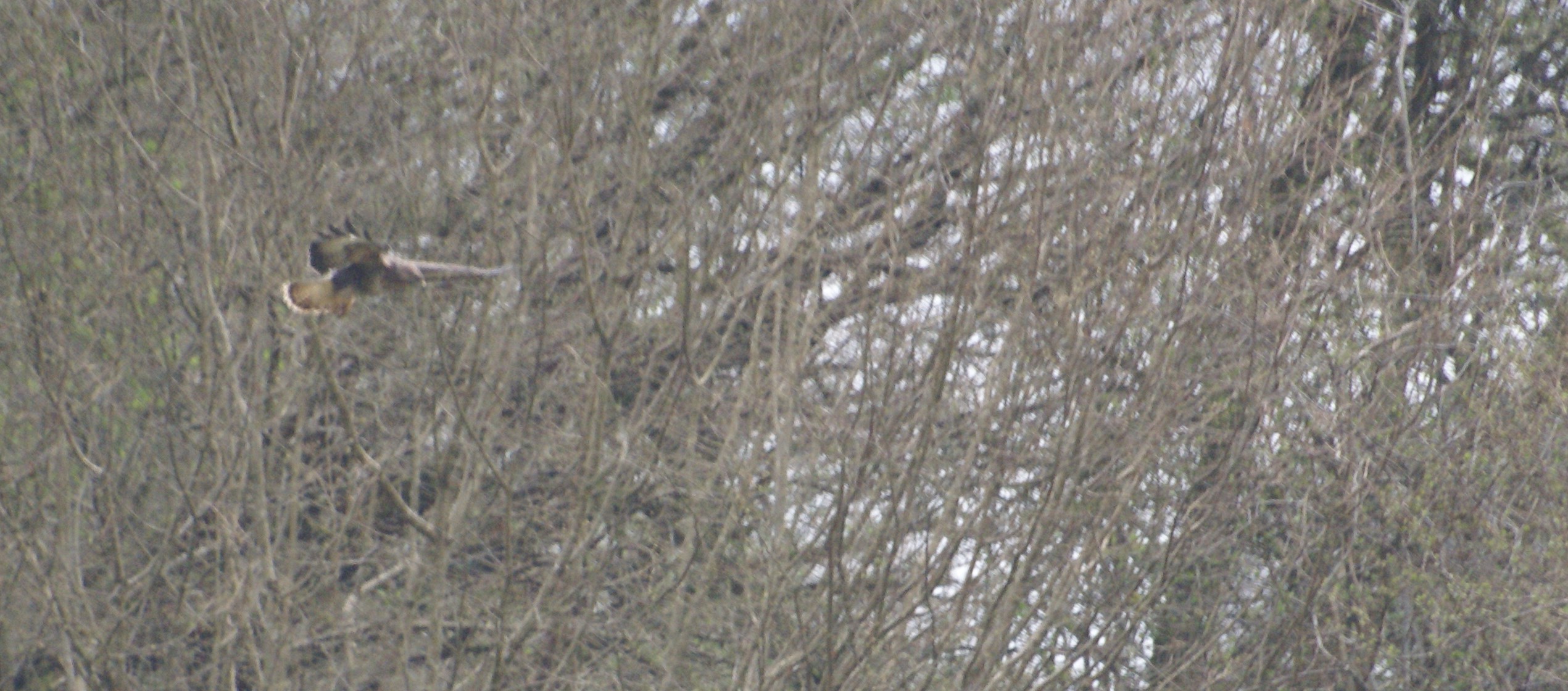
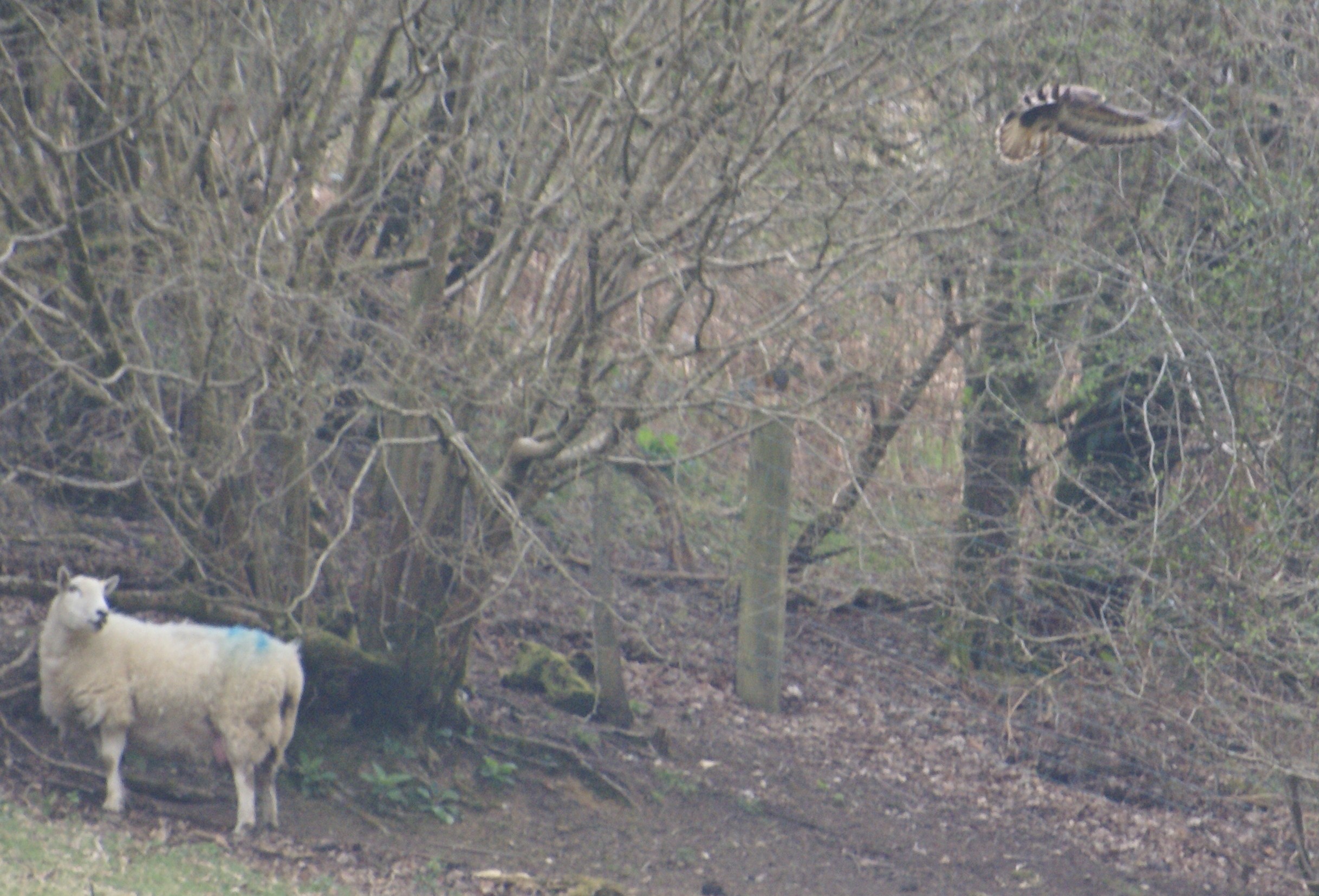
Circling  above her is a large bird of prey — a buzzard, it wants a really good look at her.  Like the magpies that bounce (half flying, half jumping) around the nearby pasture, he is interested in the cleansings (placenta and membranes) and they seem to  sense a ewe in labour from miles away.  In fact this one has taken up residence in the stand of mature oak trees just above the pasture which gives him prior claim — or so he thinks, the crows and magpies think differently.

He swoops low ‘buzzing’ our ewe.

SONY DSCSONY DSC

SONY DSC

Then he perches in the tall hedge to watch her — and waits.  She can’t settle.

Sheep in labour are very vulnerable and with any threat their contractions will cease for a time.  I don’t think that a buzzard, or indeed a domestic cat, is much of a threat to an adult sheep or a healthy lamb but there is something in their primitive background that responds to the shadow of a hawk, the shape of a cat and of course the bark of a dog that really upsets them at lambing time.  Dog walkers should bear this in mind because even the best behaved dog on a lead, can spook a ewe whose labour may become prolonged so that her lamb dies or, if she is beyond the point of no return , she may drop the lamb and run.

We like to see the birds of prey — we were very excited when we thought we saw an osprey recently, so are reluctant to chase them away.  Anyway, while I was wrestling with this dilemma this buzzard got bored waiting and flew off.

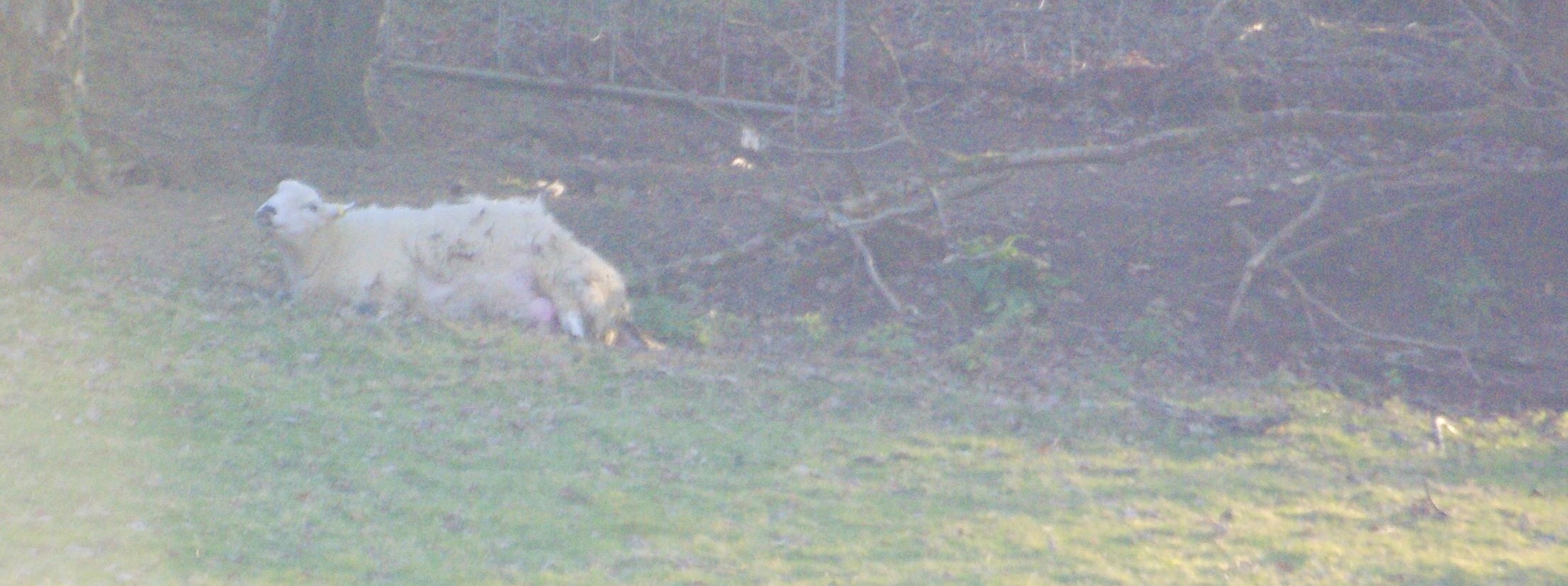
The ewe slumped immediately to the ground and finished the job.

SONY DSC

I am not a buzzard or a cat and she let me approach to help her with the first lamb and soon she had two beautiful, tall, strong lambs running at foot, one male and one female.

Standard
Hill Farming, Lambing

In Praise of Older Females

Last year she had her 8th and 9th lamb, both large (10lb and 11lb).  She is now 8years old and last year I wrote in my lambing record, after I’d helped her lamb in the open, ‘No fuss’.

My shepherding friends sing the praises of a young flock and tell me to cull the old ewes but that doesn’t seem fair if they are healthy and productive and easy to handle so I stick to my guns.

Today was Number Thirty’s due date and, sure enough, she took herself off after lunch to the top of an otherwise empty field but, oddly, she was making a lot of noise — not a labour type baa (some of them are quite noisy, just like some women, but she isn’t usually one of those).  Nor was it a bubbly, talking to a lamb baa — it was a loud calling baa (like when one sheep has crossed the stream and calls to the others to come too.

I went up and sat in the sunshine on the bank and she quietened.  After 20 minutes or so I thought I’d go and get the evening feeds ready but as I walked down the hill she started calling again so I went back, and she stopped.  It seemed she wanted me there — don’t ever tell me sheep aren’t intelligent.

She laboured on but things did not seem to be progressing as they should despite strong and prolonged contractions.  Alan came and took one look and went off to put on his waterproof trousers.

I caught her during a contraction and could feel the two front feet and the muzzle with a swollen protruding tongue, the lamb was moving but huge and it didn’t want to budge.

Alan got back and we caught her again easily and this time he held her and I heaved, holding so tight to the hooves that I thought I might damage them and easing the head out.  The feet kept slipping from my grasp and I had forgotten to bring a towel.  I pulled off my T-shirt and dried the legs with it then used it to hold them.  She contracted, Alan urged her on, I pulled with all my might and at last could feel it coming — the legs extended, the head was free and shoulders were born and with a slither and a gush of orange, meconium stained liquor the mighty leviathan arrived – one ear up and one ear down but breathing.

P1050310

I laid it down by its mother’s nose and though prostrate with exhaustion and still will an Alan around her neck, she licked its muzzle and it gave a little bleat and she gave her bubbly baa.

Half an hour later Alan had gone to the pub and the  lamb was all spruced up and had had a feed and Number Thirty was as lively as anything and in no hurry to re-establish the normal distance between the species.  She had her supper while I (in a clean top) weighed the monster — 14 lb.

We sat for a while on the steep bank — ewe, lamb and shepherd. Two farm trucks came down the lane which is on the other side of the little valley overlooking our field.  The first flashed its lights and the second honked its horn and wound down the window and waved. I don’t know who they were but they were acknowledging a special moment that they recognised.

P1050316 (2)

Lesson learned: next year I really must get them scanned so as not to overfeed the singletons.

Standard
Hill Farming, Lambing

Pink Balloon but No Celebration.

Lamb Friday -- all white and fluffy now.

Lamb Friday — all white and fluffy now.

Even in the Welsh Hills fewer and fewer farmers lamb out in the fields — most do it in the shelter and warmth of large sheds with pens and good lighting and enough sheep to make it worth while and to have someone there day and night.

We are an anachronism — I stumble around our fields with torch or hurricane lamp listening to the sounds of the night — for the soft bubbly baa of a ewe calling to her new-born lamb or the hysterical rhythmic baaing of a frightened young ewe, lambing for the first time.  By and large our sheep do not lamb in the hours of darkness — one of the advantages of not having the lights on all the time — their circadian rhythms are undisturbed, even if ours are not.  Our lambs usually arrive at first light.

P1050289 (3)

Last night, though, was an exception.  It was clear and frosty and there was a huge bright full-moon casting weird shadows over a black and white world.  I was woken by a bleat at half past one in the morning and went to investigate.

Up in the corner of our steep field was one of our first-time ewes running after two lively new-born lambs.  I’d been worried about her as she had been large and uncomfortable and had had a large swollen udder — it was bare of wool and oedematous so that it looked  translucent, like a large pink balloon.  This should have made more of an impression on me.

Anyway I was very relieved to find that she had delivered without any trouble and that the lambs were so lively and went back to bed…  Mistake!

At dawn Alan counted the sheep and called me — only one lamb at foot and something white on the ground.

Sure enough there was a dead lamb on the ground but the young ewe still had her two lambs, one was tucked up behind her.

After failed attempts to resuscitate the perfect, cold, dead ram-lamb, we had a roll call and tail inspection of the other ewes in the field — no one had any signs of having delivered a lamb.

The two lambs born in the night were exploring their leafy environment and I was pondering on missed opportunities and lessons to be learned:

1.  Be particularly vigilant on bright moonlit nights when the light level is high and when all night can seem like just before dawn.

2.  An udder like a pink balloon may herald triplets (quite rare in our breed).

3.  Remember to wait a while after delivery as it’s the last, often smallest, lamb that slips out unnoticed or sometimes just rolls off down the hill and gets overlooked when the ewe has so much new to deal with.

Standard
Hill Farming, Sheep, Uncategorized

The Worrying Case of the Good Friday Lamb

Considering it was born just after dawn with cloud resting on the hilltop and rain dripping from the trees, our first lamb seemed reasonably robust — it was standing but, ‘It looks a bit torpid,’ Alan said as he handed me the binoculas.

We watched — it had done the two most important things — it had breathed and it was on its feet but it would not suckle.  Our most skittish ewe had delivered it onto the moist leaf litter behind the hedge and it teetered around under its mother’s belly looking for something (it did not know what) but it tired and slumped down onto the wet grass when its mother pawed at it ominously  with her foot.  It stood again and she nudged it backwards along her side. Half heartedly it butted the ewe’s back leg, missing her udder, failing to let down any milk and not sensing the teat at all.  Again it flopped down in the mud.  This happened over and over and the ewe looked pitiful — uncharacteristically she let me come very close.

Something would have to be done — the lamb was getting weaker, the ewe was pawing at it more roughly, more desperately.

Worried ewe -- over 2 hours and the lamb has not fed

Worried ewe — over 2 hours and the lamb has not fed

A makeshift pen was constructed nearby and I carried the lamb into it, it was female, her mother followed without any fuss — even human mothers comply with their attendant’ suggestions when at their wit’s end.

Makeshift pen

Makeshift pen

The lamb didn’t like being picked up and a little surge of adrenaline probably did it good.  As I placed it on its feet, it ran to its mother (now restrained by a hurdle) it butted her udder, which is what they do when they run home for safety, and I squeezed the teat which squirted the lambs face with milk — she latched on immediately and fed.

P1050274

Full stomach, ears up, baa working, bowels working, bladder working, numbered like Mum (number 12, on the other side) and tummy sprayed with iodine, she is ready for a healthy sleep and not the engulfing drowsiness of hypoglycaemia that can carry off even a healthy lamb if she cannot achieve all three gaols of her birthday — breathing, standing and feeding.

Now she can do them all!


Standard
Ecology, Hill Farming

The Midwife has arrived…

in her black and white uniform.

SONY DSCWho called her?  Nobody knows.  But she knows: she knows exactly when every baby is due and she moves in a day or so before to watch over the mother.

Unlike her human counterpart she has no concern for the mother, she is here to collect the placenta and the membranes.  There’ll be no rotting flesh on our fields to attract predators.  All will be whisked away by the midwife bird.

She, or he, has been working up the valley following the wave of lambing which creeps up with the warming air and the growth of the grass.  The first sign  of her presence is a smear of wool on the field;  she has taken the liberty of pulling some wool from a ewe’s back to line her own nest and leaves a little on the grass, alarming as she chose the wool marked with red marker — does the colour of blood attracts her?

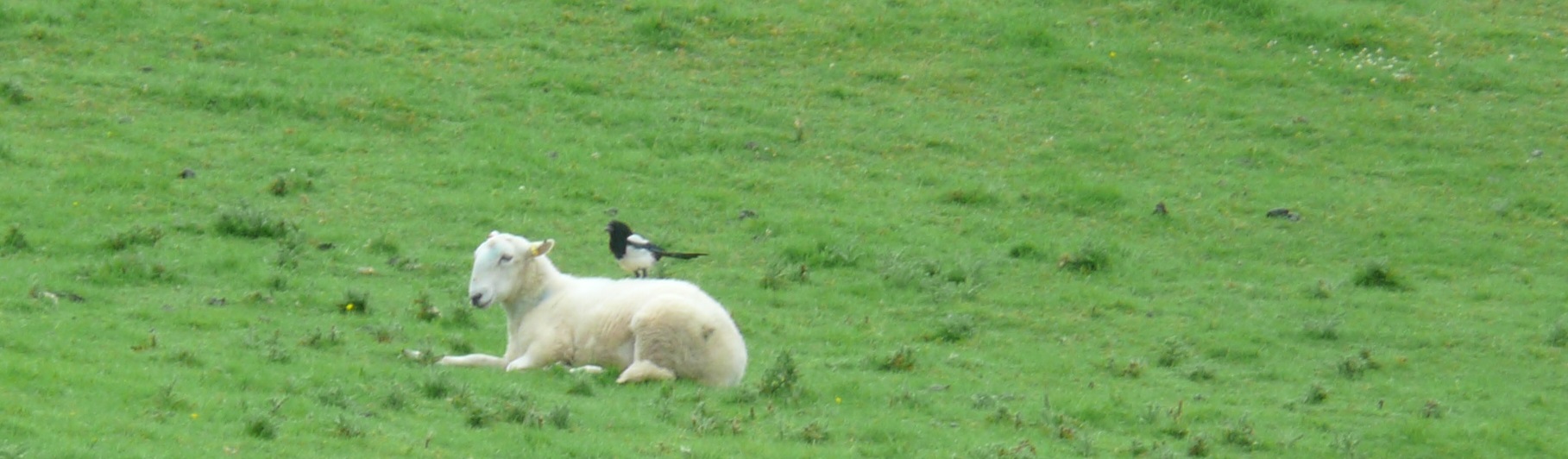
Magpies are hated by most farmers because of their partiality to another delicacy: they will peck the eyes from dead sheep and sometimes from not-quite-dead sheep and even from the head of a partially born lamb.

This upsets farmers (not surprisingly) but the flash of this bold and watchful bird will often alert him to a miscarriage, premature lambing or a fallen ewe and you can see magpies on occasions, perched on the back of a sheep, patiently picking out maggots from soiled wool which, if left, would attack the skin and eat into the sheep’s flesh causing rapid septicaemia from fly-strike and death if untreated.

Magpie looking for parasites and maggots

Magpie looking for parasites and maggots

The midwife bird is here to warn you that lambing is nigh — ovine tempers are frayed but the fields are drying out nicely so

SONY DSC

brace yourselves for an avalanche of lambs.

Standard
Ecology, Hill Farming, Humour, lifestyle

Hearts of Oak

‘The measure of a man’s importance is the size and number of his woodpiles’.

I was told this fact many years ago in rural France — it made a great impression — so contradictory was it to the progressive philosophies of my young French friends that I found it oddly reassuring — and still do!

We have woodpiles — burning wood when you have lots of trees is great but trees need cutting down and they don’t go quietly, they have a lot of stored energy and can lash out ferociously.  They need logging and drying and wood burns amazingly quickly so you need loads and plenty of room for storage.  We have an old barn, thirty feet by twenty feet already full of timber.

Last back end (as they say in Lancashire) we culled a Leylandii hedge, grown 40 feet high in a blink of Mother Nature’s eye. We cut off the branches and burned the brush-wood —

SONY DSC

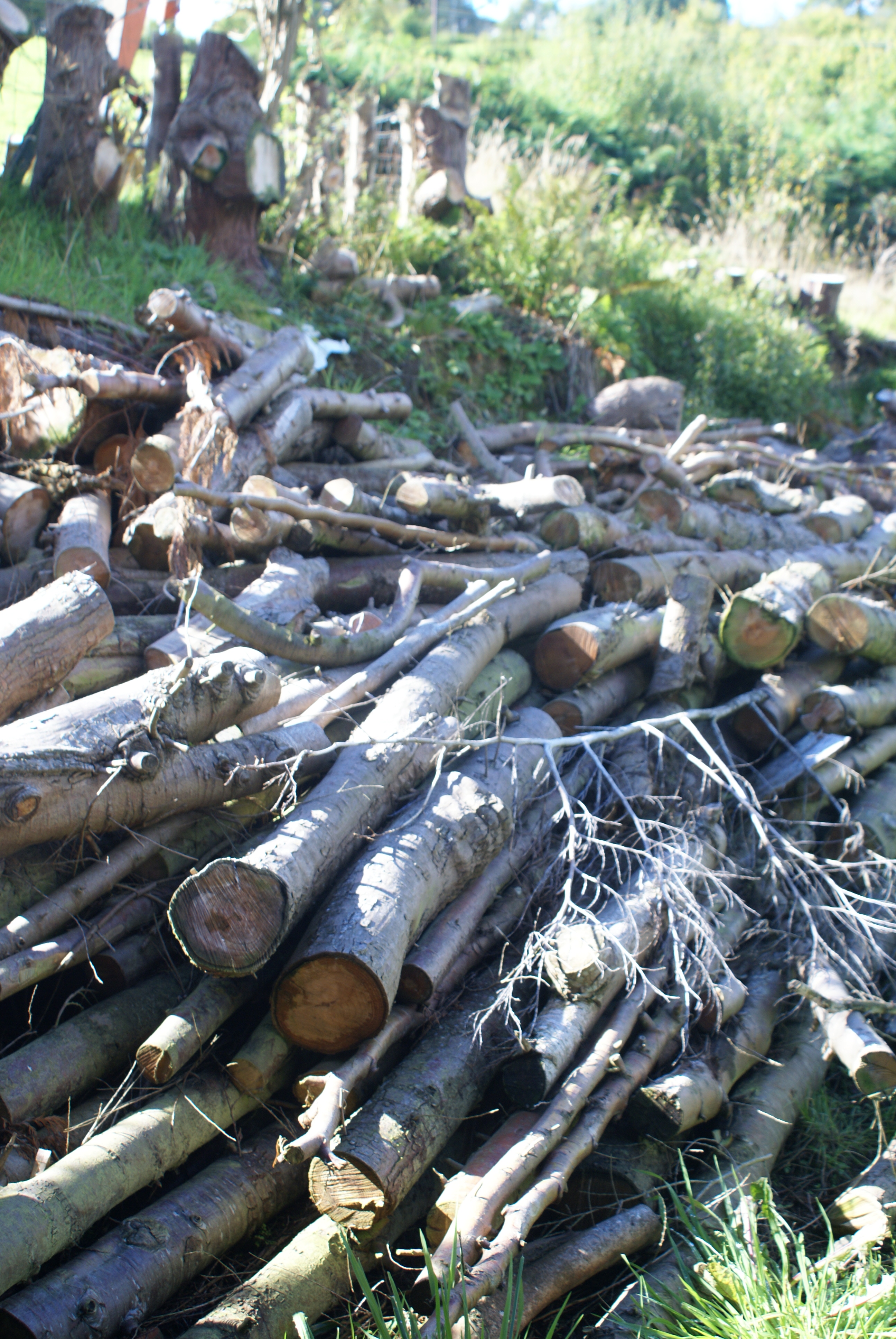
— but when the exalting roar of the chain saw had stalled for the last time we were left with a daunting amount of timber — a mountain where our new workshop was waiting to be built.

SONY DSC

There it lay until last week when we were taken in hand!

Not by the Forestry Commission or the satellite snooperage of Rural Affairs, Wales (it was nothing to do with illicit romance in the hills) — it wasn’t even our very grown-up children who, though they never tidied their rooms, now worry about the state of their decrepit parents.   No, it was a  young neighbour (well relatively young) who knew that all we needed was a tiny push, a little encouragement.

‘I’ll come and help you on Tuesday — I’ve nothing much on this time of the year — I’ll be with you at midday.’

We refused, we protested, we were tempted, we said he’d have to have lunch (would there be meat? — Yes), he accepted, we capitulated, it was arranged and, in the intervening few days, we got on with what we should have been doing for months!

By the time Tuesday came we had started two new woodpiles and that day something strange happened — tree trunks scudded over the ground, whizzed through the air, crashed into trailers, flattened the saw trestle and just about spifflicated two pensioners temporarily under vigorous new management.

Chainsaws started willingly and logs marched to the music of the Sorcerer’s Apprentice jumping happily onto the new woodpiles.

By evening, by some miracle of effort and teamwork, well mainly one man’s effort (we helped as hard as we could and tried not to get in the way) we had uncovered the bare earth where our new workshop is to be sited.

crop

Temporarily repaired trestle on the almost cleared site — Digger just watched and didn’t help at all.


It’s a miracle.  Just another of the miracles of living here — Thank you David!

One of new woodpile waiting to be sheeted.

New Woodpile


Standard
Birds, Hill Farming, lifestyle, Wales

Aerial Dog Fights

We are not in a war zone but over the undulating landscape of Mid-Wales fighter aircraft of the Royal Air Force rent the sky and intertwine their parabolas as they pass behind the hills to emerge and cross, one with the other with micro-second clearance — they travel in pairs, weaving like mating dragonflies on amphetamine, never quite making contact, thankfully — so far.

Photo: Cpl Paul Oldfield RAF/MOD [OGL (http://www.nationalarchives.gov.uk/doc/open-government-licence/version/1/)]

2 Hawk TMk2 Aircraft courtesy of Cpl Paul Oldfield RAF/MOD (OGL v1.0)

They use this area for low level training (I don’t think it’s a secret) and use our house as a landmark or perhaps we are located exactly on the intersection of the invisible lines of the virtual grid that is projected onto the land by a NASA satellite  (the eyes in the sky).  When we were slating our new roof the eyes in the sky were obviously interested, sending fighters to make pass after pass over our house, lower and lower in the sky, trying to topple the large khaki penguin, wrapped up against the elements (it was winter — we do everything late).  Were we part of a secret military exercise — a pretend enemy missile installation under construction — subject to constant aerial monitoring and due for annihilation when we fixed the last ridge tile?  Or was the intelligence officer just keen on DIY, trying to see how we feathered and leaded the valley of our new roof?

Anyway we enjoyed the attention.

We’re not paranoid, not even when a massive Hercules transport plane hoves over the horizon which, in these hills, can be just yards ahead.  Motorists on the mountain road swerve to avoid the huge alien craft that rears up as they approach the crest of a hill!

The remains of a fuel tank from such a plane was in our barn for years, jettisoned by a pilot who misjudged the height of our hill, and quickly squirreled away by conspirators to fill the oil lamps of this valley for a generation — or so they say!

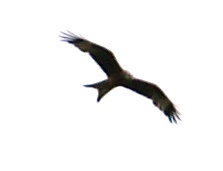
The aerial activity recently has been more pastoral.  The crows that roost and build their nests in the wood do not like the buzzards, nor are they very keen on the red kites —
?????????????????????????????

— that swoop down from great altitude to pick up the remains of pheasant carcasses left on the hillside for them by this lazy farmer’s wife who is fed up with making soup.

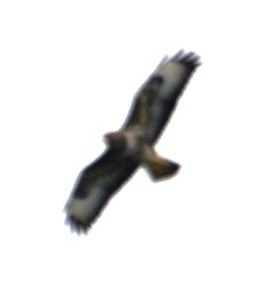
The buzzards are ever present,
?????????????????????????????

mewing to each other and circling above the trees and crossing the valley.  The crows are intelligent and social creatures and resent this invasion of their airspace so have formed an air force of their own.  They  climb up high in ones and twos and swoop down on the buzzard from above and behind and the buzzard will twist and roll to face the enemy with his talons outstretched and they will engage and drop and spin in the most aeronautically alarming way — a real dog-fight.

They recover and the buzzard continues to beat his Herculean way across the field of combat as the crows re-form to attack again.

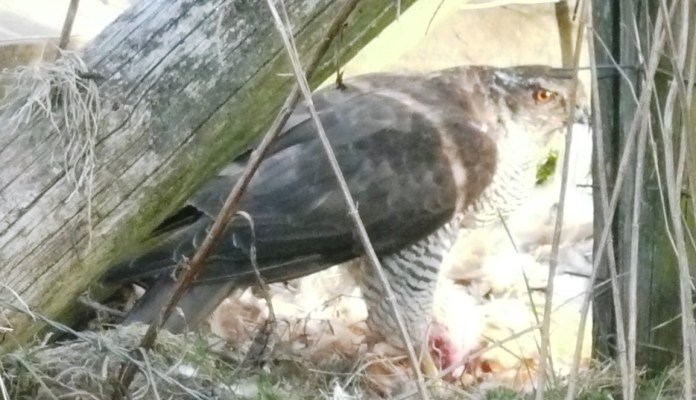
It’s hard not to sympathize with the plucky crows especially after the chicken incident — imagine our delight when a great bird of prey alights just under our bedroom window to consume its prey — we are honoured and watch and wait, enthralled, to photograph its every move and later rush out to examine the spot — only to discover the remains of our last bantam hen!
173Best Buzzard

Note added 26.10.2023 — In my ignorance I failed to notice this is in fact a goshawk — aristocrat among hawks but still not entitled to eat our hen!

Photo of Hawk aircraft by Cpl Paul Oldfield RAF/MOD [OGL (http://www.nationalarchives.gov.uk/doc/open-government-licence/version/1/)%5D, via Wikimedia Commons
Standard
Hill Farming, lifestyle, Welsh language

Why Welsh is an up-hill business.

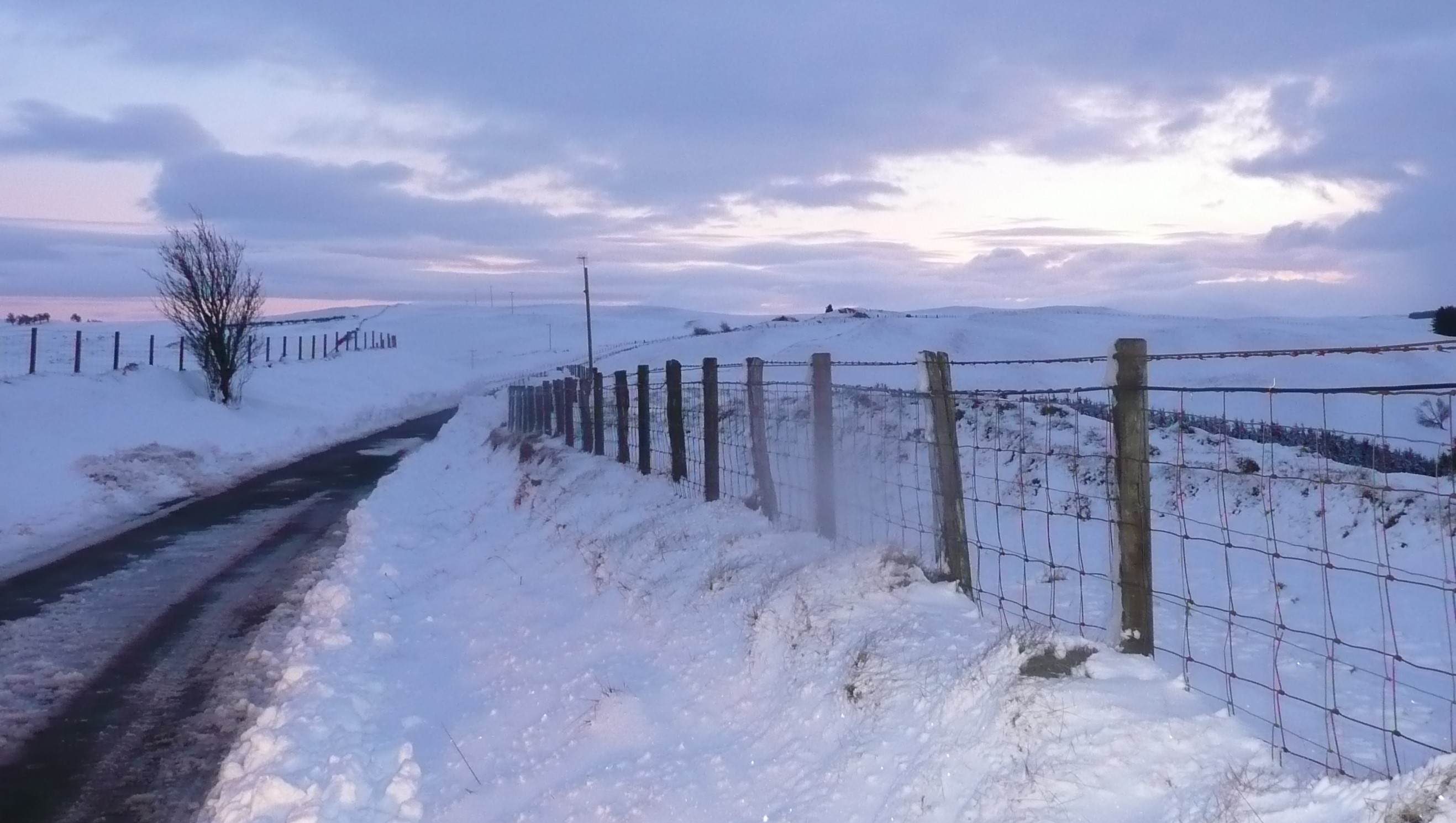
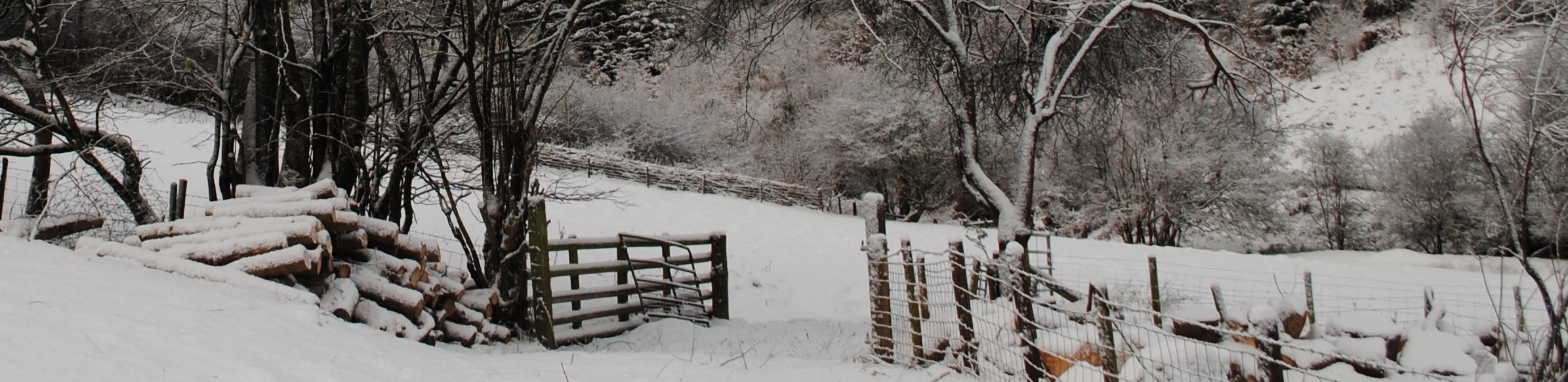
Getting around this time of the year is not always easy.

Winter near Staylittle.

Winter near Staylittle.

My problem is that when I venture out alone it is usually dark so I can’t see the little icons on the second, magic gear knob — the one that engages the four-wheel-drive. So after I’ve had a little slide I have to stop and look for the light switch and maybe also my bifocals.  But the problem is, for the occasional night driver, when you get your head in just the right position to see the hieroglyphics on the knob, your own shadow falls exactly on that very same knob — spooky?.  You can drive one hundred miles at night in Wales and only see five other cars but when you are stopped on the back road to Staylittle, rummaging for your reading glasses, another car will blind you with its headlights and, finding you stationary on a mountain pass in the middle of the night, the driver will get out, or at least wind down his window, to ask you if you are alright and discern with his knife sharp perception that you are definitely not alright, but then, probably you never were.

084I go to Delife to have my Welsh lesson.  It is beyond Staylittle which used to be called Stay-a-little, a much better English name for such a friendly place, albeit a tad exposed and chilly in winter, on the west side of our hill where the weather comes in from the Atlantic, whistling up the Celtic Sea, carefully avoiding Ireland, to dump its full ferocity on the Cambrian Mountains where we live.

You wouldn’t think that language had anything to do with altitude but it has!  In the sheltered valleys of Mid-Wales only the road signs are still bilingual; the indigenous population was long ago polluted by generations of English speaking in-comers, who passed by on their way to Ireland but dallied, drawn by the beauty of the place and the passion of the people and the strangeness…  Nothing is more sexually enticing than strangeness (good old genetics, it just loves difference) so they stayed and fell in love and intermarried and, with the collusion of the government, bought up their children to speak English.

Farmers don’t marry for love; they marry for land, nothing is more alluring to a farmer than three hundred acres of prime pasture and so the farming families who are rooted in the land have not intermarried to the same extent.  They live on the hills and they still, by and large, speak Welsh.

The frontier between these two foreign lands, with their amazingly different languages, runs around the edges of the hills at about 200M and that is why I go to Delife for my Welsh lessons.  Although the Government pays lip-service to the promotion of the Welsh language, with the recent round of cuts, my previous class folded.  But, up in the hills where neighbours still chat in Welsh and the sort of folk who settle there want to join in, a kindly lady minister is running a class in a pub, without training (I assume), or vetting, or funding, or overheads, or fees, or forms, or appraisals, or even cake — it is the only class that I have ever come across that is not struggling for numbers.

Dyna beth od — Tybed pam

That’s odd — I wonder why!

030 (3)

Standard