The mottled grey is particularly distinctive in life as it is uniquely glossy.
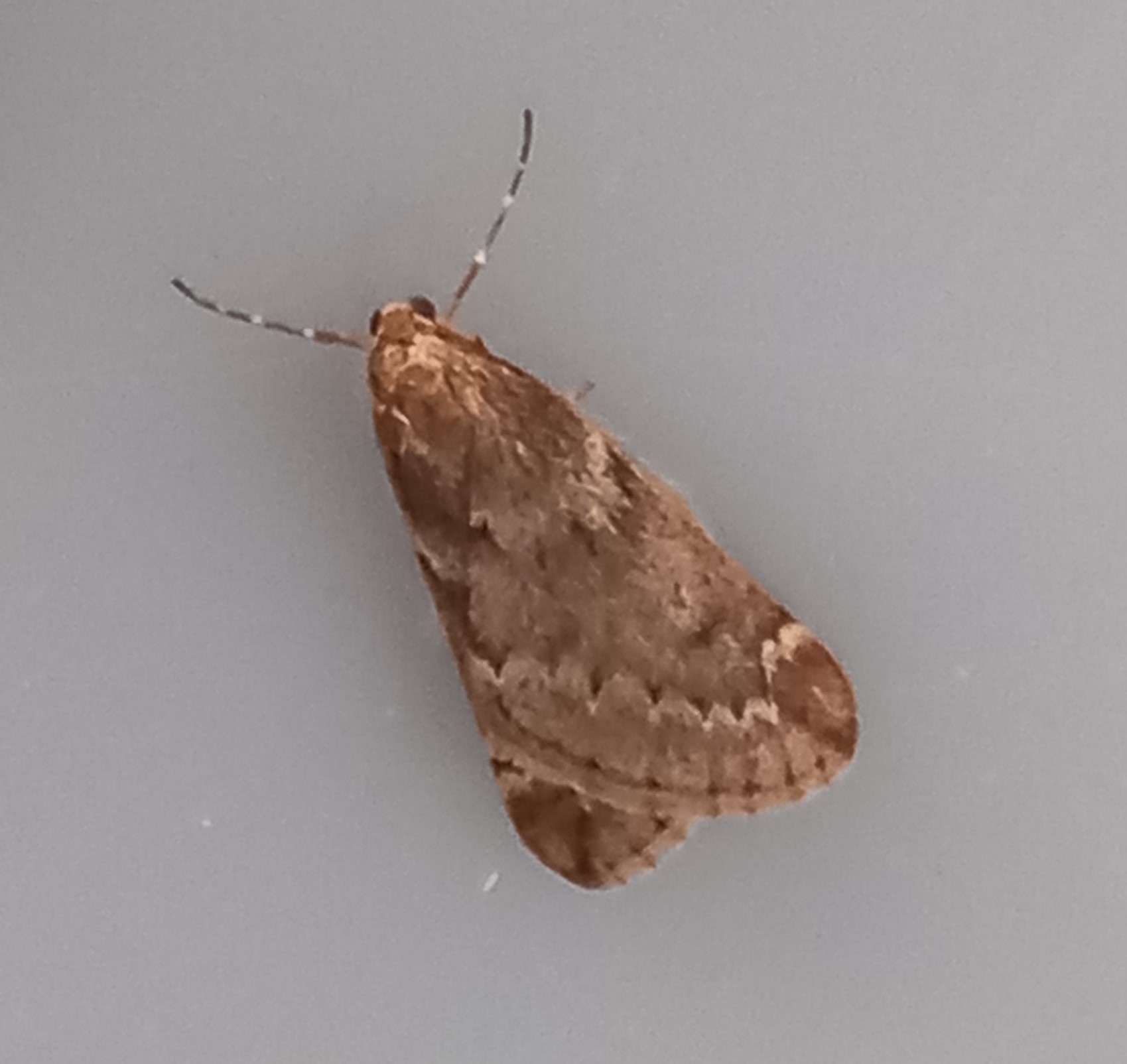
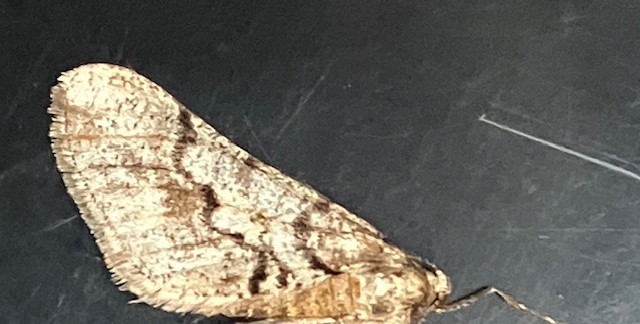
Last of all the real hero is this rather war-worn specimen of the mottled umber moth. It flies in the middle of winter (Oct-Jan), mating with the flightless females who wait patiently on the tree trunks and have by now laid their eggs which will be laying dormant until the food plants start to sprout — it likes most of the trees that grow in our woodland — not being picky is a great advantage and may explain part of its success — it is common and widespread. This one must have survived two major storms tucked away behind our machinery shed.
We are possessed — we tumble out of bed at the first ray of sunlight, Bill to rush out and be electrocuted in the morning dew, forgetting to switch off the mains before moving the sodden leads so that he can see what he has caught in his moth trap!
I follow, not to resuscitate but because the one thing I hate more than early mornings is being left out! And it’s like Christmas — you just don’t know what you will get!
Antler moth artistically posing on my rhubarb.
Buff arches
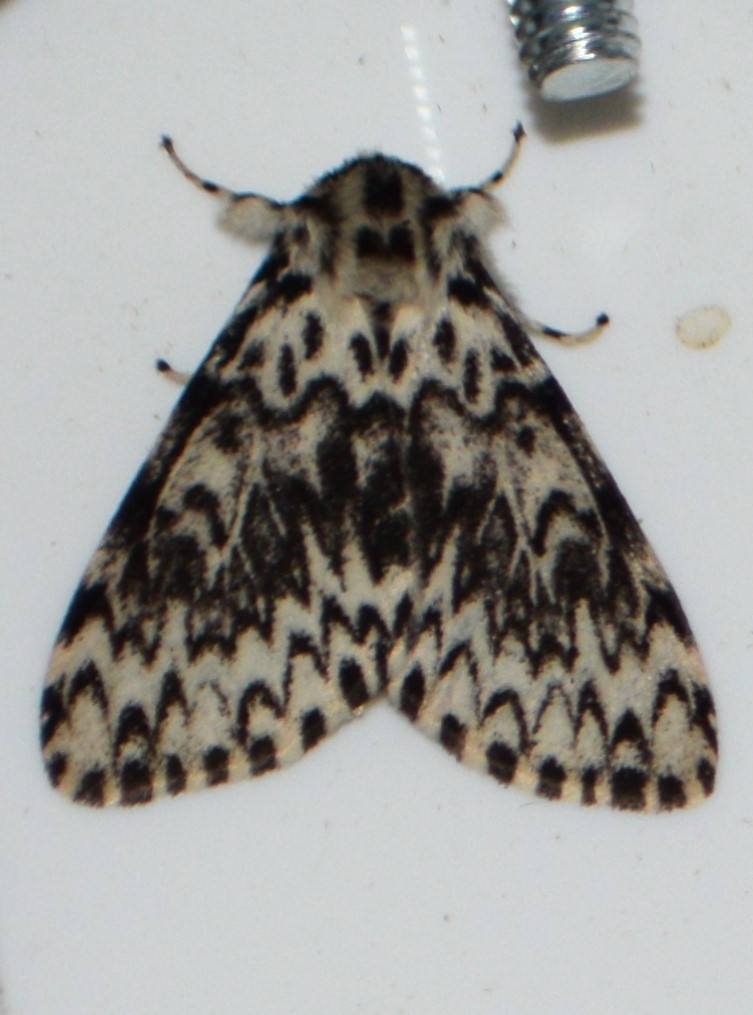
Black Arches Moth
Brown china mark
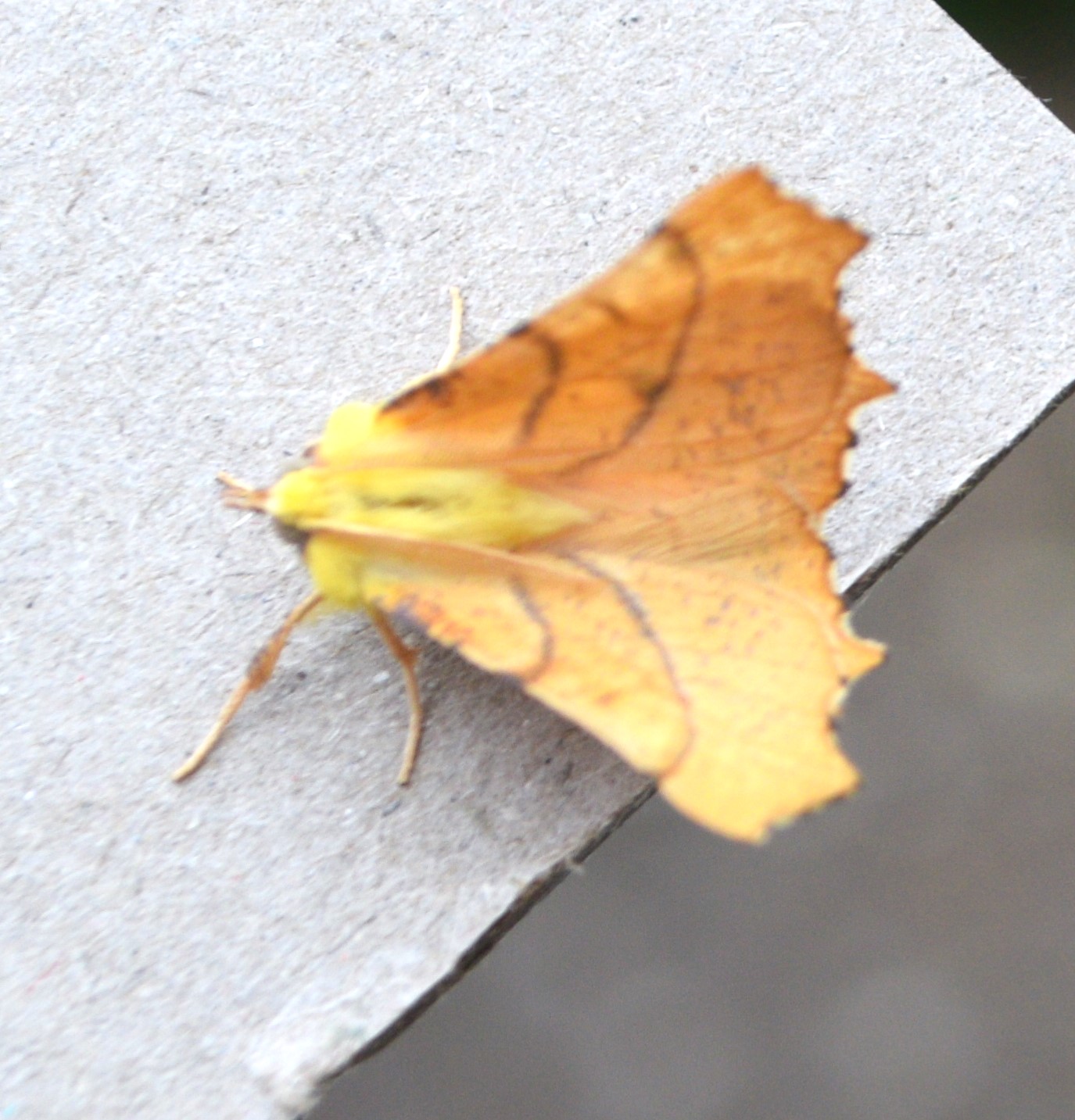
Canary shouldered thorn
Feathered gothic
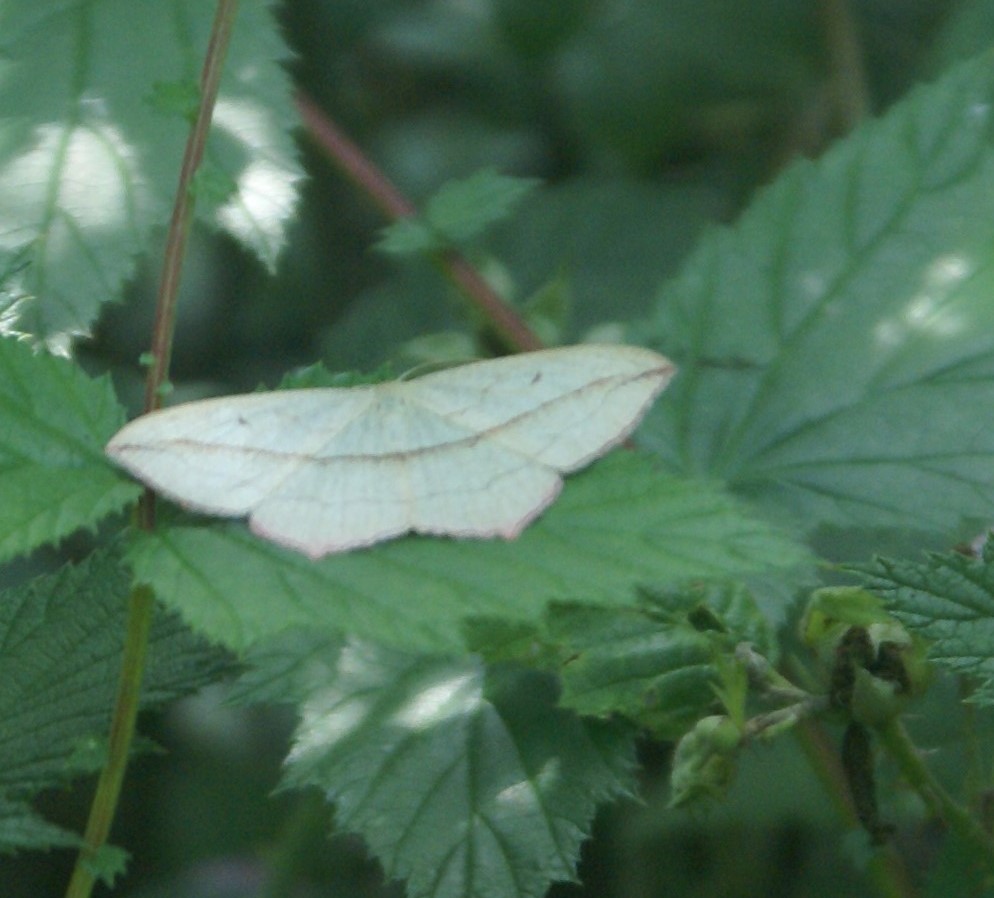
Large emerald
Garden tiger moth
Gypsy moth male — slightly battered — not surprising, possibly blown from Europe.
Just a few of the 100 plus species of moth we have photographed since July — you can’t say they are dull!
But these are what gets me tip-toeing down the dewy track as the sun peeps over the hill!
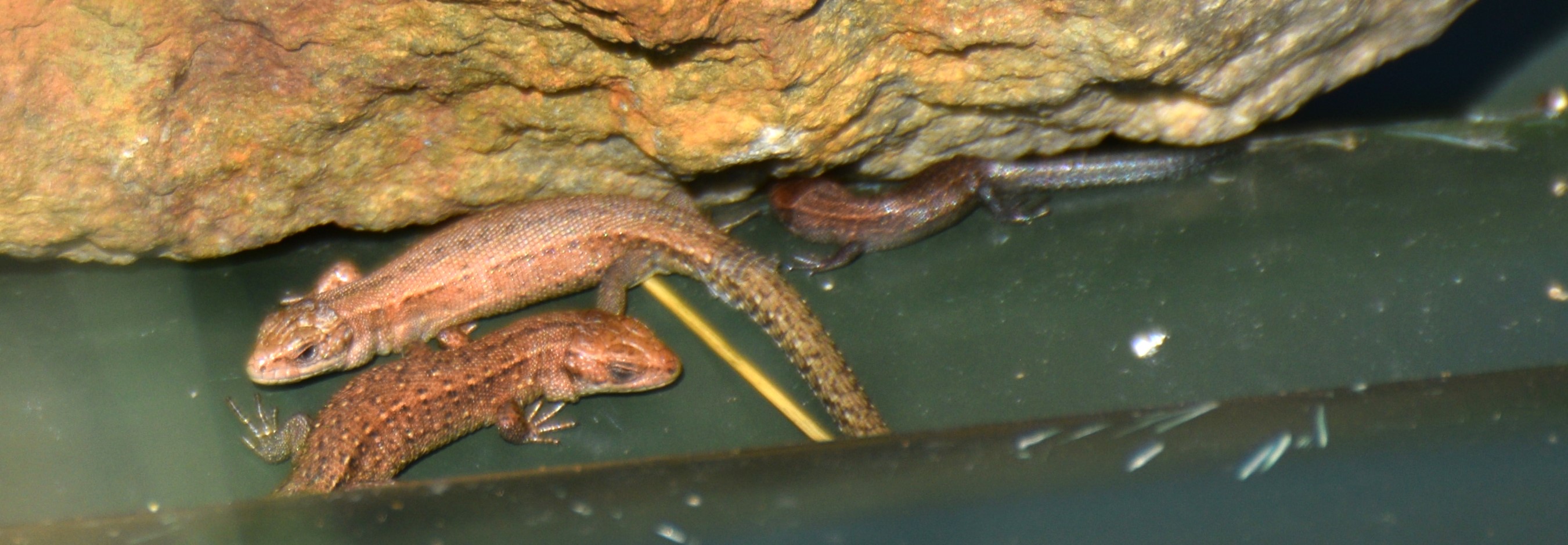
Baby lizards
There seems to be a family of 7 or 8 babies and at least one adult that bask in the morning sun on the corrugated iron that we have put by the bench where we bask. They are charming and very brave — are they going to become accustomed to us and remain so as adults — I do hope so. We have made them an air-raid shelter but at the moment they seem to prefer to hide in the grass.
It is amazing what is fluttering around the house in the dead of night. Here are some of the most spectacular.
This elephant hawk moth is not uncommon. Why is it so pink? Well, the food plant of its caterpillar is the rose bay willow herb which has had a very good year and the foliage is flecked with the same pink as its flowers and its moth! The moth doesn’t look much like an elephant but it is relatively large and the markings on its shoulders could be seen as like large ears… maybe.
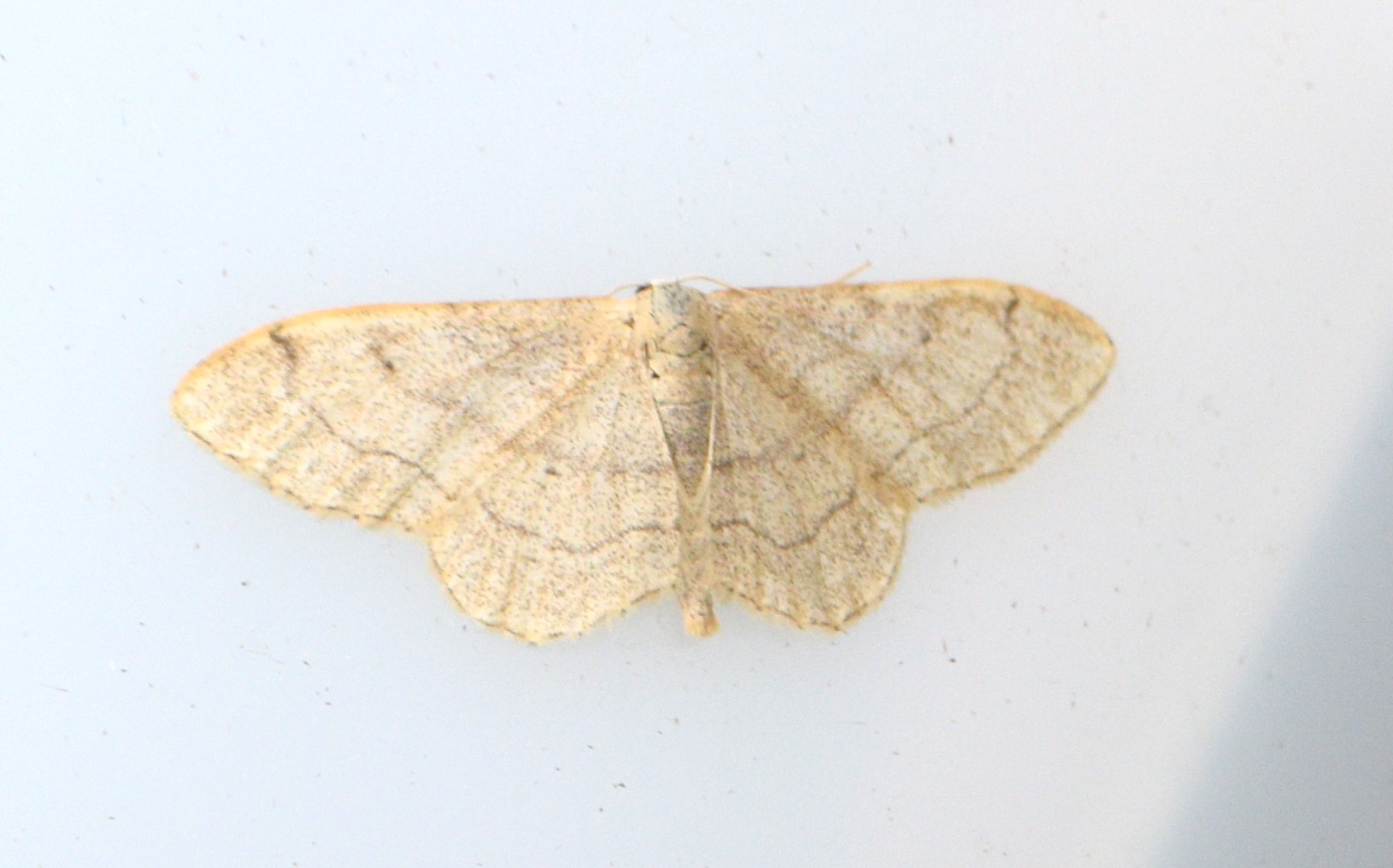
The riband wave moth is one we catch most nights, there are two forms, we are getting the remutata variety, shown here. Their caterpillars eat various plants like dandelions and dock — the docks have also enjoyed the conditions this year.
Another beautiful moth is the light emerald, Campaea margaritata. Its caterpillar eats the soft bark of some deciduous trees, including apple and plum, which might explain why one of our apple trees is looking so peaky.
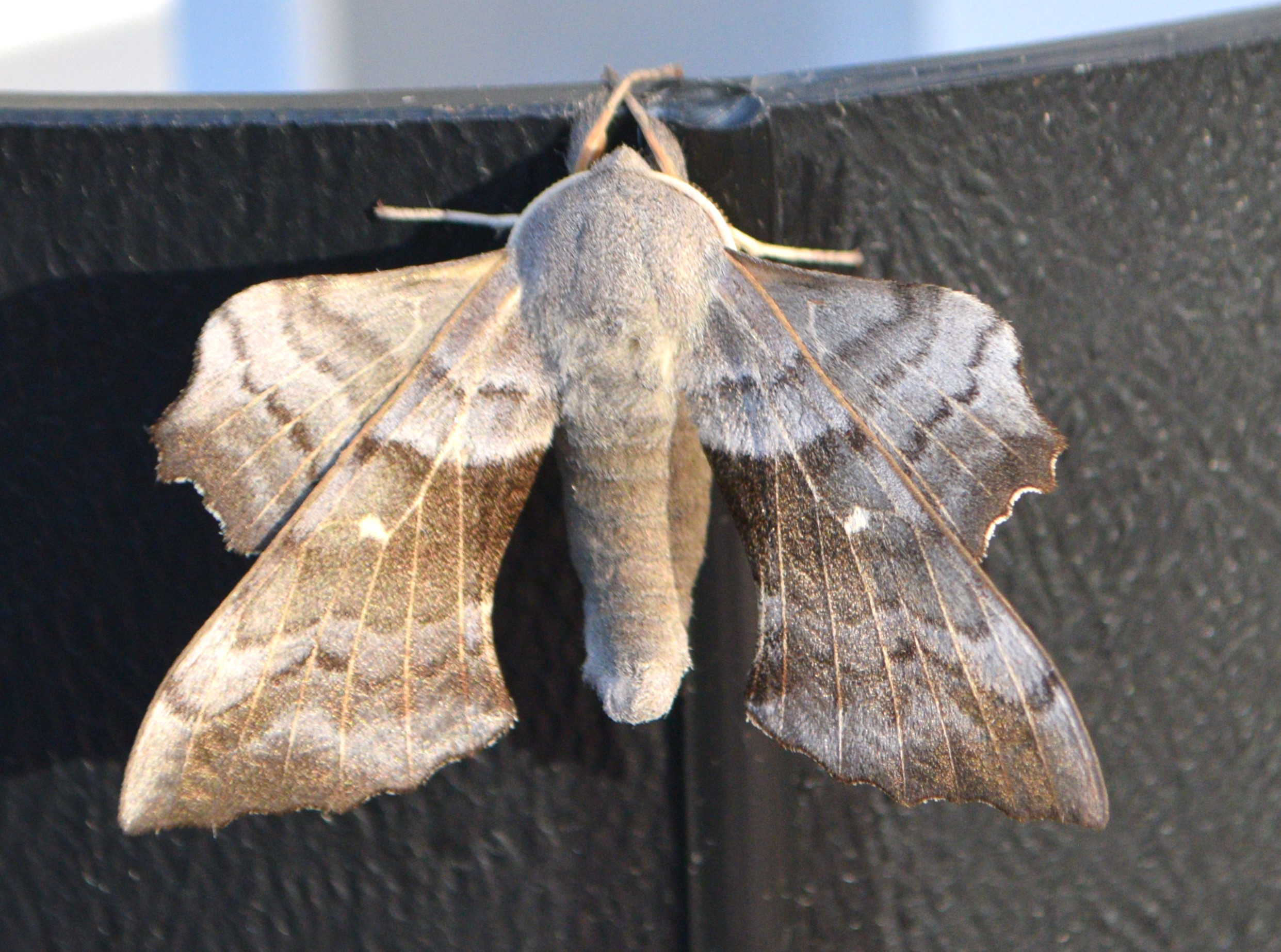
Here is the largest so far, the poplar hawk moth Laothoe populi. Its wingspan is 7-10 cm and rather than having its fore and hind wings linked together, like most moths, these are separate so that, at rest, they lie at different angles and look like a group of dead leaves on the poplars and willows trees that they favor with their caterpillars.
But there is a downside to moth trapping which I say as I try not to scratch my itching face!
Midges! It has also been a very good year for them!
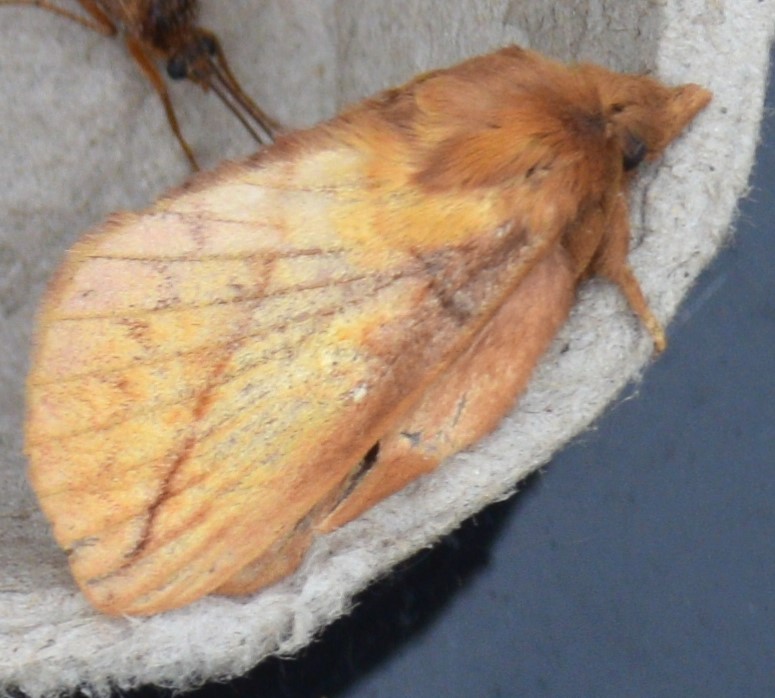
This drinker moth is perched above a sea of dozing midges which swarm up to suck the blood of the lepidopterists!
Here’s a better shot of the Drinker with the ubiquitous caddisfly lurking behind.
We catch almost as many caddisflies as moths — they are not as glamorous as moths but are a good health marker for the environment. Their larvae are aquatic and our stream is pure, we see lots when we pond dip, and they will be providing food for our growing brown trout.
We recently visited the Isle of Wight on a butterfly hunt. The weather did not help much but one sunny morning did yield a few windswept examples of what we had hoped for.
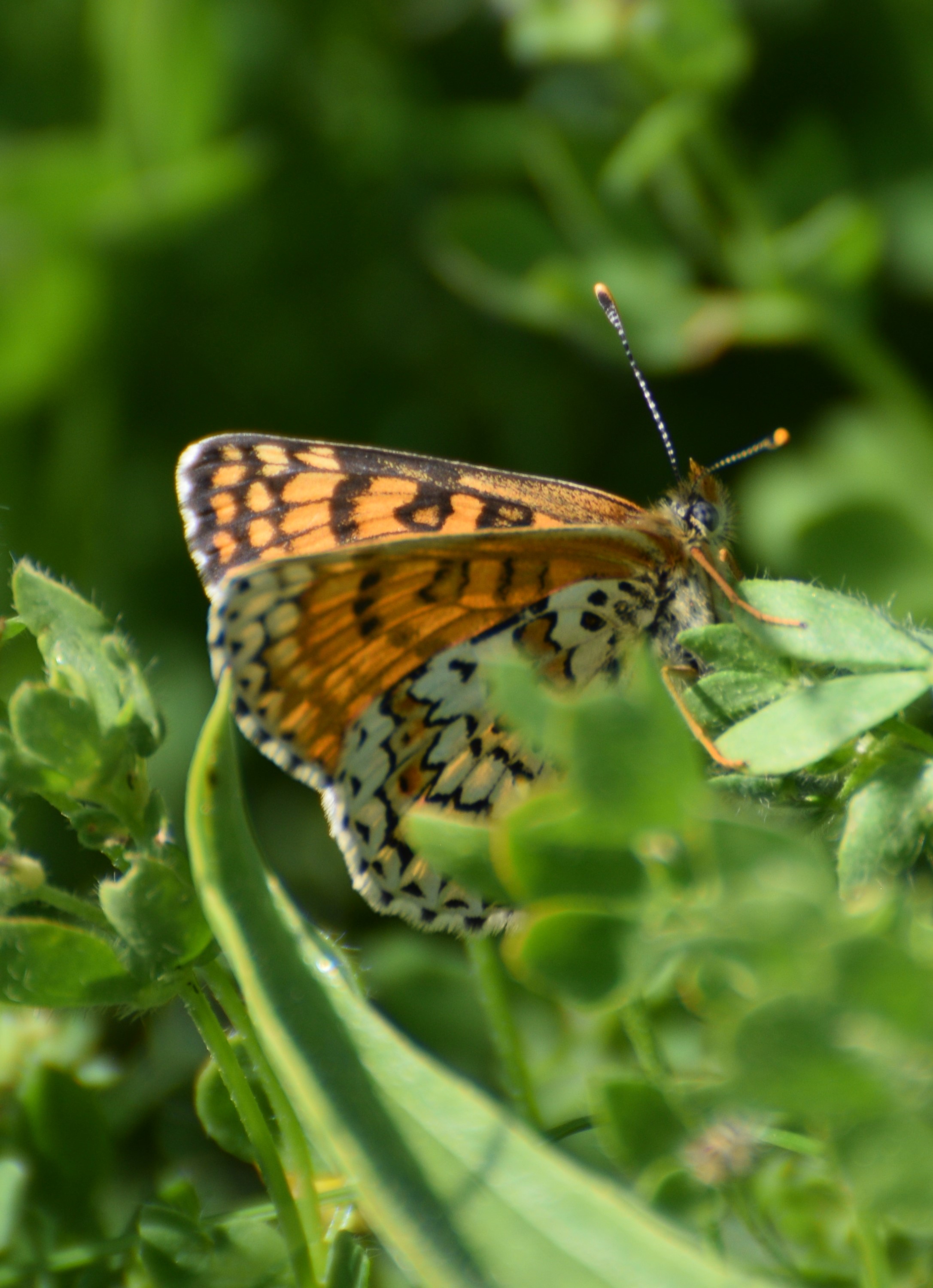
Glanville Fritillary — not seen very often in UK, except in the Channel Islands, Isle of Wight and far south.
Underwing of Glanville Fritillary
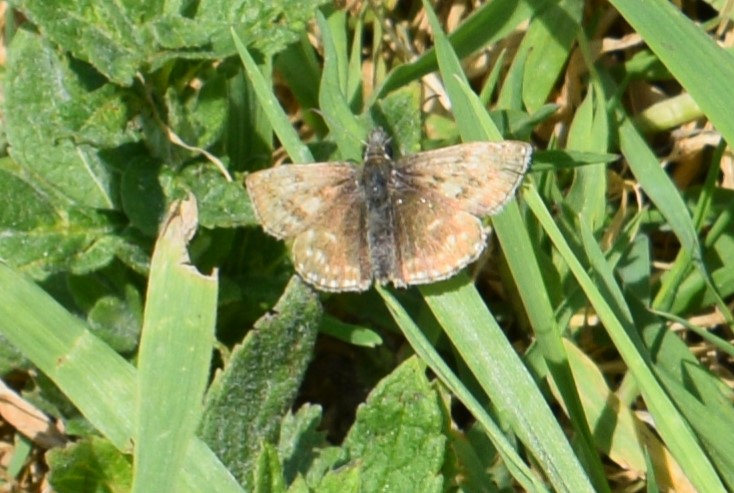
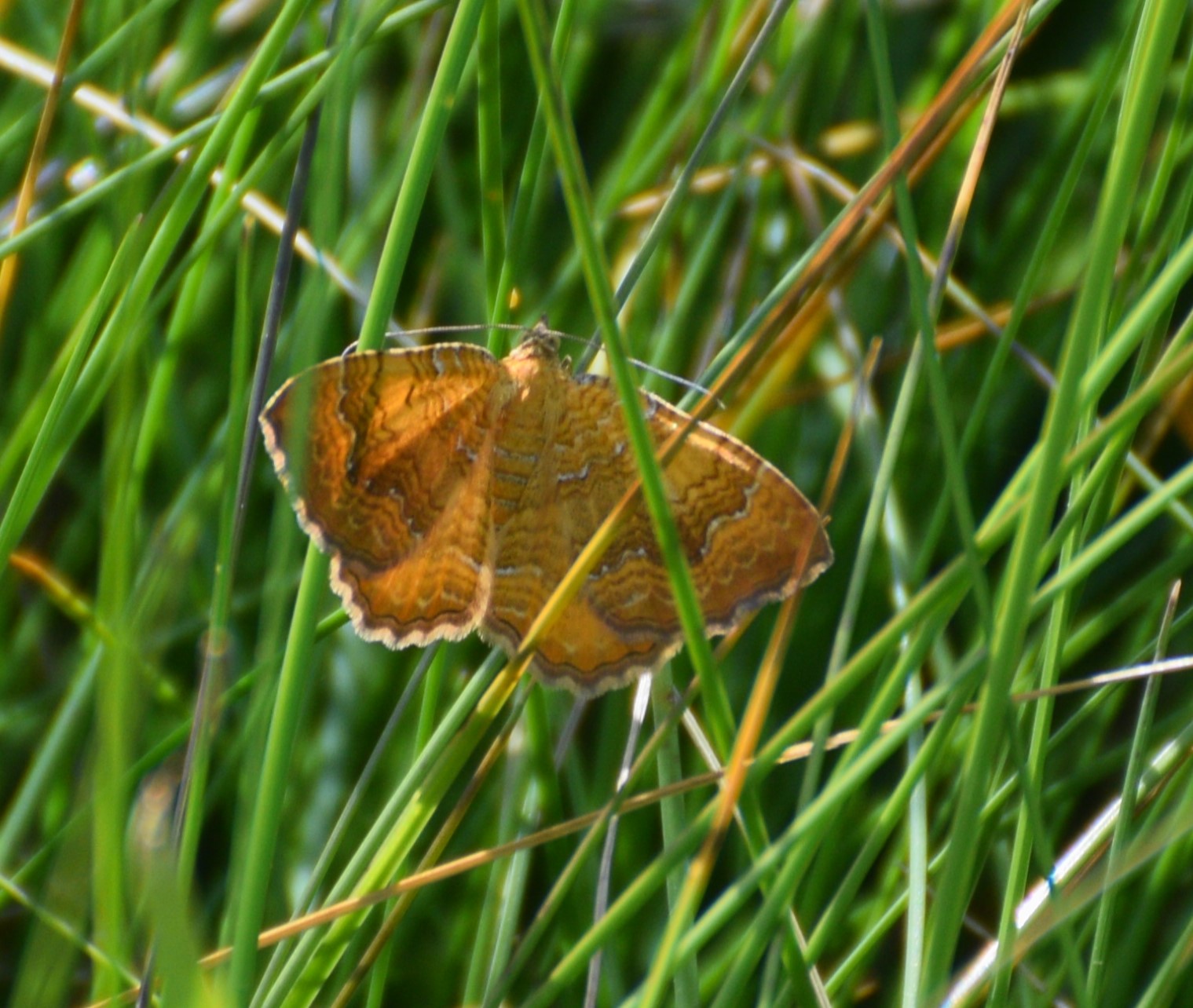
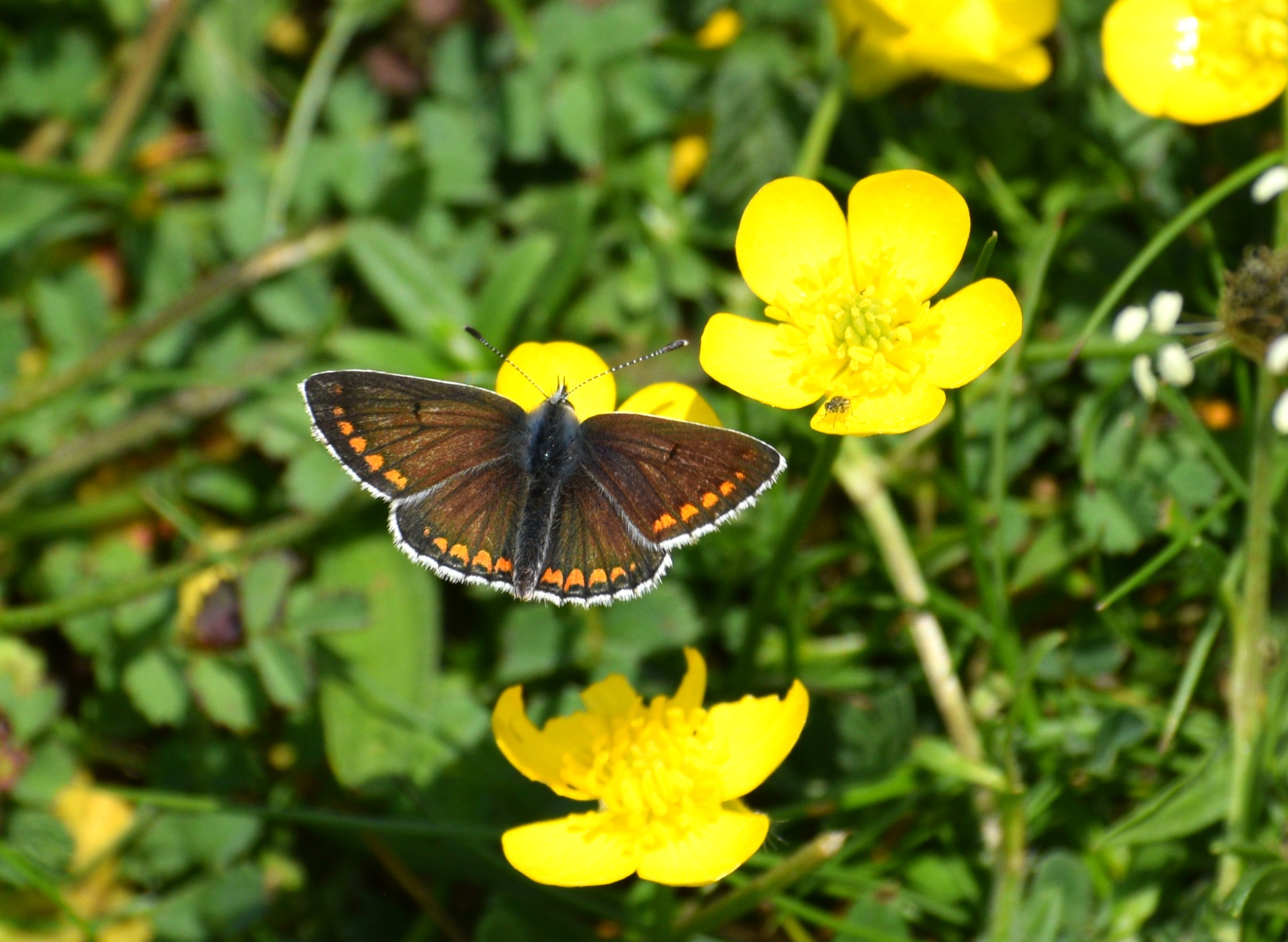
Grizzled skipperDingy skipperYellow shell mothAdonis Blue Adonis Blue underwingBrown ArgosA bonus — Caterpillars of Muellin moth — easily spotted because they had eaten nearly all the Muellin — they are so bright that I doubt they taste very nice!
The chalk downs are home to many plants that are unfamiliar to us in the acid West:
Bee Orchid
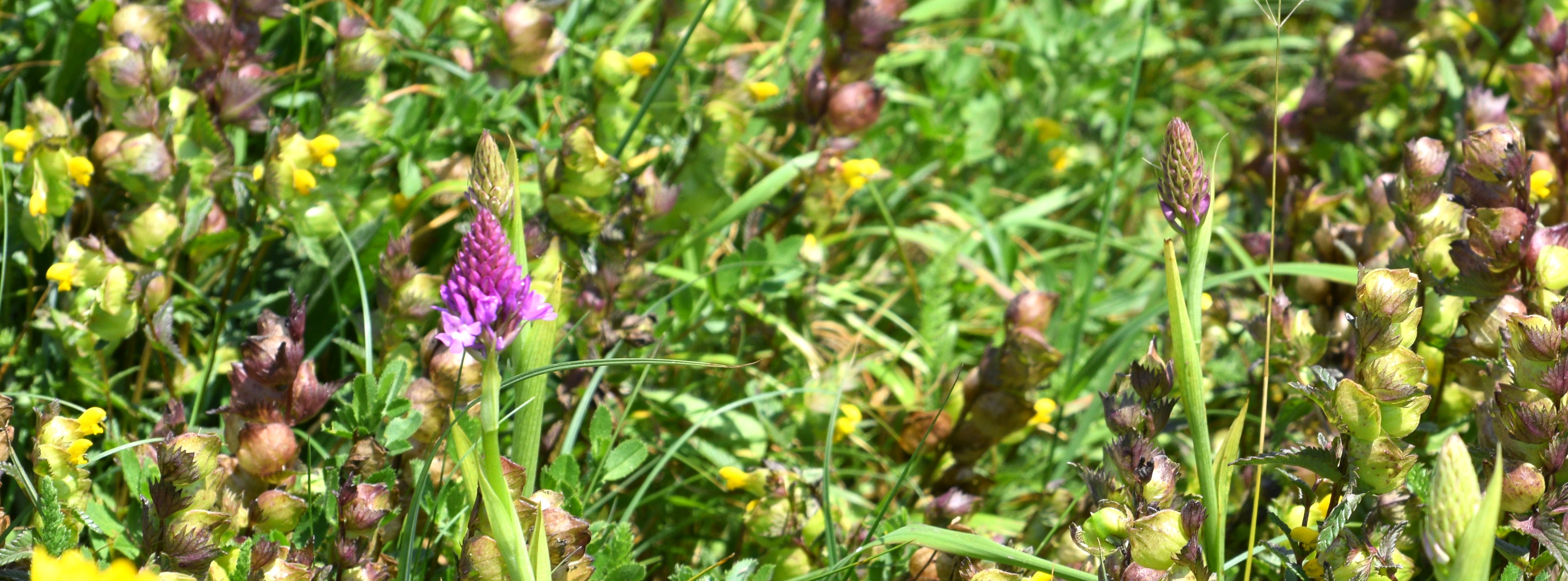
Pyramidal orchids amongst yellow rattle.Broomrape
We kept our eyes open for white tailed eagles and had a good look at all the likely habitats on the island. At one place we spotted a large, dead, oak tree. As we were looking there was an avian kerfuffle with crows attacking a marsh harrier — we watched fascinated as the harrier returned to its nest among the reeds when suddenly a huge bird swooped down and attacked the harrier, carrying off something which may have been a chick. It carried it up into the oak tree and was almost immediately joined by its mate.
What a fluke, two white tailed eagles in an unpublicized nest. But that was not all — as we looked through the telescope — there was a chick.
Fuzzy image but definitely a chick! Because this may have been it’s first photo-call we have allowed time for it to fledge before publishing the image. What a privilege and adequate compensation for the bad weather!
The trouble with Nature is that it runs away with you!
You give her, Nature that is, a small area of hillside to play with and, before you know it, she has barricaded herself in with thorny thickets and hidden earthworks, molehills under layers of slippery bracken and ankle breaking, knee jarring pitfalls made by rabbits and badgers. (Did I tell you I’ve just had a new knee.) The whole area is now dense undergrowth, criss-crossed by looping, flailing brambles and willow whips.
Ah, you say, that’s nice — good for diversity!
But is it — it’s not as simple as that!
So concerned were we that we called in an expert — Super-eco-man, a conservation hero —
Bionomic Man — Rob Mileto from Naturetrek
He’ll know what to do.
And he did — we slithered and scrambled up and down our precipitous banks as he introduced us to species of which we had been oblivious. Pleased to meet you! He showed us how to distinguish between our six common ferns, and to start to make sense of some of our mosses, not easy as they mainly have Latin names, now recorded in my roughly dried notebook — it will be fun giving them proper English names — shaggy christmas tree moss and less shaggy christmas tree moss — I suppose they would sound more impressive in Latin
Most importantly he showed us what we might lose. In our emerging woodland, already we are losing the avenues of open ground for butterflies and moths, insects and bats. The paths that remain are steep sided — like canyons through the trees without the gently sloping edges needed by butterflies and pollinating insects — there is a lot to do.
The overgrowth of bracken is alternately shading and insulating the great anthills on the sunny bank so that our ancient neighbours, the huge colonies of yellow meadow ants cannot so efficiently control their temperature as they have done for thousands of years.
Our carefully placed owl box overlooks dwindling areas of decent hunting ground for barn owls as the vole habitat is being eroded by blackthorn — probably the reason they haven’t used it of late.
These little beauties settled elsewhere.
Our mature oaks, it turns out, are only 100 years old, adolescent almost, not nearly gnarled and hollow enough to provide adequate nesting for all the bats, like the ones currently breeding in the bathroom ceiling and the pied and spotted flycatchers that come looking for nest sites every spring. Our new barn will need a large well insulated roof space to deal with the housing shortage! A new owl box is planned for the old barn and a safety rail for the swallows and martins as the roof purlins are too steep — the nests tend to fall off.
Seems I’ll have to start production again. Did you know that spotted flycatchers like to nest near buildings.
Open fronted bird boxes for flycatchers and bat boxes — earlier prototypes.
Now I’ve got to go and plan the new pond, we know exactly where to put it and its adjacent compost heap and en-suite woodpile. Our lizards need somewhere to bask with an air raid shelter, we’ve got just the rocks we need.
Seriously we found the exercise very helpful, now we realize that managing an area for wildlife is not a passive exercise. Those who think that any form of re-wilding threatens the rural lifestyle had better think again — even though we might only be cutting some of our hedges every other year (to get more berries) we will be generating lots of other activity.
You know who you are! The bird watcher who dismisses starlings or corvids (except ravens or choughs) or the bird that is ‘just a gull’.
When we start looking at nature we are drawn to the conspicuous, the brightly coloured, the easily identified and as time goes on these become mundane and we start to look for the unusual. So, when you can recognise all the 59 species of UK butterfly it is time to start on the previously dismissed moths! Here’s a moth for beginners — easy to recognise because of the face hidden in its markings — can you see it.
See the profile of Mrs Punch or Mother Shipton after whom it is named — the Mother Shipton Moth. One of the 133 larger, day flying moths to start spotting. It shows some of the features which usually distinguish them from butterflies: resting with it’s wings flat; antennae feathery or rod-like, curved and without a knob at the end; and back and forewings linked together.
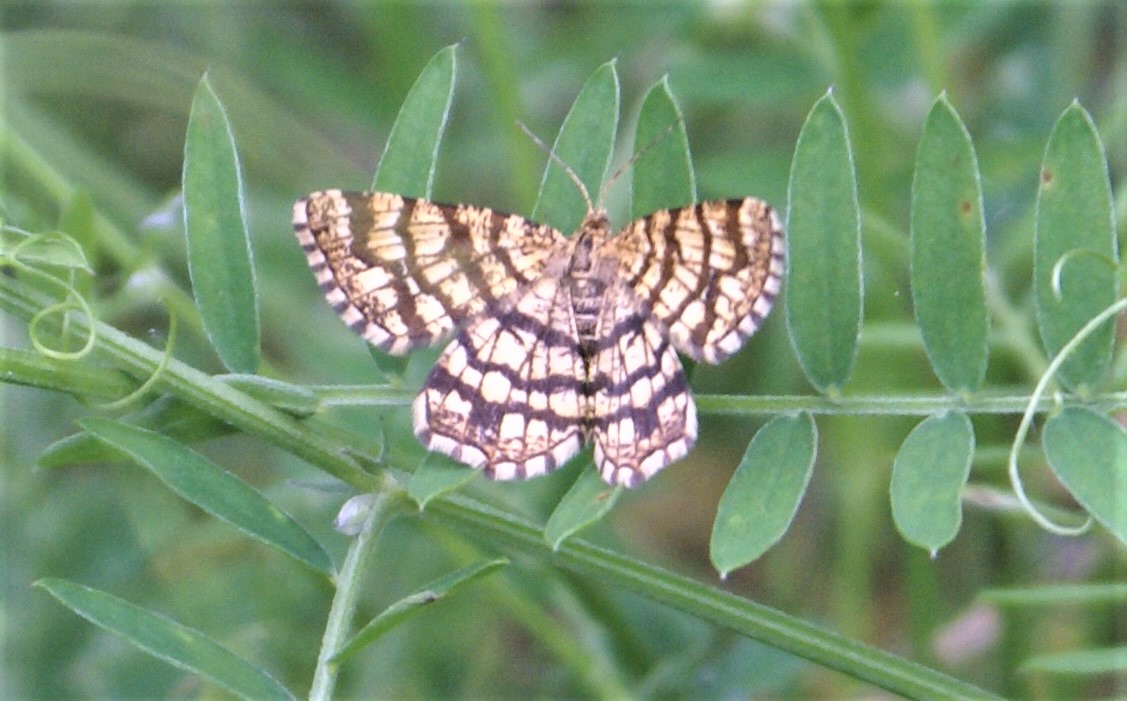
Speckled Yellow Moth which makes you think you have found a new butterfly.Blood Vein Moth resting on low vegetation as is its wont.The Lattice Heath Moth is spectacular
Once you’ve checked out all the larger, day-flying moths you can start on the tiny ones and the hundreds of marvellous night fliers! When someone says “it’s just a moth!” ask which one!























 dianaashworth