Here she is under a strangely blue sky, for Wales– Mother Magpie, unlikely heroine of my last blog — fighting to save her two (there may have been more) fledglings. They are both alive and she and Father Magpie are still feeding them. The Sun is still shining:
This is one of the chicks — having a flying lesson with Mum, fully fledged but smaller than the adults and with a shorter tail. At night they roost close to their original nest, next to the telegraph pole.
But look at this —
Last evening at dusk, not 10 meters from our door, waiting for the light to finally fade — Tawny Owl bides her time.
While we blustered about trying to find the tripod, she flew away and this morning the head count was the same — but she’ll be back!
We know it must be spring because the cock pheasants are rutting, fighting beak and nail while the hens pretend not to notice. These two are spoiling for a fight —
and it all kicks off!
Getting quite violent but balletic!
After several skirmishes the newcomer takes off with indecent haste leaving the resident cock to strut about guarding his territory while the eight females under the bird feeders, seemingly oblivious, continue to excavate the ground for peanuts thrown down by the picky nuthatch.
One hundred yards further up the valley another drama enfolds as the unusually sunny weather is drying out a shallow pond threatening the lives of several thousand tadpoles.
Enter International Tadpole Rescue with a bucket and dust pan!
All re-homed to a bigger pond further up the valley.
Over the road in our neighbors pond things are equally torrid as the toads, who pair later than the frogs, are only now laying their spawn. Here they are, photographed by Sue Whitehead (all rights reserved).
See how different the toad spawn is from the more familiar clumps the frog spawn.
We know that the mud at the bottom of these ponds is full of ferocious dragonfly nymphs and hungry newts and the surface today was sparkling with the ripples of a hundred pond skaters excited by the prospect of a juicy tadpole. How many adults will emerge from all this spawn?
When everything you know seems under threat you start to realize what really matters. Here’s a tribute to our local baker.
They make bread in the old fashioned way from simple ingredients — just flour, water, yeast and salt. Here’s some dough proving, slowly — waiting to be put into crocks…
and baked into delicious, crispy wheat or rye sourdough bread. There are wholemeal wheat, rye and spelt loaves and “Llanidloes specials” with the magic cheesy crust. There are olive ciabatte, Chelsea buns and almond croissants.
Baked each day and delivered to local shops. No plastic wrappers, tiny carbon footprint, no waste — they sell out every day but nothing for the birds as the humans fight for every last crumb!
I really want to see choughs in the wild. Delicate crows with fine scarlet beaks and feet. There are choughs on Bardsey Island, Enlli in Welsh .
Here is a wikimedia map of Wales to show the location of Bardsey Island, in the Celtic Sea, a couple of miles from the tip of the Llyn Peninsula.
Below is what you see as you set out from Porth Meudwy.
I had waited 4 days for the sea conditions to be suitable and now they were — I was off to hunt the chough.
Colin the boatman, a local farmer, told us that this year was the first for thousands of years in which no one had overwintered on the island. Not so many years ago the population was about 80 — now they are mainly summer visitors.
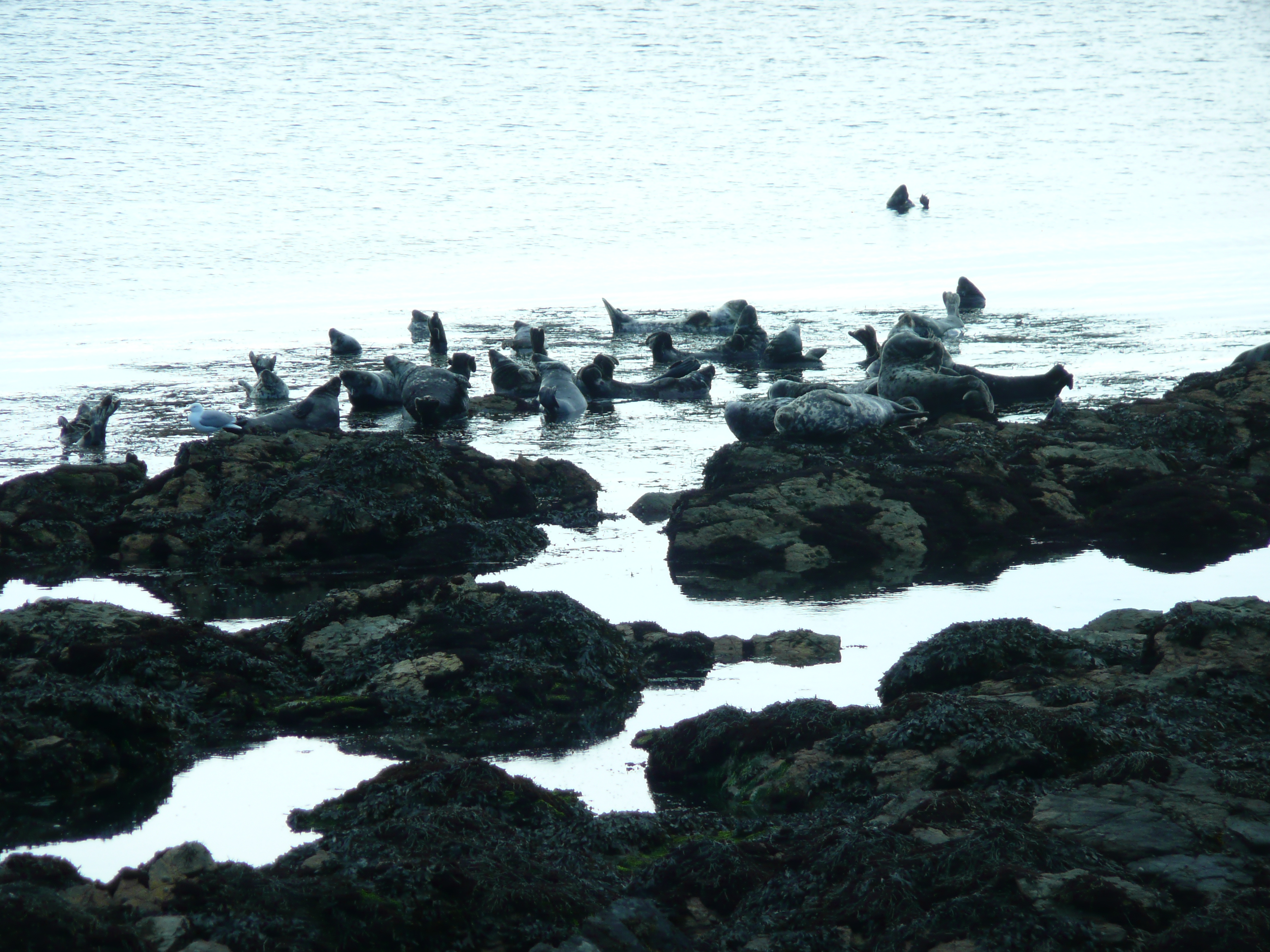
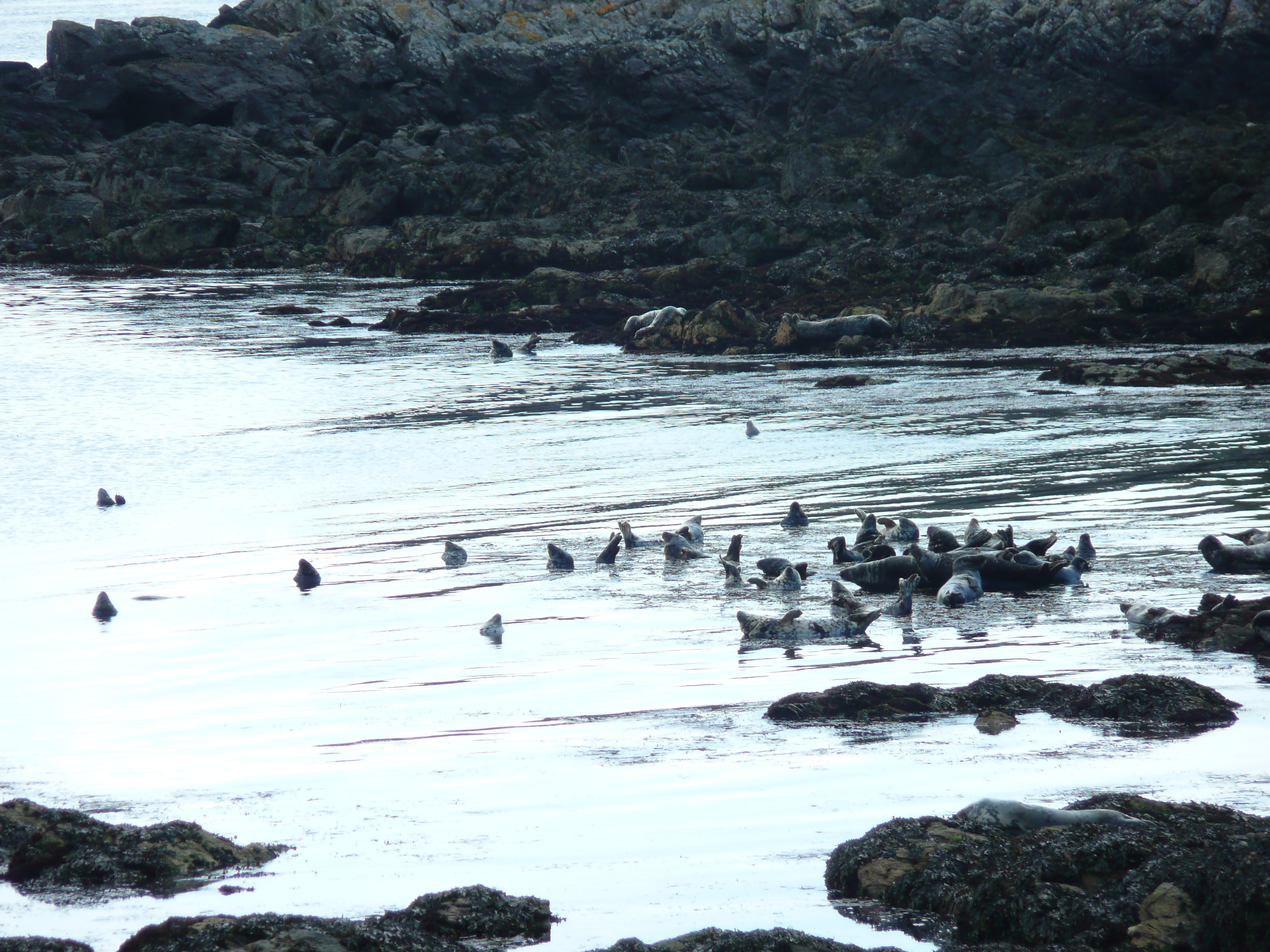
As we arrived the tide was coming in and the grey seals on the beach were starting to bob around in the rising water, the larger ones, I guess male, lolling in the ripples making a soulful siren call which reminded me of the spiritual reputation of the island where 20,000 saints are said to be buried — Celtic saints.
Until the time of Henry VIII there had been a monastery on the island and it was a place of pilgrimage, three visits to Bardsey were equivalent to one to Rome. Presumably punters paid well for such potent indulgence and being buried there was de rigeuer for anyone with ambitions of canonisation!
The boatman told us to climb the mountain for the views and I did — no one else did. It was steep and painful and the only other people I saw there were two separate elderly ladies who were staying on the island, both walked with sticks and addressed me in Welsh, pointing out the landmarks. You can see the Mountains of Wicklow and the Mountains of Mourne in Ireland on a clear day. I could see Cardigan Bay all the way to Pembrokeshire and the nearby Llyn peninsula with Snowdon in the distance and the burrows of the Manx shearwaters but no choughs. “What, not seen a chough! They are usually here — must be nesting.”
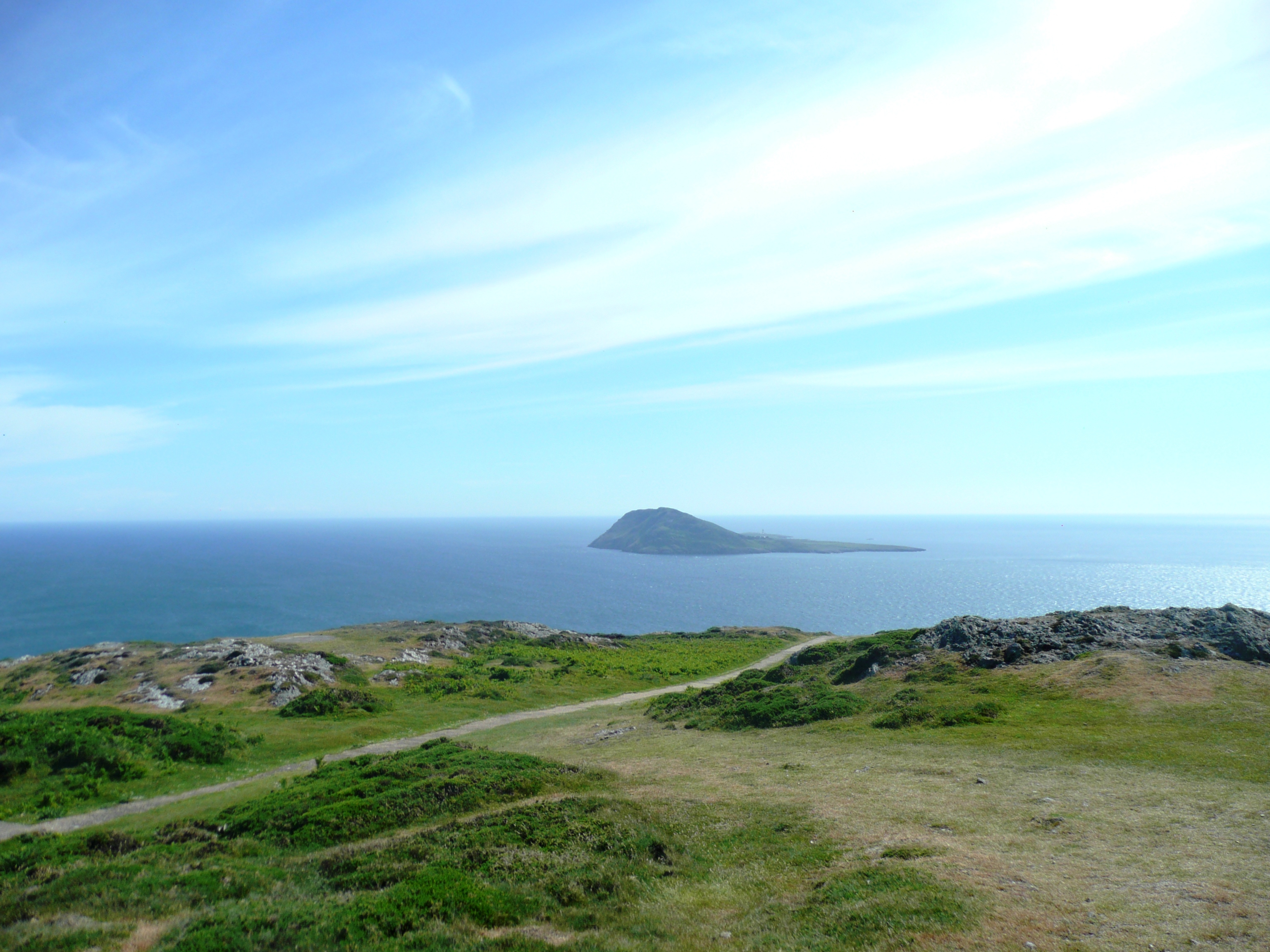
View of the island from halfway up the mountain
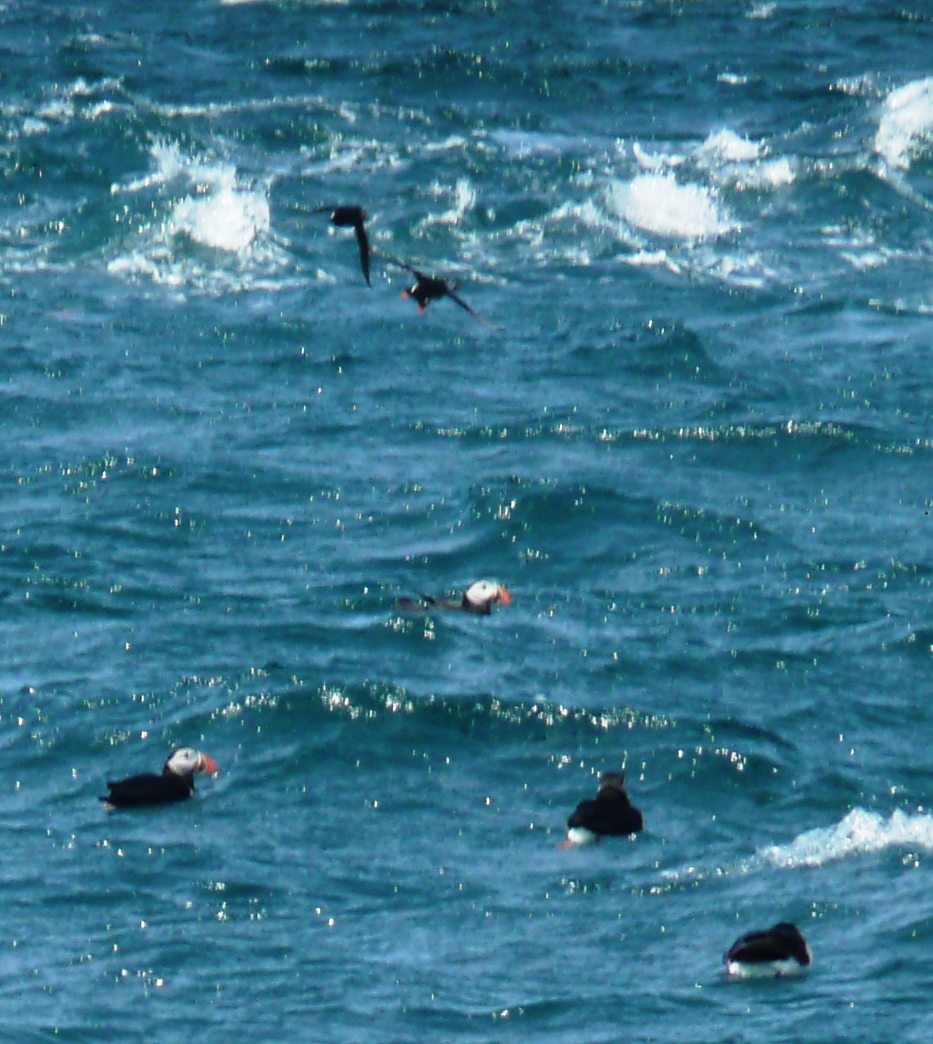
By 3pm the waters around the island were getting choppy and the trusted boatman would not risk our precious lives to view the puffins from the sea but seeing our disappointment he kindly took a detour and showed us the Ynes Gwylan Puffin Colony on the two little isles off Aberdaron.
As we approached the plump little birds started whizzing overhead showing the white flashes of their flanks as they flew ahead of us to land in the water and dive for sand eels.
Safely back on land I drove to the tip of the peninsula where I had been told that choughs hang out but all I found was a hungry herring gull and a farewell view of Bardsey Island.
Several years ago a couple of sections of hedge near here appeared to have been wrapped in the biggest cobweb I had ever seen. The sections were about 3-4 meters long — the length of a farm gate. At first I thought it was something to do with planning permission — as when farmers or developers wrap a section of hedge in green plastic netting to stop birds from nesting while they wait for permission to root it out for a new entry. Closer examination revealed something more interesting!
The net appeared to be a huge, quite robust, cocoon in the safety of which thousands of caterpillars were devouring the hedge.
Apocalyptic!” thought I, “That’s the end of that hedge and maybe life as we know it.”
But no, that section which was mainly bird cherry looked dead but the web eventually disappeared and the hedge recovered.
This year the phenomenon has recurred, this time in a hedge that is mainly holly with bird cherry growing through it and the caterpillars of the Bird Cherry Ermine Moth (Yponomenta evonymella), for these are the culprits, have ensheathed most of the bird cherry but left the holly unscathed.
The caterpillars are thriving protected from predatory birds and they appear to have eaten much of the foliage within their web nests already but below you can see them spinning new web to enclose more food.
Now we must wait for them to pupate and later for the adult moths to emerge — a ghostly white night-flyer with rows of black dots, an echo of the caterpillars…
They are successful as a species — they’ve developed a clever biodegradable protective wrapper for themselves and they don’t even appear to come back to the same trees twice, they protect their food source — little eco-warriors.
Cameras are a constant source of disappointment to me because they rarely see what I see.
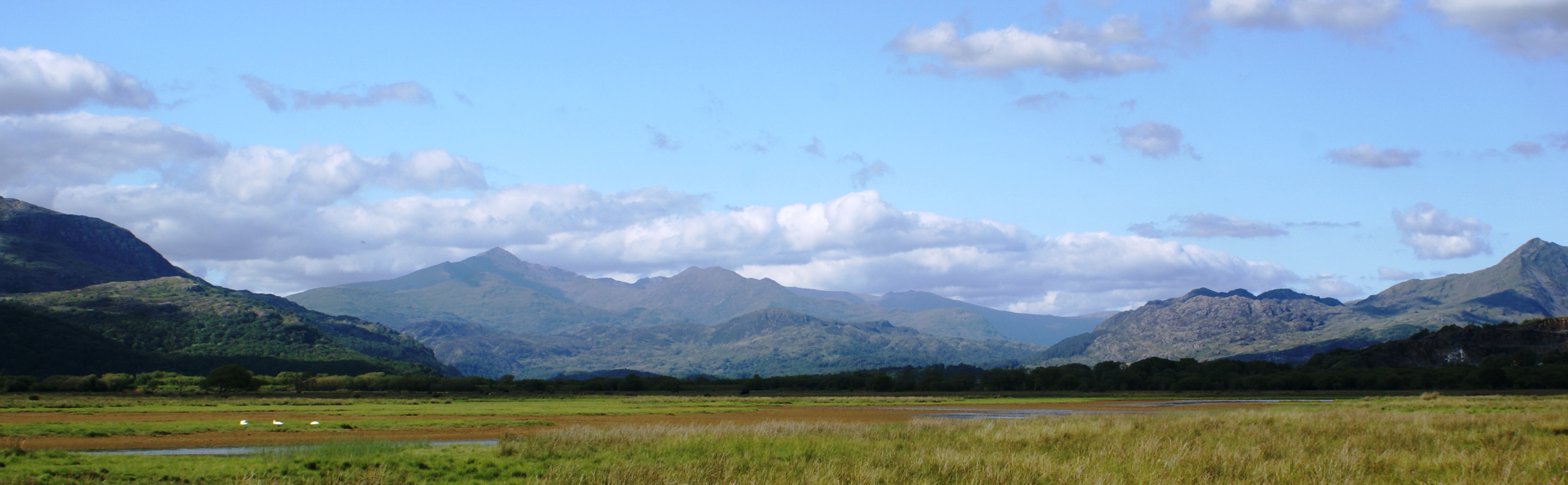
When I see the three dimensional majesty of the mountain peaks that surround me as I stand in wonder on the plain, the camera sees only the actual sky-line which is surprisingly flat.
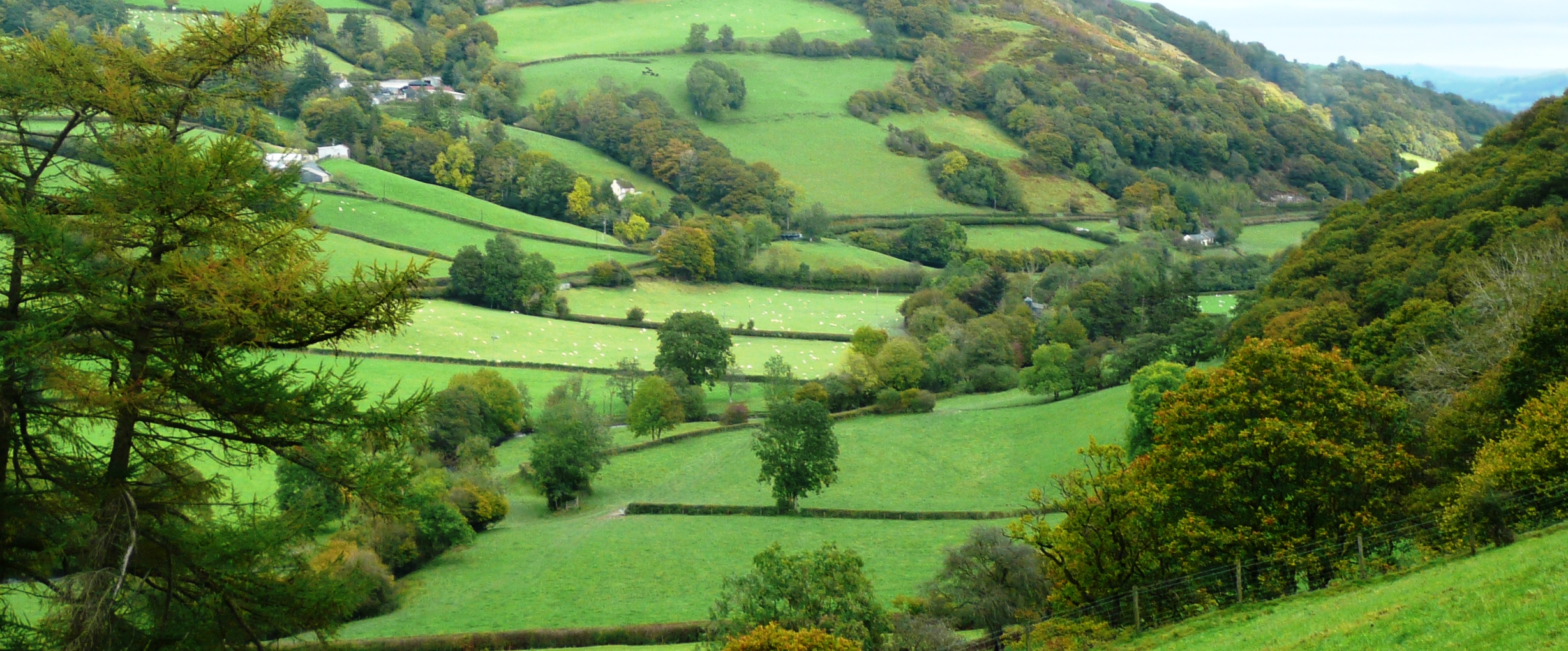
Eyes are much better — they inject emotion. They integrate with the other senses to capture the euphoria of a landscape — the freshness of the breeze, the perfume of honeysuckle and hay, the buzzing of the bees and the birdsong. The vibrant greens of a valley re-awaken ancestral stirrings that draw us still to fertility and shelter.
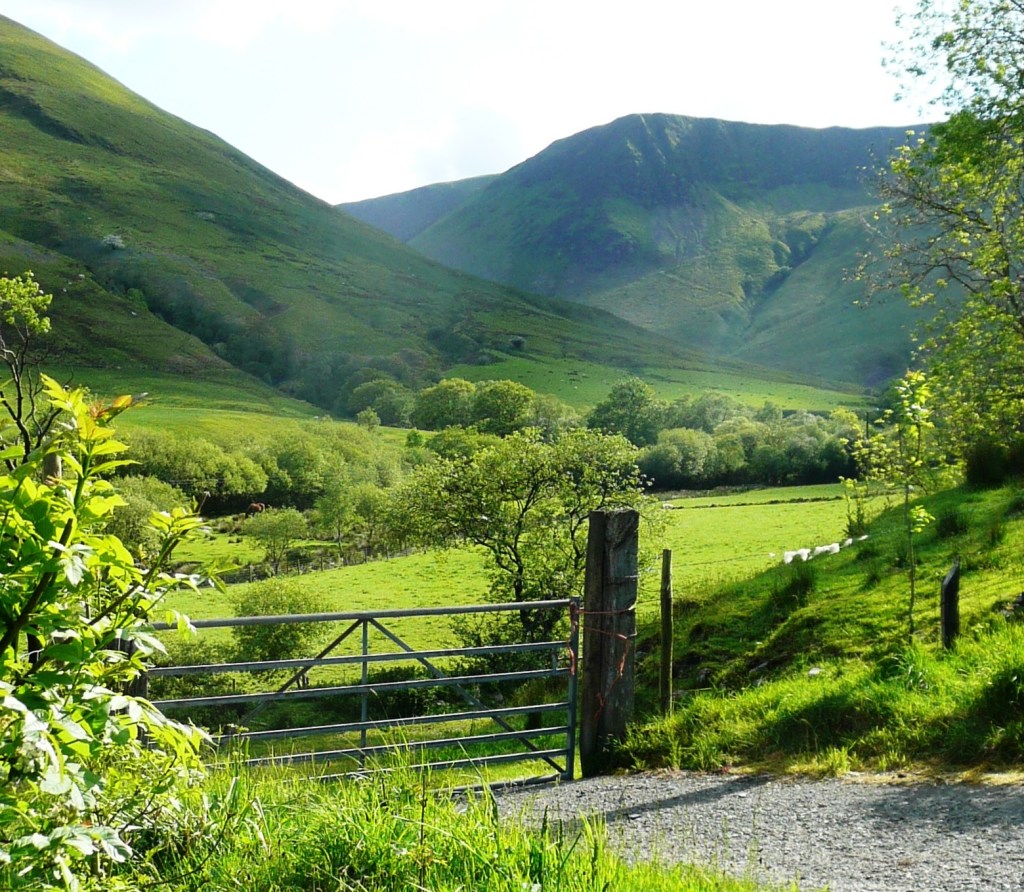
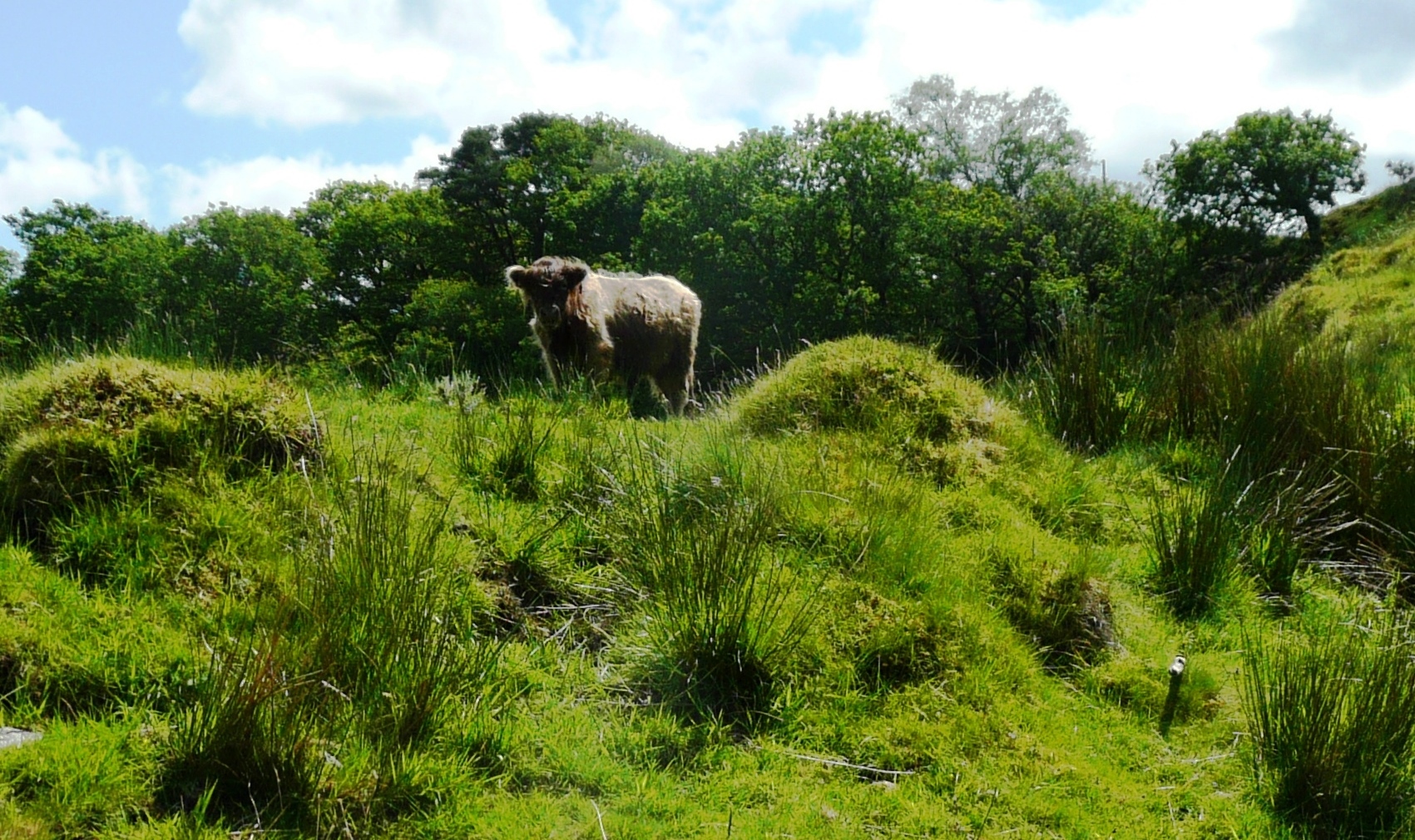
Yesterday I drove to Rhyd in Snowdonia, it was a wonderful spring day — such a shame that the photos could not capture my mood (even if I had remembered the UV filter). These are the best of a bad lot.
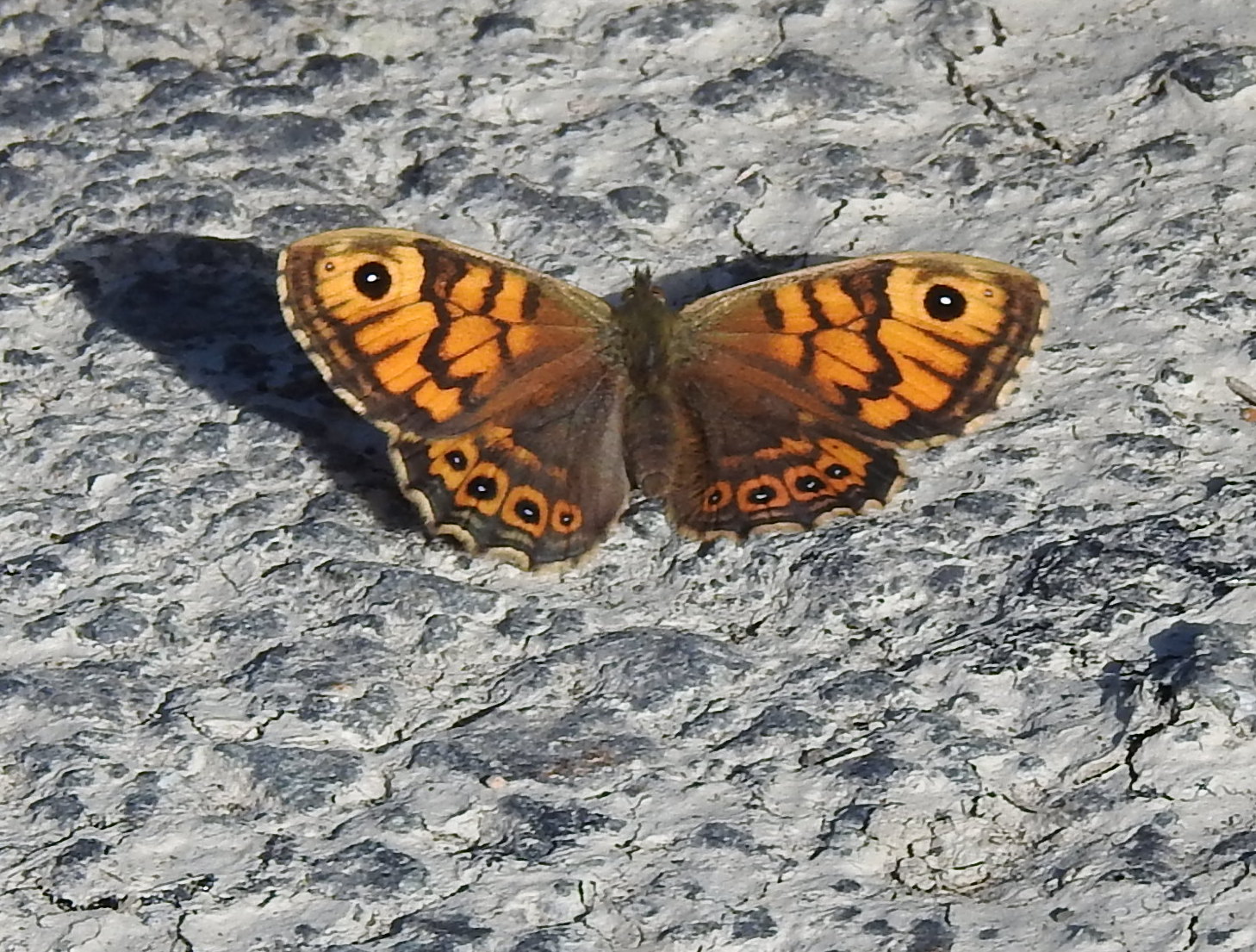
What’s this? A fritillary? No — look at those eye spots, it’s a wall butterfly (Lasiommata megera).
They live in short grassland especially where the sward is broken by rocks, furrows and walls (they like Wales), they are seen on grassy railway embankments and green verges, usually alone. Perhaps you’ll see a male flitting along looking for a female or resting with its wings folded together, showing the mottled grey underside, camouflaged on a rocky outcrop. This one was enjoying the May sunshine with its wings outstretched on the edge of a country lane that has a wide verge (the long acre) waiting to flutter up to waylay a passing female.
Their numbers are dwindling and they represent a high conservation priority as, although widespread in coastal England and Wales, they are rapidly declining. Rare now in central England it was presumed due to loss of habitat because of building and changes in farming, less grazing and the use of insecticides to protect arable crops. But there may be another reason: there is evidence that warmer temperatures are causing generations to hatch out too late in the year to survive.
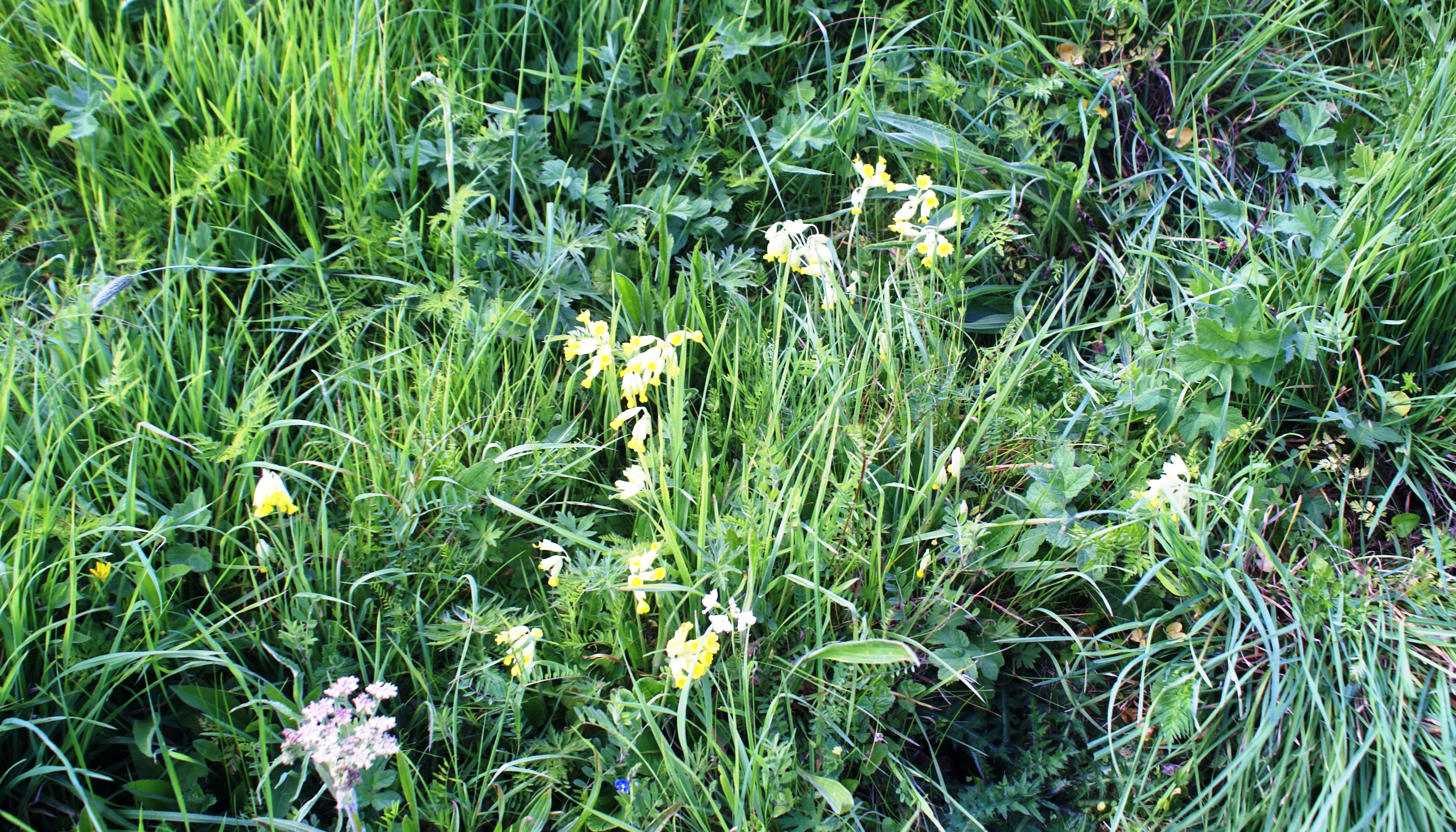
About three years ago everyone here was complaining bitterly about the council not cutting the verges regularly anymore. This year the verges are blue with a resplendent crop of wild hyacinths, self sown or grown from dormant bluebell bulbs which lay waiting for a reprieve from incessant mowing. It’s an austerity bonus! Good for bees!
As our lonely wall butterfly flits off to find a mate it reminds us of the enormous value of our 937 square miles of verges in the UK — twice the size of Exmoor and the New Forest put together — let’s mow them all just once a year and stop spraying and, while we’re at it, please can we turn off all the street lamps!
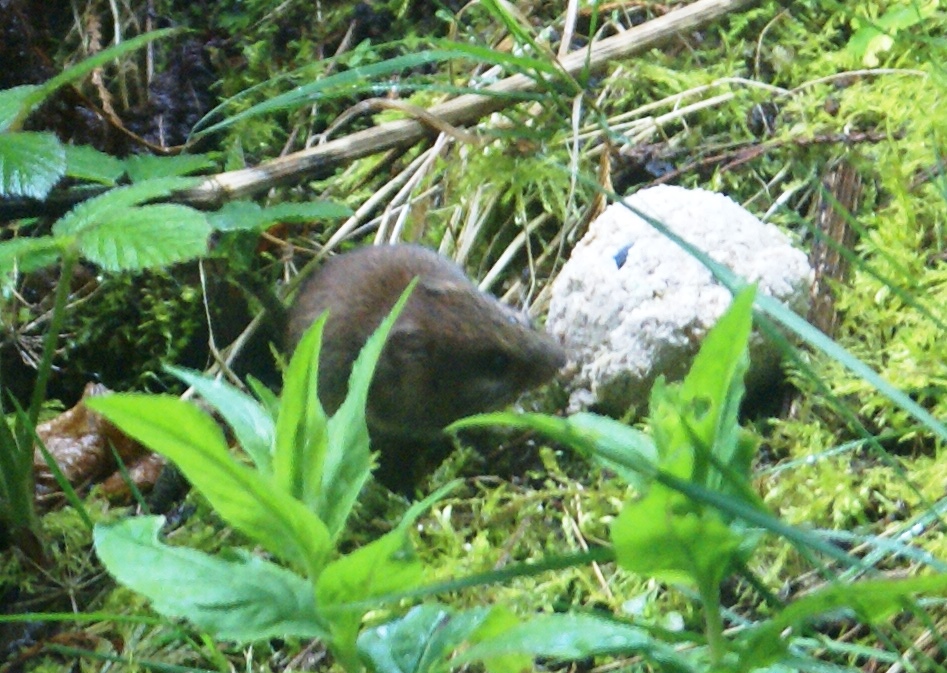
Cheeky bank vole steeling new friend, Thrush’s fat ball (he’s eaten all the bananas!) — bold as brass, six feet away from me.
Gosh! He moves fast, flitting all about the bank –soon the plants will have grown so much that he will be sheltered from the eyes in the sky –buzzards, barn owls and tawny owls. But watch out! There’s a stoat that visits the bank and next door’s cat. Everything is getting much braver since our dog died.
Last autumn it was too dry to burn the brushwood from our extensive hedging operations.
Now, when most years we have snow, I’ve been farming in my shorts! We’ve had the hottest February days since records began (here anyway). There are wildfires on Saddleworth Moor but here the ground is still a bit soggy so Alan announces that the conditions are right for a bonfire!
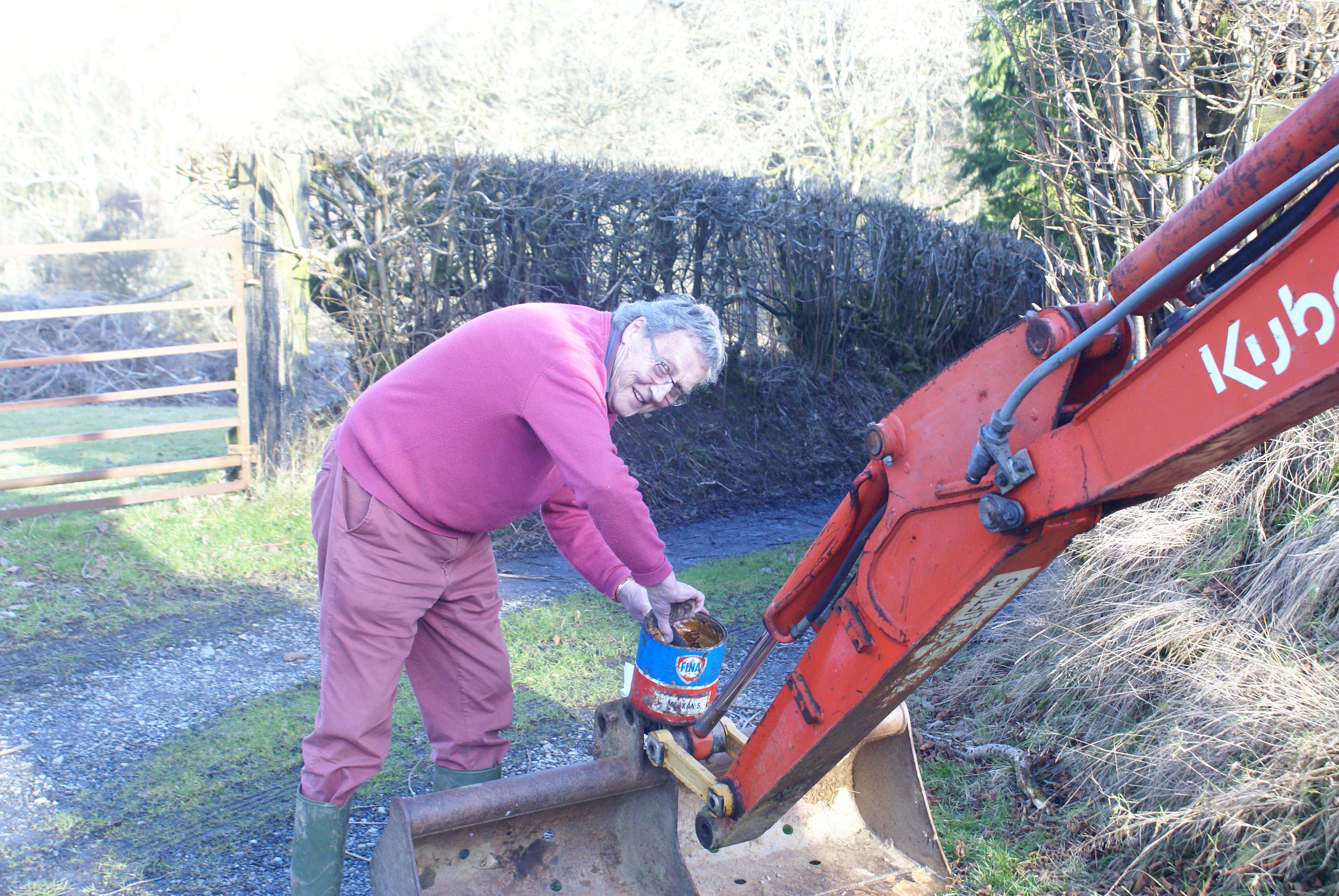
As we had a spot of bother with our last big fire ( see Uncall the Fire Brigade) our friend David takes it upon himself to supervise us, bringing his grab on the big tractor — always exciting for us!
There was a shower over night so it is slow to start.
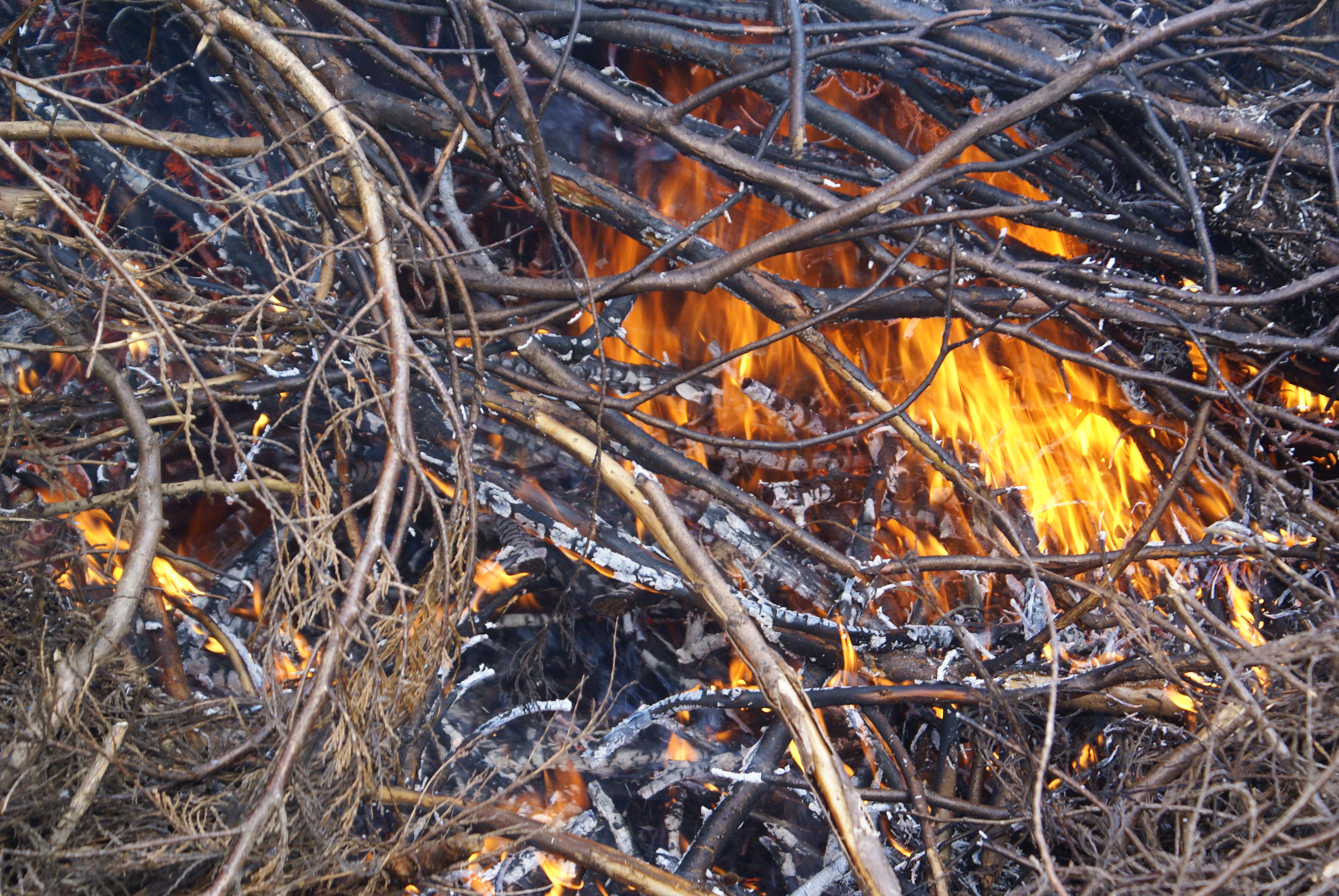
But, after a bit of encouragement:
We have a spark to work with — piling on the brushwood on an industrial scale!
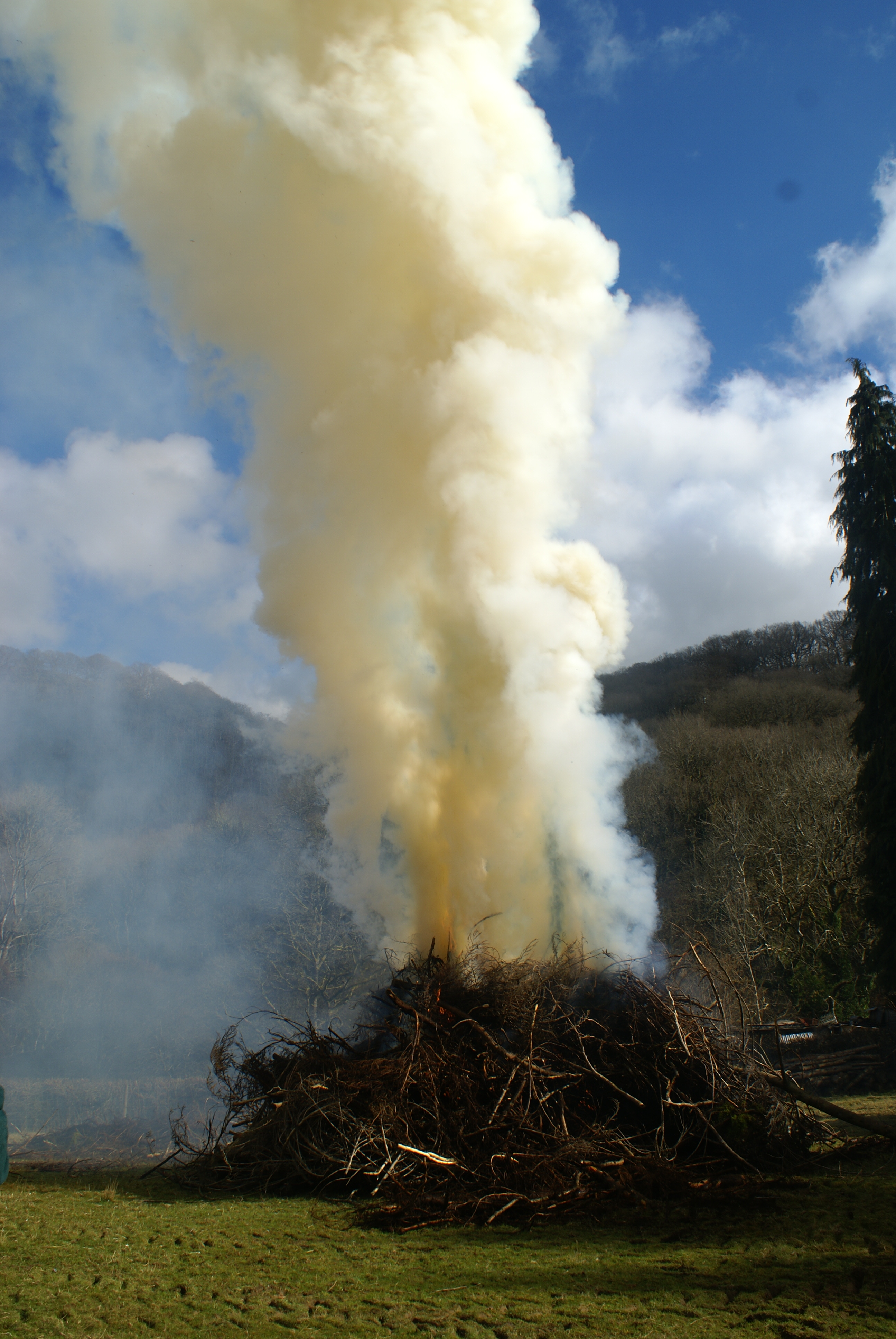
Until we have a decent bonfire!
Satisfying to watch!
It burns all night and no hedgehogs are injured in the making of this fire!
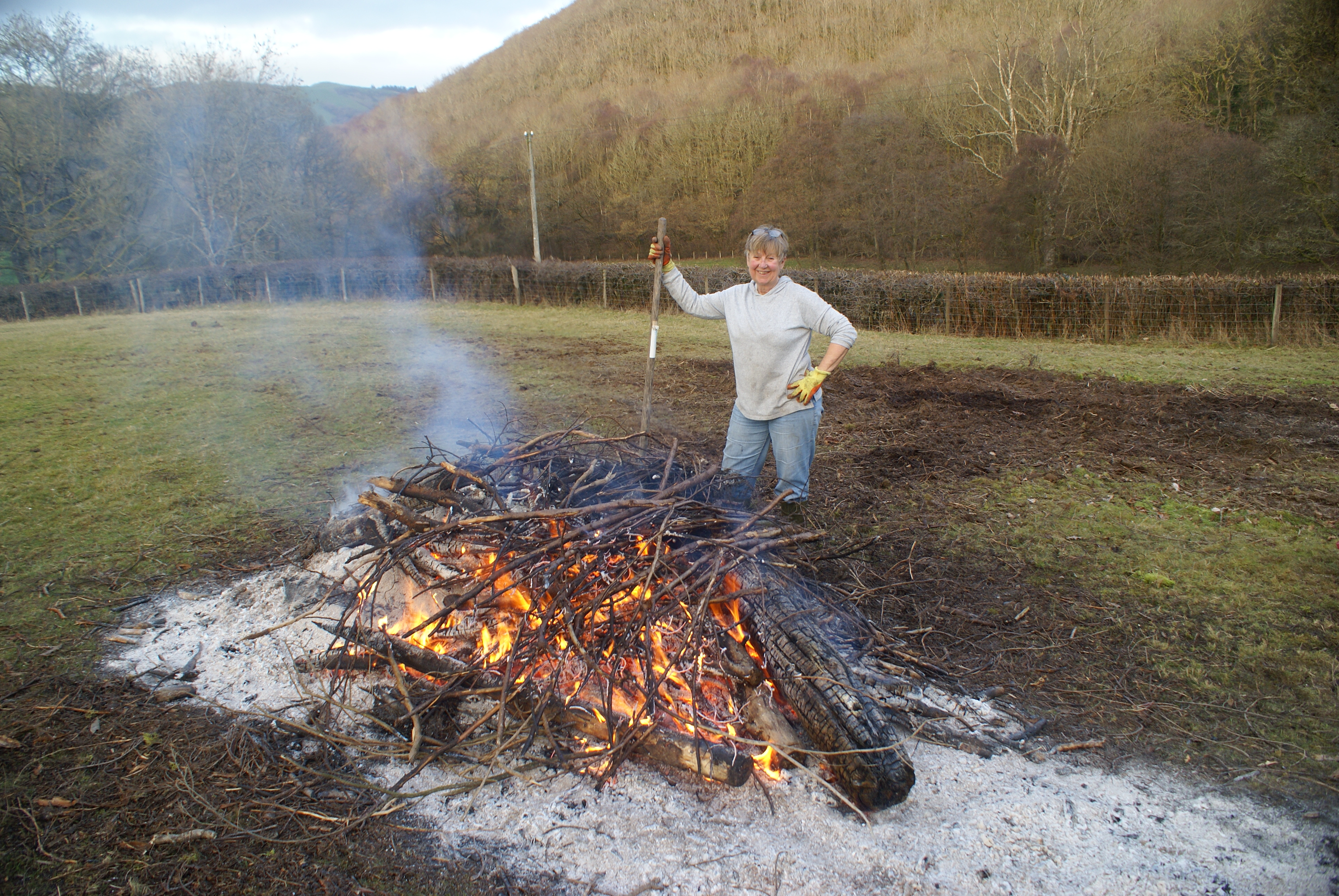
By next day it is manageable by a retired lady with a pitchfork.
Now we are ready for the spring and, you guessed, it’s raining!