British history, Humour, Local History, Travel

Discovering Shrewsbury…

Although I’ve lived within 50 miles of this, the county town of Shropshire, for 20 years, I’ve never really had the time to look at it properly — always rushing for a hospital appointment, changing trains or dashing back for some imperative.
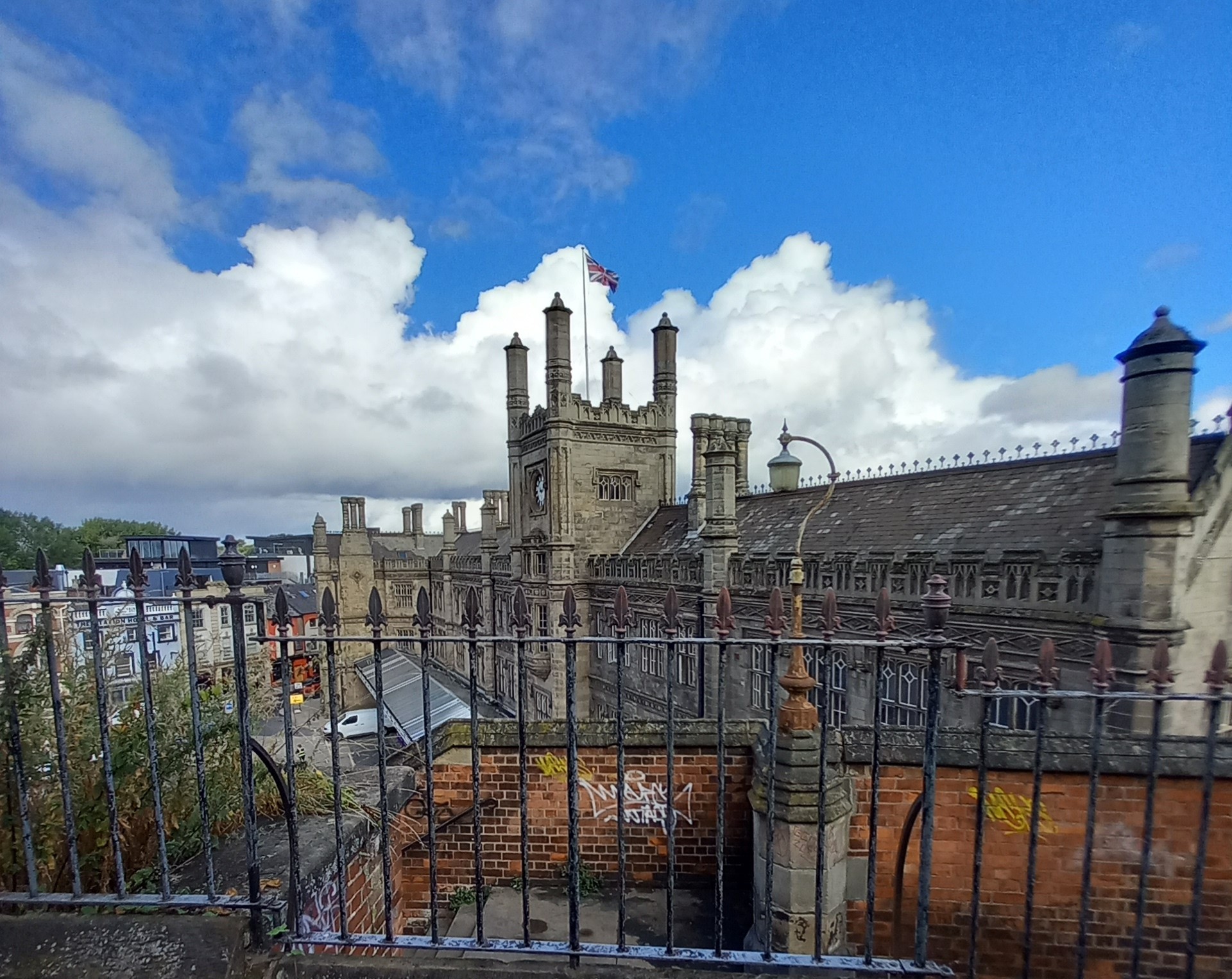
Last week we took my friend, Anne, to catch a train to Yorkshire — she had a tortuous journey ahead so, despite the traffic (we do not expect it in Wales), we opted to drop her at the historic railway station (above) where we ejected her unceremoniously and to much furious and unsympathetic honking. “No cars!” said the entrance to the carpark, “Bicycles only!” Nobody actually mowed us down as I hauled her luggage from the boot and we found the platform up 28 steps (lift out of order) taken at a trot with her heavy bags — fortunately the train was 3 minutes late and we had 15 seconds to spare.

Having found somewhere to leave the car legally, Bill had to buy a ticket which fortuitously brought him to the booking office where, having waved off my friend, I was wondering what to do next and where he might be — it seems for once the stars were aligning for a good day out!
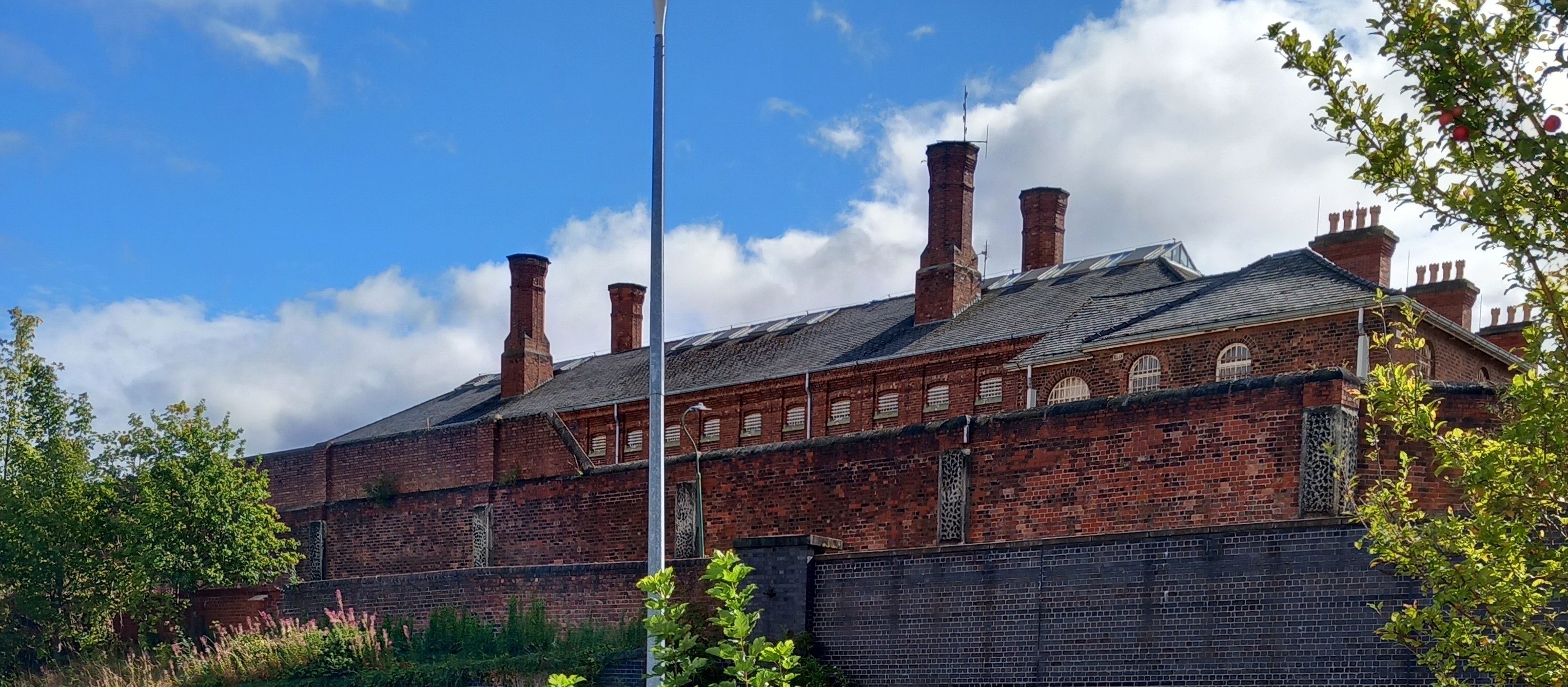
Shrewsbury Prison is a smouldering presence above the carpark, built in 1793 by Telford, designed by local architect John Hiram Haycock and William Blackburn, advised by John Howard the famous prison reformer who looks down from his plinth above the gate. You can book a tour and even stay the night in a cell, “That’s an idea!” says I with my Granny hat on.

Here’s another famous citizen, Clive of India, getting more infamous by the day as we look at empire from a different angle now — still he hasn’t been toppled from his plinth yet.

The town is full of tantalising mediaeval alleyways– note how the common gutter has been replaced by festive commercial waste bins — I miss the piglets, dogs and red kites scavenging on the waste!

The marvellous market has moved indoors but still bristles with prime produce. As we amble around town the clouds are gathering and the tempting aromas start to emanate from the various eateries. Our noses led us to La Mer Rouge for delicious tapas and to watch the torrential rain in comfort. Behind the old market hall is the town museum and art gallery, irresistible!

Mermaids and dolphins vase, made by Walter Crane Maw and co, Broseley (Shropshire) c1889.

Also the findings from Wroxeter, the 4th largest city in Roman Britain (Vironium) just beyond the modern bypass — both to be explored in Granny hat.

Shrewsbury has been an important place ever since, at the gateway to Wales, a strategic and wool trading centre. Fortunes were made.

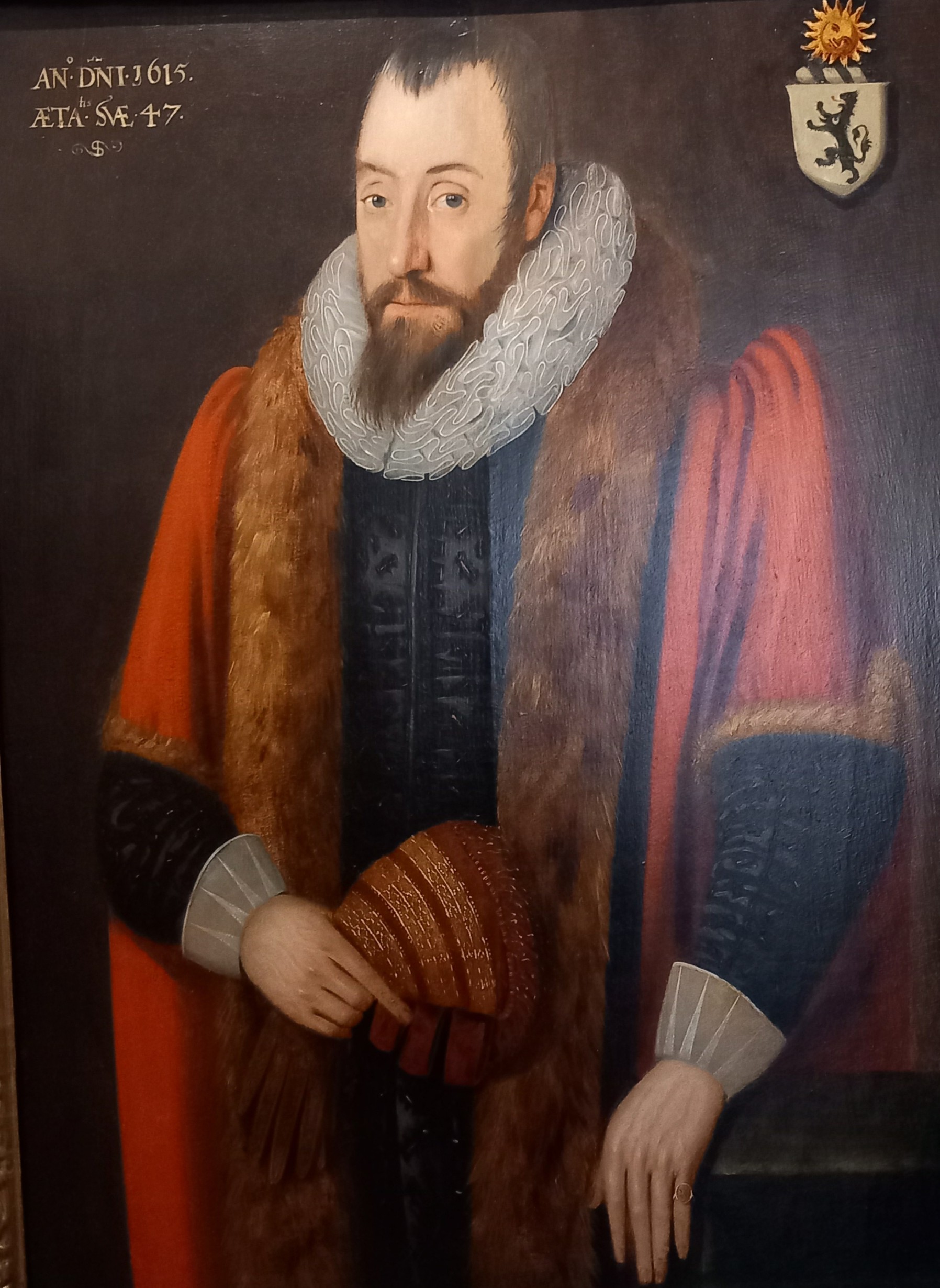
In Stuart times one of these rich wool traders, Thomas Jones, pictured below in 1615, married Sarah Ballard, the educated daughter of the Mayor of Chester. Thomas rose in the local hierarchy as an alderman, then Bailiff and finally Mayor in 1638.
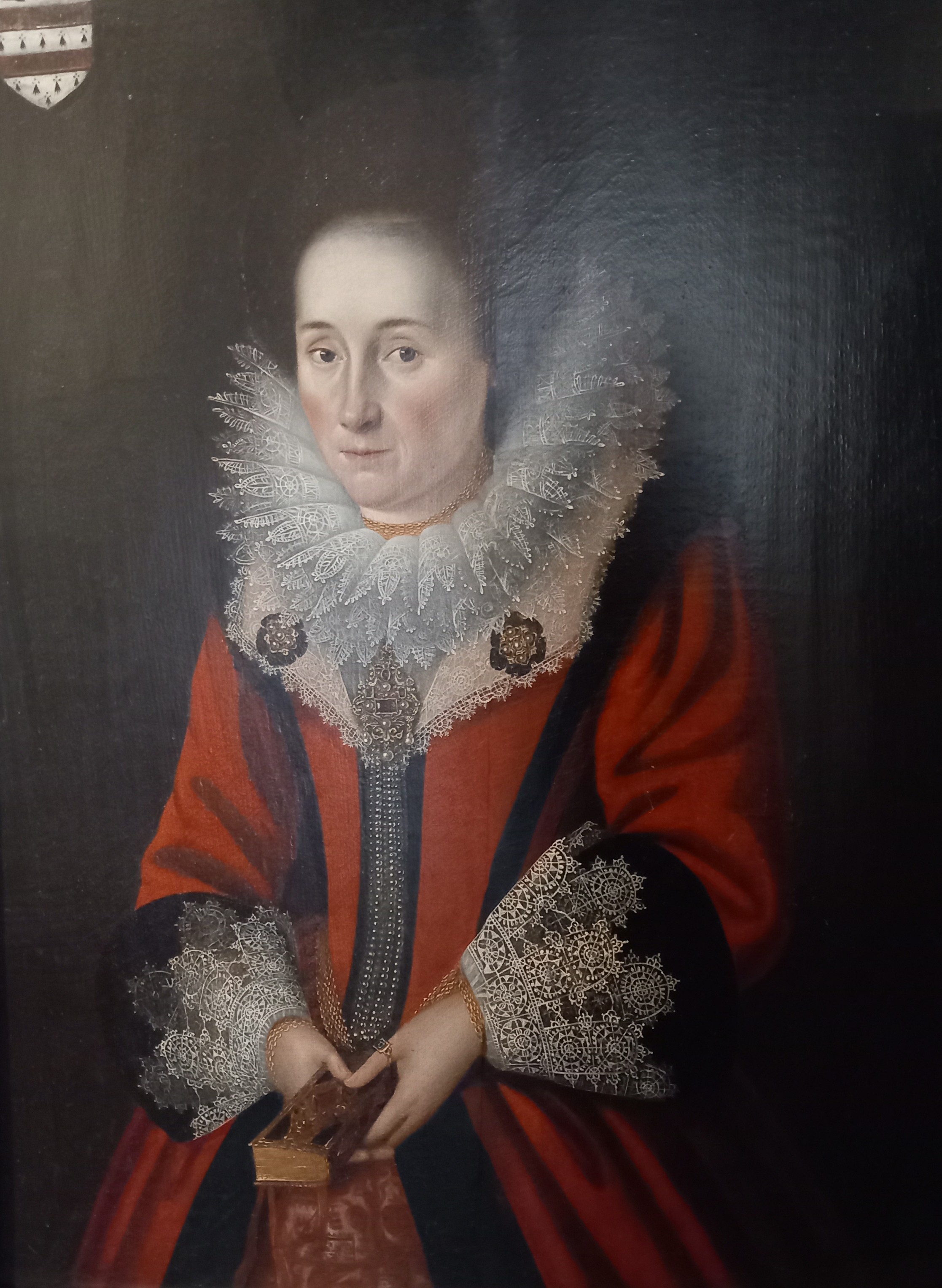
At the beginning of the Civil War (1642-1651), one man, Francis Ottley, seen below with his family in 1636, was appointed Governor of Shrewsbury by Charles I, who called on him to form a regiment of foot. These were divisive times with mixed loyalties. He carried the town along the Royalist path. Francis was appointed Sheriff of Shropshire in 1644 and, as the tide turned, was involved in negotiating the surrender to the Parliamentarians in 1646 after which his estates were sequestrated. He paid a price for his loyalty to the Crown spending the rest of his life fighting to retrieve his estates at Pitchford. However, It seems he negotiated these treacherous times, relatively successfully as his family remained prominent after the war and for centuries thereafter.

It may be significant that Sir Francis Ottley had been criticised by Prince Rupert, when in power, for being too lenient with Parliamentarians — Perhaps that was his salvation… One never knows when the boot will be on the other foot! (personal note)

For all the above, the highlight of our visit was the discovery of the Castle Museum and the history of the King’s Shropshire Light Infantry, a magnificently curated museum deserving another visit and a blog of it’s own.

Standard
Ecology, temperate rainforest

2022 — A Miracle Year, in One Respect

This is to put all you keen gardeners in your place.

It should be reassuring to see what happens if you do absolutely nothing. We dug the pond because we were fed up with having to evacuate the tadpoles every year as the puddles dry up and their wriggling density becomes alarming.

We dug it in June (well, Mauryg dug, I just did the interfering)
New pond July 2022. The start of a very dry summer.

Here it is 4 months later — despite the drought!

Isn’t that miraculous? The opportunism of plants — I wonder if the few things we have actually planted will survive the competition — probably not, but that is what it is all about…

There are fishes too, very tiny super-sonic ones. This is promising:

A frog wondering where her favourite puddle has gone. There are water boatmen and the southern hawker was patrolling all summer, though we haven’t seen the female laying eggs we live in hope that soon the mud will be teeming with insect larvae.

It’s been a miraculous summer all round.

In the seventeen years I’ve lived in Wales I’ve never before eaten a home grown hazel nut, the same is not true of our squirrels and jays — this year there has been plenty to share.
Standard
Hill Farming, Humour, lifestyle

Suddenly Summer!

‘We’ll do that in the Summer!’ we say, ‘In the long balmy days, free of water-proofs and wellies; when the sheep look after themselves and we can enjoy all the things that drew us to this place.’

Summer

Summer

‘We’ll do it after shearing, and after we’ve wormed the ewes and caught all the lambs and sprayed them against “fly strike” and after we’ve immunised them all (it’s too hot to tag their ears yet), and after we’ve sprayed the nettles and cut the thistles (and Alan’s mended the rough cutter — and by the way, the dish-washer’s broken), meanwhile we’ll spray ourselves with midge repellent and cut the thistles by hand — will you sharpen the sickle and the bill hook.

Digger rests, engulfed in Summer

Digger rests, engulfed by Summer

And while our rough cutter waits for Alan  and the digger with its poorly track awaits attention from the mechanic, all around us grass grows, you can almost hear it, and men work through the long days into the nights to cut silage and bale it all before the thunder storms come.  The mechanic rushes from farm to farm to keep the wheels turning.

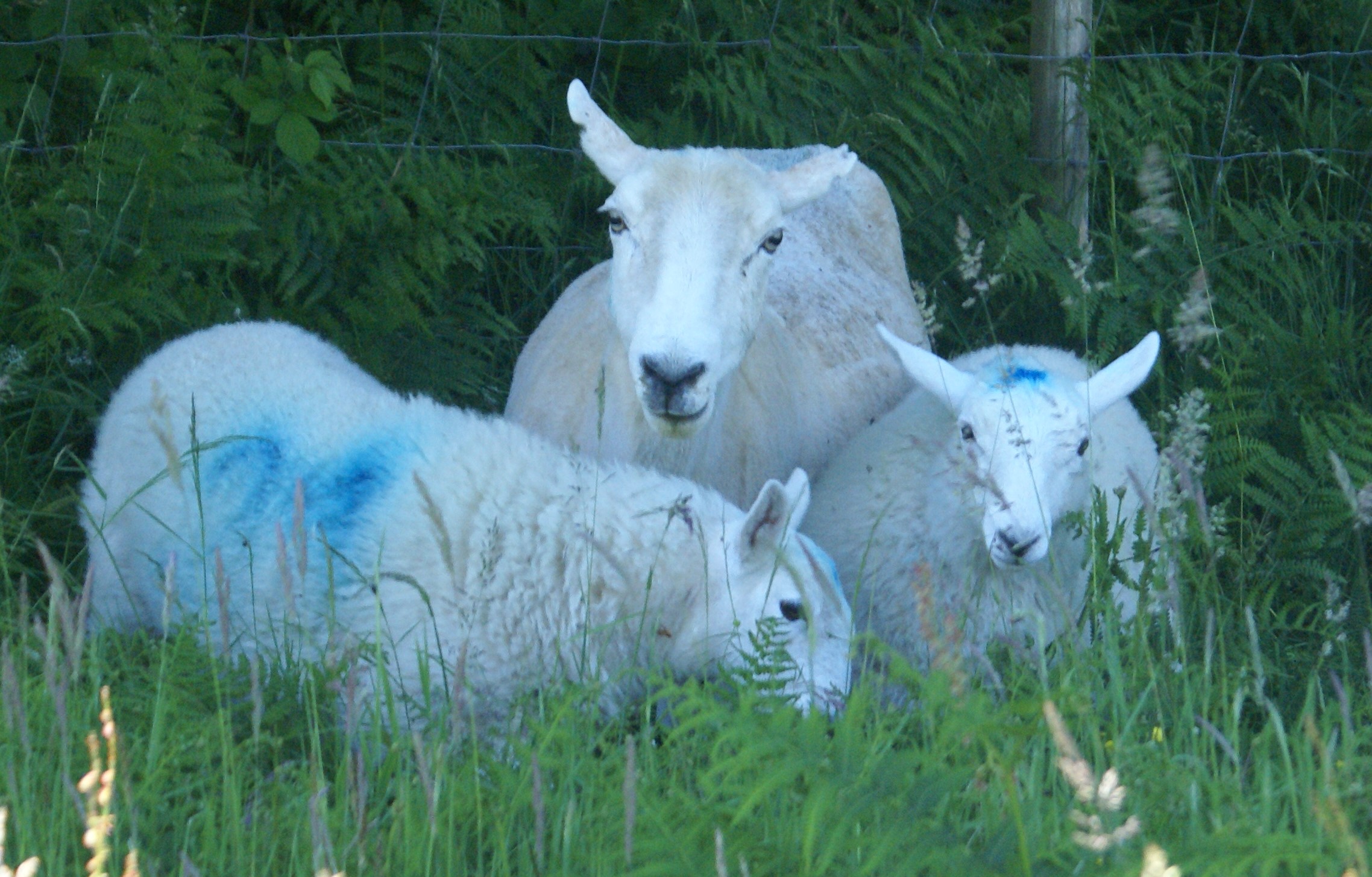
The bracken, which should have been cut by now, stretches to the sky and spreads to shade the sheep, who far from being relieved by the removal from each of a couple of kilograms of organic insulation and carpet fibre, are now bothered by the sun.

SONY DSC

Seeking shade in summer pasture

SONY DSC

Sheep shadow

They use their bodies to mark out the exact outlines of trees on the hillsides — sheep shadows, and they pant and look at me accusingly as we might ask the Almighty why we have to suffer so at the hand of cruel destiny.

We sheared them on the day before the heat wave struck and as I walked into the first hot summer sun  where they had been lying the buzz was deafening so that we looked about for a cause (continuing the biblical) — a plague of flies had hatched that day and roared in anticipation.

That day we lead them through the woodland to our upper field where the orchids grow and where there is hardly a fly in this shady pasture — like us, they don’t know how fortunate they are.

Orchid in the Summer Pasture

Orchid in the Summer Pasture

Standard
Bereavement, Metaphysical

Life is short —

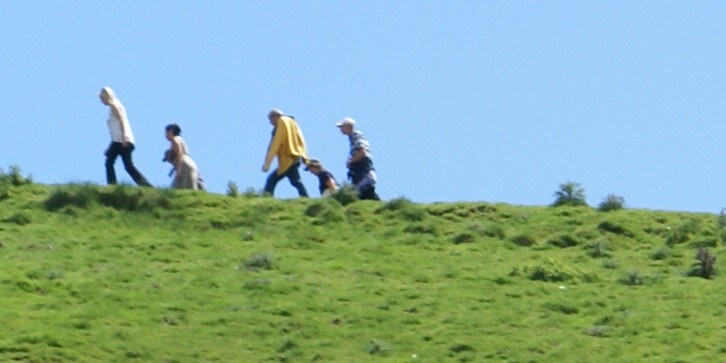
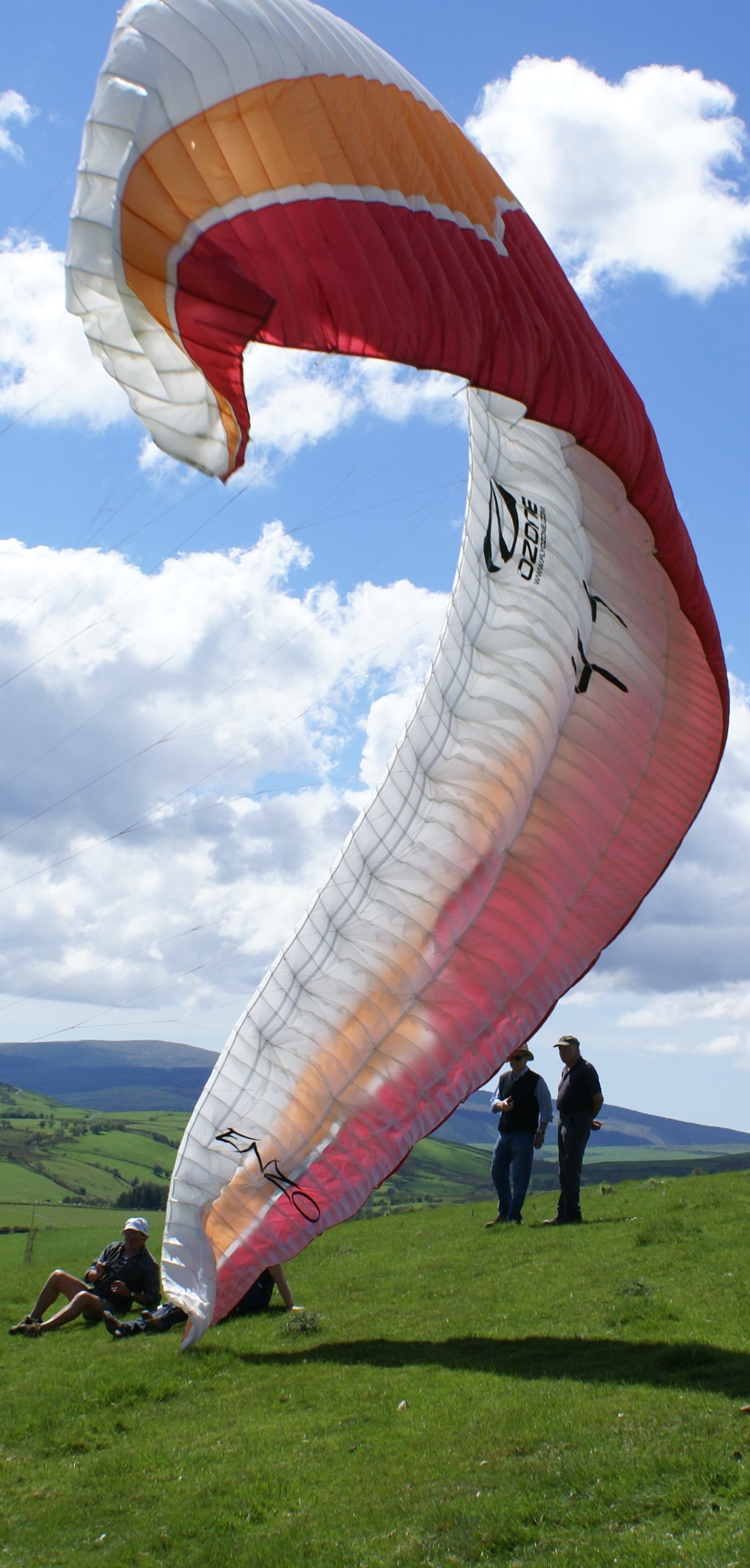
Andy had enjoyed life and particularly paragliding so what better way to celebrate his life than for him to posthumously drag his unfit friends, one last time, up the steepest hill, have a few drinks then  jump off the top in tandem with an old friend.

?????????????????????????????

Advanced party

Canine support

Canine support

Time for refreshment.

Ready for one last turn around the valley

And so Andy’s ashes soared over the valley he loved and then were scattered on the mushroom field where he had  taken his friends for one last picnic and some quiet reflection.

?????????????????????????????

Andrew Stewart Pryce

21-5-50 — 4.12.13

What's it all about?


Standard
Democracy, Local History, Wales

Time warp

Llanidloes hasn’t changed much in two hundred and fifty years.  Take away the cars, cover the yellow lines with horse manure and replace the plastic awnings of the market stalls with canvas ones and you could be back in 1749 when John Wesley, evangelical Nonconformist rode into town and stood and preached on the stone by the market hall where dogs today, as they have for centuries, cock their legs.

?????????????????????????????

?????????????????????????????

1839 was the year that the people of the town rioted because three London police constables were sent to arrest the leaders of the town’s Chartist union.  The Chartists believed in one-man-one-vote, a secret ballot, annual elections, pay for Members of Parliament and the abolition of financial and property qualifications for MPs and that each parliamentary constituency should contain the same number of voters.  That is all.  The authorities were so unnerved that the little town of two thousand people was occupied by the military for twelve months.  It had taken five days for the troops to arrive in this remote part of Wales and this was known as the ‘Five Days of Freedom’, our ‘Celtic Spring’.

Townsfolk stormed this building to free the Chartists

Townsfolk stormed this building to free the Chartists

Yesterday was St.David’s Day, and the market was held as it is every Saturday and has been for centuries:

It is the first town on the River Severn, set in the most beautiful countryside, a good place for the dawn of democracy and a cracking place to do your shopping.  The small independent shops and market stalls, between them, can  service the towns every need.

Standard
Doggy

Charismatic Canine

Pedro, our dog, ought to have his own blog (not a weblog but a doglog — a glog), but then maybe no-one would ever visit mine.  His posts already get all the likes and comments. SONY DSC When we first moved to Wales, when he was still young and intact and the world was full of willing bitches, Pedro was irrepressible, unrestrainable, clever (he still is) and devious (that too).  He earned us the reputation of the feckless English who could not even control their own dog. In this farming area he should have been shot; you can’t have big, powerful dogs just wandering about: dogs will always be dogs.  The thing was he didn’t just wander; he had purpose and inherent cunning.  He was never seen anywhere near a sheep, although he regularly crossed their fields, he always kept out of sight, a commando — along the stream or in the ditch.  There were no give-away signs of the sheep gathering or running, they didn’t even smell him. While bitches wailed in disappointment angry farmers locked him in barns only to be bedazzled by his escapology; he is always very biddable when caught, it’s a fair cop, chwarae teg in Welsh; he can speak Welsh and do door handles, knobs and latches.  One farmer is still scratching his head, like Sherlock Holmes: you see both doors were locked from the outside and the only window was a good twelve feet from the ground; I’m told he’s taking holy orders, the farmer, not Pedro. 043Ped closeup It was pure charisma that kept him alive; he would boldly approach the man with the shot-gun, wagging his tail, as if he’d known him for years.  Perhaps he had licked his face one night recently when he lay drunk in the hedge while trying to get a bit of shut-eye on his way back from a lock-in at the pub.  Perhaps the farmer recognised in Pedro his own younger self; they do say that the Welsh (careful) are a passionate race and have their own traditional ways of courting, not dissimilar to Pedro’s. Anyway he survived and I have written about his adventures elsewhere.  I’ve never known anyone, human or otherwise, who knows so many people.  He’s a dog who comes home, after a night out, in the post van (You know how postmen feel about dogs).  The postman lets him out at the gate and he trots home. We benefitted indirectly from Pedro’s fame; farmers know a good dog when they see one, even if he is with that damn silly English couple.  When introduced to us at chapel they would say, ‘Oh yes, Pedro’s people.’ SONY DSC But all that changed when something happened down the valley, news of it drifted up on the wind, came through the key hole and under the door, Pedro sniffed, he trembled, he whimpered… To be continued.

Standard